“Polar exploration is at once the cleanest and most isolated way of having a bad time which has been devised.” - Apsley Cherry-Garrard
In the winter of 1911, with the world’s attention on the race for the South Pole, three men from the Terra Nova Expedition set out on a different journey across the frozen expanse that would turn out to be one of the most brutal sledging trips ever undertaken in Antarctica. Their purpose was simple in theory but daunting in practice: to collect emperor penguin eggs during the winter breeding season in total, freezing darkness.
Immortalized by Apsley Cherry-Garrard in his post-expedition memoir, The Worst Journey in the World, the exploits of the three men in constant darkness and temperatures as low as -60°C are every bit as remarkable as they are unbelievable. Hauling sleds for over 200 kilometers across 36 days, they pushed themselves to the absolute limit of physical and mental endurance on a quest for scientific discovery.
Scott's Terra Nova Expedition
The Terra Nova expedition (1910-1913) was led by famed polar explorer and British national hero Robert Falcon Scott, who sought to become the first to successfully reach the South Pole, while conducting a wide range of scientific research across the then-unknown continent. Scott had previously led the Discovery Expedition (1901-1904) and was seen as Great Britain's foremost polar explorer and rival of Sir Ernest Shackleton.
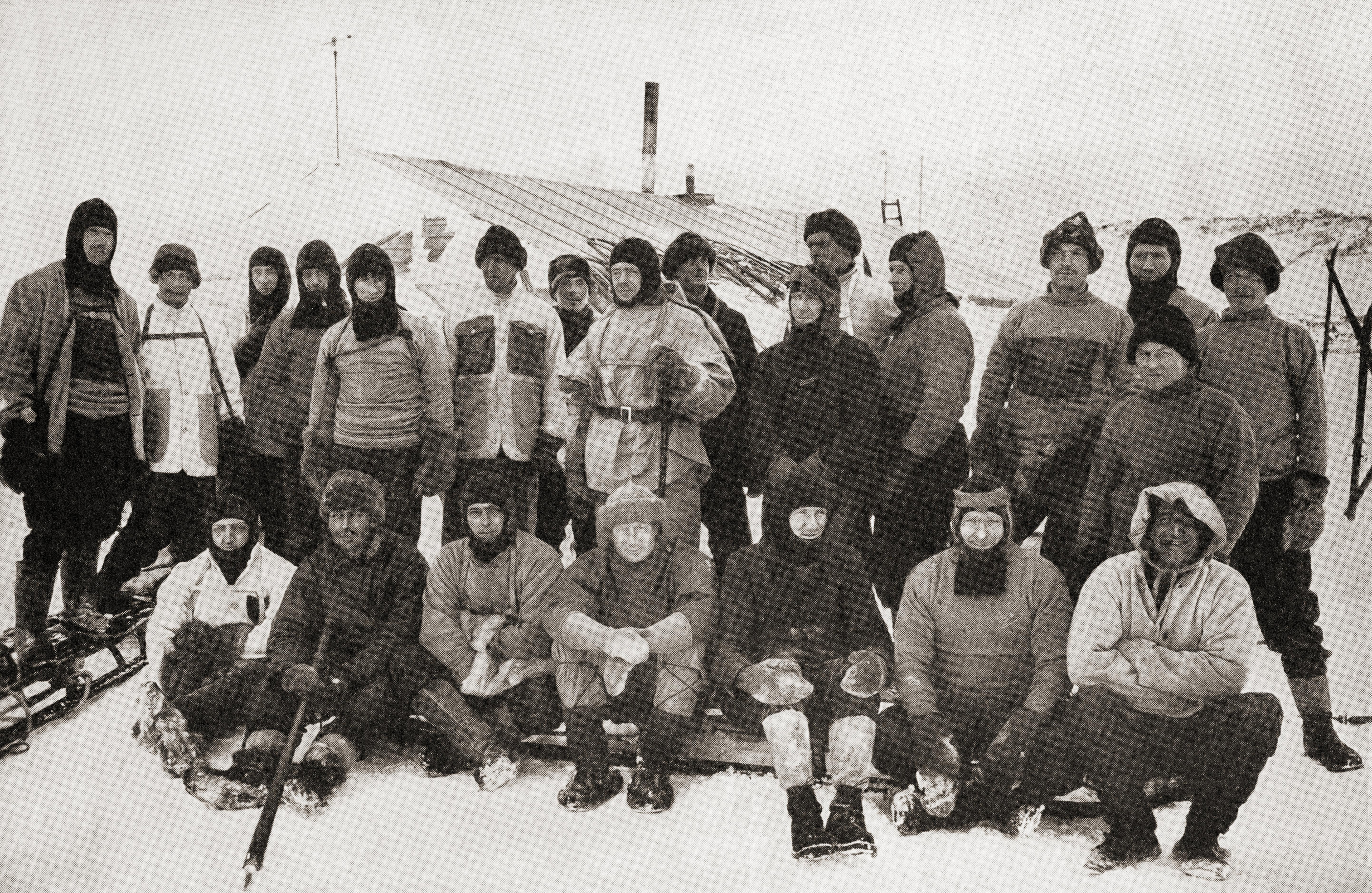
Photo: Robert Falcon Scott, 1868-1912, back row centre in balaclava, with members of the ill-fated Terra Nova expedition in 1912 | Getty Images
The Terra Nova sailed south with a crew of both seasoned Antarctic veterans, including men who had served with Scott aboard the Discovery and Shackleton aboard the Nimrod. His second in command was Edward Evans, who served as the captain of the Terra Nova, and many others were picked by the Admiralty. Antarctic old hands William Lashly, Tom Crean, and Edgar Evans had served on prior expeditions with distinction, while others, such as Lawrence Oates, an independently wealthy contributor, contributed significantly to the expedition's funds. Edward Wilson served as chief scientist, leading an impressive scientific team comprising meteorologists, zoologists, geologists, physicists, and biologists.
It was Edward Wilson who proposed the journey to collect emperor penguin eggs in the darkness of the Antarctic winter. A theory at the time held that the flightless penguin could be a missing link between reptiles and birds, and that studying its embryo could lead to a scientific breakthrough. A decision was made. Wilson would lead a small team to Cape Crozier, a round-trip of over 200 kilometers, during the expedition's first winter. While Scott prepared for his push for the Pole, Wilson put together a plan to cross ice shelves and crevasses, guided only by the stars and planets.
Wilson chose two men to accompany him. Henry Bowers, a young Scotsman who served in the Royal Navy, and Apsley Cherry-Garrard, the youngest member of the expedition, whom Wilson had taken on as his protege. Like Lawrence Oates, Cherry-Garrard had contributed a significant sum to the expedition and was seen by many as having bought his way to Antarctica. However, he had soon proved his worth among the seasoned veterans and came to be counted on numerous times throughout. Cherry-Garrard also made extensive notes, recording his experience in the South and detailing the progression of the expedition.
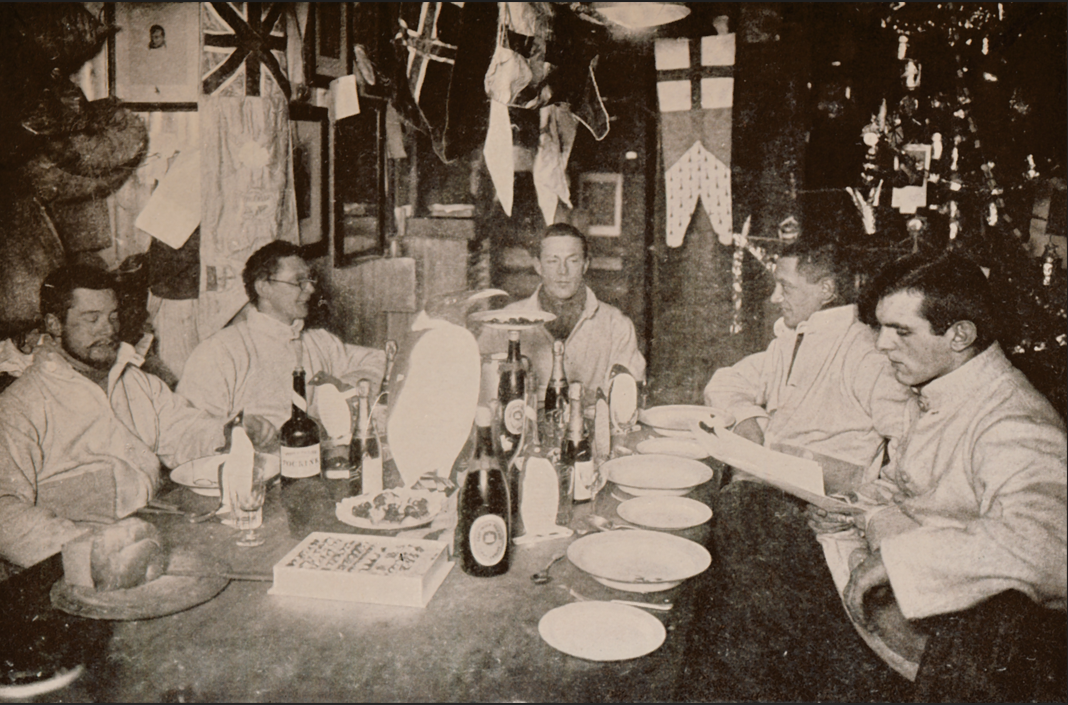
Photo: Midwinter Day, 1912 - The Officers: Left to right, Zoologist Apsley Cherry-Garrard, physicist Charles S Wright, surgeon Edward Atkinson, biologist Edward W Nelson, ski expert Tryggve Gran | Getty Images
Their destination was the emperor penguin colony at Cape Crozier, roughly 60 miles (about 100 km) from the expedition’s base at Cape Evans. Between the team and the eggs lay a mazy landscape of crevasses, hummocks, pressure ridges, icy slopes, and exposed open terrain, all of which needed to be navigated in complete, freezing darkness.
A scientific journey & feat of endurance
The journey began during the first Antarctic winter of the expedition, in late June 1911. Unlike spring sledding journeys used for long-distance exploration, this trip had to be undertaken during the darkest, coldest months of the year to coincide with the breeding season of emperor penguins. Wilson was determined to obtain eggs as early in their development as possible, which meant collecting them while the parents were incubating them.
By June, the sun would not rise again for months. Temperatures routinely dropped below –60°C (–76°F), and each breath created ice crystals that coated both clothing and equipment. To reach their goal, they would need to cross the Ross Ice Shelf. The three men set off hauling a heavy sled loaded with supplies and a small tent. They crossed the frozen sea ice of McMurdo Sound, skirting pressure ridges and navigating by moonlight, stars, and occasional glimpses of the Southern Lights. They took with them six weeks of supplies, scientific gear, tents, and survival equipment, equalling over 24 kg per man.
Progress was painfully slow. Snow surfaces shifted constantly, sometimes hard as rock, sometimes soft enough to swallow the sled runners. Every step required effort while wearing thick layers of fur and wool.
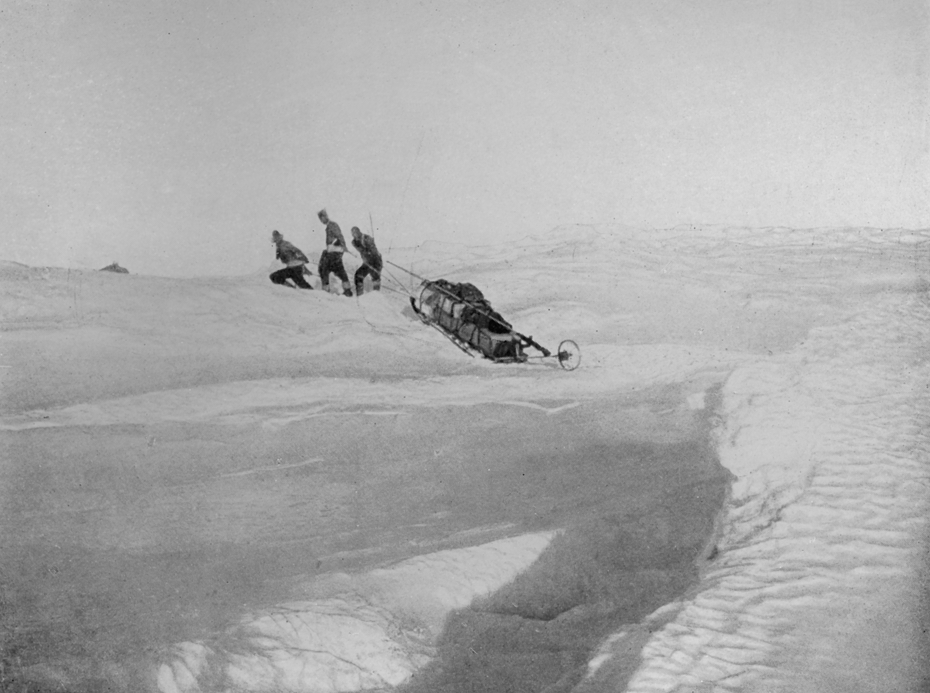
Photo: The Sledge has just crossed the tide crack, here twenty feet wide, between the sea-ice and the land-ice', circa 1911 | Getty Images
Sleep offered little relief. Each night, they crawled into reindeer-skin sleeping bags that quickly froze from moisture. By morning, the bags were stiff with ice, forcing the men to wrestle themselves free. Even lighting the stove to melt snow for water could take an hour in the brutal cold. To get into the harnesses to drag the sleds took significant effort, battling against frozen, thick fabric and stiff, aching joints and bones. It took two men to help one get ready for a day's hauling, after which all three were already breathless with exertion.
Cherry-Garrard described how his clothing froze instantly as he turned his neck, the sweat of each man freezing instantly, chilling them and locking them into stiff clothing. The cold affected not just the body but the mind. Fingers lost sensation. Faces froze numb. The darkness seemed endless.
Chilled to the point of frostbite in their sleeping bags, the men gathered enough strength to continue after waking each day, draining blister and blister, hauling their sleds, following the bright ball of Jupiter in the night sky as their beacon. They found themselves on pressure ridges, unnerved by the sharp cracks and bangs of the ever-shifting ice, while the ghostly, ragged silhouettes of mountains hemmed them in against the darkness that swallowed them on each side. Constant attention had to be made to avoid disappearing into a crevasse, while hours of monotony, shivering in a sleeping bag, were broken only by long periods of effort, sweat, and anxious, uncertain progress.
The realm of emperors
“Take it all in all, I do not believe anybody on Earth has it worse than an Emperor penguin.” - Apsley Cherry-Garrard
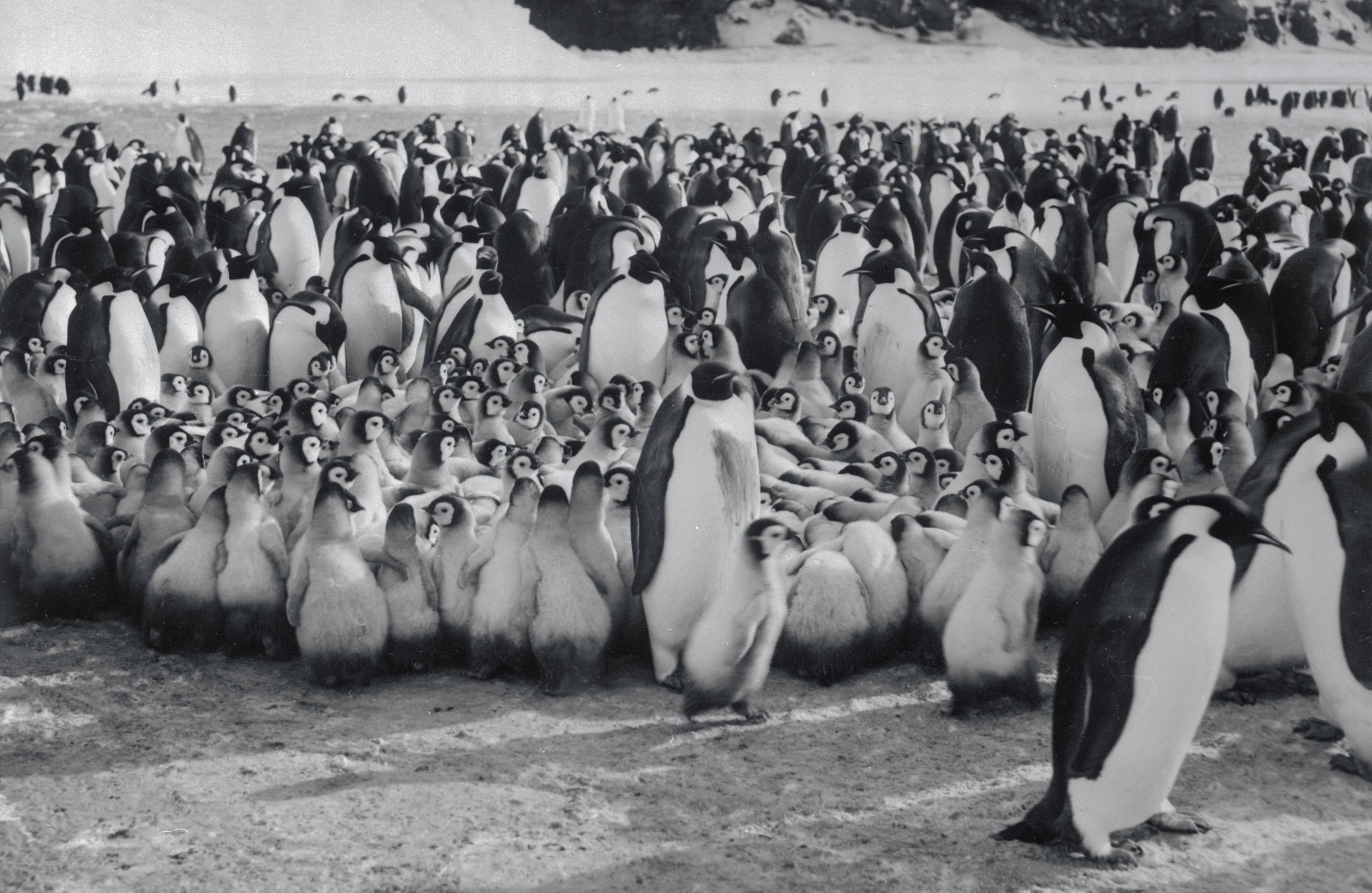
After 19 agonizing days, the three men staggered to a halt at their destination. The emperor penguin colony at Cape Crozier lies beneath the towering cliffs of Mount Terror, one of the dramatic volcanic peaks that dominate the landscape. Even in darkness, the explorers could hear the colony before they saw it: thousands of emperor penguins calling out across the ice. The penguins huddled in dense groups, each male carefully balancing an egg on his feet beneath a fold of warm skin. Unique among penguin species, emperor penguins breed much farther south, during the dark, freezing Antarctic winter.
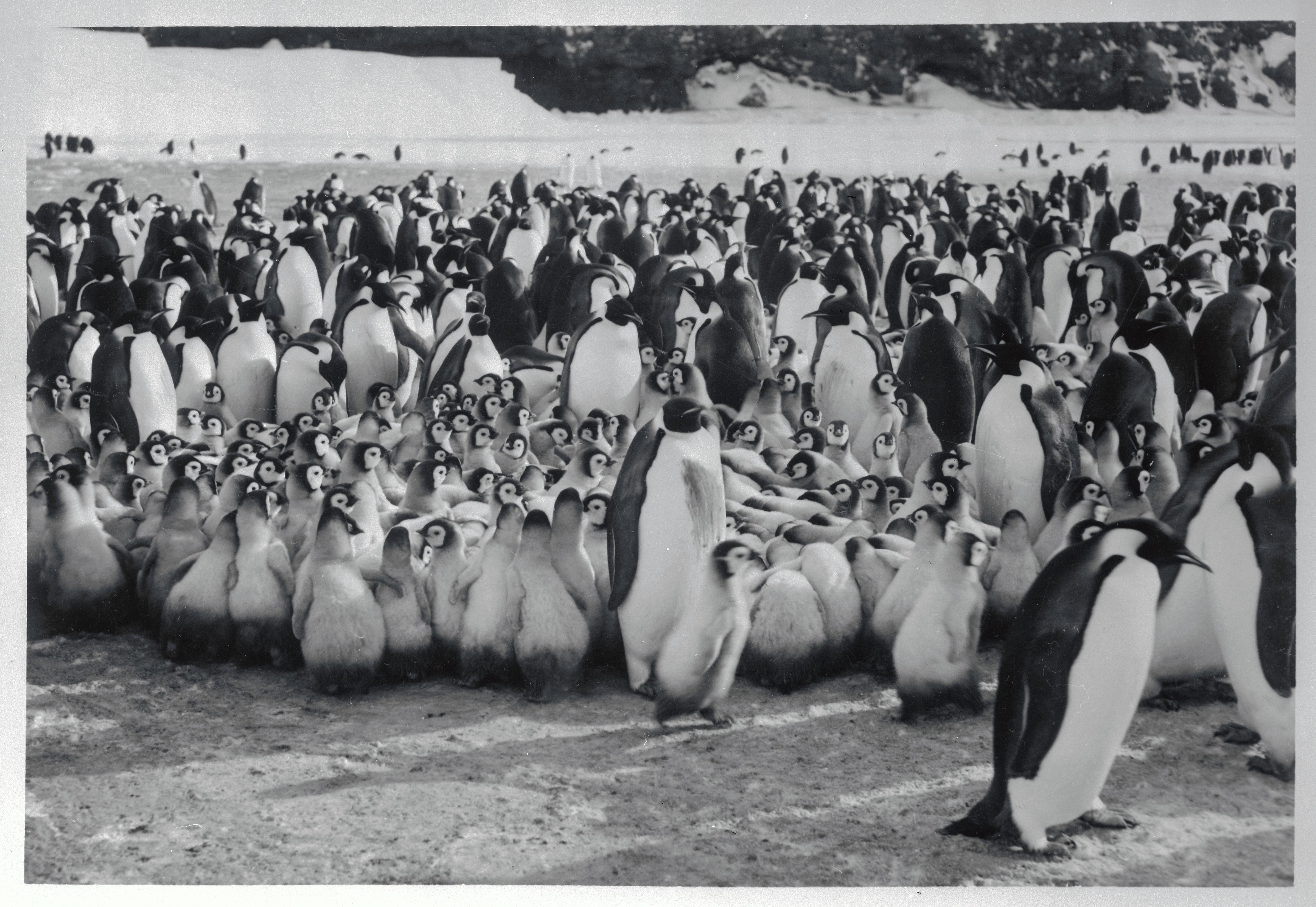
Photo: A crowd of adult Emperor Penguins and their young chicks are shown at Cape Crozier in Antarctica, at one of five known Emperor Rookeries in the world | Getty Images
After gathering their strength, Wilson worked patiently to collect several eggs. Removing them without damaging the fragile shells required careful handling in conditions where even exposed fingers could freeze in seconds. They secured three eggs, carefully packing them into prepared, padded containers for the long return journey. Anxiety grew - if the eggs were broken during the retreat to Cape Evans, every second of suffering would have been for nothing.
At one point, while camped during a violent blizzard, hurricane-force winds tore their tent away. Their shelter disappeared into the darkness, leaving the men exposed to temperatures that could kill in minutes. Without shelter, survival would be almost impossible. They searched blindly in the storm and pitch darkness, and by extraordinary luck, Bowers eventually stumbled upon the tent some distance away, partially buried in snow. The men managed to recover it and re-establish camp. This stroke of luck had undoubtedly saved them from death.
Triumphant return to national tragedy
The journey back to Cape Evans proved just as punishing as the outward trip. By now, exhaustion had set in, and the physical toll of weeks in the cold became evident. Cherry-Garrard recalled popping multitudes of blisters each night, almost passing out with the pain. When they snatched periods of sleep, it was short, broken, and un-restorative. Just existing here was a toll on the body, let alone dragging heavy sleds over rough, unending ice and hummocky slopes.
On 1 August 1911, 36 days after they had set out into the darkness, Wilson, Bowers, and Cherry-Garrard staggered back into the Terra Nova camp at Cape Evans. They were gaunt, exhausted, barely able to walk, and on the verge of total collapse. Remarkably, all three eggs remained intact. The men had covered over 200 kilometers, enduring temperatures as low as −61 °C. At times, they only covered a little over a mile per day, but they had succeeded. Upon their return, Cherry-Garrard described the experience as "The Worst Journey in the World" - the name of his future memoir.
Ultimately, however, the scientific results proved limited. Later analysis of the embryos failed to yield the evolutionary insights scientists had hoped for, and later events on the Terra Nova expedition overshadowed the efforts of the three men.
In November 1911, Wilson, Bowers, and Cherry-Garrard joined Scott’s team on the long march to the South Pole. At the top of the Beardmore Glacier, Cherry-Garrard was sent back with the second support party, while Wilson and Bowers were eventually selected for the final group to make the attempt on the Pole. Scott, Wilson, Bowers, Lawrence Oates, and Edgar Evans reached the South Pole on 17 January 1912, only to discover that Roald Amundsen and his Norwegian team had beaten them by several weeks.
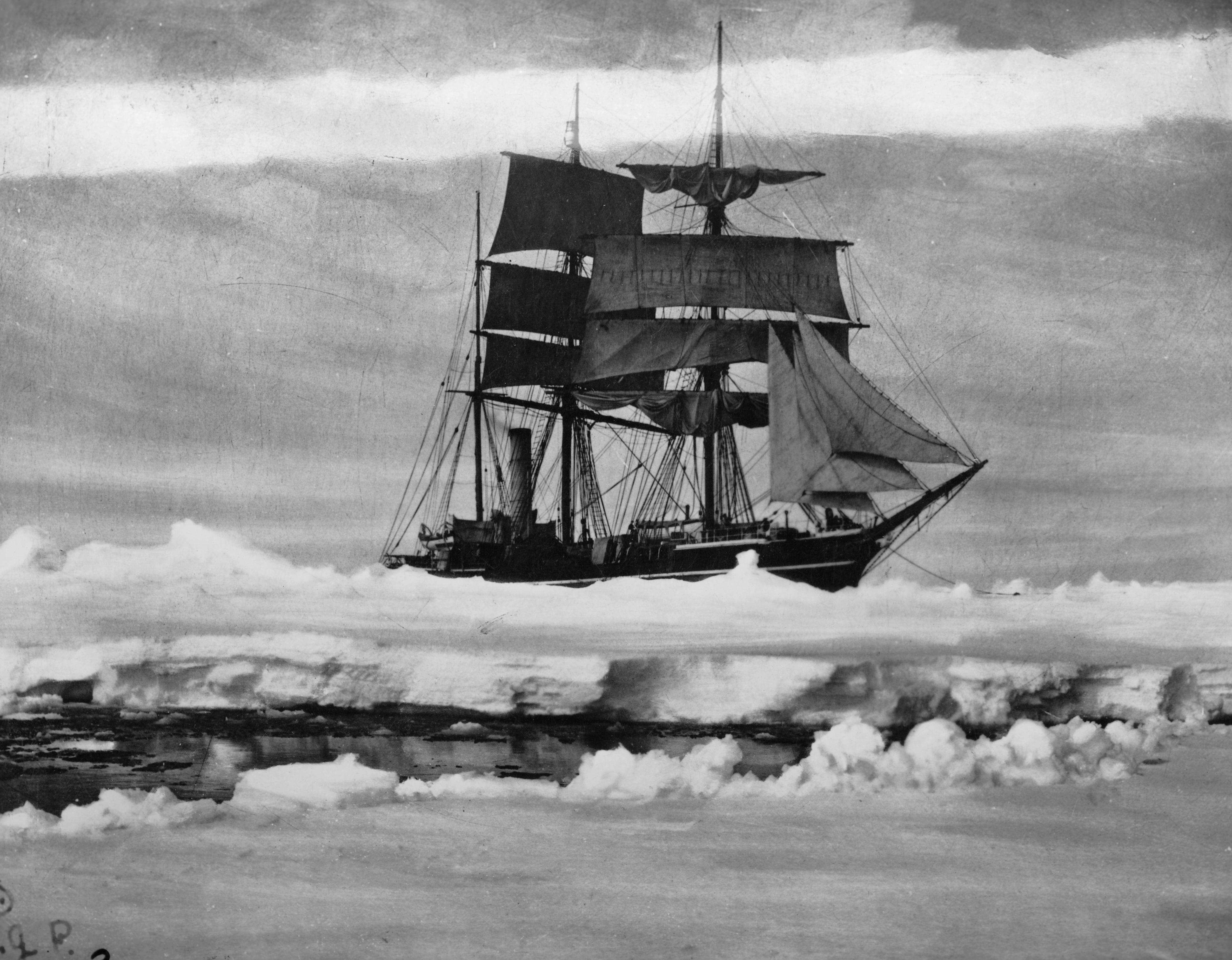
Photo: The Terra Nova, Robert Falcon Scott's expedition ship to the South Pole, shown in an ice pack - undated photograph, circa 1912.
The Polar Party perished on the Ross Ice Shelf during the retreat from the Pole in March 1912. Only Cherry-Garrard survived to tell the story of the Cape Crozier emperor penguin journey. His account, "The Worst Journey in the World," is considered one of the greatest accounts of polar exploration ever written. Before leaving Antarctica, Cherry-Garrard took part in the search for Scott's polar party, later discovering their bodies, aside from that of Lawrence Oates and Edgar Evans, in their collapsed tent just 11 miles south of One Ton Depot.
"I do not think we can hope for any better things now. We shall stick it out to the end, but we are getting weaker, of course, and the end cannot be far." - Robert Falcon Scott's final journal entry, 29 March, 1912
The journey of Wilson, Bowers, and Cherry-Garrard was, at the time, overshadowed by the dramatic loss of Scott and the polar party. In 1922, Cherry-Garrard published his account, throwing the journey into the spotlight and adding a different dimension to public perception of polar exploration.
Today, the three eggs are held in the archives of the Natural History Museum in London, and Cherry-Garrard's memoir continues to be one of the most celebrated in Antarctic history, exploring the human condition and how time spent in the Great White Silence forever changes a person.