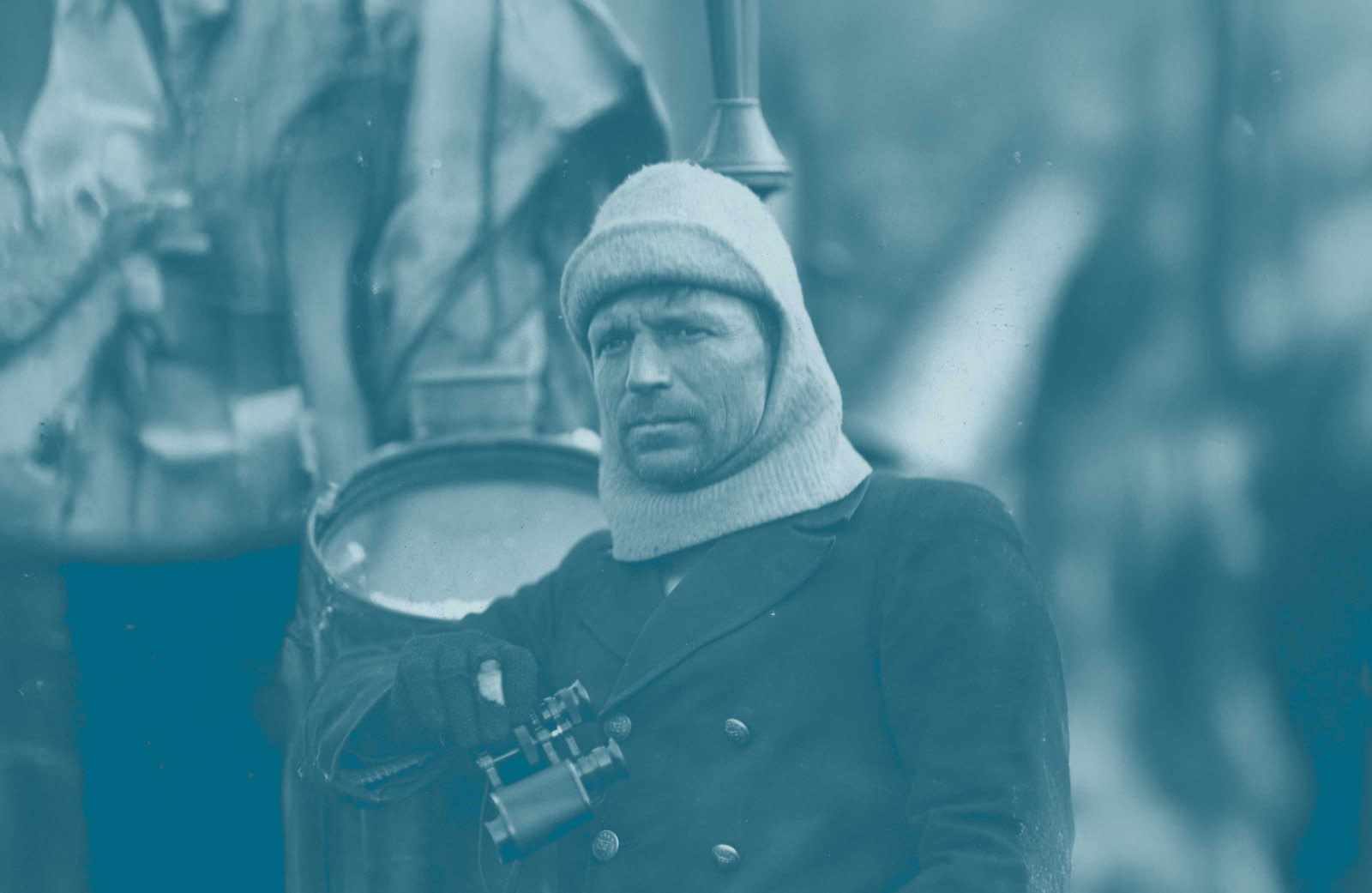
The exploits of Sir Ernest Shackleton and the dramatic tale of survival following the sinking of Endurance in 1915 are well known. But of the 28 men serving on the expedition, each had a role to play in overcoming adversity. Some were most visible, as in the case of Shackleton, while others' contributions were less so.
The men's eventual survival hinged not only on strength, endurance, and the will to survive, but also on navigational precision. At times, the fate of every single man hung in the balance, with the slightest misjudgment dooming all to a miserable death in the Southern Ocean. Perhaps most crucial of all to the survival of those aboard was the captain of the Endurance, Frank Arthur Worsley.
Frank Worsley - destined for a life at sea
Frank Worsley was born in the small coastal community of Akaroa, New Zealand, in 1872. Akaroa, like many other coastal settlements in New Zealand at the time, relied heavily on the maritime world, and the sea had shaped its people. From an early age, Worsley displayed an aptitude for finding adventure. A local Akaroa tale is that, as a child, he and his brother built a raft from reeds and sticks and crossed Akaroa Harbour to Wainui and back - no mean feat!
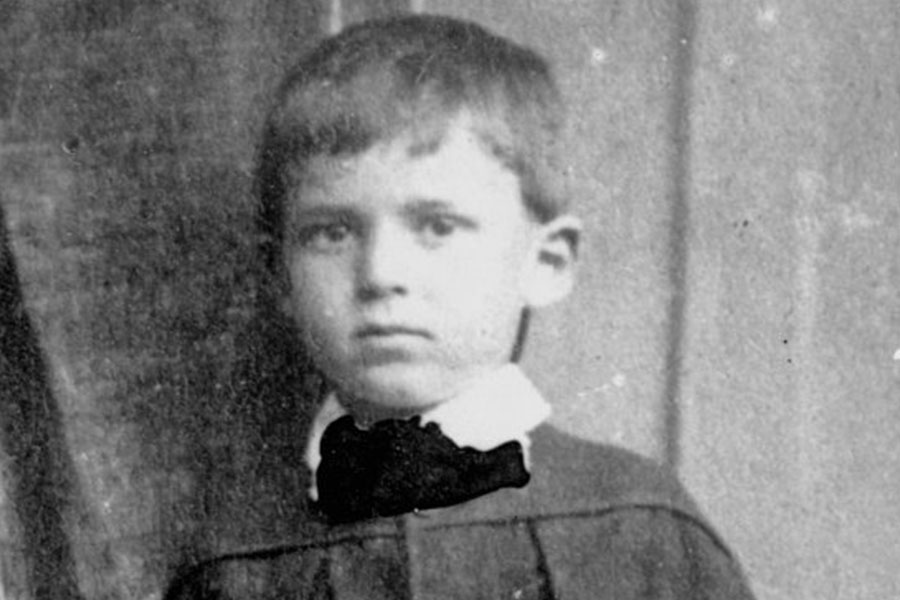
By Unknown author - http://natlib.govt.nz/records/23216721, Public Domain, https://commons.wikimedia.org/w/index.php?curid=39478489
Whether this tale is true or not, Worsley went to sea at a young age, joining the New Zealand Shipping Company before later serving in the Royal Navy Reserve. Long before Antarctica, Worsley had already built a reputation as a capable, sharp-eyed officer, if a little mischievous. While serving aboard the NZGSS steamer Tutanekai, Worsley stole the ensign from the German consulate in Apia, German Samoa. Despite this, Worsley gained a posting as third officer on the Hinemoa before passing his master's exams in 1900.
By 1902, Worsley had joined the Royal Navy Reserve as a sub-lieutenant. In 1904, after his command, NZGSS Countess of Ranfurly was sold, Worsley found himself aboard HMS Sparrow, which would become his first naval command the following year. He would serve aboard several Royal Navy ships in the following years, including HMS Swiftsure and HMS New Zealand, along with intermittent stints in the Merchant Navy.
In 1914, Ernest Shackleton was in the middle of organizing his Imperial Trans-Antarctic Expedition, setting up in London and interviewing candidates for several open positions, including the captain. Worsley, by chance in London, woke from a vivid dream. He was navigating a ship along Burlington Road, avoiding icebergs in thickly falling snow. Taking this as a premonition, he hurried to Burlington Street, where he noticed Shackleton's advertisement and call for applicants. After just a few minutes of conversation, Worsley was accepted as captain - he was polar-bound.
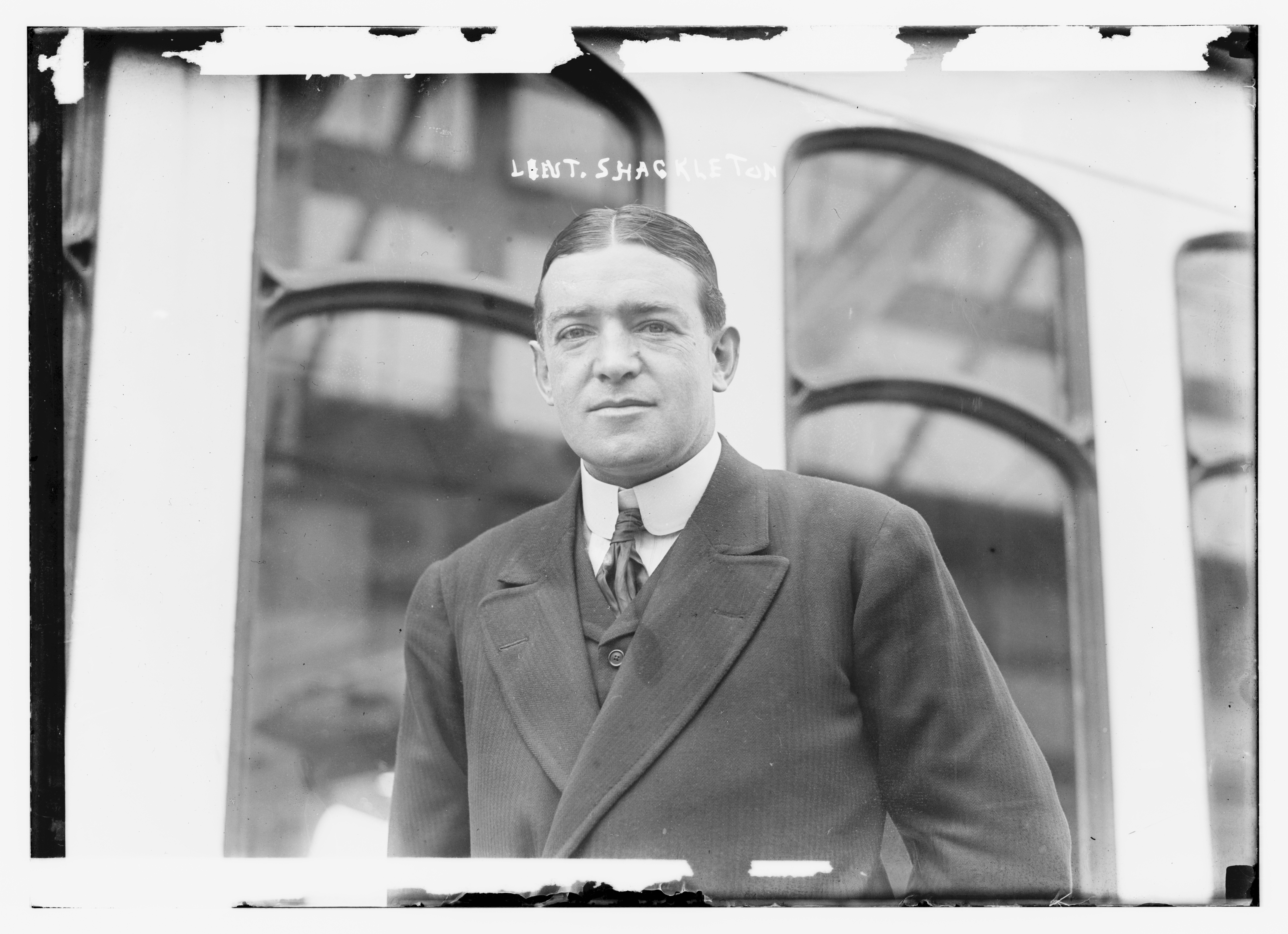
Ernest Shackleton, Public Domain
The Endurance expedition - Worsley put to the test
Worsley, Shackleton, and the Endurance departed London in August 1914, and by January 1915, the ship was held fast by the pack ice of the Weddell Sea, which steadily tightened its grip.
For the next ten months, Endurance drifted with the ice, unable to escape. Throughout, Worsley maintained meticulous navigational observations whenever conditions allowed, tracking their drift across the frozen sea, recording precise positions. By late February 1915, the Endurance reached its farthest south position, 77°S, before the ice gradually forced it back north.
In October 1915, the pressure on the ice-strengthened hull of the Endurance became insurmountable. The ice crushed the hull, and on 21 November, the ship finally sank. The men were stranded on the ice, exposed to the elements of the frozen Weddell Sea.
Worsley’s calculations during the drift, especially at the time of the sinking, would later play a critical modern role. His recorded positions, combined with descriptions of ice movement, were instrumental in narrowing the search area for the wreck of Endurance. In 2022, when the nearly pristine ship was rediscovered on the seabed of the Weddell Sea, it lay astonishingly close to Worsley’s final estimated position, a testament to his remarkable navigational accuracy.
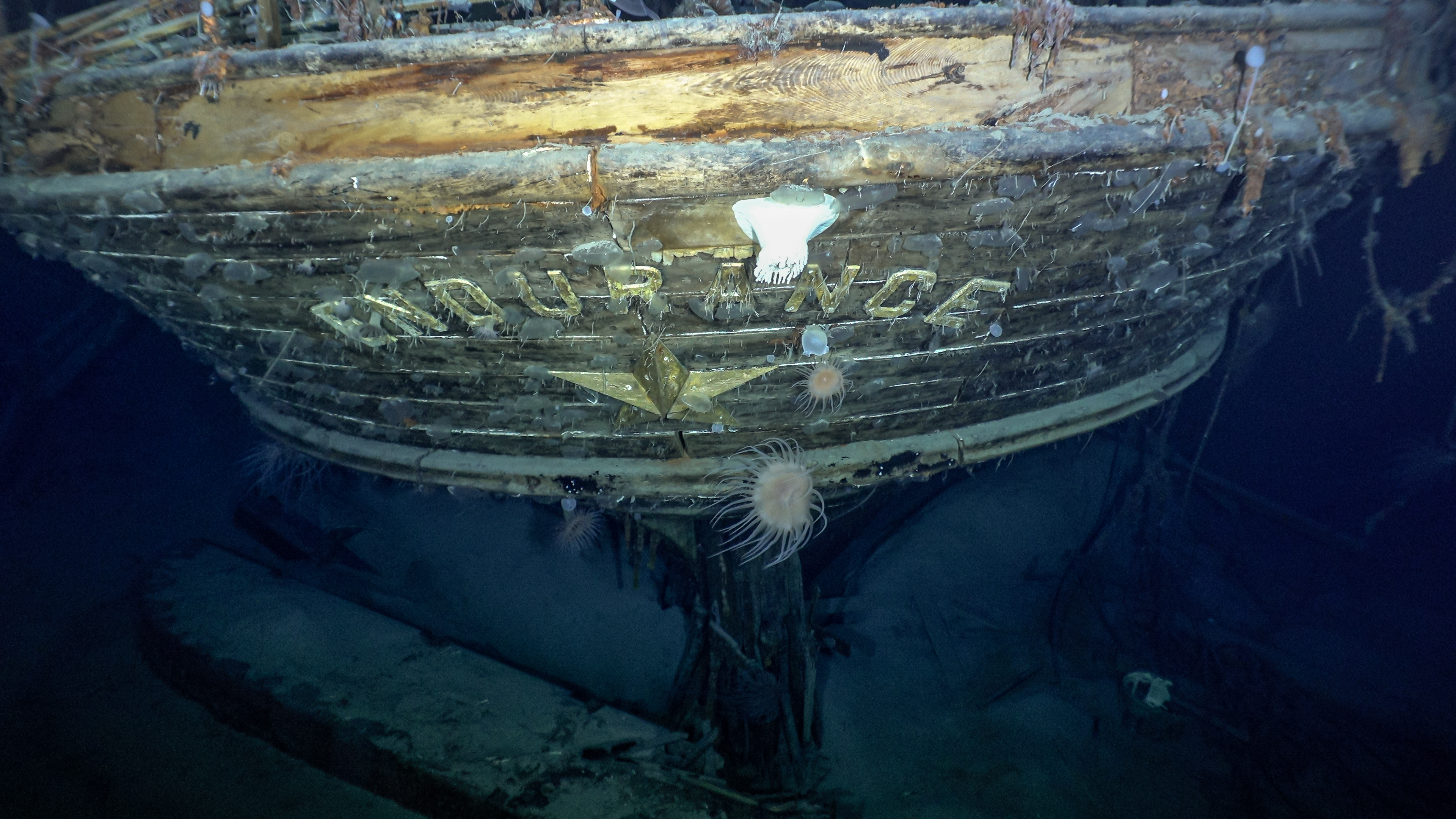
Picture by Falklands Maritime Heritage Trust and National Geographic
Elephant Island and the voyage of the James Caird
After a harsh period surviving on the ice at Patience Camp, the expedition launched the three ships' boats of Endurance as the floes began to break up on 9 April 1916. On 16 April, the three boats landed on Elephant Island, a remote, windswept, and miserable island, dominated by glaciers and fierce, unforgiving winds. They had been guided there by the skills of Worsley, who knew that, if he misjudged their position and direction, the three small, open-topped boats would miss the island and instead find themselves at the mercy of the ferocious Southern Ocean. Upon landing on Elephant Island, the men felt solid ground beneath their feet for the first time in 497 days.
Despite this critical contribution to getting the men to shore, Worsley's defining moment was yet to come. Shackleton knew that, despite being safely ashore, the men were doomed if they remained on Elephant Island. It was far from any shipping lane, exposed, and seldom visited. Rescue would not come for them - instead, they would have to fetch it. He concocted a desperate yet brilliant plan. One of the open-topped boats, the James Caird, would have its sides raised, and Shackleton, along with five others, would attempt to cross the stormy Scotia Sea to reach South Georgia, 1,300 km (800 miles) away.
Joining Shackleton in the James Caird was Frank Worsley, whose navigational skill would be critical. Just over six meters long, the open-topped boat had a false deck fitted by the expedition's carpenter, 'Chippy' McNish, and her sides were raised to try and give the men a chance of survival in the harsh weather to come. On 24 April 1916, Shackleton and Worsley, along with second officer Tom Crean, 'Chippy' McNish, and seamen Tim McCarthy and John Vincent, set off, starting one of the most epic ocean-going journeys in history.
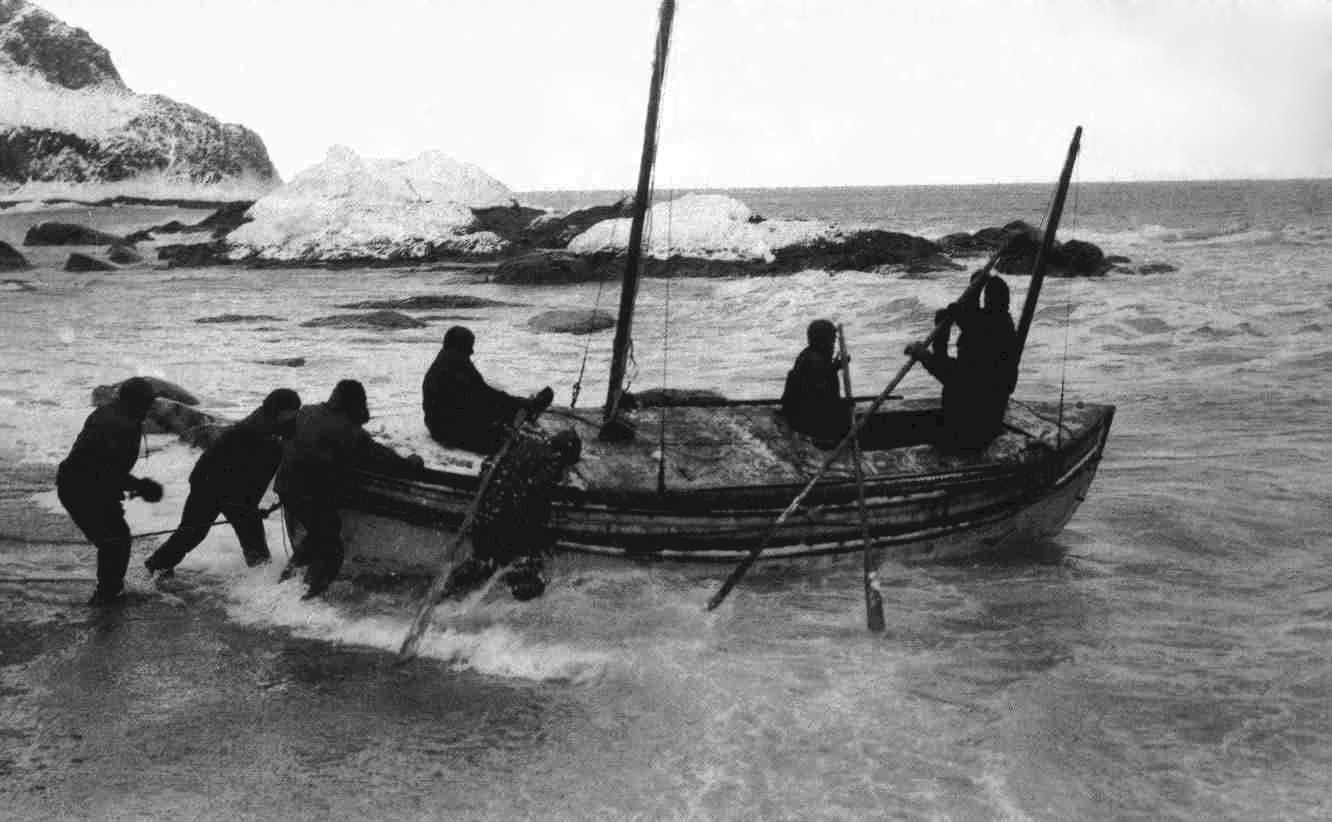
By Probably Frank Hurley, the expedition's photographer - Public Domain, https://commons.wikimedia.org/w/index.php?curid=1798629
Navigation under these conditions bordered on the impossible. Worsley had only brief glimpses of the sun through cloud cover, heavy seas, and freezing spray that coated the boat in ice. He relied on dead reckoning - A single significant error would have meant missing South Georgia entirely. At first, they set a northerly course to avoid ice packs, but as heavy swells and force 9 winds began to batter the small ship, they changed course to the south. The small crew settled into a strength-sapping routine: turns at the helm, constant bailing out of water, watches, and manning the sails. In between, they snatched short periods of rest in the tiny covered space in the bow of the ship, drenched by freezing spray, which itself needed to be chipped away from the sides and ropes as it threatened to capsize the boat.
The waves of the Drake Passage continued to grow in ferociousness, and by 29 April, the worst of the weather battered the tiny ship. Later, Worsley noted that navigation became "a merry jest of guesswork," and the focus became one of frantic bailing, ice removal, and huddling below in cramped, wet conditions. 48 hours later, the weather lessened, and by Worsley's calculation, they were 460km (290 miles) from South Georgia. Over the following days, they made further progress, despite the James Caird being "lifted and flung forward like a cork in breaking surf".
On 7 May, Worsley told Shackleton that he could not be sure of their position within 10 miles, and so they pushed further southeast to avoid missing the island. At midday on 8 May, the coastline of South Georgia appeared on the horizon, yet the seas threw a final challenge at the men. For over 24 hours, the James Caird was tossed about along the coastline, preventing them from landing and putting them at risk of being driven onto the rocky shores and sheer cliffs. On 10 May, after seeing that his men could not last another day at sea, they attempted a landing, hauling the James Caird onto land in King Haakon Bay, two weeks after leaving Elephant Island.
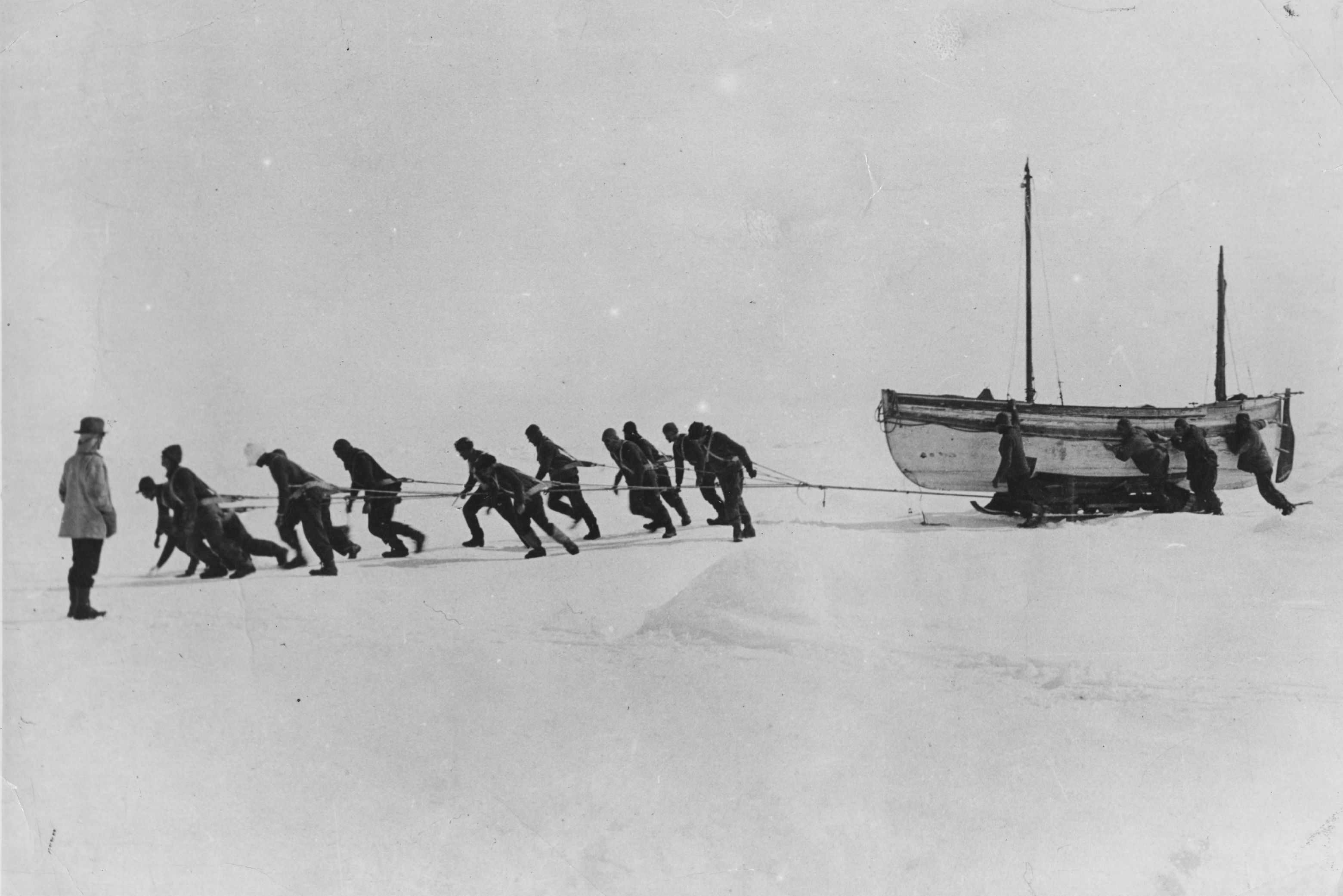
Picture by Hulton Archive via Getty Images
Without Worsley, they wouldn't have made it. He took hurried readings, bracing himself against the pitching sides of the boat, and calculated positions while soaked and exhausted. Later, Shackleton would say that Worsley’s navigation was nothing short of miraculous. Without it, none of the men from the Endurance would have survived.
Crossing South Georgia
Despite this remarkable feat, Worsley's adventure wasn't yet at an end. The James Caird had landed on South Georgia's uninhabited southern shore. To reach the whaling stations at Grytviken and Stromness, they would need to cross the glaciated, mountainous interior - never before done.
Leaving the exhausted McNish, McCarthy, and Vincent at Peggotty Camp, Worsley, Crean, and Shackleton trekked across some of the most rugged terrain on Earth, arriving the next day at Stromness, where, after a brief rest, Worsley sailed to pick up McNish, McCarthy, and Vincent. He then took part in the rescue of the remainder of Shackleton's men from Elephant Island, over 24 months after their epic adventure had begun.
Intending to aid in the rescue of the Ross Sea Party on the other side of Antarctica, Worsley then sailed to New Zealand with Shackleton to take command of SY Aurora. Yet the Australian government appointed its own captain, and Worsley was ignominiously left behind and instead offered a free berth back to London.
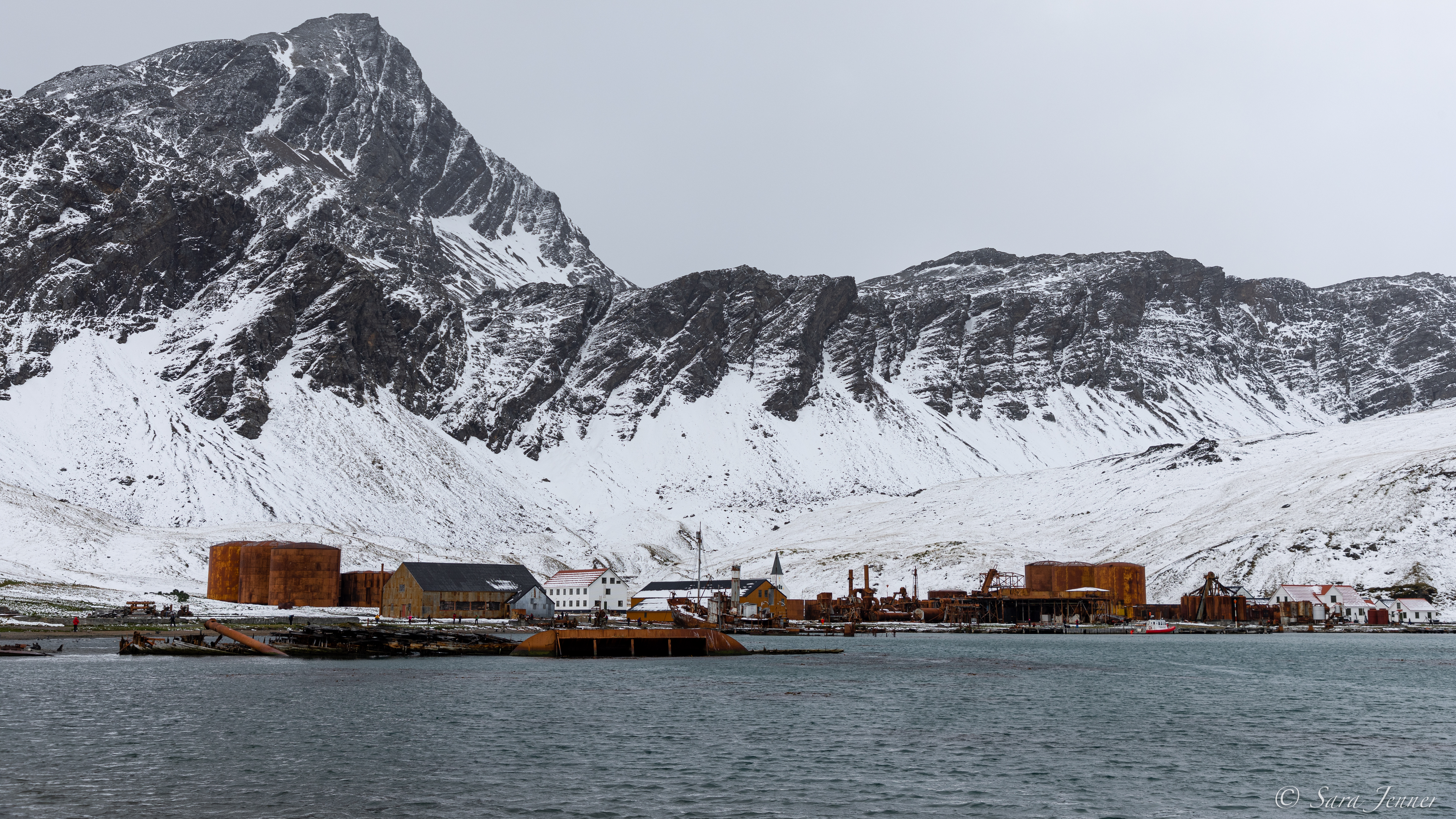
Picture of Grytviken by Sara Jenner
After Antarctica - a legacy continued
For his actions as part of the Imperial Trans-Antarctic Expedition, Worsley was awarded the Polar Medal. During their exploits in Antarctica, the world had plunged into global conflict. The First World War was raging, and Worsley signed up for service with the Royal Navy. He would later command a P-boat, combating the growing threat of German U-boats. While in command of PC.61, Worsley's first officer was Joseph Stenhouse, who had commanded SY Aurora during her drift as part of the Ross Sea Party.
He served with distinction during the First World War, earning the Distinguished Service Order (DSO). He briefly served under Shackleton in Northern Russia as part of the Allied Intervention in the Russian Civil War. During this time, Worsley was awarded a bar to his DSO. He was also appointed to the Order of St. Stanislaus, and as an Officer of the Order of the British Empire.
Worsley would return to the world of polar expeditions with Shackleton on the Quest as part of the Shackleton-Rowett Expedition in 1921. However, after Shackleton's unexpected death aboard Quest while moored in South Georgia, plans were changed. After a brief period exploring the Weddell Sea, the group returned to South Georgia, where Worsley assisted in burying Shackleton and in building a memorial cairn. On the way back to London, Worsley mapped Tristan da Cunha and stopped at Cape Town, Ascension Island, and Saint Helena.
Worsley wrote candidly about his experiences, contributing some of the most vivid accounts of the Heroic Age of Antarctic exploration. Unlike some of his contemporaries, Worsley never cultivated a heroic image. He remained, first and foremost, a sailor. After a brief merchant career in the Arctic and a period of lecturing, touring, and writing several books and articles, Worsley then embarked on a short career as a treasure hunter, searching for pirate treasure on Cocos Island.
At the outbreak of the Second World War in 1939, Worsley was keen to serve once more. Too old to join the Royal Navy Reserve, he instead worked with the International Red Cross, then briefly commanded a vessel in the Merchant Navy and helped train recruits at the Royal Naval Volunteer Reserve at the Royal Naval College in Greenwich.
He died in 1943, leaving a remarkable polar and naval legacy that continues to inspire to this day. To go farther than anyone else, knowledge, understanding, and ability are essential. Worsley never missed his mark when it mattered most - something he shares with the crew and expedition teams of Oceanwide Expeditions. On an expedition cruise to Antarctica, you can visit many of the locations key to the tale of Shackleton and Worsley, including Elephant Island, South Georgia, the Weddell Sea, and the spray-swept Scotia Sea and Drake Passage.
Main image Scott Polar Research Institute, University of Cambridge / Contributor via Getty Images