Experience a full circumnavigation on our Around Spitsbergen voyage
Many of our expedition cruises focus on specific areas of the Arctic or Antarctica, offering a more focused experience that explores local wildlife and other natural highlights - for instance, our long hike voyages into Greenland's Scoresby Sund. But other programs aim to be more exploratory, approaching expeditions like a survey, visiting a variety of sites dynamically within a looser itinerary.
Such programs include our Around Spitsbergen Including Nordaustlandet voyages, which circumnavigate the principal island of the ruggedly beautiful Svalbard archipelago, venturing to the seldom-visited eastern shores of Nordaustlandet and passing between the islands of Barentsøya and Edgeøya. These regions are one of the planet’s best locations for spotting polar bears, along with a variety of other Arctic wildlife, including walruses, bearded seals, reindeer, and a truly exceptional range of Arctic birds.
These voyages provide a full circumnavigation of the wildlife-rich main island in the archipelago, the coastline of which is dominated by huge, iceberg-filled fjords, towered over by spiralling, snow-capped mountains and wide tundra. Historical sites, wildlife haul-outs, bird cliffs, and opportunities for immersive land and sea-based activities abound in the realm of the polar bear!

Picture by Martin Anstee
There and back again: how to circumnavigate Spitsbergen
The adventure begins in the administrative center and largest town in Svalbard, Longyearbyen. This former mining town is a delight to explore on foot, whether you’re visiting the local museum, parish church or the world’s northernmost brewery. Don't worry if you can't grab a beer beforehand - we stock Svalbard Bryggeri beers on our expedition vessels!
The surroundings may appear barren and inhospitable, but over a hundred plant species thrive on the slopes around Longyearbyen. You might even see the first minke whale of your voyage while sailing out of Isfjorden, as we kick off our Spitsbergen circumnavigation by heading north, following the outer coastline of Prins Karls Forland and the Forlandet National Park.
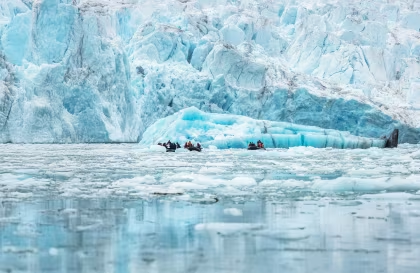
Our first stop could be a morning visit to Krossfjorden, where the mighty Fjortende Julibreen (Fourteenth of July Glacier) spills into a water covered with brash ice. Here, the tantalizing chance of exploring this spectacular place by Zodiac awaits. an excursion near the jaw-dropping Fourteenth of July Glacier.

Picture by Mikhail Barabanov
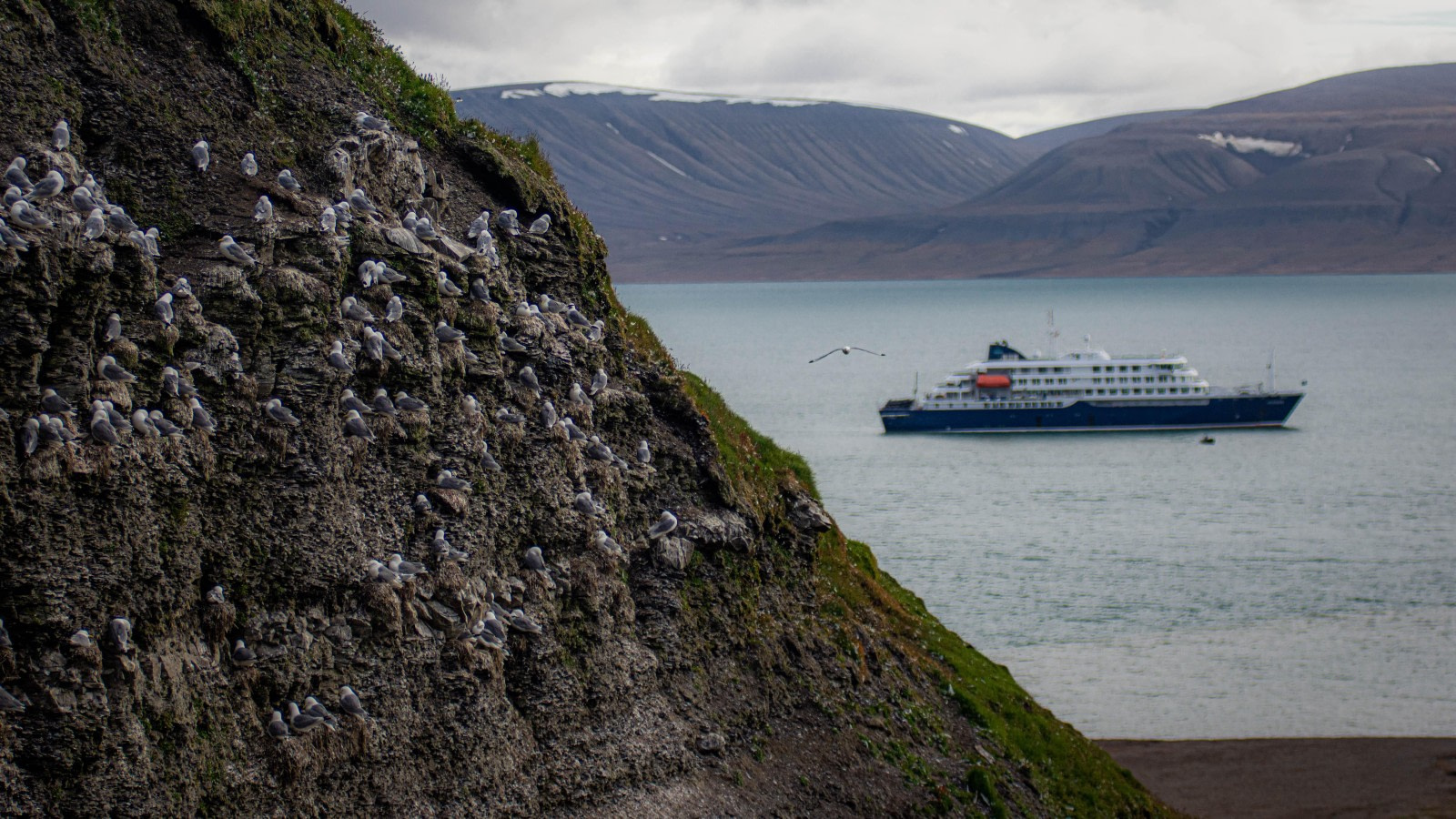
This whole area features beautiful green tundra and rocky slopes blooming with colorful Arctic flowers. Flocks of Brünnich’s guillemots and kittiwakes nest of the nearby cliffs, and your odds are good to spot a bearded seal in the fjord or an Arctic fox on the prowl for bird eggs or stray chicks.
Across Kongsfjorden lies Ny Ålesund, Earth’s northernmost settlement. Like Longyearbyen, Ny Ålesund was once a mining village and even boasted the most northerly railway. ou can also send a postcard from the most northerly post office on the planet!
This area is not without its own wildlife: Arctic terns, pink-footed geese, and barnacle geese breed nearby. And for those interested in the history of Arctic exploration, you can visit the anchoring mast used by polar explorers Amundsen and Nobile in their airships, Norge (1926) and Italia (1928).

Picture by Sara Jenner
Weather and ice conditions (especially early in the season) will determine your next destination, but we will likely sail into the mighty Liefdefjorden.bringing you within sight of the 5-kilometer-long (3.1 miles) Monaco Glacier. Here, we might hike to Texas Bar or enjoy Zodiac cruises along the bird-filled cliffs. Thousands of kittiwakes feed in the water near this glacier, and we sometimes see polar bears hunting along the glacier's base. If ice conditions are tricky, Wijdefjorden and alternate locations along the west coast will be explored.
From here, we venture steadily north. Next up might be Sorgfjord, where the wrecks of French and Dutch ships lie beneath the still water, and the lonely graves of 17th-century whalers lie at Eolusneset. Walruses, ptarmigans, seabirds, and seals inhabit this area, and you may encounter them during excursions across the rocky landscape. Next up is the northernmost point of your journey: Sjuøyane (seven islands). Here, you might reach 80° north, just 870 km (540 miles) from the geographic North Pole! Potential areas for exploration include Phippsøya and Chermsideøya, both well known for walrus and polar bear sightings.

Picture by Sara Jenner
Pack Ice & Dynamic Adventure
In the seas around Sjuøyane, we may encounter loose pack ice, turning the expedition into a truly dynamic voyage where the ice dictates our path forward. Everything is subject to change, making each day full of surprises and new opportunities! We will aim for the shores of Nordaustlandet, following the coast of Harald V Land and passing the former nunatak of Isisøya, and Kapp Mohn, part of the largest ice cap in Europe! This landscape is much different from West Spitsbergen, with vast ice providing a real feeling of being at the distant edge of the world.
From here, we venture south west, passing through Heleysundet, separating West Spitsbergen from the island of Barentsøya. Depending on the ice, you might explore the Skjolddalen valley, huge ivory gull and kittiwake colonies, trapper’s huts, such as at Sundneset, and a glacier landscape dominated by Negribreen and Kvalhovden. On the island of Edgeøya, you may land at Diskobukta or Kapp Lee, home to a walrus haul-out and Pomor ruins. This location was where our very own Ko de Korte overwintered in Svalbard during the 1968-1969 Dutch Spitsbergen Expedition, during which time he studied and tagged polar bears.
In this region, there is always the chance that our route is too blocked with ice - this is precisely what Ko de Korte encountered, with their relief vessel unable to reach them for months. In this case, we will take alternate routes forward. The channel separating Barentsøya and Edgeøya, Freemansundet, is renowned for the abundance of polar bears - it pays to keep your binoculars handy as you sail south!

Picture by Martin Anstee
As we near the end of our adventure, we return to the landscapes for which Spitsbergen is named - a land of pointed mountains. We will explore the fjords of Hornsund, where Spitsbergen's name makes perfect sense - Hornsundtind rises 1,431 meters (4,695 feet), and is not alone in its magnificence! Not only are there 14 sizable glaciers in the area, but bears, seals, and beluga whales sometimes appear here, ideal for Zodiac encounters. On land, locations such as Samarinvaagen and Birgerbukta provide great settings for longer walks.
The final site of our circumnavigation is Bell Sund, one of the largest fjord systems in Svalbard. In this area, you can see the sobering remains of 19th-century whaling, such as at Ahlstrandhalvøya, and also enjoy local reindeer and bird populations, such as little auks at Vaarsolbukta. If you’re lucky, you may even see a beluga whale pod. This part of the archipelago is known for more lush vegetation and open tundra, supported by warmer ocean currents and increased temperatures.

Picture by Martin Anstee
From here, we return to Longyearbyen, and the first real glimpses of civilization. It's hard to believe you can see so much in such a short time, but that’s exactly what our Around Spitsbergen circumnavigation aims to provide! Ticking off some of the must-see locations in Svalbard while providing the chance to explore seldom-visited areas, haunting historic remains, and premium wildlife spots, our Around Spitsbergen itineraries are highly dynamic, and one of the best ways to experience the jewel of the North!
Main image by Alexander Romanovskiy