Blog
Type
Region
Destination
-
Show all
Ship
Highlights
-
Show all
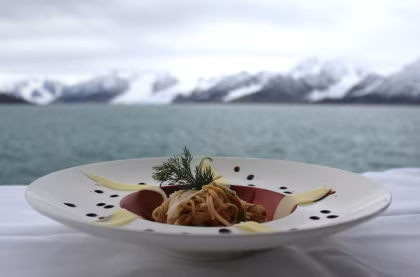
Polar Cuisine in Pictures
Just because you’re traveling in some of the planet’s least civilized locations doesn’t mean your cuisine has to be barbaric.
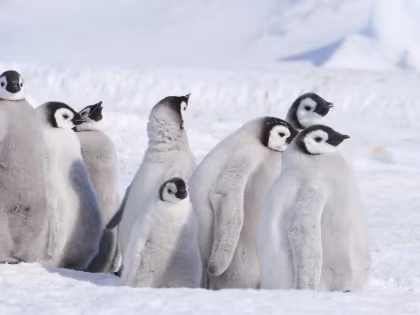
Oceanwide Expeditions reaches Snow Hill emperor penguin colony
For the second year in a row, predicting great things for its 2019 Antarctic voyages
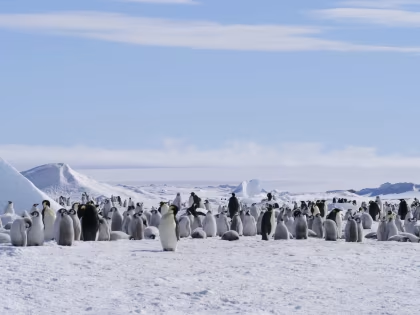
Emperors Everywhere: Letter from Snow Hill Island, Antarctica
Yesterday marks two years in a row that we’ve been able to take our guests to the spectacular but seldom-visited Snow Hill Island emperor penguin colony.
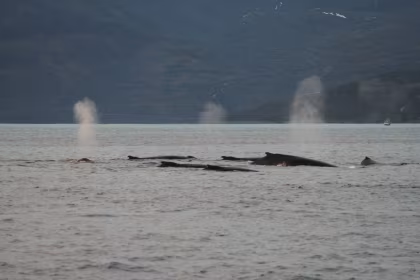
There’s No Place like North Norway
As a cruise specialist for Grand Nord Grand Large, I’ve had the opportunity to cruise the seven seas and dozens of rivers all around the world. But none of those trips took me to a place like Northern Norway.
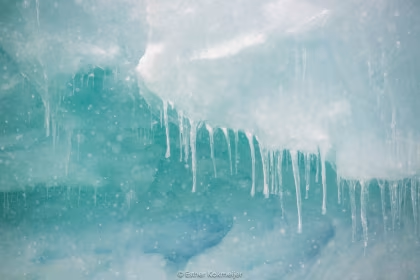
Picture Perfect: Interview and Advice from a Polar Photographer
It isn't easy to take a bad picture in the polar regions, but it's far from impossible.
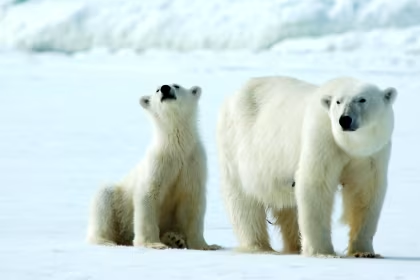
Meat, Mate, Move: a Polar Bear Story
Silent as the wind through your fur, you creep over the ice to the small, dark hole. At the bottom, well within reach of your tensing paws, a black circle of lapping water stares back at you like the pupil of some enormous, unreadable eye.
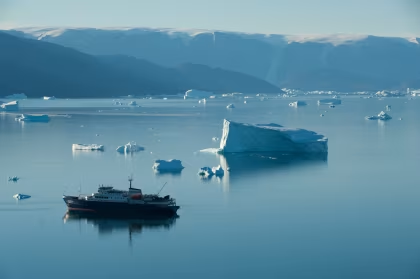
AECO, IAATO & OEX: Polar Travel Partnerships
Nature-based travel asks its share of responsibilities to the planet, and travel in ecologically vulnerable areas even more so. Thankfully, the polar regions have two vital and widely respected organizations in their corner: AECO and IAATO.
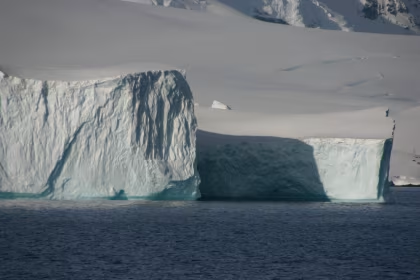
Antarctica: When to Visit, How to Plan, What to Expect
If Antarctica is an astonishingly exotic location coveted in equal measure by ice enthusiasts and continent hoppers (and it is), it also asks a lot in return for its prestigious polar status.
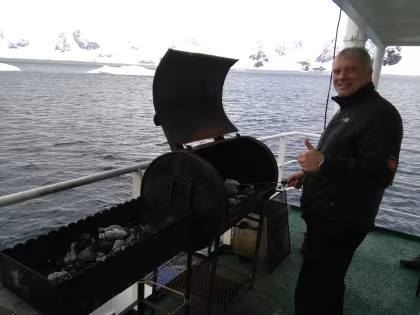
A Moveable Feast: Interview with a Polar Cruise Chef
Polar cruises are luxurious, but they aren’t luxury cruises. The beds are wonderfully comfortable, but nobody expects goose-down pillows. The bar is appropriately well stocked, but no bottles of triple-cask Macallan 21 glow atop the shelves. The food is delicious, ample, and hearty, but…

Arctic Mythology: Inuit, Saami, and the Ancient Greeks
The Arctic locations we visit aren’t merely made up of phenomenal landscapes, exotic wildlife, and more adventure than a Hardy Boys novel. They’re also interwoven with ancient cultures, all of which have their own particular and fascinating cosmologies.
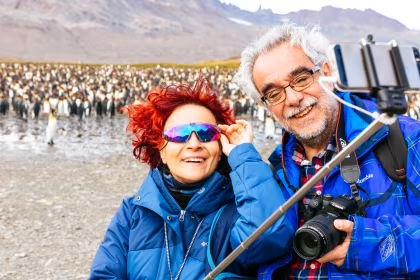
Two for the Snow: Polar Cruises for Couples
You know the old saying, “Cold hands, warm heart.” We’re not doctors or anything, but in our opinion that bodes well for couples who visit the polar regions.
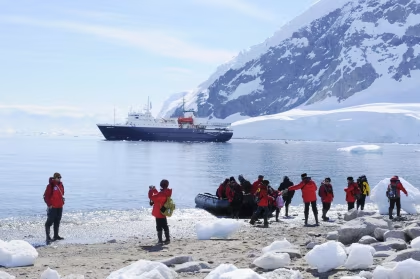
The Seven Best Things to Do in Antarctica
Unless you’re a scientist, there’s no such thing as a means-to-an-end trip to Antarctica. Merely being there is reason enough to make the journey - even, we would wager, for most scientists who travel to Antarctica solely for research.
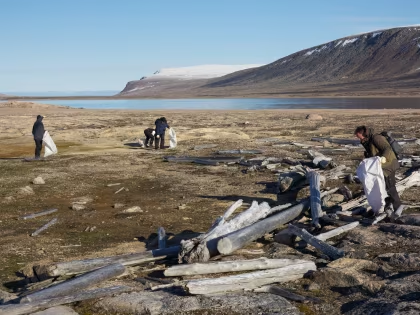
Keep It Green: Our Commitment to Sustainable Polar Travel
It doesn’t make much sense for polar travel if every time we visit the Arctic and Antarctica we leave them worse than we found them. And that’s just considering things from a purely human perspective, which we don’t.
OCEANWIDE EXPEDITIONS
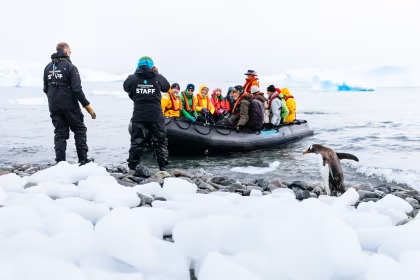
Oceanwide Expeditions embarked on its epic journey in 1993, originating in a university research program in the northern Netherlands. Employing a former oceanographic vessel, this program became the first in the world to provide civilian voyages to the Arctic island of Spitsbergen. These original routes still form the core of some of our most popular voyages.
A New Take on North Norway
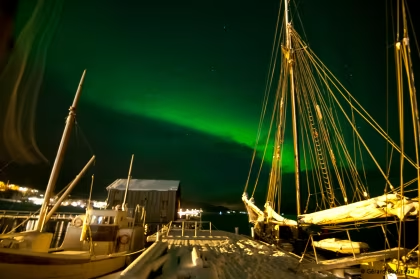
Having returned from a week in Northern Norway on s/v Noorderlicht, my husband and I felt the need to write a trip log of our experiences. (Spoiler: They were great.) Northern lights were seen, whales watched, and wonderful meals wolfed down.
Polar Mountain High: Interview with a Ski and Mountaineering Guide
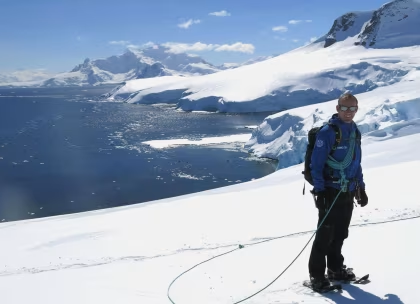
There are good jobs, and there are great jobs. And then there are jobs where you climb mountains and ski back down them and get paid for it. These are different jobs entirely. Tim Blakemore, one of Oceanwide’s mountaineering and skiing guides, has one of these jobs.
No Landing Today
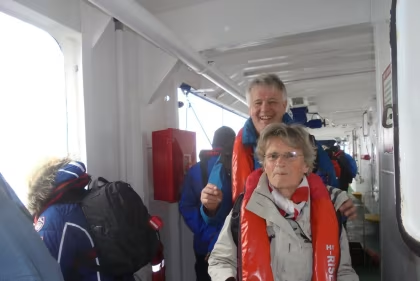
Together with some 100 fellow passengers, I am aboard the vessel Ortelius on a whale safari to Fair Isle, Jan Mayen, and Svalbard.
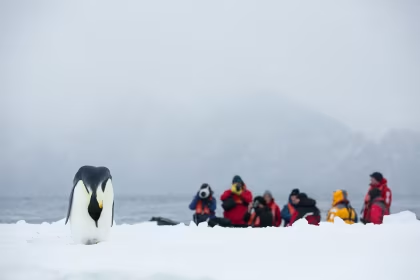
Five Reasons You Should Cruise the Ross Sea Immediately
In our quest for the little-known holiday destination (that’s still popular enough to have its own fully developed spa and gift shop), we travelers sometimes overlook the truly underrated gems this planet has hidden up its sleeve.
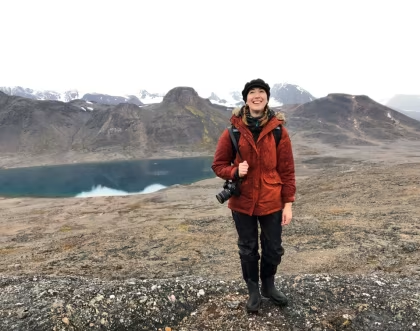
Plancius and the Polar Bug
Standing on the outer deck of Plancius as we sailed out of Longyearbyen, I looked down to see a puffin staring back at me. It was bobbing next to the ship, sunbeams glittering on its sleek body, which it lifted up and skimmed over the water in the direction of something on the horizon. I shielded my eyes to get a closer look and discovered dolphins wave-riding against the setting sun.
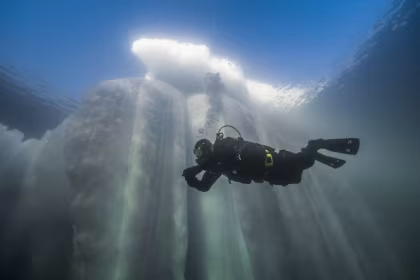
Why a Polar Diving Cruise Should be Your Next Great Decision
Not so very long ago, all you had to do to qualify as a thrill-seeker was hop a ship to the polar regions and make it back with all your fingers – or your life, if you weren’t picky.
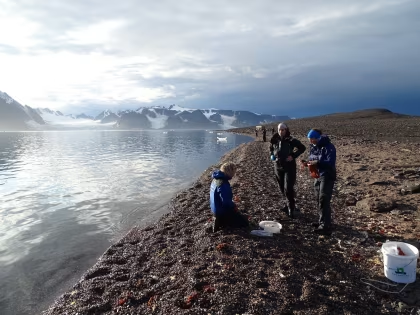
Research in the Arctic
At Wageningen Marine Research, we are working with our international partners to monitor ecological changes in the Arctic. Our research on the arrival of marine non-native species in Svalbard required us to travel around these Arctic islands in 2018, sampling and surveying different beaches.
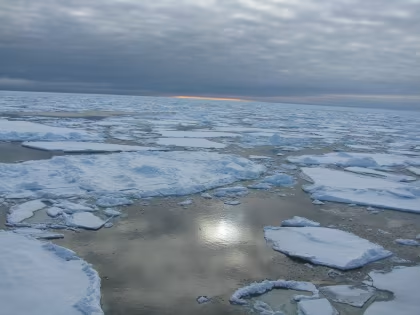
Es war meine erste Expeditionsfahrt überhaupt und sie hinterliess tiefe Spuren in mir
Dies betraf nicht nur die perfekte Organisation an Bord, die abwechslungsreiche Verpflegung, das zwanglose Miteinander von Crew und Reisenden, sondern auch das Tourprogramm selbst, welches nur von den Wetterverhältnissen bestimmt wurde. Das machte die Reise so spannend, da die Natur entschied, was sie vorführen wollte.
