Blog
Type
Region
Destination
-
Show all
Ship
Highlights
-
Show all
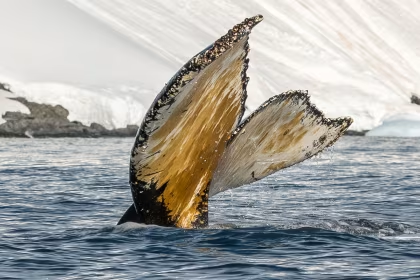
IAATO Votes New Whale Protection Measures Into Effect
On May 3 the International Association of Antarctica Tour Operators (IAATO) voted measures into effect that will reduce the incidence of tourist ships striking whales around the Antarctic Peninsula.

Oceanwide Expeditions Donates €620 to Charity Based on Passenger Reviews
Thanks to our passengers, we’re donating €620 to four separate charities: Plastic Oceans International, World Wide Fund for Nature, BirdLife International, and 4Ocean.
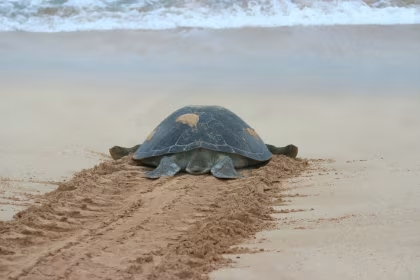
The Overlooked Treasures of Ascension Island
If you know anything about Ascension Island, which is unlikely, it probably has to do with the green turtle breeding population that exists there.
Why Travel Solo to the Polar Regions?
Travelling solo means you’ll arrive among new friends and fellow adventurers rather than strangers in an unfamiliar group.
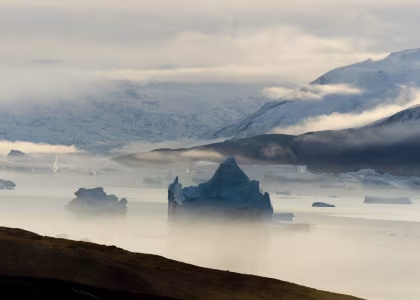
Peaks, Fjords, and Auroras: 14 East Greenland Attractions
Nothing against the west coast, but many travelers agree it is more touristic and developed (and hence, less wild and adventurous) than Greenland’s eastern shores.
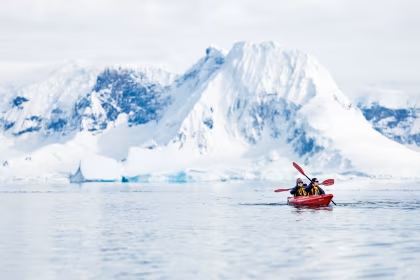
Adding Antarctica to Your Seven-Continents Bucket List
It’s a common pursuit among serious travelers to visit all seven continents. And indeed, the term “bucket list,” which became popular (if not overused) since the 2007 movie, fits naturally with this goal.

Higher Ground: Interview with Polar Hiking Guide Philipp Schaudy
Imagine you’ve spent the last hour and change huffing up a rocky Arctic slope, pausing only to pull a drink from your water bottle or wipe sweat off your brow, when suddenly you realize your hiking group has stopped and you’ve reached the summit.

The Arctic Hare: Easter Bunny²
In preparation for Easter Sunday, let’s explore all the ways this so-called polar rabbit (which really isn’t a rabbit at all) might in fact make a better mascot than the traditional Easter bunny.
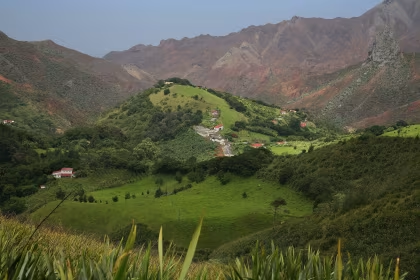
Five Reasons to Love St. Helena (Even If You’re a Polar Junkie)
Being one of the most remote islands on Earth confers a certain charm. Getting your name from a Roman empress (and the mother of Constantine the Great) also helps. And if you’re in search of a conversation starter, being the site of Napoleon’s final exile doesn’t hurt either.
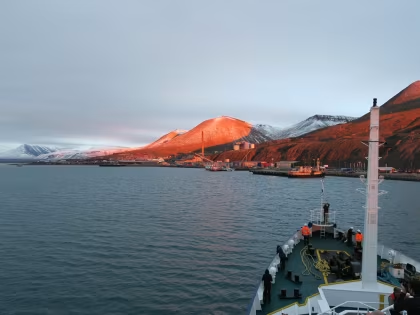
Port Pastimes: 7 Fun Things to Do in Longyearbyen
Waiting in port to begin an Arctic cruise can be a little like waiting for water to boil or coffee to brew or Game of Thrones to come back: Time seems to defy its own laws and, as life slows to a crawl, you begin to wonder if all of this is really going to be worth it.
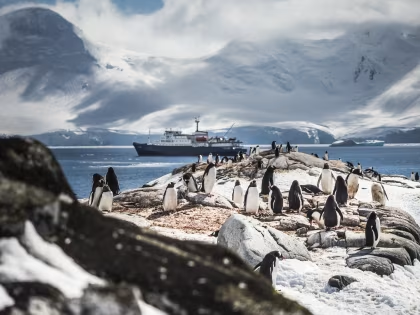
Top 10 Antarctic Attractions
Even if you put its exotically beautiful wildlife aside, Antarctica is undeniably mythic in both scale and scenery: The largest glaciers and icebergs are found there, drawing polar newcomers and the certifiably snow-mad alike.
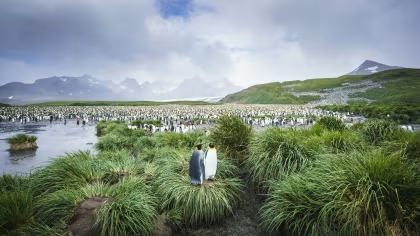
The South Georgia Seven: Hikes, Fjords, Whales, & Penguins
Few places encapsulate such a staggeringly rich assortment of sub-Antarctic scenery, animals, and outing opportunities as South Georgia.
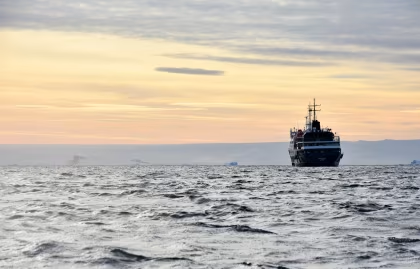
Antarctica and My Old Friend, Ortelius: Passenger Story by Ann Lane
I was on the recent Antarctic trip on Ortelius, 16 Feb - 7 March. This has been my third expedition with Oceanwide, and I continue to be very impressed by the experiences.
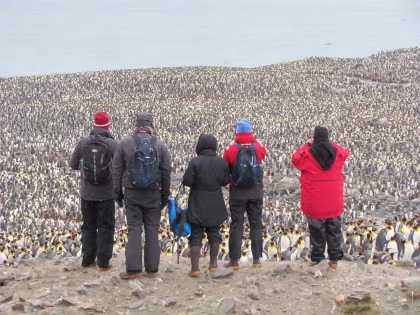
Scenes from St. Andrews Bay: 12 Pics of Penguins, Seals, and More
It’s highly likely that, if you’re ever lucky enough to visit the visually stunning sub-Antarctic island chain of South Georgia, one of your favorite sites (and sights) will be the picture-perfect shoreline of St. Andrews Bay.
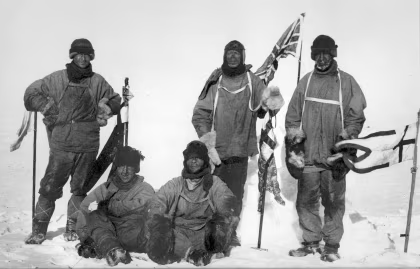
Polar Gear of Yesteryear: Expedition Clothing 100 Years Ago
When you look at pictures of polar expedition clothing from a century past, the experience is not unlike seeing images of World War military gear.
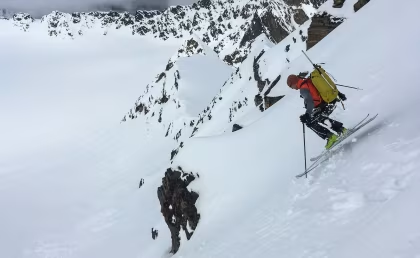
Trek into the Timeless: Interview with Polar Ski Guide Phil Wickens
If you ever find yourself lost in snowy, ice-clutched, thoroughly inhospitable country like in the latest wilderness survival movie, don’t pine for the likes of Robert Redford, Anthony Hopkins, or Mads Mikkelson – nice as their company would be. Rather, pray Phil Wickens is with you.
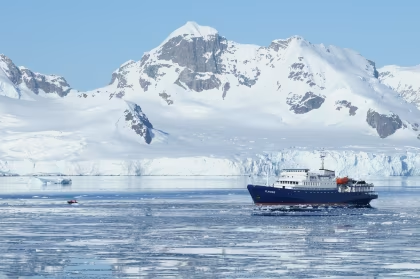
The Ultimate Traveler’s Guide to the Arctic and Antarctica
Sunrises or sunsets, coffee or tea, Wonder Woman or Superman. The world contains a virtually limitless supply of things to compare, contrast, juxtapose, differentiate. But few things so perfectly express the polarities of our planet as its literal magnetic poles – or more generally, the Arctic (north) or Antarctica (south).
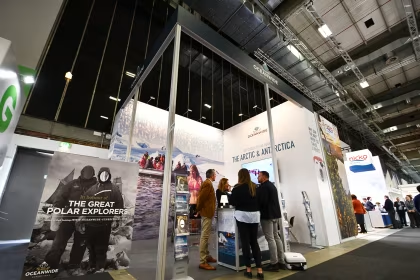
Oceanwide Expeditions covers the polar corner at ITB Berlin
Last week Oceanwide staff attended ITB Berlin, the world’s largest travel trade show, meeting old friends and new in a weeklong spree of tour operators, travel agents, and all other manner of professionals in the wide world of commercial travel.

Ada Blackjack: Forgotten Queen of Arctic Expeditions
The incredible real-life story of the overlooked Iñupiat woman who became the only survivor of a fateful Arctic expedition.”
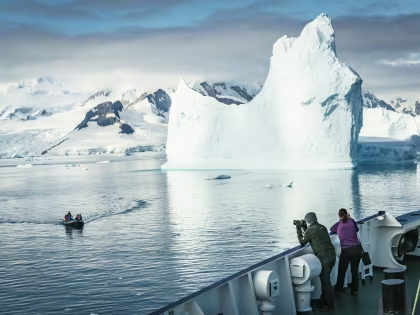
Antarctic Explorer’s Voyage
There’s off the beaten track, and there’s really off the beaten track. And then there’s the Antarctic Explorer’s Voyage, a far-ranging polar expedition cruise that lets you visit areas of Antarctica we rarely if ever offer – or any other cruise operator, for that matter.
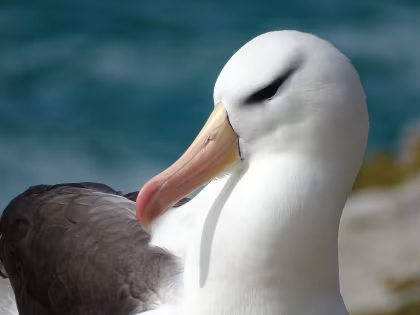
Cruise to Falklands, South Georgia and Antarctic Peninsula 3rd – 22nd December 2018
The first day was spent sailing towards the Falkland Islands, and on the second morning I woke to a bright day and was up on deck to see us sail through the Woolly Gut, a narrow gap between two islands. The hillsides were painted bright yellow with gorse, which was in full flower.
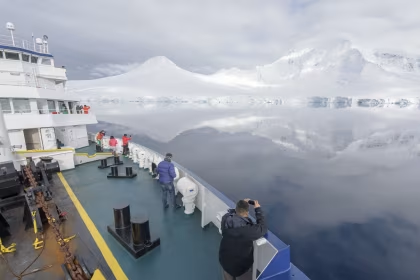
A Brief History of Arctic & Antarctic Cruises
These days you can book a few tickets, take a few flights, and embark on an expedition cruise to areas that just over a century ago represented the outer limits of earthly exploration.
