Blog
Type
Region
Destination
-
Show all
Ship
Highlights
-
Show all
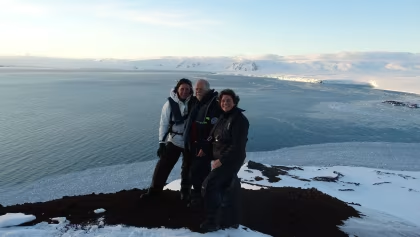
Polar Cruises: The Ultimate Icebreakers
Travel is one of life’s great eye openers. It brings you into contact with new people and perspectives, challenges old assumptions you haven’t held to the light in years, and invites you to make unexpected discoveries about the world around you – and most of all, about yourself. Added to which, you get to visit places you never knew you loved until you saw them.
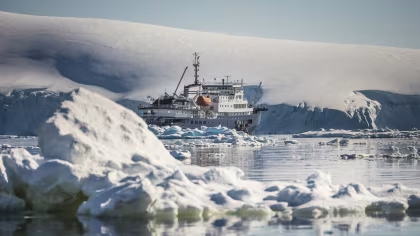
5 Life Lessons You'll Learn in Antarctica
Whether you’re climbing mountains, buying lunch in a foreign city, or taking an Antarctic cruise, you’re not only learning more about the world and the people in it, you’re learning about yourself.
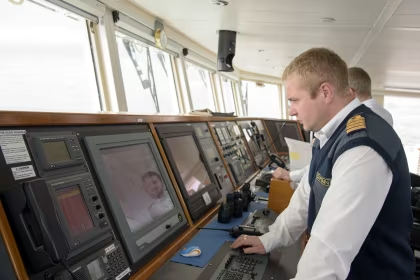
A Thankful Tradition: Interview with Captain Nazarov
It takes a village to run a polar cruise. The guides show us the terrain, the serving staff keeps us fed, and the passengers make sure the bartender has never a lonely moment. Yet among all this fine-tuned circuitry, the captain plays the most important part.
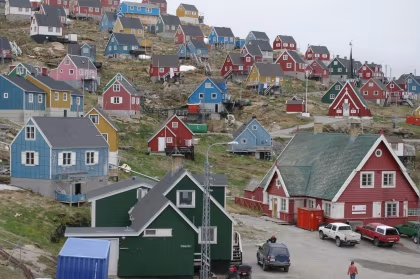
10 Traits of Post-Ice-Age Greenland
During the last ice age, most plants and animals vanished from Greenland as a thick sheath of ice coated the landscape. Once this ice started to retreat around 12,500 years ago, it left boulders and raw mineral earth exposed for plants and animals to colonise. This colonisation, however, did not occur overnight: Due to Greenland’s geographic isolation and difficult topography, it was a slow, slow process.
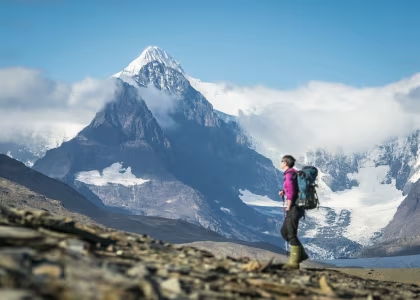
15 Fantastic Photos of Antarctica
It's often said that it is impossible to take a bad photo in Antarctica. We'll say it again.
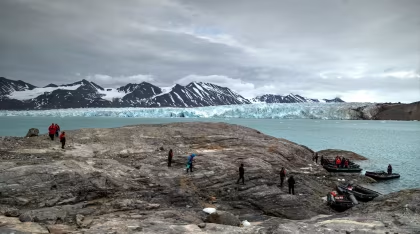
The Enchanting Islands of Svalbard
Here we showcase the many wonders that keep people coming back to the islands of Svalbard year after year.
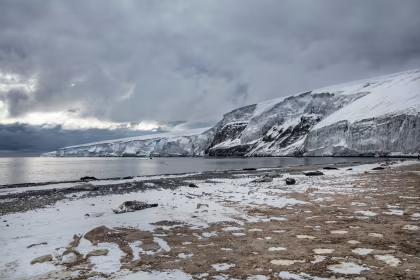
An igneous paradise: Franklin Island
Franklin Island is located in the Ross Sea. It's not just a pile of volcanic rubble, but actually remnants of a shield volcano. Read on and learn more.
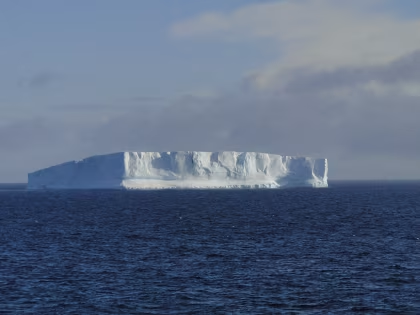
Weddell Sea: the Original Antarctic Adventure
According to the historian Thomas R. Henry, you have to be brave to visit the Weddell Sea. In 1950 he wrote in his book, The White Continent, about sudden “flash freezes” that occur in the area. In fact it was due to one of these flash freezes that Ernest Shackleton’s ship, Endurance, got stuck in January of 1915, forcing his crew to spend more than a year there before they could get out.
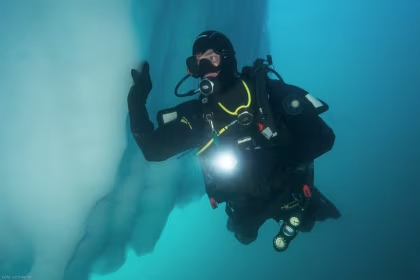
Polar Diving: A Supreme Underwater Adventure
If you’ve ever gone diving in warm, tropical waters you know how exciting that can be. In the ocean’s depths you’ll be met with an array of colors from schools of fish and the vibrant coral. In tropical waters, your biggest concern is the crowd of other divers exploring these waters along with you. But imagine diving in an environment where only a select few dare to venture. A place so unique only a special few divers have ever experienced its astonishing wonders. This is the magic, the challenge and the reward of polar diving.
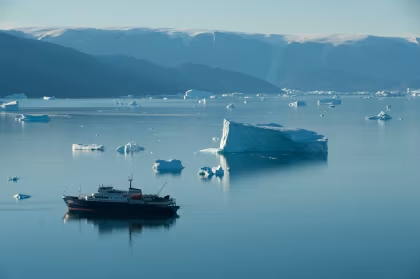
10 Misconceptions About the Arctic
The Arctic is a big place. Really big. Spreading out over 14.5 million square km (5.6 million square miles), the Arctic encompasses eight countries: Canada, Finland, Greenland (Denmark), Iceland, Norway, Russia, Sweden, and the United States. But despite its size, the Arctic often gets painted with some seriously misconceptions. Time to set the record straight.
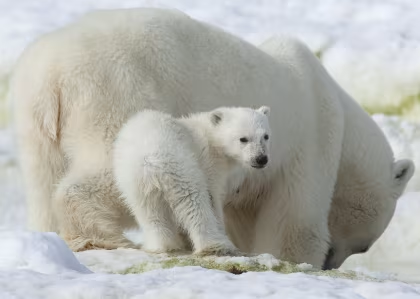
Arctic Icon: 10 Facts about the Polar Bear
Polar bears are to the Arctic what penguins are to Antarctica.
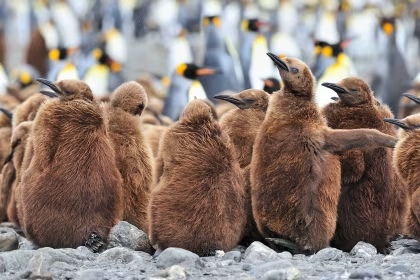
Oceanwide Expeditions Birding Contest
Our 2017 Antarctic Birding Competition has come to a close with over 150 feather-oriented entries. We’re delighted with the entries we received and want to thank everyone, both contestants and voters, for participating. We thought we’d take a moment and make sure everyone who participated is up to speed about what’s been happening while you wait for the Grand Prize announcement.
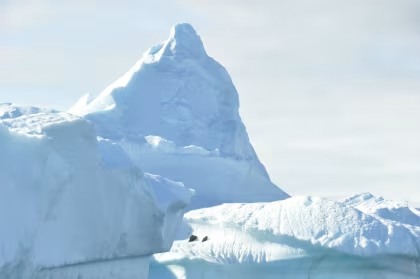
Life migrating through the Polar Front
Since James Cook’s second voyage in 1772-1775 to Antarctica, which saw the first descriptions of Antarctic animals, scientists have progressively revealed the composition of the Antarctic and sub-Antarctic region’s biodiversity. Since then scientist have undertaken numerous expeditions and scientific research projects to understand the unique continent’s ecosystems.

Five of History’s Greatest Polar Explorers
Today’s visitors to the Polar regions follow in the footsteps of some of the most famous explorers in history. Here’s a list of 5 great explorers to brave the harsh lands of the Arctic and Antarctica.
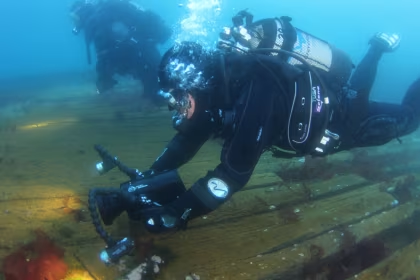
Wreck Diving in Antarctica
Scuba diving in Antarctica is a unique experience, no doubt about it. How many other places can you swim beneath icebergs and possibly see a penguin into the bargain? But that's not all Antarctic diving has to offer. There are shipwrecks, too. And with us, you can go wreck diving to one of them.
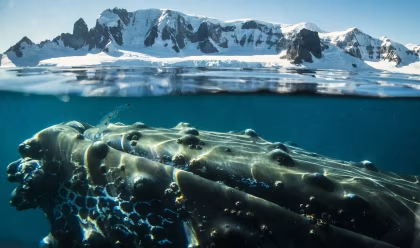
Baleen Whales – The Gentle Giants of the Ocean
There are many species of baleen whales: 15 in total. In this blog we will tell you much more about baleen whales, so you can expand your knowledge.
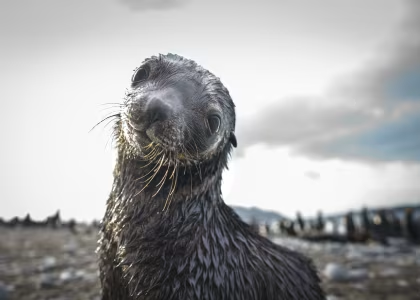
The secrets of Antarctic seals revealed
There live only six species of seals in the Antarctic: Southern Elephant Seals, Antarctic fur seals, crabeater seals, leopard seals, ross seals and weddell seals. While we know of them, there are many secrets of their lives that we have yet to discover.
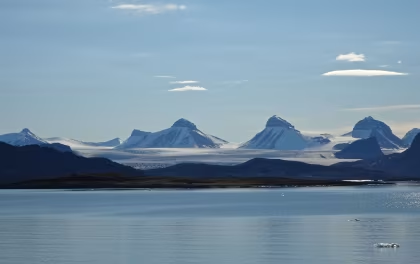
The Arctic Borderland of Kongsfjorden, Svalbard
Kongsfjorden is a glacial fjord in Svalbard that is home to a rich mixture of Arctic flora and fauna.
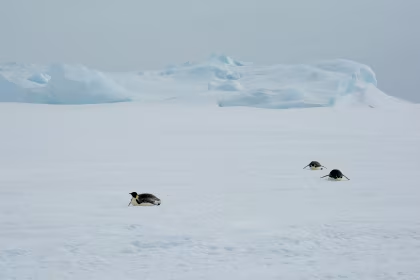
Encounter with the emperor penguin in Antarctica
Dutch journalist Gemma Venhuizen embarked on the MV Ortelius during the Weddell Sea cruise 'In search of the emperor penguins'. She had several encounters with this majestic penguin species - both from the sea and from the air.
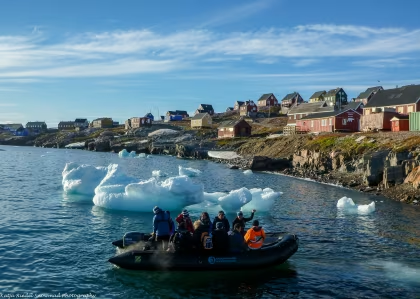
Scoresby Sund: the Greatest Greenland Adventure
Would you like to discover a world of towering ice spires, magnificent glaciers and breathtaking fjords? There is such an adventure for you in Eastern Greenland. Few places can make the claim to be the biggest, the grandest or the most inspiring but Scoresby Sund (or Sound) is one of those remarkable locations.

The world is changing for Greenland's native Inuit people
You may know them as ‘Eskimos’, but the people of the Arctic are officially called the Inuit. Historically, they were hunters in the truest sense. For hundreds of years they survived the world’s harshest conditions, living off their prey of whales, seals, polar bears, muskoxen, birds, fish and caribou. This has always been their way of life. One that is now changing.
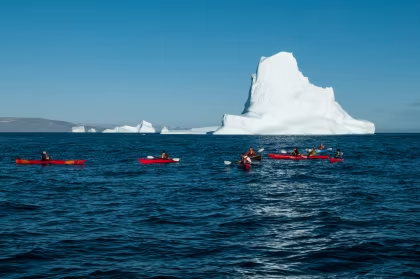
Kayaking In Greenland
The kayak is a quick, agile boat, invented by the Inuit, the native people of Greenland. For centuries, perhaps thousands of years these skilled hunters and fishermen used this light, mobile platform to hunt their prey. They still do.
