Blog
Type
Region
Destination
-
Show all
Ship
Highlights
-
Show all
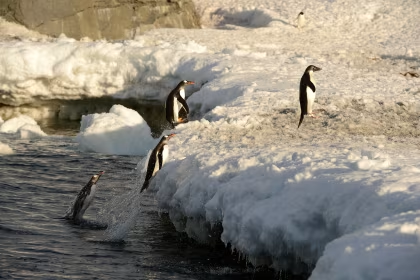
10 Terrific Antarctic Bird Facts
Antarctica is a fantastic cruise destination for birdwatching, with around 45 distinct species you may be able to see.
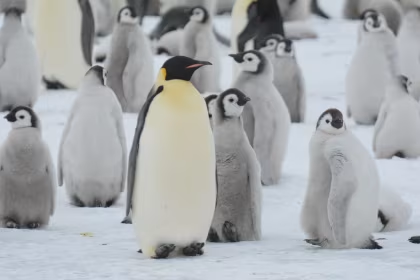
12 Tips to Help Keep Birds Safe During an Antarctic Cruise
One of the most wonderful experiences you can have on an Antarctic cruise is investigating the multitudes of penguins in their natural habitat. Naturally, passengers are often concerned about the possibility of disturbing the penguins (and other Antarctic birds), causing an upheaval in their breeding and nesting patterns.
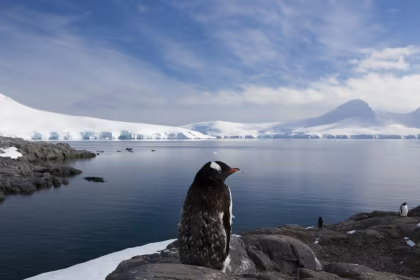
Guidelines for visitors to Antarctica
Activities in the Antarctic are governed by the Antarctic Treaty of 1959 and associated agreements, referred to collectively as the Antarctic Treaty System.
Scott’s ponies becoming unstuck
‘’English-men where flabbergasted…they had never dreamt that dogs could run in that way before a sledge, and already they felt contempt for their dear ponies. Suddenly they were gripped by wild excitement, cheered, and waved their caps. Our drivers returned their greetings and cracked their whips’’.
Exploration of the Polar Regions
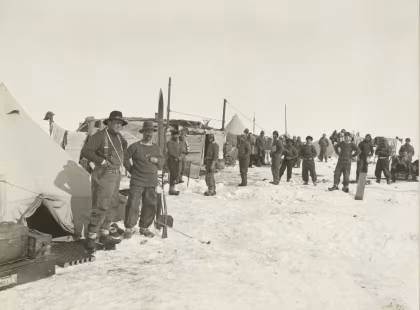
From the Vikings via the first whale and seal hunters to Scott and Amundsen, from the maritime explorers Franklin and Nordenskiöld to present-day polar tourism, a quick tour through history reveals some of the aspect which motivated people to extend their horizons. Existential need, sheer curiosity, imperial greed, polar science and a taste for adventure all converged in regions which pardon no mistakes.
Svalbard a Disneyland for geologists
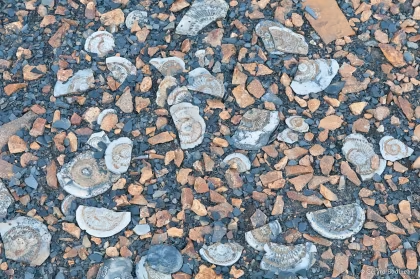
Svalbard is located in the north-western corner of the Eurasian plate. For a long period Svalbard was part of a large continent that included North America, Greenland and Eurasia. At one time both Northeast Greenland and Svalbard were submerged under the depths of the ocean before surfacing again. It is because of this geological history that Svalbard is a geologist’s heaven.
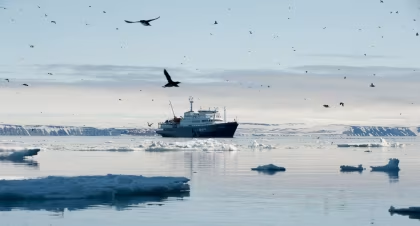
A Photo-Tour of our Cruise Ship the m/v Plancius
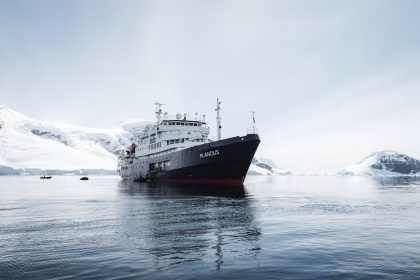
Welcome aboard the Plancius! She was originally named the Hr. Ms. Tydeman and was built as an oceanographic research vessel for the royal Dutch Navy in 1976.
Six Seal Species You Might See On Your Greenland Cruise
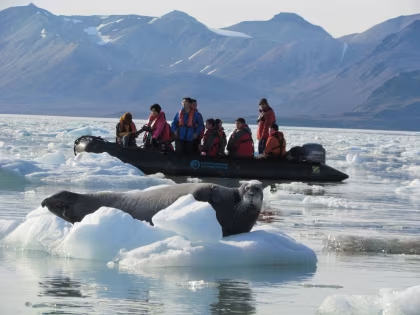
Seals play a big role in the history of Greenland. They’ve been a source of food, clothing, and other supplies for centuries and without them it’s possible that there wouldn’t even be a Greenland as we know it at all.

Traditional Lifestyles of the Inuit
The Inuit are an indigenous Arctic people who speak the languages of the Eskaleutian family and who reside in four countries surrounding the North Pole: Greenland, Canada, the United States, and Russia.
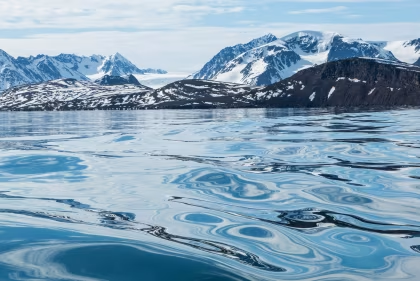
Freshwater ecosystems in the Arctic
The Arctic, which may be of a surprise, is home to an abundant and diverse range of freshwater ecosystems including lakes, ponds, rivers and streams in addition to deltas and wetlands. Some of the rivers and associated deltas located in the Arctic are the world’s largest including the Lena, Ob and Yenisei.
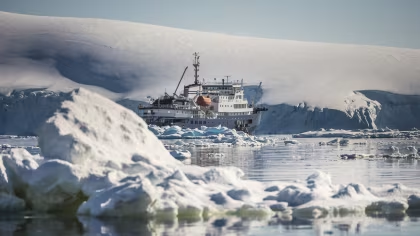
Want a Sneak Preview of Your Antarctica Cruise?
You’ll have to put some effort into taking a bad picture of Antarctica. The landscapes offer starkly beautiful vistas in every direction.
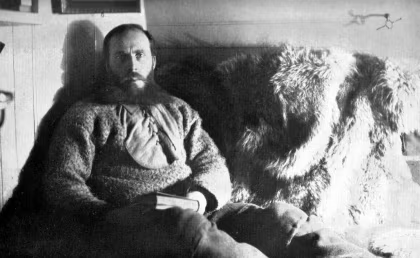
The disastrous expedition in the Arctic west
In 1902, Otto Sverdrup, captain of the Fram on Nansen’s expedition, led his own expedition to the Arctic north of Canada. Over the period of the expedition, which started in 1898, Sverdrup and his 15-man crew chartered over 250,000 square kilometres of the Arctic using the Fram and sledges. During the expedition Ellesmere Island’s west coast was explored and new islands discovered.
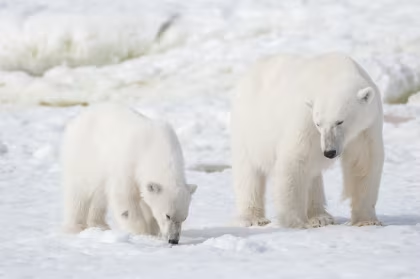
The polar bear: king of the Arctic food chain
The polar bear is the world’s largest species of bear and the largest land predator. There is a large difference in size between male and female polar bears with the male weighing anything from 350 to 800 kilograms. Females in contrast weigh less than half.
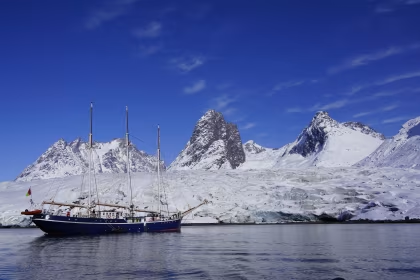
5 Misconceptions You Might Have About Greenland
Greenland isn’t dark the entire year round. It isn’t always bitterly cold either...
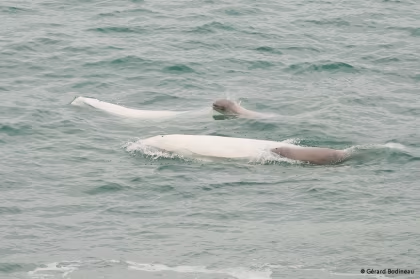
The Mysteries of the Beluga Whale
Beluga whales (also known as white whales, sea canaries, and sometimes melonheads) are a rare but cherished sight during Arctic cruises, due in part to their striking appearance. Yet despite the infrequency of beluga sightings, a fair amount is known about these friendly-faced cetaceans.
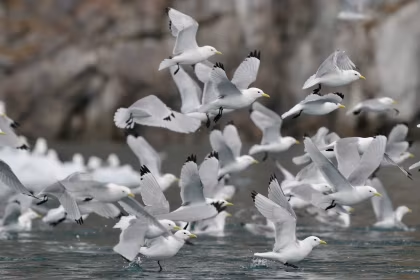
Five Birds You Might See on Your Greenland Cruise
A Greenland expedition cruise gives birdwatchers the chance to add some beautiful avian entries to their photo collections. Host to over 230 different species of bird, Greenland is as full of spectacular landscapes as winged wildlife.
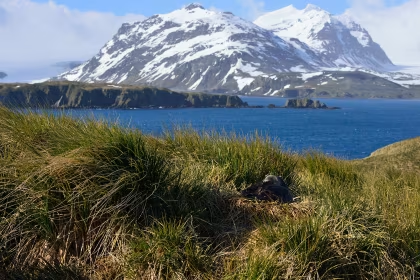
Flowers in Antarctica
The Polar Regions are one of the most inhospitable environments for plants and animals to live in. In Antarctica life faces difficulties from low temperatures, high winds, solar radiation and freezing of cells. Life is made even more difficult when the Antarctic continent is plunged into darkness for during winter and then full light during the summer.
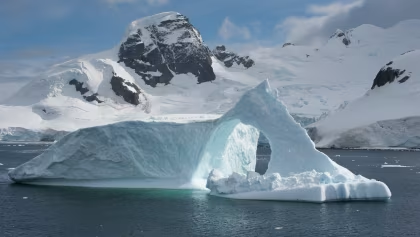
All things ice in the Antarctic
The first recorded sighting on an iceberg in Antarctica was on 1 February 1700 when Edmond Halley was on an expedition to measure the Earth’s magnetic field. Today scientists have classified Antarctic ice as two types: Land and sea ice.
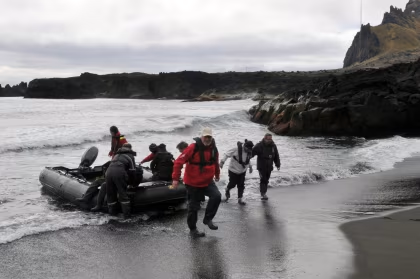
A visit to the fascinating island of Jan Mayen
After exploring the remote island of Fair Isle, our Atlantic Odyssey voyage once more turned its attentions northwards and left the outer extremities of the UK behind. Our destination was Jan Mayen, a volcanic island situated on the mid-Atlantic ridge just north of 71°.
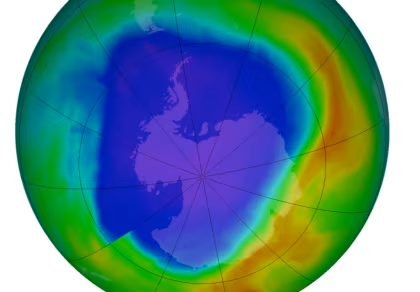
The ozone layer in Antarctica
Scientists have calculated that if the ozone layer was brought down to sea level it would be 3 mm thick, while in the Antarctic the ozone can be as low as 1 mm thick. Ozone in the stratosphere is being depleted by a variety of human-made gases with a ‘hole’ forming over Antarctica.
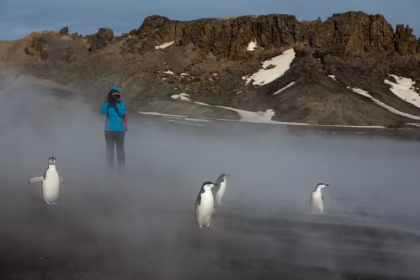
Graham Land: A landscape dominated by volcanoes
At the upper tip of the Antarctic Peninsula lies Graham Land, a jagged, glaciated part of Antarctica with a landscape dominated by volcanoes. Despite the volcanoes being over 200 million years old they are far from extinct with volcanic activity occurring today.
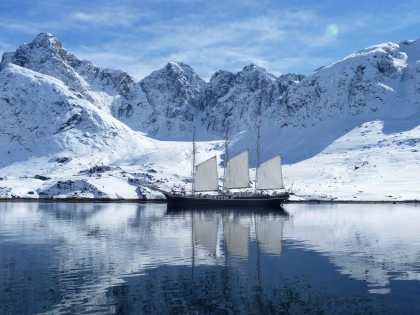
Why You Should Visit Greenland: 11 Things to See, Do, and Explore
There's nothing quite like seeing your first Greenland glacier, sailing into the island's largest fjord system (also, incidentally, Earth's largest), or watching a humpback whale breach over the dark Greenland Sea - three great reasons to visit Greenland, and we've barely gotten started.
