For centuries before Antarctica's eventual discovery in the 19th century, a hypothetical southern continent was theorized to exist, locked in by ice and acting as a counterbalance to the landmasses of the Northern Hemisphere. From Antiquity through to the 18th century, 'Terra Australis Incognita', Latin for 'unknown southern land', appeared on maps of the world, often as a large, blank landmass. Throughout the 16th and 17th centuries, as European empires rose and global explorers ventured farther, world maps became more accurate, with blank spaces filled in.
Remarkably, what lay in the South mainly remained a mystery until 1820, when the Antarctic continent was first sighted, likely by Fabian von Bellingshausen. Antarctica proper, larger than Europe and unlike anywhere else on Earth, had lain hidden, obscured by thick, seemingly impenetrable sea ice, heavy seas, soup-like mists, and technological limitations of the age. This fabled land had even eluded perhaps the most famous, divisive, and influential explorer in history, Captain James Cook.
ZU_09 via Getty Images
Cook's First Voyage - Antarctica Undiscovered
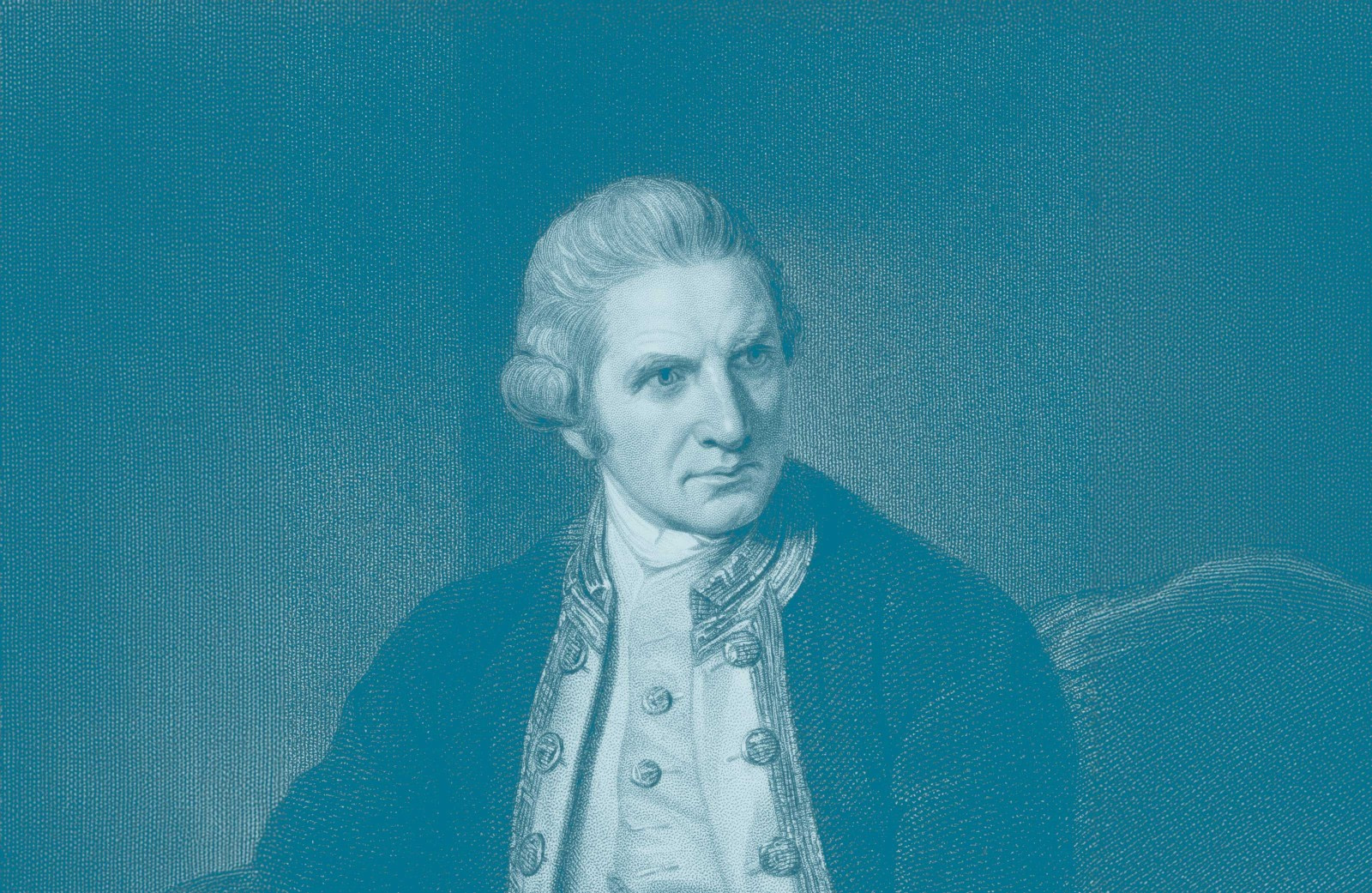
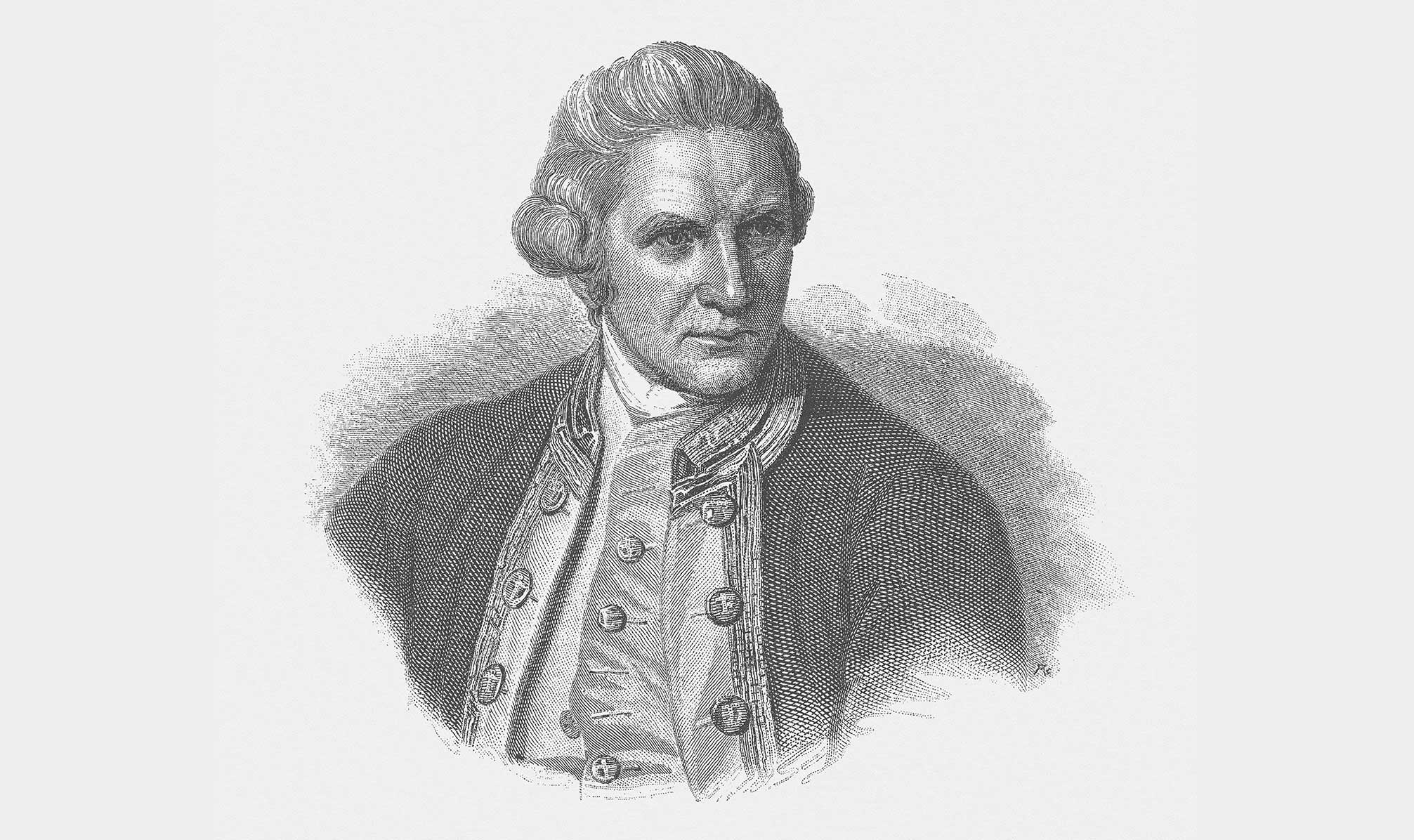
Captain James Cook was born in 1728 in Yorkshire, England. He rose from humble beginnings to a British naval career that included service during the American War of Independence, and that would eventually lead him across the globe. He became the first European to chart and land on many parts of the Pacific, including New Zealand, the east coast of Australia, and those scattered across the South Pacific and South Atlantic oceans. Best known for his three scientific voyages between 1768 and 1779, Cook, although a divisive and controversial figure in the modern era, contributed immensely to European understanding of the globe, astronomy, cartography and scientific advancement.
Cook's first voyage, aboard HMS Endeavour between 1768 and 1771, was jointly organized by the British Royal Navy and the Royal Society. While on paper a scientific expedition, Cook also had secret, additional objectives, including a search for the mysterious Terra Australis Incognita and an order to claim lands for Britain. Cook wouldn't sight Antarctica on his first voyage; instead, he explored Tierra del Fuego, Tahiti, the Polynesian islands, and, under orders to discover what lay in the South, New Zealand and Australia's eastern coast. This first voyage had been one of several firsts. Cook claimed several islands, including Huahine, Borabora, and Raiatea, for Great Britain, before he and his crew became only the second European expedition to visit New Zealand, after the Dutch Abel Tasman over a hundred years previously. Cook charted much of New Zealand's coastline before becoming the first Europeans to land on the east coast of Australia, at Point Hicks and Botany Bay.
The expedition eventually returned to England, reaching port in July 1771 after almost three years at sea.

Hulton Archive via Getty Images
Cook's Second Voyage - Below the Antarctic Circle
While his first voyage had proved unsuccessful in answering the question of a southern polar continent, the interest generated by Cook's Pacific adventure was strong enough to prompt the British Admiralty to rapidly organize a second expedition. This time, rather than one ship, Cook would lead an expedition of two vessels, acquired by the Naval Board and re-commissioned as HMS Resolution and HMS Adventure.
Cook's second expedition departed almost exactly one year after his return to Great Britain, sailing from Plymouth in July 1772, with the express goal of proving or disproving the existence of Terra Australis Incognita. Cook captained Resolution, while Tobias Furneaux led Adventure. Both vessels sailed south, stopping at Funchal and Cape Verde before crossing the equator and eventually anchoring and resupplying in Table Bay, near Cape Town, South Africa, in late October 1772.
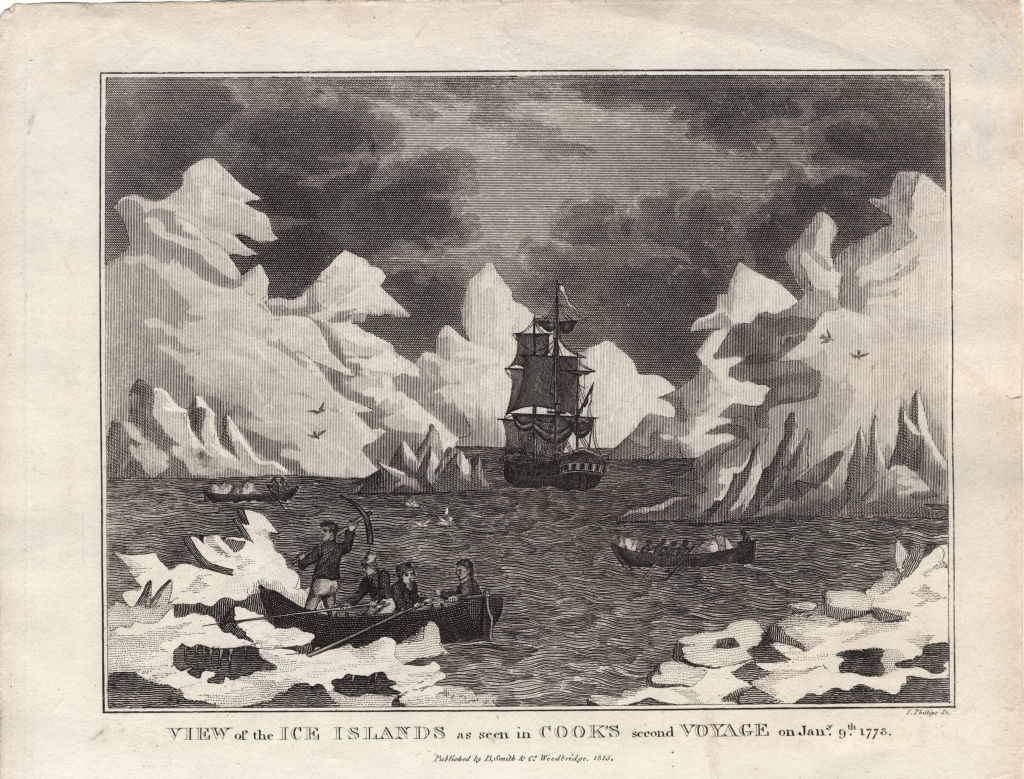
By late November, the expedition departed the Cape and ventured into the South Atlantic, previously reported by the French explorer Jean-Baptiste Bouvet to contain land, which would later prove to be the exceedingly remote sub-Antarctic Bouvet Island. Reporting increasingly bitter winds and harsh sea conditions, Cook continued south and, by early December, spotted the first large iceberg of the expedition at around 51°S, encountering whales, penguins, and other sub-Antarctic wildlife as the pack ice began to impede their progress. Both ships were forced north and east repeatedly to avoid being trapped by the encroaching ice, and heavy fog hampered progress.
Universal Images Group via Getty
By early January 1773, Cook recorded a position of 59°18' S and longitude 11°9' E, and abandoned his search for Bouvet's reported landmass, correctly assuming that if land existed, it was likely a small island surrounded by ice. Instead, both ships sailed east, harvesting fresh water from the ice as they went, conducting scientific experiments on sea-ice salinity and taking temperatures at depth. After steering south, on 17 January 1773, Cook and his crew became the first to cross the Antarctic Circle at latitude 66°36.4’ S and longitude 39°35’ E. Reporting that, 'From the masthead, I could see nothing southward but ice,' Cook switched his focus to a search for the sub-Antarctic Kerguelen Islands, but was once again frustrated in this by heavy sea ice and unfavorable conditions.
Prevailing easterly winds prevented Cook from locating the Kerguelen Islands, and by February 1773, he was forced to continue eastward. Despite crossing the Antarctic Circle and voyaging farther south than anyone before him, his findings had once again failed to prove the existence of a southern continent. However, this wouldn't be the last time Cook would cross the Antarctic Circle.
Re-crossing the Antarctic Circle - Resolution Alone
After continuing east, thick fog caused Cook's ships to become separated. After searching for Adventure, Cook headed for New Zealand, with a pre-arranged plan to rendezvous in Queen Charlotte Sound in case of separation. Conditions were especially severe, and morale was low on both ships. However, while Cook aboard the Resolution eventually reached New Zealand, Furneaux aboard Adventure found himself approaching Van Diemen's Land, modern-day Tasmania. Both ships would eventually be reunited in May 1773 at Cape Jackson.
Over the following weeks and months, beset by scurvy and poor conditions, both ships ventured to Tahiti, Tonga, and the Society Islands, before returning to New Zealand in October. Both ships were once again separated in a damaging storm, and when Adventure limped into Ship Cove, the agreed meeting point, in November, Cook and the Resolution had already departed, leaving a message beneath a tree for Furneaux.
Universal Images Group via Getty Images
Furneaux and the Adventure eventually departed for England following tense and violent encounters with local Maori, leaving Cook and Resolution alone in the Southern Ocean. By December, Cook and his crew reached 51°30' S, almost the antipode of London on the other side of the globe. By the 12th, the first iceberg was sighted, and the ship encountered Antarctic pack ice several days later. By Christmas Day, after crossing the Antarctic Circle for the second time, Resolution was frozen, with thick rime forming on sails and ropes, and icicles on the superstructure.
Morale dropped rapidly, with supplies and stores running low as poorly stored and prepared food rotted in the poor conditions. Despite rising tensions, many of which were recorded in the diaries of several of the ship's officers, Resolution continued to push south. On 26 January, 1774, the ship crossed the Antarctic Circle for the third time, pushing south until the crew sighted a wall of ice across the horizon, and mountains of ice to the clouds.
"I, who had ambition not only to go farther than anyone had been before, but as far as man could go, was not sorry in meeting with this interruption." - Captain James Cook
At 71° S, Cook and his crew achieved the southernmost point recorded up until that point, setting a record for exploration that would not be broken for half a century. Recognizing how reckless it would be to continue pushing through the ice, Cook decided to turn back, heading for the South Pacific and turning his back on Antarctica for the final time.
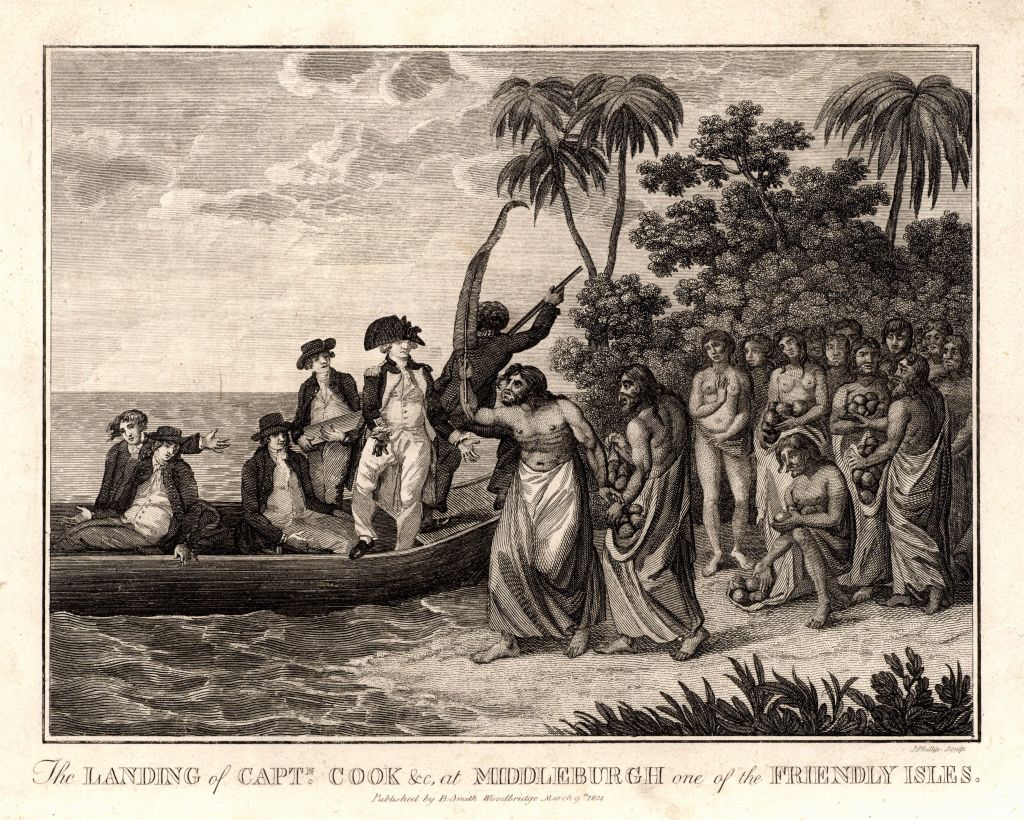
Cook and his crew headed to the Pacific, where they would visit and 'discover' many islands and archipelagos, including New Caledonia, the Marquesas Islands, Tanna, Malekula, Eromanga, and Norfolk Island. On their return to England, after passing Cape Horn in December 1774, Cook sighted and landed on South Georgia, becoming the first to chart the island. He claimed the land for the British Crown and also explored several additional sub-Antarctic islands near the Antarctic Peninsula. On 30 July 1775, after three years of oceanic exploration, Cook's second voyage came to an end, and with it, the notion of Terra Australis Incognita faded. Clearly, something lay there, but what it was would remain an intriguing mystery.
Cook's Enduring Legacy
Today, Cook is most widely remembered for his voyages and key role in establishing relationships between European and local inhabitants, especially in the Pacific, Australia, and New Zealand, where he interacted significantly with the Melanesian and Polynesian cultures. His exploits are divisive, and his role in the rise of the empire and colonialism remains debated today. Cook's arrival in the 'New World' heralded an age of imperialism, the impact of which continues to be felt today by Pacific, North American, and Australian and New Zealand indigenous peoples across the globe. Hence, it is perhaps what Cook represents, rather than Cook himself, that has become so vilified in the modern age.
Today, Cook's exploits in the Southern Ocean and his association with Antarctica and the sub-Antarctic are often overlooked. He may not have been successful in his quest to discover the fabled continent at the world's southern extremes. Still, he set records, inspired generations of explorers, and, in some way, set the stage for what would come in the Heroic Age of Antarctic Exploration a century later.
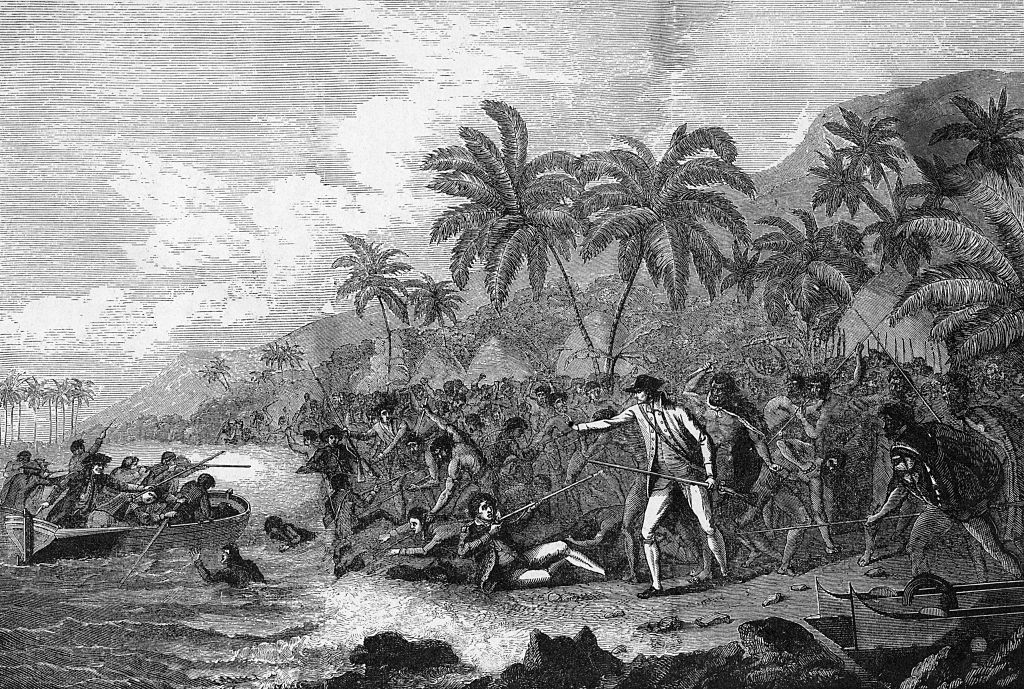
Cook was killed in Hawaii during a period of tension during a third voyage in 1779, bringing to an end the life of one of the great cartographers and ocean-going explorers in history.
Bettmann via Getty Images
Main image GeorgiosArt via Getty Images