You can visit the remote Bellingshausen Sea and the regions associated with the Belgian Antarctic Expedition on a unique expedition cruise with us in 2027. We're venturing onto the ice of this spectacular part of Antarctica, aiming to land on Peter I Island, one of the most far-flung and seldom-visited parts of Antarctica!
In early August 1898, on a pitch-black Antarctic night lit only by shimmering stars and the ghostly-pale glow of icebergs and snow, Roald Amundsen stands alone. Moving slowly to catch up to him on cumbersome skis are the Belgian Captain Georges Lecointe and an American explorer who would later foster controversy in the Arctic, Frederick Cook. The three men are on a six-day hunt for penguins, a brief respite from hardships that began months earlier, after their ship became ensnared in the pack ice of the Bellingshausen Sea.
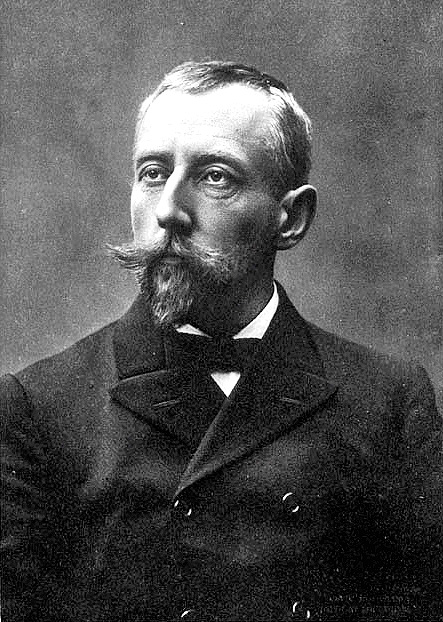
Roald Amundsen
This was not the Amundsen of later renown, who had conquered both poles and written his name into polar legend. This Amundsen was younger, barely 26, serving as First Officer aboard the Belgica, which lay ominously dark, frozen into the Antarctic ice several miles away. His mood was low, and the men's morale on board the ship was ebbing away. This expedition ushered in the dawn of the Heroic Age of Antarctic Exploration, but its success and the sanity of its participants hung in the balance.
A New Era for Antarctic Exploration - the Belgica Expedition
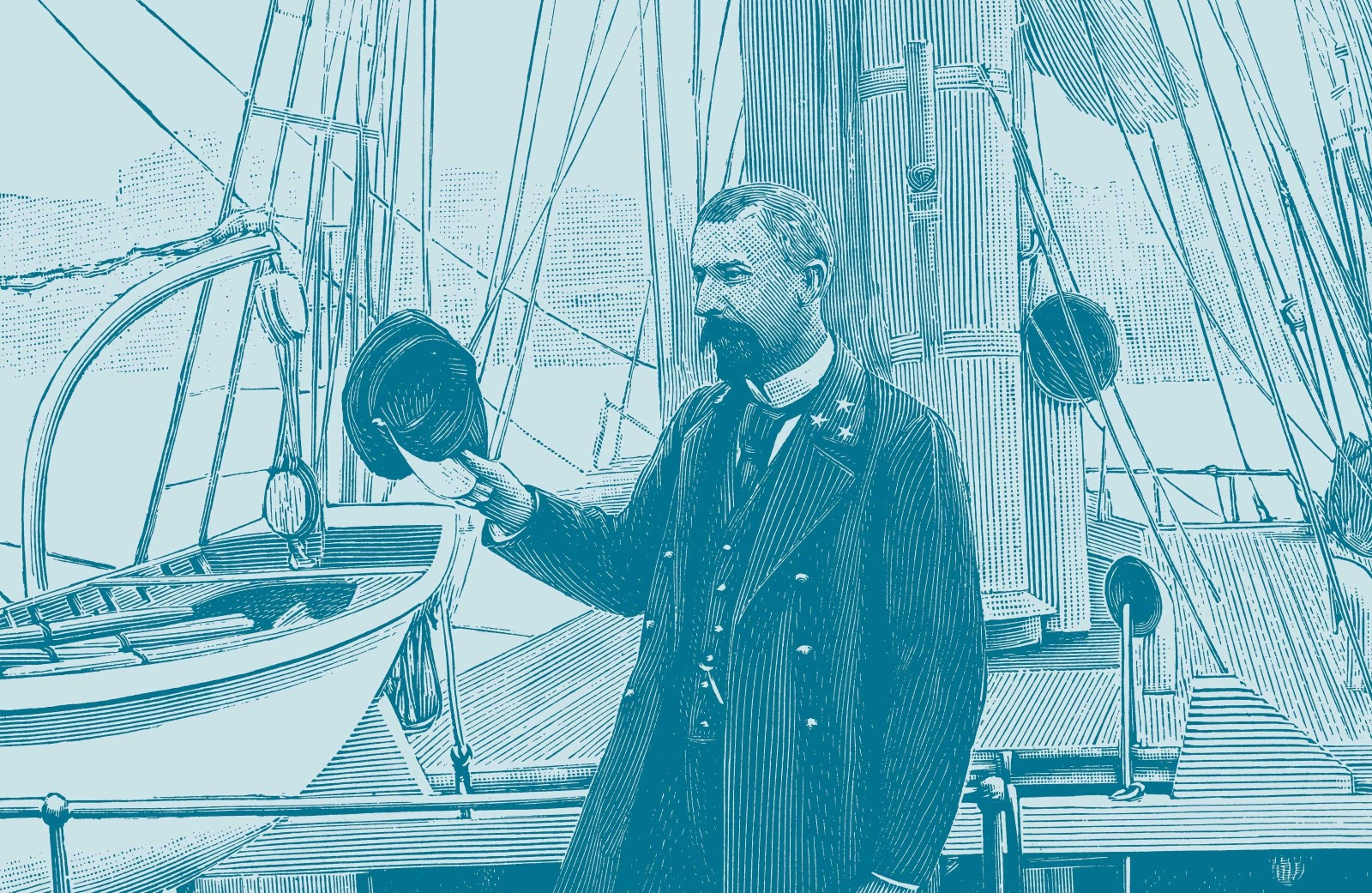
Led by the pioneering Belgian naval officer Adrien de Gerlache, who in 1896 had purchased and refitted the ship that would become the Belgica, the Belgian Antarctic Expedition, known as the Belgica Expedition, was full of firsts, immense challenges, and the proving ground for several members who would go on to define the Heroic Age of Antarctic Exploration.
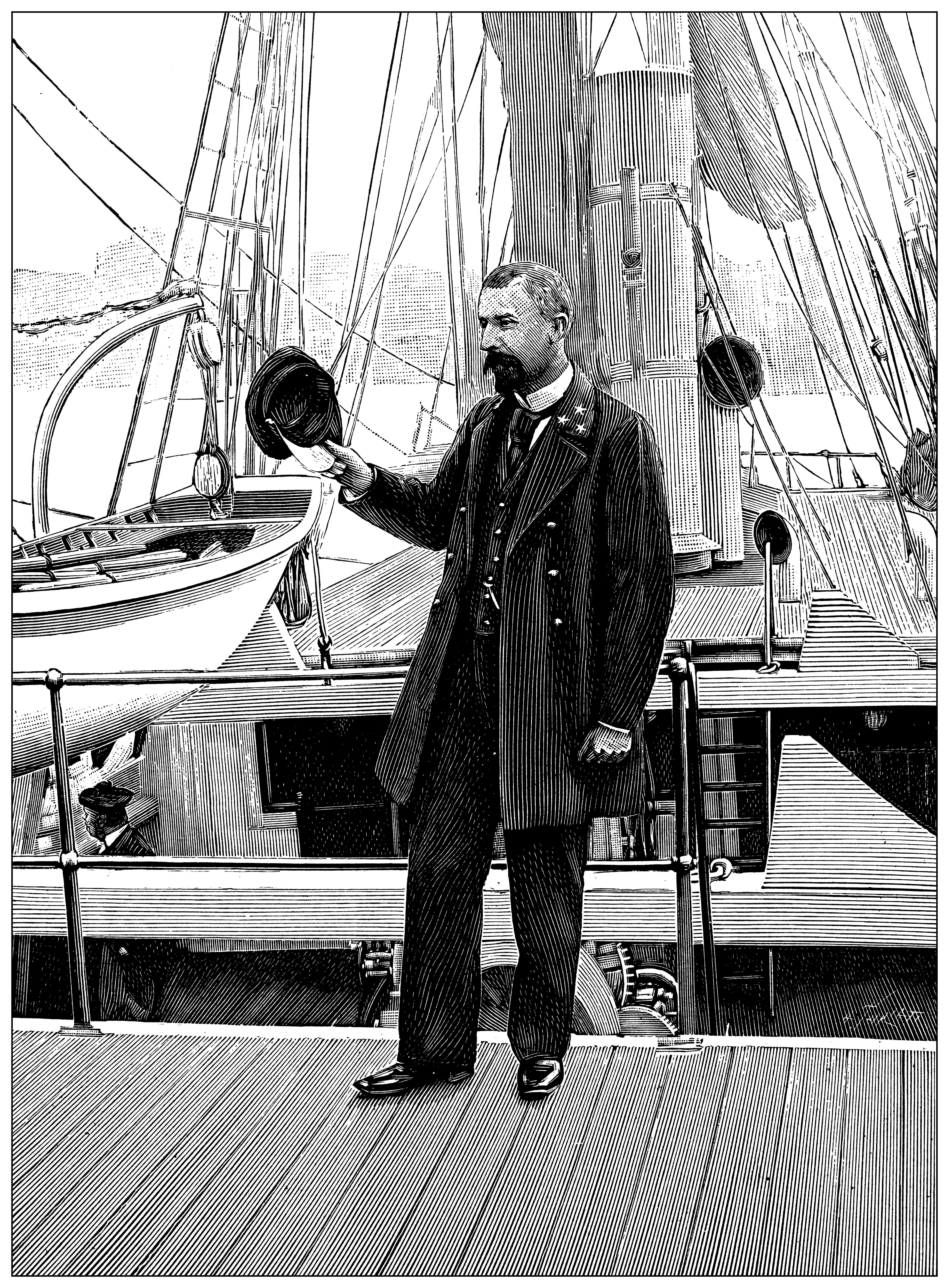
Adrien de Gerlache
The expedition sailed from Antwerp in 1897, with a multinational crew including Roald Amundsen, Belgian captain Georges Lecointe, Polish geophysicist Antoni Dobrowolski, geologist Henryk Arctowski, the Romanian Emil Racoviță, a zoologist, and the American surgeon and explorer Frederick Cook, who would join in Rio de Janeiro as the ship's surgeon. The aims of the expedition were clear: to venture into uncharted regions of the Antarctic Peninsula, gather a variety of scientific data, collect biological specimens, and map the Antarctic Peninsula and outlying islands.
Challenges beset the expedition early on, with one crew member, Carl Wiencke, washed overboard and lost off the coast of Graham Land. In late January 1898, the Belgica passed between Graham Land and the string of islands lying off the western shore of the Antarctic Peninsula. This would later be christened the Gerlache Strait.
In January and February 1898, the expedition went ashore several times, as documented in a series of photographs, scientific observations, and detailed journals by several crew members. But, as they ventured further south, the ice became thicker, older, and more unforgiving. They soon found themselves in the uncharted waters of the southern Bellingshausen Sea, with the Belgica becoming immobilized for days at a time before working her way loose once more. By early March, however, the grip of the ice proved too strong. The ship was held fast - it was clear the Belgica, and the men aboard her, faced the approaching Antarctic winter. They would be the first to do so.
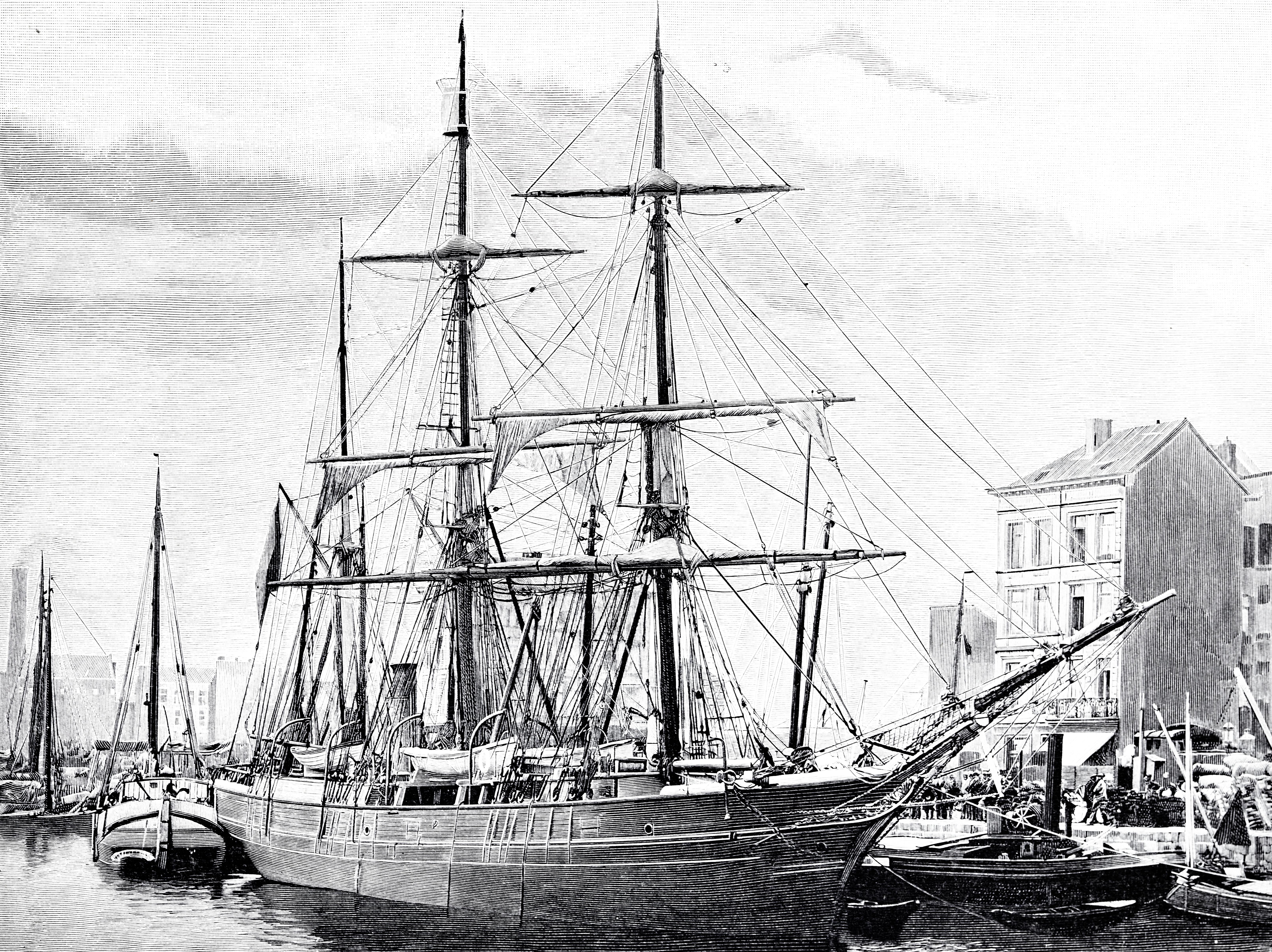
Belgica
Into Darkness - The Antarctic Winter Descends
"We are stuck... We must no doubt spend the winter here, and that is fine with me." On 6 March 1898, Amundsen recorded the locking in of the Belgica. He was upbeat, but the atmosphere on board was uncertain and anxious. The plan had supposedly never been for the ship to overwinter in the ice. Instead, a group of men would be left ashore, and the Belgica would return in the spring. It would later transpire that de Gerlache had perhaps intentionally navigated the ship into the ice, aiming for her to be held fast and remain there over winter.
On 11 March, Amundsen wrote, "The ice is firm around us and without ridges. This is starting to get interesting.” With temperatures plummeting and darkness descending, the mood on board quickly worsens. While some, including Amundsen and Cook, remain upbeat and eager to explore, many others suffer both mentally and physically as rations diminish and the strain of life begins to take its toll. In June, several months into their imprisonment, one of the ship's scientists, the Belgian Émile Danco, dies, most likely of scurvy and lack of nutrition. Fear and mistrust begin to spread.
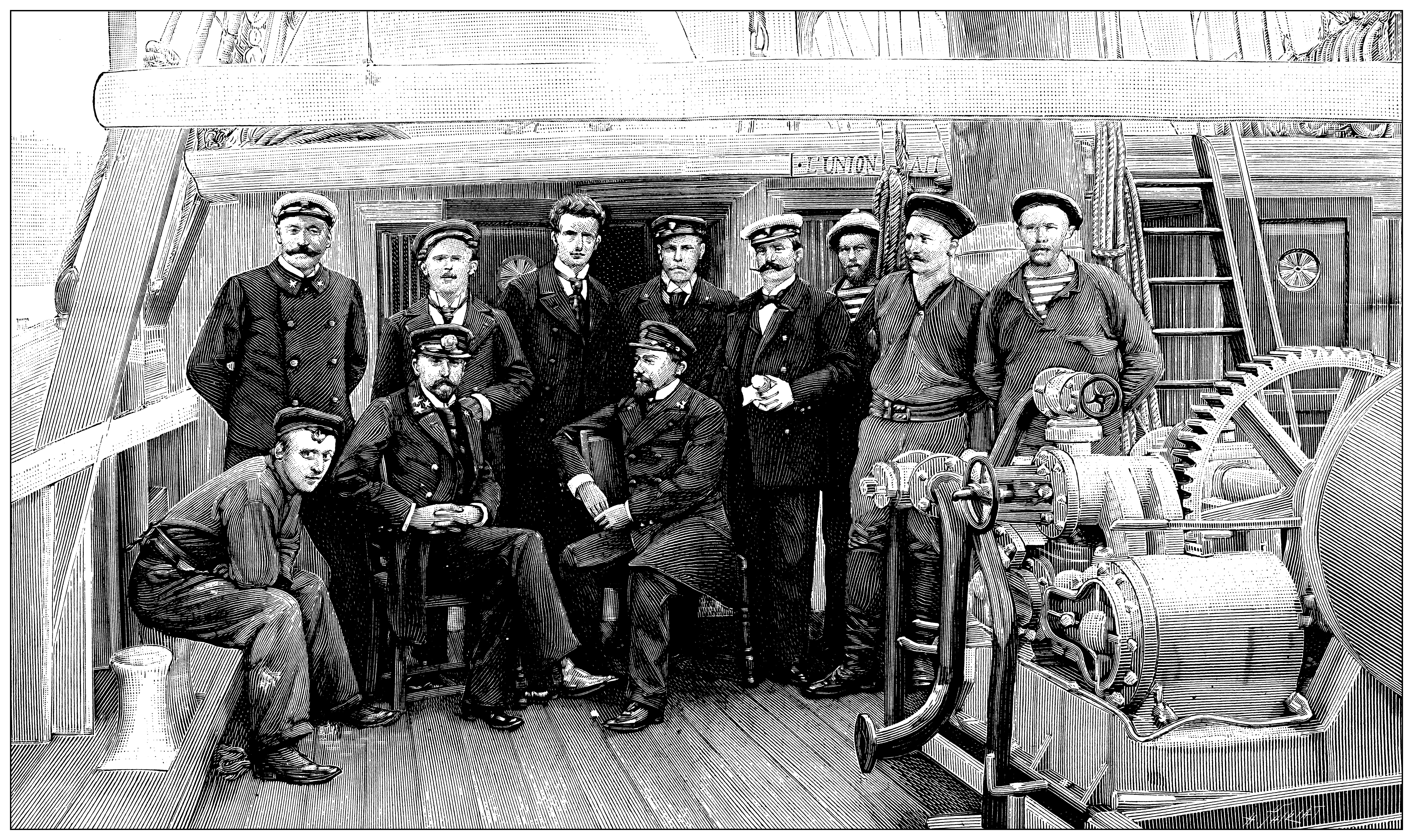
Belgica's crew
By July, things are at their darkest, both literally and spiritually. Sickness grips the crew - some, including Lecointe, write their wills. Others show signs of cabin fever and mental degradation. Misunderstandings from language barriers lead to death threats, and de Gerlache's leadership begins to fracture. The ship's cat, Nansen, also died in July, further plummeting morale.
Disaster Averted - Penguin Steaks, Scurvy and Insanity
Almost all of the men aboard were by now suffering from scurvy - a vitamin deficiency caused by a poor diet. They were bedridden, had little energy, and, as Dr. Frederick Cook wrote, "The curtain of blackness which has fallen over the outer world of icy desolation has descended upon the inner world of our souls." Some would never fully recover. One, the Norwegian Adam Tollefsen, suffered so intensely that he was committed to a mental institution upon their return to Belgium.
It was Cook who recognized the need for fresh meat rather than the canned food the crew had relied upon. He implemented seal and penguin meat, which at first was unpopular with the men and was even opposed by de Gerlache. But, over time, their strength returns, the symptoms of scurvy lessen, and morale begins to slowly climb. According to Amundsen, "Penguin beef is absolutely excellent... You have the most delicious steak you could wish for.” Amundsen and Cook quickly establish a friendship, with Amundsen among Cook's supporters as he attempted to implement his new, life-saving diet. Cook had previously been on several expeditions to Greenland and made a marked impression upon Amundsen.
Cook would later claim to be the first man to reach the North Pole, which remains debated to this day. His friendship with Amundsen would last until the latter died in 1928.
By late July, the crew's health had improved, and Amundsen set out on a ski-sledge journey to hunt penguins, accompanied by Cook and captain Lecointe. On their return, the atmosphere soured further when de Gerlache, in an attempt to re-establish his control, told Amundsen that, no matter what happened, the expedition would remain under Belgian control. Effectively, Amundsen's position was overruled. Almost immediately, he resigns his position, writing, "There is no longer any Belgian Antarctic Expedition for me. I see in Belgica only an ordinary vessel, trapped in the ice. I have a duty to help the handful of men who are assembled here on board.”
The Release of the Ice - Success Snatched from Disaster
Both Cook and Amundsen had proved themselves the most capable of the men aboard the Belgica, organizing hunting parties and maintaining morale. By January 1899, the ice began to slowly break up, but not enough to release the ship from its icy tomb. Once again, Cook offers a solution - to clear a channel for the ship to maneuver through, rather than hope the ice forms floes in their favor. With pickaxes, shovels, and the explosive tonite, the crew forges a route for the Belgica to slowly navigate back out into the open waters of the Bellingshausen Sea. It takes several weeks to cover just seven miles, but by mid-March, they once again found themselves in open water.
The Belgica reached Puntas Arenas on 28 March, 1899, and, true to his word, Amundsen departed the expedition. By November 1899, the Belgica returned to Antwerp. While severe, the expedition had gathered critical scientific data, and the return of the ship and her crew was welcomed with aplomb. The Belgian national anthem, La Brabançonne, sounded as the crew set foot once more on Belgian soil, and de Gerlache and his men were made members of the Royal Order of Leopold and were issued expedition medals.
Many of the men involved would go on to take part in several other expeditions, both polar and elsewhere in the world. Of course, most notably, Roald Amundsen would go on to become one of the most famous polar explorers of all time. His time on the Belgica would shape his approach to expeditions, leading to later staggering success. Adrien de Gerlache would take part in several Arctic expeditions, while Frederick Cook would, in 1907, claim to have reached the North Pole. While disputed, his polar career was remarkable, and set him out as one of the greats.
Captain Georges Lecointe founded the International Polar Organization. He would have a distinguished naval career, while the scientists aboard would go on to become well-known figures in the polar world, in their areas of study, and in the independence of nations, such as Henryk Arctowski and Polish independence following the First World War.
Many locations were named after the Belgica and its crew. The Danco coast was named for Émile Danco, the Gerlache Strait for Adrien de Gerlache, and Wiencke Island for the man lost overboard, Carl Wiencke. Later, others would lend their names to coves, peninsulas, and nunataks with modern and contemporary expeditions etching the men of the earliest proper scientific expedition to Antarctica into polar legend.