When you think of Antarctica, what comes to mind? No doubt icebergs, whales, glaciers, seals, and penguins. Penguins have become an icon of the Antarctic and are among the most curious and visually striking animals in the southern reaches of our planet.
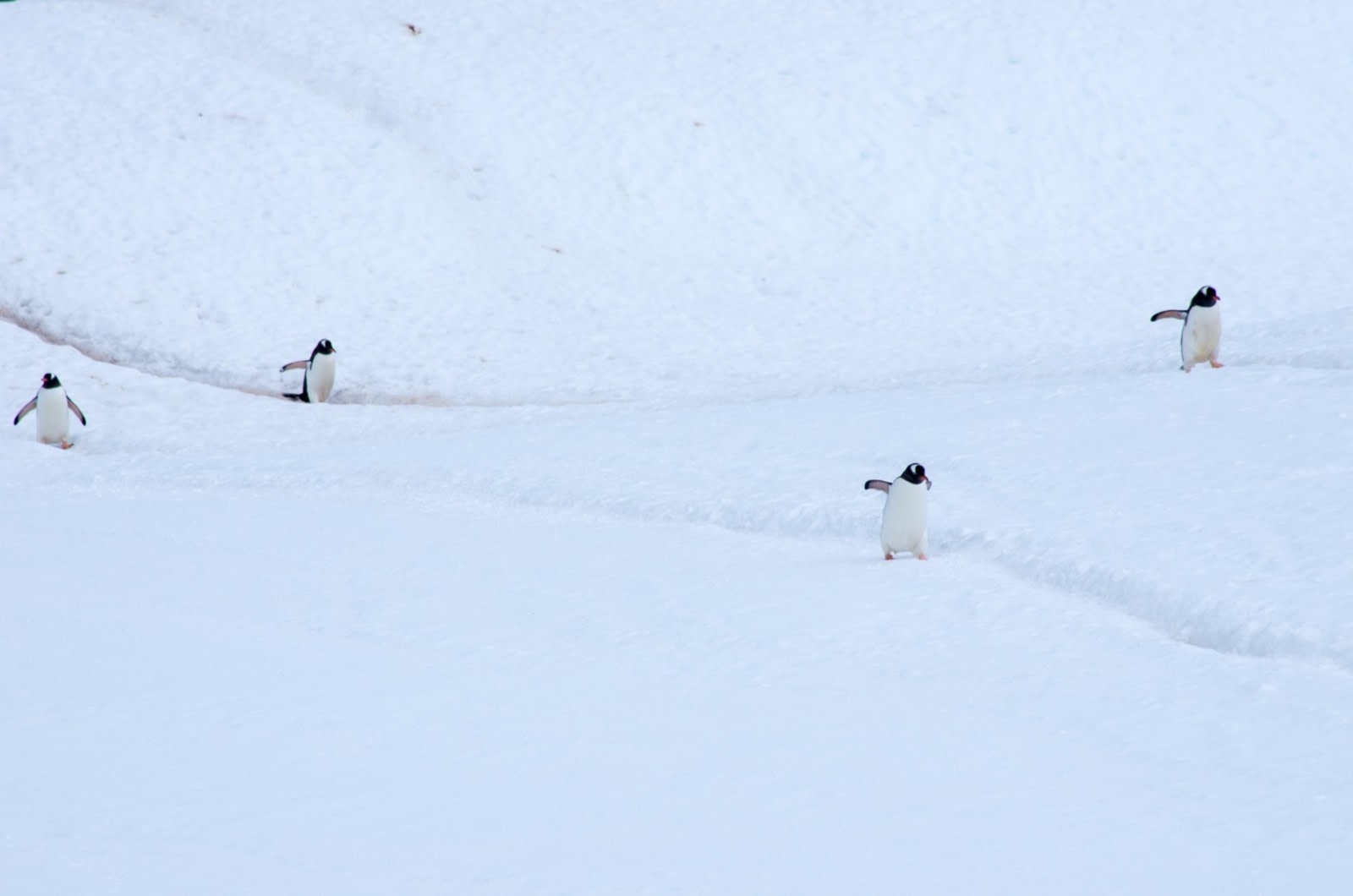
Penguins are optimized for life in the water. Their wings have evolved into strong flippers, ideal for propelling their streamlined bodies through the water at surprising speeds. Indeed, gentoo penguins are the fastest underwater birds in the world, reaching up to 36 km per hour. On land, however, penguins are far less well-adapted. So, to navigate the ice of Antarctica, penguins have devised ingenious methods of transport - trails that make the journey as fast and safe as possible - the penguin highway.
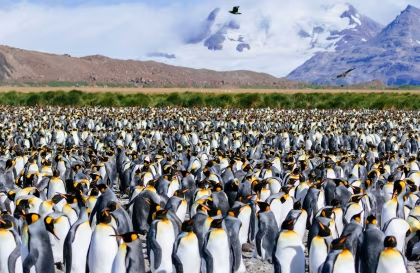
On a trip to Antarctica, you'll see huge penguin colonies and groups of penguins in the water or clambering about on land.

Picture by Marie Ann Daloia
A need for speed on the penguin highway
It's a tale of two worlds for penguins. They spend about half their lives in the water, agile and swift, using their powerful 'flippers' to hunt deep fish, squid, and other small prey beneath the cold waters. But when they return to land, they transform into a waddling, clumsy penguin straight out of a cartoon or a movie.
All penguin species are restricted to a slow waddle and short bursts of speed along their penguin highways, and often find it difficult to clamber over objects and power themselves up inclines. You'll often see groups of penguins launching themselves out of the water onto shorelines, icebergs, and ice floes - otherwise, they're sometimes incapable of hauling themselves out onto dry land.
Usually, penguin colonies and groups stay relatively close to the water. However, during breeding seasons and depending on the ice and shoreline, they may site rookeries or colonies a fair distance from the water's edge. At a penguin waddle, moving from the water to the safety of the colony could take a long time, so they optimize their journey by sticking to established well-trodden (or belly-slid) penguin highways.

Picture by Esther Kokmeijer
Understanding the penguin highway code
On a visit to many penguin colonies in Antarctica and the Sub-Antarctica, you'll often be able to see these crisscrossing trails marking out the routes that penguins take as they waddle and slide their way between the ocean and their colony. There's no particular code of etiquette for penguins using the penguin highway - they waddle, waddle, slide, and waddle in the direction they need to go, stopping only when they encounter a penguin coming the other way or barrelling past them if they're in a real hurry.
It's important that we keep clear of the penguin highways and not stop the penguins by blocking them - they use lots of vital energy crossing rough terrain if we do this.
Colonies on islands and rocky outcrops with little or no snow or ice cover won't feature these recognizable tracks, often discolored by the scraping of many feet and penguin droppings. Species like gentoo penguins live in large colonies and are among the finest penguin highway builders. They are particular about their breeding areas and often move colonies to avoid dirty, overused areas. You'll often see them speed their way (as fast as they can) behind, past, and over one another towards the ocean, before they transform into torpedoes once they hit the water.
On our expedition cruises to Antarctica, you'll visit numerous penguin colonies and witness various species at locations such as South Georgia, the South Orkney Islands, the Antarctic Peninsula, and the mainland. Whether zooming along their penguin highways, scrambling over rocks across beaches, or powering through the icy waters, a penguin encounter in Antarctica is anything but ordinary.

Picture by Stephanie Lim
The royal penguin highway
The migration routes that emperor penguins use when they head inland to breed are less visible and witnessed. Their highways are often less discernable because they breed so far south on the Antarctic mainland and during the Antarctic winter. You could also better describe the emperor penguin highway as a toboggan course. Often, they propel themselves along on their bellies, sliding their way across the ice and snow to and from their breeding colony.
You'll see other species doing this, including the curious Adelie, speedy Gentoo, and resplendent king penguins, but the emperor penguin, due to its larger size and weight, finds the best use out of this faster way to get around the ice.
You can get a chance to witness the emperor penguin colony at Snow Hill Island on one of our expedition cruises with helicopter capabilities. If you're lucky, you'll see chicks and adults getting to grips with life on the open road of the penguin highway back towards the ocean.
Main image by Lorenz Dolezalek