Blog
Type
Region
Destination
-
Show all
Ship
Highlights
-
Show all
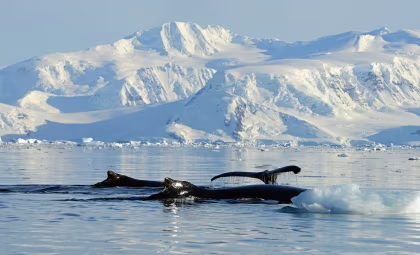
Humpback Whales: the Stars of the Western Antarctic Peninsula
The marine ecosystem of the West Antarctic Peninsula (WAP) extends from the Bellingshausen Sea to the northern tip of the peninsula. The WAP includes the Antarctic Sea Ice Zone, a very productive system that supports large stocks of marine mammals, birds, and Antarctic krill. One of the stars of this region, which you can see on your whale-spotting Antarctica cruise, is the humpback.
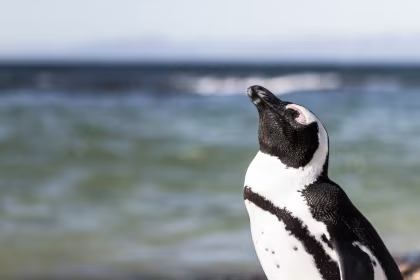
How Arctic Wildlife Differs from Antarctic
While there are definite similarities between the north and south poles, at the same time, the two regions are vastly different. Though both are cold and dry, each pole is unique in its terrain and climate. While the Antarctic is harsh and inhospitable, home to only two native vascular species of plants, the Arctic tundra can support a wider range of fauna with its warmer temperatures and a greater diversity of plant life. Here are just some of the different animals that you can expect to see in the Arctic as opposed to the Antarctic.

Steel, Sweat, and Fire: the Forging of Hondius at Brodosplit Shipyard
In a mid-sized city on the rocky Croatian coast, not quite midway between the northern border of Montenegro and the southern shoreline of Slovenia, a sprawling shipyard claims a swath of Adriatic so wide you could back an aircraft carrier into it and barely need to check your side-view. Even from a distance, you can tell something big is underway.
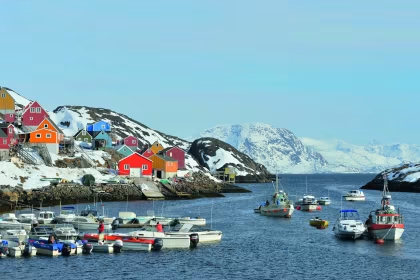
Amazing Greenland
If you ever get the chance to take a trip to Greenland, you will be amazed by its coastlines, fjords, ice-covered peaks, and great expanse of snow-covered land. You will also notice that Greenland is a rugged area with a rich diversity of life, making it a dream location for scientists as well.
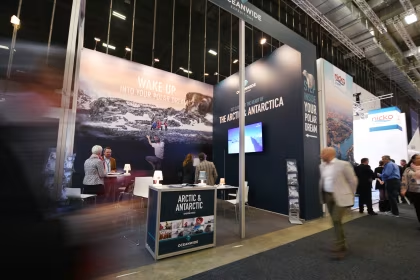
The Oceanwide Edge: Hondius at ITB Berlin
Every industry has its iconic, center-of-the-universe events. Film has its Sundance and Cannes, music its Summerfest, Glastonbury, and Austin City Limits. As for the travel industry, which for years has been one of the world’s fastest-growing sectors, there exists one indisputable star around whom all smaller travel fairs orbit: ITB Berlin.
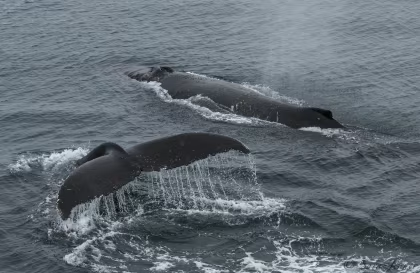
Polar Marine Visitors: the Whales of Antarctica and the Arctic
Whales are the world’s largest mammals, found in the Arctic and Antarctica. This article covers some of the major species you may see on voyages to these remarkable areas.
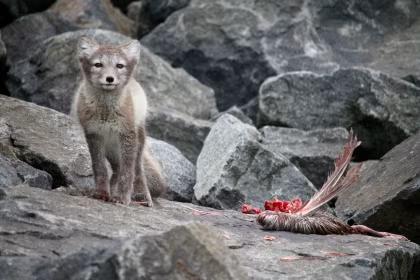
Arctic Foxes: Constant Gardeners of the Arctic
The Arctic fox is a circumpolar species found across the Arctic, extending from Greenland, Iceland, and Svalbard across Eurasia to North America. The species also extends its range northwards over the sea ice, having been spotted close to the North Pole.
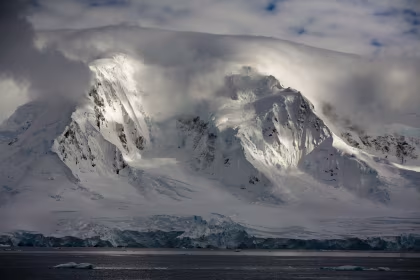
The Ancient Fossil Forests of Antarctica
Over a hundred years ago, Robert Falcon Scott’s expedition to Antarctica discovered fossils of plants on the Beardmore Glacier, less than 500 km (310 miles) from the South Pole. Edward Wilson, who was the expedition’s chief scientist, recorded the findings in his diary, stating that “most of the bigger leaves were like beech leaves in shape and venation.”

Polar Pour Master: Interview with Rolando Garcia
Nobody goes to the polar regions just for the drinks, but it’s tempting when your expedition cruise ship has a bartender like Rolando Garcia.
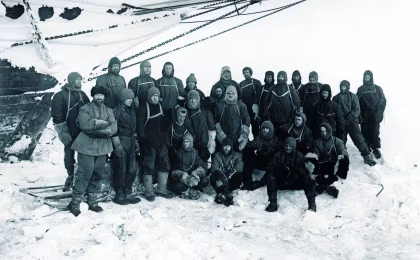
Retracing the Steps of Antarctica’s Early Explorers
For a long time in human history, there was a belief that a large continent must lie at the southern end of the Earth to provide balance to the known lands in the Northern Hemisphere. By the 15th century, many European maps had even placed a sizable landmass called Terra Australis in the far south, though the real continent was to remain undiscovered for quite some time.
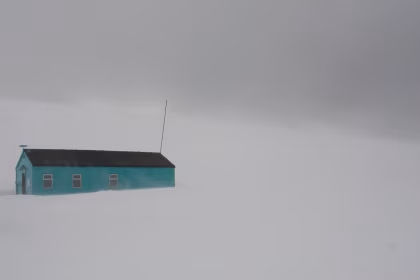
The Research Stations of Antarctica and the sub-Antarctic
Numerous research stations operate throughout the Antarctic and sub-Antarctic, engaged in all manner of scientific inquiry. This article will cover the stations under the management of the British Antarctic Survey (BAS), which conducts year-round terrestrial and atmospheric research in some of the most compelling polar locations on Earth.
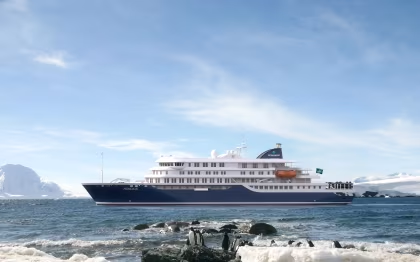
The Birth of Hondius: a Story in Pictures
As of the summer of 2019, our new polar vessel, m/v Hondius, will be cruising the crystalline waters of the polar regions, delivering dozens of wildlife-loving and adventure-seeking passengers to the most iconic locations in the Arctic and Antarctica. Until then, however, this advanced new vessel-to-be is little more than an assortment of steel plates and inscrutable machinery scattered around a cavernous Croatian shipyard.
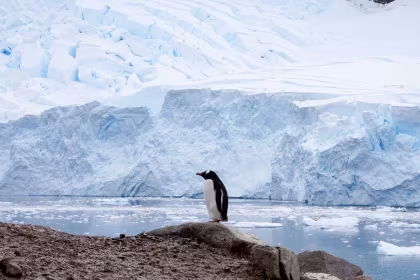
Top 10 Polar Research Stories of 2017
Before the first month of the new year becomes a thing of distant memory, and with it everything that happened the year before, let’s take a quick backward glimpse at the defining polar research moments of 2017.
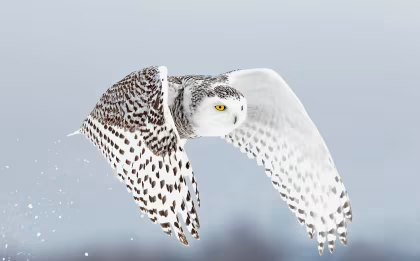
Secrets of the Snowy Owl: Habitat, Adaptations, and Other Facts
The snowy owl (Bubo scandiacus), also known as the great white owl or Arctic owl, is one of the most distinctive bird species on the planet. While you won’t find them in all areas of the Arctic – they don’t exist in Svalbard due to the lack of lemmings – they are seen in the polar regions of Eurasia and North America and are a potential visitor during Greenland cruises. The binomial species name,“scandiacus,” is derived from Scandinavia, as this is where the bird was first discovered. The snowy owl is the official bird of Quebec, and they are a must-see for countless bird watchers and naturalists.
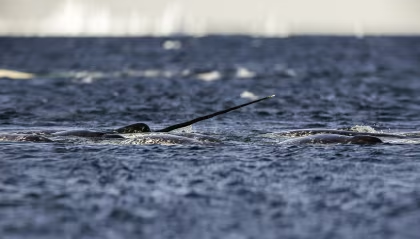
Narwhals: 10 Facts About an Elusive Arctic Unicorn
The narwhal is an Arctic-based whale that spends most of its life in the waters off Greenland, Svalbard, Russia, and Canada. Some estimates put 90 percent of its total global population in Baffin Bay, between Western Greenland and Canada. Narwhals are in fact only one of three whale species that spend their entire lives in the Arctic, the others being bowhead and beluga whales.
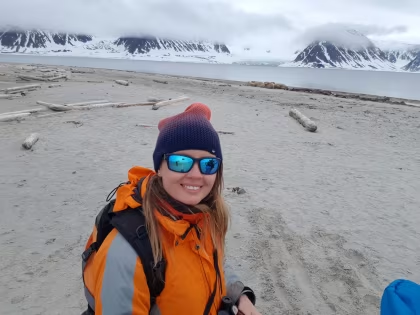
A Travel Pro’s Take on the Arctic Cruise Experience: Interview with Mariola Burejko
We’ve heard what it’s like to cruise the polar regions from the perspective of the passengers, the guides, the captains. But what about the folks we don’t so often hear about, the intermediary professionals responsible for finding, recommending, and booking us Arctic or Antarctic trips in the first place? Surely the mavens of the travel industry, who love seeing new corners of the world so much they’ve chosen as a career what for most people is merely a beloved hobby, have much to say about what sets polar expedition cruises apart from the standard travel fare. To find out, we sat down with Mariola Burejko, business development director for LiveAboard.com, and asked a few questions about her recent Arctic cruise around the Norwegian archipelago of Svalbard.
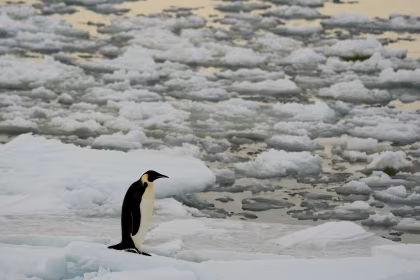
The Ways and Wildlife of the Weddell Sea
The Weddell Sea is located off the coast of Antarctica, at the very south of the Atlantic. Its geographical location is 75 degrees south and 47 degrees west, and it covers the Argentine, Chilean, and British territories of Antarctica. The harsh weather conditions and abundant pack ice have made the Weddell Sea difficult for people to access, but modern icebreaker ships have started to open up this area to explorers.
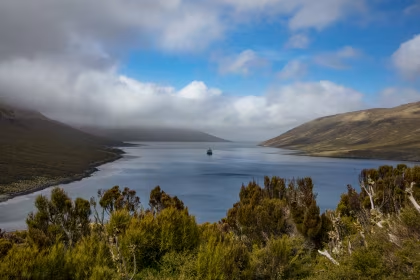
Visiting the Nearly Unknown: New Zealand’s Campbell Island
Campbell Island is located south of Bluff, New Zealand. It's best known for its flora and fauna. Read on to discover which wildlife you can find here.
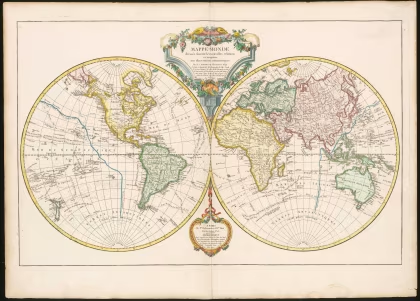
The History of Antarctica in Maps
Long before human eyes ever beheld Antarctica, the ancients were convinced it existed – or at least something like it. Ptolemy, a Greco-Roman astronomer who lived around 100 – 170 CE, thought that an enormous far-southern landmass must exist in order to provide a planetary counterweight to the large continents of the north.
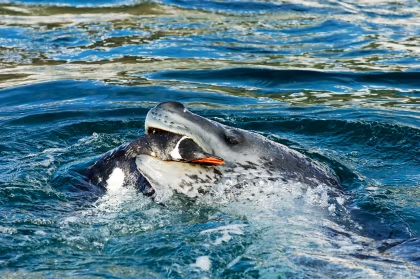
The Wildlife of Antarctica’s Seas and Skies
Antarctica is one of the most pristine environments on Earth, home to whales, penguins, seals, and birds, providing nature lovers with a treasure trove of wildlife memories to take back home.
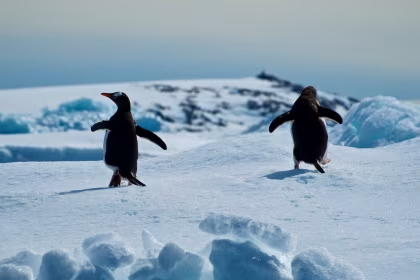
Eight Ultimate Antarctica Adventures
Antarctica has adventure in its bones. Long before most travelers even reach the continent, they have to cross the Drake Passage, an oft-tumultuous waterway considered by many a hallmark of high adventure in itself. Once you do reach the Antarctic shores, the variations of landscape and wildlife are as multiform as the activities you can pursue there. While not all of these activities can or should be shoehorned into a single article, this piece will give you a survey of the top eight. Like everything in the polar regions, these activities are subject to weather conditions – and your own threshold for adventure.
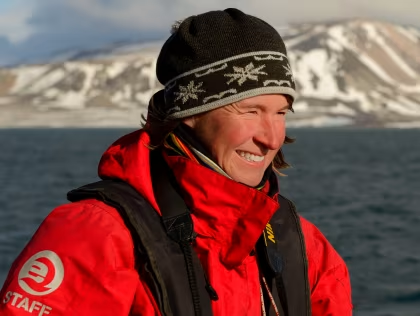
At Home in Antarctica: Interview with Katja Riedel
Most of us lucky enough to visit the polar regions seldom visit more than once, and we’re rarely experts. The most enthusiastic may have read a few books about glacier formation or historic polar explorers, but it’s typically our expedition guides who give us the real scoop on these ice-infused environments.
