Blog
Type
Region
Destination
-
Show all
Ship
Highlights
-
Show all
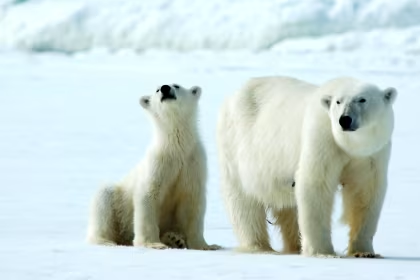
Meat, Mate, Move: a Polar Bear Story
Silent as the wind through your fur, you creep over the ice to the small, dark hole. At the bottom, well within reach of your tensing paws, a black circle of lapping water stares back at you like the pupil of some enormous, unreadable eye.
AECO, IAATO & OEX: Polar Travel Partnerships
Nature-based travel asks its share of responsibilities to the planet, and travel in ecologically vulnerable areas even more so. Thankfully, the polar regions have two vital and widely respected organizations in their corner: AECO and IAATO.
Antarctica: When to Visit, How to Plan, What to Expect
If Antarctica is an astonishingly exotic location coveted in equal measure by ice enthusiasts and continent hoppers (and it is), it also asks a lot in return for its prestigious polar status.
A Moveable Feast: Interview with a Polar Cruise Chef
Polar cruises are luxurious, but they aren’t luxury cruises. The beds are wonderfully comfortable, but nobody expects goose-down pillows. The bar is appropriately well stocked, but no bottles of triple-cask Macallan 21 glow atop the shelves. The food is delicious, ample, and hearty, but…

Arctic Mythology: Inuit, Saami, and the Ancient Greeks
The Arctic locations we visit aren’t merely made up of phenomenal landscapes, exotic wildlife, and more adventure than a Hardy Boys novel. They’re also interwoven with ancient cultures, all of which have their own particular and fascinating cosmologies.
Two for the Snow: Polar Cruises for Couples
You know the old saying, “Cold hands, warm heart.” We’re not doctors or anything, but in our opinion that bodes well for couples who visit the polar regions.
The Seven Best Things to Do in Antarctica
Unless you’re a scientist, there’s no such thing as a means-to-an-end trip to Antarctica. Merely being there is reason enough to make the journey - even, we would wager, for most scientists who travel to Antarctica solely for research.
Keep It Green: Our Commitment to Sustainable Polar Travel
It doesn’t make much sense for polar travel if every time we visit the Arctic and Antarctica we leave them worse than we found them. And that’s just considering things from a purely human perspective, which we don’t.
Polar Mountain High: Interview with a Ski and Mountaineering Guide
There are good jobs, and there are great jobs. And then there are jobs where you climb mountains and ski back down them and get paid for it. These are different jobs entirely. Tim Blakemore, one of Oceanwide’s mountaineering and skiing guides, has one of these jobs.
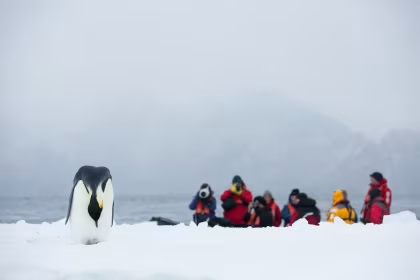
Five Reasons You Should Cruise the Ross Sea Immediately
In our quest for the little-known holiday destination (that’s still popular enough to have its own fully developed spa and gift shop), we travelers sometimes overlook the truly underrated gems this planet has hidden up its sleeve.
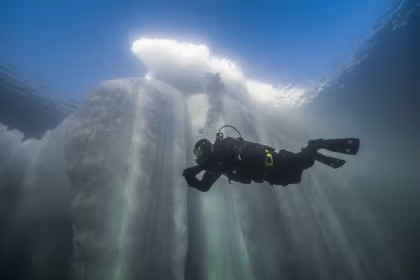
Why a Polar Diving Cruise Should be Your Next Great Decision
Not so very long ago, all you had to do to qualify as a thrill-seeker was hop a ship to the polar regions and make it back with all your fingers – or your life, if you weren’t picky.
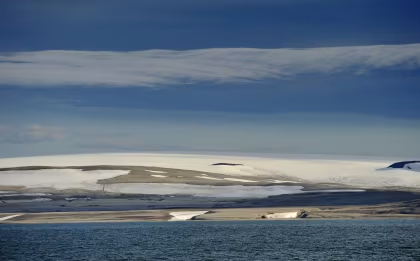
Six Must-See Svalbard Sites
It’s home to humanity’s last-ditch supply of crop seeds, the world’s northernmost settlement over 1,000 people, and is one of the best places on the planet to spot a polar bear.
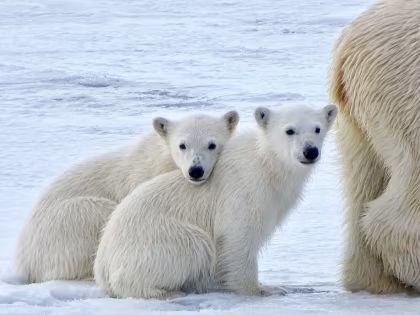
Where the Polar Bears Roam
Going to the Arctic without clapping eyes on a real-life polar bear might reasonably be compared to visiting Africa without seeing a giraffe or a zebra or, most analogously, a lion. Not that that’s unusual. Polar bears, after all, aren’t overabundant no matter where you go. And if you see one, you should thank your lucky stars (and watchful expedition guides) that you did. Still, if you wrap up an Arctic cruise without spotting one polar bear, you can certainly count on spotting your share of disappointed faces when you get back – your own among them.
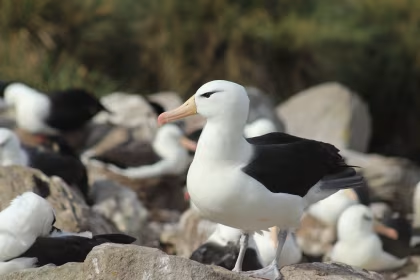
15 Falklands Bird Photos
Few places offer as unique and abundant a selection of birds, particularly seabirds, as the remote sub-Antarctic archipelago of the Falkland Islands. With this in mind, we’ve compiled 15 images of the most photogenic birds in the Falklands. Some were taken by you, some by us, but every one of them was lovingly photographed during our exciting Falkland Island voyages.
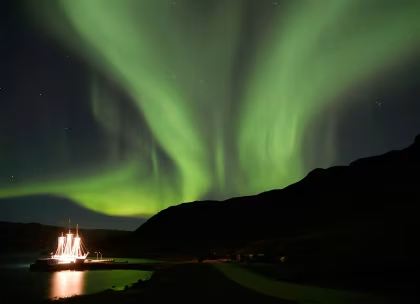
North Norway, Northern Lights, and All the Pretty Whales
At first glance, visiting Northern Norway at any other time except a blazing-hot summer might seem an undertaking unfit for the average traveler. Legends abound of Norway’s months of unbroken darkness, tracts of untamed wilderness, and history of bone-chilling winters that could make even the most committed Viking consider a career change.
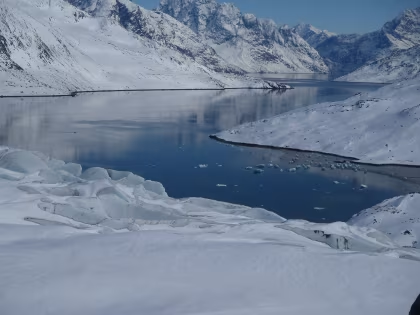
8 Scientific Wonders of the Arctic
The Arctic’s frozen landscape not only contains scenic gems, it also prompts fascinating advances in research. Here are some of the eight best.
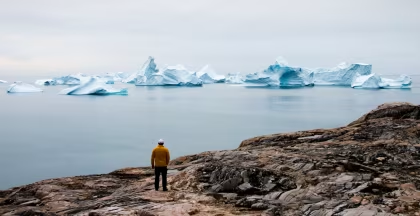
Tracking Greenland’s Wildlife from Space
Despite Greenland’s harsh environment, life has found a way to thrive there. If you’re lucky enough to embark on a Greenland cruise, you stand the chance of encountering many species of cold-adapted mammals, birds, and fish. Over recent decades, comprehensive research has been undertaken into the migratory patterns of these animals.
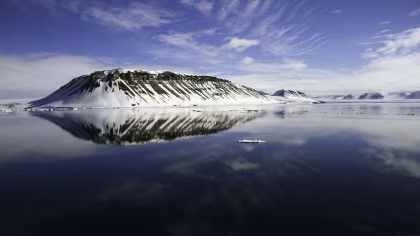
The Ice-Jewelled Geology of Spitsbergen
The Svalbard archipelago is found in the Arctic Ocean, approximately 660 km (410 miles) north of the northernmost tip of Norway. It is a geologist’s paradise, having a rich geological history that can be traced back through the Mesozoic era (65-245 million years ago), the Cambrian era (570 million years ago), and all the way to the Archean era, over 3.5 billion years ago.
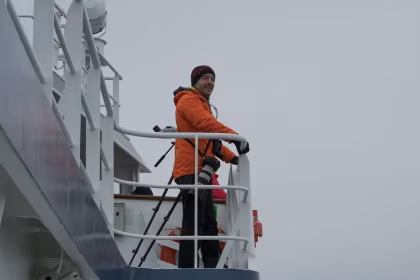
Hello, Hondius: Former Passengers Visit Our Future Vessel
It’s hard not to be flattered when our former passengers speak highly of our voyages, vessels, and staff. But it’s altogether impossible when they travel far from home to visit one of our ships, especially one that’s still under construction! Naturally, Swiss aviation workers Samuel Gantenbein and his girlfriend Valérie didn’t fly all the way to Croatia just to wish our new ship luck, but the fact that it was on their agenda at all pleases us greatly – and is, in our opinion, call for a cozy chat.

The Art of the Arctic: Interview with Udo Prinsen
Most of us lucky enough to visit the Arctic recognize instantly how picturesque it is, far more striking than even the most expertly captured photograph can convey.
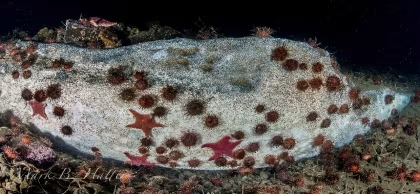
A Diving Dream Fulfilled
Last January, Mark Hatter accomplished a dream he’d been training two years to fulfill. Booking his berth aboard our m/v Ortelius and making the long flight to Ushuaia, Argentina, he and two of his friends sailed down the famous Drake Passage, bound for Earth’s southernmost continent.
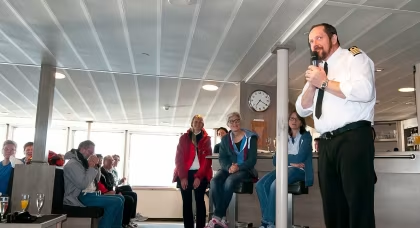
Polar Perfectionism: Interview with Captain Levakov
Turning our attention to the control room, we steal a few informative (and highly entertaining) moments with one of our most seasoned polar captains, Evgeny Levakov. A veteran of the colder side of nautical life, Captain Levakov has been piloting ships since 2002, leading everything from week-long Arctic cruises to expansive 33-day Antarctica voyages. And among the many things he’s learned in all those berg-bejeweled years is that polar captaining isn’t a gig for gamblers.
