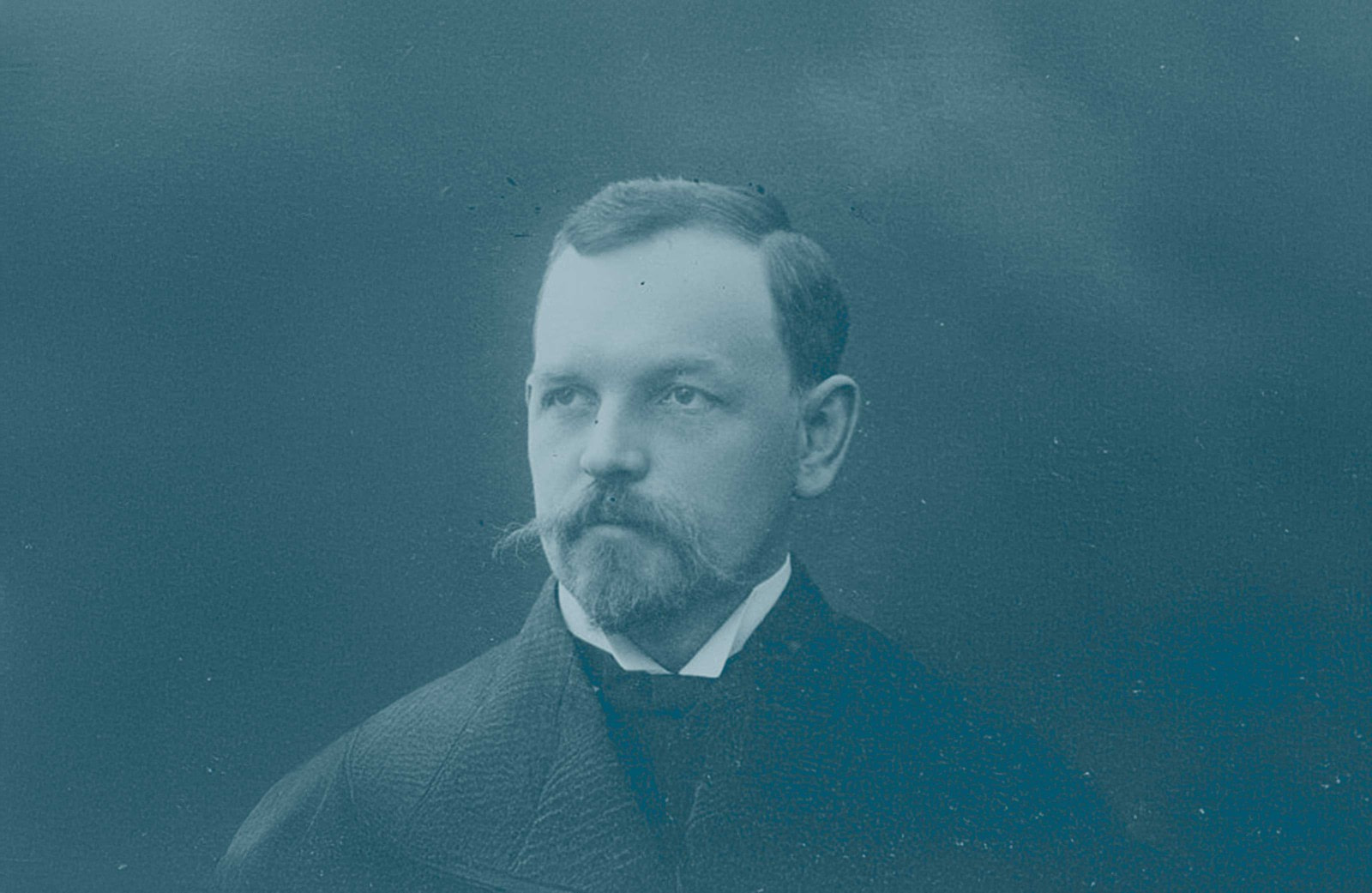
A seminal figure in the polar exploration period known as the Heroic Age of Antarctic Exploration, Otto Nordenskjöld led the way in advancing the geographical understanding of the White Continent, embodying the spirit of scientific discovery and endurance that would define the most famous polar explorers in history.
When you venture South with us, you'll uncover Nordenskjöld's legacy across the Antarctic Peninsula, from the locations now named in his honor and those that played host to his Swedish expedition, to the same spirit of adventure that flows through the veins of every Oceanwide Expeditions pioneer!
A Scholar Drawn to the Poles
Otto Nordenskjöld was born in 1869 in Småland, Sweden, to a family with a strong tradition of exploration. His uncle was the famed Arctic explorer Adolf Erik Nordenskiöld, known for his navigation of the Northeast Passage and exploration of northeast Greenland. A cousin, Gustaf Nordenskiöld, undertook significant studies of ancient Pueblo dwellings in Mesa Verde and the exploration of North America.
After earning a doctorate in geology at Uppsala University, Nordenskjöld developed a particular interest in glaciology and polar environments. Early mineralogical fieldwork, completed both before and after his doctorate, in Patagonia, Tierra del Fuego, Alaska, Greenland, and the Canadian Klondike region, sparked a fascination with the Antarctic, particularly the potential to study Earth's climatic history.
This academic focus would set Nordenskjöld apart from other early Antarctic explorers. His Antarctic expedition focused almost entirely on science, with imperialist aims and ideas of conquest set aside. An Antarctic novice, he recruited experienced members for the voyage. Overall command would be given to Carl Anton Larsen, a tenured Antarctic sailor who captained the expedition's ship, aptly named the Antarctic.
Between 1892 and 1894, Larsen led a Norwegian expedition to Antarctica, during which he explored much of the Peninsula's coastline, discovering the Larsen Ice Shelf and the Jason Peninsula. During this voyage, Larsen would set a farthest south record in the region of the Larsen Ice Shelf that would not be broken for almost a century. In typical Norwegian fashion, he also became the first person to ski on the Larsen Ice Shelf.
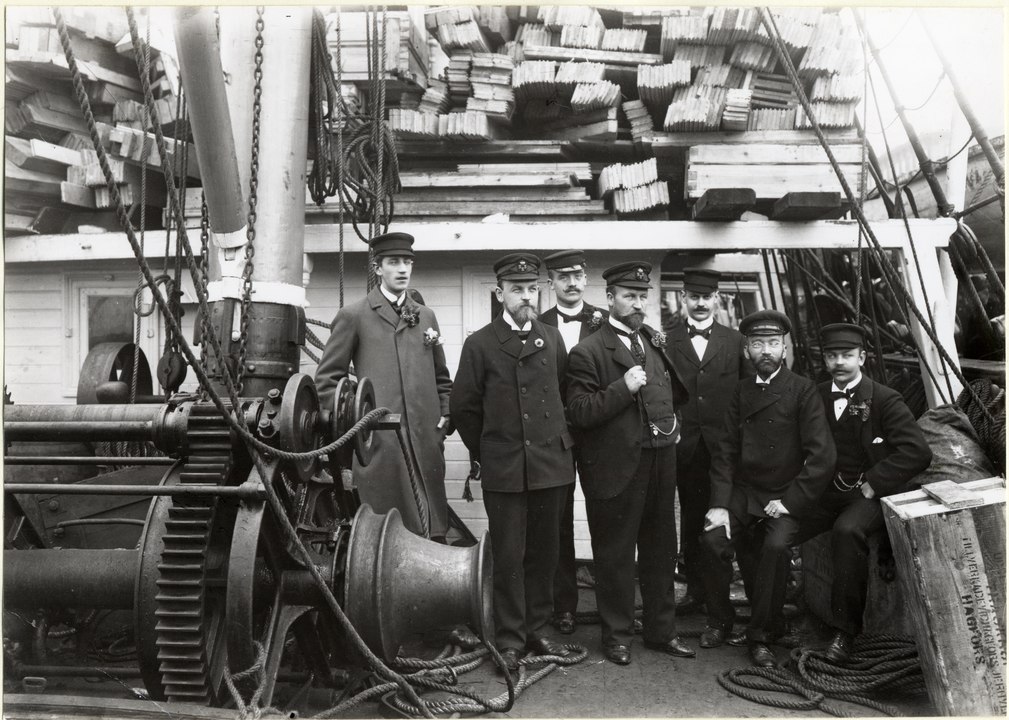
Crew aboard the Antarctic in October 1901
Picture by Olga Rinman - This file was provided to Wikimedia Commons by Göteborgs museer och konsthall as part of a cooperation project with Wikimedia Sverige.Göteborgs stadsmuseum, Public Domain, Link
The Swedish Antarctic Expedition (1901–1903)
In 1901, the expedition set off from Gothenburg, aiming to explore the then largely unknown parts of the eastern Antarctic Peninsula. Accompanying Nordenskjöld and Larsen were a team of scientists, including botanist Carl Skottsberg, zoologist Axel Ohlin, and archaeologist Johan Gunnar Andersson. A total of 16 other ranks, along with seven scientists, brought the expedition's total to 25. During a stop in Falmouth, Nordenskjöld met with William Speirs Bruce, leader of the Scottish National Antarctic Expedition that was about to depart for the South. Bruce and Nordenskjöld agreed to a pact to rescue one another if required, as they would be operating within a few hundred miles of each other.
After stopping off in Buenos Aires and the Falkland Islands on the way South, the Antarctic reached Snow Hill Island in the Weddell Sea. Along the way, the ship became the first to pass through Antarctic Sound and recorded several locations along the northern tip of the Antarctic Peninsula throughout December 1901 and January 1902. They established a supply depot on Seymour Island and landed on Paulet Island before heavy ice slowed progress.
In February 1902, on Snow Hill Island, Nordenskjöld and a small scientific team were left behind by the Larsen and the Antarctic. The plan was for the team to overwinter in a prefabricated hut, conducting meteorological observations, geological surveys, and biological studies. In the meantime, the ship would return to the Falkland Islands to resupply and await the breakup of the ice. With Nordenskjöld were five others, along with sled dogs and two boats.
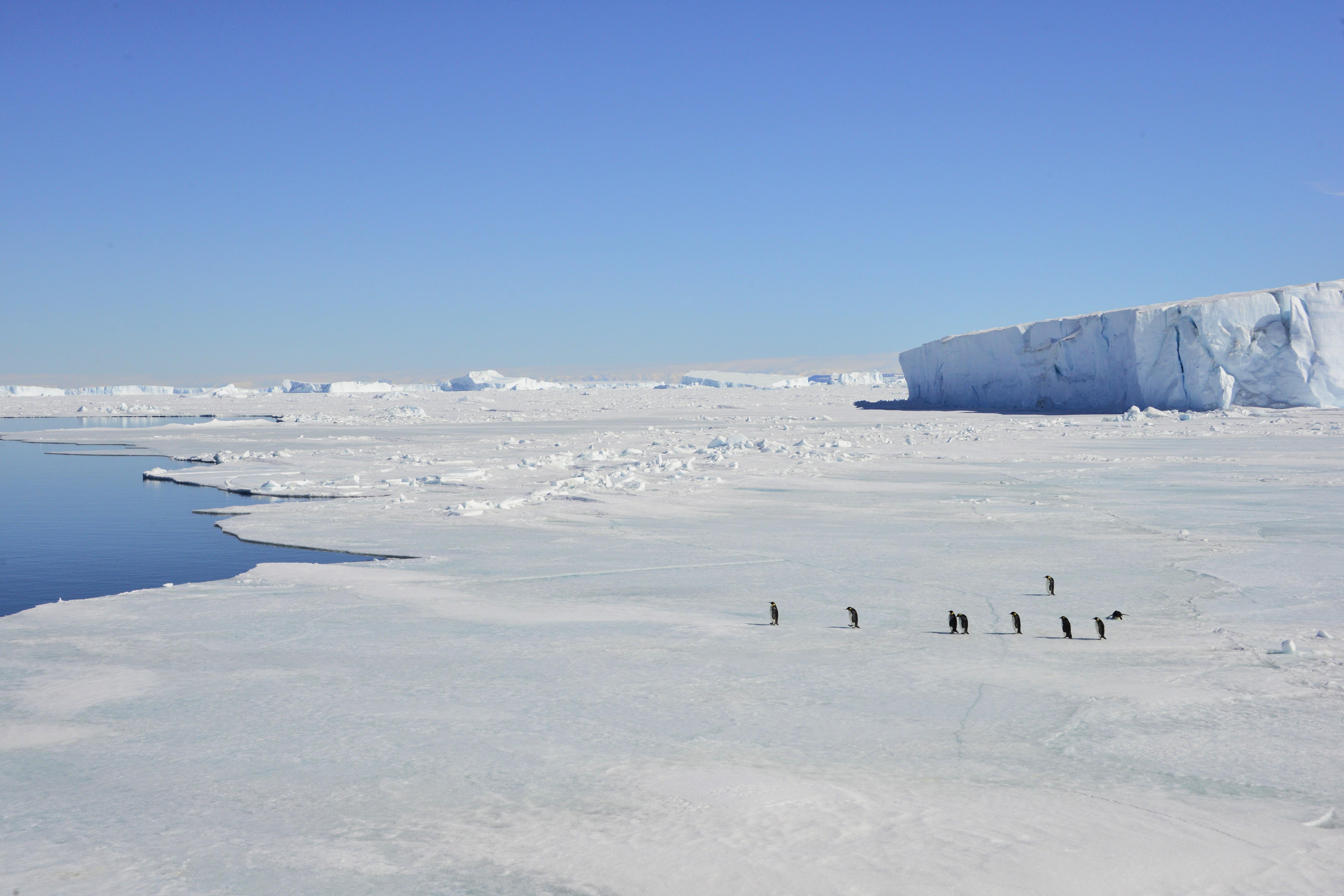
Snow Hill Island
Picture by Gary Miller
During their overwintering period, the group documented fossilized plants and marine life that provided evidence of a warmer prehistoric Antarctica, supporting emerging theories about continental drift and the past climate of Antarctica. Detailed weather records from Snow Hill Island also contributed to the earliest long-term Antarctic climate datasets. However, it was a harsh and exposed place to shelter. Storms lasted for days, and temperatures plummeted.
The men also made excursions to test their equipment, one of which covered 400 miles. Otherwise, they staved off boredom and their feeling of isolation, awaiting the return of light. However, after winter passed and the expected thaw failed to materialize, the worst-case scenario presented itself to the men. The Antarctic would not come - the ice did not open, and they would remain trapped for a second winter. They busied themselves with gathering food to get through the dark months ahead and settled into a routine of meteorological observations and further sledging journeys. Darkness swiftly descended on the small hut once more.
Many months later, on 12 October 1903, while sledging away from the hut, Nordenskjöld spotted three men in the distance. As they grew closer, disbelief turned to shock. The men were from the Antarctic, put ashore the year before, and sent to fetch the overwintering party.
Disaster in the Ice: The Loss of the Antarctic
The three men, Andersson, Druse, and Grunden, had been put ashore at Hope Bay after the Antarctic had been unable to penetrate the thicker-than-expected pack ice. The three men were to cover 200 miles, and made good progress at first, before being blocked by open water. The trio returned to Hope Bay to wait for the Antarctic to return.
Facing the prospect of overwintering, the three men built a small hut and gathered supplies. Months were spent in discomfort, with little food and little to do. With the arrival of spring, the men knew that if the Antarctic had been lost, no one would know where they were, and so they had to attempt to reach the other party at Snow Hill Island. So, they made a two-week journey across the frozen wastes before eventually being reunited with Nordenskjöld in October 1903.
Unbeknownst to both parties, the Antarctic had indeed been lost. In December 1902, shortly after depositing the men at Hope Bay, the ship was caught in the pack ice of the Weddell Sea. The Antarctic was eventually crushed, stranding Larsen and the crew on the ice. Three separate groups were now stranded in Antarctica, unaware of the others' fate.
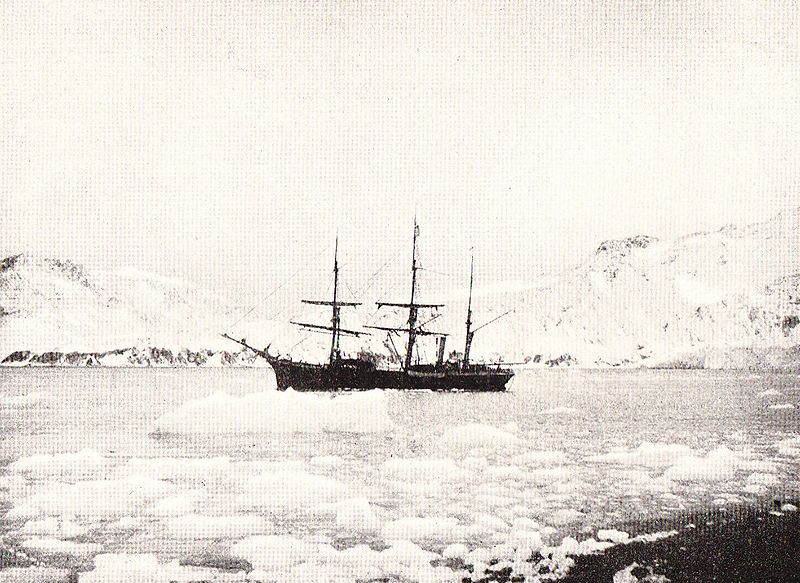
Antarctic trapped in pack ice
Picture by Otto Nordenskjöld (1869–1928) - Scanned and cropped from Mill, H.R. The Siege of the South Pole, Alston Rivers Ltd, London 1905 (Plate facing p. 426)., Public Domain, Link
The Antarctic party now faced a gruelling march across the ice to Paulet Island, aided by the drift of the sea ice. They dragged the ship's whale boats, loaded with supplies and the ship's cat, eventually reaching Paulet Island in February 1903. They knew they would have to survive the winter if they had any hope of raising the alarm.
The men built a crude stone hut and hunted penguins, attempting to stave off boredom and mental fatigue. They had little to pass the time. In June, a young sailor, Ole Wennersgaard, fell ill and died. He could not be buried until the following spring. By October, the men launched one of the whale boats and sailed to Hope Bay, arriving mere weeks after the three men had left for Snow Hill Island. Finding a map and constructing a crude sail, they set a course for Snow Hill Island, covering the final section on foot.
When they arrived at the hut, they found Nordenskjöld, his party, and the three-man Hope Bay group. To the delight of all, the Argentinian rescue vessel Uruguay was also present at Snow Hill Island. Thankfully, this had been arranged before the expedition left South America - if no word was heard by a predetermined date, the Uruguay would venture south in search of the men.
Against overwhelming odds, all three groups survived the winter of 1903. The men left on Paulet Island were rescued 11 days after Larsen had left in the whale boat. The dramatic reunion of the scattered parties remains one of the most extraordinary survival stories in Antarctic history, and one that, if timings had not aligned, could have ended very differently.
Despite the hardships, the expedition was a scientific triumph. The scientific team recorded thousands of specimens, produced extensive meteorological records, detailed maps, and reports that helped transform global understanding of the Antarctic Peninsula and Weddell Sea region.
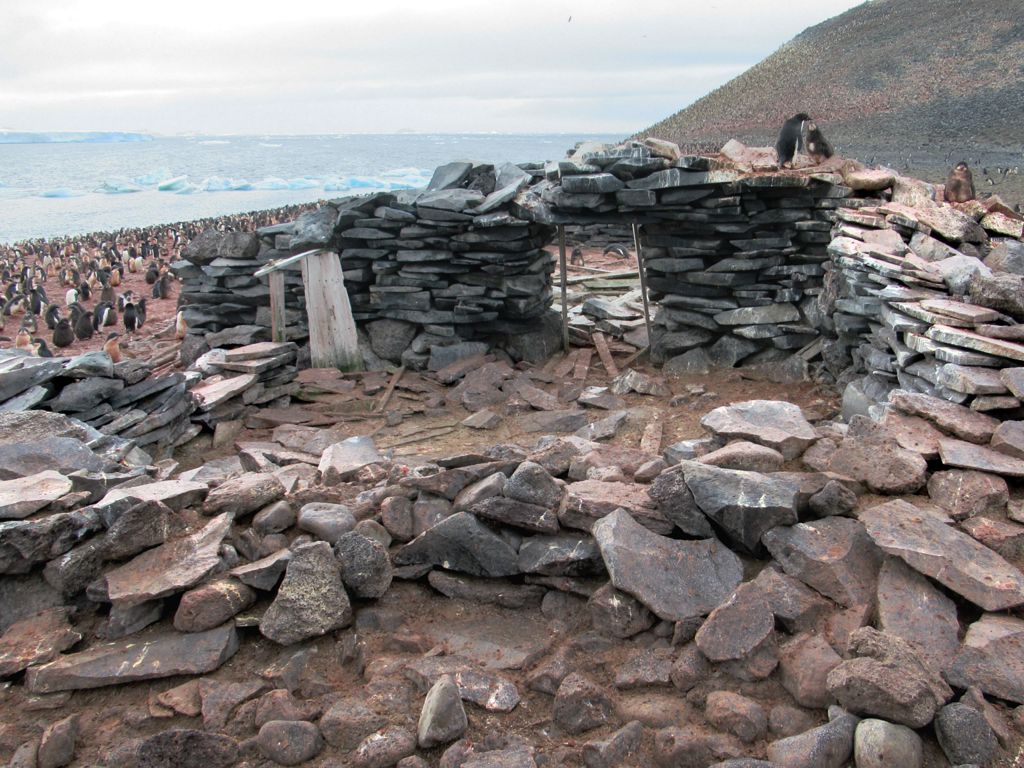
The remains of the stone hut on Paulet Island
Picture by David Stanley from Nanaimo, Canada - Nordenskjöld Expedition Shelter, CC BY 2.0, Link
An Enduring Legacy Through Polar Science
Nordenskjöld’s expedition helped establish Antarctica as a continent of scientific importance rather than mere geographic conquest. This belief holds in the modern world thanks to the continued framework of the Antarctic Treaty.
After returning from the Antarctic, Nordenskjöld found himself in significant debt. His expedition hadn't relied on funding from institutions and governments, and he had borne a significant portion of it. He returned to scholarly work, teaching at the University of Göteborg. In 1909, Nordenskjöld explored parts of Greenland and was involved in a proposed but never-realized Anglo-Swedish Antarctic Expedition.
He died in 1928, aged 58, following a traffic collision.
Today, locations such as Snow Hill Island and Paulet Island remain significant sites for researchers, and our expedition itineraries. Nordenskjöld's hut remains standing on Snow Hill Island, and we visit this remarkable place on our iconic Snow Hill Island in Search of Emperor Penguins voyages. On these, we take guests to the northernmost colony of emperor penguins, found on Snow Hill Island - an experience unlike any other in Antarctica.
When you step ashore, you encounter landscapes that tell stories of endurance, discovery, and the fragile beauty of polar ecosystems. Led by our expert guides, you'll not only visit these regions but also gain a deep understanding and appreciation for the polar regions, from the species that call them home to the stories of human endurance that mark them out as the final frontiers of human discovery. Through our citizen science opportunities and support for scientific research, we help sustain Nordenskjöld's legacy in the modern era and aim to inspire future generations of Antarctic ambassadors at the ends of the Earth.