Blog
Type
Region
Destination
-
Show all
Ship
Highlights
-
Show all

The Arctic Hare: Easter Bunny²
In preparation for Easter Sunday, let’s explore all the ways this so-called polar rabbit (which really isn’t a rabbit at all) might in fact make a better mascot than the traditional Easter bunny.
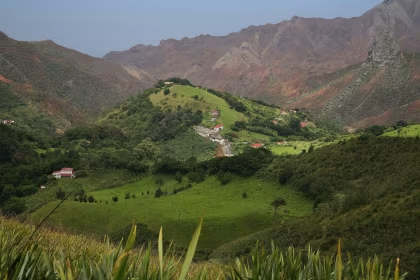
Five Reasons to Love St. Helena (Even If You’re a Polar Junkie)
Being one of the most remote islands on Earth confers a certain charm. Getting your name from a Roman empress (and the mother of Constantine the Great) also helps. And if you’re in search of a conversation starter, being the site of Napoleon’s final exile doesn’t hurt either.
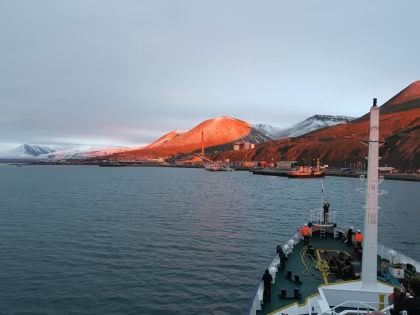
Port Pastimes: 7 Fun Things to Do in Longyearbyen
Waiting in port to begin an Arctic cruise can be a little like waiting for water to boil or coffee to brew or Game of Thrones to come back: Time seems to defy its own laws and, as life slows to a crawl, you begin to wonder if all of this is really going to be worth it.
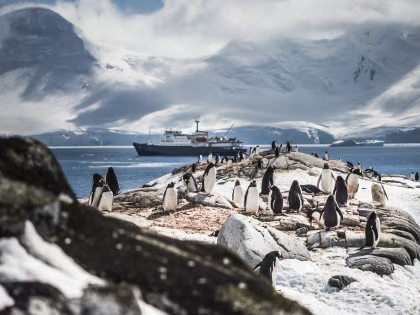
Top 10 Antarctic Attractions
Even if you put its exotically beautiful wildlife aside, Antarctica is undeniably mythic in both scale and scenery: The largest glaciers and icebergs are found there, drawing polar newcomers and the certifiably snow-mad alike.
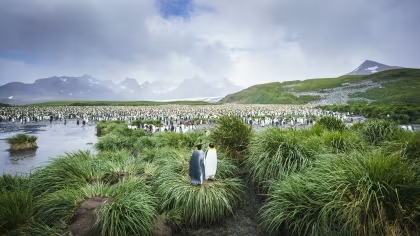
The South Georgia Seven: Hikes, Fjords, Whales, & Penguins
Few places encapsulate such a staggeringly rich assortment of sub-Antarctic scenery, animals, and outing opportunities as South Georgia.
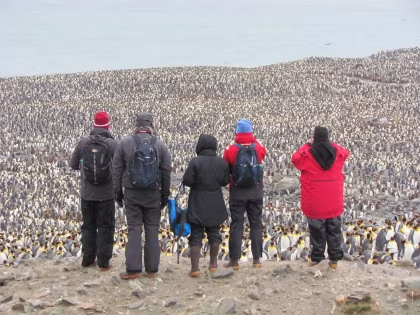
Scenes from St. Andrews Bay: 12 Pics of Penguins, Seals, and More
It’s highly likely that, if you’re ever lucky enough to visit the visually stunning sub-Antarctic island chain of South Georgia, one of your favorite sites (and sights) will be the picture-perfect shoreline of St. Andrews Bay.
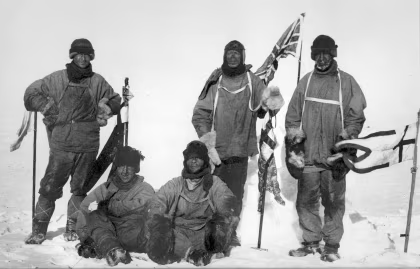
Polar Gear of Yesteryear: Expedition Clothing 100 Years Ago
When you look at pictures of polar expedition clothing from a century past, the experience is not unlike seeing images of World War military gear.
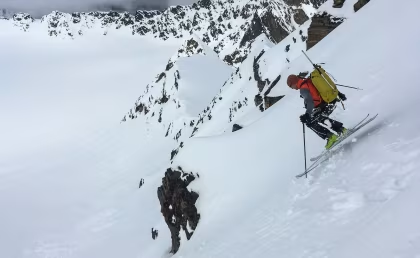
Trek into the Timeless: Interview with Polar Ski Guide Phil Wickens
If you ever find yourself lost in snowy, ice-clutched, thoroughly inhospitable country like in the latest wilderness survival movie, don’t pine for the likes of Robert Redford, Anthony Hopkins, or Mads Mikkelson – nice as their company would be. Rather, pray Phil Wickens is with you.
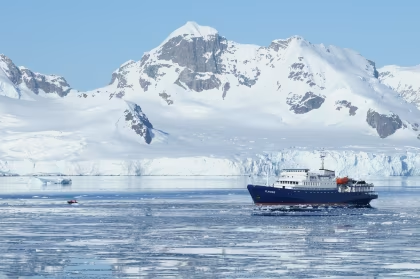
The Ultimate Traveler’s Guide to the Arctic and Antarctica
Sunrises or sunsets, coffee or tea, Wonder Woman or Superman. The world contains a virtually limitless supply of things to compare, contrast, juxtapose, differentiate. But few things so perfectly express the polarities of our planet as its literal magnetic poles – or more generally, the Arctic (north) or Antarctica (south).
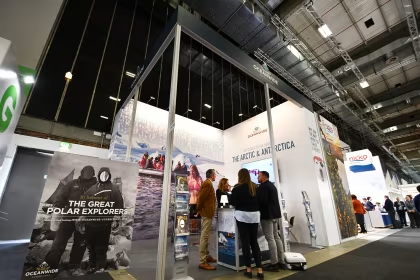
Oceanwide Expeditions covers the polar corner at ITB Berlin
Last week Oceanwide staff attended ITB Berlin, the world’s largest travel trade show, meeting old friends and new in a weeklong spree of tour operators, travel agents, and all other manner of professionals in the wide world of commercial travel.
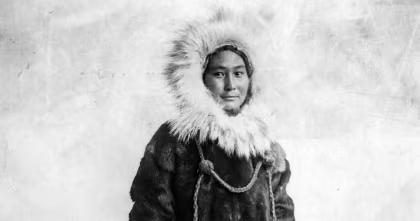
Ada Blackjack: Forgotten Queen of Arctic Expeditions
The incredible real-life story of the overlooked Iñupiat woman who became the only survivor of a fateful Arctic expedition.”
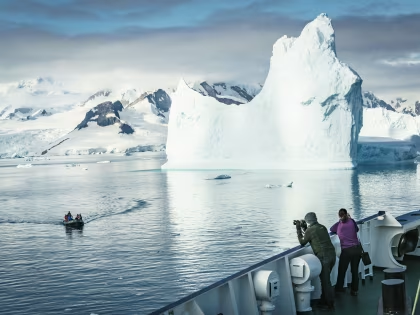
Antarctic Explorer’s Voyage
There’s off the beaten track, and there’s really off the beaten track. And then there’s the Antarctic Explorer’s Voyage, a far-ranging polar expedition cruise that lets you visit areas of Antarctica we rarely if ever offer – or any other cruise operator, for that matter.
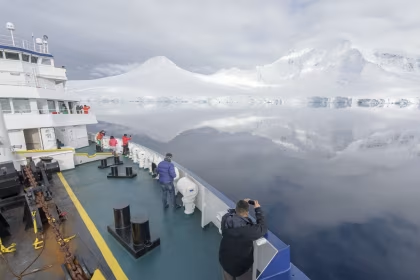
A Brief History of Arctic & Antarctic Cruises
These days you can book a few tickets, take a few flights, and embark on an expedition cruise to areas that just over a century ago represented the outer limits of earthly exploration.
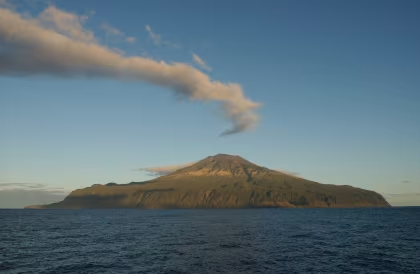
Tristan da Cunha Collection: 18 Pics from Earth's Most Remote Islands
The best pictures aren't always in the first place you look. In fact, sometimes they're about as far away as you can get. And it's hard to imagine a more far-flung earthly destination than Tristan da Cunha.

Arctic Ales, Polar Pilsners: Interview with the Svalbard Brewery
Something just seems right about the existence of the Svalbard Brewery. After all, there certainly should be a brewery on the far-flung Arctic archipelago of Svalbard. And it certainly should be in Longyearbyen, the largest settlement of the chain’s largest island.
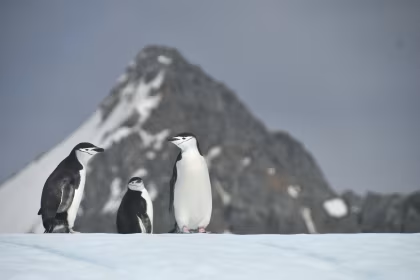
11 South Orkney Animals: Whales, Seabirds, and Penguins Aplenty
The South Orkney Islands are frequently forgotten as an Antarctic travel option. But they shouldn’t be: Forming part of the Scotia Sea Islands tundra ecoregion, the South Orkneys are home to a healthy supply of wildlife despite their rough conditions.
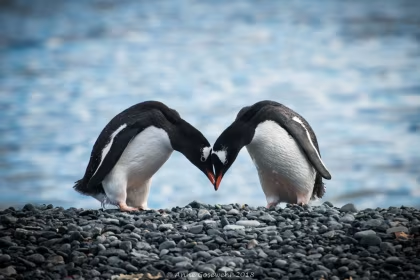
Polar Amore: 14 Wildlife Pics to Warm up Your Valentine’s Day
Contrary to common belief, Valentine's Day is not just for couples. At least not in the polar regions. With that in mind, we've compiled 14 pictures celebrating the many faces of polar love - some sugary, some fiery , but all certain to make your Valentine's Day a little brighter.
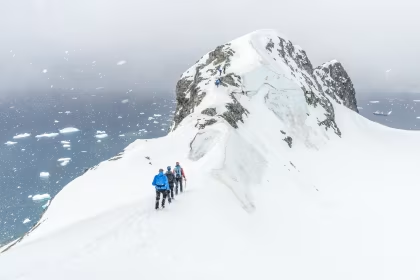
The Ins, Outs, and Ups of Polar Mountaineering & Ski Mountaineering
To shed some light on these ultimate outings, here’s a rough guide to polar mountaineering and ski mountaineering, telling you what the activities entail, where you can do them, and why they’re the best way to put some elevation in your polar vacation.
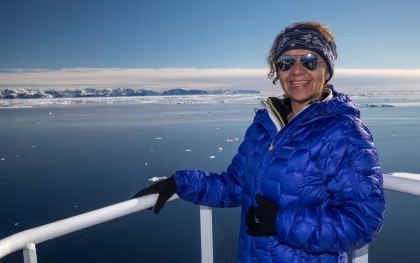
Selling Spectacular: Interview with Maria del Pilar Fernández
We regularly interview our expedition guides and crew, gushing about all the fantastic locations these lucky souls get to call their office. But what about the Oceanwide staff whose office is, well, an office?
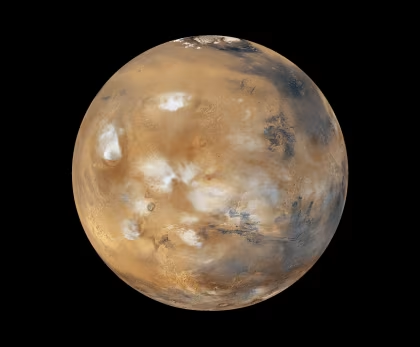
Earth vs. Mars: Polar Regions Compared
It’s common knowledge that Mars, like Earth, has its own polar regions – lovingly referred to as the Martian ice caps. But is that all there is to it, or are there distinctions between these regions?
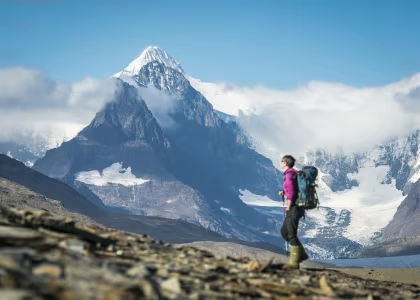
Path of Polar Heroes: Hiking Shackleton’s Historic Route
Our voyages touch on much of the same ground the giants of polar history explored, endured, and (to a lesser degree) enjoyed during their historic expeditions, most of which describe acts of such superhuman resolve they almost defy belief.
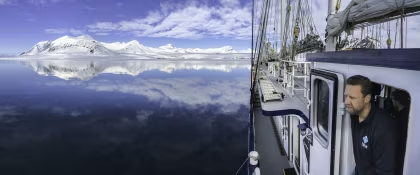
Arctic and a Coffee: Interview with a Polar Sailing Captain
Some people travel to the Arctic for the polar bears and seabirds, others for all those ice-spackled bays and peaks dusted with snow no hand will ever touch.
