Stepping off a Zodiac onto Antarctic ice is nothing like disembarking from a cruise ship gangway. Landings define an Antarctica cruise. They are the moments you leave the vessel behind and stand among penguins, ice, and rock shaped over millions of years. At Oceanwide Expeditions, we build every day around getting you ashore, not around keeping you on deck. Our expedition staff plan each landing around the exact conditions of that day, so no two landings ever look the same. Some days see you explore beaches full of molting seals and curious penguins. Others bring steep climbs above a bay filled with drifting ice, or historic buildings.
How Zodiac landings work on an Antarctic expedition cruise
Every landing on an Antarctica cruise begins with a Zodiac. These rigid inflatable boats shuttle you from ship to shore in small groups, with our expedition staff at the helm. Before every landing, our team runs a short briefing covering the route and the wildlife you might meet. Some landings are dry, stepping straight onto rock or a gravel beach. Others are wet, wading through shallow surf in rubber boots. Either way, our crew handles the boat work - you focus on the spectacle of Antarctica greeting you!
Picture by Martin Anstee
Hiking, photography, and time among penguin colonies
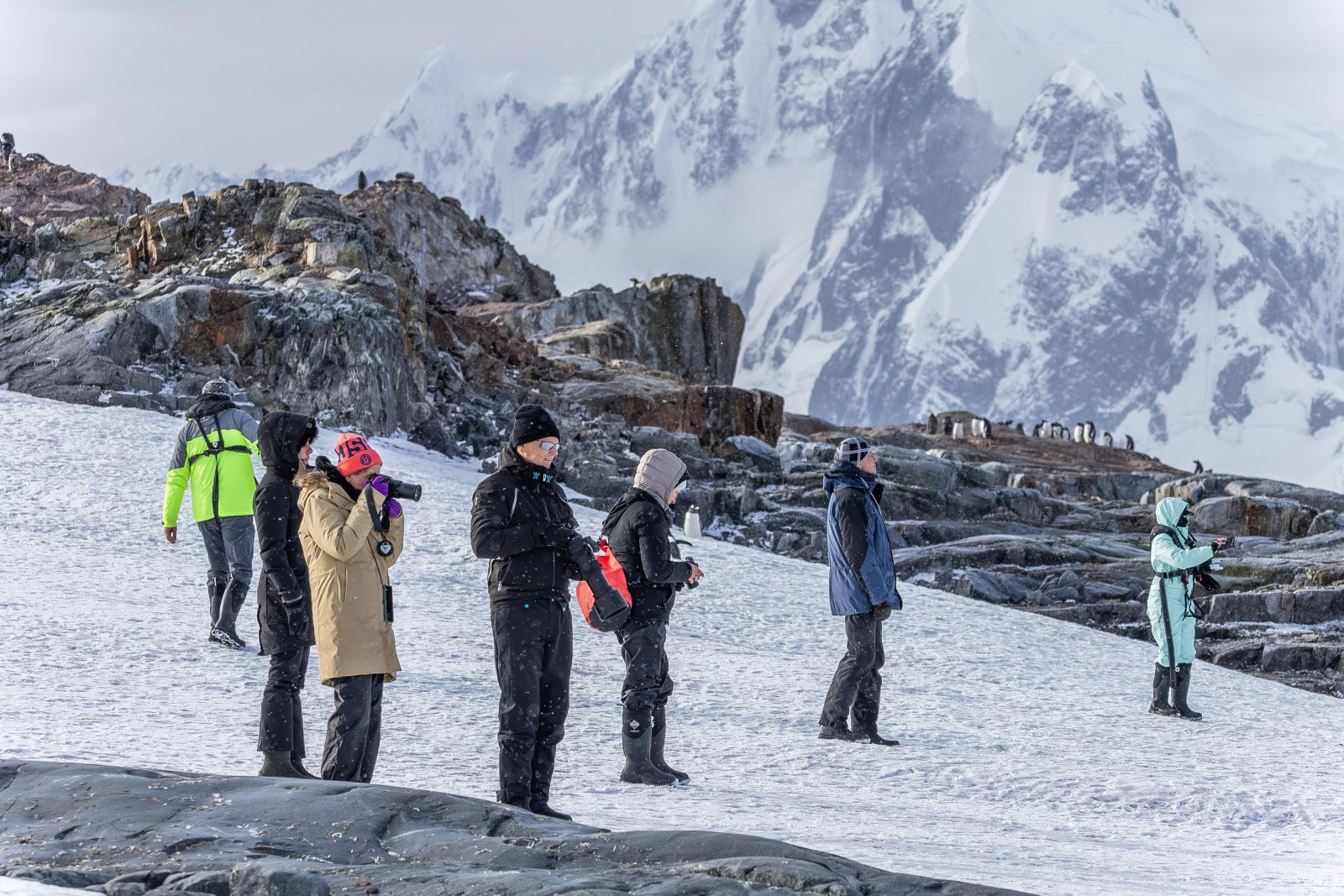
Once ashore, the program shifts to exploring, observing, and photographing. Our expedition staff lead hikes across elevated ridgelines on the Antarctic Peninsula, where the view opens onto glaciers calving into the sea below. You might follow a trail through a gentoo penguin colony, weaving carefully around nests scattered across volcanic gravel. Photography workshops give you time to frame an ice cliff or a skua wheeling overhead. Snowshoeing extends your range across deeper snow, when conditions allow. On certain landings, mountaineering routes climb toward higher ground, opening views across the bay and the ship anchored below. Every outing stays flexible. If the wind picks up or the ice shifts, our expedition staff adjust the route within minutes.
Landing sites across the Peninsula and the southern islands
Landings vary widely depending on where your Antarctica cruise takes you. We choose landing sites for the mix of terrain and wildlife each one offers. Along the Antarctic Peninsula, sheltered bays open onto glaciers and beaches crowded with Adélie and chinstrap penguins. Terrain shifts constantly. Black volcanic sand and hauled-out elephant seals are a feature of many beaches in the South Shetland Islands. Rock and moss color the ridgelines above, worn smooth by fierce katabatic winds. Every landing site brings its own mix of wildlife, terrain, and light.
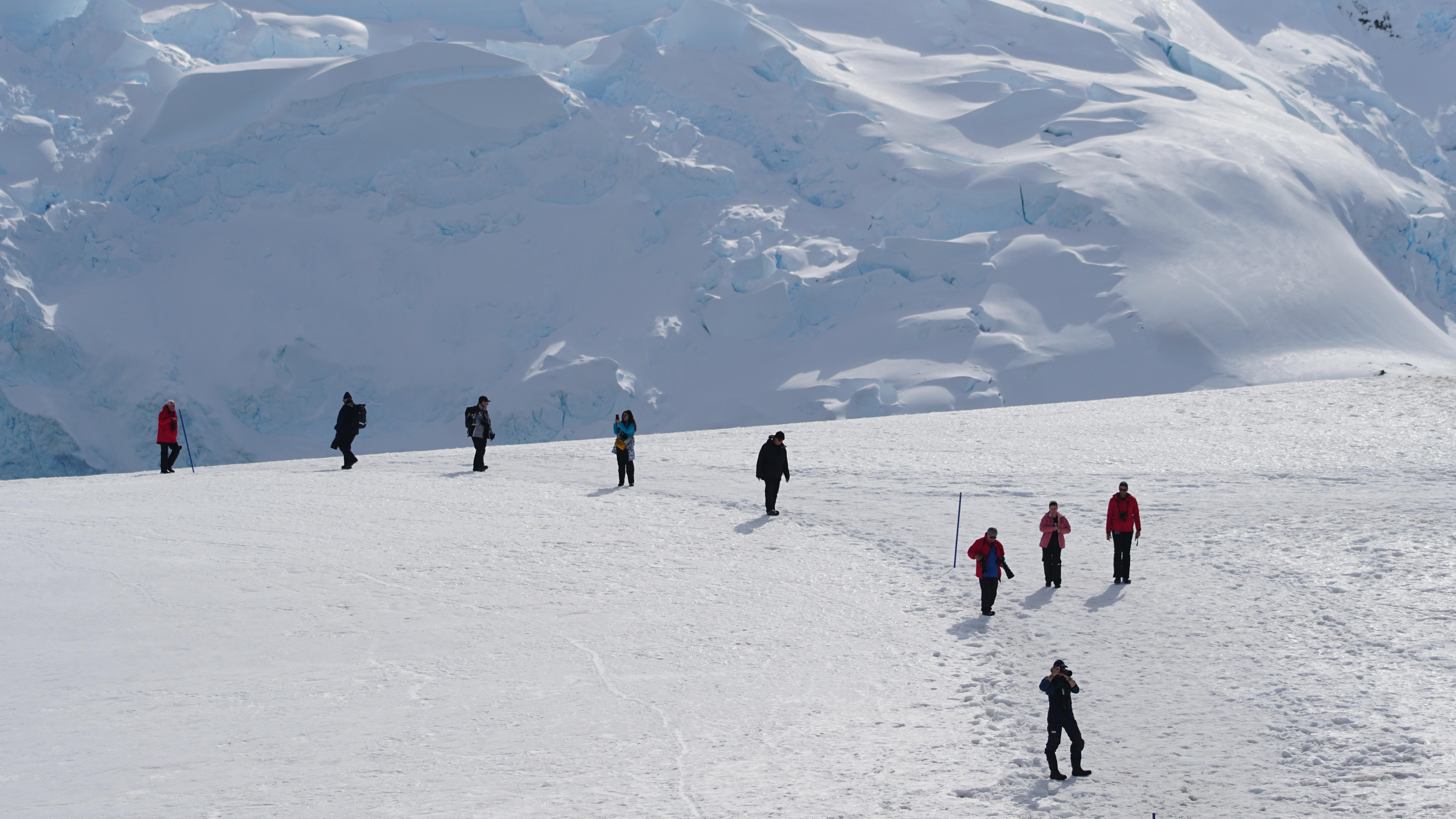
Picture by Jess Owen
Landings on South Georgia and how ice defines our plans
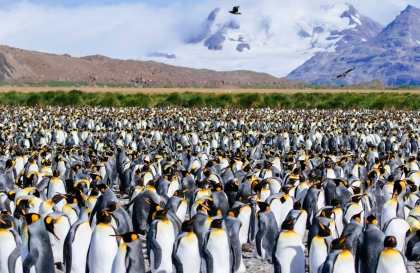
On itineraries that include South Georgia, landings bring you face to face with huge king penguin colonies spread across entire beaches, full of the sounds and smells of thousands of raucous birds. Fur seals crowd the tussock grass just behind the tideline, curious as you pass by. Like anywhere else in the sub-Antarctic, weather and ice have the final word on any landing. The presence of drifting icebergs can close a bay overnight. Katabatic winds can end a landing within the hour. Our expedition staff track conditions continuously and shift the plan the moment something changes. Smaller vessels give us the edge here: fewer people ashore means faster decisions and more time spent on land instead of waiting your turn. Our Antarctica cruises run on flexibility, not a fixed script.
Few experiences match the quiet of stepping onto Antarctic and sub-Antarctic shores for the first time. The moment stays with you. View our expedition cruises to Antarctica and book your once-in-a-lifetime adventure online.
Main image by Koen Jongerling