Charting a course across the mighty Atlantic Ocean, from the southern tip of South America to some of the most remote islands on Earth, and the tropical waters of Cape Verde, is our industry-renowned Atlantic Odyssey voyage.
Renowned by the birding community as one of the premium ocean-birding trips in the world, and beloved by fans of the high seas and those seeking to visit far-flung corners of our globe, our Atlantic Odyssey voyage is full of discovery, opportunities to encounter rare wildlife species, and the lure of stepping foot on some of the most remote locations on Earth.

Hans Verdaat
This season, experienced Expedition Leader and researcher Hans Verdaat will again be leading our Atlantic Odyssey, bringing a blend of scientific research and a deep insight into endemic and migrating bird species, along with a passion for enhanced guest participation and the pursuit of adventure. For over 20 years, Hans has worked for the Marine Research Institute from the University of Wageningen in the Netherlands, specializing in sea bird and marine mammal research, and, since 2015, has worked closely with Oceanwide Expeditions as an Expedition Guide and Expedition Leader.
Visit the most remote islands on our Atlantic Odyssey
The true Atlantic Odyssey voyage departs Ushuaia, located in the far south of Argentina, and steams northeast into the open ocean. First up is the stunning island of South Georgia, a heavily glaciated, mountainous, sub-Antarctic island home to monumental colonies of king penguins and beaches dominated by gargantuan elephant seals.

Photo by Hans Verdaat
South Georgia is rightly regarded as a wildlife paradise, yet it is just the first stop on a journey that gets even more special. From South Georgia, the route follows the migratory paths of many species of seabirds. "Once we leave South Georgia, we see indications of bird migration," Hans says. "It's the end of the wintering season in Antarctica for the northern hemisphere breeders, with Arctic terns, long-tailed jaegers, perhaps phalaropes, all heading north. For some species, we hardly know where they spend their winter, but we know they fly north."
"The ocean may appear empty," he continues. "But during the Odyssey, passing an hour without seeing a bird is rare, even in the doldrums where wind disappears. Here, at the least active point, we still see upwards of 50 birds a day." The Atlantic Odyssey is rightly regarded as one of the must-do trips for birders and marine mammal enthusiasts, particularly those interested in seabirds and species unique to the areas visited, including sub-Antarctic fur seals. After traveling several days in the open ocean, the next point on the map highlights this perfectly - the mist-shrouded shores of Gough Island, an important seabird nesting site for species including Tristan Albatross, spectacled petrel and Atlantic petrel. Along the shoreline, opportunities to seek the Gough Island Finch and the Gough Island Moorhen, both of which are endemic to the island. will likely present themselves.

Photo by Hans Verdaat
Gough Island is also home to a variety of other species, including the Atlantic yellow-nosed albatross and the northern rockhopper penguin. "For people interested in seeing every species of penguin, this is important," says Hans. "They can only be found here, on Gough Island, and the islands around Tristan da Cunha." Today, Gough Island is a strict nature reserve, off-limits regarding landings, and is home to a South African weather and research station. Still, during Zodiac cruises, the opportunities for spotting bird life, as well as sub-Antarctic fur seals here, are magnificent.
From Gough Island, a day's sailing reaches the incredibly remote island of Tristan da Cunha and its surrounding islands, the Nightingale Islands (consisting of Nightingale Island and two islets, Stoltenhoff Island and Middle Island), and the evocatively named Inaccessible Island. "This is what makes this trip so appealing for island or territory collectors,'' says Hans. "Gough Island, Tristan da Cunha, Inaccessible Island, and Nightingale Island can only be visited by ship, and only really on a voyage of this kind."

Photo by Hans Verdaat
The most remote island on Earth
Here, over 2,700 kilometers from South Africa and 3,700 kilometers from South America, lies Tristan da Cunha, part of the British Overseas Territory of Saint Helena, Ascension and Tristan da Cunha, and the most remote inhabited island on Earth. Dominated by Queen Mary's Peak, the island's only town and capital, Edinburgh of the Seven Seas, is clustered around a small harbor, the only link to the outside world. Here, a small community of Tristanians lives in the shadow of a volcano that last erupted in 1961, the evidence of which can be seen during a visit ashore.

Photo by Hans Verdaat
Part of the expedition team for the Atlantic Odyssey will be Conrad Glass, a resident of Tristan da Cunha and member of the well-known Glass family. He served (and continues to serve) as the island's only police officer, having written a book about his experiences, 'Rock Hopper Copper'. Glass's presence adds an extra dimension to a visit to Tristan da Cunha, as this community link provides something far more than just a surface-level visit to this remarkable point on the map. "That's something actually quite special," agrees Hans. "Many other tour operators will take on a local guide for a day if they visit Tristan, to talk a bit about life on board or life on the island, but they're not present for the whole trip. So, with us, it's a unique opportunity."
"Another big benefit is that we usually have flexibility in the length of time we spend in the area of Tristan da Cunha, Nightingale, and Inaccessible Island," continues Hans. "Many other operators only stop by Tristan for a day, and if sea conditions aren't favorable, that's it - you've missed your chance. With our approach, we can adjust plans to maximize the chances of being able to land on the islands we are allowed to."

Photo by Hans Verdaat
Indeed, the sea conditions here, so far from anything, can be rough. But by operating flexibly, the success rate for landing on Tristan da Cunha and the Nightingale Islands is high. Every island in the archipelago has its own unique endemic species with three subspecies of the Tristan thrush found on Tristan and the outer islands. On Nightingale Island the Nightingale Island finch can, be seen all over the island but the very rare Wilkin's finch is only seen in a very small area on the top of this lush green outcrop. A variety of other breeding species also thrive here, with the establishment of a marine reserve in 2020 helping to protect important seabird breeding colonies.

Photo by Hans Verdaat
Inaccessible Island lives up to its name. Opportunities to land are often limited and can be challenging to achieve. Yet, for birders seeking one of the rarest and most isolated bird species on the planet, it is a must-do. The Inaccessible Island rail, the smallest flightless rail in the world, is only found here. Even if landing is impossible due to weather, a Zodiac cruise may offer the extremely rare opportunity for capturing this elusive bird on film. The Inaccessible Island finch and Tristan thrush forage on the island, and occasionally, you will see resting northern rockhopper penguins on the beaches. Several species of albatross also thrive here, including the sooty albatross, spectacled petrel and afore-mentioned yellow-nosed albatross.
Towards the tropics
From Tristan, the course of the Atlantic Odyssey then heads north to Saint Helena, another remote island located around 1,200 miles (1,950 kilometers) off the coast of Angola. "The great thing about this trip is that you travel through the different regions, from very cold to very warm," says Hans. "So, on this one trip, you really can see many of the rare species that are found in the South Atlantic Ocean. That's unique because there are one or two that are very difficult, but you stand a chance!"
Saint Helena is perhaps best known as the location where Napoleon was exiled to following his defeat at the Battle of Waterloo in 1815. While wildlife remains a draw in the seas and skies of Saint Helena, including the endemic Saint Helena plover or wirebird, the real attraction is the fascinating history of the island, tied to emperors, empires, and global trade. Ashore, guests can visit the grave of Napoleon, the historic house where he lived out his last years, and the historic settlement of Jamestown. The island also offers opportunities to hike, with plenty of fauna and flora on display.
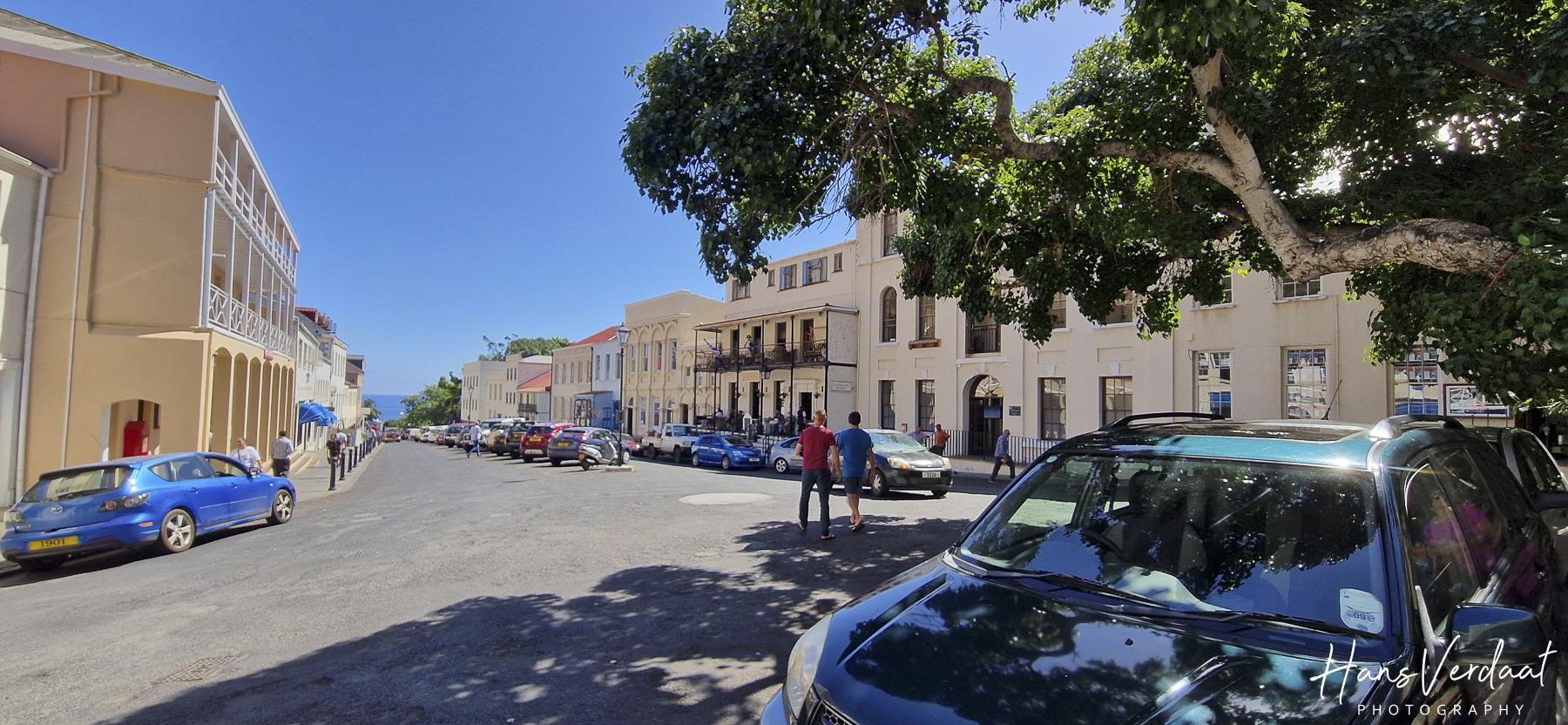
Photo by Hans Verdaat
"Beyond birds, dolphins and whales, we have a lot of 'charismatic megafauna,'" says Hans. "That's anything we see on the surface of the water. So that includes sharks, turtles and large fish like tuna, ocean sunfish or rays. On the Odyssey, we have a good chance to see many different species of sharks and marine turtles, including whale sharks and hammerheads. In the tropical waters we encounter a number of tropical dolphin, and whale species including Kogia and tropical beaked whale species." In Saint Helena especially, guests may get the opportunity to snorkel with whale sharks, while the waters around Ascension Island are a hotspot to see sea turtles.
Currently, Ascension Island cannot be visited, but a tantalizing opportunity lies just offshore. "The area gives superb chances of views of the Ascension Island frigate bird - their colony is truly enormous," says Hans. "The seas surrounding the island are also home to species such as the white-faced storm petrel, white-tailed tropicbird and rough-toothed dolphin – often superb to be seen from the decks of our vessel."
The final stop on the Atlantic Odyssey is Cape Verde, north of the Equator and in balmy, tropical seas. Here, a melting pot of cultures and history awaits, along with tropical species in the waters and skies. Both Cape Verde and Saint Helena have airports.
A scientific approach to expedition cruising
Oceanwide Expeditions prides itself on its foundations in scientific research and continues to support scientific studies in both the Arctic and Antarctica. Along with formal scientific research, Oceanwide Expeditions also supports and advocates for citizen science in certain forms. On expedition cruises, guests can engage with citizen science in various ways, from data collection to logging sightings of whales through organizations such as Happywhale. "Along with empowering our guests to take part in data collection, we also engage with proper scientific research projects, and provide a platform of opportunity - it's essential to have that distinction."
On the Atlantic Odyssey, this blend of citizen science and accredited scientific support is very well apparent, with guests contributing to scientific papers on bird species, and guides supporting the work of research institutions at various points throughout the trip. "We have actually started identifying new plumage variations and adding that to the scientific records for populations in the Tristan area," says Hans. "In addition, we added several species of whale and birds that had not been spotted in the marine protection areas in these remote oceanic zones before, for example, we recorded the first blue whale in the Tristan area."

Photo by Hans Verdaat
Part of this scientific aspect is driven by Hans himself, self-described as a hands-on Expedition Leader, who combines his passion for research and wildlife with a desire to share his knowledge with others. "When I'm on board, all my data gets collected. I consistently record all my observations on observation.org," says Hans. “And that's true for a lot of the guides, but also guests. We all use the same observation.org platform, and through that, we have contributed to scientific publications. There's a publication written by a guest coming out soon about terns on Tristan eating caterpillars with data and photos that we collected during this itinerary."
This blend of science, discovery, and adventure brings guests from all backgrounds, including photographers, adventurers, and wildlife enthusiasts. All this, combined with the experience and knowledge base of the expedition team, creates an onboard atmosphere where the spread of knowledge and the thrill of discovery are felt in every conversation, lecture, and activity on board, by Zodiac, and ashore.

Photo by Hans Verdaat
When you join the Atlantic Odyssey, you never know who you might be sharing the ship with, as Hans suggests. "What's remarkable is that on these trips, a number of guests are often scientists working for scientific institutes. Over the four trips I have done, scientific output has been six or seven articles to date."
Our Atlantic Odyssey itinerary runs at the end of each Antarctic season. The true Atlantic Odyssey trip runs from Ushuaia to Saint Helena, lasting for around 23 nights. From there, you can continue to Cape Verde by booking a combination cruise. Other combination cruises can be added, which include a voyage to Antarctica before you depart South America, bringing the total duration to 42 nights. It is also possible to end your Atlantic Odyssey in Saint Helena, rather than continuing to Cape Verde.