Blog
Type
Region
Destination
-
Show all
Ship
Highlights
-
Show all
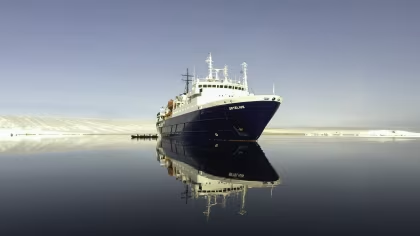
Ortelius under repairs
The vessel Ortelius is currently under repairs in Longyearbyen, Spitsbergen due to a problem with the propulsion system.
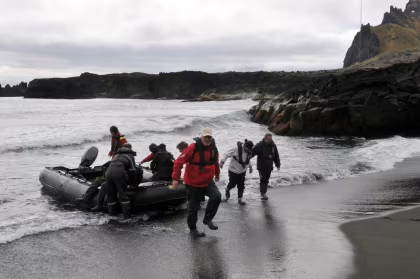
A visit to the fascinating island of Jan Mayen
After exploring the remote island of Fair Isle, our Atlantic Odyssey voyage once more turned its attentions northwards and left the outer extremities of the UK behind. Our destination was Jan Mayen, a volcanic island situated on the mid-Atlantic ridge just north of 71°.
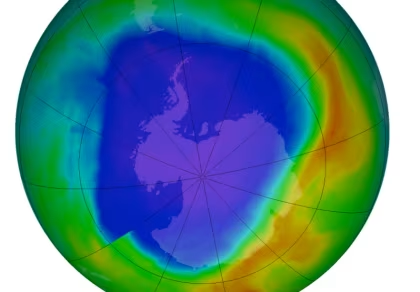
The ozone layer in Antarctica
Scientists have calculated that if the ozone layer was brought down to sea level it would be 3 mm thick, while in the Antarctic the ozone can be as low as 1 mm thick. Ozone in the stratosphere is being depleted by a variety of human-made gases with a ‘hole’ forming over Antarctica.
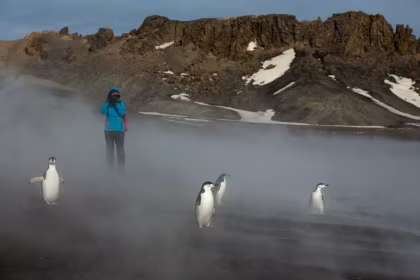
Graham Land: A landscape dominated by volcanoes
At the upper tip of the Antarctic Peninsula lies Graham Land, a jagged, glaciated part of Antarctica with a landscape dominated by volcanoes. Despite the volcanoes being over 200 million years old they are far from extinct with volcanic activity occurring today.
Oceanwide completely refurbished deck 4 aboard Ortelius
In 2011, Oceanwide Expeditions acquired the vessel Ortelius. A great expedition ship with the highest ice-class ranking as well as lots of deck space. Ideal to operate in the ice and to offer exclusive wildlife programs, including helicopter flights.
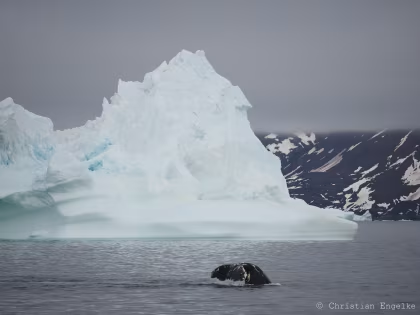
100 bowhead whales near Qeqertarsuaq, West Greenland
Today – May14, 2016 - we were sailing with the Rembrandt van Rijn towards Qeqertarsuaq; certainly in the hope of seeing a couple of whales. We know that these waters are nutrient rich and thus hoped for the possibility of seeing a few Humpback whales or even Greenland whales (Bowhead whales) off the coast of Disko Island.
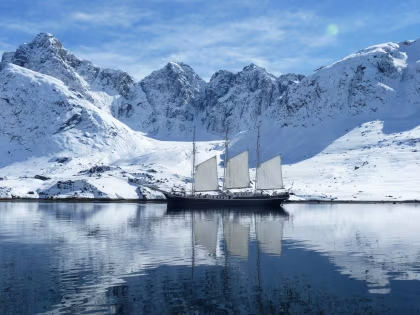
Why You Should Visit Greenland: 11 Things to See, Do, and Explore
There's nothing quite like seeing your first Greenland glacier, sailing into the island's largest fjord system (also, incidentally, Earth's largest), or watching a humpback whale breach over the dark Greenland Sea - three great reasons to visit Greenland, and we've barely gotten started.

Shackleton’s Push to the South Pole
On the evening of February 11, 1907, Irish-born polar explorer Ernest Shackleton, already among the more famous polar explorers, announced his intention to embark on a momentous Antarctic expedition. His goal: to reach the South Pole.
19 Photos of Life on Ortelius
It’s understandable that most of your questions are going to revolve around what you can do once your Arctic or Antarctic cruise reaches its destination. Still, you may very well be curious about the journey itself; after all (depending on your cruise) you may be spending as much as a month aboard a ship.
Get to Know Your Ice
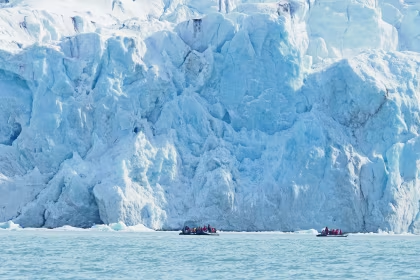
Ice. It does everything from cooling your drink to helping to regulate the temperature of the entire planet. Let’s take a look at the ways we encounter ice in the world and its wide variety of names.
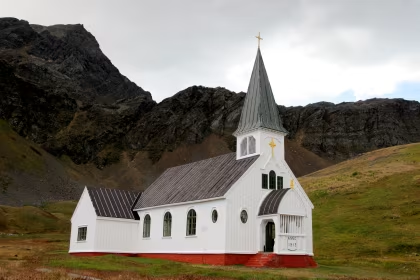
Churches in Antarctica
'Below 40 degrees South there is no law, below 50 degrees South there is no God', goes the old adage. When faced with a storm in the turbulent and freezing waters of the Drake Passage, one might think so.
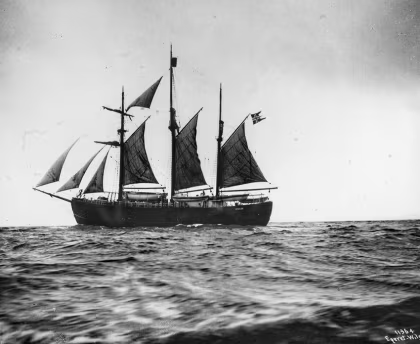
Amundsen’s Race to the South Pole
Amundsen had acquired Fram from Fridtjof Nansen on the understanding it was to be involved in an expedition to the Arctic. However, before it could set sail it required a number of repairs, including a new diesel engine as it had been out of commission for many years. On June 7 1910, Fram left Oslo for the first leg of what was supposed to be the first leg of a voyage to the North Pacific via Cape Horn: Amundsen’s original plans was to explore the northern part of the polar basin where the North Pole was situated which the first Fram expedition under Nansen in 1893-96 had failed to reach.
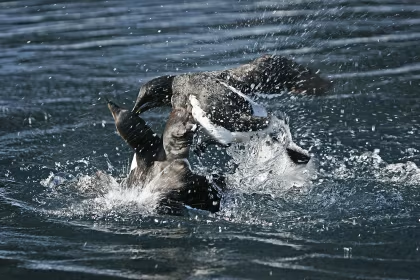
20 Reasons Why We Love a Spitsbergen Cruise (and Why You Will Too)
Welcome to Spitsbergen. It’s one of the destinations we always love to visit, and we think you’ll love it too. Why? Well…
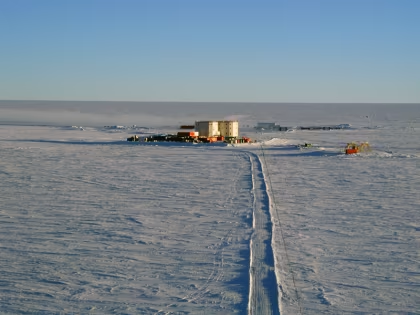
Day and night in Antarctica
The abnormal day and light cycles cause great impact on humans, and scientists are using Antarctica to study its effects and how to prevent them.
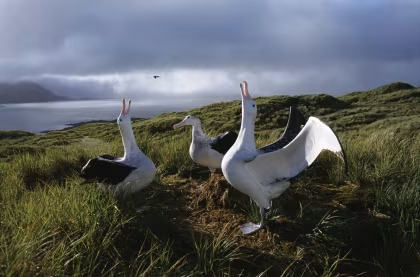
Albatross, penguin and krill research in Antarctica
In the Antarctic region, a great deal of research is being conducted by national Antarctic programmes including the UK’s, Australia’s and Japan’s on understanding species in the air, on the ground and in the sea and how their species are interconnected without variables including human impacts and climate change.
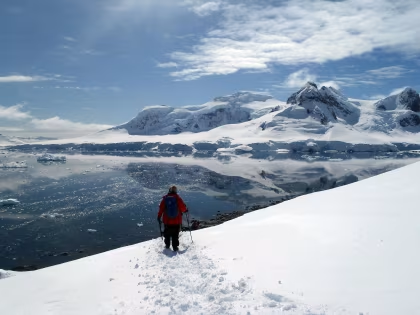
Explore Antarctica Without Leaving Your Couch
There are many ways to explore Antarctica from home. Check these great resources to discover the White Continent without leaving your couch.
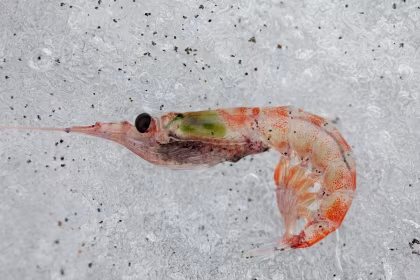
Antarctic krill: Antarctica's Superfood
The size of a paper clip, pink, krill is a shrimp-like crustacean that does not look like much. Without them, though, the Earth marine ecosystems would collapse completely.
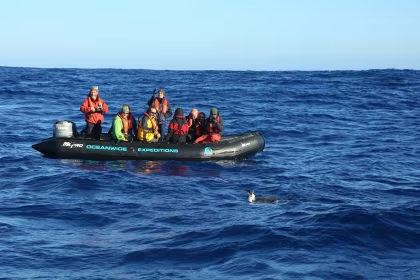
The Emperor Penguin of the Drake Passage
There are certain moments in life when a series of events combine to create an experience that is both unexpected and unforgettable. These are the times when you are reminded how fortunate you are to be a part of something that few people will ever have the opportunity to experience.
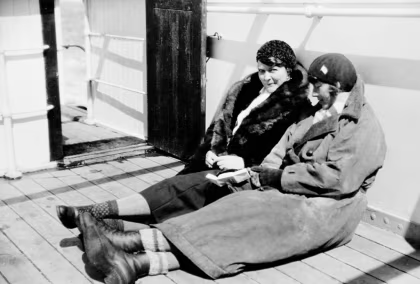
The First Women in Antarctica
Though the list of explorers, scientists, and scientific expeditions in Antarctica is as extensive as it is impressive, it has also been overwhelmingly one-sided in terms of gender - especially before the early years of the twentieth century.
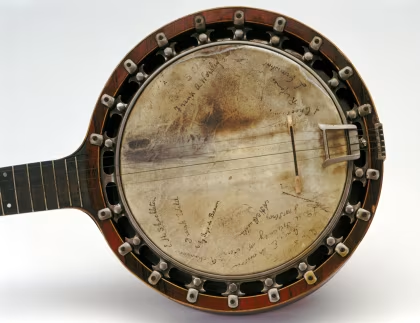
Leonard Hussey’s Banjo: brain food
The Endurance had been trapped in pack ice for 10 months when Sir Ernest Shackleton gave the order to abandon ship on 27 October 1915. He allowed each member of the Imperial TransAntarctic Expedition to bring 2lbs of personal gear with them as they set up camp on the floe—all except meteorologist, Leonard Hussey.
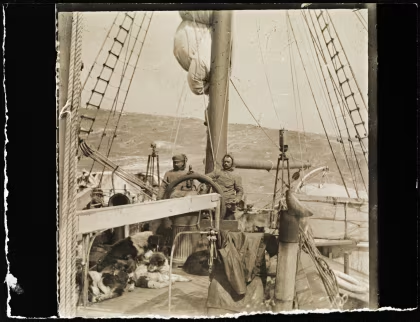
Roald Amundsen’s polar exploits
Roald Amundsen had been, unlike Scott, dedicated to exploration ever since he was 15 years old reading about Franklin’s Arctic expeditions. Amundsen wrote that ‘the narrative that appealed to me most strongly was the suffering he and his men endured. A strange ambition burned within me to endure those same sufferings’ and so he dedicated himself to becoming an Arctic explorer.
10 Books and Films To Prepare for your Antarctica cruise
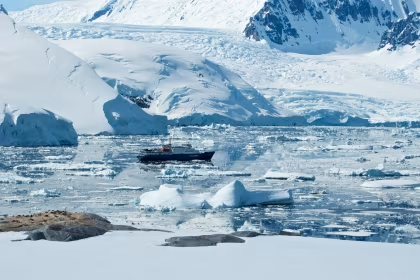
Stunning landscapes. Marvellous wildlife. Astounding human survival stories. Here's a list of books and films that contain all of that. If you are thinking of embarking on a trip to Antarctica, once you've watched or read our recommendations, you will feel you have to be on a vessel, destination south, pronto.
