Blog
Type
Region
Destination
-
Show all
Ship
Highlights
-
Show all
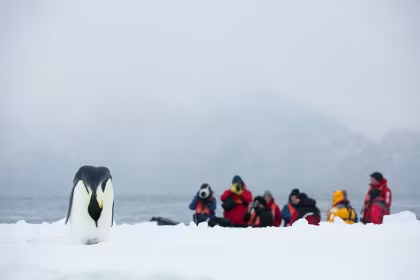
Five Reasons You Should Cruise the Ross Sea Immediately
In our quest for the little-known holiday destination (that’s still popular enough to have its own fully developed spa and gift shop), we travelers sometimes overlook the truly underrated gems this planet has hidden up its sleeve.
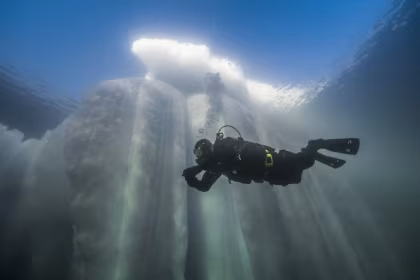
Why a Polar Diving Cruise Should be Your Next Great Decision
Not so very long ago, all you had to do to qualify as a thrill-seeker was hop a ship to the polar regions and make it back with all your fingers – or your life, if you weren’t picky.
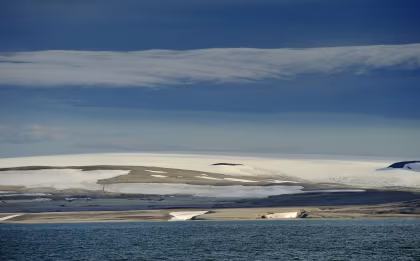
Six Must-See Svalbard Sites
It’s home to humanity’s last-ditch supply of crop seeds, the world’s northernmost settlement over 1,000 people, and is one of the best places on the planet to spot a polar bear.
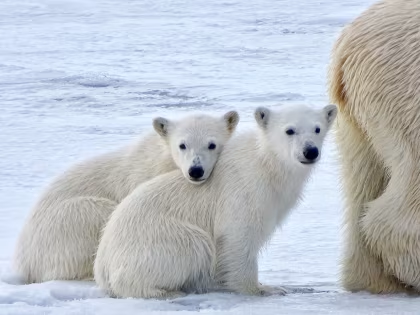
Where the Polar Bears Roam
Going to the Arctic without clapping eyes on a real-life polar bear might reasonably be compared to visiting Africa without seeing a giraffe or a zebra or, most analogously, a lion. Not that that’s unusual. Polar bears, after all, aren’t overabundant no matter where you go. And if you see one, you should thank your lucky stars (and watchful expedition guides) that you did. Still, if you wrap up an Arctic cruise without spotting one polar bear, you can certainly count on spotting your share of disappointed faces when you get back – your own among them.
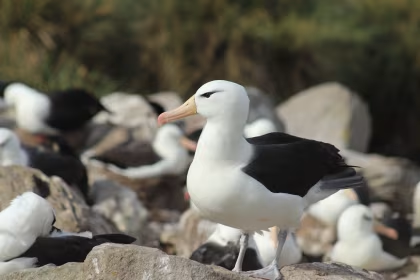
15 Falklands Bird Photos
Few places offer as unique and abundant a selection of birds, particularly seabirds, as the remote sub-Antarctic archipelago of the Falkland Islands. With this in mind, we’ve compiled 15 images of the most photogenic birds in the Falklands. Some were taken by you, some by us, but every one of them was lovingly photographed during our exciting Falkland Island voyages.
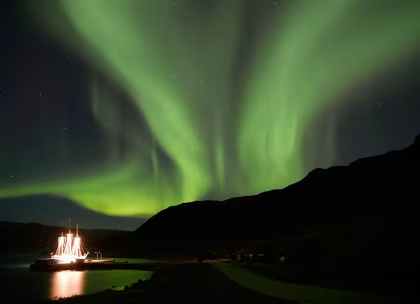
North Norway, Northern Lights, and All the Pretty Whales
At first glance, visiting Northern Norway at any other time except a blazing-hot summer might seem an undertaking unfit for the average traveler. Legends abound of Norway’s months of unbroken darkness, tracts of untamed wilderness, and history of bone-chilling winters that could make even the most committed Viking consider a career change.
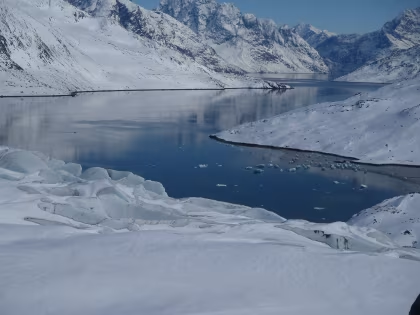
8 Scientific Wonders of the Arctic
The Arctic’s frozen landscape not only contains scenic gems, it also prompts fascinating advances in research. Here are some of the eight best.
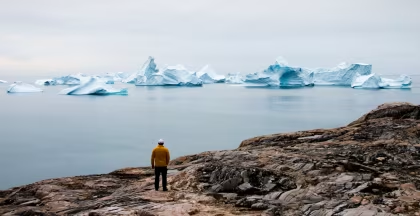
Tracking Greenland’s Wildlife from Space
Despite Greenland’s harsh environment, life has found a way to thrive there. If you’re lucky enough to embark on a Greenland cruise, you stand the chance of encountering many species of cold-adapted mammals, birds, and fish. Over recent decades, comprehensive research has been undertaken into the migratory patterns of these animals.
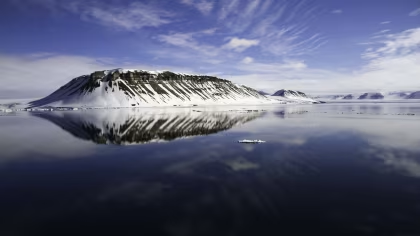
The Ice-Jewelled Geology of Spitsbergen
The Svalbard archipelago is found in the Arctic Ocean, approximately 660 km (410 miles) north of the northernmost tip of Norway. It is a geologist’s paradise, having a rich geological history that can be traced back through the Mesozoic era (65-245 million years ago), the Cambrian era (570 million years ago), and all the way to the Archean era, over 3.5 billion years ago.
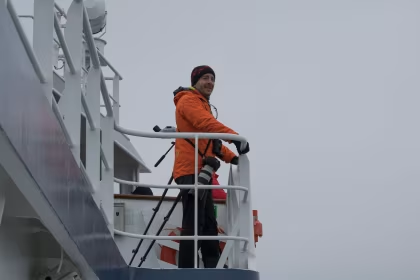
Hello, Hondius: Former Passengers Visit Our Future Vessel
It’s hard not to be flattered when our former passengers speak highly of our voyages, vessels, and staff. But it’s altogether impossible when they travel far from home to visit one of our ships, especially one that’s still under construction! Naturally, Swiss aviation workers Samuel Gantenbein and his girlfriend Valérie didn’t fly all the way to Croatia just to wish our new ship luck, but the fact that it was on their agenda at all pleases us greatly – and is, in our opinion, call for a cozy chat.
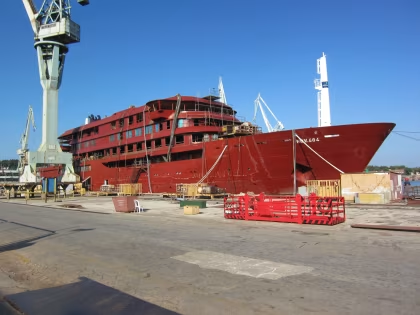
The First Float of m/v Hondius
On the morning of Saturday, June 9, a newly constructed polar expedition cruise vessel slid down the timber-and-steel slipway of a sprawling Croatian shipyard, plunging into the pale blue waters of the rocky Adriatic coast. The launch of this vessel, one of 28 new expedition ships currently on order, might have seemed commonplace, even insignificant, to the world at large.

The Art of the Arctic: Interview with Udo Prinsen
Most of us lucky enough to visit the Arctic recognize instantly how picturesque it is, far more striking than even the most expertly captured photograph can convey.
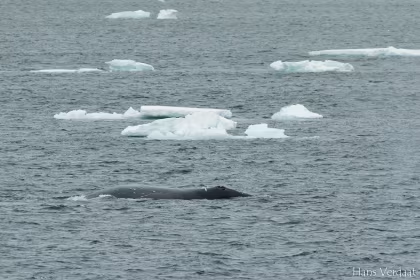
Bring out the Bowheads: Our Largest Whale Count in Years
Researchers aboard Oceanwide Expeditions vessel m/v Plancius spotted between 104—114 bowhead whales during a June 1st cruise along the east Greenland pack ice. Hailing from Wageningen Marine Research and staffed as Oceanwide expedition guides, the scientists spotted the whales over the course of seven hours while on a voyage organized by Oceanwide, Inezia Tours, and Natuurpunt, Belgium’s largest conservation entity. This number exceeds all previous bowhead whale counts, potentially a good sign given the rarity of the whale as well as its classification as critically endangered by the IUCN.
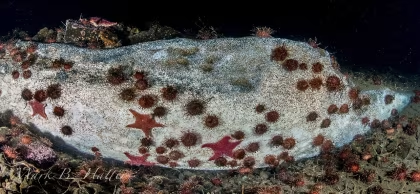
A Diving Dream Fulfilled
Last January, Mark Hatter accomplished a dream he’d been training two years to fulfill. Booking his berth aboard our m/v Ortelius and making the long flight to Ushuaia, Argentina, he and two of his friends sailed down the famous Drake Passage, bound for Earth’s southernmost continent.
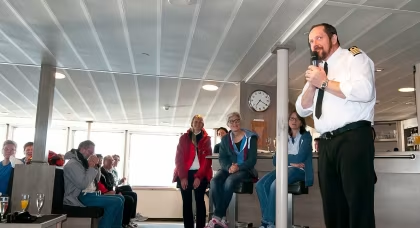
Polar Perfectionism: Interview with Captain Levakov
Turning our attention to the control room, we steal a few informative (and highly entertaining) moments with one of our most seasoned polar captains, Evgeny Levakov. A veteran of the colder side of nautical life, Captain Levakov has been piloting ships since 2002, leading everything from week-long Arctic cruises to expansive 33-day Antarctica voyages. And among the many things he’s learned in all those berg-bejeweled years is that polar captaining isn’t a gig for gamblers.
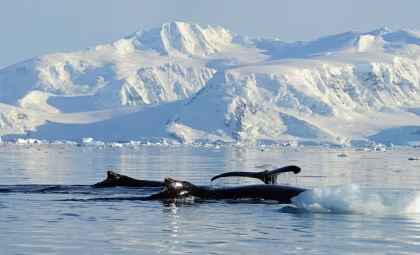
Humpback Whales: the Stars of the Western Antarctic Peninsula
The marine ecosystem of the West Antarctic Peninsula (WAP) extends from the Bellingshausen Sea to the northern tip of the peninsula. The WAP includes the Antarctic Sea Ice Zone, a very productive system that supports large stocks of marine mammals, birds, and Antarctic krill. One of the stars of this region, which you can see on your whale-spotting Antarctica cruise, is the humpback.
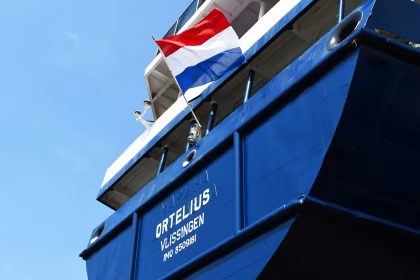
A New Flag for a Veteran Vessel, Ortelius
Vlissingen, located in the south western part of the Netherlands, has been Oceanwide Expeditions “Homeport” since the company was established more than 20 years ago. When our vessel Plancius was being built, there was no hesitation which name should be mentioned as homeport for the vessel and thus since it’s delivery in 2009 Plancius is flying the Dutch flag and has Vlissingen on its stern as being its homeport.
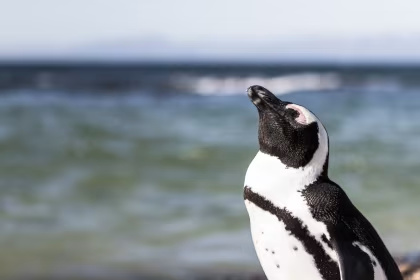
How Arctic Wildlife Differs from Antarctic
While there are definite similarities between the north and south poles, at the same time, the two regions are vastly different. Though both are cold and dry, each pole is unique in its terrain and climate. While the Antarctic is harsh and inhospitable, home to only two native vascular species of plants, the Arctic tundra can support a wider range of fauna with its warmer temperatures and a greater diversity of plant life. Here are just some of the different animals that you can expect to see in the Arctic as opposed to the Antarctic.

Steel, Sweat, and Fire: the Forging of Hondius at Brodosplit Shipyard
In a mid-sized city on the rocky Croatian coast, not quite midway between the northern border of Montenegro and the southern shoreline of Slovenia, a sprawling shipyard claims a swath of Adriatic so wide you could back an aircraft carrier into it and barely need to check your side-view. Even from a distance, you can tell something big is underway.
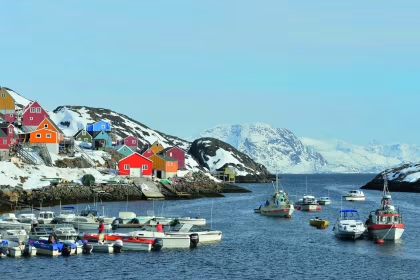
Amazing Greenland
If you ever get the chance to take a trip to Greenland, you will be amazed by its coastlines, fjords, ice-covered peaks, and great expanse of snow-covered land. You will also notice that Greenland is a rugged area with a rich diversity of life, making it a dream location for scientists as well.
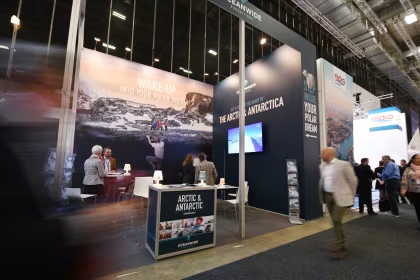
The Oceanwide Edge: Hondius at ITB Berlin
Every industry has its iconic, center-of-the-universe events. Film has its Sundance and Cannes, music its Summerfest, Glastonbury, and Austin City Limits. As for the travel industry, which for years has been one of the world’s fastest-growing sectors, there exists one indisputable star around whom all smaller travel fairs orbit: ITB Berlin.
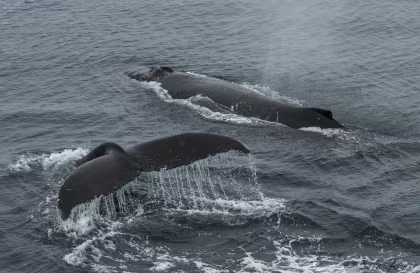
Polar Marine Visitors: the Whales of Antarctica and the Arctic
Whales are the world’s largest mammals, found in the Arctic and Antarctica. This article covers some of the major species you may see on voyages to these remarkable areas.
