| Date: |
05.12.2025 |
| Position: |
62°46.3’S, 056°40.5‘W |
| Wind: |
Var 1 |
| Weather: |
Overcast |
| Air Temperature: |
-1,6 |
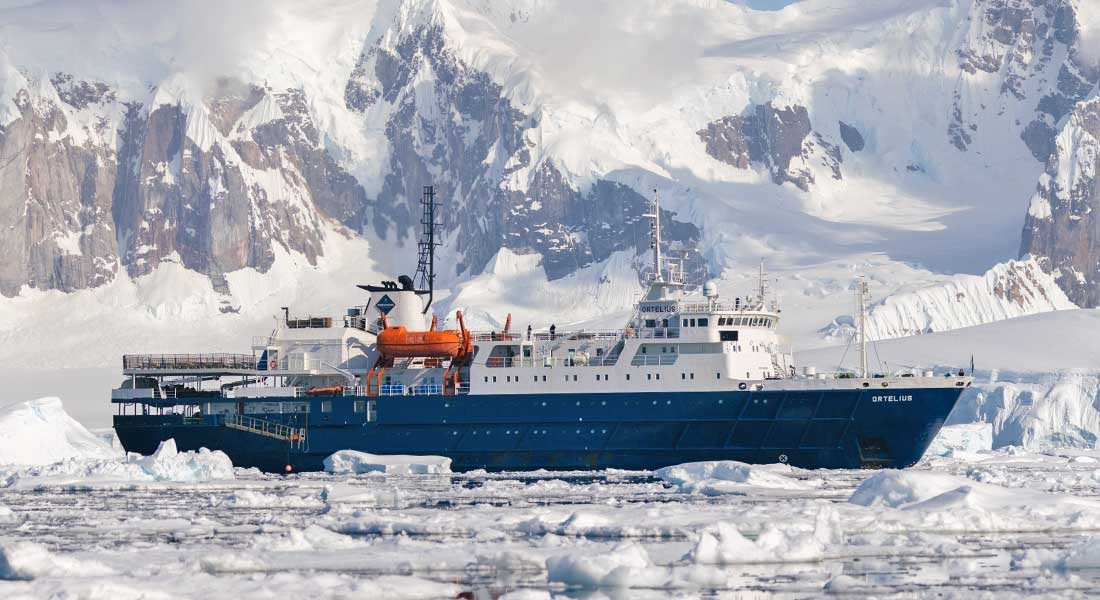
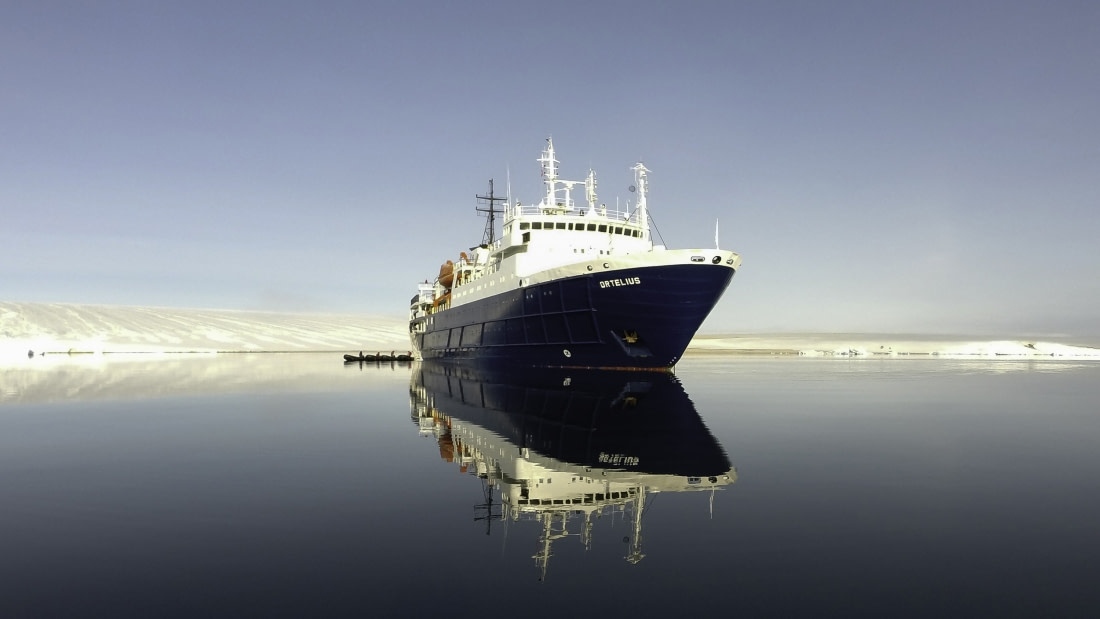
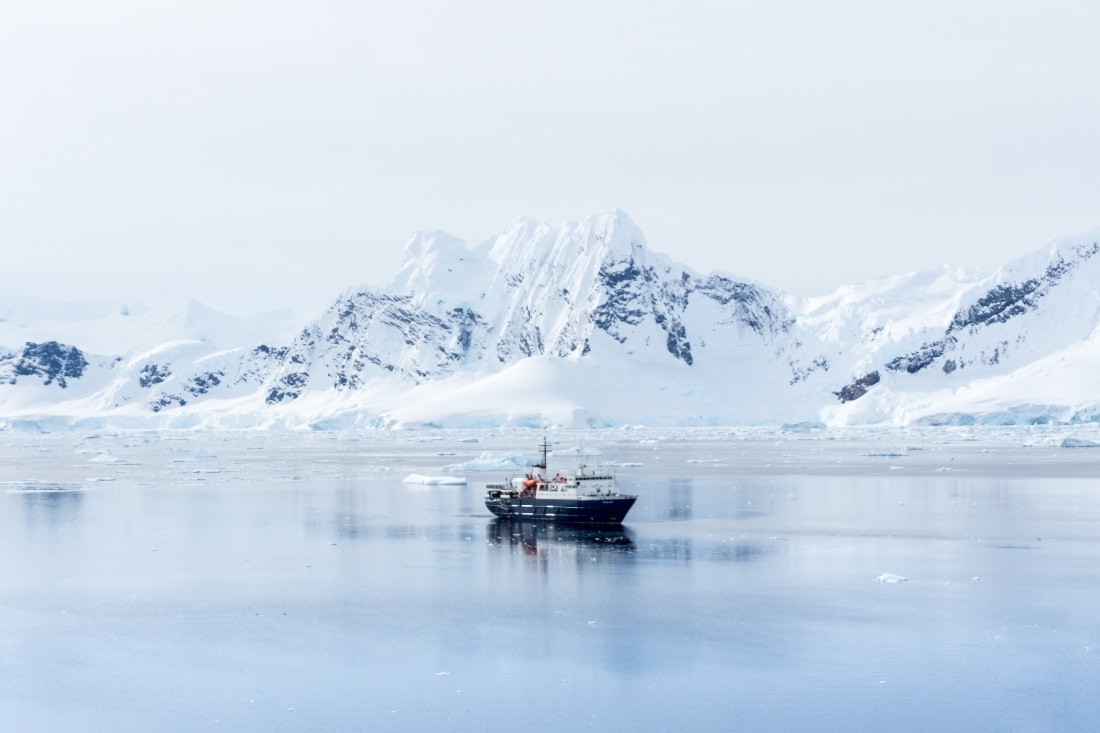
This morning began quietly, the ship gliding gently among plates of drifting sea ice on the edge of the Weddell Sea. The light came early and pale, tinting the vast ice plain around us with shades of silver and blue. By breakfast time the air was crisp and still, and the sea around us a mosaic of floes and narrow leads, each glinting in the low Antarctic sun. It was one of those rare, perfect mornings when the Weddell Sea seems to open itself in welcome — bright, calm, and magnificent.
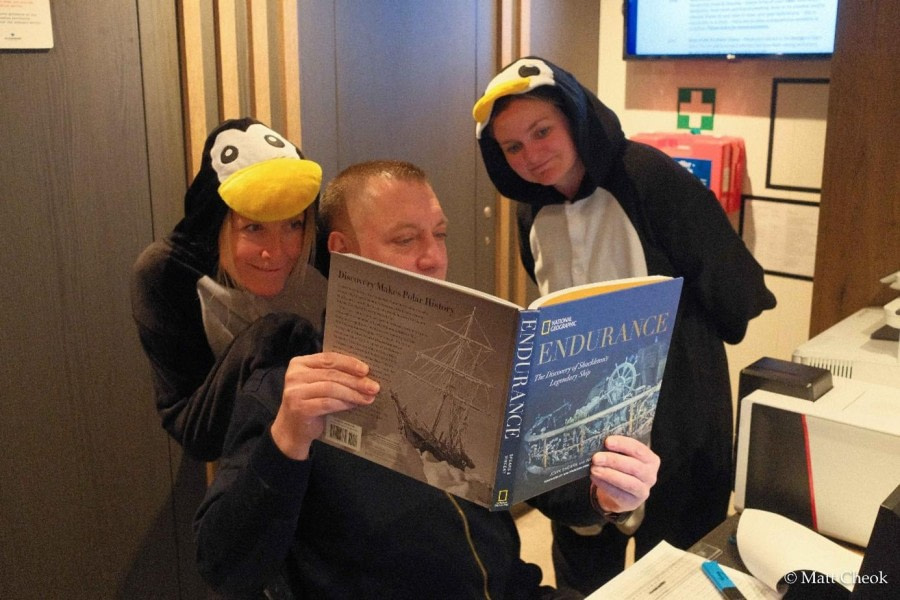
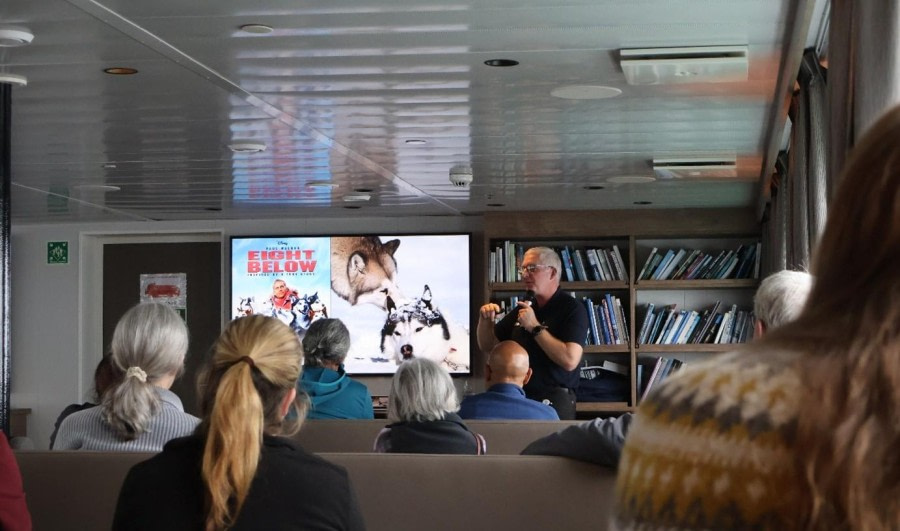
After breakfast, we gathered in the lounge for a presentation from Allan, who took us on a journey back in time through one of the most dramatic stories in Antarctic history — the Swedish Antarctic Expedition of 1901–1903, led by Otto Nordenskjöld and Captain Carl Anton Larsen.
Allan told the tale with enthusiasm, painting vivid images of the small wooden ship Antarctic pushing bravely into the Weddell Sea more than a century ago, when so little was known of these waters. It’s a story of perseverance, leadership, and the resilience of the human spirit — and Allan reminded us that these very waters around us, calm and brilliant today, were the same that once swallowed the Antarctic. The contrast between the tragedy of the past and the beauty of our present morning was not lost on any of us.
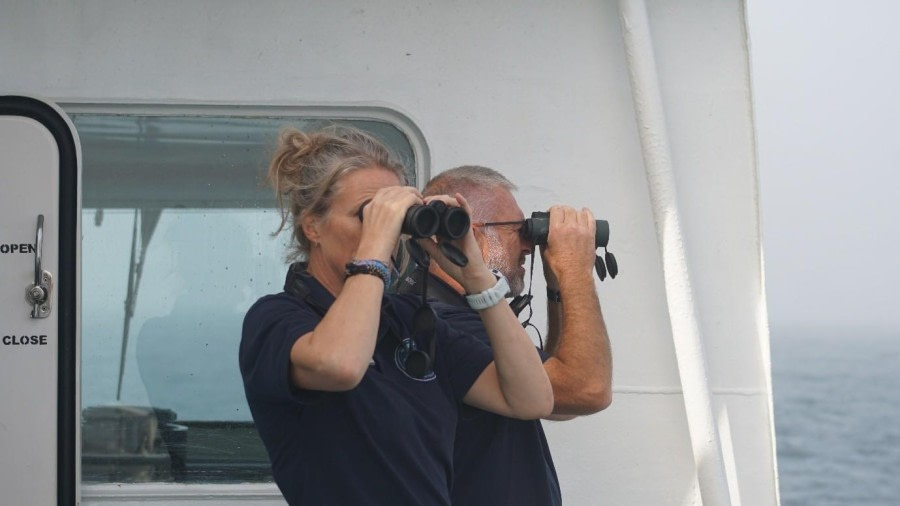
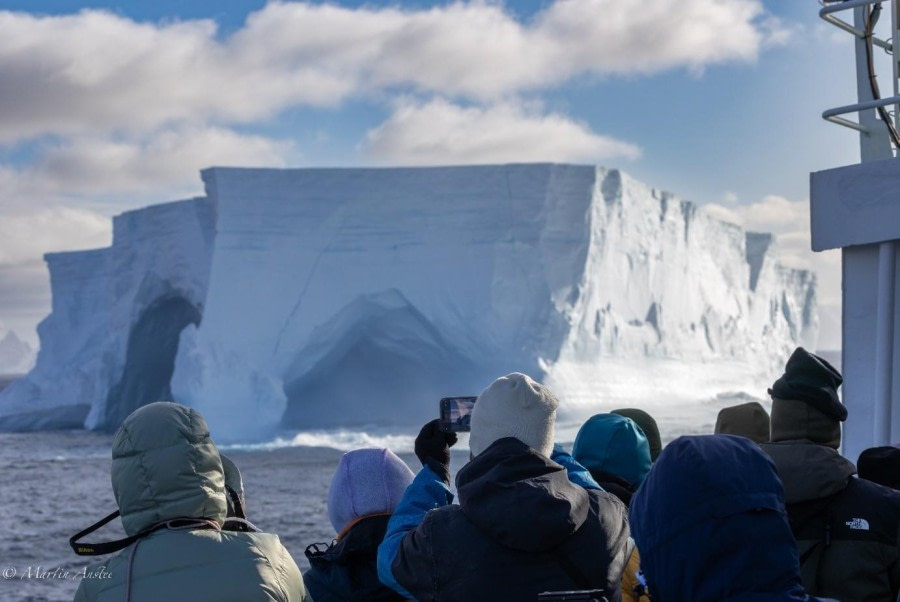
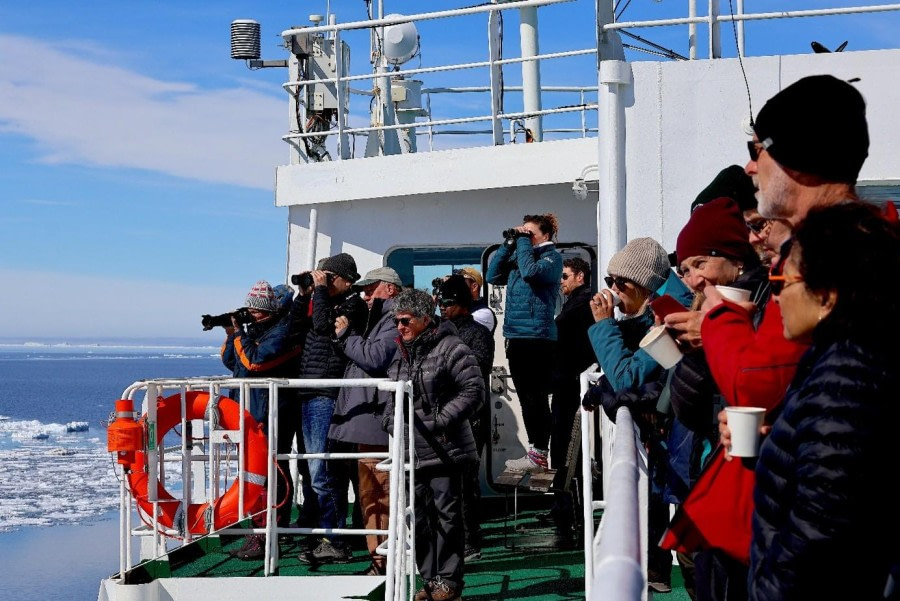
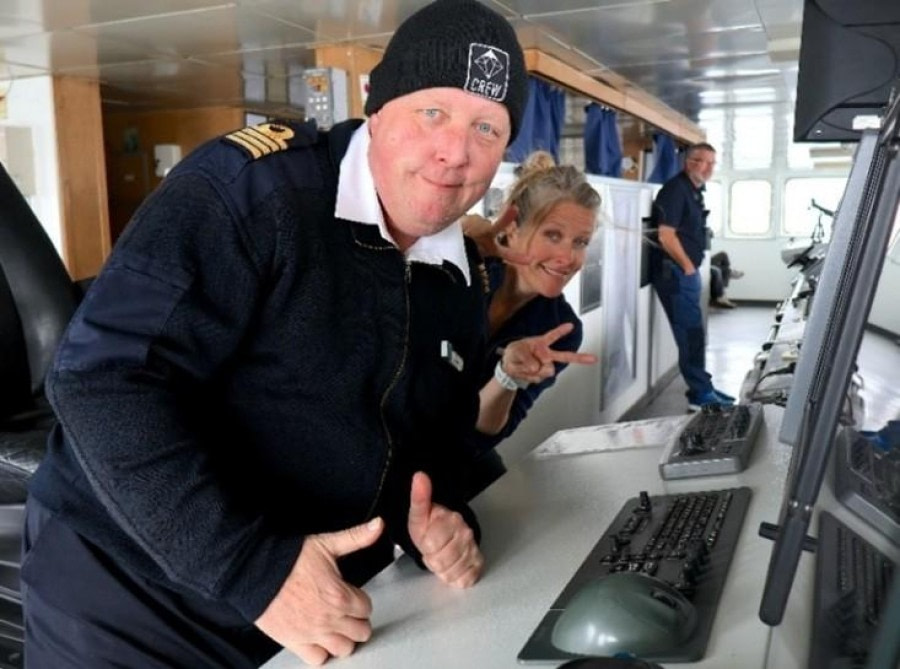
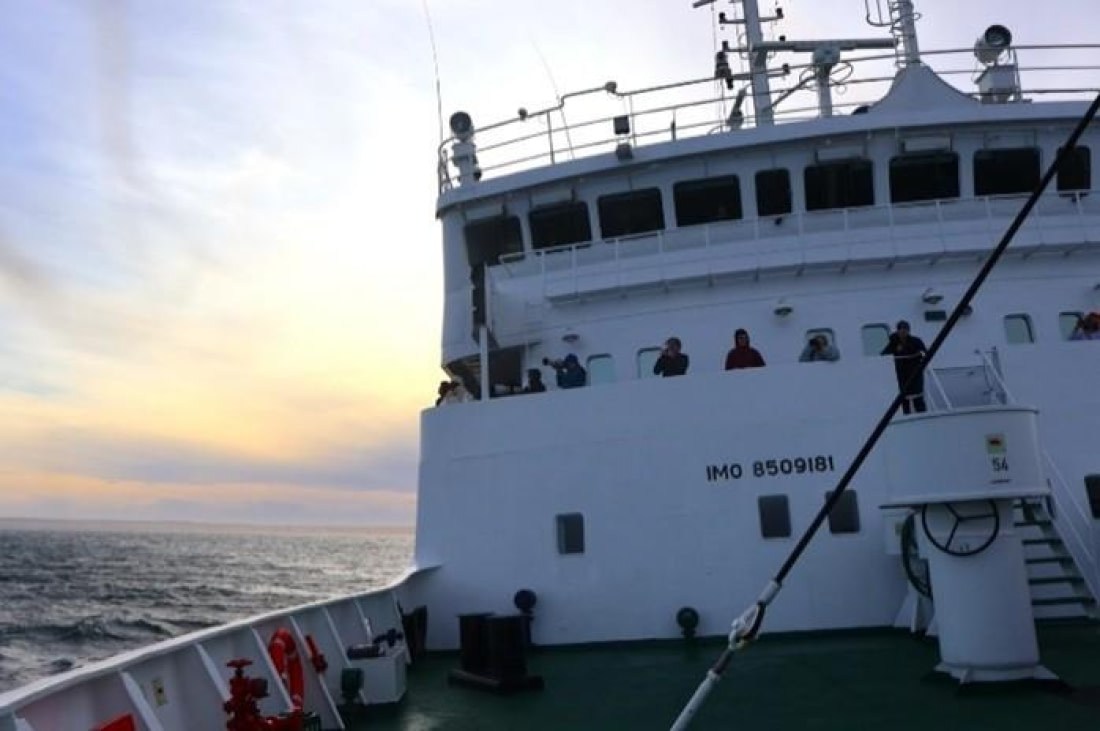
After the lecture, we stepped out onto the outer decks, drawn by the incredible scene around the ship. The air was cold but clear, with the sun glinting off the smooth white surfaces of massive tabular icebergs. Each berg was a floating mountain, its walls sheer and blue-veined, rising straight out of the water like the walls of a cathedral. Between them, the Captain and his bridge team guided our ship with masterful precision through the drifting ice floes.
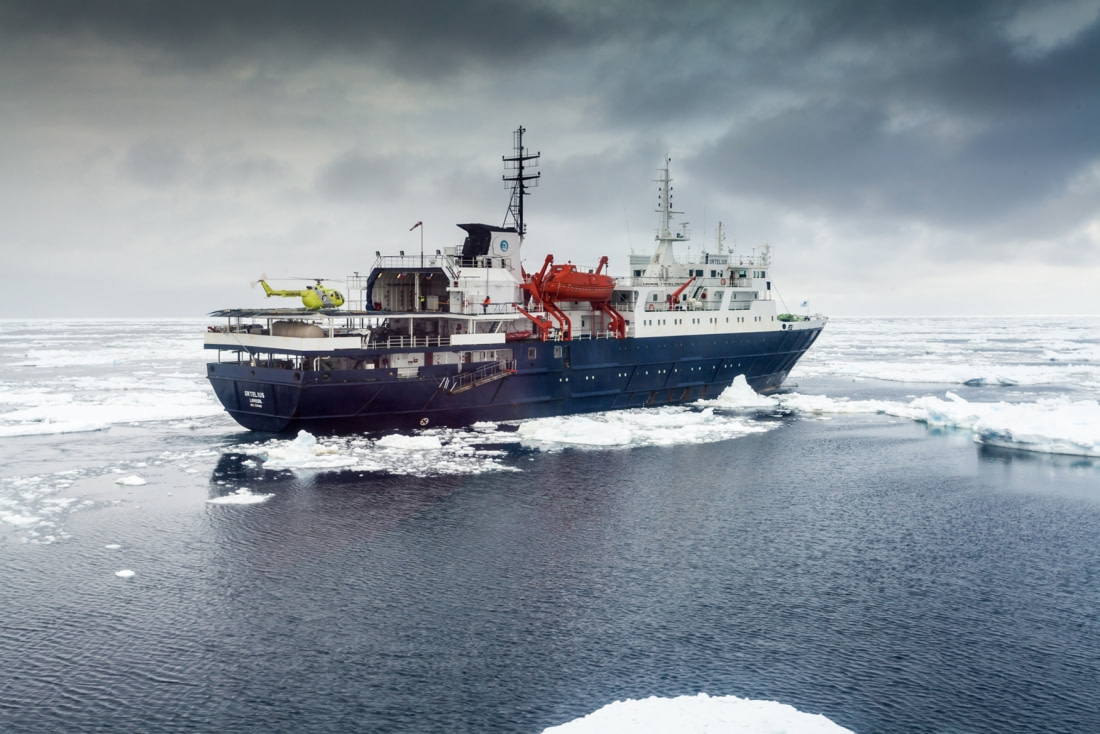
Now and then, we heard the muffled crack and crunch as the hull gently parted thin layers of sea ice, a reminder of both the ship’s strength and the fragility of the frozen world we were passing through. It was mesmerizing to watch — the stillness of the sea broken only by the rhythmic pulse of the engines and the occasional exhale of a distant seal. Everyone was outside, bundled up in parkas and hats, cameras ready, smiles wide. For many guests, this was the quintessential image of Antarctica — luminous light, drifting ice, and the serenity of true remoteness.
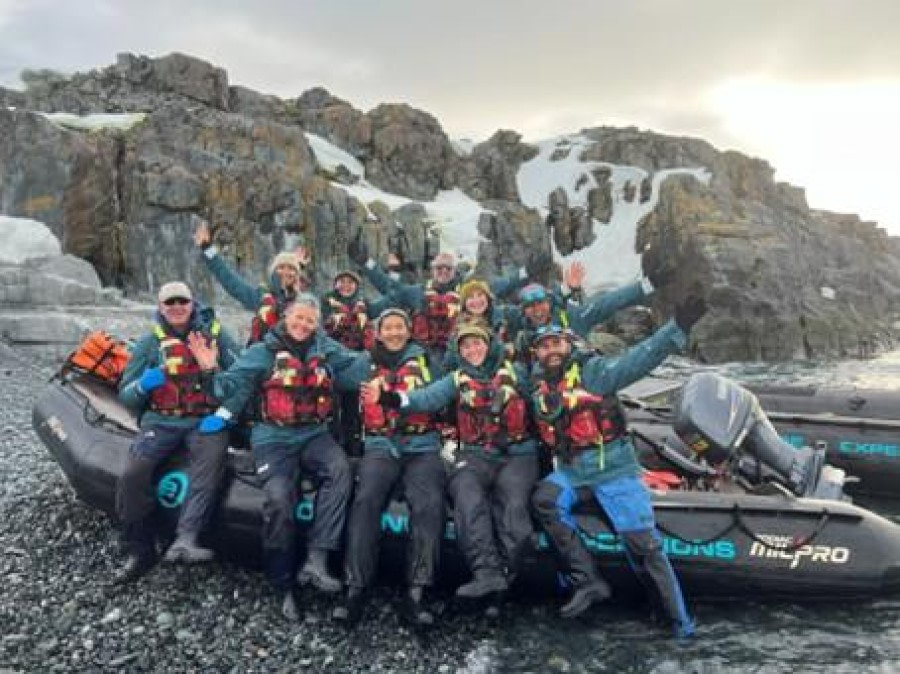
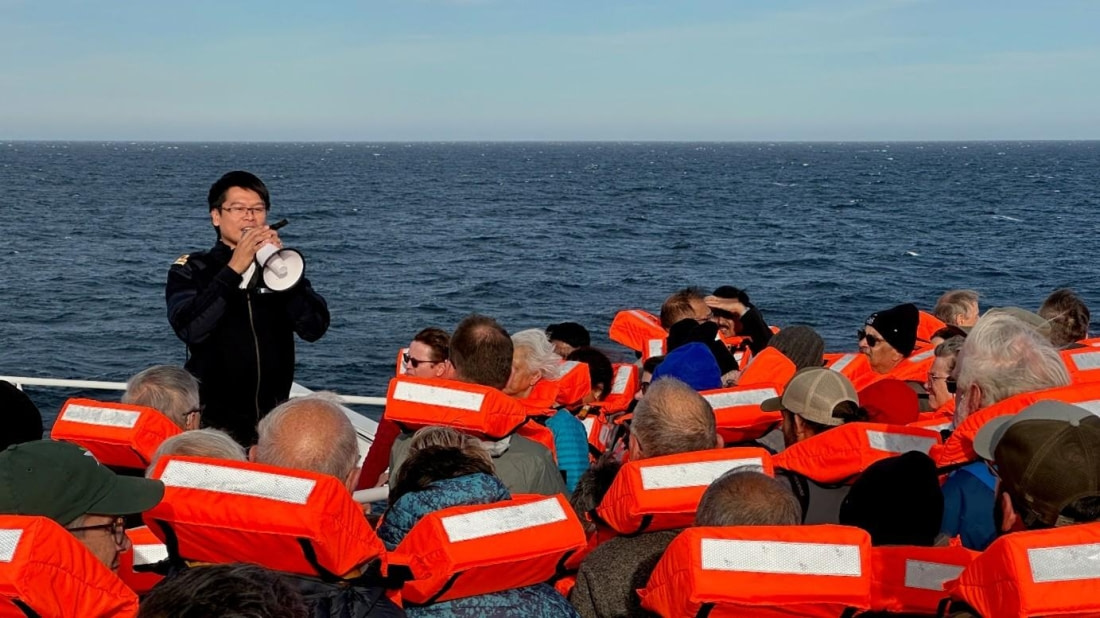
In the early afternoon our next excursion Zodiac cruise in Kinnes Cove on the northern coast of Joinville Island began. The conditions were promising — sunshine, relatively calm seas, though the air remained distinctly chilly. Dressed in layers, gloves, and lifejackets, we made our way down to the gangway and boarded the waiting Zodiacs, engines purring softly against the icy water.
Out on the water, the Weddell Sea revealed itself in a new dimension. The ice here was beautiful — sculptures of blue and white in every shape imaginable, some as smooth as marble, others ridged and rough from wind and melt.
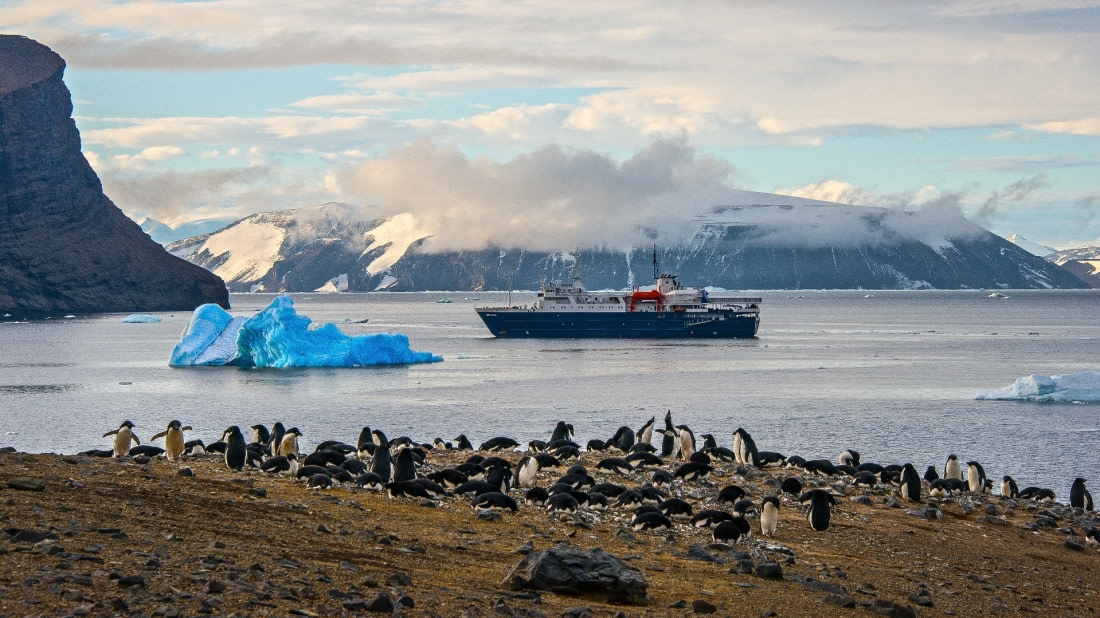
Wildlife sightings came one after another. We spotted groups of Adélie penguins, unmistakable in their tuxedo plumage, busily carrying small stones to build their nests on the rocky shore. A few Gentoo penguins mingled among them, their white head-bands shining in the sunlight. From several boats came the excited calls of “Weddell seal!” — and indeed, two of these sleek, large seals were seen resting on ice floes, while another surfaced close by, curious and unbothered by our presence. Cameras clicked continuously.
Even though the sun was shining, the cold made itself felt, the kind of chill that sneaks through even the thickest gloves when you pause too long to take photos. Still, no one seemed eager to return — it was too beautiful to leave. When at last we turned back toward the ship, the scene behind us — the ice, the penguins, the distant cliffs of Joinville Island — looked like a painting that would stay in our minds for years.
Back on board, we warmed up with hot drinks and freshly baked pastries. But the day was far from over. Our expedition leader, George made the decision that we would advance dinner and attempt an evening landing on the Antarctic continent itself — at Brown Bluff. For many, this would be the moment they had dreamed of for years: stepping foot on the Antarctic mainland.
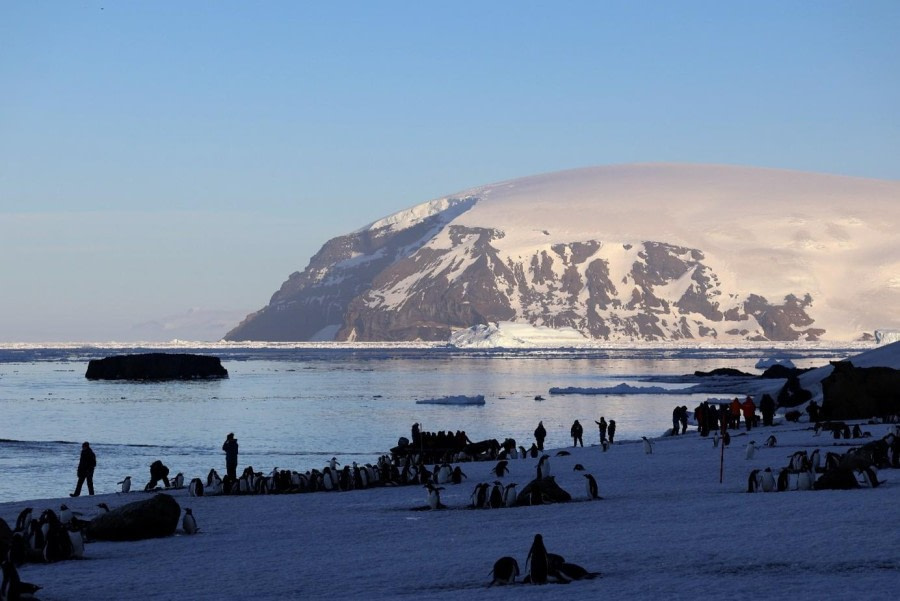
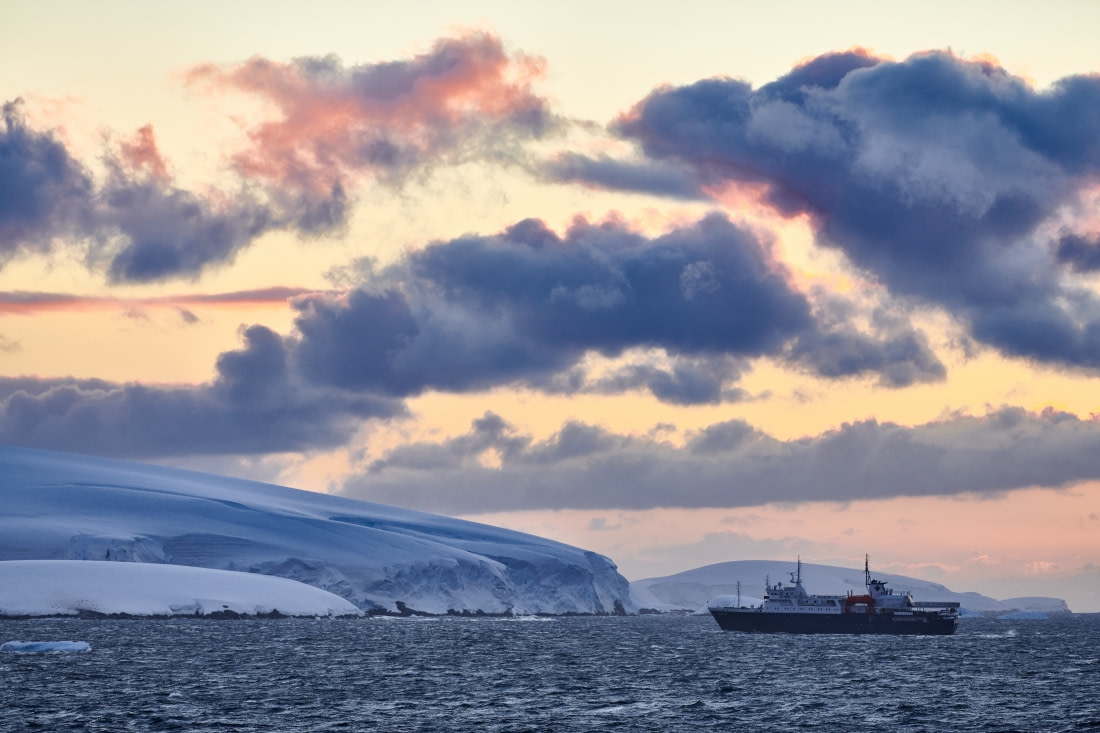
By early evening, the light had softened into that magical golden hue that only polar regions seem to create. The wind had dropped, the water gleamed like glass, and our Zodiacs were soon heading toward the reddish-brown cliffs of Brown Bluff — a towering volcanic formation that marks the edge of the continent. The moment we stepped onto the shore, it felt momentous. One by one, we took photographs beside the continental landing flag, smiling in triumph and awe.
The atmosphere was joyous but reverent. Above us, snow petrels soared in graceful arcs, their pure white plumage catching the evening light. Along the beach, colonies of Adélie penguins were hard at work building and defending their nests. They seemed utterly unfazed by our presence, continuing their endless exchange of stones, squabbles, and courtship displays. Watching them so close, in their natural world of ice and wind, was deeply moving.
Down by the water’s edge, several of our photographers waited patiently, cameras poised, hoping to capture the perfect image — that split second when a penguin leaps from the snow into the sea. It took patience, but their dedication was rewarded with shots that captured the energy and grace of these little Antarctic residents. The light continued to shift, glowing pink and orange on the cliffs, turning the sea into a mirror.
As the time came to return to the ship, no one wanted to leave. It felt like the perfect end to a perfect Antarctic day — a journey through history, ice, wildlife, and finally, the continent itself.
That night the lounge was alive with stories, laughter, and a sense of shared accomplishment. We had followed in the wake of the early explorers, navigated through sea ice and tabular bergs, cruised among penguins and seals, and stood upon the Antarctic continent.