• Accueil
  • Triplogs
  • OTL21-25, trip log, Falklands, South Georgia and Antarctica - Photographic Special

OTL21-25, trip log, Falklands, South Georgia and Antarctica - Photographic Special

by Oceanwide Expeditions

Galerie de photos

Journal de bord

Day 1: Puerto Madryn. Embarkation Day

Puerto Madryn. Embarkation Day
Date: 22.10.2025
Position: 42°44.8’S, 064°59.2‘W
Le vent: NE 8
Météo: Partly Cloudy
Température de l'air: +10

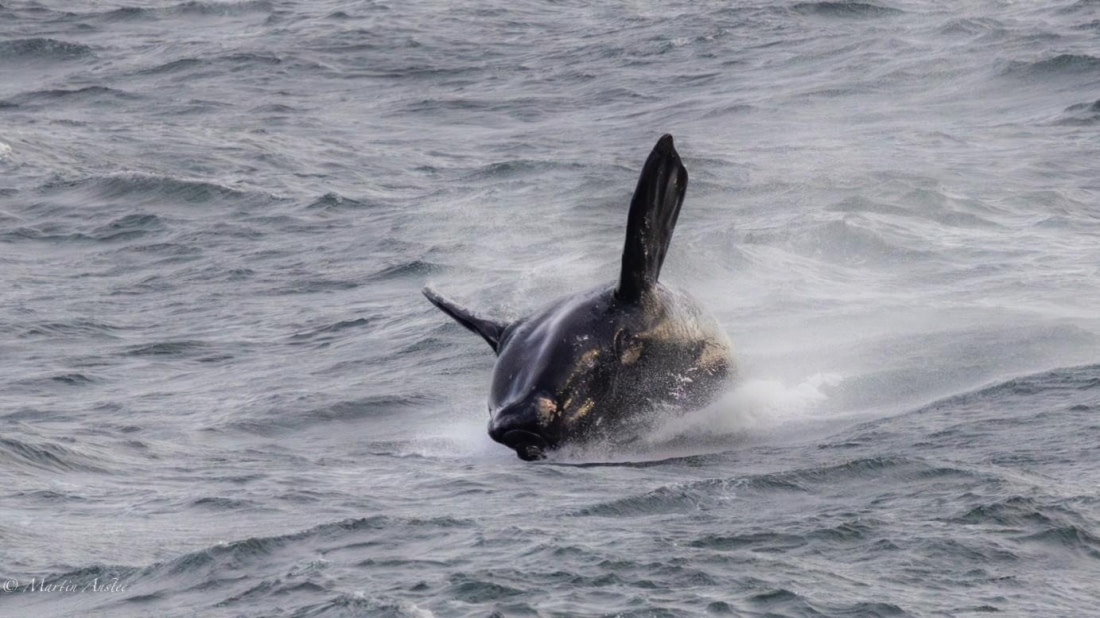
For many, the days prior to boarding were spent busying ourselves with obligatory whale watching from the shores of Puerto Madryn and exploring what this unexpected Argentinian coastal town has to offer. It wasn’t long before this long-awaited moment became reality as we began the journey down the long pier to where Ortelius lay, right out amongst the waves and the whales.

Some took the brave decision to walk the length of the pier, although only those who had a confident firm grip of all their belongings and did not mind some involuntary facial expressions being forced upon them by the wind.

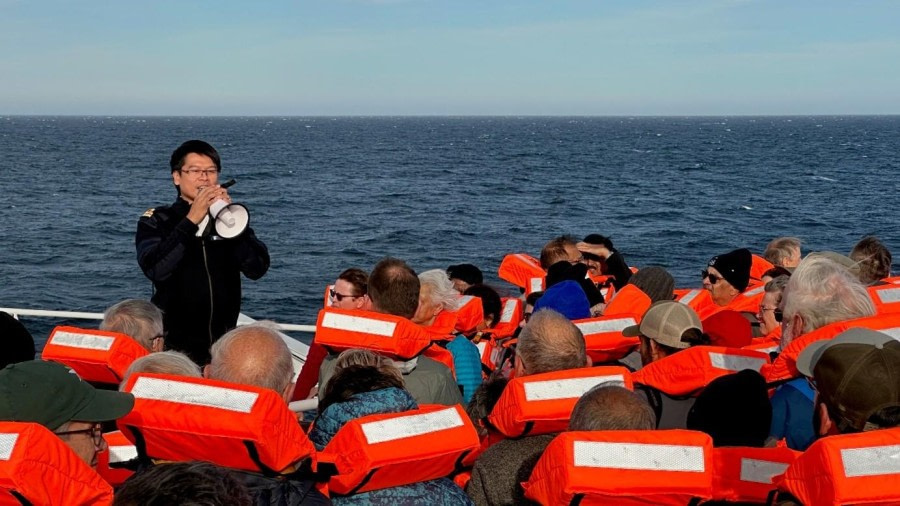
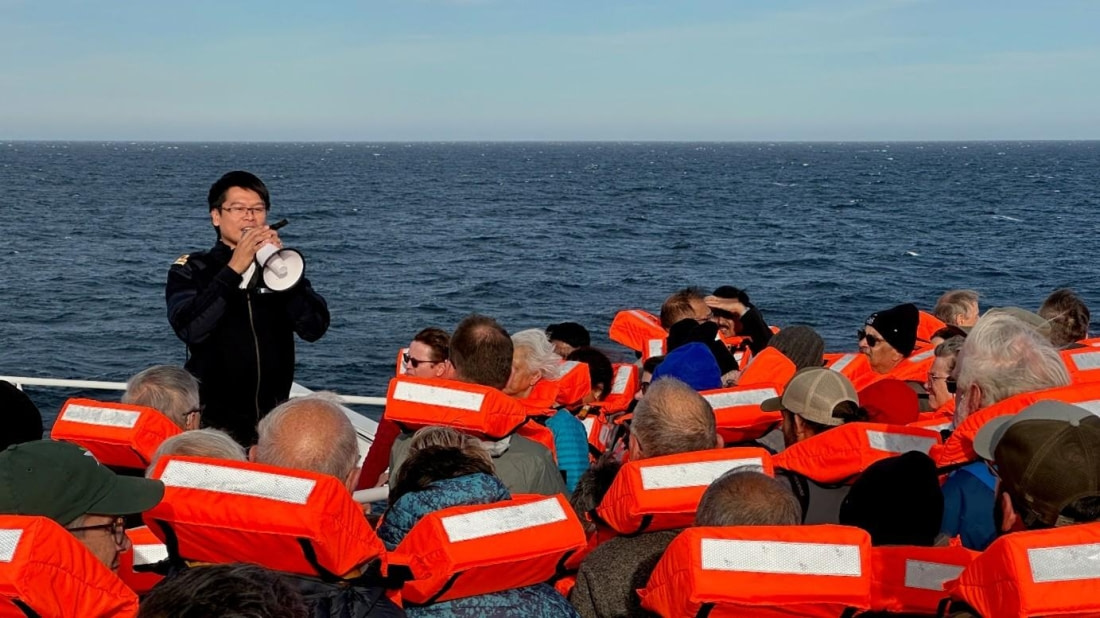
Upon embarkation, the crew showed us to our cabins where we were met with our luggage. Before settling into our new home for the coming 21 days, it was time for the mandatory briefings. These were essential to understand the safety procedures and precautions whilst on board Ortelius.

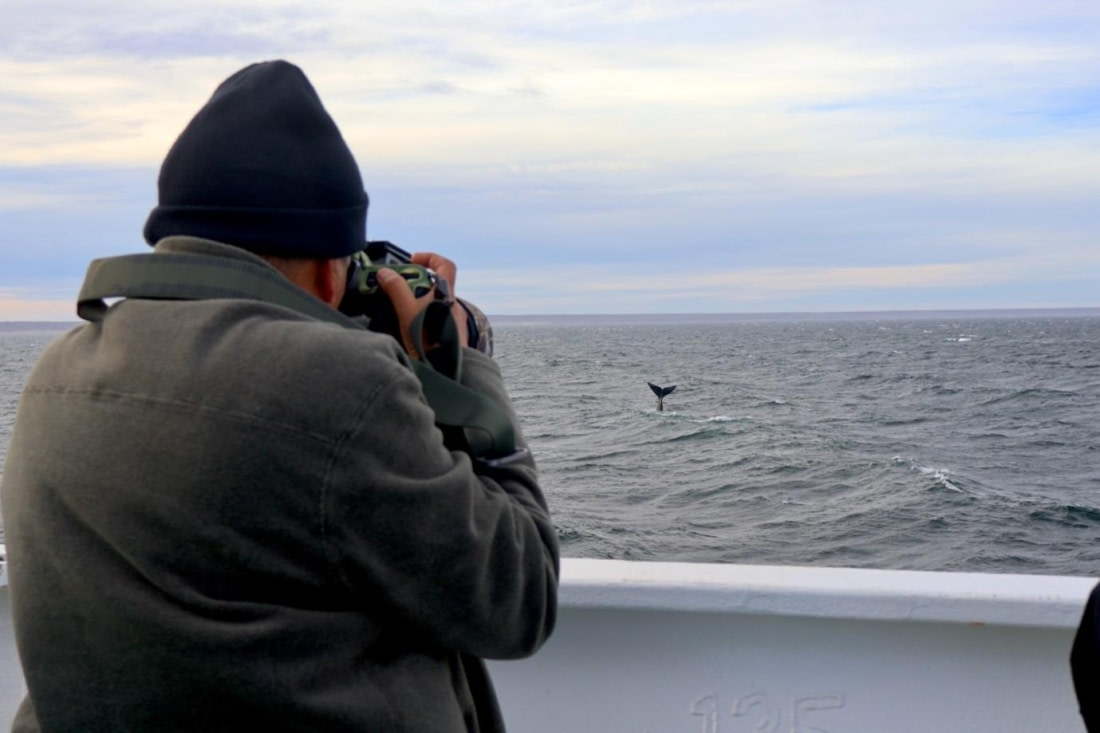
Due to the spectacular evening light and the abundance of marine life surrounding the ship, our Expedition Leader and Captain decided that we would postpose the captain’s cocktail and introductions until after dinner. Therefore, we all dressed up in an extra layer and headed to the soft light on the outer decks to capture the pectoral fins and flues of the southern right whales which frequented the surface.

The range of cameras was a sight in itself as we gasped and pointed, running from one side to the other, sharing our sightings and excitement with those around us. Some were up on the bridge. Others on the mid decks. Many lined the edges of the bow.

Dinner was called which enticed a few inside. It wasn’t until the bridge announced we had to speed up and make headway towards the Falkland Islands that the last of us peeled ourselves from the outer decks to enjoy some food. It was hard to leave even without the impressive display from the whales!

Day 2: Sea Day

Sea Day
Date: 23.10.2025
Position: 44°59.3’S, 063°33.5‘W
Le vent: NW 5
Météo: Overcast
Température de l'air: +10

We were very excited to begin our first full day onboard Ortelius. Today we would be spending a whole day at sea as we made our way towards the Falkland Islands. George gave us a wake-up call on the PA system, but many of us were already awake and excited to get outside. The sea was a silvery grey colour and there was a layer of fog on the horizon. There was some movement on the ship, but overall, the weather was good, and most people avoided feeling seasick.

After breakfast, George and Pippa invited us to the lounge for our two mandatory briefings of the day. The first was about IAATO and how to behave in Antarctica around the wildlife and the restrictions we needed to be aware of. The second was about the Zodiac operations and how to embark and disembark the Zodiacs at the gangway and on the beaches.

Lots of beautiful bird species were spotted throughout the day, including the black-browed albatross, cape petrel, white-chinned petrel, giant petrel, prions, shearwaters, and storm petrels.

Later in the morning, Matt introduced us to the photography program that would be running throughout the trip. He wowed us with some beautiful images of the polar regions and inspired us all to get involved in making portfolios of our voyage.

We enjoyed a tasty buffet lunch before we gathered in the lecture room to collect our muck boots that would keep our feet warm and dry during the trip.

In the afternoon, about ten minutes before Martins’ lecture was about to begin, a blue whale was spotted quite close to the ship. This caused much excitement as it is a real rarity to see the largest animal in the world. Martin kindly delayed his lecture so we could enjoy the whale. He eventually gave us a great talk about the birds we can expect to see in the Falkland Islands. It got us excited at the prospect of seeing penguins and albatrosses at their nest sites as well as the shore birds and birds of prey.

Before dinner we gathered in the lounge for the first of our daily recaps. George told us about the plans for tomorrow and Jess gave us some more information about the two whale species we have seen so far.

We were served a lovely plated dinner in the restaurant before returning to the bar to listen to the first of Matts photography workshops. This one was about how to get the most out of your smart phone. It really showed how you don’t need to have lots of expensive equipment to get excellent shots.

Many of us stayed on the outside decks all through the afternoon until it became dark in the evening enjoying the birds. We went to bed with our heads full of new information and ideas and with lots of excitement.  

Day 3: Arrival at the Falkland Islands: Steeple Jason

Arrival at the Falkland Islands: Steeple Jason
Date: 24.10.2025
Position: 49°51.5’S, 061°48.3‘W
Le vent: NE 3
Météo: Overcast
Température de l'air: +6

We were woken up again by our Expedition Leader George. Some of our early birds were already out on deck and were greeted by the sun this morning. We’d made good speed overnight, which meant we were getting closer to the Falkland Islands. We saw more seabirds around our vessel like several little petrels soaring in the wind, but also some of the first giants of the Southern Ocean were around; the southern royal albatross and the black-browed albatross.

Before we are able to land in the Falklands we must do a biosecurity check. To make sure we are not bringing any seeds, grass, soil or invasive plants to the islands. We were called in groups to the lounge on deck 6 to complete our first biosecurity. On the rhythm of the waves, we tried our best to get all our outerwear, backpacks, muck boots and tripods/walking sticks up the staircases, to be checked and/or cleaned.

After that, at 11:30, we were invited by Allan to join him in the lounge on deck 6 to listen to his lecture about The Falkland Islands and hear all about the wild islands, with some of his local insights into life on the islands, as Allan is a local Falklander and has lived there his whole life. It was amazing to hear his personal story about his country with its 778 islands, a few of which we will hopefully visit over the next coming days.

At 12:30 we were invited by our Hotel Manager Volodymyr to enjoy another lovely lunch in the dining room. And shortly after that we were asked to join the Expedition Team in the lounge (deck 6) for our daily recap and briefing already at 14:00. Because during the normal time around 18:15 we would be off the ship.

Today was a special day as the Expedition Team would try to get us on land on Steeple Jason Island. It is located in the far northwest of the Falkland Islands archipelago. Due to prevailing winds coming from the southwest over the Southern Ocean, it is really hard to land here.

While we approached Steeple Jason we saw southern sea lions, fur seals and many seabirds and alongside Ortelius we also saw dusky and Peale’s dolphins jumping the waves. Steeple Jason is home to the world’s largest black browed albatross colony, as well as an array of other bird and wildlife species. We were all so excited to get on land and see it all for ourselves. We all got dressed and stood at the gangway, ready to be picked up by one of the Zodiacs and driven ashore. We had landed on a rocky outcrop in a sheltered bay that gave enough lee for us to be able to get off reasonably easily for our first outing.

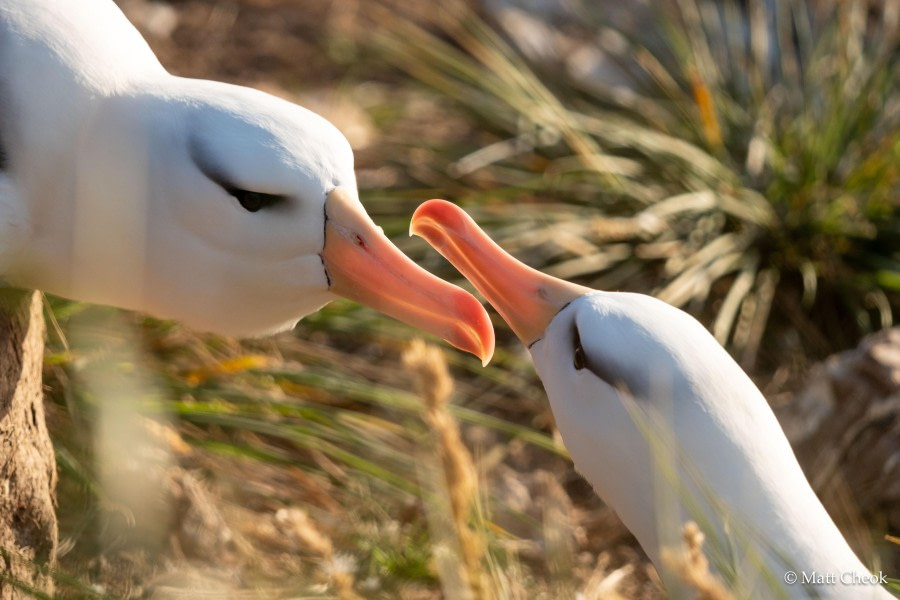
Right beside the bags, where we had to drop our life jackets, we were met by our first penguins of the trip, a small group of nesting gentoos. Some of them briefly lifted their chest, so we could see the egg. A route was set out and we could follow the poles out to experience the island. We were overwhelmed by the wildlife that greeted us. Rockhopper and Magellanic penguins and finally at the end of the route the biggest colony of black-browed albatross in the world. There are more than 110,000 breeding pairs in this colony that stretches 5 kilometers along the coastline and is around 200 meters in width.

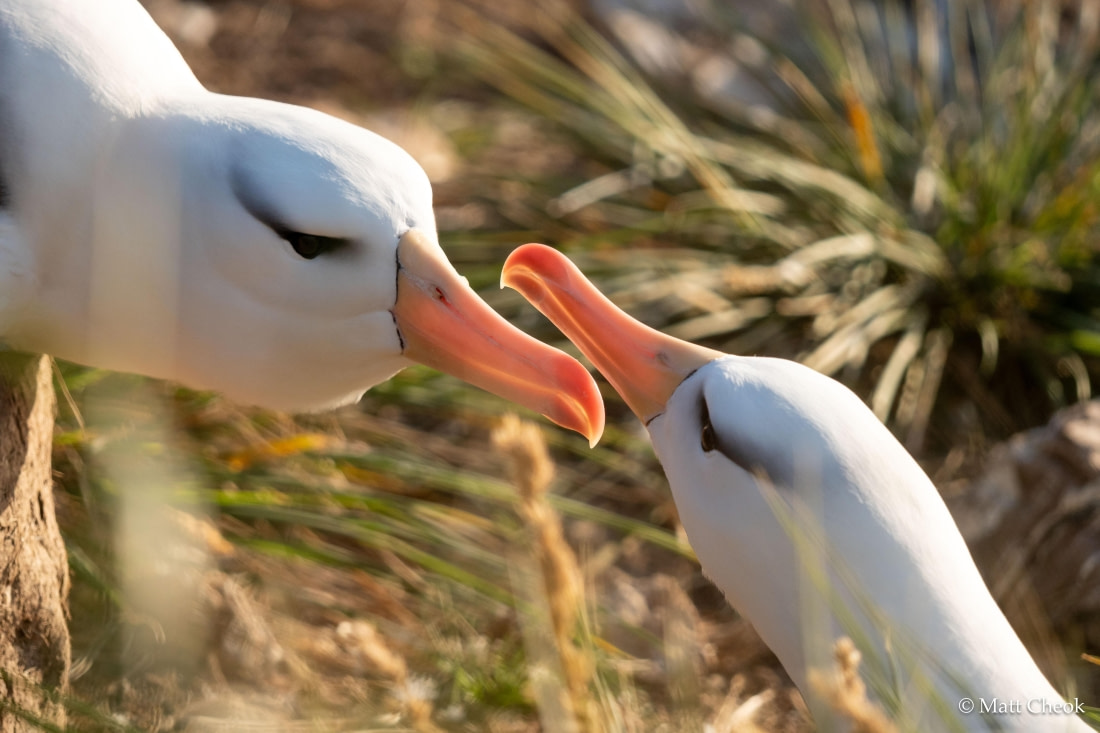
After a good leg stretch up the hill, we arrived at the colony. We had to meander our way through thick and high tussock grass to reach a viewpoint where we could be right at eye level with these gigantic birds. The sound was incredible and to see them nurturing their eggs, clacking beaks, walking around with their big feet and taking off with their enormous wingspan was just amazing. The sun was setting which shaded a beautiful glow over the colony. Just magical. For the birders on board, it was really exciting to spot their first endemic bird of the Falklands, the Falkland flightless steamer duck.

After this amazing landing we were back on board and enjoyed another great dinner made by the gally team. What an incredible first day this was in the Falklands.

Day 4: Carcass Island and Saunders Island

Carcass Island and Saunders Island
Date: 25.10.2025
Position: 51°18.2’S, 060°32.3‘W
Le vent: NW 5
Météo: Partial Cloud
Température de l'air: +4

First thing this morning Ortelius came to anchor off Carcass Island. The scene outside was one of rugged beauty bathed in glorious early morning sunlight. The tiny settlement was visible off the starboard side, surrounded by a tight cluster of introduced trees. A moderate cool breeze blew from the west, as is typical for the Falklands. The expedition team deployed during breakfast to scout the landing site, and soon we were donning outdoor gear for a thrilling Zodiac ride ashore.

We stepped on to Dyke Beach near the south-east end of the island where an incredible array of birdlife awaited us. The unmistakable morning chorus of Magellanic penguins welcomed us to the island. Chief among the wildlife highlights on Carcass was the endemic Cobb’s wren, which birders were delighted to find almost immediately where we landed. And with minimal effort the second and only other endemic, the Falkland Steamer Duck, was found just along the beach. Walking across the narrow isthmus to the stunning Leopard Beach, there were so many birds that it was difficult to know where to look. This abundance and diversity are a result of the rodent-free status that Carcass enjoys. A small pond gifted a group of yellow-billed teal and a spectacular pair of Chiloë wigeon, as well as a mixture of upland and ruddy-headed geese. Those who made it across to Leopard Beach were treated to gentoo and Magellanic penguins coming ashore through the tropic-like shallows.

The long walkers headed north-west around the shore of Port Pattison towards the settlement, where a wonderful morning “smoko” (an old Falklands tradition) awaited us. In the main house a fantastic spread of cakes, cookies and other treats was laid out for all to enjoy, washed down with a steaming mug of coffee or tea. Those who didn’t hike were whisked across the bay by Zodiac to visit the settlement and sample the home-baked goodies. At the house we were hosted by Jane Chater, the owner of the Island. Her father bought Carcass Island in 1974, and only recently handed it on to Jane. We admired and photographed striated caracaras, one of the rarest birds of prey in the world, as they loitered mischievously in the tress. The time passed all too quickly, and soon it was time to take the Zodiacs back to Ortelius. It had been an unforgettable morning.

Over lunch, Ortelius repositioned 13.5 miles to the east to an anchorage off a location known as The Neck on Saunders Island. The day had changed dramatically, and soon dark, stormy skies brought driving snow and increased wind speeds that threatened our landing operation. Luckily, the bad weather eventually passed, and the winds dropped as sunshine returned. We took the Zodiacs ashore to a sandy beach near a large Gentoo penguin colony. We were met on the beach by David Pole-Evans, the owner of Saunders Island, and his sister Biffo. David also inherited his island from his father and is the lucky owner of the fourth largest island in the Falklands. It is very much a family affair with David, his wife, daughter, sister and two brother-in-laws all living on the island. Their settlement is 10 miles (16km) from where we landed. A drive of 45 minutes in their 4x4 vehicles.

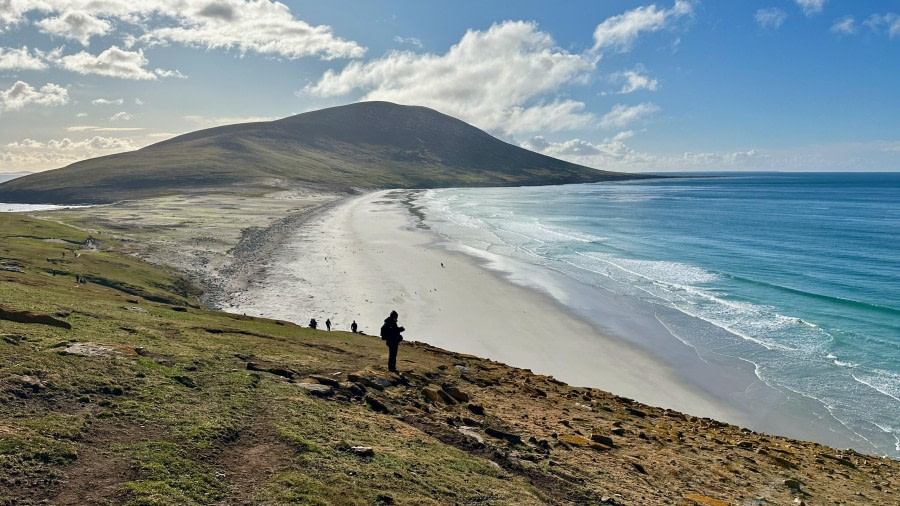
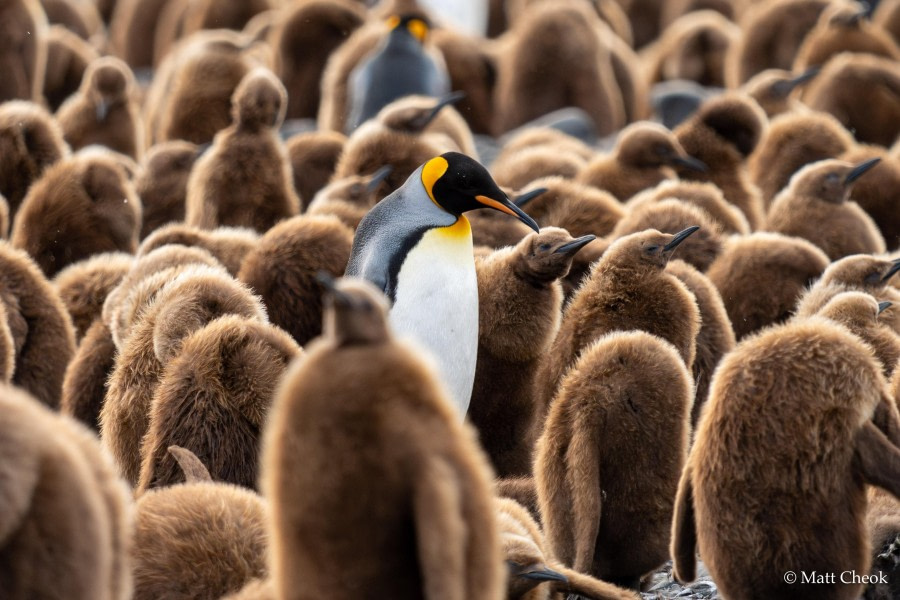
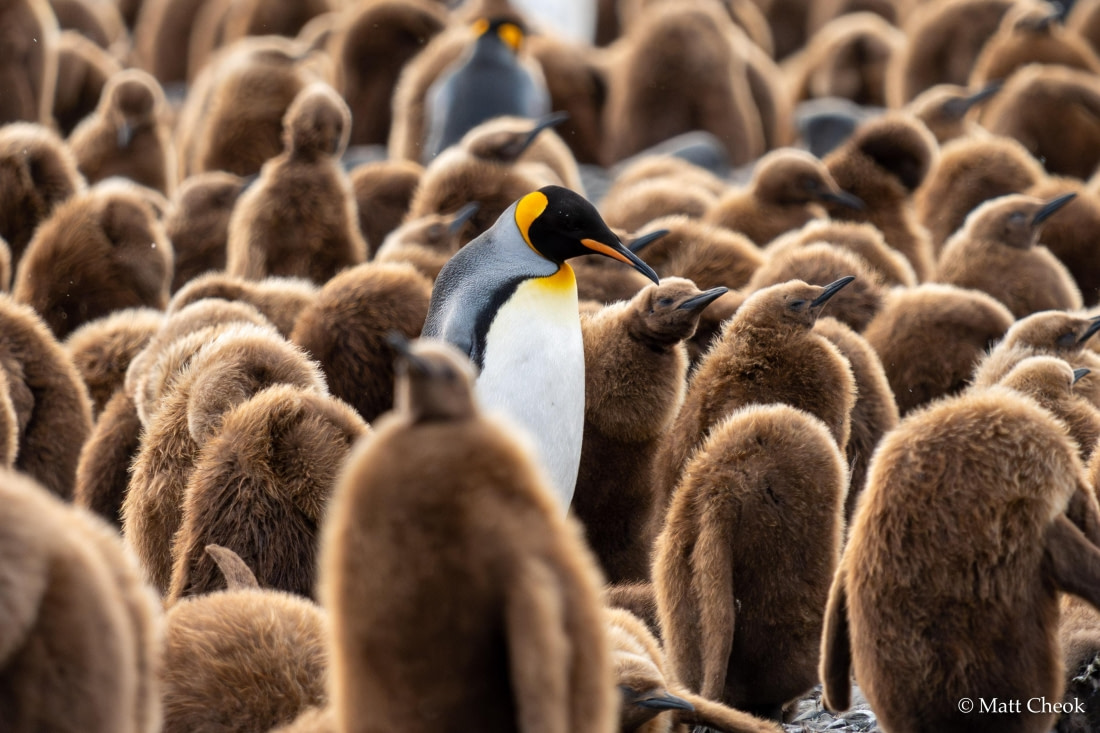
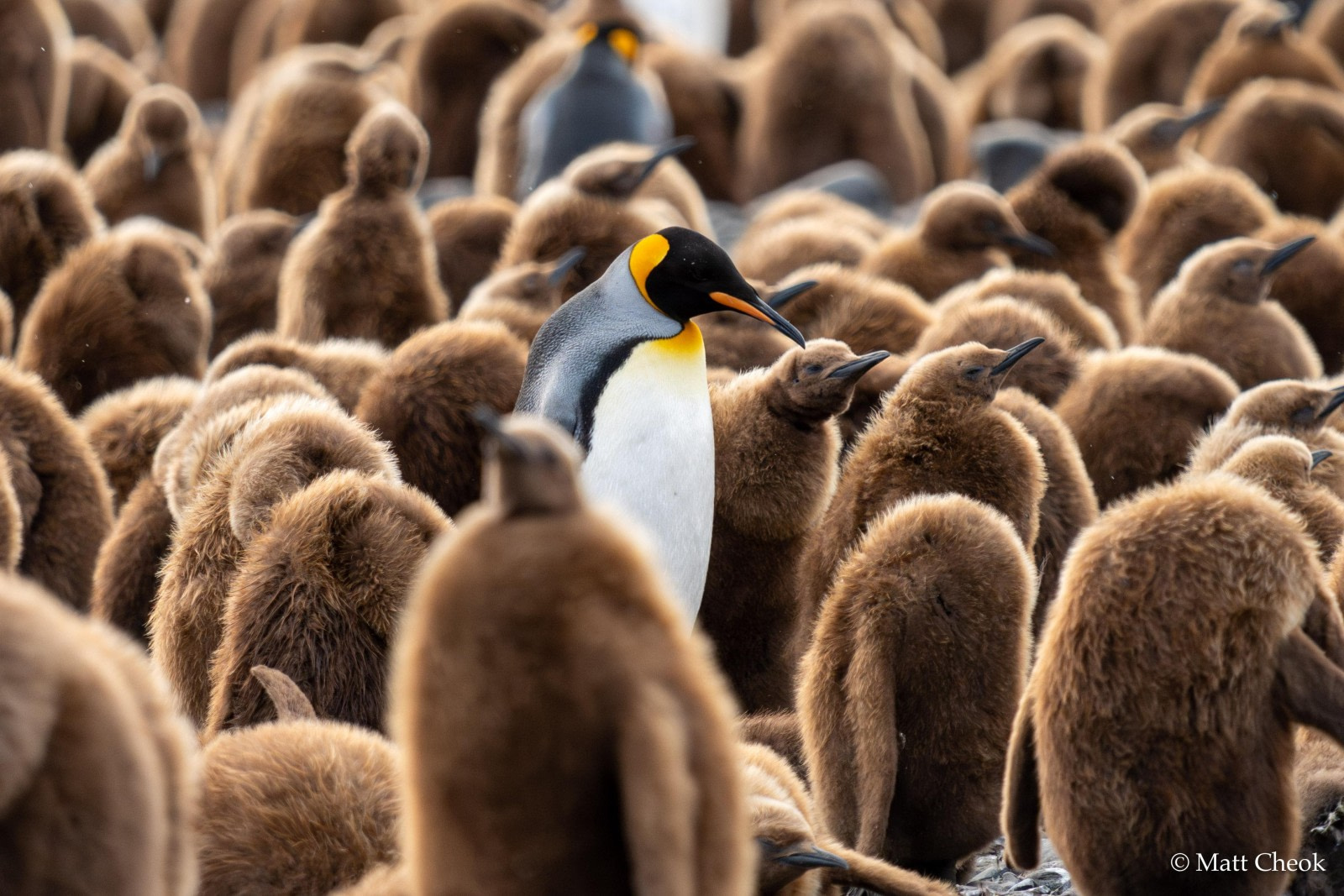
We followed a trail up to the steep hillside where a large colony of rockhopper penguins were the first to greet us. Further on we were delighted to encounter more black-browed albatrosses, sitting tight on their nests, protecting a single precious egg from the elements. The view from the vantage point was quite stunning, as we looked down over a spectacular sand beach that stretched some 1.5km into the distance. It was peppered with penguins, and those that ventured down to the sandy expanse were excited to find a small number of king penguins. These were both birds in spectacular adult plumage and large chicks in their thick brown fluffy coats. We stayed well into the evening to enjoy the soft light and dark, moody skies which looked quite threatening. Sure enough, the infamous Falklands weather changed once again and there was a sharp increase in wind as another wintery squall romped through our location.

Safe and sound back on Ortelius, it was time for a fine dinner and hot shower. Captain Per shaped a course for the Falklands capital, Stanley, which involved an overnight passage along the north coast of the Islands. The ship was buffeted by increasing winds, and violent wintery squalls made the decks very slippery. We joined the expedition team in the bar for a look at what lay in store tomorrow and learnt that the Falklands were about to be engulfed by a very nasty weather system that would bring gale-force winds. Our visit to Stanley was very much in the balance, and some luck would be needed tomorrow.

Day 5: Stanley

Stanley
Date: 26.10.2025
Position: 51°41.2’S, 057°51.0‘W
Le vent: S 9
Météo: Partly Cloudy
Température de l'air: +3

We woke this morning to the sight of the Narrows. This is a narrow channel from Port Williams through to Stanley harbour. It requires very careful navigation as not only is it narrow but it is also shallow. The captain did a fantastic job to get us through safely in winds gusting around 35 Knots. Many ships would not even attempt that navigation in such weather.

As we dropped anchor and manoeuvred into position it became clear that the disembarkation would be tricky with the wind as it was.

Another delicious breakfast was served as the expedition team dropped Zodiacs and assessed the conditions.

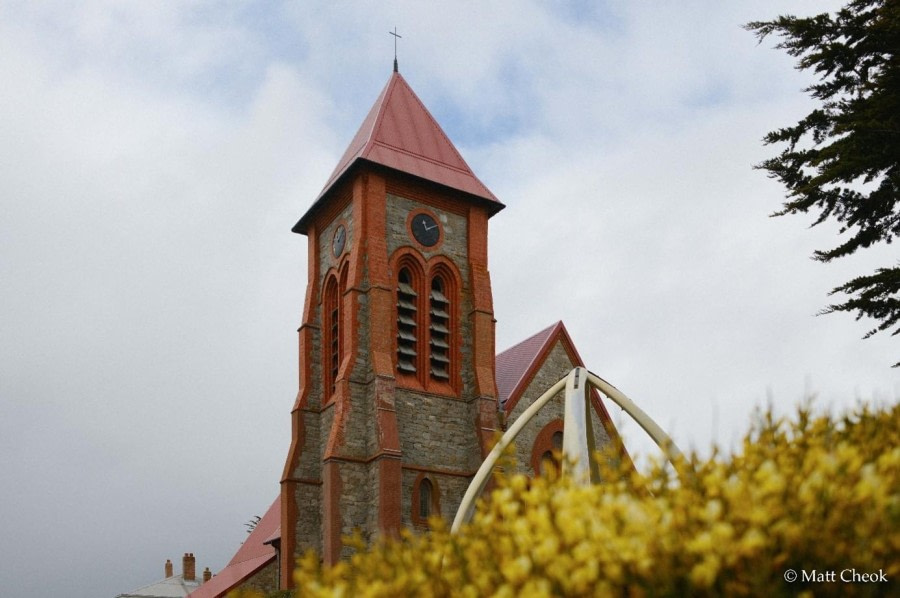
An hour or so later we were all enjoying dry land under our feet and the delightful town of Stanley. Some of us were escorted in by the local Commerson dolphins! One of the big attractions is the southernmost cathedral on the planet. Some of us visited the service at 10am. Others enjoyed the museum, the post office and the coffee shops.

We found the locals so friendly and happy to talk about their lives at the bottom of the world. By now it was sunny and warm as we walked along the ‘front road’ and Victory Green. Many visited the war memorials to pay their respects whilst others purchased gifts from the shops that had opened on this quiet Sunday morning.

Later in the morning, Falklands Beerworks and the gin distillery opened especially for us. A few samples were tasted, and bottles of beer and gin were taken back as mementos.

Before we knew it was time to head back to the ship. We headed back on the Zodiacs, this time a bit drier with the wind and spray behind us. We left the good people of Stanley to their quiet Sunday afternoon, and it was time for us to go to lunch. Many of us also watched our navigation back through the narrows. A truly spectacular exit as we passed Gypsy Cove and Yorke Bay and then finally Cape Pembroke and the Lighthouse as we ventured out into open seas.

There was a swell of 3-4 metres as we headed out and many of us retired to our cabins for the afternoon. During the afternoon those that could attend were treated to fascinating lectures on the Falklands War from Allan and Falklands geology from Beth.

After our vegetarian dinner some went to the photo workshop where images were shared from the last few days in the Falkland Islands and we reflected on what was a fabulous visit to the islands. 

Day 6: Sea Day

Sea Day
Date: 27.10.2025
Position: 52°27.8’S, 052°08.8‘W
Le vent: SW 6
Météo: Overcast
Température de l'air: +2

After an incredibly successful and exciting three days in the Falkland Islands, we were quite pleased to be at the start of two sea days. This meant we could rest after our hikes and shore rock climbing adventures and begin the daunting task of organising our many thousands of photographs. The sea state had definitely improved from yesterday afternoon but there were still a few people struggling with seasickness.

We began the day with a mandatory briefing about what to expect when visiting South Georgia. George showed us an exciting film, a visitor’s guide to South Georgia, which really got us inspired and excited about our upcoming trip. He then explained about the biosecurity measures in place to protect the unique flora and fauna of the island and how to manage a potentially intimidating advance from an angry fur seal.

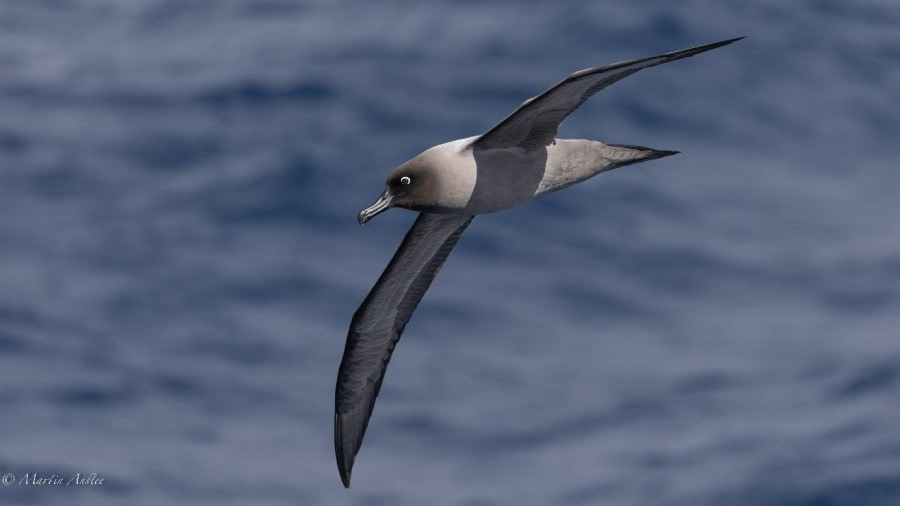
Throughout the day we were birdwatching outside. Some new species of the day included the Atlantic petrel, light-mantled albatross and the grey-headed albatross.

Before lunch, Jess gave us a presentation about the cetacean species that we have the chance of seeing on our trip with some tips about how best to spot them.

After lunch we gathered in the lounge to hear Pippa give a presentation about the seal species we should see on our journey.

Around 4pm even more seabirds started to appear, and some light-mantled albatrosses were flying very close to the ship in beautiful low light, creating a perfect opportunity to capture today’s photo objective which was ‘birds in flight’. We also had great views of a wandering albatross, the record-breaking bird for having the largest wingspan.

In the late afternoon Saskia told us the story of Shackleton on the Endurance and how he and his men survived against the odds ultimately making it home from their disastrous attempt to cross the Antarctic continent.

We gathered for our daily recap in the evening where Martin gave us some more information about some of the bird species we had seen, Jess showed us the wingspans of a variety of the seabirds soaring around the Southern Ocean, and Pippa explained more about the Antarctic Convergence zone.

After dinner Matt invited us for another photography workshop where many of the passengers and staff shared some images they had taken over the last couple of days. We all take away different views and experiences from this trip and sharing our images was an excellent way of demonstrating this.

Day 7: Sea Day and Shag Rocks

Sea Day and Shag Rocks
Date: 28.10.2025
Position: 53°35.5’S, 043°46.2‘W
Le vent: SSW 6
Météo: Overcast
Température de l'air: +2

After a bumpy night, George woke us up for our second full day at sea between the Falklands and South Georgia.

The bird watchers were out early this morning trying to see if there were any new species to be spotted as we crept closer to South Georgia.

Beth kicked off the lecture program with a talk about the Geology of South Georgia so that we could better understand the folds and structures in the landscape when we arrived there.

Straight after the talk we started getting ready for our second round of biosecurity. This one was particularly important as the South Georgia Government and South Georgia Heritage Trust have worked incredibly hard to eradicate invasive species such as rats and non-native plants. During the biosecurity checks a couple of beaked whales were spotted, and very far away on the horizon we could make out our first large iceberg.

We rewarded ourselves for doing such a great job cleaning by having yet another buffet lunch in the restaurant.

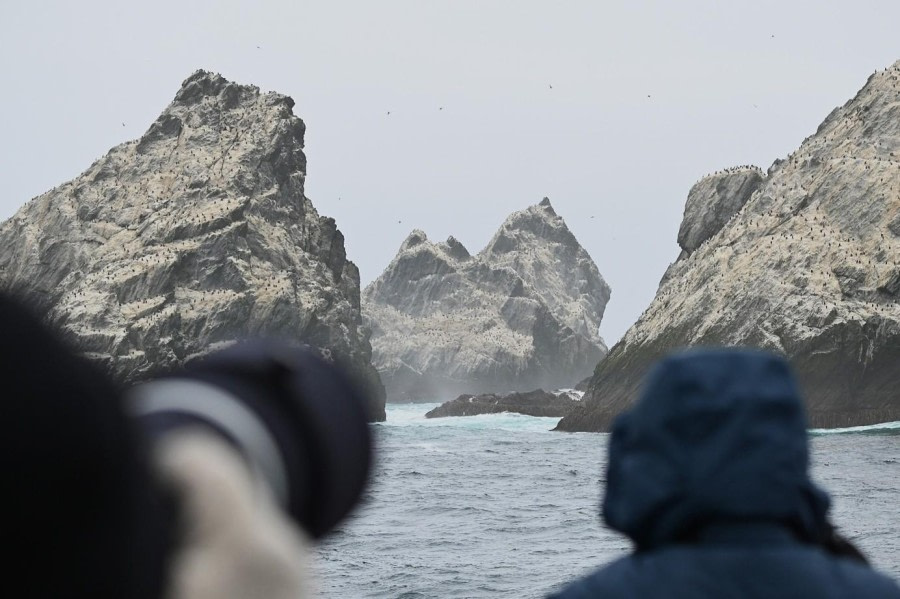
After lunch the magnificent Shag Rocks started to loom in the distance. The captain sailed the ship very close to the rocks so that we could see and hear the waves crashing up on the steep sides. There were hundreds of blue-eyed shags sitting on their nesting spots on the rocks, resting on the water, and flying in and out from fishing trips and to gather up seaweed to use for nesting material. It was quite a spectacle and there were also prions sitting in large numbers on the water around the rocks and even a humpback whale surfaced a couple of times. The wind was icy, but it didn’t stop us posing on the bow for a big group photo in front of the rocks. This was an excellent detour on route to South Georgia and a treat to get so close to these impressive geological structures in such a big swell.

In the late afternoon George gave us a lecture about the politics of South Georgia.

For the evening recap we gathered to hear the very exciting plans for tomorrow from George about our first activities in South Georgia. Martin told us about the South Georgia pipit, and Allan talked about the remarkable discovery of the ship Endurance, over one hundred years after it sank in the Weddell Sea.

We headed off to dinner with great excitement about tomorrow. Matt gave us another photography workshop in the evening where we looked at some of our photographs and he also gave us some more technical tips before improving our photography.

Day 8: Fortuna Bay and Stromness Whaling Station

Fortuna Bay and Stromness Whaling Station
Date: 29.10.2025
Position: 54°05.6’S, 036°48.0‘W
Le vent: SE 6
Météo: Partly Cloudy
Température de l'air: +1

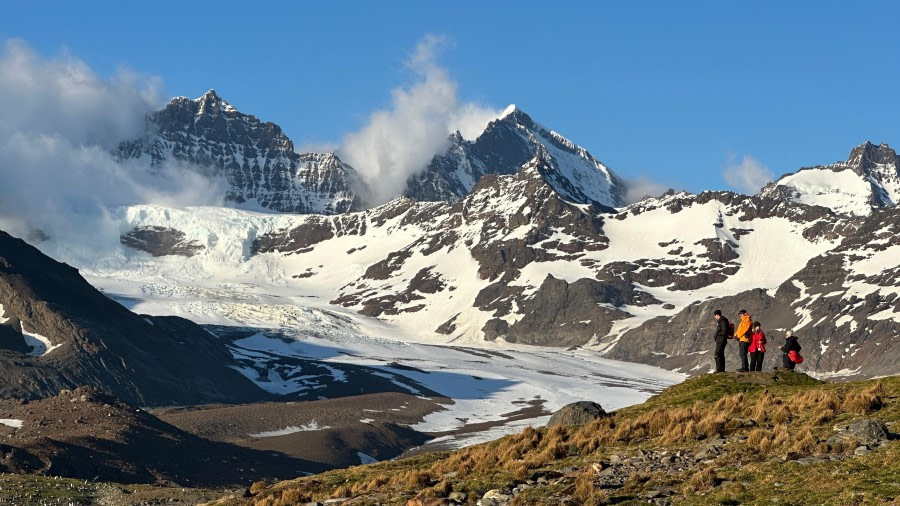
In the soft light of early morning, the coastline of South Georgia rose from the mist, a jagged sweep of mountains and glaciers that drew everyone out on deck despite the chill. To our delight, the weather was very pleasant, with reasonably calm seas and clear visibility, offering perfect conditions to appreciate the island’s dramatic scenery. As the first rays touched the peaks, the island revealed its rugged beauty with snow-dusted ridges and waterfalls plunging into the sea.

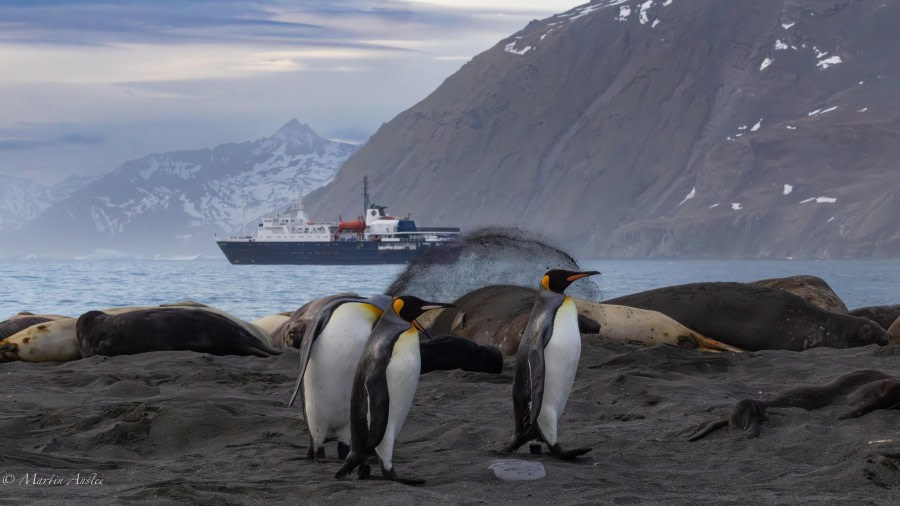
After breakfast, we launched our Zodiacs for Fortuna Bay, a spectacular amphitheatre of rock and ice. The beach was alive with movement and sound as southern elephant seals lounged along the shore and king penguins filled the air with their brassy calls. As we made our way toward the colony, Antarctic fur seals were dotted along the path, watching our progress with mild curiosity. Against the backdrop of glaciers and sheer cliffs, it felt like stepping into another world. We truly felt we had arrived in South Georgia, delighted by the sheer number of king penguins and their chicks spread across the landscape.

Following lunch, we set out once more, this time for Stromness, a place that was once a bustling whaling station and is now a quiet monument to endurance and history. Rusting tanks and weathered buildings stood as reminders of a bygone era beneath a skyline of circling skuas. Bathed in soft afternoon light, some of us walked up the valley toward the waterfall, while others climbed a nearby hill for a view of the gentoo penguins nesting below. Our birders were on the lookout for the elusive and endemic South Georgia pipit, though it managed to evade us on this occasion.

At the evening recap, George, our expedition leader, shared an exciting surprise: a wake-up call at 4:15 a.m. He promised it would be well worth the early start, as we are heading to St Andrews Bay, home to the largest king penguin colony in South Georgia. The thought of seeing tens of thousands of penguins at dawn filled the room with anticipation — definitely a night for an early sleep.

Day 9: St Andrews Bay and Godthul

St Andrews Bay and Godthul
Date: 30.10.2025
Position: 54°26.4’S, 036°07.2‘W
Le vent: Variable 1
Météo: Partly Cloudy
Température de l'air: +6

Due to a promising forecast for the St Andrews area, it was decided to grasp this opportunity and get an early morning landing with the soft light flooding the open outwash plane of St Andrews Bay. In polar operations we must make the most of any lull of the wild conditions that dominate these high latitudes, so we disregarded a complete night sleep and set off to the landing site at 04:45.

George woke us with the good news that things were looking good, and the swell was manageable where it reached the sweeping sandy beach. We watched the sun break the horizon, smelt the waft that accompanies any penguin colony and heard the hum of 400,000 breeding pairs of king penguins as we approached the landing site.

At the landing site we immediately disembarked the Zodiacs so the boats could be pushed back out from the waves of the shoreline. It was hard to get up to the lifejacket bags to rearrange ourselves into photography mode without being captured by the entertaining elephant seals grunting and snorting. The king penguins looked so spectacular in the morning light as they came and went from the crashing waves.

We had to focus on making time for reaching the viewpoint at the end of the walk where we could reach a spectacular position which overlooked the vast sea of penguins on this open plane. To reach the lookout we had to walk past many elephant seals which lined the beach. Males guarded their harems where the first of the young pups lay adjacent to their mothers.

Occasionally we were lucky enough to see a satellite male challenging the dominant male. As they caterpillar tracked over to their opponent, all other wildlife dispersed rapidly, avoiding being trampled. There were instanced where we saw females disappearing under a male and reappearing the other side as the male bulldozed through the crowds, stopping for nothing.

We also had to make two river crossings to reach the viewpoint. This was not for everyone which wasn’t a problem as there was so much action to see from before the rivers. The guides worked together to assist everyone through the water which luckily wasn’t above the height of the muck boots, although there were certainly some wet feet amongst us!

After some time enjoying the vastness of the king penguin colony with the high mountains surrounding us and tumbling glaciers pouring down the valleys, it was time to make tracks back to the landing site.

By 08:30 we were all back on board and breakfast began. What a lot to discuss during this breakfast as we shared stories of amazement that this landing had really lived up to the high expectations.

After breakfast there was no break, it was time to head out on our first Zodiac cruise. All sun creamed up for the clear conditions, we headed to some rocks called Clark Point on the northern end of the beach where we could see many sheath bills feeding on the rocky shores. A group of king penguins looked curious as they waddled across the rocks, tempting each other to make a splash into the waves. It is always entertaining to speculate in our Zodiacs as to what the king penguins are saying to each other!

The Zodiac cruise delivered a new perspective to the site where we could view all the giant petrels on the water, keeping a beady eye ready for any carcasses to scrounge on. We saw large rafts of king penguins breaking through the surf to set off on fishing trips, often taking their time for some play first. The aspect from the sea also enabled us to appreciate the alarming rate of glacial retreat as we had seen in the introduction briefing that the three glaciers behind the landing site were once connected and came to a calving glacier front at the coast as recently as 1980.

Back on board it was time for lunch and a short break as we made our way round to Godthul. The coastline between the two locations was worth being out on deck for as we saw the high peaks, topped with lenticular clouds, leading down to the U-shaped valleys carved by the glaciers and large outwash planes where the glacial sediments are deposited forming spectacular open planes for the wildlife.

At Godthul there was the option to go ashore and tackle the steep tussock grass slopes up to Lake Aviemore and the Gentoo colony or take a Zodiac cruise to admire this fascinating bay where wildlife, whaling history and tectonic movements have all left their mark.

The gentoos were entertaining to watch as they stole nesting material from one another, looking very proud of their findings as they went back to their own nest. Occasionally we were able to get a glimpse of the two eggs they were sitting on.

Up at the gentoo colony a trip highlight for many came as our first South Georgia pipit was spotted. An endemic bird’s population has been growing since the eradication of rats in South Georgia however, in recent years some of our guides had noticed fewer sightings.

On the way back down, we worked together find a way through the maze of tussock grass and listened carefully as we went to ensure there were no lurking seals in our track.

Back on board, George gave us a briefing about the next day’s activities which involved a visit to Grytviken, one of the few whaling stations which is in safe condition, possible to visit. However, before we were able to consider this, it was time for a biosecurity session to remove the seeds we had acquired from scrambling through the tussocks at Godthul.

The day had more to offer as we finished with a BBQ on the heli deck. Our luck came again as the wind dropped at our anchorage in Godthul. Together, we reminisced on a wonderful, packed day!

Day 10: Grytviken and Jason Harbour

Grytviken and Jason Harbour
Date: 31.10.2025
Position: 54°17.1’S, 036°28.9‘W
Le vent: NW 7
Météo: Partly Cloudy
Température de l'air: +9,6

The day began with Ortelius making her way into scenic Cumberland East Bay and coming to anchor in Grytviken (Norwegian for Pot Cove) while we enjoyed breakfast. It was another sunny day, and the surrounding scenery was magnificent. Ahead of the ship was the rustic remains of the whaling station that was established in 1904 by Norwegian captain Carl Anton Larsen. Nearby on King Edward Point was the modern research station operated jointly by the South Georgia Government and British Antarctic Survey. Zodiacs were launched to collect two South Georgia Government Officers and some Heritage Trust personnel.

A short presentation on the work of the South Georgia Heritage Trust was followed by the much anticipated and thoroughly prepared for biosecurity inspection by the Government Officers. We passed with flying colours! It was a 100% success for Team Ortelius. Soon we were on the Zodiacs heading to shore for a landing below the whaler’s cemetery where Sir Ernest Shackleton was laid to rest. We joined Expedition Leader George at the grave side for a whiskey toast to ‘The Boss’, taking a moment to appreciate what a privilege it was to be able to pay our respects to the most famous Antarctic explorer that ever lived. In addition to the many graves of whalers, the cemetery is also the resting place of Argentine submariner Felix Artuso, the only fatality from the 1982 skirmish between British and Argentine forces.

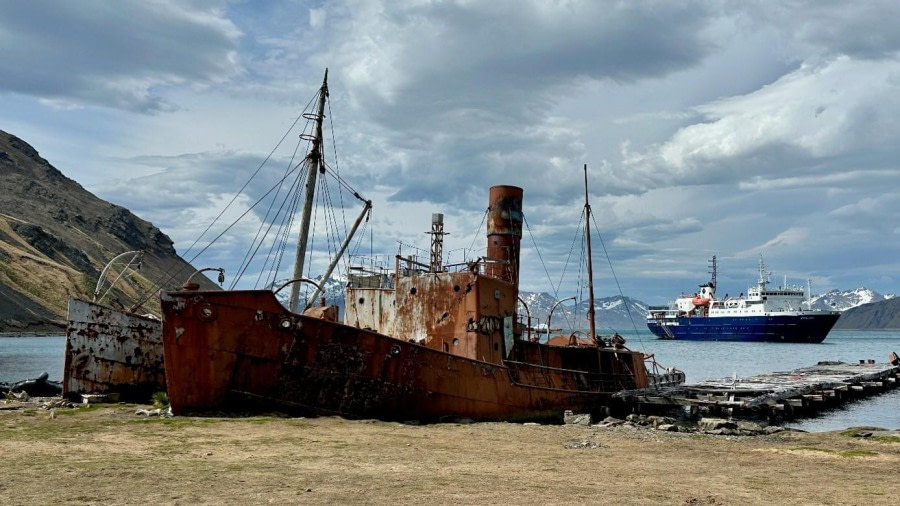
We wandered around the shoreline and through the remains for the whaling station, inspecting the machinery that efficiently processed every bit of the whales and extracted the maximum amount of oil. The whale catcher Petrel lay beached as a silent relic of a once brutal and barbaric era that saw the near annihilation of whales. At the back of the station, we found the beautifully preserved Whalers Church where, some took the opportunity to sit in quiet contemplation or have a go at ringing the bell. This is where the funeral of Sir Ernest Shackleton took place in 1922. A short distance from the church we found the magnificent museum and gift shop located in what used to be the Manager’s Villa, with the post office next door. Souvenirs were bought and postcards were mailed. At 11:00 some of us joined one of the Heritage Trust personnel for a guided walking tour of the whaling station. Meanwhile, ferocious katabatic winds were buffeting Ortelius, and Captain Per spent the whole morning on the bridge working the engines to ensure the ship held position in the tight little anchorage.

All too soon it was time to take the Zodiacs back to the ship, which were waiting for us in front of the museum next to the rusting hulks of the whale catchers Albatross and Diaz. As Ortelius turned and sailed out of Grytviken, another delicious lunch was served by the ever-attentive hotel department. The ship made her way northwards out of Cumberland East Bay and crossed Cumberland West Bay to drop anchor in Jason Harbour. The wind whistled down off the mountains ahead of the ship, peaking with gusts in excess of 35 knots. We donned our outdoor gear for a wild ride ashore in the Zodiacs.

We landed on a protected pebble beach that was a breeding site for Elephant seals. Menacing male Fur seals were also dotted here and there, which we had to keep a sharp lookout for. There was an old refuge hut that dated back to 1911, with a small tussac-covered hill behind that gave a great overview of the area. The elephant seals definitely stole the show, with lumbering great males reigning supreme over their harems and new-born pups begging their mothers for more of their rich milk. Super-cute weaners from last year were also scattered here and there, along with wannabe males who were not yet of beach master status. The action was intense, with everything from mating to maternal care. A lucky few got to witness the birth of a pup, after which a mass of skuas and giant petrels swooped in to feed off the placenta. Further along the beach some giant petrels fed on the carcass of a pup, their faces plastered with blood. It made for dramatic photographs with the spectacular mountain backdrop and softening light.

It was an exciting downwind ride back to the ship, with the Zodiac drivers skilfully negotiating the gangway operation in the strong wind and swell. Before dinner, there was just enough time for George to deliver a briefing on our plans for tomorrow, which brought the exciting news that we would attempt another dawn landing at one of South Georgia’s most beautiful locations.

Day 11: Gold Harbour and Cooper Bay

Gold Harbour and Cooper Bay
Date: 01.12.2025
Position: 54°37.8’S, 035°55.2‘W
Le vent: NE 3
Météo: Cloudy
Température de l'air: +2

This morning was another early start to enable us to get the most out of our last day in South Georgia. We were woken at 04:15 with George announcing that all looked good so far and the Expedition Team were heading ashore to check out the landing site. The forecast had been for 90% cloud cover, but we were optimistic due to our track record of sunshine so far that disregarded the forecast.

The team were able to find a gap in the wildlife to get ashore on the far northern end of the beach between the rocky outcrops. It was not the easiest landing as once on the beach we had to head straight up into the tussock grass behind the dense packed beach. After taking a wide berth around a nesting giant petrel, the young elephant seals and the fur seas, we were able to cross a stream and occupy a small area on the edge of the beach overlooking the dense king penguin colony.

Beyond the colony lay the rolling hills of the moraines and then the impressive steep cliffs. The glacier now terminated above these rolling hills, forming a hanging glacier. It was as recent as 1984 that this glacier reached the shoreline. In the evening, Wei showed us an impressive video of the front of the glacier breaking off and tumbling down the steep cliffs towards the lagoon below.

It was a spectacular setting with very dense wildlife which were really putting on a show with a large range of behaviours being displayed. There was plenty of jousting between the male elephant seals, suckling for the pups, play fighting between the ‘teenagers’ of the elephant seals and pecking of the seals by the inquisitive young king penguin chicks.

By 08:00 we were all back on board ready for breakfast. What an exciting feeling it is to have all these early starts to fit in the most to our days in this spectacular and historically rich island of South Georgia.

During breakfast we made our way south to Cooper Bay where we planned a Zodiac cruise. The landscape began to change as we made our way from the sedimentary layering of the east to the continental origin and igneous rocks of the southern part of the island.

Cooper Island protects the bay where we were to have our Zodiac cruise, otherwise this bay would be fully exposed to the Southern Ocean. The bay also hosts an iceberg graveyard where large ice bergs come to melt away that were broken off from the spectacular big tabular ice bergs that drift here from the Weddell Sea ice shelves. The currents from the Weddell Sea carry the ice along the eastern side of the Antarctic Peninsula and out towards the southern tip of South Georgia. The ones we saw are likely to have broken off larger tabular ice bergs, possibly even A23a.

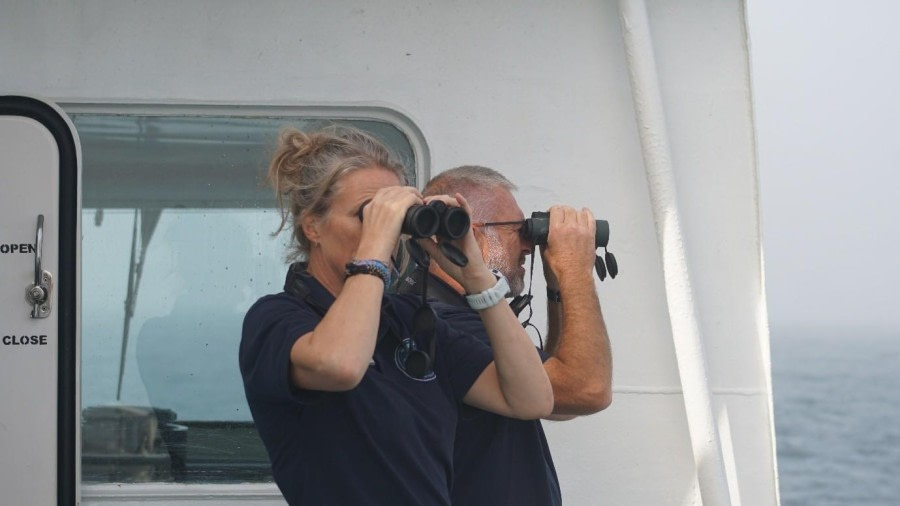
In the Zodiacs we set off to the eastern part of the bay. Our Zodiac drivers carefully navigated between the spurs of rocks which jutted out from the coast. In the narrow channels we could see gentoo penguins and fur seals enjoying the kelp forests that lined these rocky shores. With every gentoo penguin we raised our binoculars and carefully inspected the head to see if it was what we were really in hope of: a macaroni penguin. After lots of gentoo spotting, our teamwork paid off and we were able to find some macaroni penguins which we could get the small boats close to.

Some of the boats were even lucky enough to spot a white morph giant petrel on the water in the head of the bay. We were able to spot the distinctive black line under the chin of the penguins giving them their name, the chinstrap penguins.

Although the macaroni penguins are likely the most numerous penguins in the world, many of which breed on South Georgia, it proves hard to find them on the east coast. However, with good spotters in the boats we were able to find five macaroni penguins on steep snow which they were trying to ascend to their nesting grounds. As we watched a sixth appeared at the shore and hopped across the rocky beach.

Back on board, we ate lunch quickly so we could get back out on deck to watch as we passed through the narrows between Cooper Island and the southern tip of South Georgia. The ice bergs forced us to take a very indirect route to reach the open water.

Captain Per manoeuvred Ortelius impressively close to some of the ice bergs allowing all of us who lined the foredeck to enjoy the close encounters. You could tell we were all very tired as even with the spectacular scenery we stood almost silently, enjoying the dramatic coastline as we departed South Georgia.

The coastline here is somewhat different from the South Georgia we have visited so far. The geology makes this area more comparable to the west Antarctic Peninsula where dramatic heavily glaciated mountains rise straight from the sea. With the sight of Cape Disappointment over our starboard quarter, we set course with optimism to the South Orkney Islands.

To compensate for our shortened recaps the last days in South Georgia, we had an extended session. First, we were captured by Allan’s stories of Tom Crean, then Wei responded to our curiosity in the leucistic penguins and fur seals before Beth showed us some photos of the dramatic glacial retreat in some of the locations we visited.

Day 12: Sea Day

Sea Day
Date: 02.12.2025
Position: 57°51.5’S, 040°31.7‘W
Le vent: W 9
Météo: Overcast
Température de l'air: +1

We woke to a gentle sunrise over the South Georgian coastline, greeted by a 7:45 a.m. wake-up call. Breakfast was a cheerful affair, fuel for a day full of learning, discovery, and a touch of mischief.

Our morning began with a photo editing session led by Matt and Martin in the lounge. They took a relaxed, conversational approach, showing us different styles and ways to edit our images, with a focus on fast and accessible mobile techniques. For those ready to dive deeper, they introduced us to Lightroom, opening up new ways to enhance and share the moments we had captured so far. The atmosphere was friendly and lively, with plenty of questions, tips, and shared enthusiasm for photography.

Later, Pippa guided us through the dramatic history of Antarctic whaling. Sitting in the lounge, we learned about the human stories, the industry’s impact on the environment, and the lasting consequences for both people and wildlife. It was a sobering but fascinating glimpse into South Georgia’s past, and it added new depth to the landscapes we had been exploring.

Lunch was served at 12:30 p.m., followed by a biosecurity check in the lounge. We cleaned and checked our outerwear, backpacks, muck boots, and equipment, ensuring our gear was ready for the next adventures enroute to the South Orkneys and Antarctica itself. Brushes and paperclips at reception helped, though most of us had already done our best to clean beforehand.

The afternoon continued with a Birds of the Southern Ocean session led by Martin. His conversational style kept everyone engaged as we learned more about the winged wonders we had seen and those still on our wish list. By the time the session ended, the lounge was abuzz with shared stories, observations, and plenty of inspiration for future sightings. Our baker had also supplied chocolate chip cookies during the afternoon, which disappeared almost immediately, much to everyone’s delight.

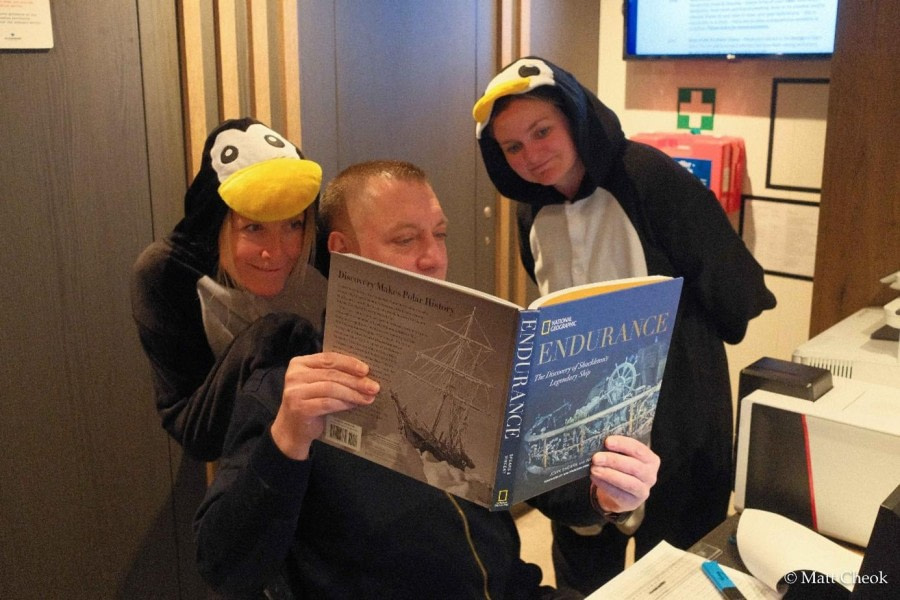
The day took a playful turn as guides Saskia and Jess were spotted in penguin costumes, preparing for the evening’s South Georgia Heritage Trust Auction. Dinner at 7:00 p.m. passed quickly, anticipation building for the fun ahead. Jess delighted everyone as the auctioneer, her good humour keeping the room laughing while a remarkable array of prizes went under the hammer — from driving the ship with the captain to joining the expedition team early. The highlight of the auction came with a penguin hair clip, which fetched an astonishing 110 British pounds, showing that a touch of fun can make fundraising truly memorable. It was a perfect blend of education, laughter, and shared appreciation for the beauty and heritage of South Georgia.  

Day 13: Shingle Cove, South Orkney Islands

Shingle Cove, South Orkney Islands
Date: 03.12.2025
Position: 60°40.6’S, 045°13.7‘W
Le vent: NW 6/7
Météo: Overcast
Température de l'air: -1

Despite expecting a well-earned sleep in after several long days, George woke us at 5:00 a.m. with his calm yet excited voice, announcing that some dramatic ice was already in sight. Many of us were quick to get up and head out on deck to watch our expedition ship moving through the ice, a remarkable start to the day. Breakfast was served at 7:30 a.m., giving us time to refuel before our first outing.

Thanks to excellent navigation and good speed from the bridge, we made a landing at Shingle Cove by mid morning. The site is home to a small colony of Adélie penguins, and it was a rare treat to see them so early in the season while taking in the icy panoramas of the South Orkney Islands. The snow was blowing sideways, giving us our first real taste of the colder conditions as we journey further south. Sailing between Laurie and Coronation Islands provided spectacular views of jagged ice, snow dusted peaks and scattered wildlife, making the morning unforgettable. The photographers were withstanding land durations out on deck to capture the abundance of snow petrels.

After a busy start, we regrouped for lunch, and the afternoon offered a chance to rest and recharge, a welcome pause after the early wake up and time spent among the ice and wildlife. Later, we gathered to watch Endurance, complete with popcorn, as we continued our voyage towards Elephant Island, a fitting destination.

The day continued with the expedition team’s recap, reflecting on the excitement of travelling through the ice, the penguin encounters and the striking scenery. Spirits were high as everyone shared their impressions and stories from the day.

In the evening, the photography workshops with Matt and Martin were a creative highlight. Their guidance was invaluable, but it was our dear guests’ own images that truly stood out. Photos from South Georgia, carefully captured and edited throughout the voyage, shone on the projector, showing the dedication and talent of our fellow travellers. The room was filled with enthusiasm and anticipation for what is still to come.

As night fell, we continued our journey south, sailing steadily towards Antarctica and the wild southern seas ahead.

Day 14: Point Wild, Elephant Island

Point Wild, Elephant Island
Date: 04.12.2025
Position: 60°29.6’S, 051°44.7‘W
Le vent: S 8
Météo: Overcast
Température de l'air: +2

We woke this morning to high winds and a rolling ship. The reason was the three metre swell outside.

The 60 knot winds had threatened to rip the ships flag from the mast. The commitment of the AB’s had meant that the flag was fixed again, and all was well. An hour later the wind had won and the flag, this time, it was ripped from its fixings and had disappeared into the vast Southern Ocean.

Beth gave a fascinating lecture about the glaciers and ice that we were witnessing and would see lots more of over the next few days.

As the morning progressed the wind didn’t let up, and the ship carried on its way towards Elephant Island. By now the air temperature was around -4 degrees Celsius and that was before the wind chill! The ship began to ice up; icicles were forming on the handrails and the rope that once held the ships flag became solid.

After a delicious vegetarian lunch, George gave a very interesting lecture on the history and geo-politics of Antarctica.

Mid-afternoon and land appeared on the horizon, that wind that had been consistently blowing from the south was beginning to abate, the sea started to calm, and the clouds started to part.

As we got closer to Elephant Island, flocks of pintado petrels flew around a huge iceberg and at one stage a single Antarctic petrel flew across the face of the ice. Fin and humpback whales cruised past as Captain Per took us as close as safety would allow to the huge iceberg.

It was then time for recap and another great all-vegetarian dinner. During dinner we approached Point Wild, the sea became flat and there was no wind! A huge decision was made and the expedition team dropped Zodiacs. We were so lucky to be able to Zodiac cruise Point Wild, the place where Frank Wild and 21 other men spent 4 months of the winter of 1916 in upturned lifeboats waiting for their ‘Boss’ Sir Ernest Shackleton to rescue them. The weather and light were amazing although a little chilly. Apart from the history there were chinstrap and gentoo penguins all over the land and sitting on the ice. As we cruised, the light began to fail, and we headed back to the ship. A truly memorable day!

Day 15: Kinnes Cove and Brown Bluff

Kinnes Cove and Brown Bluff
Date: 05.12.2025
Position: 62°46.3’S, 056°40.5‘W
Le vent: Var 1
Météo: Overcast
Température de l'air: -1,6

This morning began quietly, the ship gliding gently among plates of drifting sea ice on the edge of the Weddell Sea. The light came early and pale, tinting the vast ice plain around us with shades of silver and blue. By breakfast time the air was crisp and still, and the sea around us a mosaic of floes and narrow leads, each glinting in the low Antarctic sun. It was one of those rare, perfect mornings when the Weddell Sea seems to open itself in welcome — bright, calm, and magnificent.

After breakfast, we gathered in the lounge for a presentation from Allan, who took us on a journey back in time through one of the most dramatic stories in Antarctic history — the Swedish Antarctic Expedition of 1901–1903, led by Otto Nordenskjöld and Captain Carl Anton Larsen.

Allan told the tale with enthusiasm, painting vivid images of the small wooden ship Antarctic pushing bravely into the Weddell Sea more than a century ago, when so little was known of these waters. It’s a story of perseverance, leadership, and the resilience of the human spirit — and Allan reminded us that these very waters around us, calm and brilliant today, were the same that once swallowed the Antarctic. The contrast between the tragedy of the past and the beauty of our present morning was not lost on any of us.

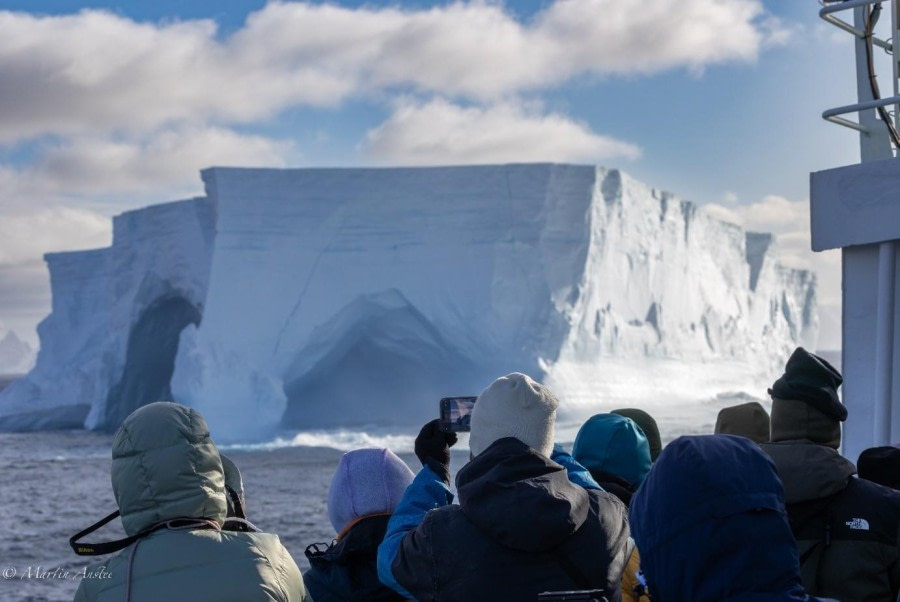
After the lecture, we stepped out onto the outer decks, drawn by the incredible scene around the ship. The air was cold but clear, with the sun glinting off the smooth white surfaces of massive tabular icebergs. Each berg was a floating mountain, its walls sheer and blue-veined, rising straight out of the water like the walls of a cathedral. Between them, the Captain and his bridge team guided our ship with masterful precision through the drifting ice floes.

Now and then, we heard the muffled crack and crunch as the hull gently parted thin layers of sea ice, a reminder of both the ship’s strength and the fragility of the frozen world we were passing through. It was mesmerizing to watch — the stillness of the sea broken only by the rhythmic pulse of the engines and the occasional exhale of a distant seal. Everyone was outside, bundled up in parkas and hats, cameras ready, smiles wide. For many guests, this was the quintessential image of Antarctica — luminous light, drifting ice, and the serenity of true remoteness.

In the early afternoon our next excursion Zodiac cruise in Kinnes Cove on the northern coast of Joinville Island began. The conditions were promising — sunshine, relatively calm seas, though the air remained distinctly chilly. Dressed in layers, gloves, and lifejackets, we made our way down to the gangway and boarded the waiting Zodiacs, engines purring softly against the icy water.

Out on the water, the Weddell Sea revealed itself in a new dimension. The ice here was beautiful — sculptures of blue and white in every shape imaginable, some as smooth as marble, others ridged and rough from wind and melt.

Wildlife sightings came one after another. We spotted groups of Adélie penguins, unmistakable in their tuxedo plumage, busily carrying small stones to build their nests on the rocky shore. A few Gentoo penguins mingled among them, their white head-bands shining in the sunlight. From several boats came the excited calls of “Weddell seal!” — and indeed, two of these sleek, large seals were seen resting on ice floes, while another surfaced close by, curious and unbothered by our presence. Cameras clicked continuously.

Even though the sun was shining, the cold made itself felt, the kind of chill that sneaks through even the thickest gloves when you pause too long to take photos. Still, no one seemed eager to return — it was too beautiful to leave. When at last we turned back toward the ship, the scene behind us — the ice, the penguins, the distant cliffs of Joinville Island — looked like a painting that would stay in our minds for years.

Back on board, we warmed up with hot drinks and freshly baked pastries. But the day was far from over. Our expedition leader, George made the decision that we would advance dinner and attempt an evening landing on the Antarctic continent itself — at Brown Bluff. For many, this would be the moment they had dreamed of for years: stepping foot on the Antarctic mainland.

By early evening, the light had softened into that magical golden hue that only polar regions seem to create. The wind had dropped, the water gleamed like glass, and our Zodiacs were soon heading toward the reddish-brown cliffs of Brown Bluff — a towering volcanic formation that marks the edge of the continent. The moment we stepped onto the shore, it felt momentous. One by one, we took photographs beside the continental landing flag, smiling in triumph and awe.

The atmosphere was joyous but reverent. Above us, snow petrels soared in graceful arcs, their pure white plumage catching the evening light. Along the beach, colonies of Adélie penguins were hard at work building and defending their nests. They seemed utterly unfazed by our presence, continuing their endless exchange of stones, squabbles, and courtship displays. Watching them so close, in their natural world of ice and wind, was deeply moving.

Down by the water’s edge, several of our photographers waited patiently, cameras poised, hoping to capture the perfect image — that split second when a penguin leaps from the snow into the sea. It took patience, but their dedication was rewarded with shots that captured the energy and grace of these little Antarctic residents. The light continued to shift, glowing pink and orange on the cliffs, turning the sea into a mirror.

As the time came to return to the ship, no one wanted to leave. It felt like the perfect end to a perfect Antarctic day — a journey through history, ice, wildlife, and finally, the continent itself.

That night the lounge was alive with stories, laughter, and a sense of shared accomplishment. We had followed in the wake of the early explorers, navigated through sea ice and tabular bergs, cruised among penguins and seals, and stood upon the Antarctic continent.
Day 16: Devil Island and Weddell Sea Cruising

Devil Island and Weddell Sea Cruising
Date: 06.12.2025
Position: 63°47.3’S, 057°88.8‘W
Le vent: Var 2
Météo: Partly Cloudy
Température de l'air: -3

The lovely voice of our Expedition leader George woke us up again, warning us about the beautiful setting that we had arrived in this morning. Overnight the bridge team had navigated our Ortelius out of the Antarctic Sound into the Erebus and Terror Gulf on the eastern side of the Antarctic Peninsula. They had dropped anchor right in front of Devil Island, with two mountain peaks on every side of the landing site, looking like horns. Behind it we could see the mountains and glaciers of Vega Island. We could relive history here as well, as the cliff behind our vessel was Cape Well Met. Allan told us earlier this trip about the story of the Swedish Antarctic Expedition. And here we were, right at the place where five of Nordenskjöld’s men met each other again after an unsuspected overwintering in the icy conditions of this rough continent.

From the decks we had excellent visibility to the horizon and beautiful views of bay surrounding us, filled with pieces of sea ice and scattered small icebergs. It was -2 degrees Celsius and just 4 knots of wind, giving us perfect conditions to do our morning operation.

A few of us were up early to scout the big birds, Emperor penguins, who live out here in the Weddell Sea area. A couple of suspicious spots were found on the horizon, but still approximately 15 nautical miles out. A scope had been put up, for the curious amongst us, to have a look at the dot, which for now only was a hinge. But we hoped our luck would continue in the afternoon by finding them.

During the wake up call the expedition team was already checking the conditions to land on shore. It became clear that the Adelie’s had taken over the whole landing site, and we could only go ashore with half of the passengers. The others would do a Zodiac cruise and then we swapped. Over breakfast the ice had come in a little. So, while waiting at the gangway, to be taken ashore, the vessel was moved a little further into a more ice-free area. Many of the icebergs had grounded and on shore they were just sitting there, and we could have a closer look at them, including the hundreds of Adelie’s that were nesting on the slopes of this rugged island. During the Zodiac cruise some of us spotted the south polar skua and the expedition guides were navigating in the shallow waters in between the icebergs with beautiful colors of white and blue and the flat sea ice floes. The sun had come out and again, it was a truly spectacular morning.

Back on board we went for lunch and then almost everybody was somewhere out of the decks or on the bow. We were navigating out of the Gulf into the northeastern part of the Weddell Sea, through an impressive sea ice landscape. The ship was pushing through all different kinds of ice floes. Thicker ones were cracked and split open, softer floes with slight upright edges were slushier and just pushed aside.

It was a bright, sunny afternoon with no clouds in the sky. Gentoo penguins swimming and porpoising in the glassy sea, where icebergs would mirror a perfect reflection. Southern Giant Petrels tried to lift off by walking on the water with their big feet and taking off eventually. It was really magical.

Just after lunch we heard our Expedition Leader George, over the tannoy, again with great news, as always! This time it was an unexpected message. We were invited up to deck 7, behind the bridge for a hot chocolate, and for those who liked, with a dash of rum and cream. It was a happy gathering.

With hundreds of photos taken from the bow and up on the decks we went into the lounge to join for the daily recap for tomorrow and some great additional topics presented by the expedition team. The ‘weather luck’ would seep away a little as we would enter the Bransfield Strait tonight and head down to the Gerlache Strait. With some more swell it would be a smooth rocky night.

Another delicious dinner followed, prepared by the galley team. To conclude this amazing day, we went up to the lounge, where some of us shared their pictures during the Photography Workshop presented by Matt. One more drink and then we went to bed.

Day 17: Mikkelsen Harbour and Palaver Point

Mikkelsen Harbour and Palaver Point
Date: 07.12.2025
Position: 63°55.0’S, 060°35.1‘W
Le vent: W 2
Météo: Overcast
Température de l'air: -2

Overnight Ortelius made steady progress down through the stormy Bransfield Strait and entered the more friendly waters of the Gerlache Strait. Most of us were happy to find that the rough conditions of the night before had subsided and this morning brought light winds and relatively calm seas. However, it was heavily overcast with light snow and a temperature of minus 2 degrees Celsius when the morning wake-up call echoed around the ship. As breakfast was being served, Ortelius came to anchor in Mikkelsen Harbour at the south end of Trinity Island. Our destination for the morning, tiny D’Hainaut Island, was just visible through the falling snow.

We took the Zodiacs ashore and were greeted, as always, by the ever-enthusiastic expedition team. A new experience awaited us. There, lined up in the snow, lay row upon row of snowshoes, which were something of a necessity with the deep snow. The staff helped us fit them, and off we went to explore the little island. A loop trail had been marked out by the staff for us to follow. The distance was not great, but for many the snowshoes made for a slow and cautious walk. There were small groups of gentoo penguins scattered around the island, many of them stood shoulder to shoulder on small rocky outcrops where they prepared their nests. Lower down, a couple of Weddell Seals slept peacefully on the snow as we wandered by.

There were several signs of past and present human activity. The oldest was the remains of a wooden boat, the ribs of which were just visible above the surface of the snow near the landing site. At the far end of the island, we saw a small hut which was built in 1954 and is maintained as an emergency refuge by the Argentine Navy. A sign over the door showed that it was named the ‘Captain Callet Bois Naval Refuge’. Gentoo penguins surrounded the hut and snowy sheathbills perched on the roof. At different points along the trail, we saw a navigational marker built by the Chilean Navy, and a weather station that was probably installed by the Argentine Navy. Evidence of the conflicting territorial claims in this part of Antarctica, which is also claimed by the U.K.

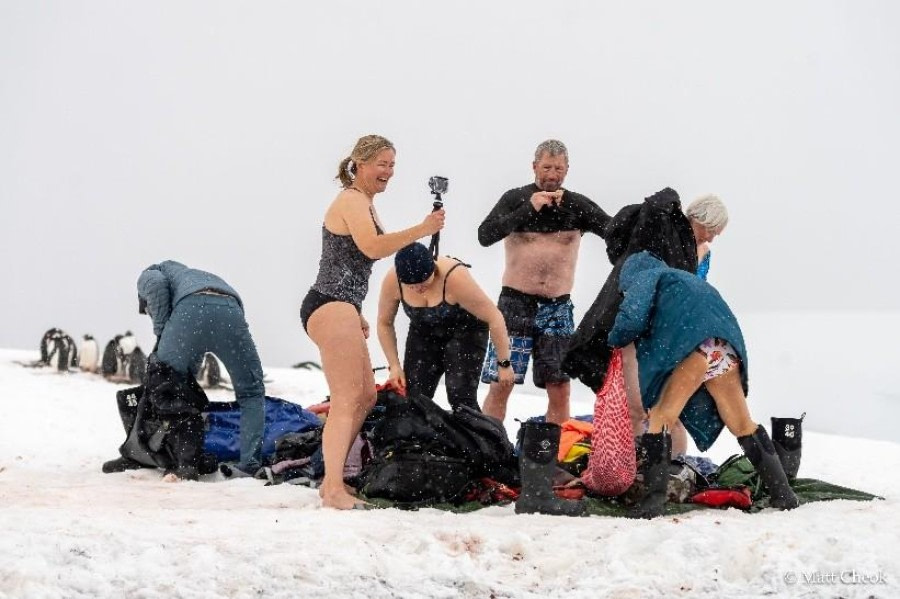
Towards the closing stages of our visit, there was the opportunity for a Polar Plunge for those who wanted to experience the invigorating sensation of a dip in the frigid Antarctic waters. The diehard and dedicated stripped down to their bathing costumes, braving the sub-zero temperatures, and boldly ventured forth into the ice-cold sea. The noises and facial expressions provided great entertainment for on-lookers, who stood with cameras in hand and towels at the ready. Zodiacs whisked the brave ‘plungers’ back to the ship where hot showers and warm drinks brought life back to numb extremities. By 11:30, everyone was back onboard, and Ortelius headed off for our next destination. Very soon, the noon announcement for lunch filled the ship.

As we crossed the Gerlache Strait, heading south-west for Two Hummock Island, Ortelius weaved her way through a sea of scattered icebergs. Several Humpback whales broke the calm surface as they went about their business. At 14:00 we gathered in the bar for an early recap and briefing on the plans for tomorrow. Then there was time to relax a little or spend time on the outer decks as we closed in on Two Hummock Island. Ortelius found her anchorage there at around 15:15.

The expedition team headed ashore to scout the landing site, and at 16:00 we disembarked for a Zodiac landing at Palaver Point. This curiously named site is home to a sizeable colony of chinstrap penguins, which collectively are capable of making quite a ‘palaver’ when they choose to do so. There was a lot of snow, so it was time to don the snowshoes once more. We hiked up the slope to various viewpoints which gave fantastic views of the chinstrap penguins and surrounding scenery. It was heavily overcast with a low cloud base at first, but little by little the cloud lifted to reveal some spectacular ice-capped mountains. To the west of us across the iceberg-strewn channel lay the dramatic coastlines of Brabant and Liedge islands.

The highest viewpoint gave a fantastic overview of a glacier with a tortured and heavily crevassed front. Colossal chunks of ice seemed to hang precariously, and many of us waited patiently for a dramatic calving that never came. It didn’t matter. The scene was utterly breathtaking. It was hard to imagine a more spectacular place. To cap it all, some humpback whales visited the bay where Ortelius lay quietly at anchor, venturing close to the ship as their curiosity got the better of them. Birders were delighted to find some south polar skuas hanging around the chinstrap penguins, which objected noisily to their presence. It was a spectacular landing enjoyed by everyone, and a wonderful way to round off another memorable day in the Antarctic.

Day 18: Whalers Bay, Deception Island and Half Moon Island

Whalers Bay, Deception Island and Half Moon Island
Date: 08.12.2025
Position: 62°58.9’S, 060°33.7‘W
Le vent: SW 6/7
Météo: Overcast
Température de l'air: 0

Our final day in the Antarctic began long before the first Zodiac touched the water. At dawn, Ortelius approached the South Shetland Islands under a moody sky, the horizon framed by shifting curtains of low cloud and streaks of light breaking through the grey. The wind was howling steadily—gusts easily over 35 knots—sending streaks of spray across the deck and challenging anyone brave enough to step outside for an early-morning look.

Captain Per’s skill at the helm was once again on full display. With steady hands and calm precision, he guided Ortelius toward the dramatic entrance of Deception Island—known famously as Neptune’s Bellows. This narrow and treacherous channel, with its submerged rocks and swirling winds, demands the utmost attention and experience from any navigator. The sea boiled around us as gusts funnelled through the opening, making the approach both thrilling and humbling. Yet, under the captain’s expert command, Ortelius slipped gracefully through the Bellows and into the flooded caldera of Deception Island, an active volcano and one of the most remarkable natural harbours on Earth.

Once inside, the dark volcanic slopes of the island rose steeply on all sides, their tops dusted with snow, creating a stark contrast of black rock and white frost. The wind still whipped across the bay, but the expedition team quickly went to work preparing for our morning landing at Whaler’s Bay. Despite the challenging conditions, their coordination was seamless.

The Zodiacs danced in the gusts as the team skilfully shuttled guests ashore—every landing carefully timed between the swells, every hand extended with confidence and care. It was another reminder of the quiet professionalism that defines the expedition team’s work each day. Thanks to their efforts, every guest was able to step safely onto the black volcanic beach of Whaler’s Bay, setting foot once more on the Antarctic shores.

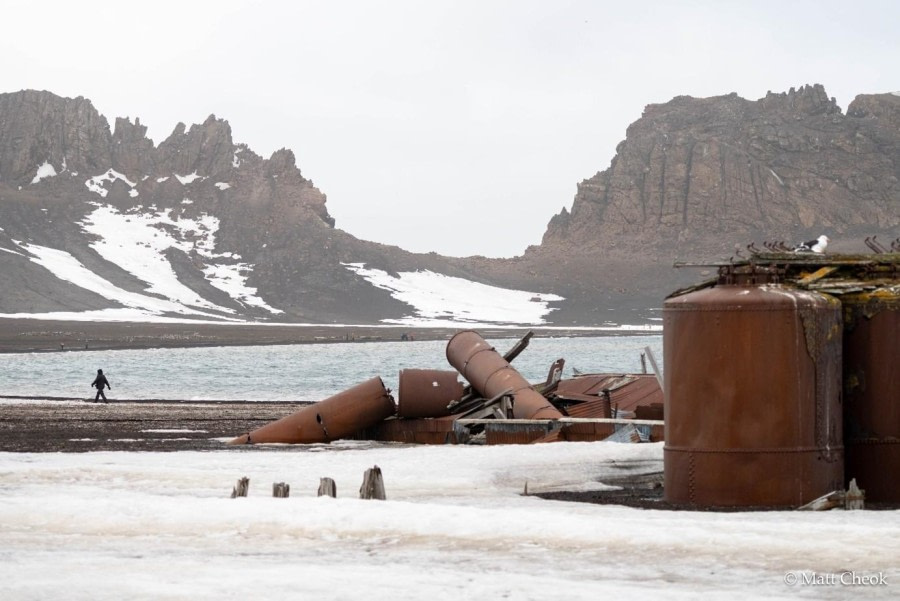
Whaler’s Bay is steeped in history. The rusted remains of the old Norwegian whaling station stand as silent witnesses to a bygone era, when ships hunted the great leviathans of the Southern Ocean. The weathered wooden structures, the collapsed tanks, and the scattered bones of the past gave the landscape a haunting character—made all the more dramatic by the wind and drifting mist.

By late morning, we returned to the ship—faces flushed, jackets soaked with sea water, hearts full of awe. As Ortelius raised anchor and made her way back through Neptune’s Bellows, the wind began to ease.

Lunch on board was cheerful and hearty—a perfect interlude between two very different landings. Over steaming bowls of soup and freshly baked bread, conversations buzzed about the morning’s adventures. Windows on the dining room revealed a changing light outside; the clouds were breaking apart, revealing patches of vivid blue.

By the time Ortelius reached Half Moon Island, the transformation was complete. The wind had dropped to a mere 5 knots, the sky had cleared entirely, and sunlight bathed the snowy peaks in a golden glow. It was as if Antarctica had decided to grant us one final gift—a perfect afternoon to close a remarkable voyage.

Zodiacs once again carried guests to shore, this time under a calm sea. The landing beach at Half Moon was alive with wildlife: chinstrap penguins bustling about their colonies, Weddell seals lounging in the snow, and the occasional skua circling overhead in search of opportunity.

The air was crisp but still, filled with the familiar symphony of penguin calls—and, admittedly, the unmistakable aroma of guano. “It’s a very poopy island,” someone said with a laugh, and indeed it was. But it was also profoundly beautiful: the gleaming white snow against the sapphire sea, the graceful arcs of penguins sliding on their bellies, and the peace of knowing this was our final landing in Antarctica.

Many guests took their time wandering quietly among the colonies, reflecting on the journey that had brought them here—the countless penguins, the icebergs, the whales, the storms and calms, the laughter and shared wonder. Some found a quiet spot to simply watch the scene unfold, letting the experience sink in fully.

As the afternoon sun dipped lower, the expedition team called the final Zodiac back to the ship. The last guests waved farewell to the penguins, reluctant to leave but filled with gratitude. Back on Ortelius, the decks buzzed with stories and the soft realization that the Antarctic chapter of our voyage was drawing to a close.

That evening, as we sailed northward through, a serene calm settled over the ship. The dining room filled with toasts and laughter, and the conversation often turned to moments that had defined the past 20 days—encounters with whales, the first glimpse of the Antarctic Peninsula, the camaraderie that had formed among travellers who had started as strangers and were now part of a shared story.

Outside, the horizon glowed softly under the late polar light. The sea stretched endless and silver, the wake of Ortelius marking a gentle path northward. It was the perfect end to an extraordinary voyage—a day that began with fierce winds in a volcanic caldera and ended in stillness among penguins and snow.

As midnight approached, the ship moved steadily onward, carrying with it not just her passengers, but their memories—of wind and ice, of laughter and quiet awe, and of a world that will forever remain deep in their hearts: the White Continent.

Day 19: Drake Passage

Drake Passage
Date: 09.12.2025
Position: 60°08.0’S, 062°13.8‘W
Le vent: W 7
Météo: Overcast
Température de l'air: +1

A more restful day was planned, allowing a 07:45 wake up call from George this morning. We were straight into action submitting our greatest creations for the photo competition. This took some sorting through our portfolio of photos which, for many, were ever improving throughout the voyage.

Jess kicked off the lectures this morning, sporting her incredible whale leggings and a wealth of marine mammal jewellery to compliment her topic! Today she shared some of her favourite stories of what whales do for us, comically drawing on their contributions through the faecal blooms they excrete and during their decomposition after death.

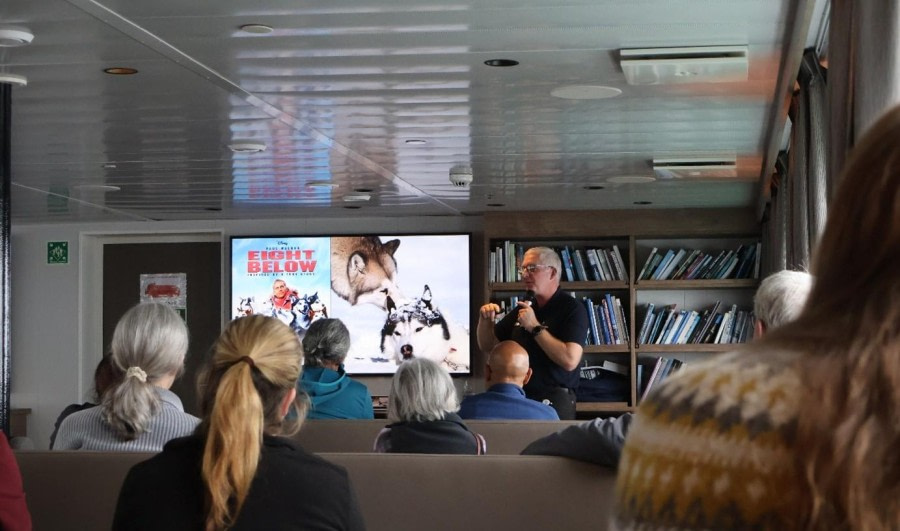
Allan then presented a fantastic talk on another group of contributors to Antarctic history: the dogs. Their presence played a vital role in the exploration of this vast continent and an often-underappreciated aspect, is their contribution to the moral on long polar journeys and during the dark winters. Following this was a delicious lunch which we made it to only by grabbing handrails and walking at a different angle to the walls.

It was quiet on the bridge with only a few birders squabbling over the identification of different types of prions. Some others enjoyed the wide-open sea which merged into mist.
Muck boots were returned after lunch, signifying an end to the outside adventures of this trip and making us reflect on the places we’d been so lucky to walk in these boots. In between the action we enjoyed coffee and delicious cupcakes in the lounge while watching the display of photo competition submissions. With so many fantastic contributions it was hard to choose favourites for voting.
Matt gave a wonderful closing talk in the afternoon which rounded up the fantastic photography program which has been on our minds throughout this incredible voyage. Before we knew it, the evening recap came around and it was time to gather again.

We have got to know each other well throughout the voyage by sharing photos at the photography workshops, overcoming the challenge of a polar plunge and living in the confined space together. This is reflected in the dining room as we varied where we sat.

During dinner and lunch today, the dining room screens have been playing the photo competition submissions with a number on each ready for our voting. This has brought about conversations of the places we have visited and of the admirable creativity that has been used to capture the places and their atmosphere, remoteness and often sinister past. The comedy round often told a story of the fun we have had ashore in particularly whist watching the clumsy penguins.

The finalists were presented to a full audience up in the bar. The honour of winning the competition on a photography special trip was reflected in the response of some of the finalists. It was a wonderful atmosphere in the bar with everyone congratulating one another and celebrating the community feel of this voyage that we have shared.

Day 20: Drake Passage

Drake Passage
Date: 10.12.2025
Position: 56°17.8’S, 066°26.7‘W
Le vent: W 8
Météo: Overcast
Température de l'air: +5

Today was a day of poems starting with ‘Jenny kissed me’ read by George over the PA system. During our fundraising auction for the South Georgia Heritage Trust, Jenny successfully bid for the opportunity to make the morning wake up call. We all enjoyed this special wakeup call from our bunks.

After paying for our South Georgia Heritage Trust auction purchases, it was time to settle down to listen to a wonderful talk by Saskia. Ortelius was rolling in the drakes rocking waves, but Saskia and a full lounge were there to hear the stories of the incredible woman behind three famous polar heroes.

Just to make sure we were never to have a two-day streek on this trip without an activity, we were all called to the bridge as captain Per brought us close by to Cape Horn. An opportunity which rarely arises due to the timings and weather. As we looked out of the splashed windows, we could make out the outline of a rocky coast, jagged with rocks near the shoreline. George read out The Rime of the Ancient Mariner, highlighting the historical significance of this harsh, far-flung extremity of our terrestrial world!

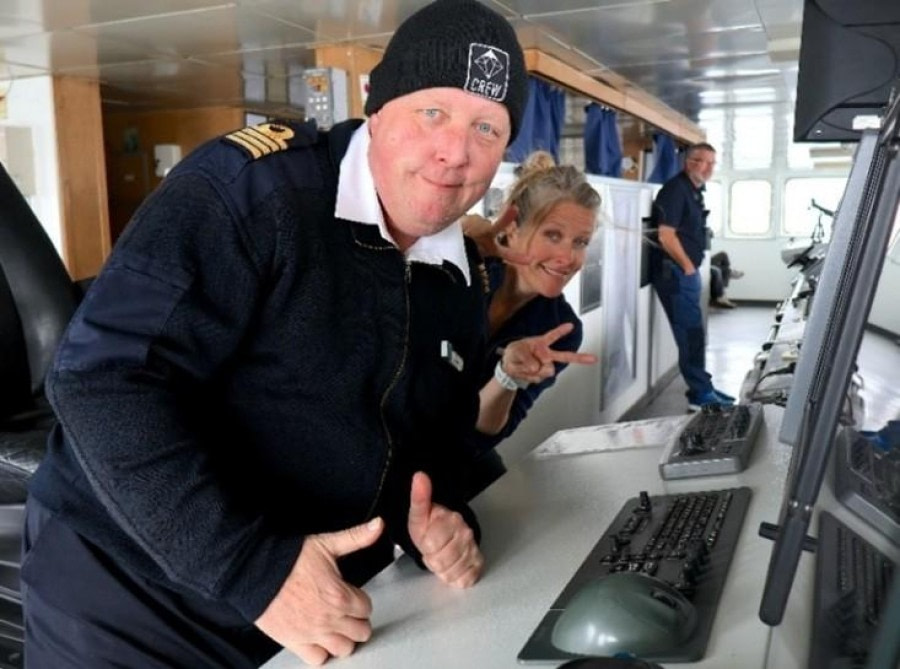
After a delicious lunch it was time for the long-anticipated Q and A session with captain Per. This shone light on many of the mysterious goings on abord the Ortelius!

A few dolphins were spotted on the bridge by Martin. We rushed to the outer decks to enjoy the new views of forested hillsides leading to the calm waters of the Beagle Channel. To our port side was Isla Navarino of Chile and to our starboard side, Tierra del Fuego of Argentina. The scent of vegetation and a terrestrial landscape was not going unnoticed!

George, Pippa and Beth then presented the other trips that Oceanwide offer. This was fascinating to have a roundup of the other regions especially from those who are so passionate and know the highs and lows of all the options.

George squeezed in the opportunity to talk to us about the future history of the Antarctic. A vitally important topic to talk about as WE are now the ones who hold the responsibility of caring for Antarctica on our shoulders, as we now know there are no Antarctic Citizens to work for this continent’s preservation.

The evening finished with a delightful captain’s cocktail in the bar, where we reflected on the wonderful trip we have shared together. There were cheers, whistles and whoops as we thanked the dining room and all the hotel team for their work on this trip. 

Day 21: Ushuaia. Disembarkation Day

Ushuaia. Disembarkation Day
Date: 11.12.2025
Position: 54°48.5’S, 068°17.9‘W
Le vent: Var 1
Météo: Overcast
Température de l'air: +8

It was a hard moment to part from Ortelius which we have called home for the last 21 days. Although we can look forward to heading to home to our loved ones and sharing stories, we will all look back fondly on this trip of a lifetime.

The components really aligned to allow such a wonderful voyage which took the energy from every individual on board to be up at all times of the day and night, often for uncomfortably long durations, dodging ice through the night, to plan and replan as the spell of the weather changed and changed again, to adapt to the new decisions, the maybes and the well-let-you-knows. Everyone has gone out of their way to make this expedition possible and a pleasure to be part of.

We had a final breakfast onboard and said goodbye to the hotel and dining room team. We headed for the gangway for a final farewell. Some of us were staying in Ushuaia to continue our adventures, while others were heading home. One thing was for sure, we would not forget our time together on-board Ortelius.  

Total distance sailed on our voyage: 3483 nautical miles / 6450 km

Most southern point sailed: 64° 12.0’ S, 061° 39.3’W

Freshwater Consumption: 453.3 m3

Freshwater Production: 420.3 m3

Fuel Oil: 171.4 m3

Zodiac Petrol: 393 litres

On behalf of Oceanwide Expeditions, Captain Per Andersson, Expedition Leader George Kennedy, Hotel Manager Volodymyr Cherednychenko and all the crew and staff of M/V Ortelius, it was a great pleasure and a privilege travelling with you!

Détails

Code du voyage: OTL21-25
Dates: 22 oct. - 11 nov., 2025
La durée: 20 nuits
Navire: m/v Ortelius
Embarquer: Puerto Madryn
Débarquement: Ushuaia

Téléchargements

Avez-vous participé à ce voyage ?

À bord m/v Ortelius

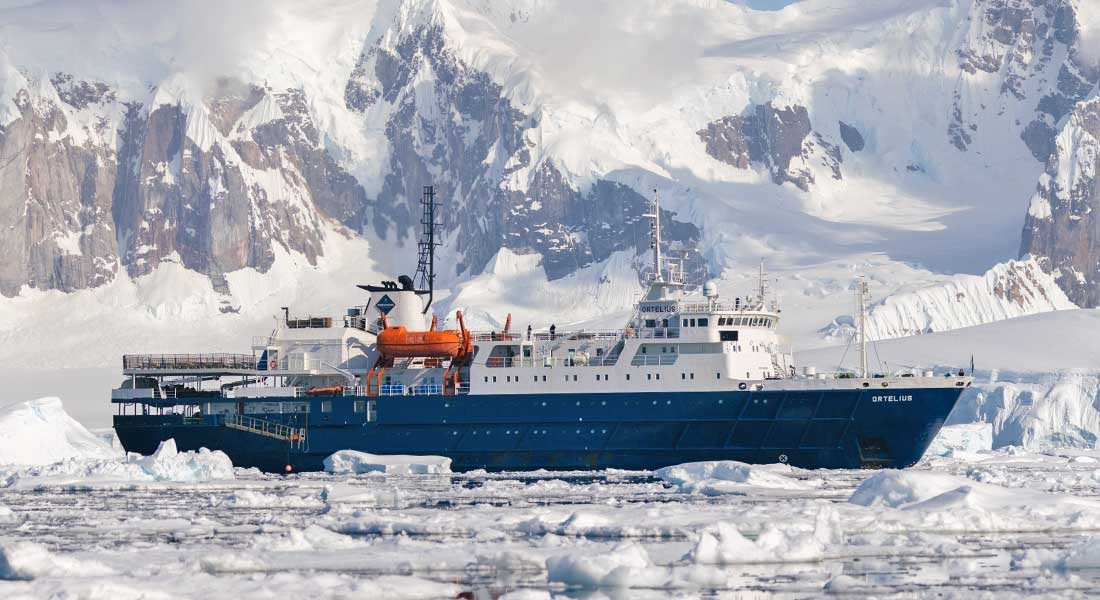
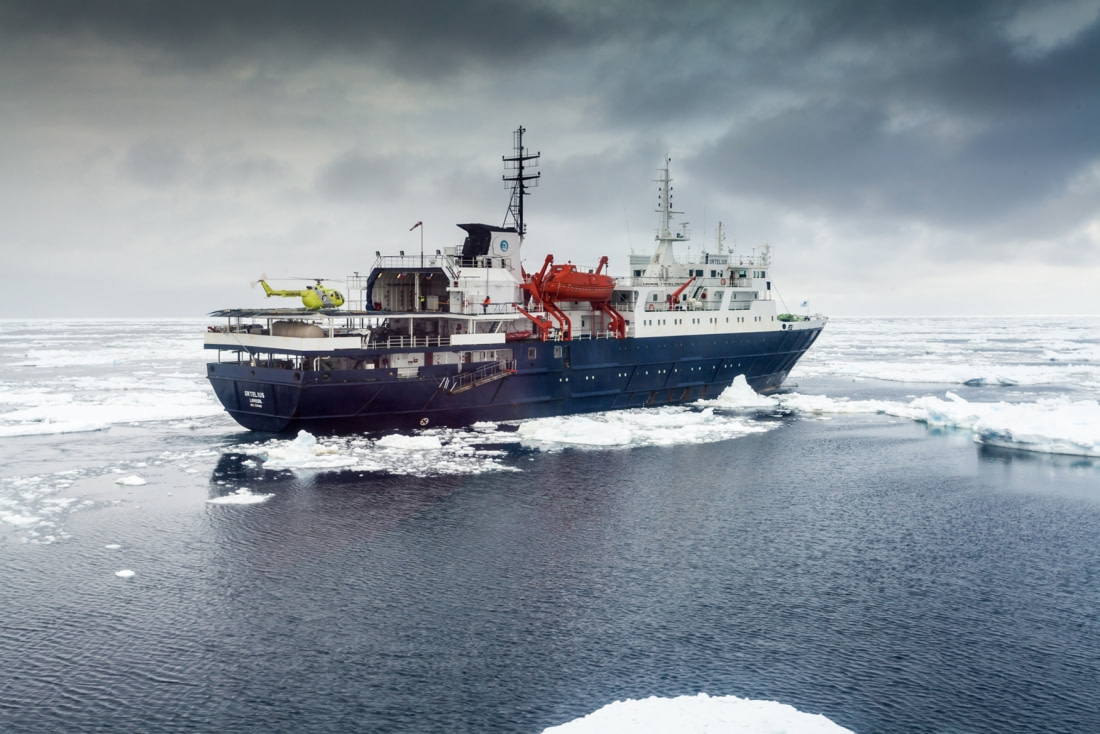
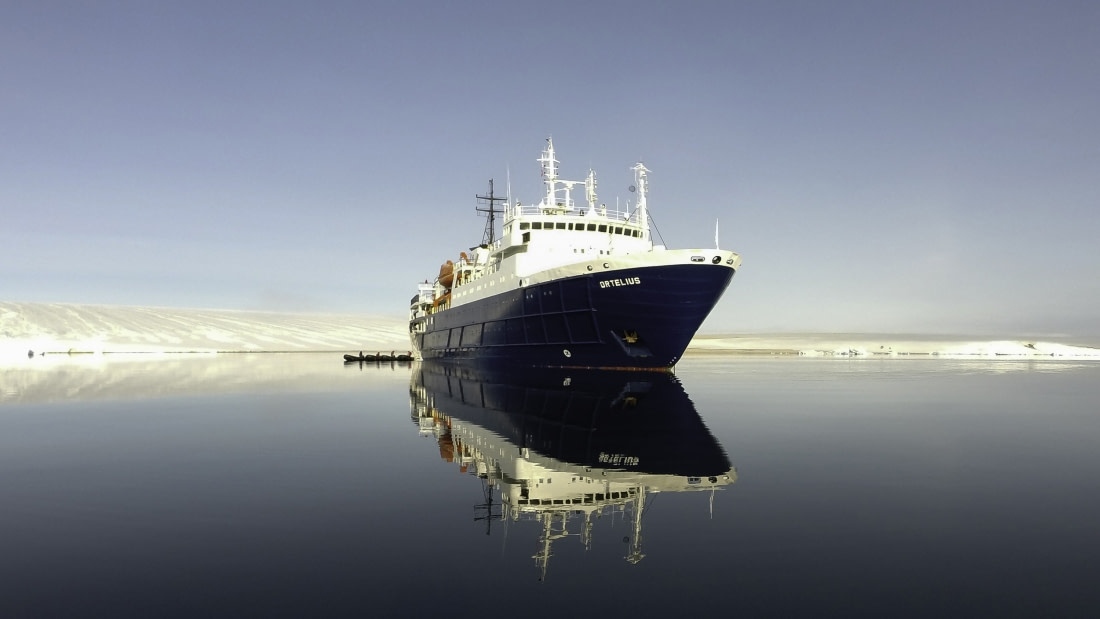
L'Ortelius, renforcé contre la glace, est parfaitement équipé pour l'exploration polaire et, le cas échéant, pour les vols en hélicoptère.

En savoir plus sur la m/v Ortelius »
Loading