OTL06-26, trip log, East Spitsbergen - Home of the Polar Bear, Including Long Hikes & Cleaning the Shores

by Oceanwide Expeditions

Photo gallery

Logbook

Day 1: Longyearbyen, Embarkation Day

Longyearbyen, Embarkation Day
Date: 26.06.2026
Position: 78°14.8’ N / 015°03.2’ E
Wind: SW-23
Weather: Part. Cloudy
Air Temperature: +8

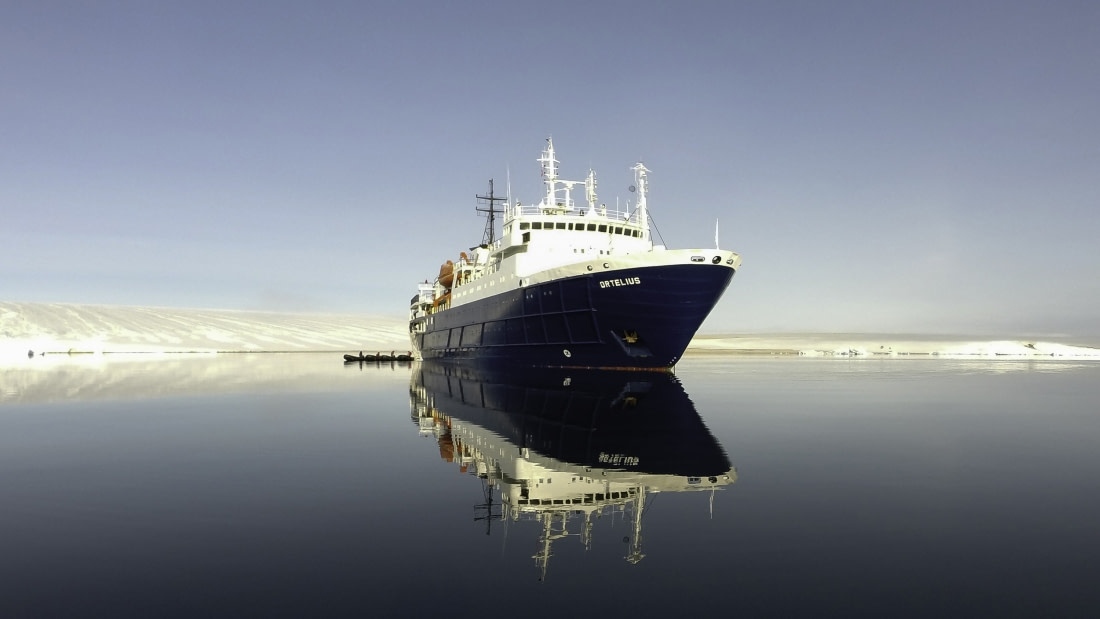
The day has come for our great Arctic adventure aboard Ortelius.

Some of us arrived a few days early while others landed a few hours before departure. Strolling the street of Longyearbyen, we take in the sights of this most remote village hanging on the edge of the world. Surrounded by mountains and lined with the ocean, hardly 40 km of asphalt, this little village has a warm feeling despite the chilling thermometer.

Soon it was time to board MV Ortelius. We were welcomed by the expedition team who took care that our luggage made its way to our rooms for the trip. Charlotte and Vova were warm as they welcomed us on board and pointed us towards our rooms.

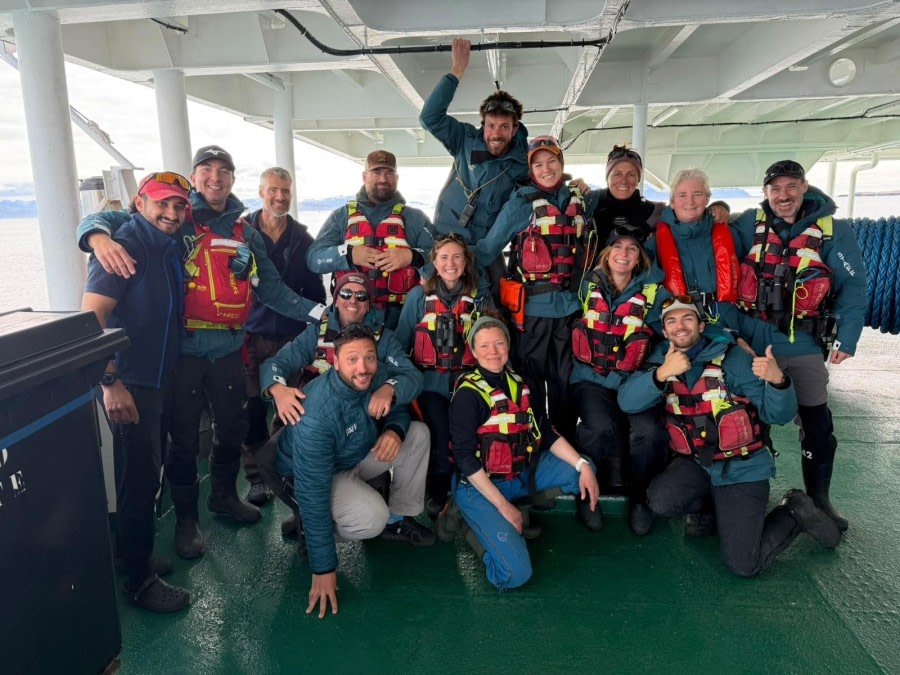
We gathered soon after in the lounge for the safety introduction. We donned our survival vests and followed the orders of the crew during the emergency exit drill. As soon as this was done, we set sail south taking in the views of Adventfjord and Isfjord. Whale blows made an appearance, and many birds accompanied the ship.

Adam, our Expedition leader, introduced the trip and settled our minds on what the plan was. The plan is that there is no plan and that we will make it as we go, taking into consideration the weather, and several other crucial variables.

Our first dinner was served in the dining room where we met our fellow passengers for a meal that set the tone for the rest of the trip.

Later our closest companions, the famed Muck Boots, were distributed before we set this long day to rest.

Day 2: Burgerbukta and Treskelen

Burgerbukta and Treskelen
Date: 27.07.2026
Position: 77°05.4’N / 015°02.1’E
Wind: NE-1
Weather: Low Clouds
Air Temperature: +3

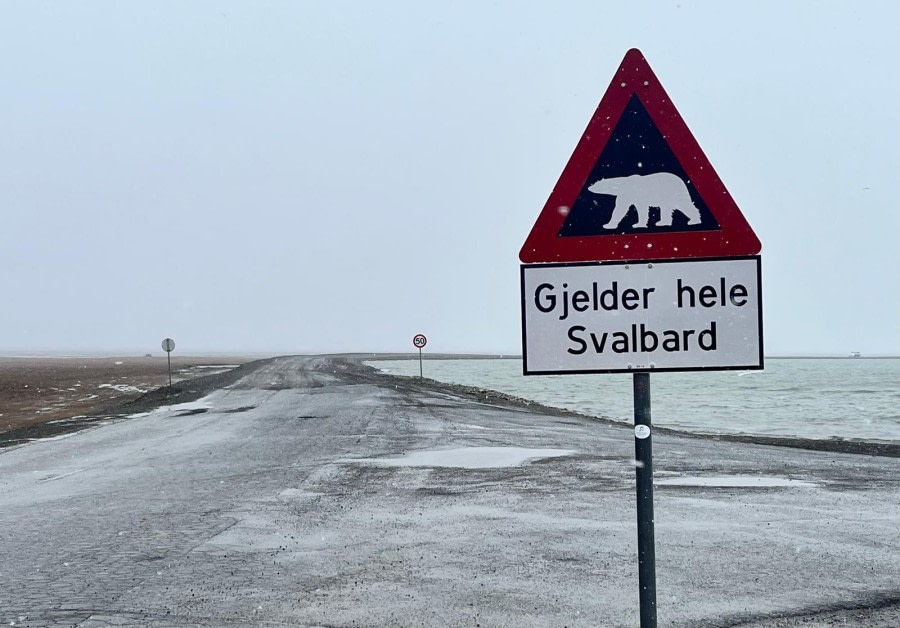
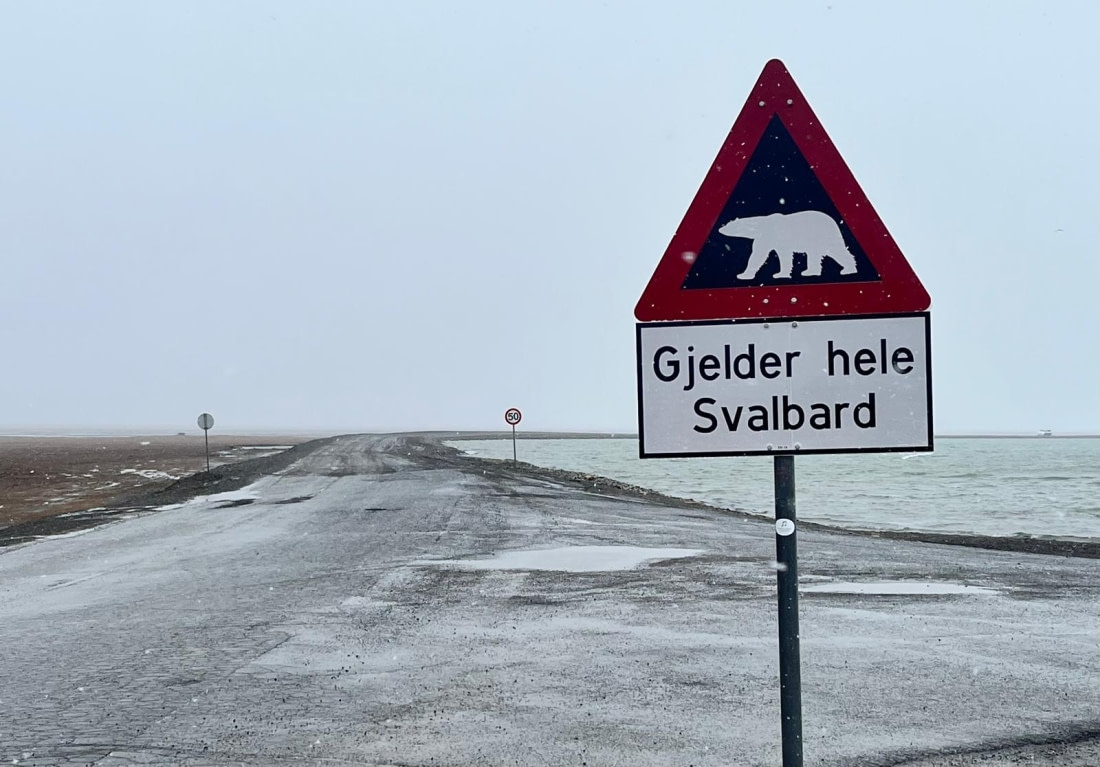
Our day began with a gentle wake-up call at 07:15 from our Expedition Leader, Adam, who welcomed us to Burgerbukta situated in Hornsund, while updating us on the weather and outside temperature. After breakfast, we gathered in the lounge for the mandatory AECO and polar bear safety briefing, highlighting the importance of safety in the Arctic, the role of our expedition guides carrying rifles, and the strict protocols in place to protect both guests and, of course, the polar bears.

Rain greeted us as we prepared for our first excursion, adding to the dramatic atmosphere. Ortelius felt very small beneath the towering mountains either side of the fjord, the dark cliffs streaked with vivid red iron deposits while the upper slopes disappeared into low cloud.

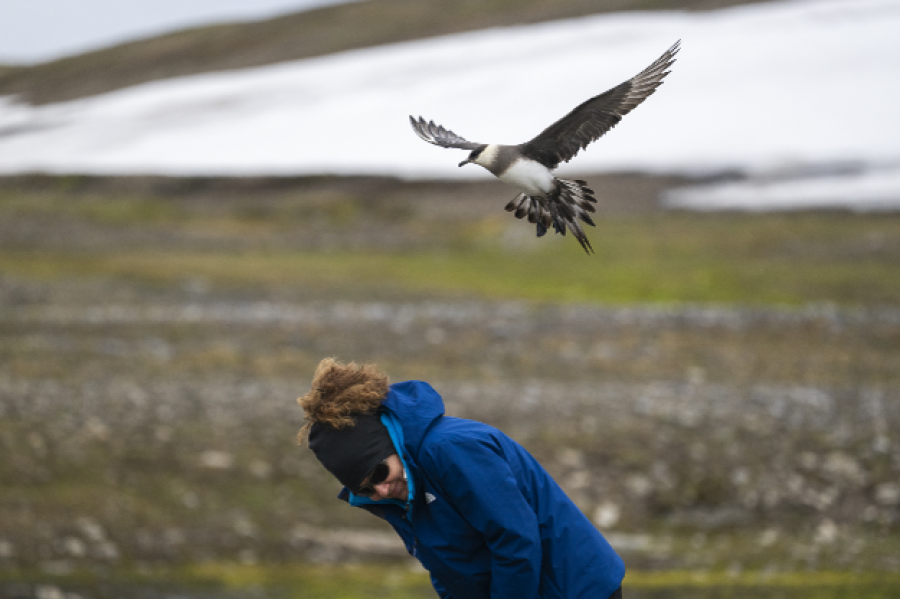
We boarded the Zodiacs for a two-hour cruise through Burgerbukta, towards the glacier. As the morning progressed, the rain eased and visibility remained clear. We cruised slowly past countless waterfalls cascading from the mountainsides while observing a variety of Arctic birdlife, including black-legged kittiwakes, common eider ducks, black guillemots, and Arctic skuas. A few lucky guests even spotted puffins briefly resting on the water.

It was a magical morning, made even more memorable when we witnessed a small glacier calving. In the stillness of the Arctic, the crack of breaking ice echoed, reminding us of the immense power of the landscape surrounding us.

Back onboard, we enjoyed an excellent buffet lunch while Ortelius repositioned to Treskelen for the afternoon's landing. As we waited to disembark, an exciting announcement came over the PA system: the guides ashore, who were scouting the landing site for polar bears, had spotted a group of beluga whales. Many of us were able to watch these beautiful white whales from the ship and from the Zodiac shuttles on the way to shore—a wonderful start to the afternoon.

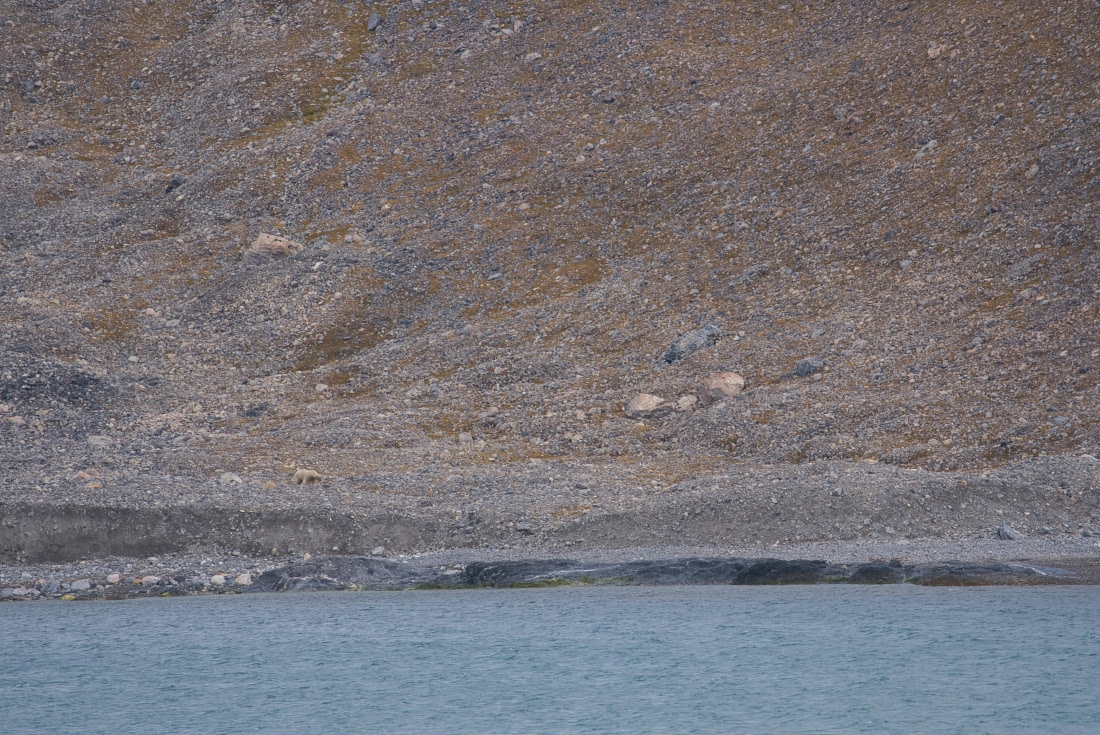
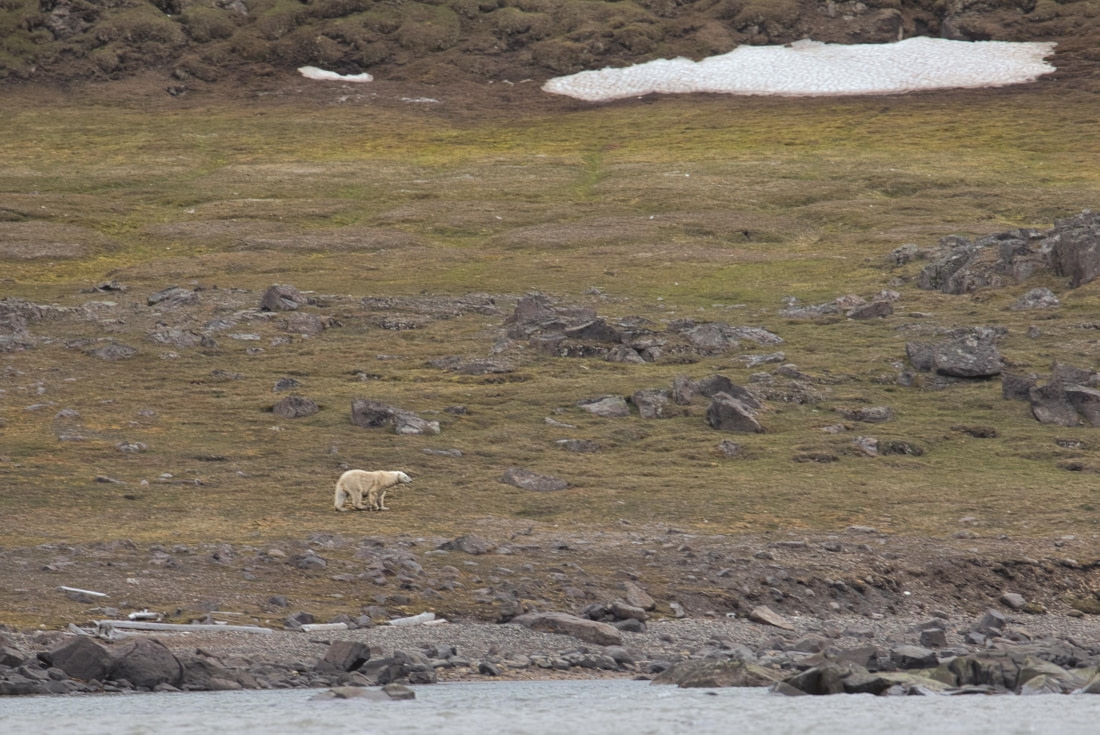
Once ashore, we were divided into our long and medium hiking groups and received a briefing on the routes ahead. We set off with our guides, eager to explore the tundra. When 40 minutes into the hike came the radio call “Polar bear, polar bear, polar bear!” The guides remained calm and through radio communication it was confirmed Claudio had spotted a polar bear swimming close to the shore where we had landed. An evacuation was put into motion. The bear was watched closely as it started swimming away from the landing site whilst Adam organised the evacuation by zodiac back to the ship. An exciting twist to our afternoon plans. Once back on the safety of Ortelius we gathered on the bridge and outer decks where we were able to watch the polar bear swimming in the water before it walked across the shoreline, it was a healthy-looking bear. Although its pace seemed casual, it was impressive to see the distance that was covered effortlessly. It was the perfect end to an amazing first day in the Arctic.

Still buzzing with excitement, we gathered in the lounge, where Emily gave a presentation on polar bears. Adam then recapped the day's adventures and outlined the plans for tomorrow. The room was filled with applause and an unmistakable sense of enthusiasm.Following another delicious buffet dinner, many of us relaxed in the bar, reflecting on an extraordinary first day before turning in for the night as Ortelius continued northeast towards Kapp Lee.


Dive One — Burgerbukta (Checkout Dive)

The voyage's diving opened at Burgerbukta with the customary checkout dive, the dive where everyone confirms their kit is working and travelling well before we commit to the more remote sites ahead. Conditions were cloudy and visibility was poor, but that mattered little for the job at hand. This dive is about systems and comfort rather than scenery. The team worked through their equipment methodically. The main task for most was dialling in weighting, getting properly balanced for the drysuits and the thick undergarments that cold Svalbard water demands. By the end everyone was settled, comfortable and happy with their setup. A quiet, useful start, and exactly what a checkout dive should be.


Dive Two — Treskelen (Evacuated)

The second dive at Treskelen did not go as planned, though it gave us a story worth telling. We kitted up on the zodiacs and ran through the final checks, and a few of the team had already rolled in and begun their descent when the call came over the radio. A polar bear had been spotted at the landing site, and entering the water nearby. Operations were stopped at once. Those already below were brought back up, everyone was accounted for, and the divers were recovered to the zodiacs quickly and calmly.

There is no arguing with a polar bear, and a recall like this is a reminder of exactly whose territory we are diving in. The disappointment faded fast. As we sailed back toward the ship, a pod of belugas surfaced near us, their pale backs rolling at the surface. We watched them for a short while before they moved on. Not the dive we expected, but a good afternoon all the same.

Day 3: Kapp Lee and Sundneset

Kapp Lee and Sundneset
Date: 28.06.2026
Position: 78°07.5’N / 020°48.4’E
Wind: WSW-2
Weather: Overcast
Air Temperature: +5

A smooth sea awaited us on the morning of Sunday the 28th of June. During the night we had rounded Spitsbergen Island and navigated across Storefjorden, the shallow sea which separates the main island of Spitsbergen from Edgeoya and Barentsoya on the southeast.

Edgeøya is the third-largest island in the Svalbard archipelago, it is known for its dramatic Arctic landscapes, extensive glaciers, and rich wildlife, including polar bears, Svalbard reindeer, walruses, and numerous seabird colonies.

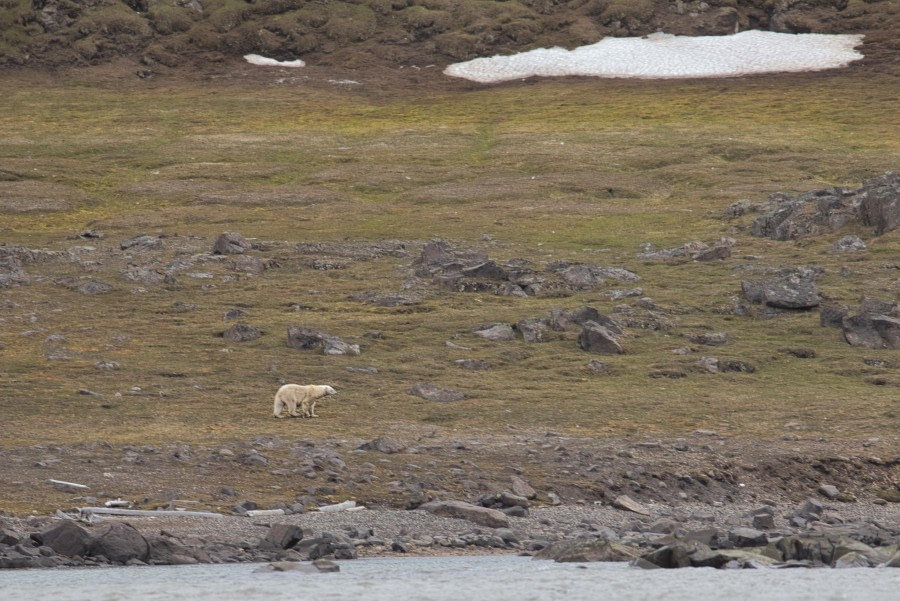
Our original plan had an unexpected turn, since a bear was spotted on a small rocky island near Dolerittneset which was meant to be our activity site for the afternoon. Quickly the expedition team got ready and with the help of the bridge and deckhand, eight zodiacs were dropped into the frigid waters of Kapp Lee and we headed out towards the shore. The bear in the meantime had decided to swim across the narrow strait towards Dolerittneset and started to walk around across the tundra. Occasionally spooking the calm reindeer which were pasturing, and in few occasions taking a roll to scratch its back on the ground.

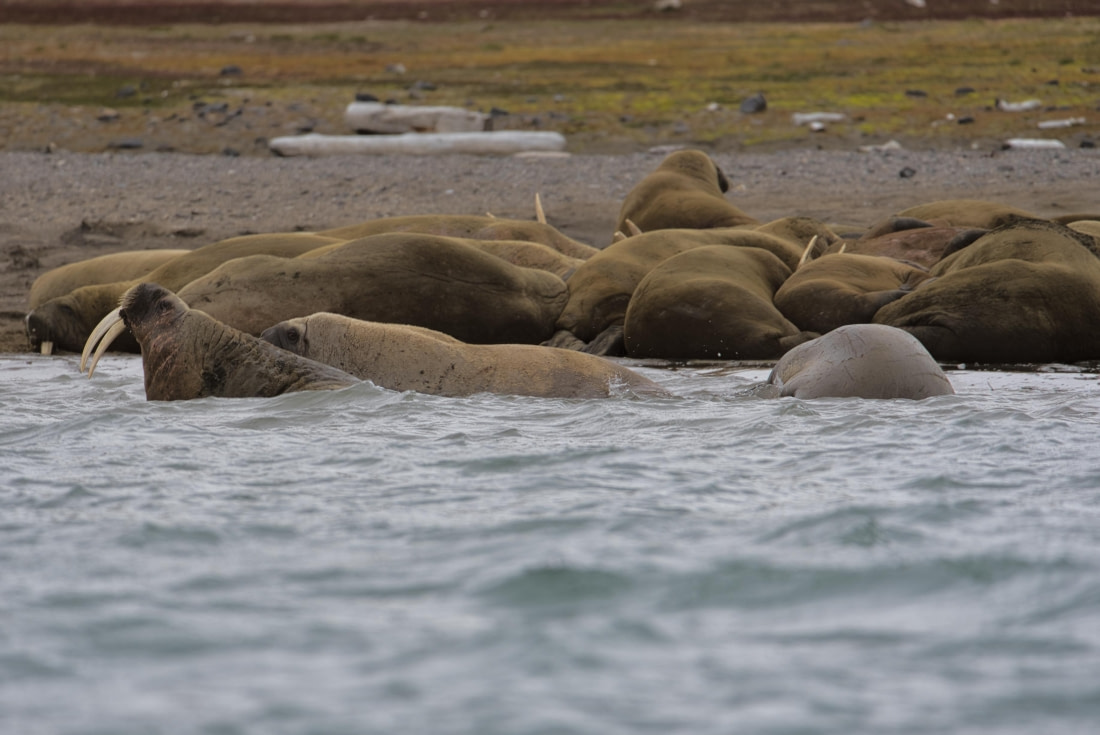
After a good half an hour observing the bear from a respectful distance, we headed through the small islands where scattered groups of walruses were feeding and surfacing here and there. It was so interesting to be able to observe these massive pinnipeds, swiftly moving through the murky waters of Kapp Lee. Observing their big, rounded eyes and their long white tusks.

Walruses are iconic Arctic marine mammals known for their long tusks, whisked snouts, and thick layers of blubber that help them survive in icy waters. They spend much of their time resting on sea ice or coastal beaches and feed mainly on clams and other seafloor invertebrates. Around Svalbard, walruses are a protected species and are often seen hauled out in groups along remote shores. Our Zodiac cruise ended exactly in front of the hauling site of this colony at Kapp Lee, a place which also holds an important mark in the history of Oceanwide Expedition as we learned later during the recap.

Back for lunch, MV Ortelius repositioned towards the southwestern corner of Barentsoya where we landed at Sundneset. A place was the Würzburger Hütte is located. Built in the 1959 by a German geo-scientific expedition led by Julius Budel, it served as a shelter for trappers and scientific expeditions operating in this remote Arctic region. Today, the hut is a protected cultural heritage site that offers a glimpse into the harsh conditions faced by those who lived and worked in Svalbard's wilderness.

Divided into small groups we headed off towards the vast and windswept Arctic tundra where we could observe Svalbard Reindeer grazing, long-tailed ducks and King Eider lingering on the snow melting ponds. The long hikers group moved North and using a small ravine climbed on top of Fuglehallet enjoy magnificent views over Freemansundet and Edgeoya, whilst the medium groups enjoyed a nice hike on the doleritic platform in between small lakes dotted with wildlife and solifluction areas dominated by thick mud.

Eventually a bit after 6pm we were back to the ship and reunited in the lounge for the daily recap and the plans for the following day. Getting to know that we were heading to the sea ice the next day made our trip filled with excitement.

Day 4: Ice Day

Ice Day
Date: 29.06.2026
Position: 78°50.0’N / 024°29.9’E
Wind: NW-2
Weather: Foggy
Air Temperature: +1

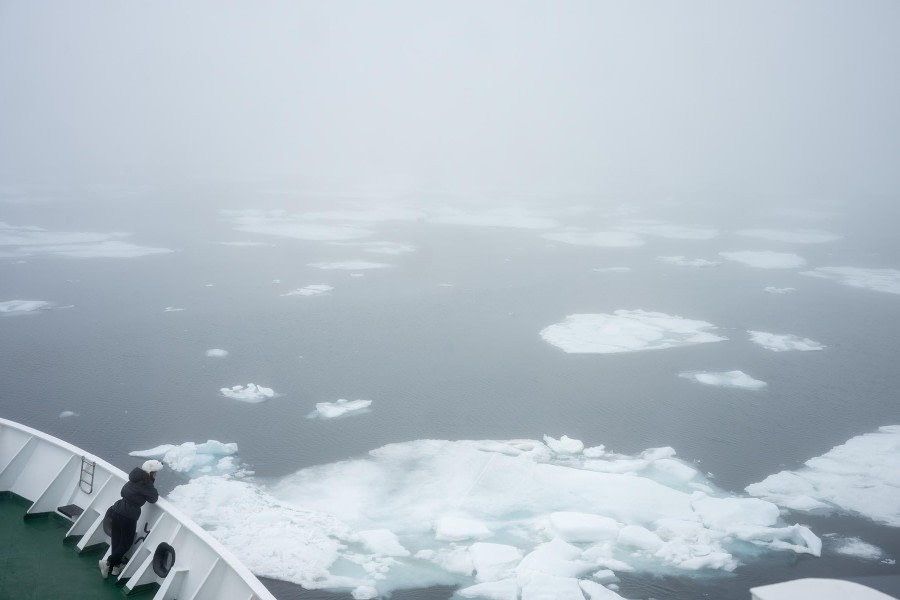
Good morning, good morning, good morning in the ice. During the night we sailed through the fog towards the East. When we wake up there is no land in sight - not only because of the fog but also because we are far away from the islands. We have sailed away from land to an area not often visited, as the ice charts have indicated that there is still a large area of pack ice here - the last bit of the ice in the East, before it disappears for the summer.

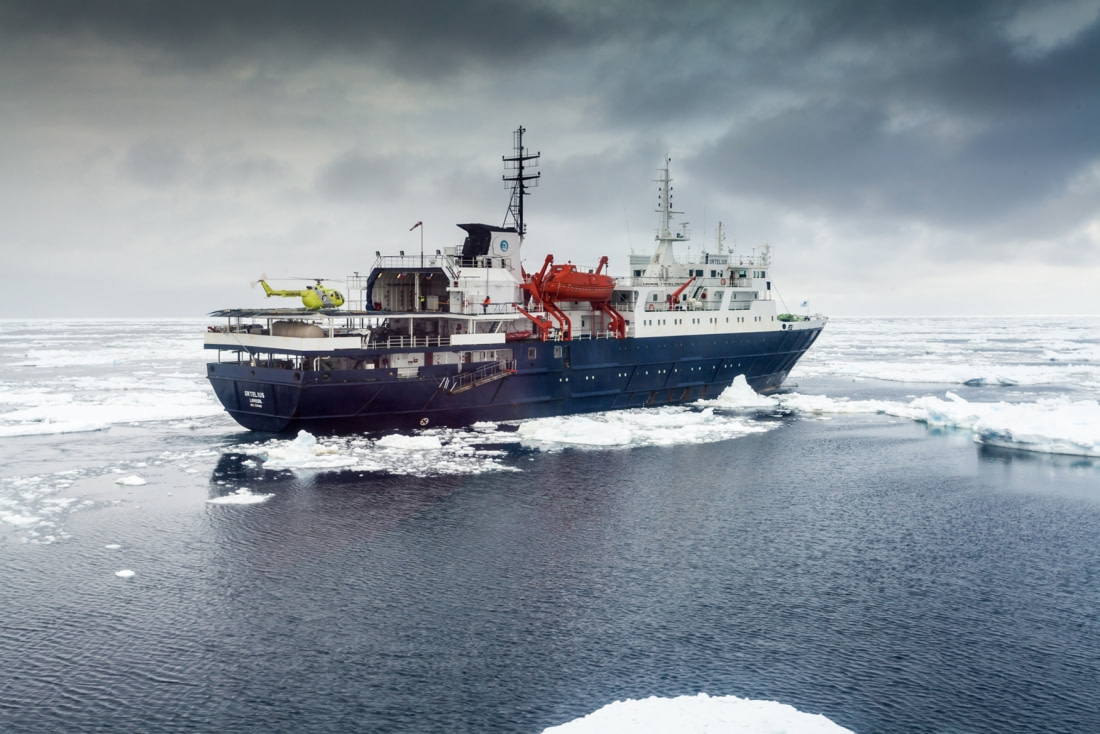
We will be surrounded by ice the entire day - larger and smaller floes of weathered ice. All the ice we see is single year pack ice - it has formed and will disappear within a season. Some floes have melting ponds on them, intensely blue little pools - others have lots of holes forming. In general, they are close to disappearing - at the same time that they are still thick enough to carry large bearded Polar bears. On some of the floes we clearly see tracks - but the bears stay potential for today - here in their preferred surroundings. We see several seals - both in the water and on the ice - and lots of fulmars as well as some ivory gulls.

Throughout the morning, we encounter many yellowish ice floes - some are colored due to silt and sand present in the places where they were formed, others are exposing the algae that have formed under and in the ice when the first light returned after the Polar night. We see ice ridges, in different forms and sizes - and encounter an occasional big iceberg - calved from a glacier and frozen into the sea ice.

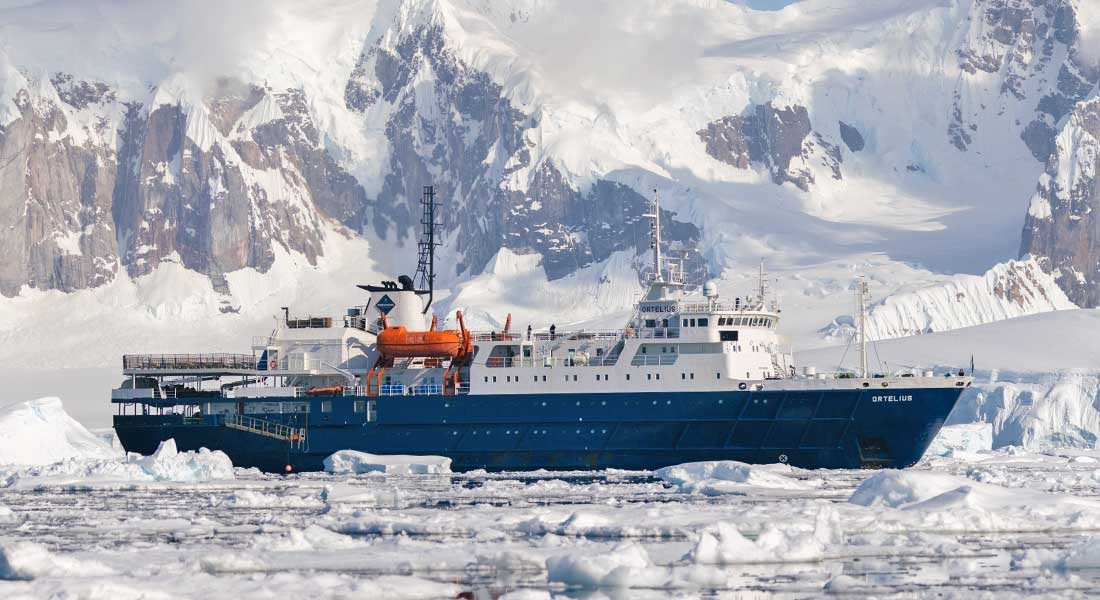
None of the ice is a problem for Ortelius, with her ice class 1A super. She moves calm and solid through the ice, and we enjoy the day on our 92 meters long world of steel.

During the morning the fog is slightly lifting - expanding our view for moments to fully surround us again in the late afternoon, accompanied by a little light rain.

In the morning Marco gathers us in the lounge for a lecture about sea ice - how it forms, moves, changes, and what on a large scale it means for the oceans and our climate. In the afternoon Gabi takes us on a voyage through our relation to and fascination with the Polar bears through different time periods and cultures.

This day we entered the sea ice at 78º59.37’N, 025º04.48’E, and traveled Southeast through the ice. In the late afternoon we turned more to the Northwest and left the ice behind us at 79º02.42’N, 025º11.73’E. Before we leave the ice we all gather to listen to our daily recap - which today presents Tom sharing inside information about the 4 Dutch researchers that overwintered at Kapp Lee in ’68-‘69 , after which Emily tells us about the Walrus we saw at the same place yesterday.

Throughout the night we are heading West to make our way back to the East coast of the main island of Spitsbergen, sailing through Freemansundet, the straight between Barentsøya in the North and Edgeøya in the South. We are leaving the ice and fog behind us, moving towards clear forecast skies and solid ground.

Day 5: Boltodden

Boltodden
Date: 30.06.2026
Position: 77°29.6’N / 018°10.4’E
Wind: SW-1
Weather: Partly Cloudy
Air Temperature: +6

The day began with a 07:15 wake-up call, followed by a hearty breakfast buffet served in the dining room. With another exciting day of exploration ahead, everyone was eager to head ashore and discover more of Svalbard's extraordinary landscapes.

Our morning landing took us to Boltodden, on the east coast of Spitsbergen. This remarkable site is known for its striking sedimentary rock formations, creating a spectacular Arctic landscape that is ideal for hiking and exploration.

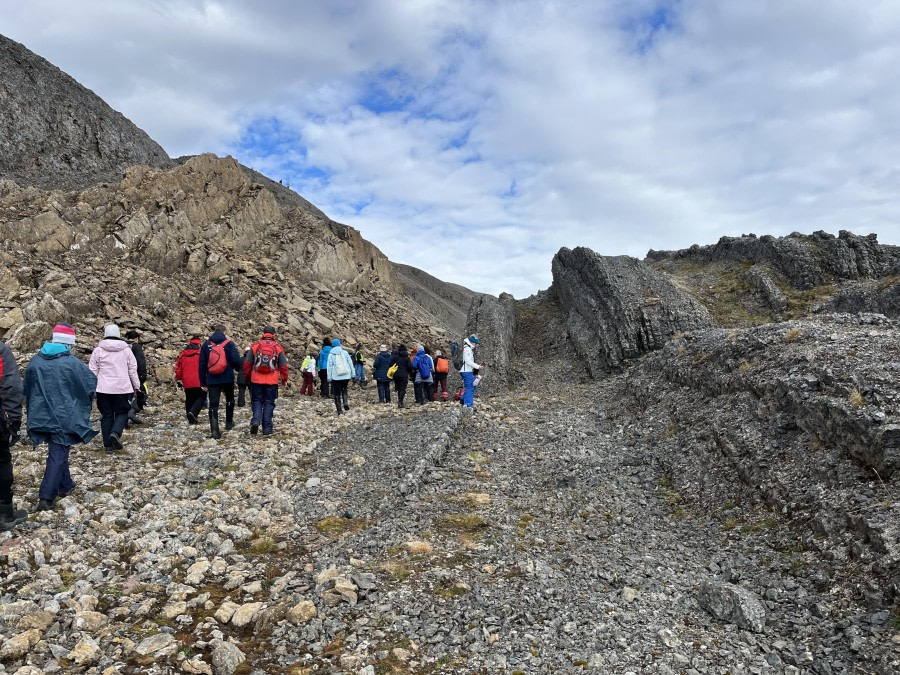
Guests had the opportunity to choose between a leisurely walk around the landing area or a longer all-day hike, complete with a packed lunch enjoyed in the wilderness. As we explored the ancient terrain, one of the highlights was searching for fossilized dinosaur footprints. Millions of years ago, herbivorous dinosaurs known as ornithopods roamed this region, and their footprints, preserved in the rocks, offer a fascinating glimpse into Svalbard's distant past. Walking where dinosaurs once walked is an unforgettable experience that makes Boltodden one of the archipelago's most unique landing sites.

After lunch on board—or a packed lunch for those joining the full-day hike—the afternoon was dedicated to a Zodiac cruise along the spectacular glacier front of Kvalbreen, where the glaciers Indrebobreen and Kvalbreen meet the sea. Towering walls of ice, sculpted into deep shades of blue, formed a dramatic backdrop as we carefully navigated through a maze of floating icebergs.

The stillness of the fjord, broken only by the occasional crack of moving ice or the calls of Arctic birds, created a truly magical atmosphere. Every iceberg displayed its own unique shape and colour, reflecting the ever-changing light of the High Arctic. Cruising so close to these magnificent glaciers offered a powerful reminder of the beauty and dynamism of this polar environment.

Back on board, we gathered in the lounge for our daily recap, where the Expedition Team reviewed the day's highlights and introduced the plans for tomorrow's adventures.

The perfect ending to an extraordinary day came in the evening with a barbecue dinner on the helideck. Surrounded by the spectacular Arctic scenery, guests enjoyed delicious food in the fresh polar air while music filled the deck. As the evening unfolded, many joined in the dancing, celebrating another unforgettable day of adventure in Svalbard. Sharing great food, laughter, and music beneath the endless Arctic sky was a wonderful way to conclude a day filled with exploration, wildlife, glaciers, and remarkable landscapes.


Dive Three — Boltodden

Dive 3 gave the team a dive beneath the bird cliffs of Boltodden. Visibility was poor, the water, thick with the suspended matter that comes with productive Arctic seas, but there was plenty to hold our attention once we settled in and worked the terrain slowly.

The rock walls and boulders were well covered with life. Anemones were the standout, dotted across the surfaces in good numbers and feeding in the current. Crustaceans worked the cracks and ledges, and a sculpin sat tucked among the rocks, holding its ground in that motionless way they have until you are almost on top of it. A reminder that visibility and abundance are not the same thing. The murk that frustrates the eye is the same plankton load that feeds everything we came to see.


Dive Four — Boltodden

The second dive at Boltodden continued under the same cliffs, and the team was diving comfortably now, reading the conditions well. Visibility remained low, but by this point everyone had adjusted to working close and slow, letting the seabed come to them.

The life held up across the dive. More anemones across the rock, crustaceans busy among the ledges, and the cold, productive character that defines diving here. Boltodden may not have offered the clear blue water of the brochures, but it delivered exactly the kind of cold, busy, life-filled diving that Svalbard does best. Two dives in at the same site, and a good day below the cliffs to show for it.

Day 6: Bamsebu and Recherchebreen

Bamsebu and Recherchebreen
Date: 01.07.2026
Position: 77°31.2’N / 014°39.1’E
Wind: W-1
Weather: Overcast
Air Temperature: +9

The gentle chime of the 07:45 wake-up call broke the silence of the Arctic morning, welcoming us to a new day of exploration in the remote reaches of East Spitsbergen. As the ship glided smoothly into the southern shores of Van Keulenfjorden, part of the larger Bellsund system, the landscape outside our windows revealed a dramatic, raw beauty. After a hearty breakfast, the expedition team prepped the zodiacs, and by 09:15, our boots hit the pebbled beach of Bamsebu.

Bamsebu is a place where history, wildlife, and geology interlace into a bittersweet narrative. Stepping onto the shoreline, we were immediately confronted by the stark, sobering remnants of the 1930s beluga whaling era. Stretching across the beach were thousands of sun-bleached white bones the tragic, enduring remains of hundreds of beluga whales harvested nearly a century ago. Walking among these skeletal ruins felt like stepping through a poignant open-air museum, a visceral reminder of humanity's historical exploitation of the far north.

Yet, nature has a profound way of reclaiming what was lost. Moving past the historic site, we walked around the sweeping curve of the bay, where the tundra was waking up to the brief Arctic summer. It didn't take long for the local wildlife to show itself. Lounging on the shoreline rocks were several harbor seals, their sleek bodies glistening as they watched us with quiet curiosity. Further inland, framed against the dramatic, jagged slopes of the fjord, we spotted four Svalbard reindeer. Distinctly shorter and more compact than their mainland cousins, these resilient creatures grazed peacefully on the sparse moss and lichen, completely unbothered by our presence. It was a beautiful contrast life thriving alongside the remnants of the past.

By 12:30, we were back aboard for lunch, sharing stories of the morning's walk. But the Arctic was far from finished with us. By 14:30, the zodiacs were lowered once more into the icy water for a highly anticipated cruise at Recherchebreen.

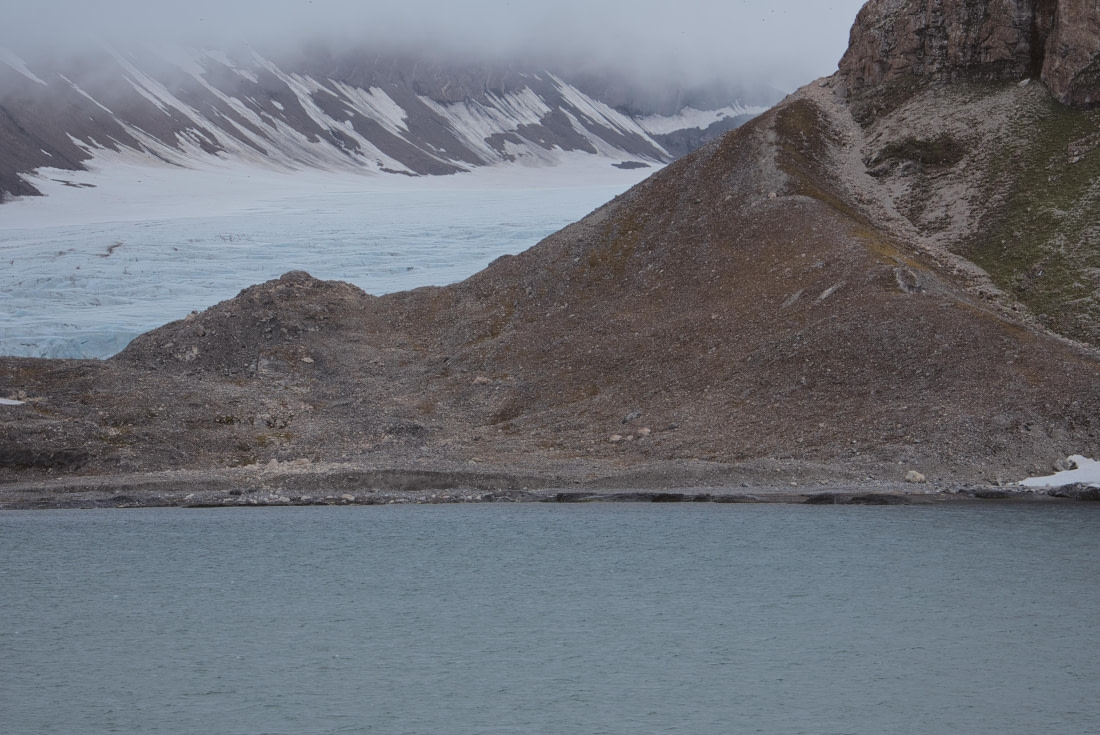
Recherchebreen is a massive, receding glacial front that feeds into a secluded lagoon. Navigating through a maze of brash ice and beautifully sculpted blue icebergs, our zodiac drivers expertly guided us toward the towering wall of the glacier. The atmosphere was electric, filled with the snap, crackle, and pop of ancient air escaping the melting ice.

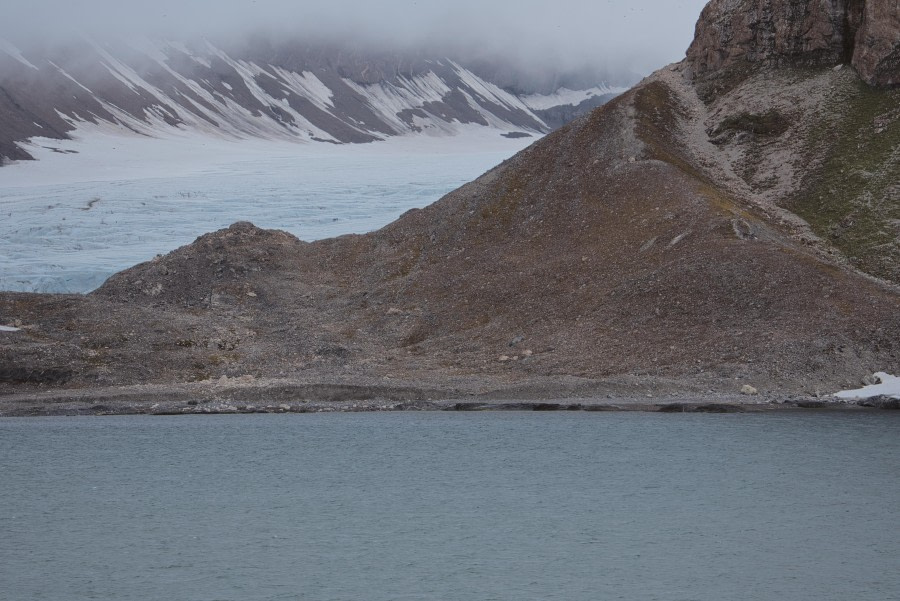
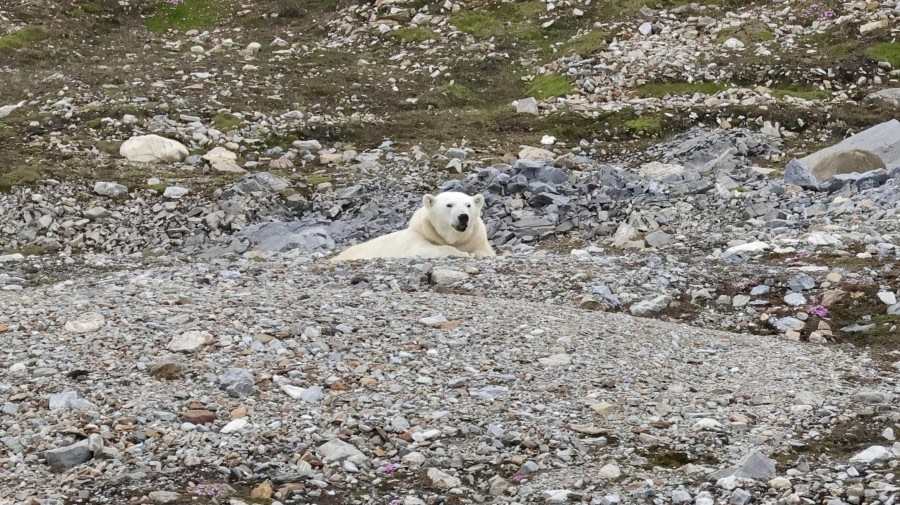
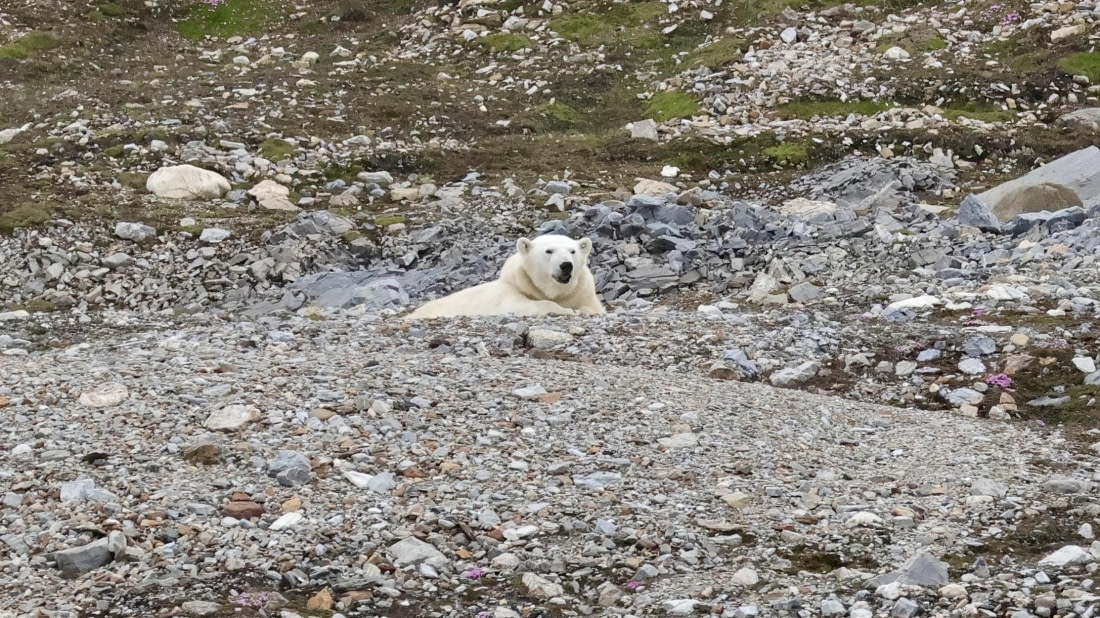
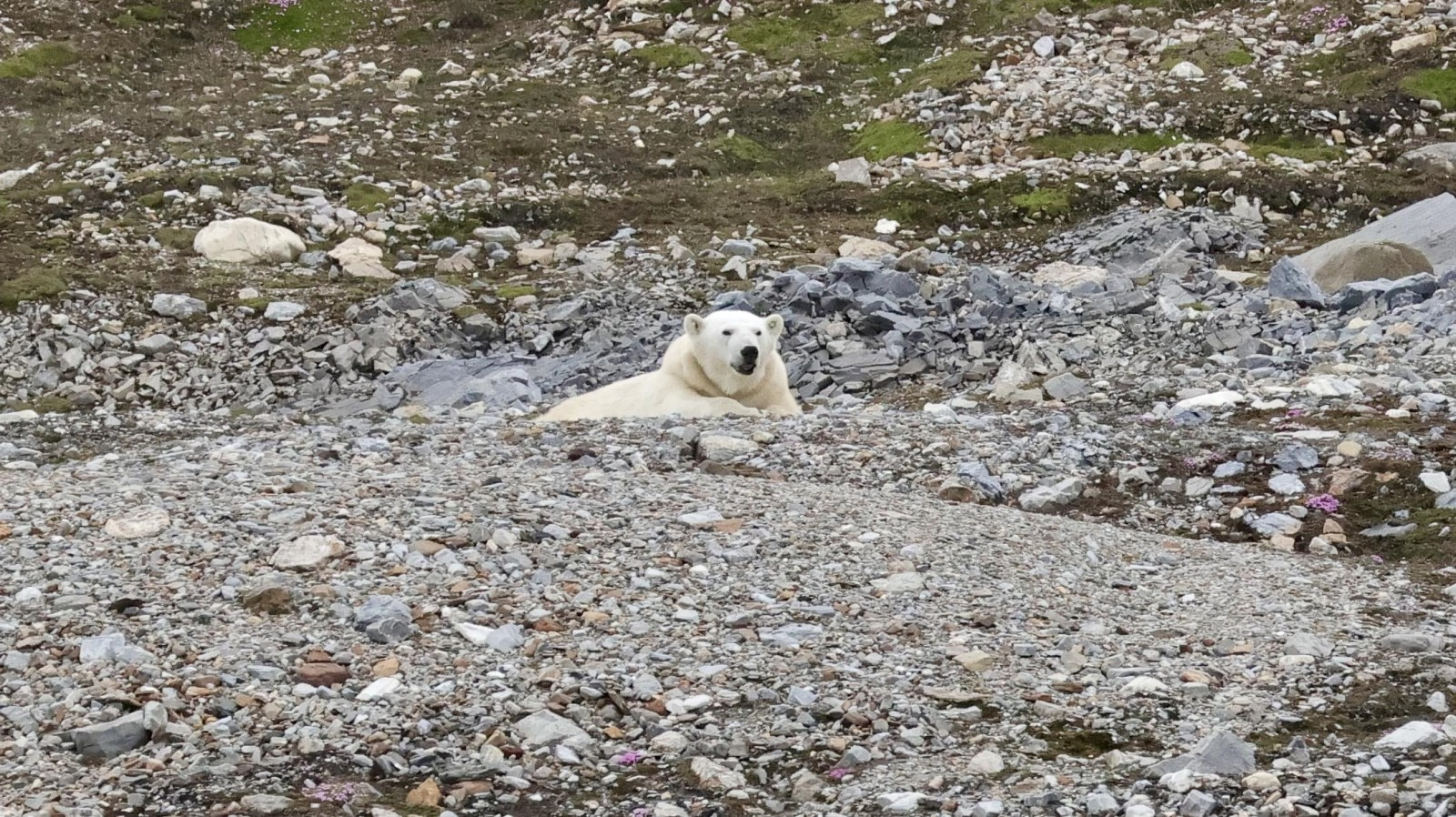
Suddenly, a crackle of excitement rippled across the VHF radios. A polar bear had been spotted. Resting on a patch of land near the glacial fringe was a beautiful female polar bear. To our delight and amusement, she was fast asleep. For the entire afternoon, she remained a picture of absolute serenity—a white silhouette against the dark moraine, occasionally shifting her weight or lifting a paw, completely untroubled by the world. To witness the apex predator of the Arctic in such a peaceful, vulnerable state was a rare privilege that left everyone in hushed awe.

While the "Queen of the Arctic" slumbered, the waters in front of the glacier front remained alive with activity. Curious faces popped up through the glassy surface of the lagoon. We enjoyed spectacular encounters with bearded seals, identifiable by their prominent, beautifully curled whiskers and large bodies resting on distant ice floes. Closer to the zodiacs, the smaller, elusive shapes of what were potentially ringed seals darted through the water, peeking up at us before diving back into the frigid depths.

Returning to the ship by late afternoon, the energy on board was triumphant. At 18:30, we gathered in the observation lounge on Deck 6 for our daily recap. The expedition team provided deeper insights into the behavior of the seals we encountered and the history of the beluga whalers at Bamsebu.

As we moved to the dining room for a beautifully plated dinner, the midnight sun continued to cast its golden, perpetual glow over the Svalbard archipelago. Today, the Arctic granted us a perfect harmony of history, glacial majesty, and unforgettable wildlife encounters—a day that will remain etched in our memories forever.


Dive Five — Bamsebu

Bamsebu turned out to be one of the standout dives of the voyage. Before we even entered the water, the bay gave us something to remember. A juvenile bearded seal was hauled out on a rock inside the bay, and we watched it for a moment before it slipped away and was gone well before we approached. A good omen for what followed.

Visibility opened to around five metres, a real improvement on the sites before it, and that extra clarity made all the difference. The dive ran through dense kelp, the fronds swaying with the surge and holding a whole community within them. Sea stars were everywhere, draped across the rock and the kelp holdfasts in good numbers. Crabs worked the bottom and the crevices, picking their way through the tangle.

This was cold-water diving at its best. The kelp forest, the clearer water, and the abundance of life across the seabed came together into exactly the kind of dive that reminds you why you pull on a drysuit in the Arctic. Everyone surfaced happy. A super dive, and a fitting one to log among the best of the trip.


Dive Six — Cancelled (Ice Floe Afternoon)

For the second time this voyage a polar bear made the decision for us. A bear was spotted in front of our intended dive site, so operations were called off before anyone entered the water. We stayed to watch it for a while, which is never a poor way to spend an afternoon in Svalbard, before turning toward the glacier and the icebergs drifting in the lagoon.

What followed was not a dive but a fine afternoon all the same. We worked in among the ice, and divers took the chance to jump from the floes and play around in the water, cameras out, making the most of the extraordinary setting. The bergs, the glacier behind them, and the clear cold water made for a memorable few hours. Then it was back to the ship, no dive logged but nobody complaining.
Day 7: Salmaneset and Coles Bay

Salmaneset and Coles Bay
Date: 02.07.2026
Position: 78°06.3’N / 014°59.0’E
Wind: NE-1
Weather: Partly Sunny
Air Temperature: +9

The gentle chime of the 07:15 wake-up call broke the stillness of the ship, summoning us to a day that would span hundreds of millions of years of Earth's history. After a hearty breakfast buffet, we suited up and boarded the Zodiacs, cutting through the calm waters toward Salmaneset. This striking spit of land divides two massive fjords, dominated by dramatic, vertically tilted rock layers that stand like giant stone pages of an ancient book.

Stepping ashore, we found ourselves walking precisely along the Permian-Triassic contact. The air felt heavy with the weight of deep time; we were literally standing on the boundary of the Great Dying—the most severe mass extinction event in our planet's history. Looking down at the weathered shale and limestone, the past came alive. We discovered an abundance of beautifully preserved marine fossils, running our fingers over the intricate, stony fans of bryozoa, the delicate shells of brachiopods, and the stacked, coin-like stems of crinoids. These creatures had thrived in a warm, primordial sea long before Spitsbergen migrated to the high Arctic.

Before leaving this geological monument, we shifted from ancient history to immediate, adrenaline-fueled reality: the Polar Plunge. Stripping down to our swimwear on the rocky shore, we braved the near-freezing Arctic waters. The shocking, electric cold took our breath away, but the adrenaline rush and the triumphant cheers of our fellow expeditioners made the icy dip unforgettable. By afternoon, the Arctic treated us to a spectacular change of pace. Under a brilliantly sunny sky, the Zodiacs dropped us at Colesbukta, a hauntingly beautiful abandoned Soviet mining settlement. Active until 1962 as a strategic port to ship coal from nearby Grymant, it now stands as a frozen capsule of the Cold War era.

The bright sunshine cast long, dramatic shadows across the tundra as we hiked through the remains of the town. We explored the weathered timber of old huts, crumbling brick buildings, and rusting railway tracks that once groaned under the weight of coal cars. Nature is slowly reclaiming the site, with bright green mosses and delicate tundra flowers carpeted around decaying machinery. Walking through these silent structures offered a surreal window into the lives of the miners who once braved the brutal polar winters here.

Returning to the ship, the atmosphere shifted to one of warm camaraderie. At 18:45, we gathered in the lounge for the Captain’s Cocktails. Clinking glasses with Captain Barria and the expedition team, we shared a farewell drink and looked back on the incredible journey behind us. As the expedition leaders outlined the disembarkation plans for Longyearbyen tomorrow, a collective sense of gratitude filled the room. We concluded this unforgettable day with a magnificent Farewell Dinner on Deck 4, celebrating the wild, untamed beauty of Spitsbergen that will undoubtedly linger in our memories forever.


Dive Seven — Sagaskjeret (Salmaneset)

Our penultimate dive took us between the towering bird cliffs of Alkhornet, one of western Svalbard's great landmarks and the peninsula of Salmaneset. We had intended to dive near the landing site at Salmaneset but drove out to Sagaskjeret instead, a call that paid off with an excellent dive.

Entering the water, divers descended through drifting jellyfish and delicate comb jellies before reaching a flourishing kelp forest below. Following the rocky wall, the seabed opened into a colourful Arctic community of anemones, sea urchins, crabs and countless other invertebrates covering every available surface.

It was a superb dive and a reminder of how much life these waters hold. Sagaskjeret delivered exactly what we hoped for and left the team buzzing on the ride back to the ship.


Dive Eight — Colesbukta

The final dive of the expedition took us out to the eastern tip of Colesbukta. There was swell running at the surface, so we dropped beneath it and found calmer water below, the usual reward for getting down and out of the movement up top.

As at so many of our sites this week, the seabed was thick with kelp, the fronds working back and forth with the surge. Jellyfish drifted through the water around us, and the dive settled into that quiet, absorbing rhythm that the kelp forests here always seem to bring. A steady, enjoyable dive to close on.

And what a week of diving it had been. From the checkout dive at Burgerbukta to this last drop at Colesbukta, Svalbard had shown us every side of its underwater world. We had kelp forests and glacier-fed lagoons, sea stars and anemones carpeting the rock, and more than one afternoon rearranged by a polar bear that had every right to be there. Poor visibility on some days, five clear metres on others, and always the cold, productive richness that defines diving in the High Arctic. As we packed our equipment away for the final time, we did so with a deeper appreciation of this remarkable place and memories that will stay with us long after the expedition has ended.

Day 8: Longyearbyen, Disembarkation Day

Longyearbyen, Disembarkation Day
Date: 03.07.2026
Position: 78°14.7’ N / 015°33.5’ E
Wind: SW-2
Weather: Overcast
Air Temperature: +7

What a bittersweet morning as we are woken up for the last time with Adam’s soothing voice. The weather peaceful, the air full of memories fleeting before us as we wake in our little world on the edge of the world.

Today the dream ends and reality takes us back in its embrace. We shake hands, exchange stories and laughs over breakfast and a warm cup of coffee ready to face the tears and the joy and the grief. It has been a joy being part of this trip, to be continued soon on other latitudes, until then Fairwell to ye explorers.


Total distance sailed on our voyage: 825 nautical miles

Most northern point sailed: 79º02.42’N, 025º11.73’E


Your Oceanwide Expeditions Team

Details

Tripcode: OTL06-26
Dates: 26 Jun - 3 Jul, 2026
Duration: 7 nights
Ship: m/v Ortelius
Embark: Longyearbyen
Disembark: Longyearbyen

Have you been on this voyage?

Aboard m/v Ortelius

The ice-strengthened Ortelius is thoroughly outfitted for polar exploration and, when necessary, helicopter flights.

More about the m/v Ortelius »
Loading