| Datum: |
01.07.2026 |
| Position: |
77°31.2’N / 014°39.1’E |
| Wind: |
W-1 |
| Wetter: |
Overcast |
| Lufttemperatur: |
+9 |
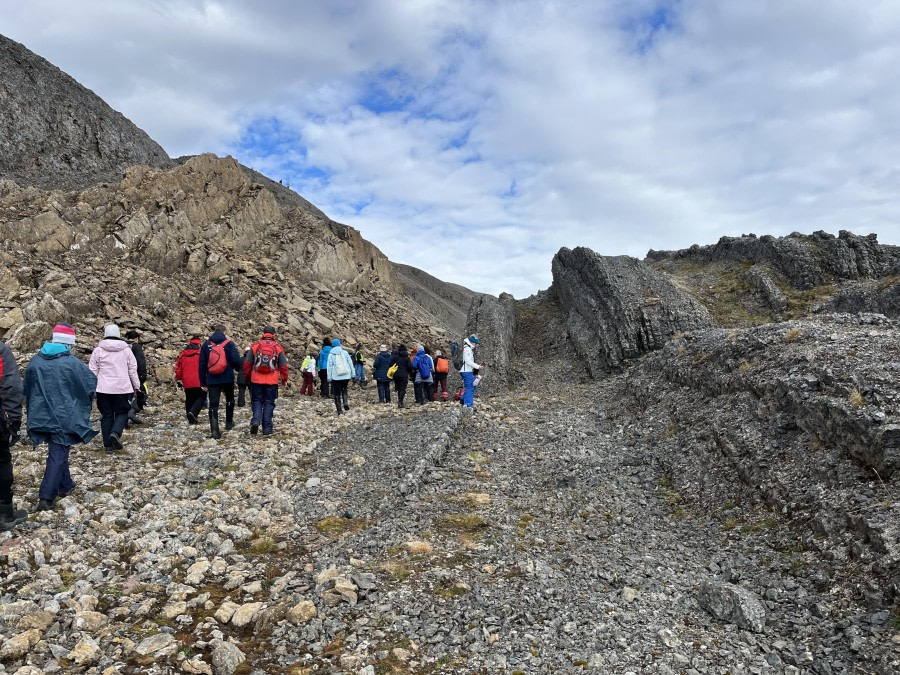
The gentle chime of the 07:45 wake-up call broke the silence of the Arctic morning, welcoming us to a new day of exploration in the remote reaches of East Spitsbergen. As the ship glided smoothly into the southern shores of Van Keulenfjorden, part of the larger Bellsund system, the landscape outside our windows revealed a dramatic, raw beauty. After a hearty breakfast, the expedition team prepped the zodiacs, and by 09:15, our boots hit the pebbled beach of Bamsebu.
Bamsebu is a place where history, wildlife, and geology interlace into a bittersweet narrative. Stepping onto the shoreline, we were immediately confronted by the stark, sobering remnants of the 1930s beluga whaling era. Stretching across the beach were thousands of sun-bleached white bones the tragic, enduring remains of hundreds of beluga whales harvested nearly a century ago. Walking among these skeletal ruins felt like stepping through a poignant open-air museum, a visceral reminder of humanity's historical exploitation of the far north.
Yet, nature has a profound way of reclaiming what was lost. Moving past the historic site, we walked around the sweeping curve of the bay, where the tundra was waking up to the brief Arctic summer. It didn't take long for the local wildlife to show itself. Lounging on the shoreline rocks were several harbor seals, their sleek bodies glistening as they watched us with quiet curiosity. Further inland, framed against the dramatic, jagged slopes of the fjord, we spotted four Svalbard reindeer. Distinctly shorter and more compact than their mainland cousins, these resilient creatures grazed peacefully on the sparse moss and lichen, completely unbothered by our presence. It was a beautiful contrast life thriving alongside the remnants of the past.
By 12:30, we were back aboard for lunch, sharing stories of the morning's walk. But the Arctic was far from finished with us. By 14:30, the zodiacs were lowered once more into the icy water for a highly anticipated cruise at Recherchebreen.
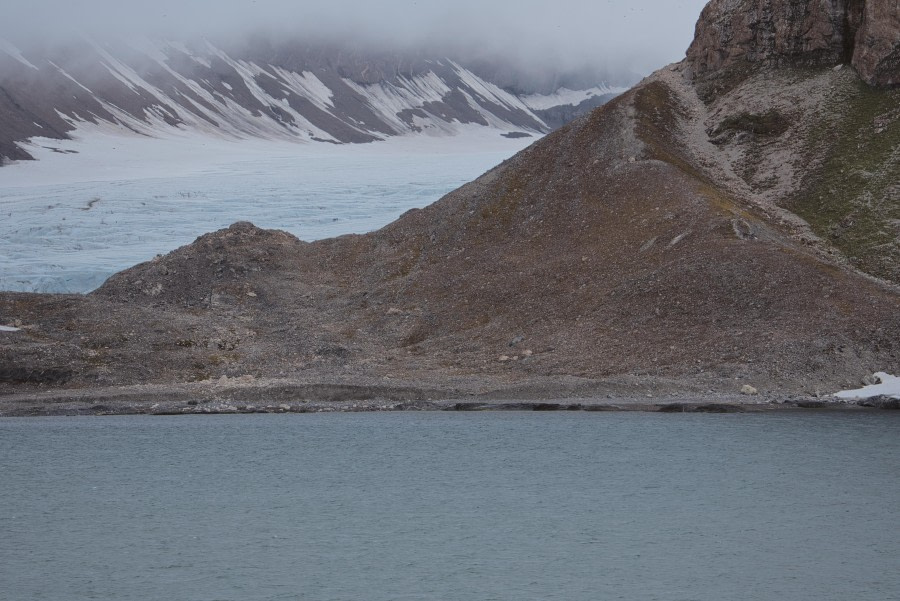
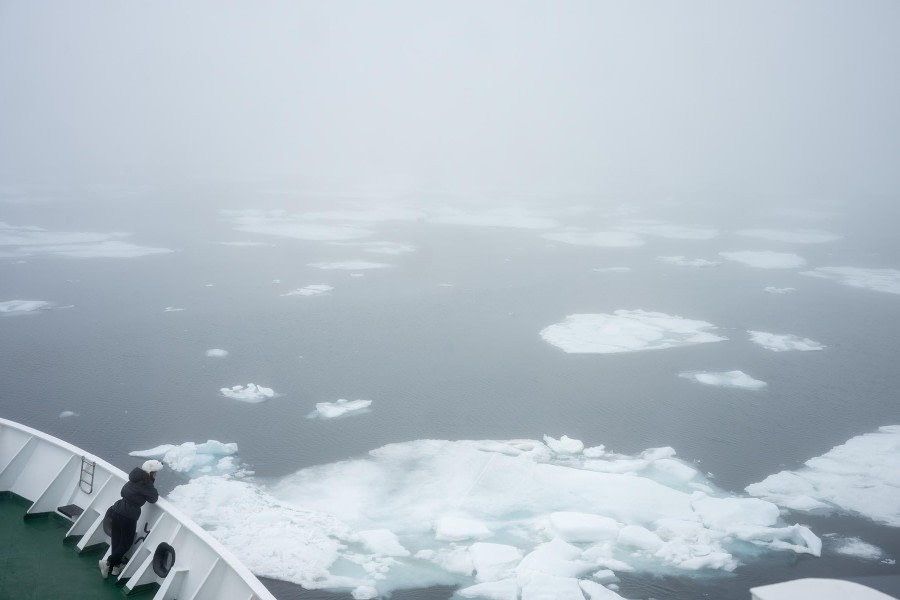
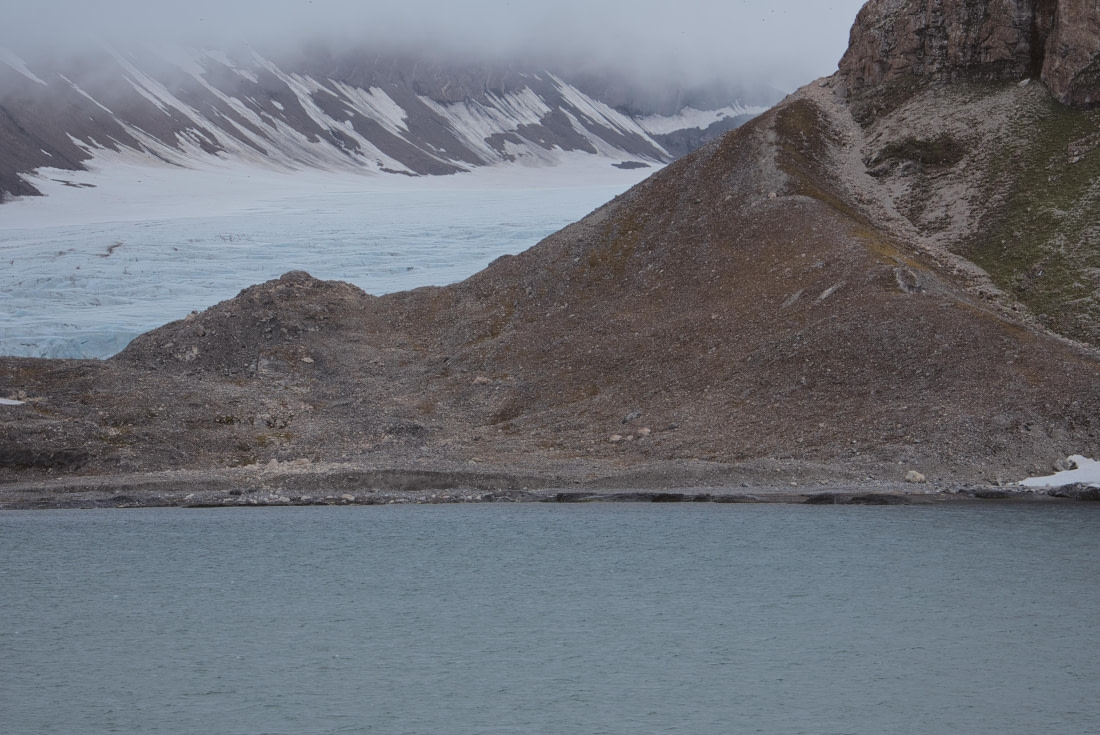
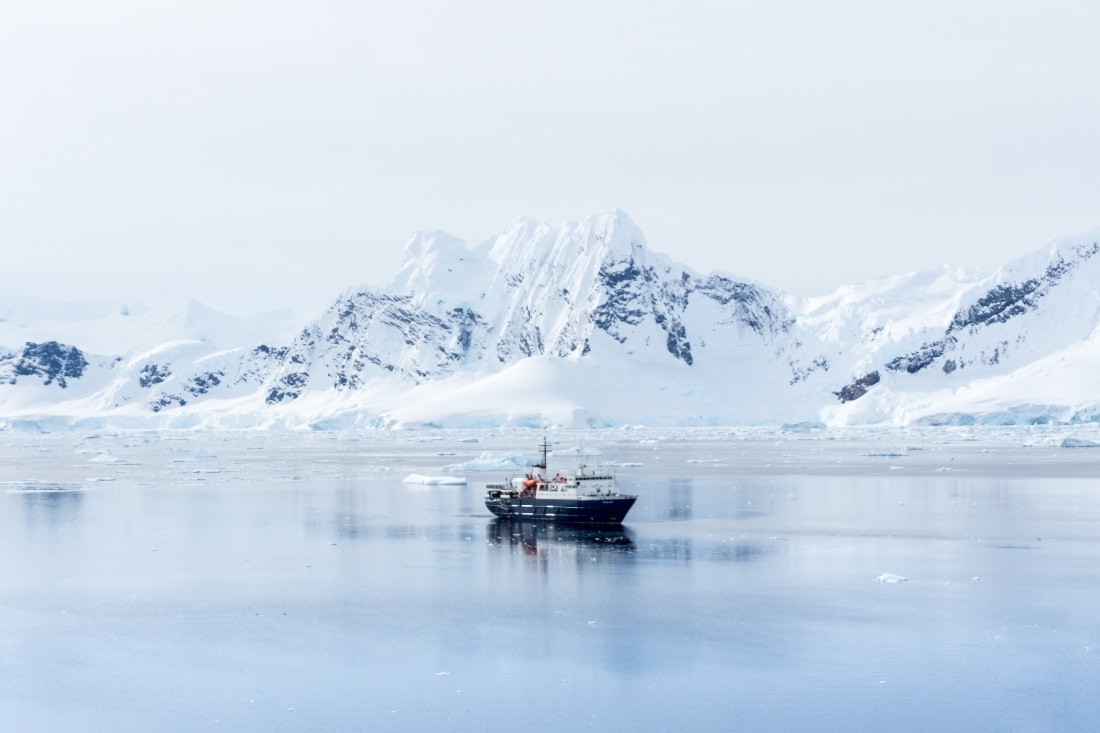
Recherchebreen is a massive, receding glacial front that feeds into a secluded lagoon. Navigating through a maze of brash ice and beautifully sculpted blue icebergs, our zodiac drivers expertly guided us toward the towering wall of the glacier. The atmosphere was electric, filled with the snap, crackle, and pop of ancient air escaping the melting ice.
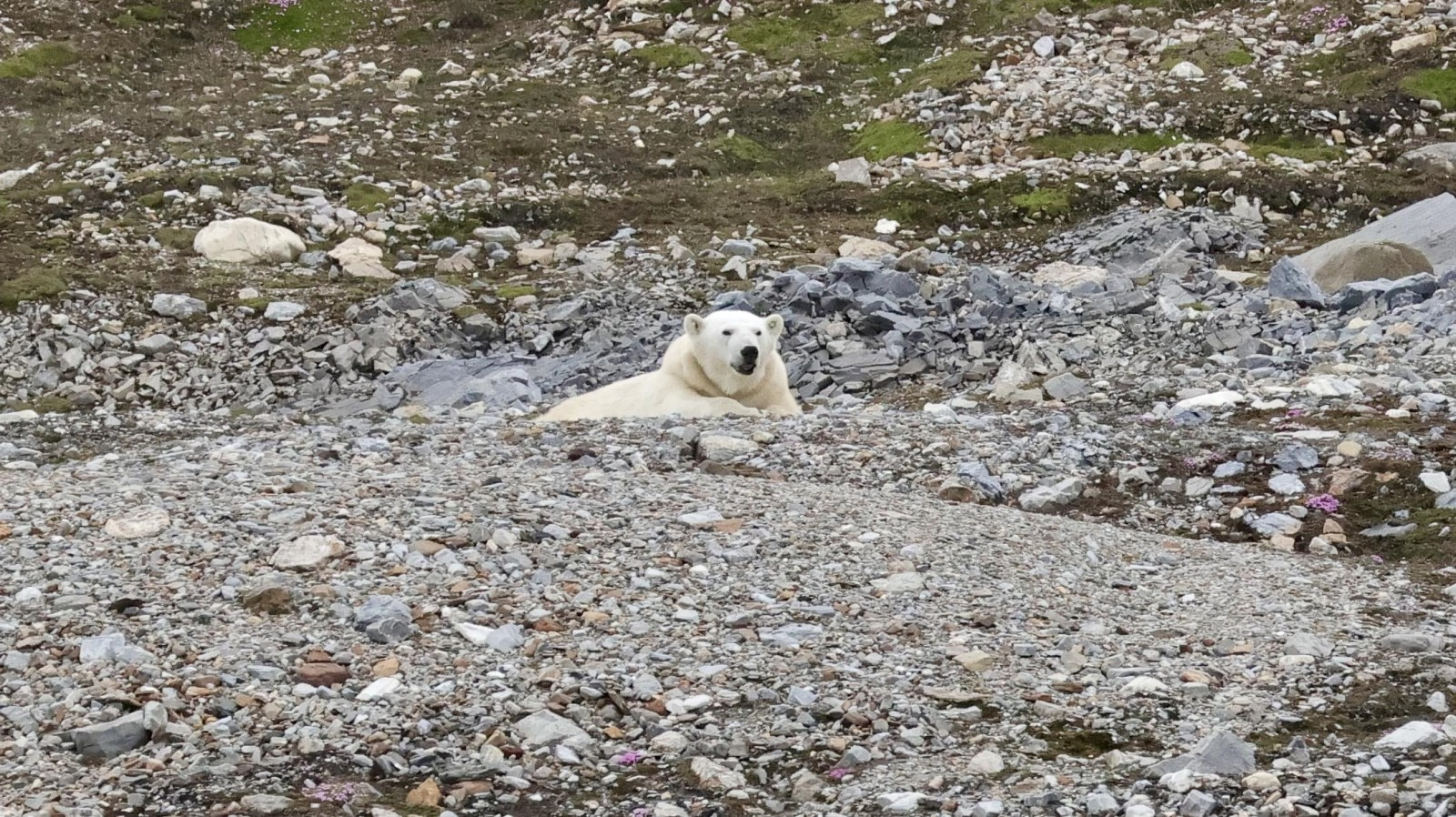
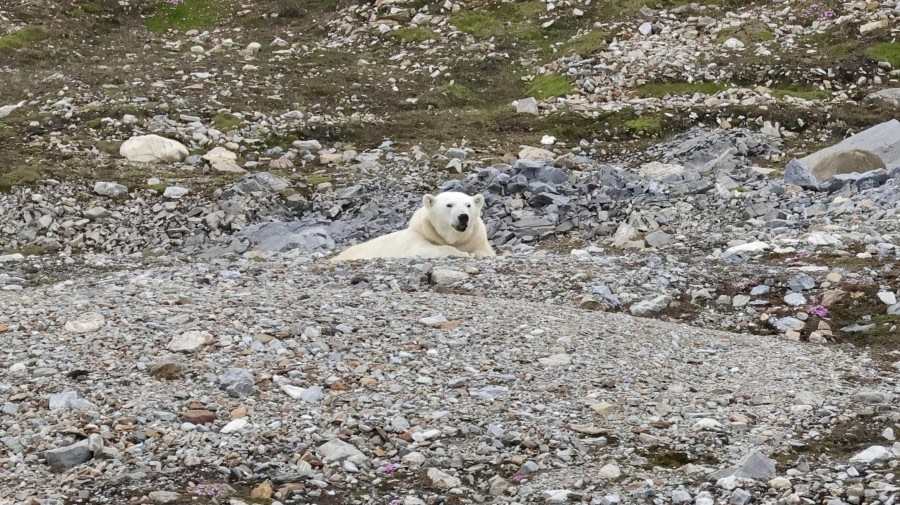
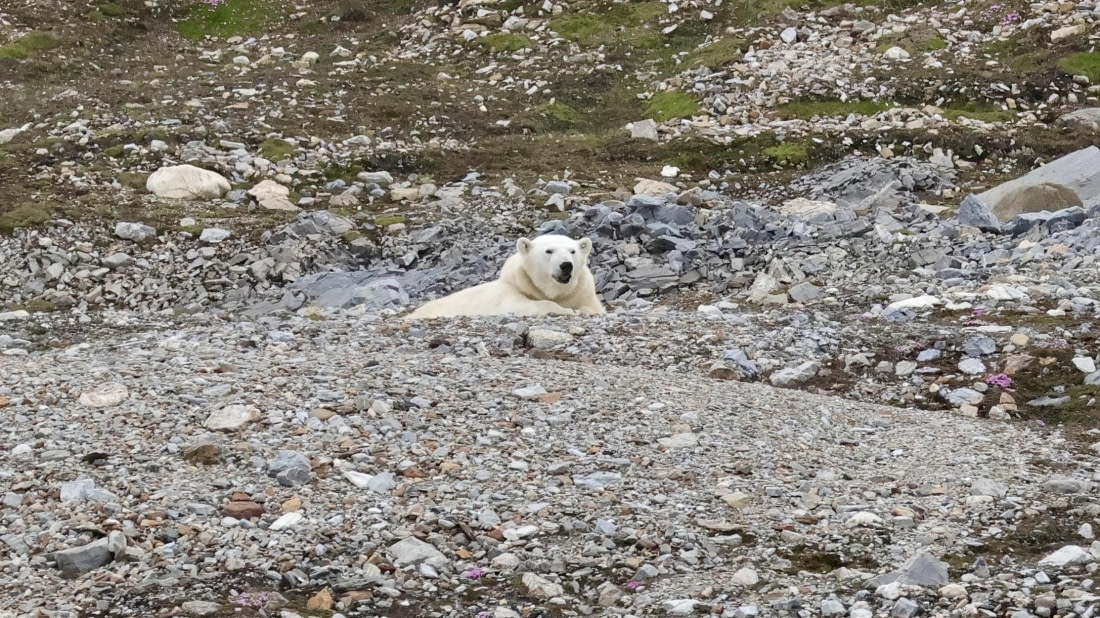
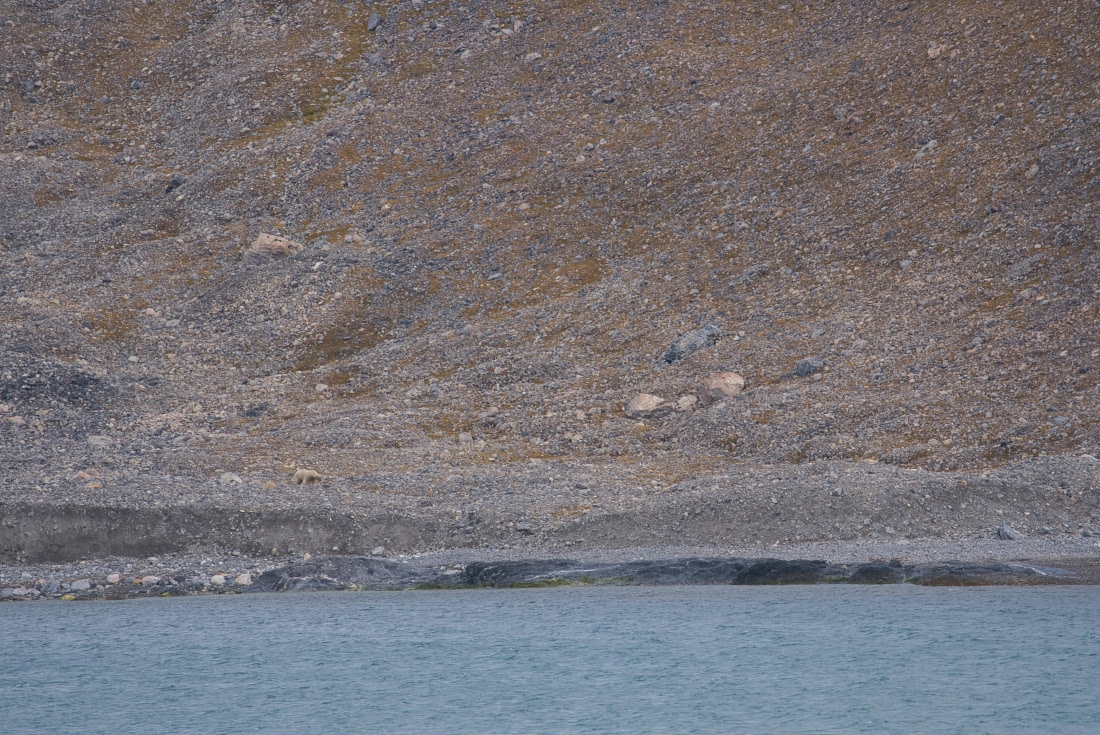
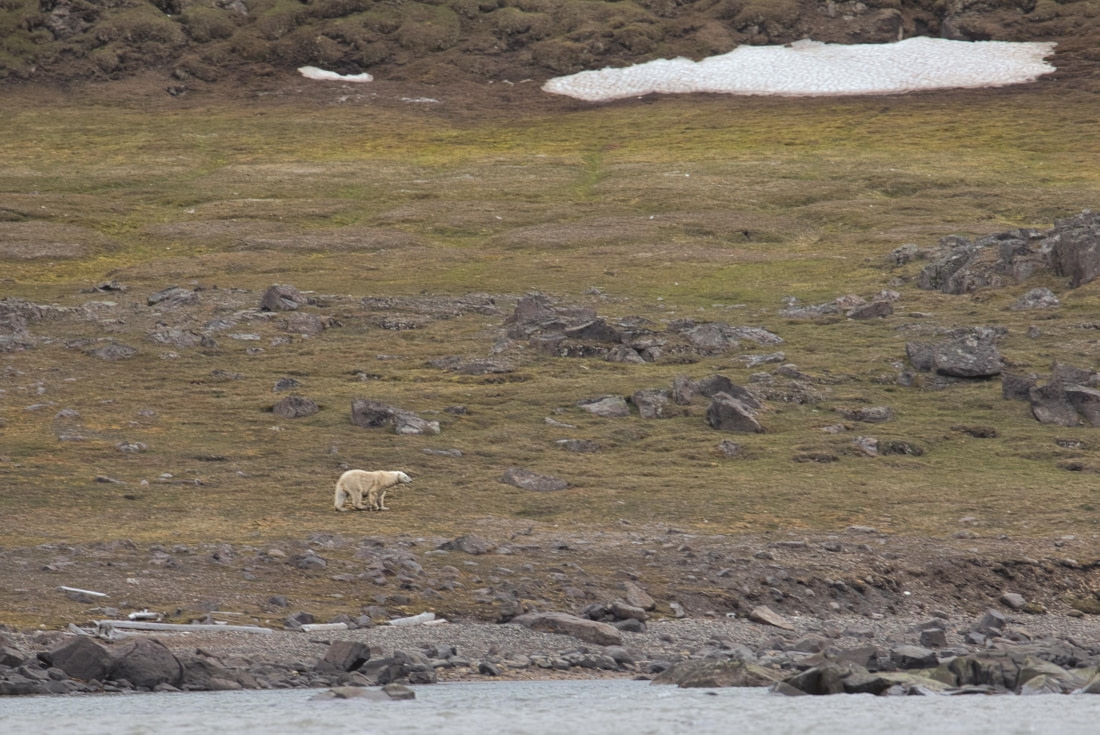
Suddenly, a crackle of excitement rippled across the VHF radios. A polar bear had been spotted. Resting on a patch of land near the glacial fringe was a beautiful female polar bear. To our delight and amusement, she was fast asleep. For the entire afternoon, she remained a picture of absolute serenity—a white silhouette against the dark moraine, occasionally shifting her weight or lifting a paw, completely untroubled by the world. To witness the apex predator of the Arctic in such a peaceful, vulnerable state was a rare privilege that left everyone in hushed awe.
While the "Queen of the Arctic" slumbered, the waters in front of the glacier front remained alive with activity. Curious faces popped up through the glassy surface of the lagoon. We enjoyed spectacular encounters with bearded seals, identifiable by their prominent, beautifully curled whiskers and large bodies resting on distant ice floes. Closer to the zodiacs, the smaller, elusive shapes of what were potentially ringed seals darted through the water, peeking up at us before diving back into the frigid depths.
Returning to the ship by late afternoon, the energy on board was triumphant. At 18:30, we gathered in the observation lounge on Deck 6 for our daily recap. The expedition team provided deeper insights into the behavior of the seals we encountered and the history of the beluga whalers at Bamsebu.
As we moved to the dining room for a beautifully plated dinner, the midnight sun continued to cast its golden, perpetual glow over the Svalbard archipelago. Today, the Arctic granted us a perfect harmony of history, glacial majesty, and unforgettable wildlife encounters—a day that will remain etched in our memories forever.
Dive Five — Bamsebu
Bamsebu turned out to be one of the standout dives of the voyage. Before we even entered the water, the bay gave us something to remember. A juvenile bearded seal was hauled out on a rock inside the bay, and we watched it for a moment before it slipped away and was gone well before we approached. A good omen for what followed.
Visibility opened to around five metres, a real improvement on the sites before it, and that extra clarity made all the difference. The dive ran through dense kelp, the fronds swaying with the surge and holding a whole community within them. Sea stars were everywhere, draped across the rock and the kelp holdfasts in good numbers. Crabs worked the bottom and the crevices, picking their way through the tangle.
This was cold-water diving at its best. The kelp forest, the clearer water, and the abundance of life across the seabed came together into exactly the kind of dive that reminds you why you pull on a drysuit in the Arctic. Everyone surfaced happy. A super dive, and a fitting one to log among the best of the trip.
Dive Six — Cancelled (Ice Floe Afternoon)
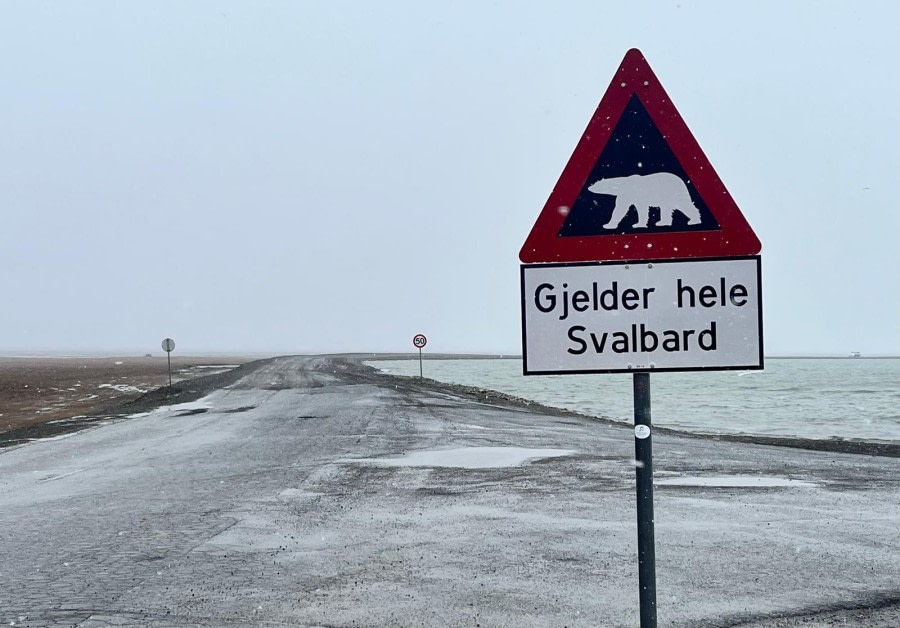
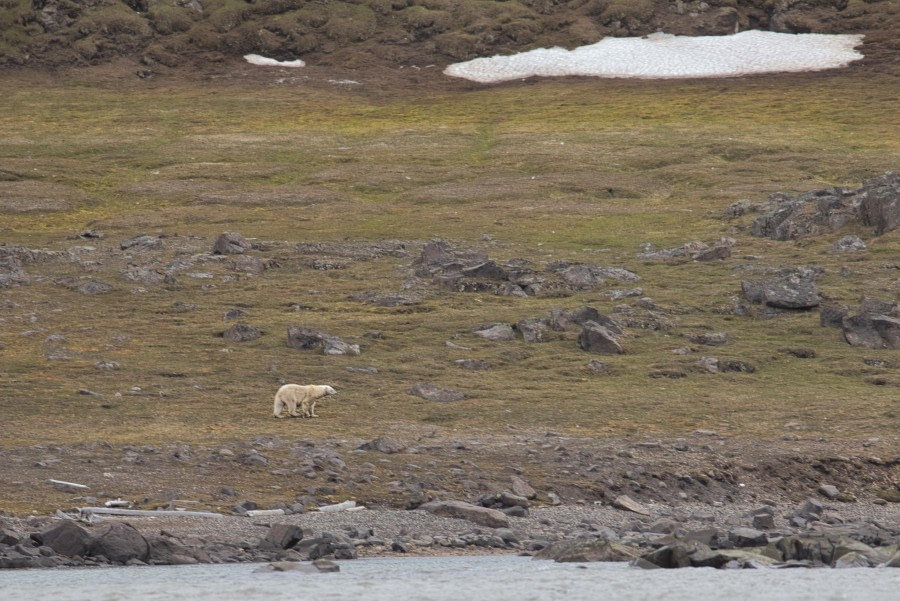
For the second time this voyage a polar bear made the decision for us. A bear was spotted in front of our intended dive site, so operations were called off before anyone entered the water. We stayed to watch it for a while, which is never a poor way to spend an afternoon in Svalbard, before turning toward the glacier and the icebergs drifting in the lagoon.
What followed was not a dive but a fine afternoon all the same. We worked in among the ice, and divers took the chance to jump from the floes and play around in the water, cameras out, making the most of the extraordinary setting. The bergs, the glacier behind them, and the clear cold water made for a memorable few hours. Then it was back to the ship, no dive logged but nobody complaining.