| Date: |
22.02.2026 |
| Position: |
53°57.7’S / 32°40.6’W |
| Wind: |
W4 |
| Weather: |
Overcast |
| Air Temperature: |
+2 |
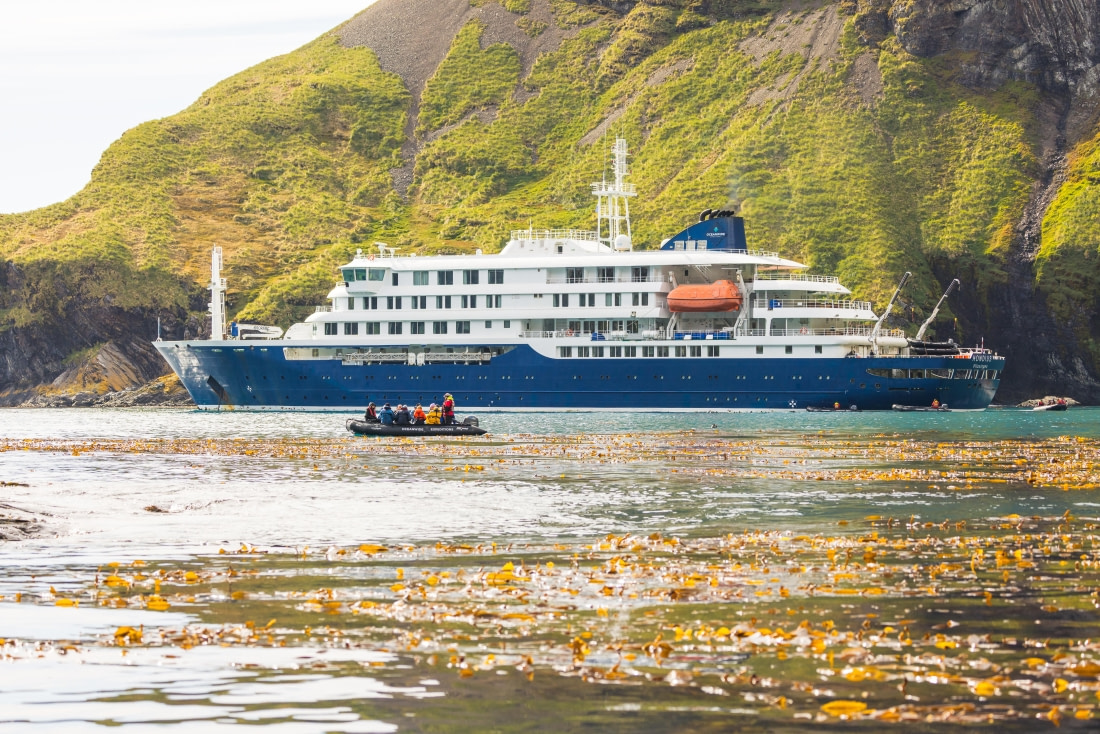
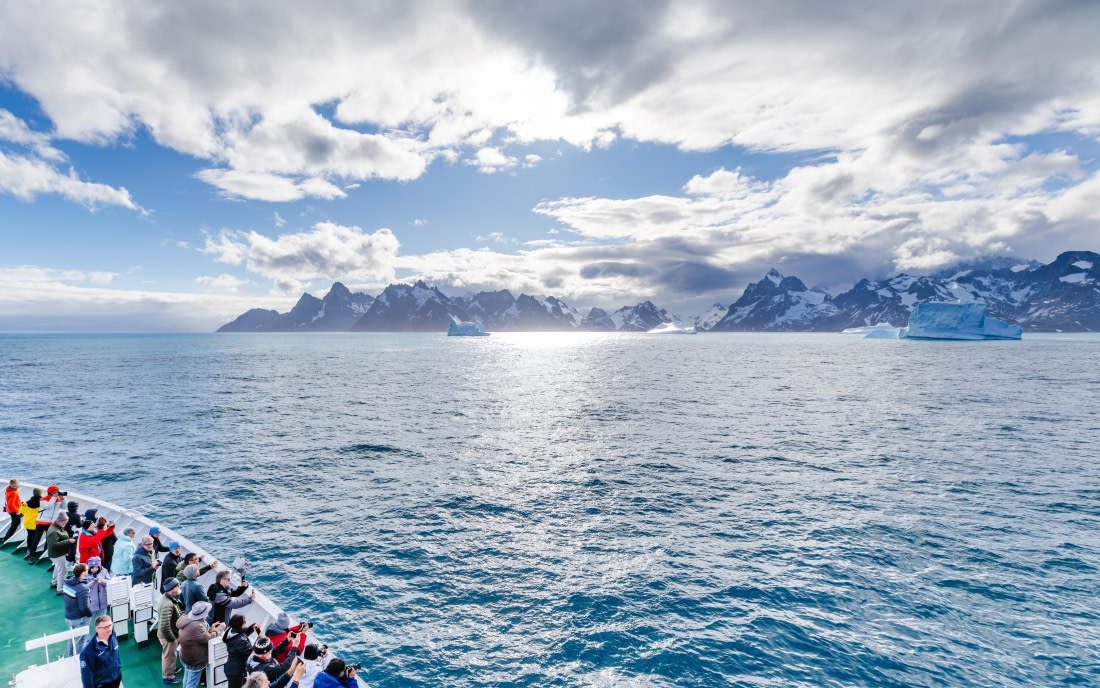
The morning began under a veil of fog. As the ship approached Right Whale Bay, mist clung to the dark cliffs and glacier-fed slopes, creating an atmospheric, almost ethereal introduction to the landscape. A light rain fell steadily at first, dimpling the sea surface, but as the zodiacs were lowered and guests prepared to land and zodiac cruise, the fog began to lift and the rain gradually eased.
The day’s itinerary promised two of the island’s most wildlife-rich landing sites: Right Whale Bay and Salisbury Plain—both legendary among expedition cruisers for their density of wildlife and sweeping subantarctic scenery.
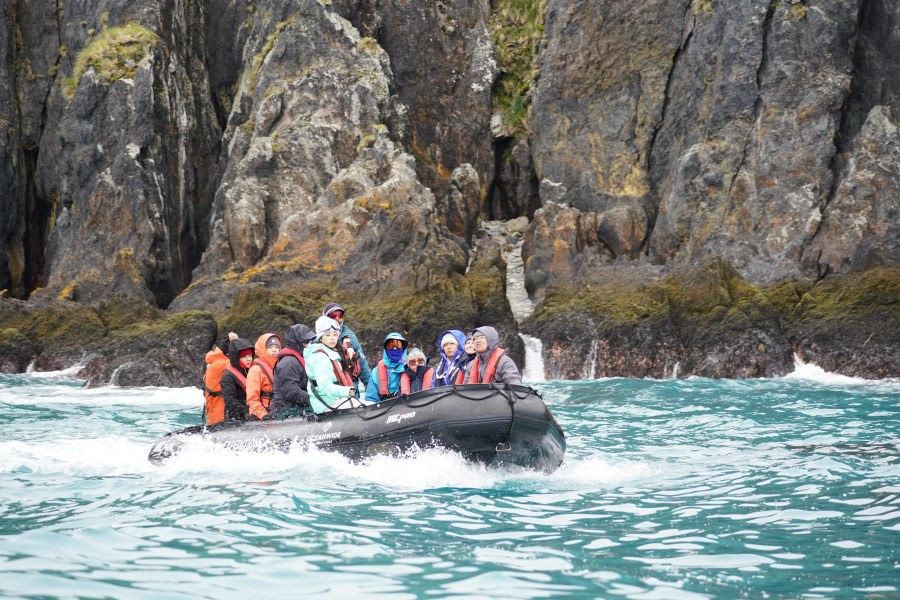
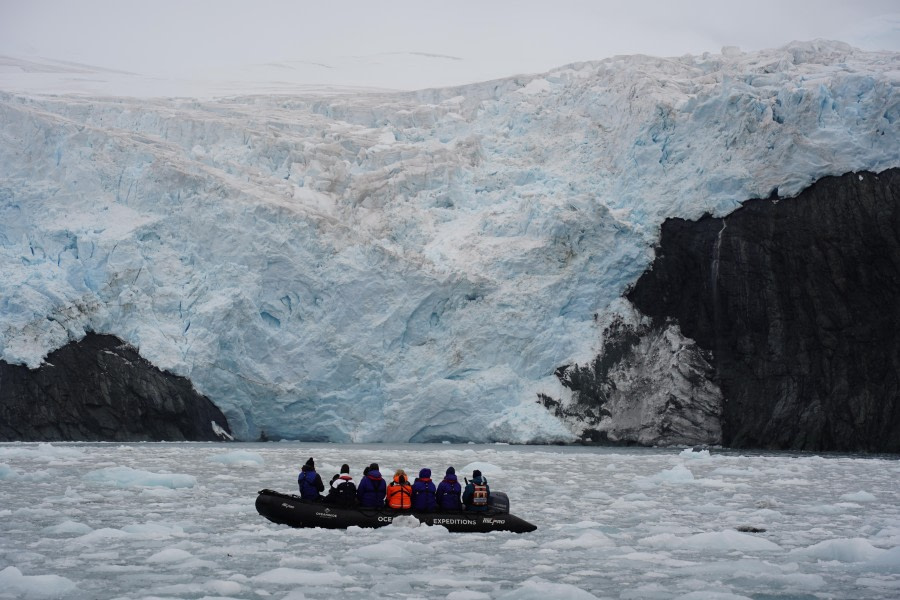
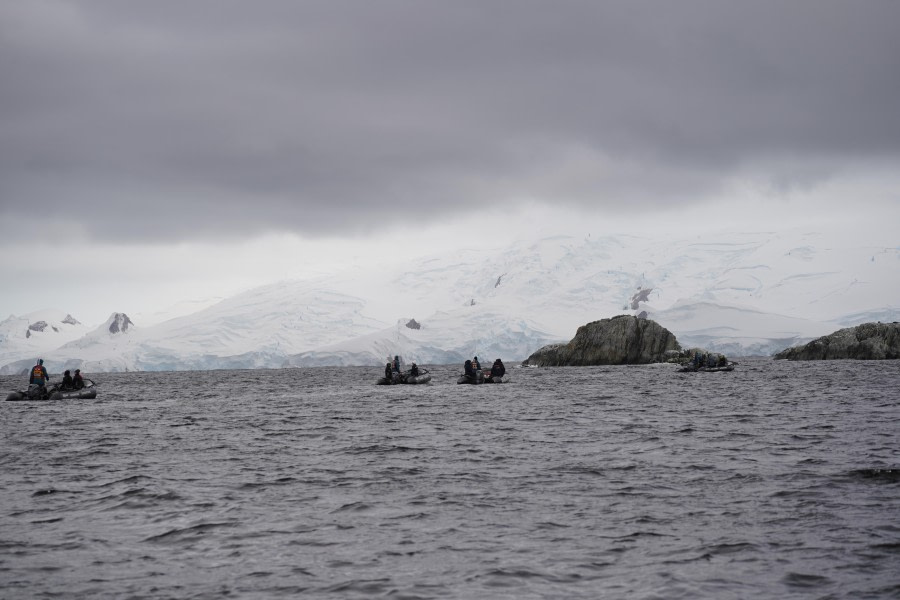
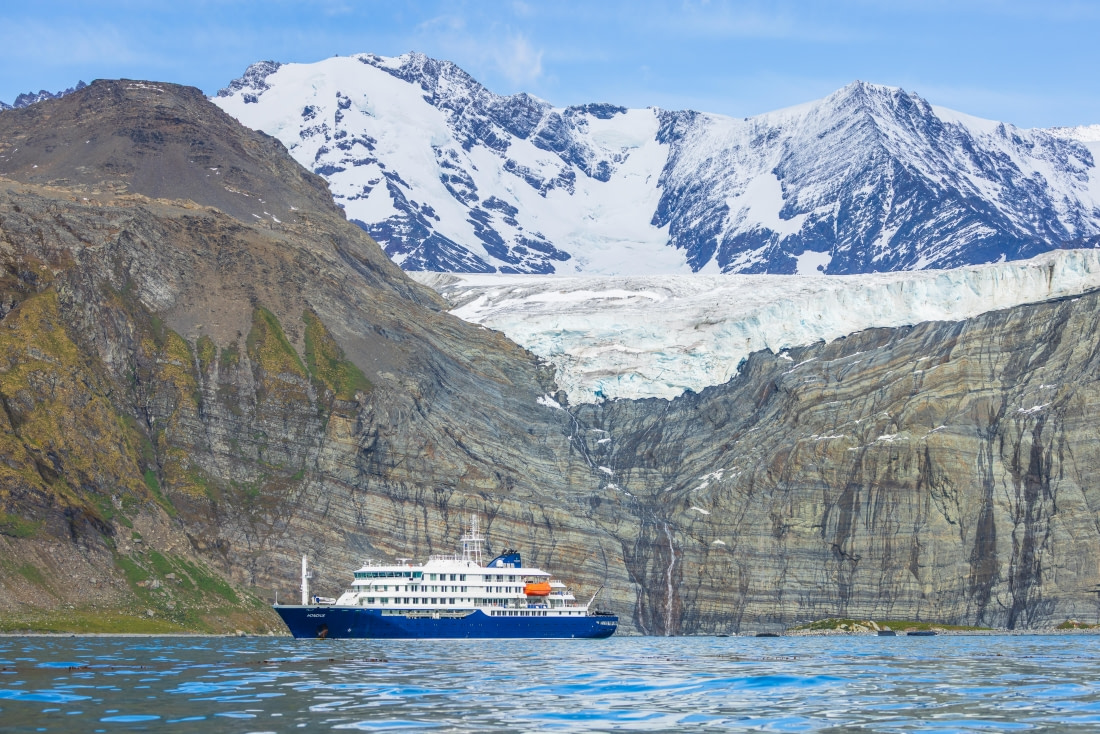
The morning began with a split landing with half of the guests landing and the other half zodiac cruising first, before swapping mid morning. The zodiac cruise along the dark, pebbled shoreline of Right Whale Bay. Named for the Southern Right Whales once hunted in these waters, the bay today feels wild and reclaimed by nature. The surrounding peaks formed a dramatic amphitheater around the bay, while glacier-fed streams braided their way toward the sea.
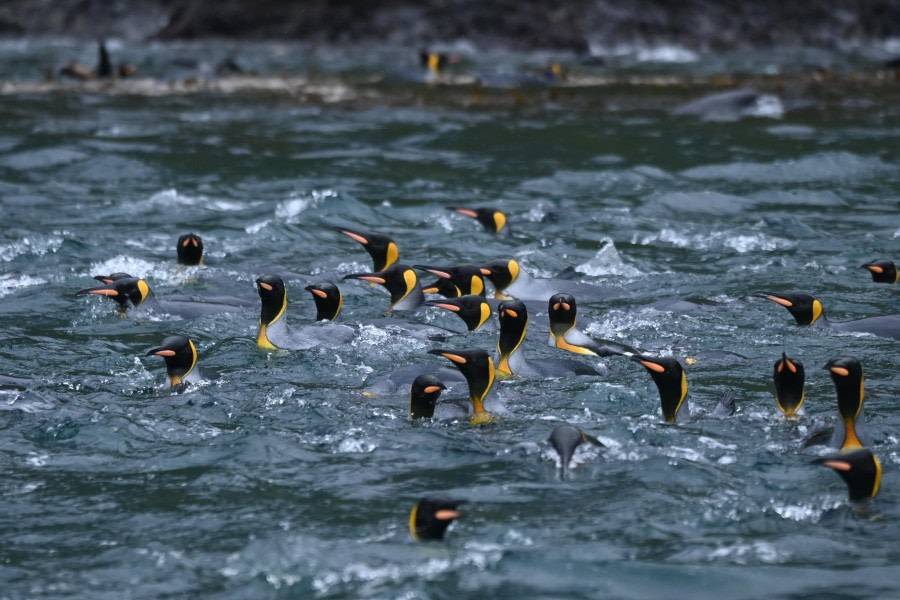
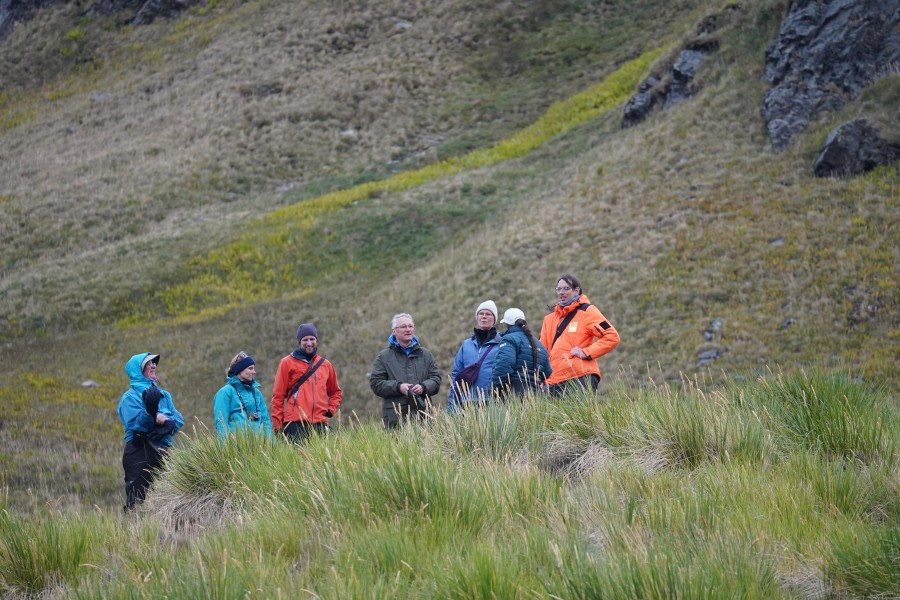
Passengers stepping ashore were immediately immersed in one of South Georgia’s defining spectacles: vast colonies of King Penguins. Thousands stood shoulder to shoulder along the beach and up into the tussock grass, their orange-gold markings vivid against the monochrome landscape. The air hummed with their calls, a constant background chorus punctuated by the sharp barks of Antarctic Fur Seals.
The fur seals, particularly numerous during the breeding season, often claimed sections of the beach as their own. Expedition guides carefully plotted safe walking routes, ensuring guests could observe without disturbing the wildlife.
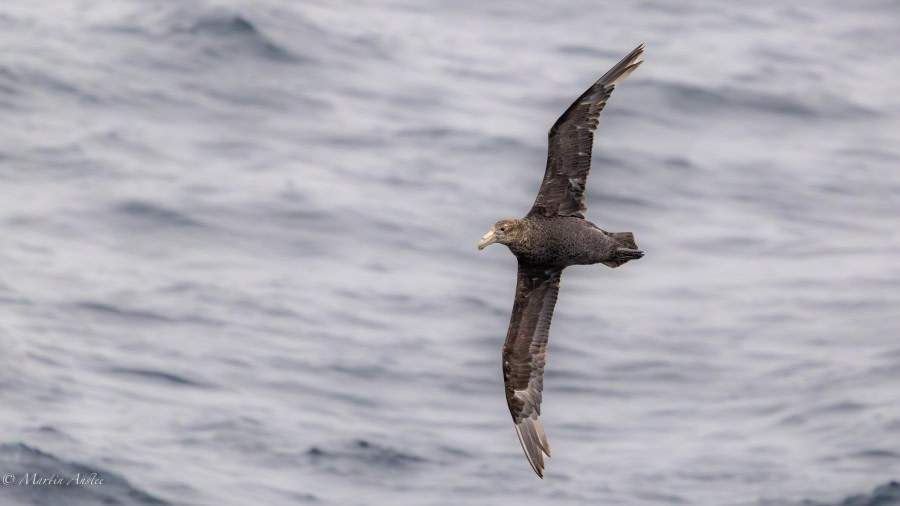
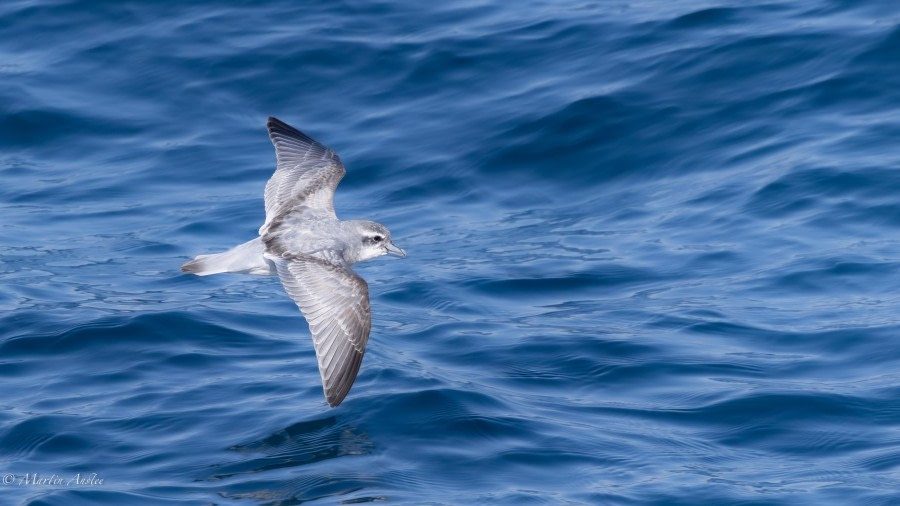
Overhead, seabirds wheeled in the brisk air currents. Giant Petrels patrolled the shoreline and beach along with Brown Skua , ever vigilant for a meal. The surrounding waters, part of the nutrient-rich Southern Ocean, teem with life thanks to the mixing of currents near the Antarctic Convergence, making South Georgia one of the most biologically productive places on Earth.
After time ashore to wander designated paths and absorb the scale of the colony, guests returned to the ship exhilarated—already feeling they had witnessed one of the great wildlife gatherings of the planet, and yet knowing more was to come.
If the morning had been impressive, the afternoon landing at Salisbury Plain elevated the experience to another level. Hosting the second largest King Penguin colony in South Georgia after St. Andrews Bay, Salisbury Plain presents an astonishing panorama: tens of thousands of penguins stretching from the surf line to the base of the glaciated mountains beyond.
The setting is breathtaking. A broad outwash plain fans out from retreating glaciers, backed by steep, ice-clad peaks. Waterfalls thread down rocky slopes, and braided streams glint under shifting subantarctic light. Against this grand backdrop, the penguin colony appears almost endless.
Visitors walking the marked route found themselves surrounded by life at every stage: fluffy brown ‘kiwi’ chicks clustered in crèches, sleek adults commuting to and from the sea, and pairs engaged in courtship rituals. The rhythm of the colony is constant—arrivals from the ocean, greetings between mates, the careful transfer of food to waiting chicks.
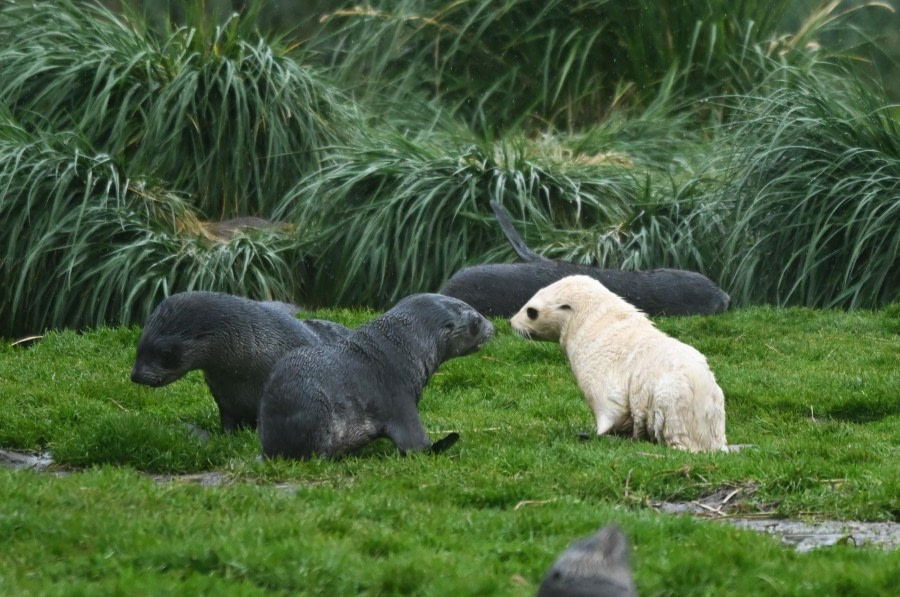
Fur seals darted along the water’s edge, agile and alert, while pups and females occupied the flat plain in large numbers, with the occasional ‘blond’ fur seal pup putting in an appearance to the lucky few.
By the time the ship weighed anchor and continued its voyage along South Georgia’s coast, the impression left by Right Whale Bay and Salisbury Plain was unmistakable. The sheer abundance of wildlife, set against a landscape of glaciers, mountains, and restless sea, encapsulates the essence of expedition cruising in the subantarctic.
For many aboard, the day stood out not just for the numbers—though the numbers are staggering—but for the intimacy of the encounters. Standing quietly as a king penguin chick waddled past, or watching waves crash behind a colony that has gathered here for generations, offered a profound sense of connection to one of the planet’s last great wildernesses.
In a single day, guests experienced both the raw energy and delicate balance of South Georgia—a place where wildlife reigns, landscapes remain untamed, and every landing feels like a privilege.