• Startseite
  • Trip-Logs
  • HDS29-26, trip log, Falkland Islands - South Georgia - Elephant Island - Antarctica - Polar Circle

HDS29-26, trip log, Falkland Islands - South Georgia - Elephant Island - Antarctica - Polar Circle

by Oceanwide Expeditions

Fotogalerie

Logbuch

Day 1: Ushuaia, Embarkation day - Setting sail for Antarctica

Ushuaia, Embarkation day - Setting sail for Antarctica
Datum: 16.02.2026
Position: 54°48.5 S, 068°17.9 W
Wind: S3
Wetter: Partially cloudy
Lufttemperatur: +10

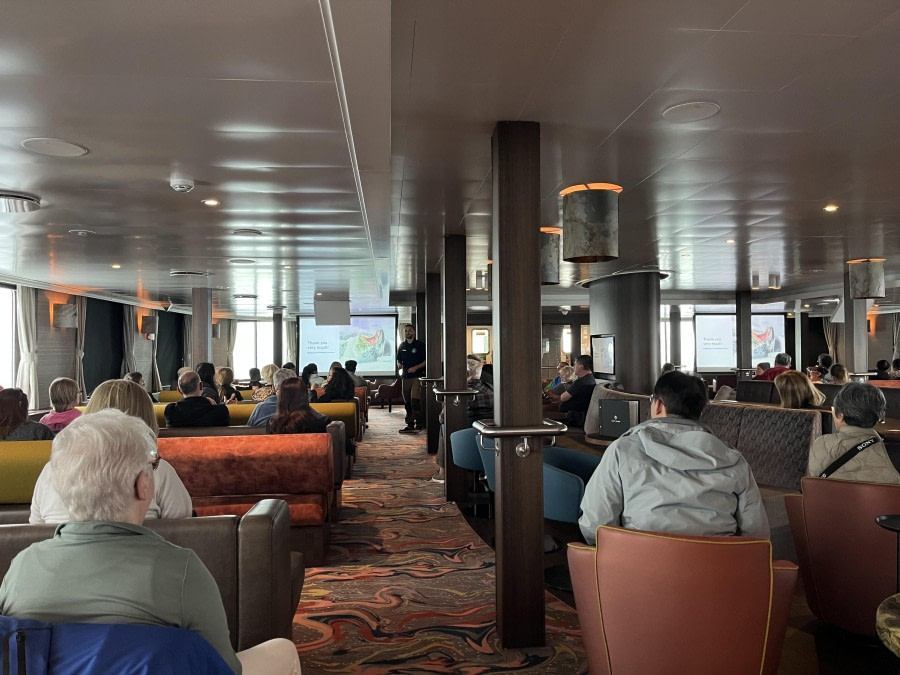
Our journey began in Ushuaia under warm and windy skies, the kind that felt like a quiet blessing before heading towards the Falkland Islands. With the mountains framing the harbor and the town buzzing softly behind us, we stepped aboard Hondius full of anticipation. Once on board, we made ourselves at home in our cabins, checking that all our luggage had arrived and beginning to settle into what would soon feel like our floating world. The Observation Lounge on Deck 5 quickly became a welcoming hub, with the gentle clink of cups and the comfort of tea and coffee easing us into the rhythm of ship life.

In the late afternoon, we gathered in the Observation Lounge for the mandatory safety briefing with the Expedition Leader and Chief Officer. Practical and reassuring, it reminded us that adventure at sea always comes with responsibility. Soon after, the emergency alarm echoed through the ship, and we returned to our cabins to collect our life jackets, completing our first drill together as a crew and community.

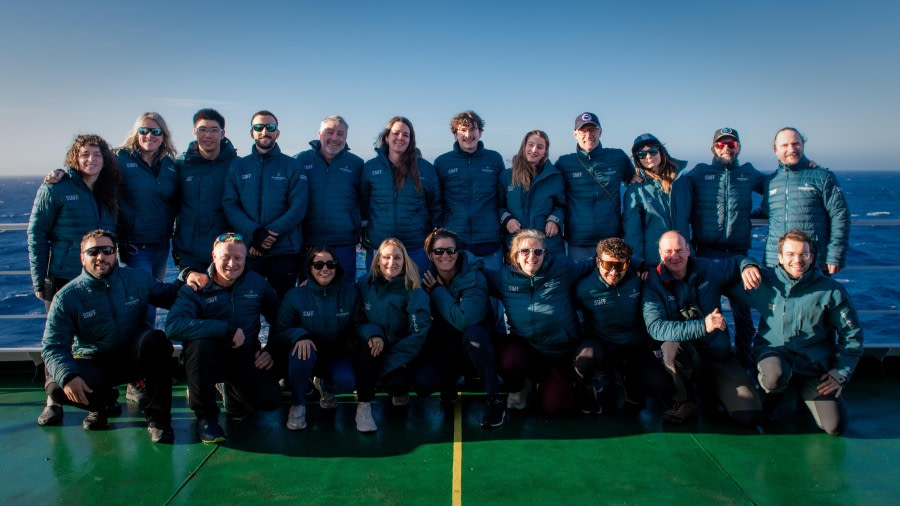
As early evening approached, we were invited back to the Observation Lounge for the Captain’s Cocktails. With drinks in hand, we listened to a warm welcome from the Hotel Manager and Expedition Leader, who introduced life on board and outlined the exciting days ahead. Meeting the Expedition Team made the journey suddenly feel very real.

While we sailed through the Beagle Channel, nature offered its own welcome: our first whale blows appeared on the horizon, followed by playful dolphins cutting through the calm water. It was a gentle, perfect beginning to our Southern Ocean adventure.

Day 2: At sea sailing towards the Falkland Islands

At sea sailing towards the Falkland Islands
Datum: 17.02.2026
Position: 53°55.2’S / 64°00.9’W
Wind: SSE6
Wetter: Overcast
Lufttemperatur: +8

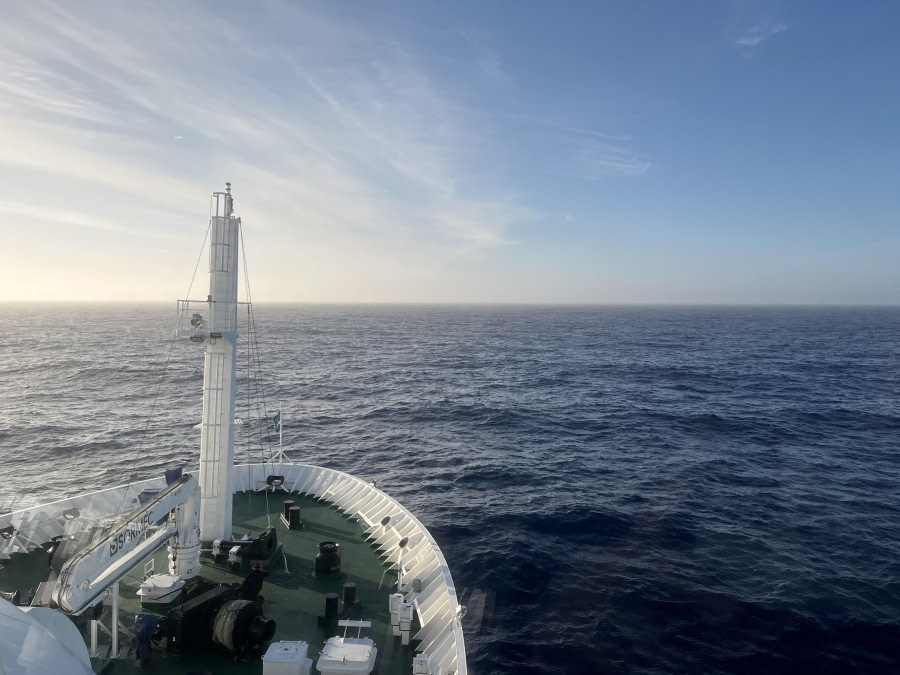
We continued our passage toward the Falkland Islands (Islas Malvinas). A gentle but persistent swell of around two meters accompanied us into the open waters of the Southern Ocean — enough to remind us we were truly heading into expedition territory, but comfortable for our first full day at sea.

Our day began with mandatory IAATO and Zodiac briefings. Safety and environmental responsibility are at the heart of any expedition voyage in the Southern Ocean, and the guidelines ensure that our presence has minimal impact on the fragile ecosystems we are about to explore. We also reviewed Zodiac operations, preparing for our first landings in the days ahead.

Biosecurity was part of the day as well, a vital ritual before any expedition landing. Every guest carefully cleaned outerwear, and inspected Velcro, pockets, and backpacks to remove seeds or foreign material. The excitement was building; tomorrow we would step ashore for our first true expedition activity.

By mid-morning, the outer decks had become the place to be. The swell carried us steadily eastward, and with it came an extraordinary parade of seabirds.

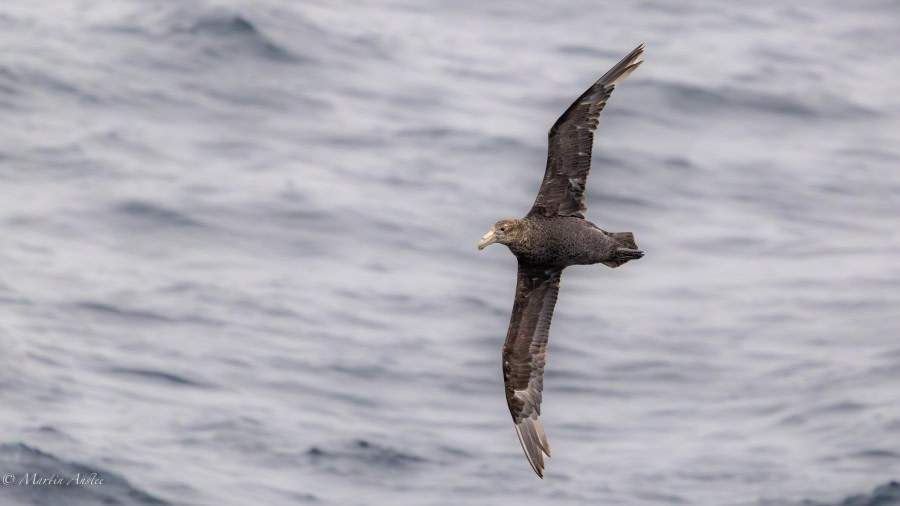
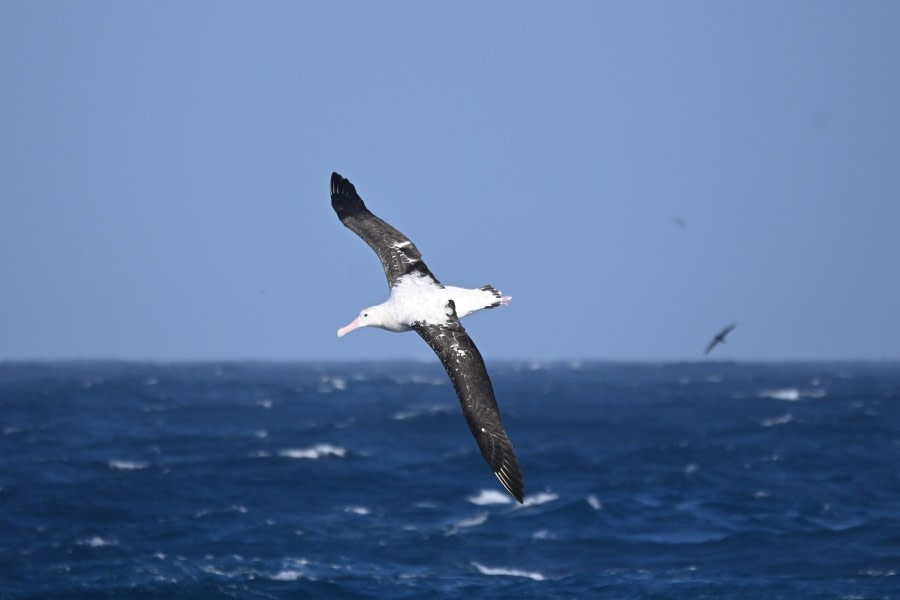
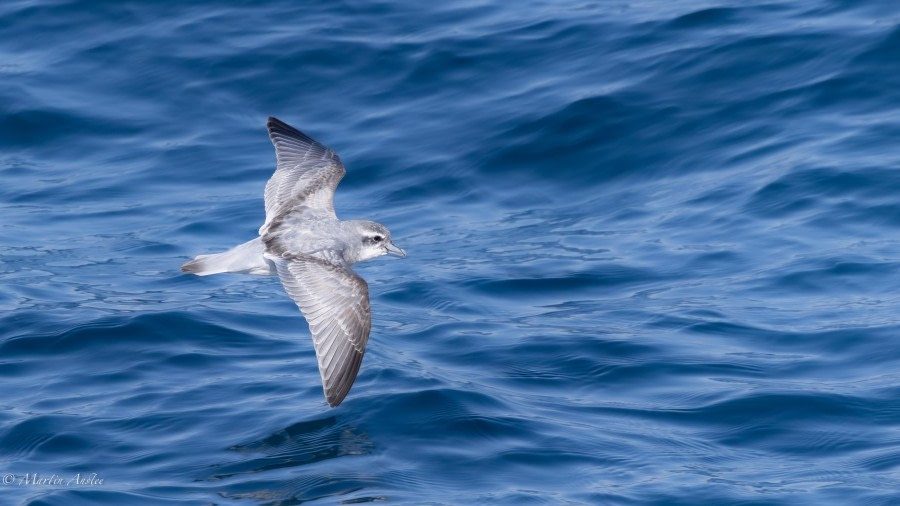
Black-browed albatrosses arced effortlessly over the waves, their dark eyebrows sharply contrasting against white heads. Wandering albatrosses, giants of the ocean, glided with breathtaking wingspans stretching over three meters. Among them, the magnificent Southern royal albatross soared in stately loops around the ship. Numerous other petrels, prions and shearwaters accompanied us, weaving between swells in dynamic flight. Later in the morning, Martin delivered a fascinating lecture on the birds of the Falkland Islands, preparing us to identify species we hope to encounter ashore, from albatross colonies to penguins and caracaras. His stories of wind-lashed cliffs and thriving seabird rookeries heightened our anticipation.

In a moment of pure delight, a pod of hourglass dolphins joined the ship, expertly bow-riding along our hull. Their striking black-and-white markings flashed beneath the surface as they surfed the pressure wave, weaving effortlessly just meters from the bow.

In the afternoon, Juan hosted a polar photography lecture, sharing tips on capturing seabirds in flight, managing light in high latitudes, and preparing camera gear for wet Zodiac landings. Many guests left inspired — and ready to test their skills tomorrow.

As the day drew to a close, we gathered for our daily recap. The expedition team reviewed wildlife sightings and outlined plans for our first landing day in the Falklands (Malvinas). Maps were shown, weather discussed, the familiar rhythm of expedition life beginning to settle in.

Our first day at sea had delivered exactly what an expedition promises: preparation, education, wildlife, and the growing thrill of what lies ahead. Tomorrow, we step into the Falklands.

Day 3: Saunders Island & Carcass Island, Falkland Islands

Saunders Island & Carcass Island, Falkland Islands
Datum: 18.02.2026
Position: 51°19.7’S / 60°15.6’W
Wind: NW4
Wetter: Partially cloudy
Lufttemperatur: +11

Gusty winds furiously tore foam from the crests of the ocean waves. The grey sky, refusing to let the sun’s rays touch the surface of the sea, added even more gloom to an already cheerless atmosphere. Hondius, our magnificent ship, drove its bow into the dark green waters of the Atlantic Ocean, sending showers of spray into the air as it continued toward the Malvinas (Falkland) Islands. The outlines of some of the scattered pieces of land that form this archipelago were already visible to the naked eye — their silhouettes emerging through the ragged grey patches of mist hanging over everything within sight. It was early morning, the morning of our first truly expeditionary day.

Our morning — and at the same time our very first — landing was scheduled for Saunders Island. The weather conditions were quite challenging, as the wind showed no intention of calming down. On the contrary, gusts of up to 50 knots were recorded, and as a result the landing was even delayed by half an hour while the expedition team assessed the safety of the operation. Eventually, having deemed the conditions acceptable, Pippa, our expedition leader, gave the green light to begin.

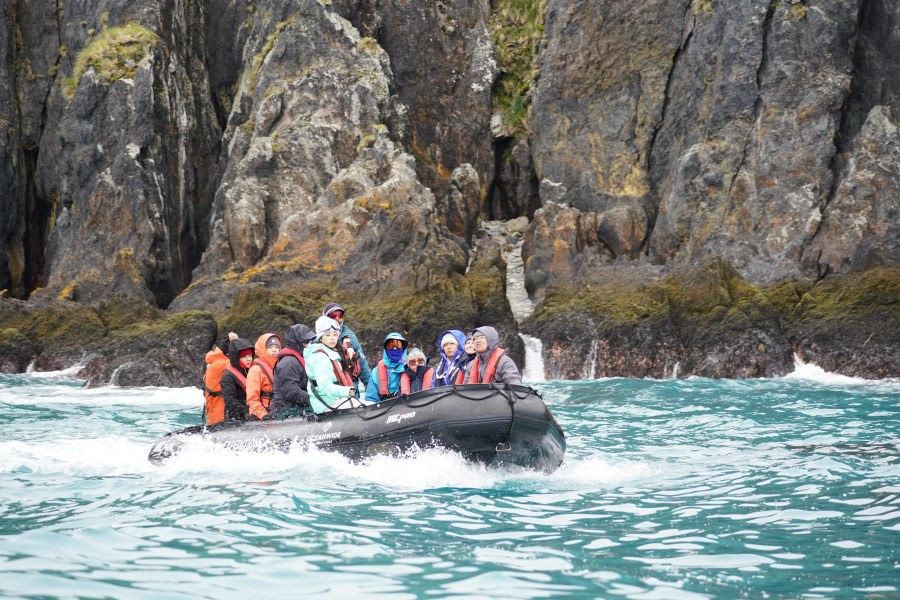
We gathered in the Zodiac boarding area and, in groups of ten, climbed into the Zodiacs piloted by our guides. Then, showered with millions of icy droplets, we sped toward the shore. On the beach we were greeted by Pippa and the other guides who, after giving us a few final instructions, sent us off on our walk. Besides the guides, there were also local residents on the shore — the owners of the island. They had arrived in two Land Rover jeeps and were offering us a few handmade souvenirs. Around them ran a cheerful, playful dog, wagging its tail enthusiastically.

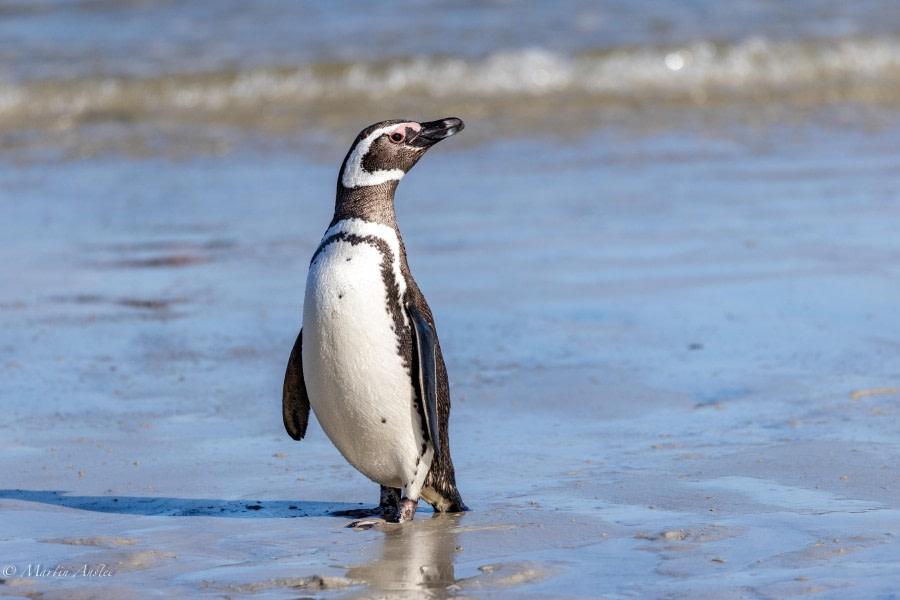
The shoreline was completely occupied by representatives of the local fauna — there were Gentoo penguins, Magellanic penguins, and even a dozen or so King penguins! In the air circled Caracaras (Johnny Rooks), skuas, and various gulls. But the most interesting sights still awaited us ahead.

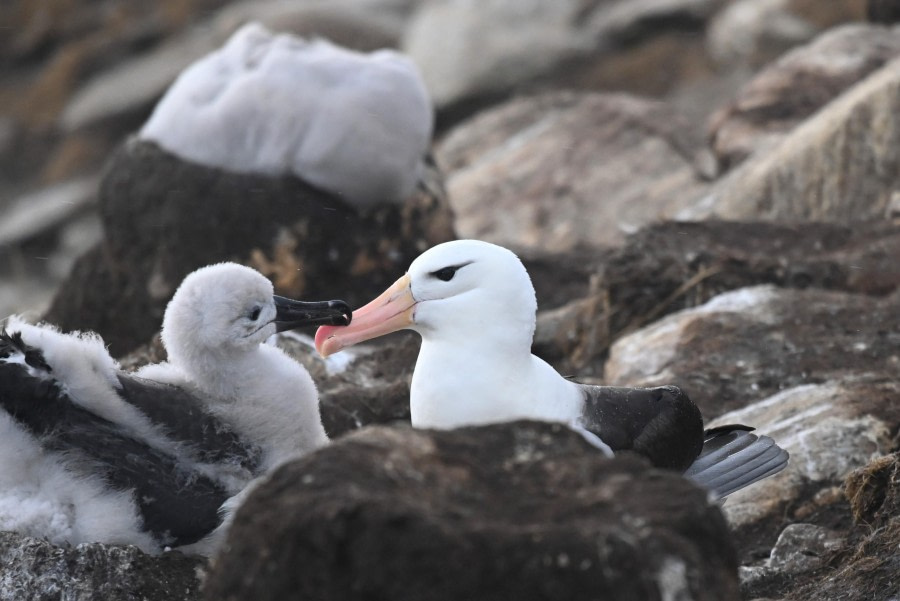
A trail ran along the shore and gradually climbed up the hillside. Following it, we reached a colony of shags and Rockhopper penguins. The latter were particularly amusing and colorful creatures. But our journey did not end there: even farther on lay a colony of black browed albatrosses. This was perhaps the most fascinating sight of all. Huge, beautiful birds sat on their nests or wheeled through the sky above us. The chicks were already almost fully feathered and seemed impatiently to await the moment when they would be able to set out on their very first flight.

Alas, the weather showed no sign of mercy. On the contrary, in addition to the squally wind, rain suddenly began to pour down. Cold and heavy, as if determined to wash every intruder off the island, it forced us to start making our way back to the ship.

Returning to the landing site, we put on our life jackets and hurried to leave Saunders Island.

While we were having lunch, the ship was already heading toward another landing site. Ahead of us lay an island with the rather ominous name of Carcass Island. A small settlement was located there whose inhabitants managed a farm, kept sheep, and also welcomed tourists, offering several guest rooms in their home. For our arrival they had baked an enormous variety of pastries and brewed tea.

Just as we had done in the morning, we crossed the waves in Zodiacs, raising clouds of spray as we made our way ashore. A few hours of fresh air exploration awaited us there, along with refreshments from the local residents. Some of us set off to conquer the summit of a nearby hill, others preferred to wander along the shore with their cameras, while some settled in the shade of the trees surrounding the house and simply enjoyed the homemade pastries with a cup of tea.

In the evening, after returning to the ship, we gathered in the main lounge for the daily recap, where we were told about the plans for tomorrow.

“The first pancake is always a flop,” says the proverb. But no — despite the weather, our first true expedition day could hardly be called unsuccessful. It had been a wonderful day.

Day 4: Stanley, Falkland Islands

Stanley, Falkland Islands
Datum: 19.02.2026
Position: 51°49.3’S / 57°57.5’W
Wind: NNW4
Wetter: Overcast
Lufttemperatur: +7

We were gently awakened at 07:15 as MV Hondius approached the Falkland Islands. After breakfast, many guests gathered on deck as we carefully navigated through “The Neck,” the narrow entrance channel leading into Port Stanley. The early morning light illuminated the low rolling hills and colourful houses that line the harbour, offering a warm contrast to the wild landscapes we had grown accustomed to.

Stanley offered a charming and welcoming atmosphere. Many guests wandered along the waterfront, visited local shops, or sent postcards from the post office. Others took advantage of complimentary access to the Falkland Islands Museum, where exhibitions told the story of the islands’ maritime history, early settlement, wildlife, and the 1982 conflict. The brightly painted houses, Union flags, and red phone boxes lent the town a distinctly British character, though the ever-present wind reminded us we were firmly in the South Atlantic.

In the afternoon, Andi invited guests to the lounge for her presentation, Whales of the Southern Ocean. Her lecture introduced us to the whale species we may encounter on our voyage — from humpbacks and fins to minkes and orcas — explaining their behaviours, identification features, and migratory journeys through these rich waters.

Today offered a different perspective on expedition life — a moment to connect with local culture and history before returning once more to the vastness of the sea.

Day 5: Scotia Sea

Scotia Sea
Datum: 20.02.2026
Position: 52°14.4’S / 51°39.3’W
Wind: WSW6
Wetter: Partially cloudy
Lufttemperatur: +5

With no wake-up call scheduled, guests enjoyed a relaxed start to the day as MV Hondius sailed steadily toward South Georgia. Breakfast was served at 08:00, and many lingered over coffee while watching seabirds glide effortlessly alongside the ship.

The morning began with a mandatory South Georgia briefing, where the expedition team outlined biosecurity procedures, wildlife guidelines, and operational details for our upcoming landings. South Georgia is one of the most carefully protected ecosystems in the Southern Ocean, and the briefing reinforced our responsibility as visitors to minimise impact and respect the extraordinary wildlife that calls the island home.

At 11:00, Mark welcomed us back to the lounge for his lecture on penguins. Drawing on his experience living and researching on South Georgia, he explained penguin adaptations, identification features, and breeding behaviours. From the sleek torpedo shape of a diving king penguin to the remarkable endurance of macaroni and gentoo colonies, his talk brought the seabirds of the Southern Ocean vividly to life.

At noon, the ship’s clocks moved forward an hour as we adjusted to South Georgia time, a small but noticeable reminder that we were progressing eastward across the ocean.

After lunch, Jodi transported us back in time with her lecture on Ernest Shackleton and the legendary Endurance expedition. Her vivid retelling of the harrowing journey. From the crushing of the ship in pack ice to the open-boat voyage to South Georgia, added depth and emotion to our approach toward the island that played such a pivotal role in that story.

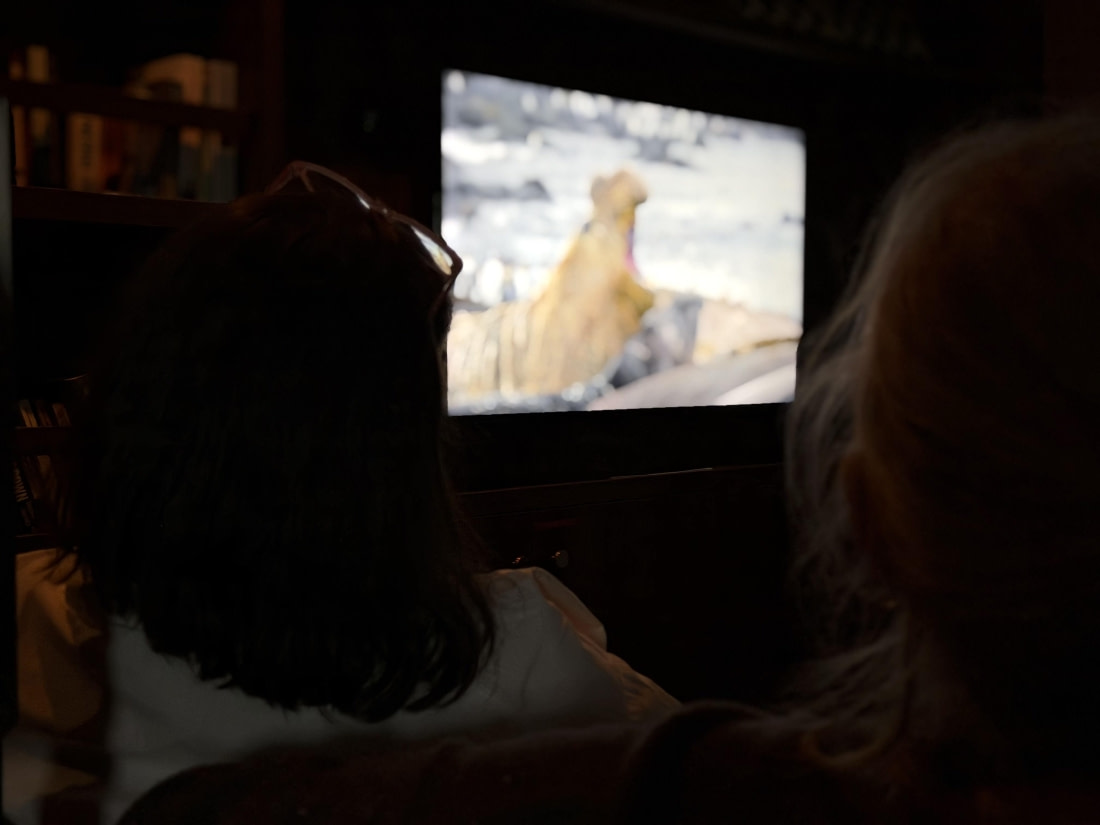
At 18:15, we gathered for recap as the expedition team shared updates and plans for the days ahead. Dinner followed at 19:00, and later in the evening guests returned to the lounge for movie night, watching Endurance Found, the documentary chronicling the modern discovery of Shackleton’s shipwreck more than a century after it sank beneath Antarctic ice.

Day 6: Approaching South Georgia

Approaching South Georgia
Datum: 21.02.2026
Position: 52°59.1’S / 43°57.9’W
Wind: W4
Wetter: Overcast
Lufttemperatur: +8

The Southern Ocean greeted us gently today: unusually calm, bright, and almost warm, as we continued our voyage toward South Georgia.

We began the day with breakfast in the dining room, the soft roll of the ship and endless blue stretching beyond the windows.

After breakfast, Enric gave an engaging lecture on the geology of South Georgia. He unraveled the island’s dramatic story: tectonic collisions, uplifted seabed, folded rock layers, and the forces that shaped its rugged mountains.

Later in the morning, Joyce introduced us to the seals we might soon encounter. Her stories of their behavior (and their sometimes feisty personalities) made us even more eager for our first landing.

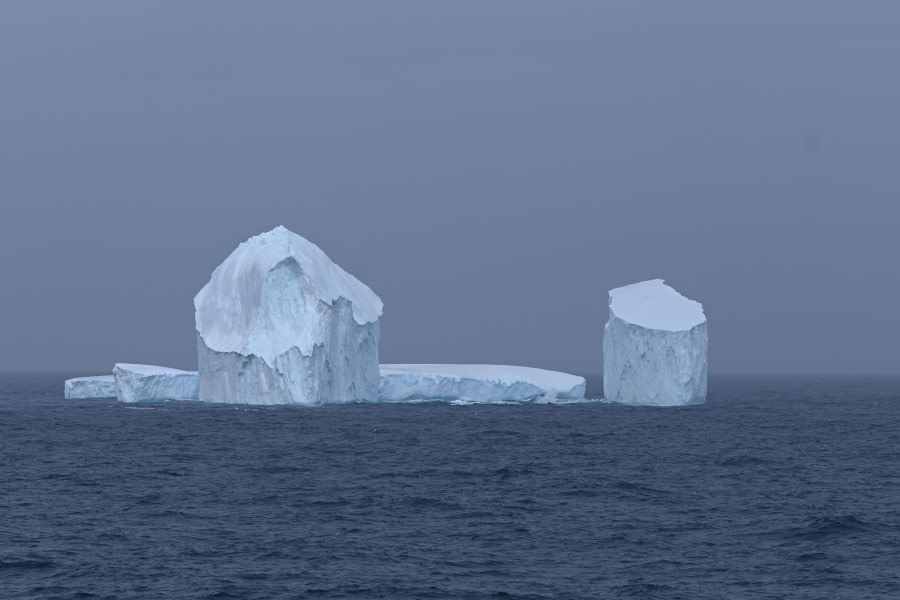
Just before lunch, excitement rippled through the ship. At exactly 12:11:56, our first iceberg was spotted. A friendly competition had been running: who could guess the precise time we would see our first iceberg? As soon as it appeared on the horizon, Saskia announced the official time over the PA system - 12:11:56 - cheers erupting throughout the ship.

It was only the first one, because then other more followed.

After lunch, it was time for biosecurity checks. Every pocket, Velcro strap, boot, and backpack seam was carefully vacuumed and inspected. South Georgia’s ecosystems are fragile and precious; we all felt the responsibility of ensuring we brought nothing ashore that didn’t belong there.

Later, Lucia was scheduled to give her lecture about krill, the small crustaceans that underpin the entire Southern Ocean food web. But nature had other plans.

Before she could begin, there were dolphins swimming around the ship. Followed by whale blows in the horizon, fur seals playing around and plenty of sea birds. All under calm seas and brilliant sunshine — weather almost unheard of for this part of the Southern Ocean. The lecture was postponed and we all went out to enjoy the surroundings.

As if the day hadn’t already delivered enough, we were treated to an unplanned sighting of Shag Rocks, jagged, dramatic spires rising abruptly from the sea.

Remote and wild, they stood like sentinels marking our approach to South Georgia.

In the evening, we gathered for recap with the expedition team to hear about tomorrow’s plans. The sense of anticipation in the room was tangible: tomorrow, we reach South Georgia.

Dinner followed, filled with animated conversations about icebergs, wildlife sightings, and hopeful guesses about what tomorrow might bring.

Tonight, as the ship continues southward, there is a shared feeling onboard: We are ready. South Georgia awaits.

Day 7: Right Whale Bay & Salisbury Plain

Right Whale Bay & Salisbury Plain
Datum: 22.02.2026
Position: 53°57.7’S / 32°40.6’W
Wind: W4
Wetter: Overcast
Lufttemperatur: +2

The morning began under a veil of fog. As the ship approached Right Whale Bay, mist clung to the dark cliffs and glacier-fed slopes, creating an atmospheric, almost ethereal introduction to the landscape. A light rain fell steadily at first, dimpling the sea surface, but as the zodiacs were lowered and guests prepared to land and zodiac cruise, the fog began to lift and the rain gradually eased.

The day’s itinerary promised two of the island’s most wildlife-rich landing sites: Right Whale Bay and Salisbury Plain—both legendary among expedition cruisers for their density of wildlife and sweeping subantarctic scenery.

The morning began with a split landing with half of the guests landing and the other half zodiac cruising first, before swapping mid morning. The zodiac cruise along the dark, pebbled shoreline of Right Whale Bay. Named for the Southern Right Whales once hunted in these waters, the bay today feels wild and reclaimed by nature. The surrounding peaks formed a dramatic amphitheater around the bay, while glacier-fed streams braided their way toward the sea.

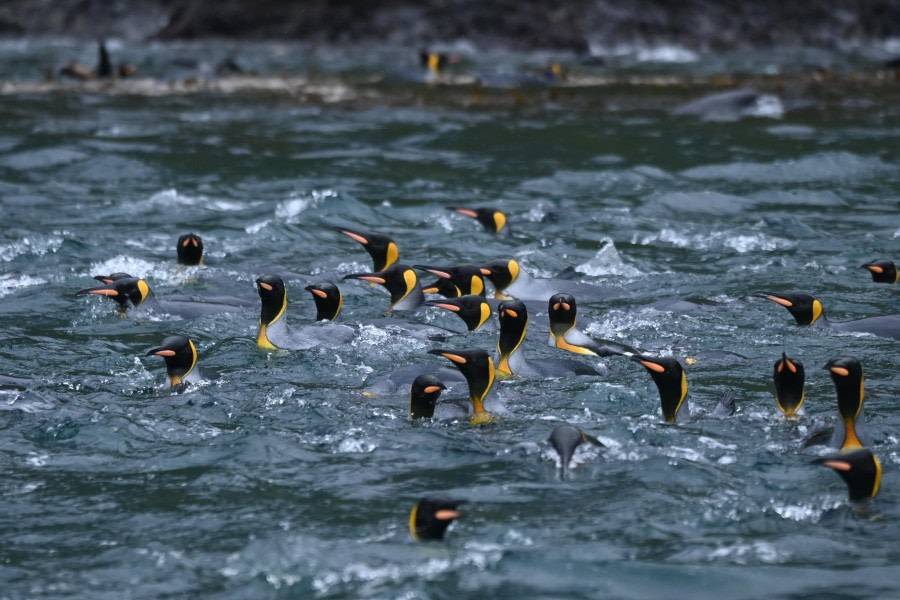
Passengers stepping ashore were immediately immersed in one of South Georgia’s defining spectacles: vast colonies of King Penguins. Thousands stood shoulder to shoulder along the beach and up into the tussock grass, their orange-gold markings vivid against the monochrome landscape. The air hummed with their calls, a constant background chorus punctuated by the sharp barks of Antarctic Fur Seals.

The fur seals, particularly numerous during the breeding season, often claimed sections of the beach as their own. Expedition guides carefully plotted safe walking routes, ensuring guests could observe without disturbing the wildlife.

Overhead, seabirds wheeled in the brisk air currents. Giant Petrels patrolled the shoreline and beach along with Brown Skua , ever vigilant for a meal. The surrounding waters, part of the nutrient-rich Southern Ocean, teem with life thanks to the mixing of currents near the Antarctic Convergence, making South Georgia one of the most biologically productive places on Earth.

After time ashore to wander designated paths and absorb the scale of the colony, guests returned to the ship exhilarated—already feeling they had witnessed one of the great wildlife gatherings of the planet, and yet knowing more was to come.

If the morning had been impressive, the afternoon landing at Salisbury Plain elevated the experience to another level. Hosting the second largest King Penguin colony in South Georgia after St. Andrews Bay, Salisbury Plain presents an astonishing panorama: tens of thousands of penguins stretching from the surf line to the base of the glaciated mountains beyond.

The setting is breathtaking. A broad outwash plain fans out from retreating glaciers, backed by steep, ice-clad peaks. Waterfalls thread down rocky slopes, and braided streams glint under shifting subantarctic light. Against this grand backdrop, the penguin colony appears almost endless.

Visitors walking the marked route found themselves surrounded by life at every stage: fluffy brown ‘kiwi’ chicks clustered in crèches, sleek adults commuting to and from the sea, and pairs engaged in courtship rituals. The rhythm of the colony is constant—arrivals from the ocean, greetings between mates, the careful transfer of food to waiting chicks.

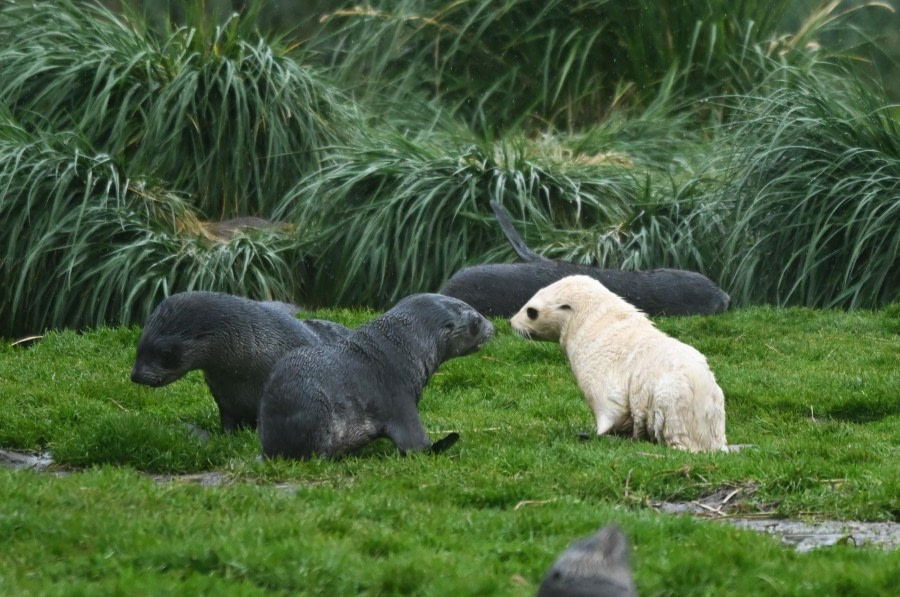
Fur seals darted along the water’s edge, agile and alert, while pups and females occupied the flat plain in large numbers, with the occasional ‘blond’ fur seal pup putting in an appearance to the lucky few.

By the time the ship weighed anchor and continued its voyage along South Georgia’s coast, the impression left by Right Whale Bay and Salisbury Plain was unmistakable. The sheer abundance of wildlife, set against a landscape of glaciers, mountains, and restless sea, encapsulates the essence of expedition cruising in the subantarctic.

For many aboard, the day stood out not just for the numbers—though the numbers are staggering—but for the intimacy of the encounters. Standing quietly as a king penguin chick waddled past, or watching waves crash behind a colony that has gathered here for generations, offered a profound sense of connection to one of the planet’s last great wildernesses.

In a single day, guests experienced both the raw energy and delicate balance of South Georgia—a place where wildlife reigns, landscapes remain untamed, and every landing feels like a privilege.
Day 8: Hercules Bay & Grytviken

Hercules Bay & Grytviken
Datum: 23.02.2026
Position: 54°07.4’S / 36°40.0’W
Wind: SW2
Wetter: Fog
Lufttemperatur: +7

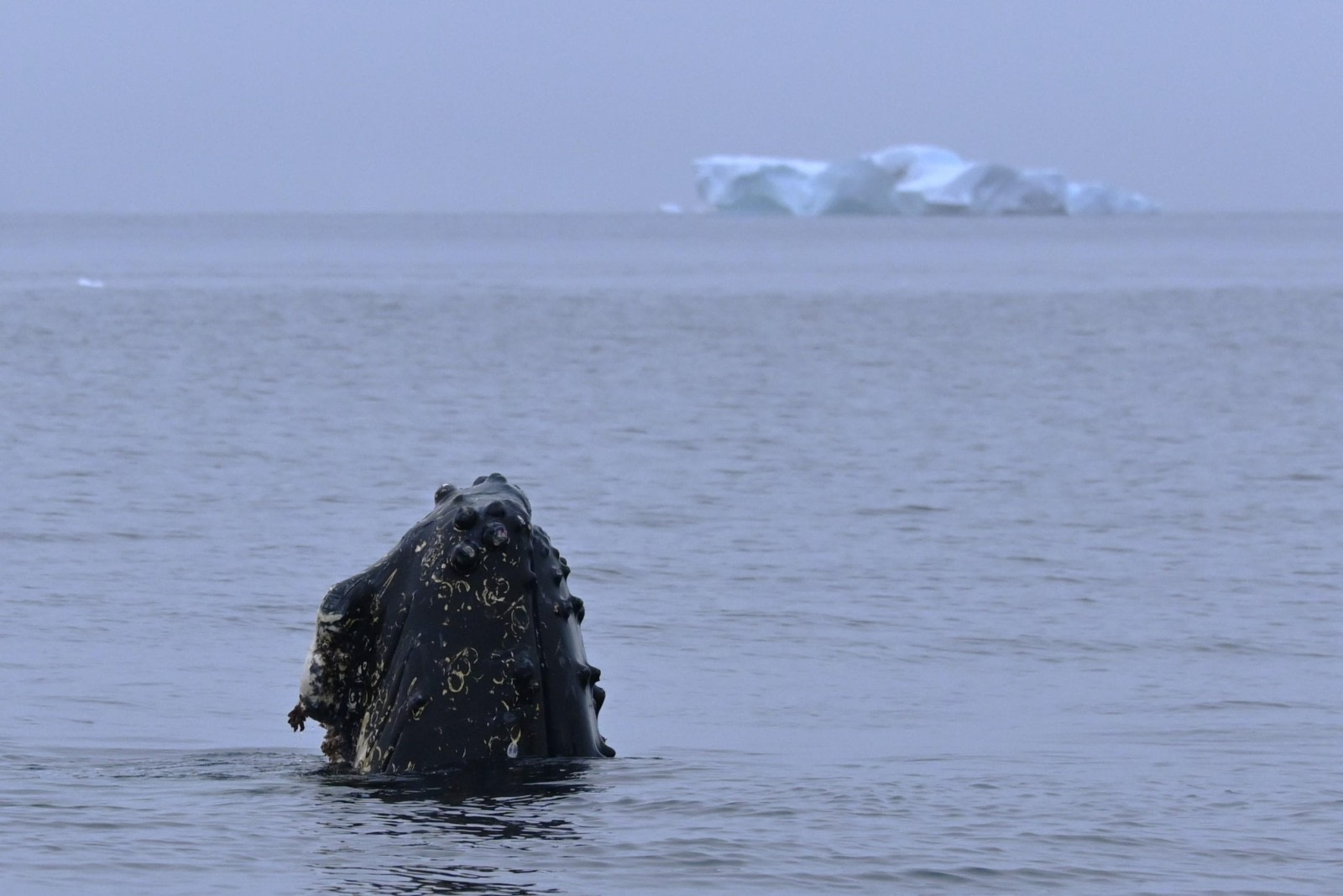
This morning’s adventures began in a beautiful little inlet called Hercules Bay. A staff favorite, the site includes high mountains, a waterfall, a small beach, a tiny bay within the bay, jagged rock features, and penguins and seals absolutely everywhere. Zodiac cruising the shoreline allowed us to get close views of the stars of Hercules: macaroni penguins. In the late 1700s, the term “macaroni” referred to a man who dressed in a manner that "exceeded the ordinary bounds of fashion." The bright gold crest of feathers over the penguins’ eyes reminded people of those outrageous dressers, and the nickname stuck. With thick orange bills, blood red eyes, and pink feet, these colorful penguins do seem to be pushing the bounds of fashion in the most flattering of ways. They cut a striking image.
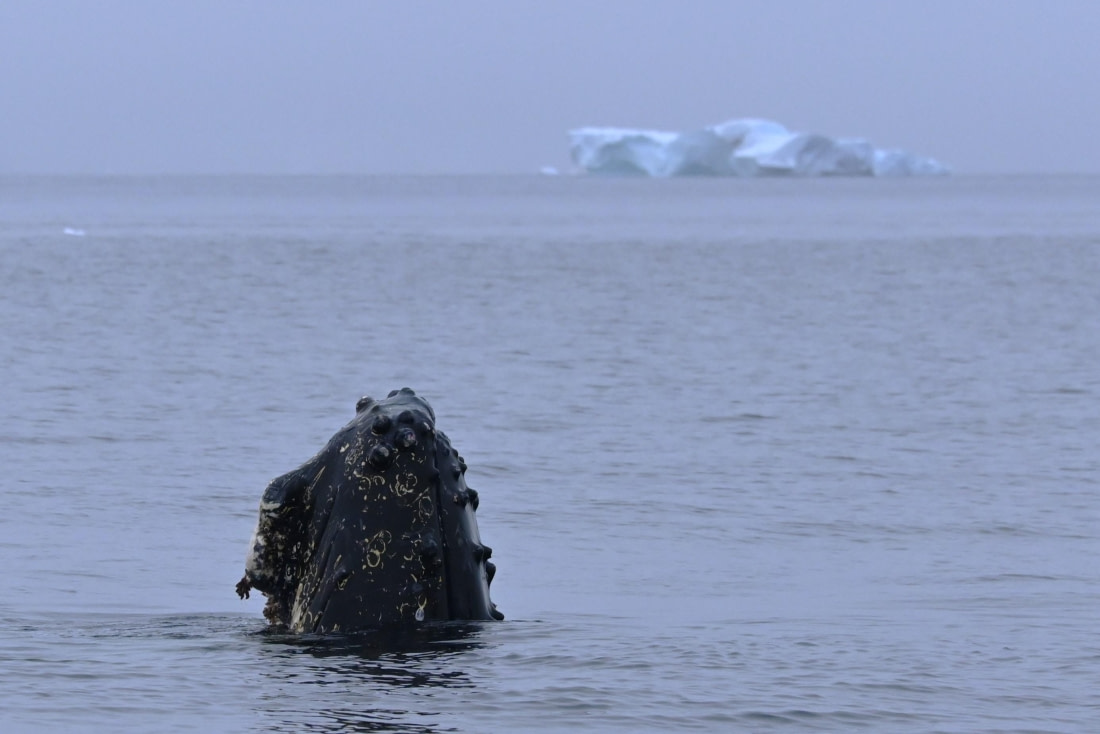
Though we knew that they can climb quite far up into the tussock grass, we were nonetheless surprised to see just how high on the cliff face some of the penguins made their nests. At times we were only able to see nests when we backed off from the shore and looked from further afield. There were still dozens (hundreds?) of nests hidden from our sight, revealed only by the raucous calls of the penguins inhabiting them. Penguin rookeries are noisy places, with each species having its own unique sound. It is always a delightful cacophony, and Hercules Bay is no exception.

On the beach near the waterfall was a mixed group of king and gentoo penguins, all molting. Feathers were everywhere; it resembled a place where an enormous pillow fight had gone awry. Feathers covered the grasses, the sand, the water. Shaggy penguins stood in the midst of plumes of feathers. Juvenile fur seals romped through the area, sending more feathers aloft. It was quite amusing. The waterfall added a majestic backdrop to a lighthearted scene, and our hearts all but burst with the sheer joy of it all.

Northern and southern giant petrels gathered in mixed groups of ten to fifteen on the water, younger juveniles showing more curiosity about our zodiacs than the older, wiser adults. We got good looks at the tubes on the tops of their beaks where a mucous is produced that filters out excess salt in the water they drink, allowing them to drink sea water. This tube is also what groups them in with a larger family of birds called, appropriately enough, tubenoses. The petrels being still and close also allowed us to see the distinguishing reddish or greenish tints on the tips of their bills that enable the distinguishing between the northern and southern species.

To round out the morning, several dozen elephant seals lolled about, also molting. Their blubbery bodies belie the strength hidden under their mass; it requires incredibly strong abdominal muscles to galumph that amount of weight around.

In the afternoon we explored the historic whaling station of Grytviken, Norwegian for “Pot Cove.” The only former whaling station on South Georgia that is safe to visit (the rest still have asbestos and unsecured, crumbling artefacts that can cause severe injury in high winds), it is a living museum. The remains of many parts of whaling infrastructure still stand, including the flensing plan, blubber boilers, storage tanks, meat boilers, etc. There is also a lovely little church, and the manager’s villa has been turned into a more traditional museum that is quite impressive despite its relatively small size. Markers denote the length of the largest whale ever processed at Grytviken (a blue whale), and a new installation memorializes the whales caught here with a visual representation of their numbers by species. Though it is still rare to see whales in the bay in front of Grytviken, fur seals have overrun the station, which is a victory in itself. During the height of the sealing era, their numbers were so diminished that they were very near extinction. Seeing so many pups clambering all over the whaling implements give hope for the future.
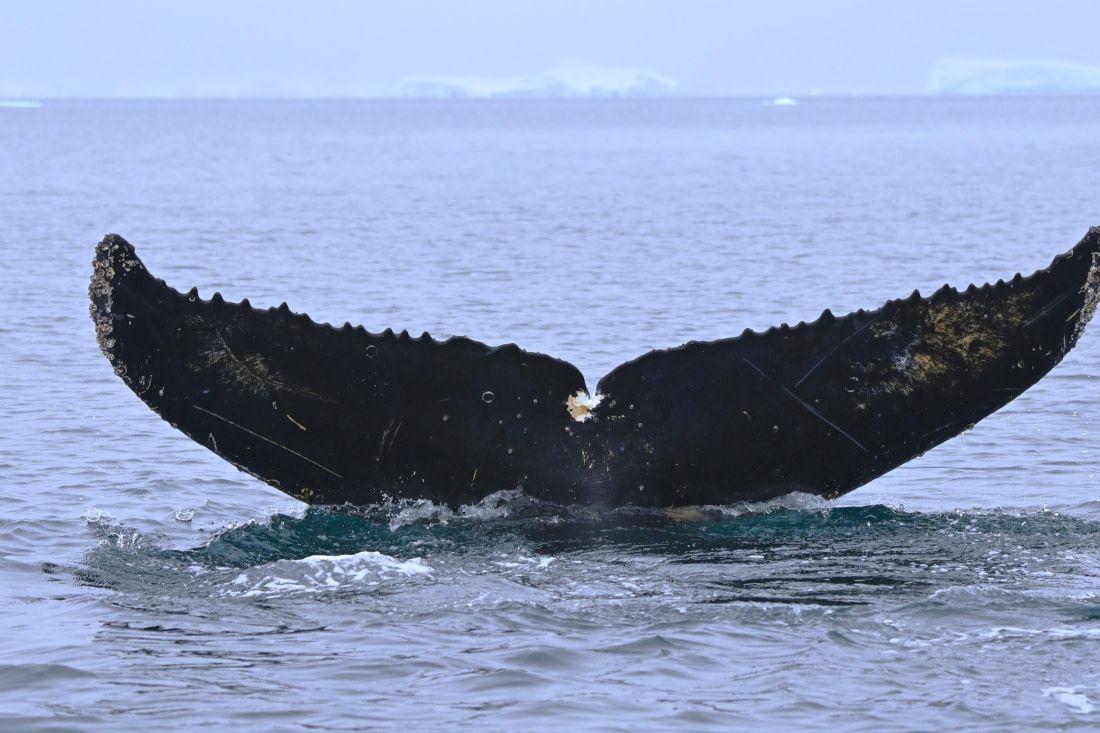
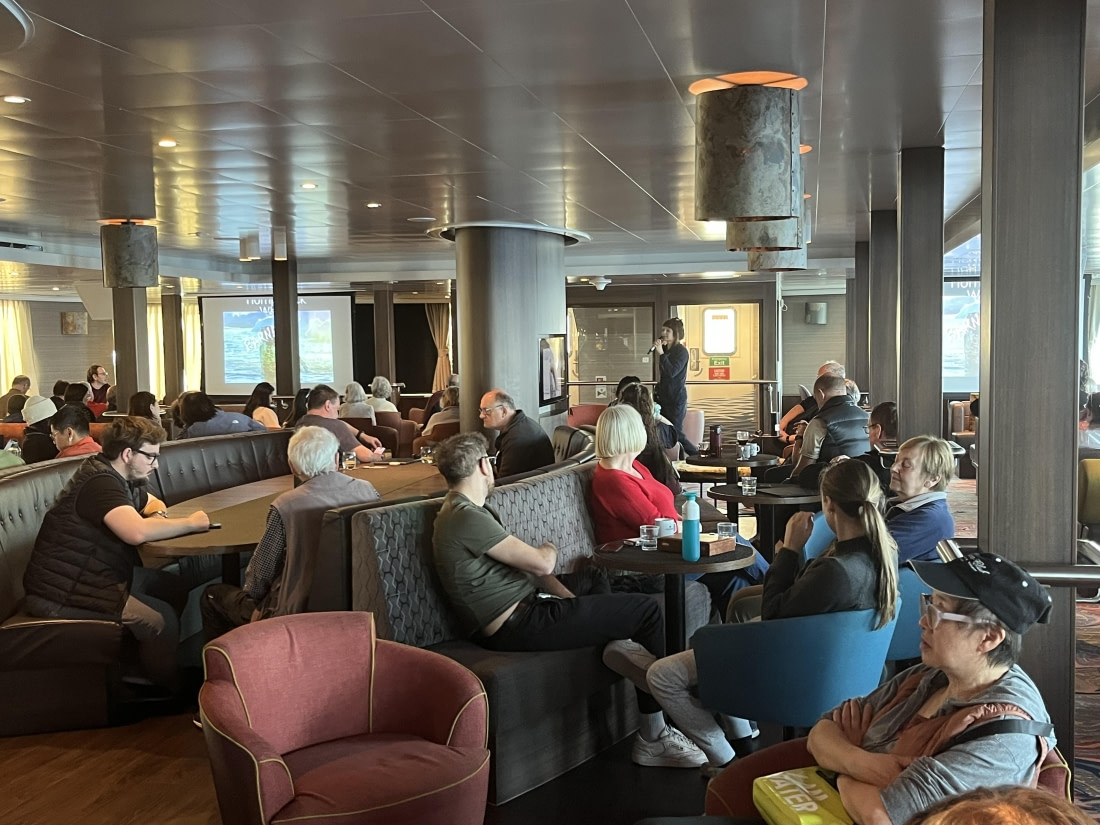
The Carr Maritime Museum sits in a separate building just to the side of the main museum and houses a replica of the lifeboat The James Caird, made famous by Sir Ernest Shackleton in his efforts to save his men trapped on Elephant Island during his Imperial Transantarctic (Endurance) Expedition of 1914 – 1917. Seeing the small size of the James Caird in person sharpened the understanding of just how harrowing the trip across the Southern Ocean must have been; it is a tiny boat. The James Caird is not the main memorial to Shackleton, however, for the man himself lies at rest in the Grytviken cemetery. Interred here after he suffered a fatal heart attack aboard his ship Quest in the bay in front of Grytviken, we drank a toast to the great explorer. He and his most ardent supporter and most loyal crewmate, Frank Wild, who is interred to the right side of Shackleton, both face south, toward Antarctica. This is as it should be, for their lives were centered around that mysterious continent. As we leave Grytviken in zodiacs only a little smaller than the James Caird, fog has rolled in, shrouding the Hondius in a thick mist. The mystique of Antarctica builds.

Day 9: Fortuna Bay & Stromness

Fortuna Bay & Stromness
Datum: 24.02.2026
Position: 54°09.6’S / 36°44.8’W
Wind: NW5
Wetter: Rainy
Lufttemperatur: +5

We woke to the low murmur of wind against the hull and the promise of a day that would test our expedition spirit. After breakfast, we layered up carefully—waterproofs zipped tight, hoods cinched, boots ready. Outside, rain swept across the bay and strong winds whipped the sea into restless motion. But this was no ordinary voyage; this was an adventure. And adventure waits for no weather.

We stepped onto the wild shores of Fortuna Bay and made our way along the beach toward a low hill. From its crest, the scene unfolded in breathtaking clarity: a colony of king penguins spread across the landscape like a living tapestry. Though smaller than others on the island, it still held some 7,000 breeding pairs—thousands of sleek bodies standing proud against the wind. The air hummed with their calls. King penguins clustered in tight-knit groups, while gentoo penguins darted along the water’s edge. Fur seals sprawled across the glacial outwash plain and tussock grass, their movements unpredictable and full of attitude. At the valley’s far end, the mighty König Glacier descended in frozen majesty. Its older moraine lines etched the story of its once-greater reach—a reminder of nature’s slow but relentless change. Among the wildlife, we were delighted to spot the endemic South Georgia pintail dabbling near the shore. And for a lucky few, a rare treasure: a blonde fur seal, its pale coat glowing against the dark earth.

Meanwhile, those exploring by Zodiac glided past sculpted ice formations and gazed up at an outlet glacier spilling down rocky slopes—an icy offshoot of the vast Fortuna Glacier high in the mountains.

After our time ashore, windblown and exhilarated, we returned to the warmth of Hondius for a well-earned lunch and the comfort of dry clothes. As we ate, the ship pressed onward toward our afternoon destination: Stromness Bay.

Our arrival at Stromness Bay was met with fierce gusts—winds howling up to 50 knots. We waited as the expedition team carefully assessed the conditions. Then at last, the welcome news: we could land. Stepping ashore, we were greeted by the haunting silhouette of the old Stromness whaling station. Weathered and silent, its rusting remains stand as a relic of another era. Because of asbestos contamination, we observed from a respectful distance, the past looming quietly against the mountains.

Eager to stretch our legs, many of us trekked up the valley toward Shackleton Falls. The name carries weight. It was here that Ernest Shackleton completed the final, desperate leg of his epic journey to seek rescue for the 22 men stranded on Elephant Island after the loss of the Endurance. Walking that same route, even in comfort and safety, felt profoundly humbling. As the afternoon unfolded, the transformation was remarkable. The wind eased. The sun broke through. Light spilled across the valley, illuminating fur seals—one more blonde pup among them—gentoo penguins shuttling between sea and shore, and elephant seals dozing heavily on the beach.

We had been granted a gift: safe passage ashore in a place where weather rules all. Grateful and exhilarated, we departed Stromness in the early evening glow, turning our bow toward the next chapter of our journey, hearts full and spirits soaring.

Day 10: Gold Harbour & Cooper Bay

Gold Harbour & Cooper Bay
Datum: 25.02.2026
Position: 54°37.4’ S, 35°56.2’W
Wind: S3
Wetter: Overcast
Lufttemperatur: +4

We woke this morning to a stunning sunrise, at least some of us did at around 5.15.

The weather was clear and sunny with a few clouds over the mountains as we approached Gold Harbour.

Those that weren’t already awake were woken by Pippa for our last day in South Georgia. We were treated to another fabulous breakfast from our galley team.

Shortly after breakfast the first group boarded the zodiacs for a short shuttle to land at Gold Harbour. As soon as we landed we had fabulous views of King penguins, Gentoos and some huge male Elephant seals.

The Elephant seals were a major attraction for everyone, the size of them has to be seen to be believed. Most of the time they would lay together quite contentedly but every now and then an argument would ensue and would involve two or three individuals before they settled down into more contented slumber.

The second group were taken on a zodiac cruise to see some spectacular scenery. On one side of Gold Harbour a spectacular hanging glacier and then on the other side some really spectacular cliffs and stacks.

The proximity of the King penguins to the landing site and the huge numbers was spectacular with many, many photographs taken. Nearly everyone who wanted to, saw the South Georgia Pipit that was showing well at one end of the beach.

Sadly, it was all too soon to return to the ship for the transit to our last afternoon activity in South Georgia, during which we had another great lunch.

Following lunch and a little rest we all boarded zodiacs for another zodiac cruise. The location was Cooper Bay, a beautiful sheltered bay full of wonderful wildlife and more spectacular scenery.

We cruised, to the south of Cooper Bay, a massive Macaroni penguin colony, we had the chance to not only see Macaroni’s up close but also Chinstraps, Kings and Gentoo penguins. We watched many Snowy sheathbills along with a pair feeding a well grown chick and we also saw Northern and Southern Giant petrels, along with the special, endemic birds, The South Georgia Pipit and the South Georgia Pintail.

All too soon it was time to return to the ship so that we could move to the South Orkney Islands. The scenery and the sunset was just out of this world as we sailed away from South Georgia full of some amazing memories of one of the most amazing places on earth!

Day 11: At sea heading southwest

At sea heading southwest
Datum: 26.02.2026
Position: 57°00.9’S, 39°40.2’W
Wind: S7
Wetter: Partly cloudy
Lufttemperatur: +3

After our last intense day at South Georgia yesterday, our expedition leader Pippa decided to let us sleep in and not do a Wakeup call this morning. After one more hour of sleep, as the ship’s time was put back at midnight, it meant we had to set our own alarm, to be in time for breakfast at 08:00.

On this sea day we could spend time on the bridge or the outside decks spotting birds and other wildlife. But the expedition team also keep us entertained with several interesting lectures.

It was Pippa that started of and invited us to the lounge at 09:30 to introduce us to the history of whaling in South Georgia and the Antarctic region. She shared some interesting facts and told us the story that started with devastation but changed into recovery tail of the whales living in these areas.

At 11:30 it was Lucia’s turn with her ‘Krilling me Softly’ lecture. She told us in her passionate way about the lynchpin species of the Southern Ocean, krill. Sharing information about the biology, but also the fishery that is going on here in the Southern Ocean. How appropriate was it, that her talk got interrupted by the announcement of whales that were sighting just a few meters of the ship.

After lunch we were all called down to the lounge again to complete your biosecurity check. This time we all knew what we were up against. We came prepared with clean gear and could all go back to enjoying the vastness of the ocean that we were sailing through. When the fog lifted we saw a beautiful fog bow appear in front of the ship and there were lovely birds around.

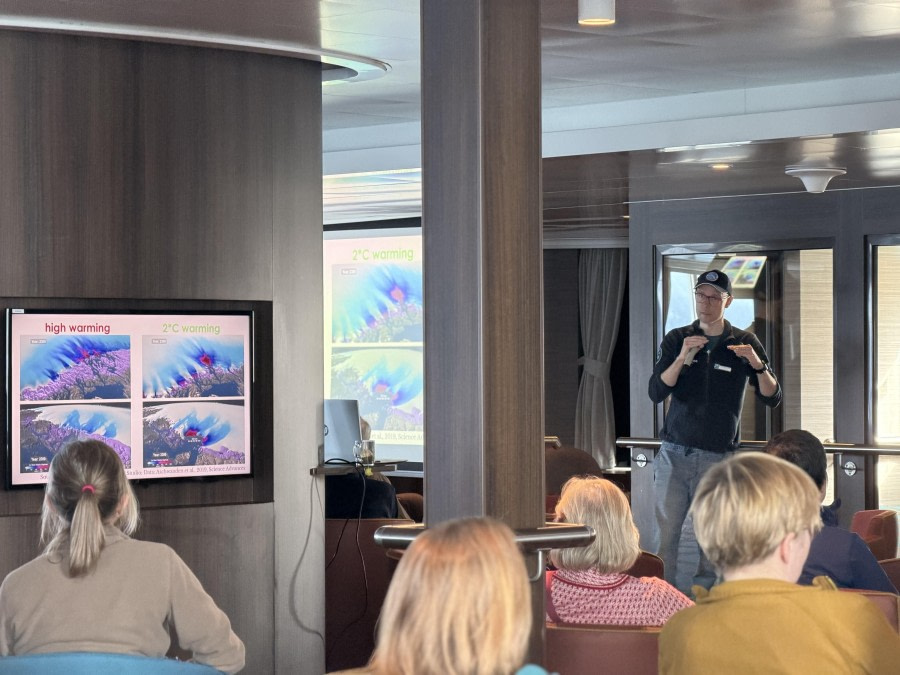
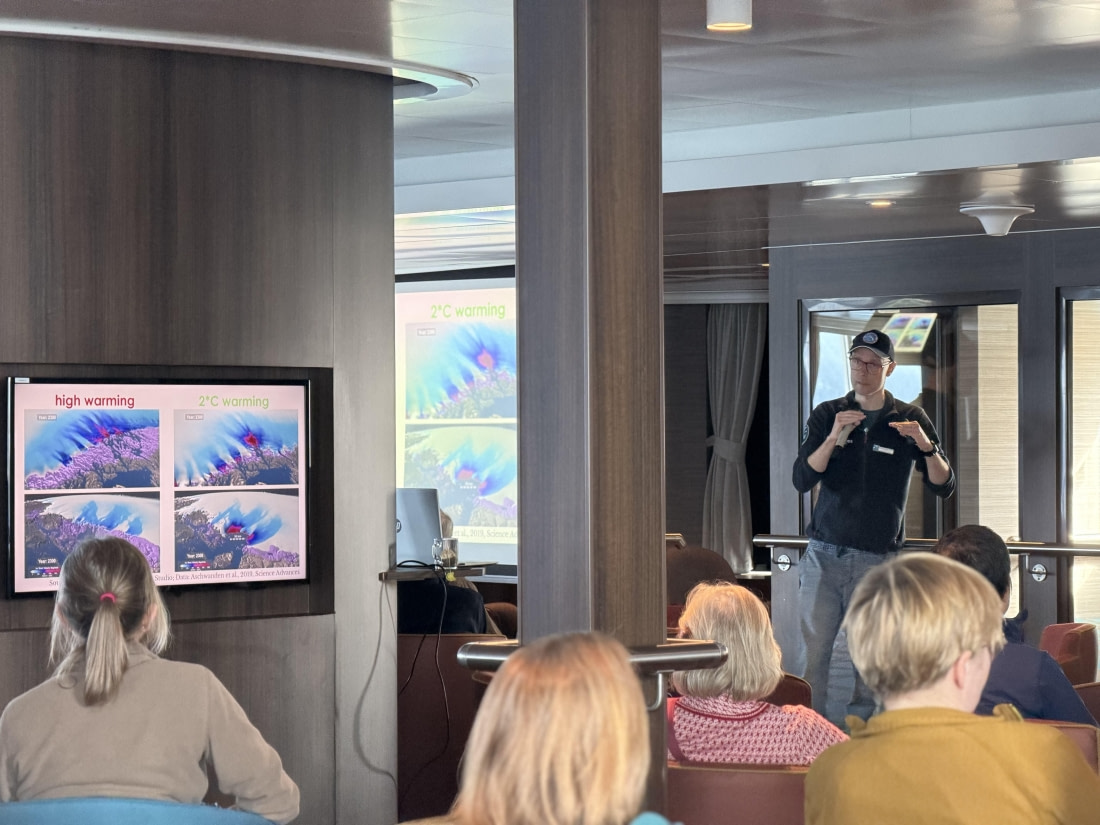
In the afternoon it was up to Jakub, our ice master of the expedition team, to learn more during his lecture ‘On thin ice’. An interesting talk about the global role of glaciers and icesheets. He started off with introducing us to his favourite glacier on Spitsbergen, called Sven, where he is doing research on for many years now.

After recap with the daily briefing, followed by dinner, we were all asked to come up to the lounge to join the expedition team to attend the South Georgia Heritage Trust Auction. It turned out to be an evening of fun and fundraising, all in aid of helping preserve the beauty and history of South Georgia.

Day 12: Signy Island, South Orkneys

Signy Island, South Orkneys
Datum: 27.02.2026
Position: 60°49.8 S, 45°18.6 W
Wind: SSE2
Wetter: Sunny
Lufttemperatur: +3

At 0600, as we slipped quietly into between and , the early light revealed a calm, silvery sea. The whisper traveled quickly through the ship: whales ahead. We hurried on deck, breath visible in the cold air, just as the first blows rose against the horizon. Several humpbacks moved steadily through the passage, surfacing in graceful arcs, their flukes lifting high before slipping beneath the glassy water. In the stillness of the morning, every exhale carried clearly across the water. It was an unforgettable start to the day.

As we continued toward Signy Island , the weather proved exceptionally kind—clear skies, bright light, and barely a breeze. By mid-morning we arrived at for our much-anticipated zodiac cruise. In near-perfect conditions, we traced the rugged coastline, snow-draped slopes rising behind us.

Wildlife defined the experience. Chinstrap penguins clustered along rocky ledges, massive Southern elephant seals layed in languid heaps along the shore, occasionally shifting or lifting their heavy heads with deep, rumbling breaths. Male Antarctic fur seals relaxed on the beaches and rocks with surprising agility, their thick coats catching the sunlight. The scene felt dynamic and wonderfully raw.

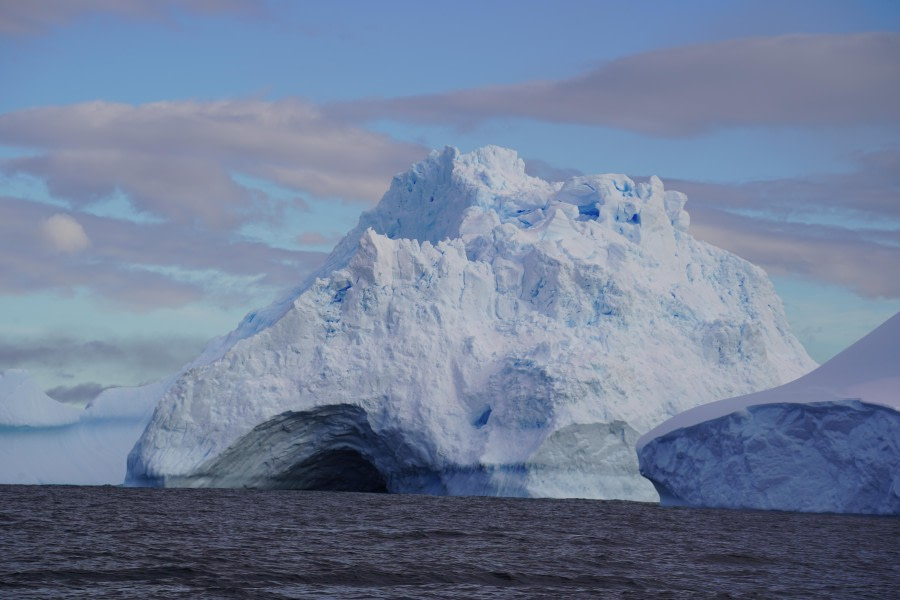
Further out, we encountered our first true Antarctic icebergs—brilliant sculptures of blue and white, some towering like cathedrals, others delicately arched and translucent. The zodiacs drifted quietly as we took in their intricate shapes, each one unique. A short touch-ground landing in the South Orkneys allowed us to briefly step ashore as we absorbed sweeping views across this remote archipelago.

The afternoon shifted from exploration to reflection. In the lounge, Saskia introduced us to the remarkable story of the Belgica expedition under , the first expedition to overwinter in Antarctica—a tale of endurance and human resilience. Later, Sven guided us through the tectonic history of the continent, unraveling the geological forces that shaped the dramatic landscapes we had just experienced. In the evening, Clara shared insights into life on an Argentine Antarctic base, offering a contemporary perspective on living and working in this extreme environment.

Yet long after dinner, it was the morning that lingered most vividly: whales in the golden light of Washington Passage, flawless weather at Signy Island, our first icebergs, and the vibrant wildlife of the South Orkneys marking a truly extraordinary day.

Day 13: Point Wild, Elephant Island

Point Wild, Elephant Island
Datum: 28.02.2026
Position: 60°57.1 S, 54°26.7 W
Wind: NW3
Wetter: Foggy
Lufttemperatur: +4

This morning, we woke up in a tiny world again. The fog had surrounded the ship, while we were sailing south towards Elephant Island. We are retracing the route in reverse that Shackleton made with five of his crew members in the James Caird in April 1916. The ocean was treating us well today. Not to be compared to the rough trip the men had in that small, refitted lifeboat, in which they had crossed the Southern Ocean. There is hardly any movement in the ship and a lot of us are about.

After breakfast, Pierre, our assistant expedition leader, invited us to the lounge for his lecture about Humpback whales. For many years he has done scientific research on these whales, spent a lot of time in the water with them and guided whale-watching trips. With his extensive knowledge he gave us a nice insight in the life of these gentle giants, accompanied by some incredible underwater footage of a mother and calf hanging out together.

Then it was time for those who always wanted to learn more about geology. Our expedition guide Enric invited us for a workshop on rocks, in the lecture room. He himself said that geology can be complicated and boring sometimes, but he came up with the perfect idea to get us involved. He created this hands-on workshop, where after he explained some basics, we were to make small groups and identify different aspects from different rocks. It was really entertaining, and this was a great way of properly understanding and learning about the different rocks we had already seen, or we would about to see during the rest of our trip.

At lunchtime chef Bawa and his galley team prepared another delicious buffet for us. We kept heading south. The fog was still this magical curtain which we couldn’t look beyond until we had reached our destination for this afternoon. Just of port side of the ship a Fin whale came up to the surface and those of us that were on the bridge cheered a little. But we had to stay quiet so Captain Dobrogowski and his bridge team could concentrate on their navigation for the approach to Elephant Island. And there it was, suddenly, the fog cleared a little and we were right there. Just a few meters from Hondius we saw Point Wild, named after Frank Wild, who was sent out to find a more suitable place to stay than the tip of the island, Cape Valentine, where they landed in the first place.

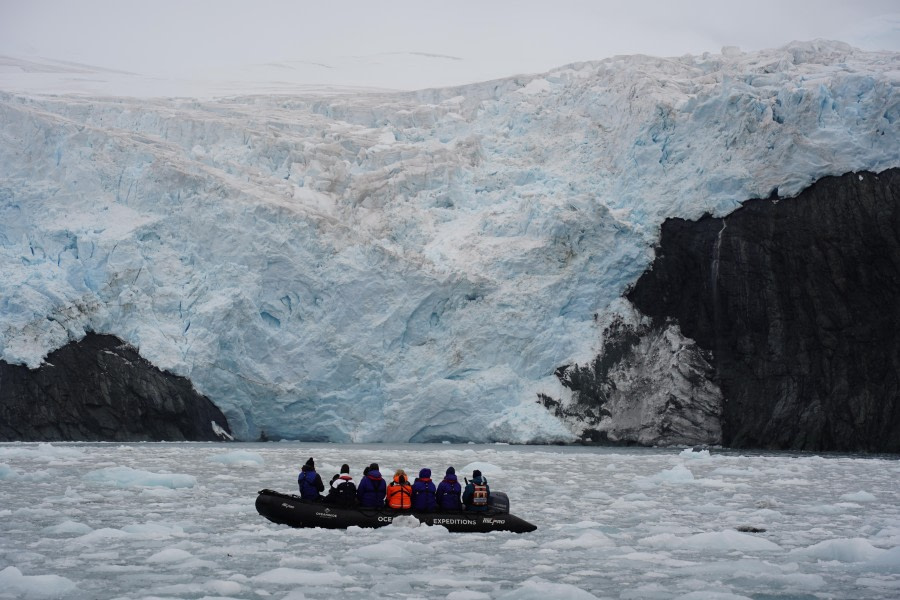
Elephant Island lies right on the edge of the Drake Passage and the swell that travels over great distances built up around the Point. The big swell together with lots of ice made a landing impossible, which is a unique given, as the chance of stepping foot on land is minimal at this wild place on earth. But the deck team lowered the zodiacs and the expedition team got ready to take us out for a closer look. The bay we were in was filled with brash ice, small pieces of ice, fed by the Furness Glacier. This sweet water source was one of the important ‘items’ that kept the 22 men alive, who were left on this spit of land by Shackleton in April 1916, when he went for help in the James Caird with 5 of his crew members. Geologist James Wordie wrote in his diary: “She is our only hope”. The spit is not that big anymore as it eroded over time.

The glacier was very active and many of us witnessed a calving, that would add even more ice to the bay. Sitting in that zodiac, while the swell moved us a meter up and down, with the crackling ice around us, was just an unreal feeling. Here, almost at the end of the world, to imagine that for four and a half months these men had to survive of penguin and seal meat, living in/under their 2 upturned lifeboats with winter on their doorstep. They were rescued on 30 August 1916 by the Chilean Naval vessel Yelcho commanded by Captain Luis Pardo. His statue was placed here in 1988 by the Chilean Antarctic Scientific Expedition, as here is a remembrance to that rescue.

With the smell of the many Chinstrap penguins that still live here at the point cemented in our brain, we went back on board. During recap we learned about the plans for tomorrow, but we also got shown a few historic photographs of the Endurance expedition. For us to compare it with what we experienced ourselves this afternoon.

After dinner, expedition member Sasha, shared his personal story of how he got to Antarctica and his life experiences. It was a great way to end this interesting day.

Day 14: Kinnes Cove & Brown Bluff

Kinnes Cove & Brown Bluff
Datum: 01.03.2026
Position: 63°18.5, S 56°53.0 W
Wind: SW5
Wetter: Overcast
Lufttemperatur: 0

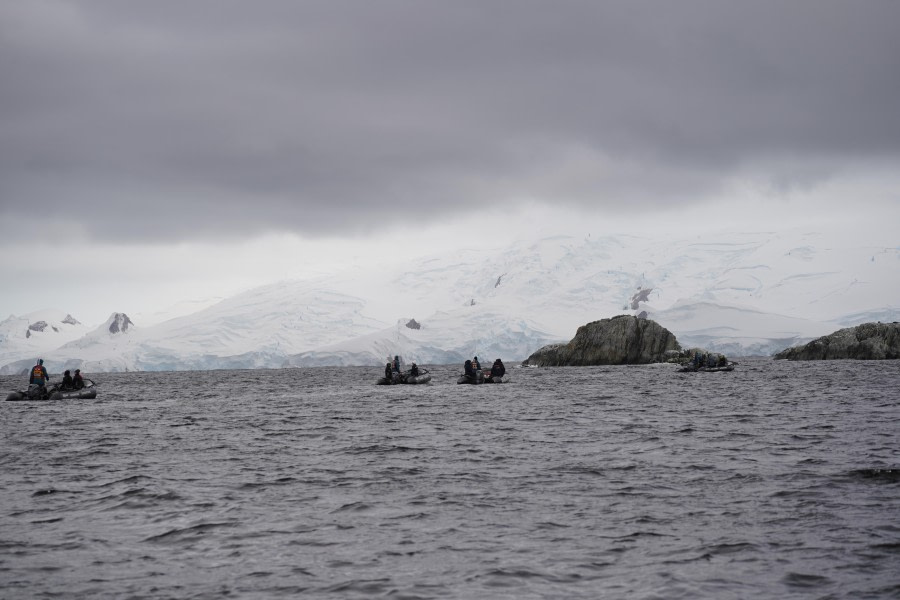
The day began in Kinnes Cove, an indentation along the west side of Joinville Island at the tip of the Antarctic Peninsula. The expedition team launched the Zodiacs under a brooding sky, but Antarctica, as always, had its own plans. What started as a manageable breeze steadily stiffened, and deteriorating wind conditions eventually curtailed the morning’s cruise. Even so, Antarctica ensured that effort was rewarded.

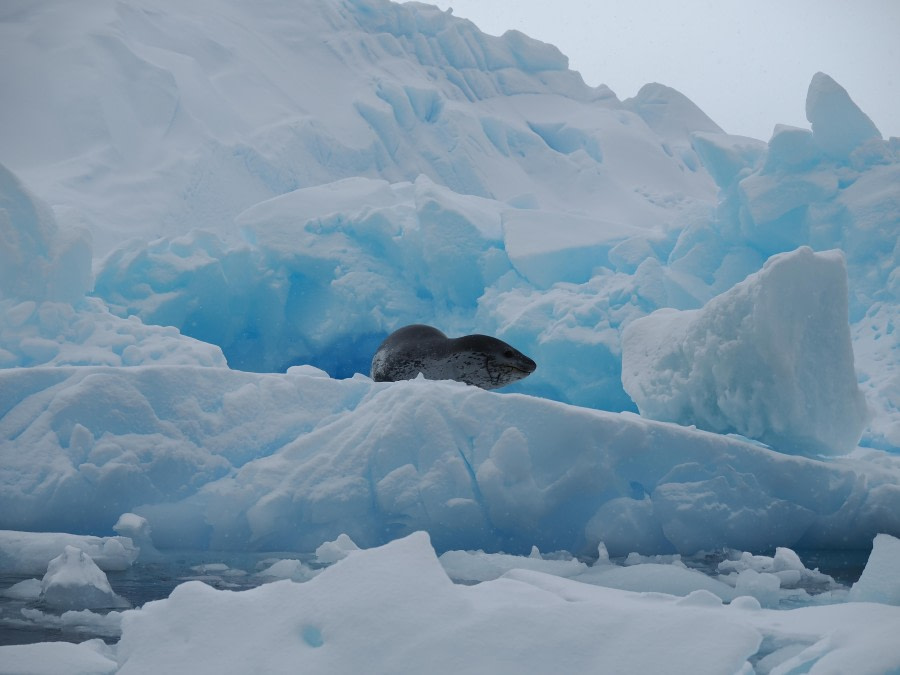
Before the winds forced a return to the ship, two magnificent Leopard seal were spotted draped across separate icebergs, under the towering Madder Cliffs. Their sleek, serpentine bodies stretched along the blue-white ice. Ever watchful, they lifted their reptilian heads to observe the Zodiacs from a distance—apex predators resting between hunts. Nearby, a couple of immature male Antarctic fur seal lounged hauled out, their thick coats ruffled by the increasing wind.

The cove was alive with birdlife. Groups of Antarctic Shag—adults in crisp breeding plumage alongside dusky juveniles either perched in groups on the rocks or flying between foraging trips. They could be seen diving repeatedly into the frigid water, seemingly unfazed by the swell that was beginning to build. Though shortened, the excursion offered a vivid snapshot of life thriving in the margins of ice and sea.

By afternoon, the ship had repositioned to the dramatic volcanic cliffs of Brown Bluff. Snow was falling as guests prepared for landing, snow flakes swirling through the Antarctic air and dusting everything and everyone in white. The weather had shifted once more, cloaking the landscape in a muted, monochrome beauty.

On shore, colonies of Adélie penguin and Gentoo penguin bustled across the snow-covered beach. Adélies, stoically stood on the higher slopes waiting out their moulting period, while Gentoo penguins, identifiable by the bright white stripe across their heads and lipstick coloured bills moved with deliberate purpose between sea and the colony sites. Among them pattered opportunistic Snowy sheathbill, ever alert for an easy meal, their white plumage nearly indistinguishable against the falling snow.

A Zodiac cruise along the towering ice cliffs revealed even more life at sea. Many Wilson’s Storm-Petrels fluttered low over the water, pattering delicately on the surface as they fed. Occasionally, a white morph Southern giant petrel glided overhead, its broad wings commanding against the grey sky. In the distance, a Humpback Whale surfaced, exhaling misty plumes before slipping beneath the swells as they passed through the bay.

One particularly striking iceberg drifted nearby, hosting all three species of brush-tailed penguins—Adélie, Gentoo, and Chinstrap—an emblematic Antarctic tableau perched on sculpted ice.

Today stood as a powerful reminder of how changeable the weather can be in Antarctica. Within a single rotation of the clock, conditions shifted from calm promise to blustery retreat, from brooding skies to gentle snowfall. Yet through every transformation, wildlife endured and adapted, offering those on expedition a front-row seat to one of the most dynamic environments on Earth.

Day 15: Elephant Point & Deception Island

Elephant Point & Deception Island
Datum: 02.03.2026
Position: 62°50.4 S, 60°39.8 W
Wind: NW4
Wetter: Overcast
Lufttemperatur: +2

We awoke this morning to glorious, finally blue skies! They took a while to reach us, but it was worth the wait. We were all very eager to get out and enjoy the morning.

A zodiac cruise around Elephant Point fit the bill nicely. Literal tons of Elephant seals were hauled out on the beaches molting. Giant animals, we got good looks at some of the big males that are often hard to find on expedition cruises, and we saw some very large proboscises. Most of the Elephant seals looked a bit grumpy, as most of us would, too, if our entire bodies itched. A few seals swam in the shallows, cooling their massive and well-insulated bodies in the brisk ocean water. They do not spend much time in the water during a molt as the blood flow to their surface skin increases to feed the growing new layers, and the seals cool off much more quickly than usual. On warm days like today, however, a quick roll in the water must feel refreshing.

Male Fur seals were also plentiful, and seeing a large, healthy male fur seal next to a large, healthy male elephant seal sharpened the understanding of just how different in size these animals are. The Fur seal, which we would normally consider a big animal, suddenly seemed tiny. The bull Elephant seal was simply gigantic. No wonder the aggressive furries tend to leave the ellies alone.

These two species were not the only seals we saw, however, as a few Leopard seals were also hanging about. They are abundant this time of year as there are many young Gentoo penguins entering the water for the first time, unaware of the ways of the ocean. Though fifty percent of a Leopard seal’s diet consists of krill, other things are on the menu right now. Dinner is tasty -- and plentiful. Some Gentoos stayed closer to the (very rocky) shallow waters, where Leopard seals and Zodiac drivers have a harder time reaching them, but many were in groups offshore, fishing.

We also saw a more unusual Antarctic creature: a scientific researcher. Camped on the beach above us, a Russian scientist was studying microplastics in the penguins’ diet. He was entertaining visitors while we were there, and we empathized as they tried to launch their zodiac out of the very shallow waters. Meanwhile the glacier glowed a brilliant blue and white, and the cloud formations were simply stunning. Most of us were so intrigued by the interplay between the clouds and the snow-covered mountains, in fact, that we would have been very happy even had we not seen any animals. But we did, and that made a good outing even better.

Back aboard the ship, the call that everyone had been eagerly anticipating for two weeks finally came: Orca. Not just a few, but large groups of them; at least thirty animals in all. Mother and calf pairings popped up around the ship, then large males with their entourages, to the point that we didn’t know where to look for the best sightings. This was such an amazing “problem” to have; the Orca were simply everywhere. It was impossible for any one person to see them all. We kept shifting back and forth from port to starboard, bow to stern, fifth deck to fourth. The Orca ensured that we all got our steps in today.

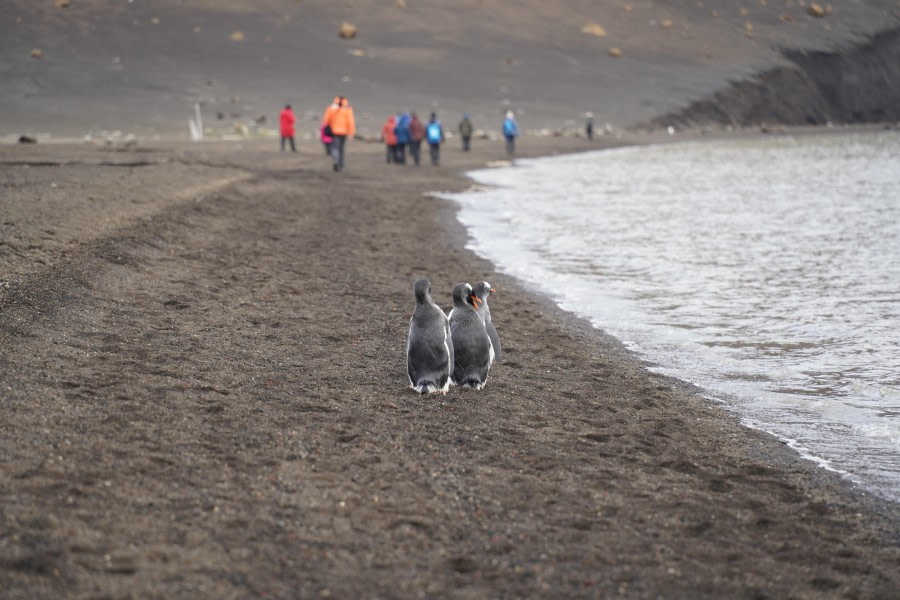
Eventually we sailed through Neptune’s Bellows, the narrow, tricky to navigate opening to Deception Island. An active volcano into whose ocean-filled caldera we can sail thanks to a collapse in the side of the crater, this area was once a haven for whales. Few are seen here in modern times. Not surprisingly, we were able to explore the ruins of an old whaling station, in a place called Whalers Bay. Massive tanks that held whale oil, a dry dock, barracks, plus a plethora of other whaling detritus sat slowly decaying, being reclaimed by the island bit by rusty and broken bit. Whale bones and the disintegrating remnants of an old water boat stood off the beach a bit further away, while an airplane hangar from the days of the British Antarctic Survey (BAS) created a boundary on the other side. Toward the center lay a cemetery now marked by only two crosses, the rest having been buried by a mudslide caused by an eruption of the volcano in 1969. Signs of destruction were everywhere, and the land itself was mostly barren and rocky. It was nonetheless strikingly beautiful. The colours of the rocks were deep and rich, and where there was green, it held a saturation that is not seen against lighter backgrounds. Deception Island feels somehow otherworldly, as though it belongs to outer space, not our blue planet.

We hiked to the rim of the caldera at a point where the ridge is lower, a place called Neptune’s Window. Here we could look out to the ocean surrounding the volcano and see the gorgeous cliffs created by the exterior of the volcano. We could also see each other! When we were not on land, we zodiac cruised through the Bellows and explored a small portion of the volcano’s flanks. Incredible rock formations created by compressed layers of ash and sediment mesmerized us. The dark rocks contrasted sharply with the brilliant blue of the sky and the perfect white of the puffy clouds. Chinstrap penguins, fur seals, gentoos, and elephant seals added life to the rocks, while dozens of pintados rafted together on the water, swimming surprisingly close to the zodiacs. To top it all off, a humpback whale made an appearance. Could the afternoon possibly get any better?

Why, yes. Yes it could. How? By stripping off our warm clothes and throwing ourselves into the frigid water, of course! Into the “warm”(2°C) waters of Whalers Bay we ran, wearing nothing but our swimsuits. Screaming and laughing simultaneously, our breath left us as the shock of seriously cold water turned our brains to mush. “Get out now!” our bodies screamed, but if we were able to withstand the first thirty seconds, it became rather pleasant. Refreshing, one might even say. Brain damaging, others would say. But for those of us who did the Polar Plunge, it will certainly be among the more memorable parts of the trip.

Day 16: Paradise Bay & Danco Island

Paradise Bay & Danco Island
Datum: 03.03.2026
Position: 64°41.2 S, 63°02.0 W
Wind: SW2
Wetter: Sunny
Lufttemperatur: +4

Dawn found us gliding silently into the dreamlike stillness of Paradise Bay. The morning felt almost unreal. Sunlight spilled across the snow-covered peaks, and the sea lay so calm it became a perfect mirror, reflecting the vast white amphitheater of glaciers and mountains surrounding us. Antarctica had offered us one of her rare, flawless mornings.

Even before we reached our anchorage, life was already stirring around us. Dark shapes of seals rested on drifting ice floes, and in the distance the misty breath of whales rose above the water like quiet signals that we were not alone in this frozen wilderness.

Soon the zodiacs slipped into the water, and we scattered across the bay to explore. It quickly became clear that the true rulers of the morning were the humpback whales. All around the bay they surfaced—gliding, breathing, diving again—sometimes traveling, sometimes feeding in the cold, rich waters. Each exhale echoed softly across the glassy surface.

Then came an unforgettable encounter: a leopard seal approached, sleek and curious. It circled the zodiacs with effortless confidence, lifting its head to examine us as closely as we were examining it. Nearby, crabeater seals lounged lazily on ice floes, seemingly indifferent to our quiet passage.

Yet even when the wildlife slipped beneath the water or drifted out of view, the landscape itself held us captive. Jagged white peaks towered overhead, glaciers poured slowly down the mountainsides, and every surface glowed in the Antarctic sun.

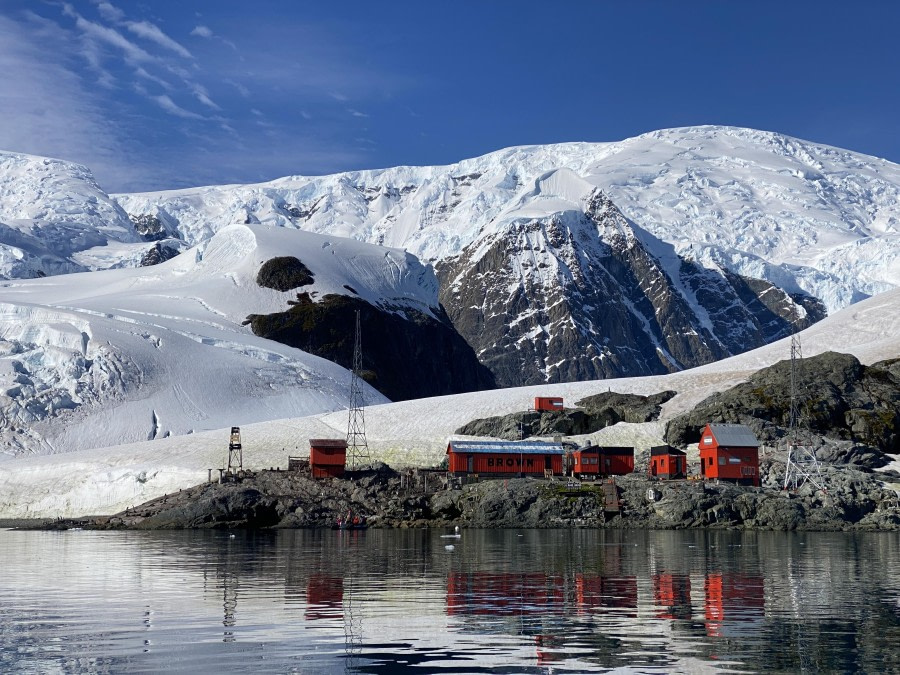
Before leaving the bay, we paid a visit to the small Argentine research station Almirante Brown Antarctic Base. Established in 1951, the station now operates during the summer months and houses a small team of researchers—just a handful of people living and working in one of the most remote places on Earth.

After such a perfect morning, we lifted anchor and turned toward our afternoon destination: Neko Harbour. As we entered Andvord Bay, towering walls of ice appeared ahead. Massive floes drifted everywhere, forcing our ship, the MV Hondius, to push slowly and carefully through the frozen maze.

But the ice had the final say. As we approached Neko Harbour, it became clear that landing by zodiac would be impossible. Plans changed quickly. Instead, we turned away from the ice-choked bay and set course for a new destination: Danco Island.

Even the detour brought its own rewards. As we exited Andvord Bay, humpback whales lay resting—“logging”—among the dense ice, their enormous bodies barely moving as they floated peacefully between the floes.

Soon another breathtaking scene unfolded in the narrow waters of the Errera Channel. Danco Island appeared ahead, framed by two enormous icebergs drifting like frozen cathedrals near our landing site.

Once again the zodiacs were lowered. One group stepped ashore to explore the lively gentoo penguin colony, while the rest of us cruised the icy waters surrounding the island. Everywhere we looked, penguins darted through the sea in fast-moving rafts, porpoising across the surface like living torpedoes.

Seals were everywhere too—Antarctic fur seals, Weddell seals, crabeater seals, and even another leopard seal—sprawled across rocks and ice as if the island were their private lounge.

The afternoon had begun under bright skies, but Antarctica changes quickly. As the sun slipped behind the mountains, the warmth vanished with it and the cold crept in.

Day 17: Melchior Islands & Sailing South

Melchior Islands & Sailing South
Datum: 04.03.2026
Position: 64°19.8 S, 62°58.9 W
Wind: EN6
Wetter: Cloudy
Lufttemperatur: +1

We spent our morning navigating the Melchior Islands, a cluster of ice-capped islets that felt like a frozen labyrinth. Under cloudy skies and a bit of a swell, we hopped into the Zodiacs for a cruise. While the wildlife was a bit shy this morning, the scenery more than made up for it. We drifted past massive, perfectly formed ice and snow domes that draped over the small islands like thick white frosting. It was a quiet, ethereal experience of the Antarctic wilderness before we returned to the Hondius around 12:30 for lunch.

As we headed back out into open water towards our tomorrow’s big goal – the Antarctic Circle – of the Southern Ocean decided to show us the little demonstration of its strength. With two-metre waves and a stiff wind, the ship began a spirited dance of rolling and pitching. For many of us, it was the "true" polar experience—finding our sea legs while watching the grey, powerful waves march past our windows.

To keep our minds off the motion, we gathered for two presentations. At 14:30, our guide Sid took us beneath the surface. Using his perspective as a diver, he showed us the vibrant, hidden world that thrives under the sea ice. It’s a completely different universe down there! At 16:00, we were incredibly honored to hear from fellow guest and published author Dr. Joanna Kafarowski. She captivated us with the story of Ingrid Christensen, the first woman to ever see and set foot on the Antarctic continent. It was a powerful reminder of the pioneers who paved the way for us to be here today.

After a lively, extended recap where the team shared more insights into our surroundings, we gathered for another fantastic dinner. Despite the ship’s movement, the atmosphere was warm and full of conversation about the incredible history and biology we’ve learned.

We are tucked in now, letting the swell rock us to sleep as we prepare for whatever wonders tomorrow brings!

Day 18: Detaille Island & Crystal Sound

Detaille Island & Crystal Sound
Datum: 05.03.2026
Position: 66°33.7 S, 67°24.3 W
Wind: WSW5
Wetter: Overcast
Lufttemperatur: 0

The day began earlier than usual for many of us, but for the best possible reason. Around 06:30 a.m., a crowd gathered on the bridge, eyes fixed on the GPS monitors. As the numbers rolled over and we officially crossed the Antarctic Circle, a spontaneous wave of applause broke out! It was a powerful moment of shared achievement, standing together as we entered this exclusive club of southern explorers.

By mid-morning, we arrived at Detaille Island. While the day started under a blanket of clouds, the sun eventually broke through, illuminating the rugged landscape just in time for our landing and cruise.

We explored the island in a three-group rotation, with the highlight being a great house—UK’s former Base W. It truly felt like a time capsule of 20th-century exploration. Seeing the old tins of food, scientific equipment, and living quarters left exactly as they were decades ago gave us a profound sense of the isolation and bravery of the researchers who once called this place home.

After a hearty lunch, we pushed even further south into the Crystal Sound area. This marked the southernmost point of our entire expedition, and the Antarctic scenery certainly dressed up for the occasion! Under brilliant sunshine, we cruised past majestic mountains and icy shores. The water was dotted with icy bits, many of which served as lounges for sunbathing seals. It was the Antarctic we had all dreamed of: blue, white, and perfectly still.

After we came back onboard, we couldn't let the Polar Circle milestone pass without a proper party! Later in the afternoon, we gathered on the bow for our official Circle Crossing Celebration. The deck was transformed into a festival of color as guests and staff donned colorful polar costumes.

With music playing and the sun shining, we celebrated with hot chocolate and rum, posing for pictures in the special photo frame to commemorate the occasion. The energy was electric—a perfect blend of Antarctic chill and heartwarming camaraderie.

We wound down the day with a celebratory dinner at 19:30, followed by a recap where we looked back at our "farthest south" photos and heard the exciting plans for our journey back north. We may be leaving the Circle behind, but the memories of this golden day are certainly coming with us!

Day 19: Port Charcot & Port Lockroy

Port Charcot & Port Lockroy
Datum: 06.03.2026
Position: 65°12.9 S, 64°09.4 W
Wind: SSW3
Wetter: Sunny
Lufttemperatur: +2

We woke this morning to another glorious day, those up early watched as we sailed towards Port Charcot, the destination for the mornings zodiac cruise.

After another delicious breakfast we boarded zodiacs with the expedition team to explore the area. The immediate area was full of huge icebergs, infact so many that the ship had to stop short of our destination. This meant a longer and more spectacular ride on the zodiacs around the icebergs and plenty of Humpbacks towards Port Charcot.

We watched both Leopard and Crabeater seals on the ice as well as Gentoo penguins in the water. Then there were the Humpbacks, they were everywhere, some were super curious and approached the zodiacs where others were intent on feeding and socialising with each other.

Some of us were lucky enough to watch the feeding whales, infact it was a feeding frenzy, at one point the zodiacs were surrounded by hundreds of feeding Gentoos and with around 6 whales it made for a fabulous, incredible sight, even a Leopard seal also got involved in the action. All this was happening while the sun was shining, and everyone got some amazing photographs and film.

All too soon we had to return to Hondius so that we could move to our next destination but this involved another wonderful spectacle, to get to our next location we had to navigate the Lemaire channel, one of the most photographed locations in Antarctica. The sun was still shining as we travelled through the narrow, steep sided channel. It was truly beautiful!

After lunch we again boarded zodiacs for a cruise and double landing around Port Lockroy. We landed at Jougla Point and on Goudier Island the home to the British Antarctic Heritage Trust base, known as Port Lockroy or Base A, the southernmost Post office.

We had the chance to visit the museum which was the original British Antarctic Survey Base A and post our postcards and buy some souvenirs from the post office/gift shop.

We also saw lots of Gentoo Penguins, some being bothered by the Snowy Sheathbills on the land and then Crabeater seals and Minke whales from the zodiacs.

Following a very full day of activities there was one more surprise, a special Antarctic outdoor BBQ.

We had more lovely food with music and dancing outside with spectacular views of Antarctica as the sun went down revealing some beautiful light and even a full moon. A perfect end to a perfect day!

Day 20: Foyn Harbour & Palaver Point

Foyn Harbour & Palaver Point
Datum: 07.03.2026
Position: 64°29.2 S, 62°04.8 W
Wind: Light air
Wetter: Overcast
Lufttemperatur: 0

Our final day of activity in Antarctica arrived—a bittersweet sunrise marking our last chance to gaze upon the majestic icebergs, the blue-veined glaciers, and the incredible biodiversity of this frozen frontier.

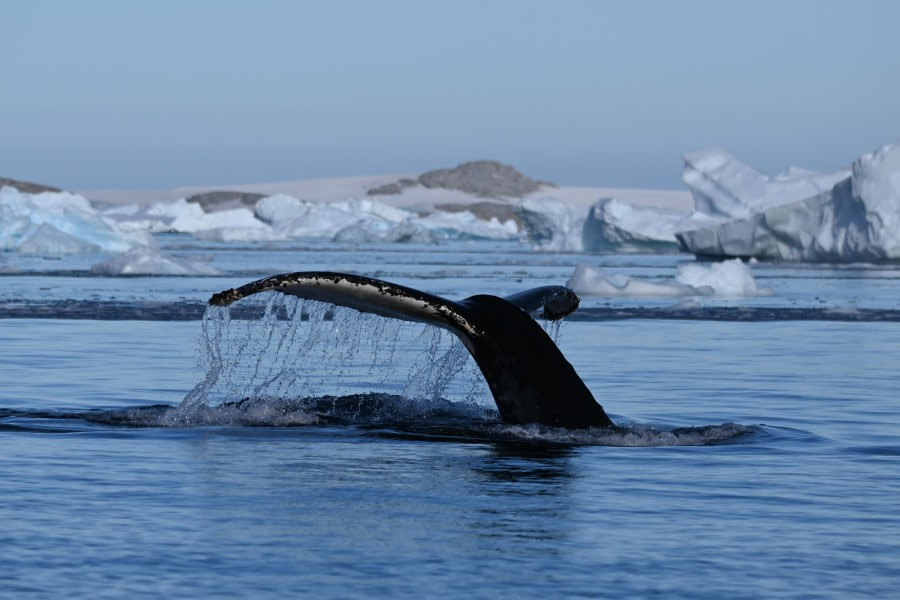
We began early in Wilhelmina Bay, setting our sights on a place steeped in whaling history: Foyn Harbour. As we lowered the zodiacs, a dense, ethereal mist swallowed the horizon, dropping visibility to less than 100 meters. Navigating through the white-out in search of a shipwreck, we were suddenly interrupted by the exhales of giants. A large pod of Humpback whales appeared through the fog. We spent the morning mesmerized by the arching of their dorsal fins and the iconic fluke of their tails. For a few lucky souls, the silence was shattered by the thunderous splash of a breach.

Despite the distraction of the whales, we reached our haunting destination: the Governoren. In 1915, this floating whale factory ship was intentionally run aground by her captain after a lantern started a massive fire. By wrecking the ship, the crew was able to escape the flames and survive, leaving the rusted skeleton as a permanent monument to the whaling era.

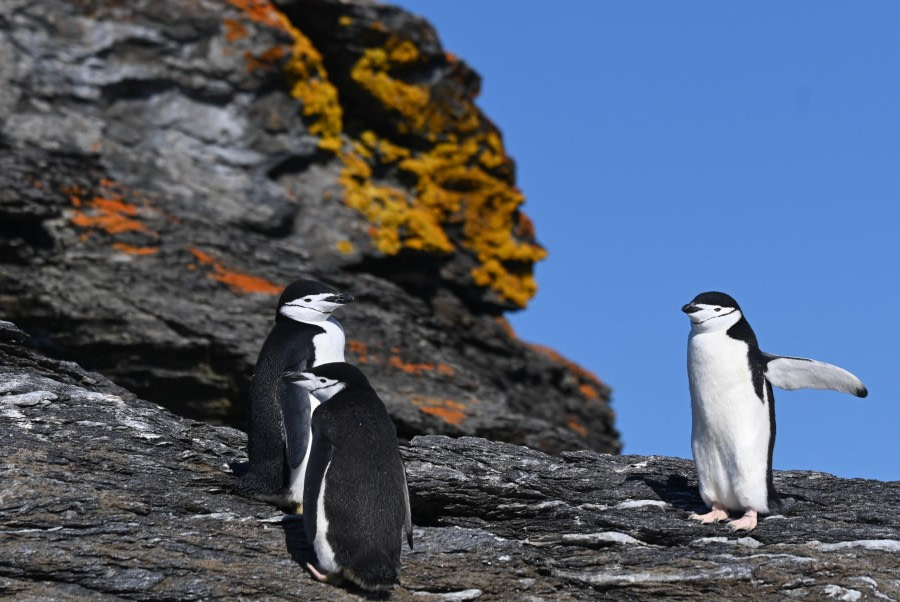
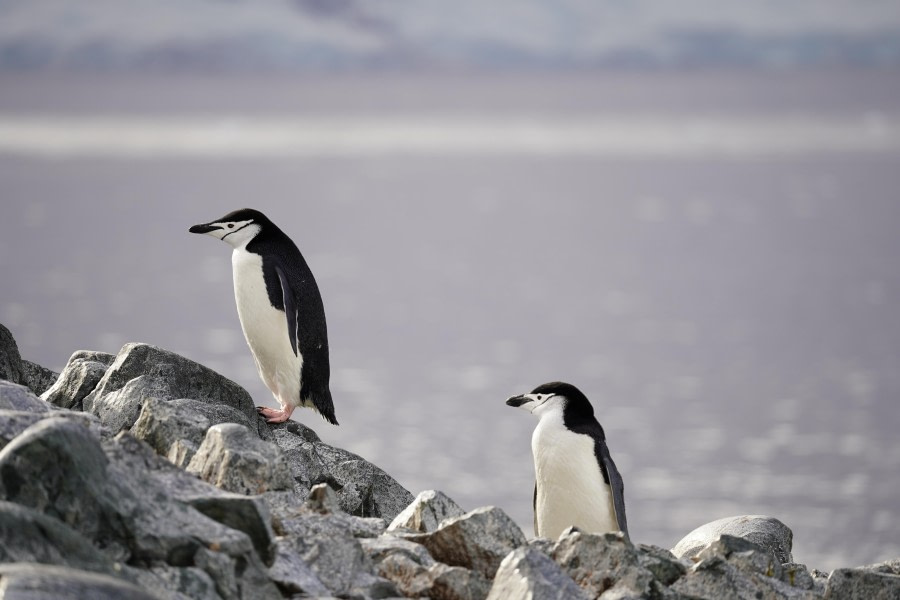
After returning to the Hondius to thaw out and refuel with lunch, we prepped for our final landing at Palaver Point on the Hummock Islands. The shore was alive with a massive colony of Chinstrap penguins. These penguins are easily identified by the thin black band under their heads. This specific colony is a bustling metropolis of activity, where the birds navigate steep, rocky paths with surprising agility to reach their nesting sites high above the waterline.

For those with a bit of energy left, we hiked to the island’s summit. From the peak, we were rewarded with a panoramic view of "active" glaciers—massive rivers of ice that seemed to groan under their own weight.

Back on board, the atmosphere was electric. You could see it in every smile: a collective sense of fulfillment for having successfully completed every activity of this epic expedition. We celebrated the closing of this chapter with a formal plated dinner, followed by a lighthearted movie night. Watching Happy Feet with a bowl of popcorn was the perfect, joyful way to say goodbye to the penguins before bed.

Now, we turn our bow toward the open ocean. The Drake Passage awaits us in the dark. How will we wake up tomorrow? Only the sea knows.

Day 21: Drake Passage, at sea to Ushuaia

Drake Passage, at sea to Ushuaia
Datum: 08.03.2026
Position: 61°44.7 S, 63°58.5 W
Wind: NNW4
Wetter: Overcast
Lufttemperatur: +2

March 8th dawned with a rare gift: a remarkably calm Drake Passage. But the tranquility of the water was only the backdrop to a much more significant occasion. Today, aboard the Hondius, we celebrated International Women’s Day. 

Following a hearty breakfast, the energy shifted toward the lecture room for the All Women’s STEAM Team Round Up. It was a privilege to join the scientists, artists, and photographers of the expedition team as they shared insights into their research and their visions for the future. The morning also featured a silent auction supporting the King’s Trust ‘Change a Girl’s Life’ program, adding a layer of purpose to our gathering. This celebration was led by the Sea Women group, the same inspiring women we’ve shared these past three weeks with. Hearing them share their experiences and the tangible results of their work was nothing short of a masterclass in dedication.

After a brief mid-morning pause, the intellectual momentum continued. Helen, Emma, and Catherine took the stage for a compelling lecture titled: “Does a Marine Mammal Need a Lawyer? Antarctica Edition.” They delved into the complex legal frameworks surrounding marine life, illustrating how rigorous science is the essential backbone for informed policy-making.

As the Hondius pressed on through the Drake at a steady 11.5 knots, we broke for lunch.

The afternoon brought a moment of quiet reflection—and a bit of logistics—as we returned our warm, waterproof boots. Looking at them, it was hard not to think of the ground they’ve covered: from the rugged shores of the Falklands to the wild peaks of South Georgia and the pristine ice of the Antarctic continent.

The afternoon lecture series served as a bridge between the legends of the past and the mission for our future. We began with The Pioneer, as Joanne transported us back in time to the legacy of Jackie Ronne. Hearing about the first woman in history to serve as a working member of an Antarctic expedition was a poignant reminder of the grit required to blaze a trail on this frozen continent.

Shifting from history to The Future, our dive guide Clara took the stage to present her project, "Una Ventana al Mar" (A Window to the Sea). Along with Gonzalo, she runs this NGO with a mission as unique as it is honorable: fostering marine conservation and ocean literacy. It was the perfect way to close the day’s talks, leaving us with a sense of responsibility for the very waters we are currently sailing through.

We wrapped up the formal presentations with our daily recap before heading to a plated dinner—our penultimate evening meal of this journey.

The day concluded with a bit of friendly competition. Sven prepared a group quiz that served as the perfect finale, allowing us to put the knowledge we’ve gathered over these three weeks—from both the guides and the lectures—to the test. It was a night filled with laughter and shared memories.

Goodnight. We have one final day at sea ahead of us before we reach the lights of Ushuaia.

Day 22: Drake Passage, at sea to Ushuaia

Drake Passage, at sea to Ushuaia
Datum: 09.03.2026
Position: 56°50.4 S, 65°42.2 W
Wind: N5
Wetter: Partially cloudy
Lufttemperatur: +5

We woke gently to the quiet rhythm of the ocean, the kind of morning that only comes after weeks spent at the far end of the world. Our voyage aboard Hondius was drawing to a close, and today the Drake Passage seemed determined to give us a kinder farewell. The sea rolled beneath us in long, patient swells—still unmistakably the Drake, yet far calmer than its fearsome reputation might suggest. Sailors have crossed this stretch between South America and Antarctica for centuries, and while it is often called the roughest sea on Earth, today it felt almost contemplative.

After breakfast we gathered in the lecture room, ready to reflect on our journey and the wider world of polar exploration. One presentation took us through other remarkable voyages undertaken by our expedition company—reminders that the polar regions hold endless stories still waiting to be experienced. Later, Jakub guided us into the future with a thought-provoking lecture about ice: how glaciers and sea ice form, how they move, and how rapidly they are changing in a warming world. It was a sobering topic, but one that made our recent encounters with Antarctica’s vast white landscapes feel even more precious.

After lunch the focus shifted beneath the waves. Andi introduced us to one of the Southern Ocean’s most formidable predators: killer whales. These highly intelligent animals live in complex family groups called pods and display remarkably specialized hunting techniques, from wave-washing seals off ice floes to coordinated attacks on larger prey. Lucia then carried us northward in spirit with a talk about Argentina—its culture, landscapes, and the history that awaited us at the end of our voyage.

As evening approached, we gathered for the Captain’s Cocktail, a warm and celebratory moment shared between guests, staff, and crew. Glasses were raised, laughter echoed through the lounge, and heartfelt thanks were exchanged for the teamwork that had made our Antarctic adventure possible. It felt both festive and nostalgic.

The day concluded with our final plated dinner in the restaurant. Conversation lingered long after the last course, as we looked back on three unforgettable weeks among icebergs, wildlife, and endless southern horizons—aware that while the voyage was ending, the memories of Antarctica would travel home with us.

Day 23: Disembarkation Day

Disembarkation Day
Datum: 10.03.2026
Position: 54°48.5 S, 68°17.9 W
Wind: N5
Wetter: Partially cloudy
Lufttemperatur: +8

Our final morning arrived quietly as the ship eased back into Ushuaia, the first light settling gently over the harbour. Even before breakfast, the corridors were lined with luggage placed neatly outside cabin doors — a simple but certain sign that our voyage was drawing to a close.

Breakfast felt especially warm and unhurried, filled with easy conversation as we shared favourite moments and reflected on all we had experienced. Stories of wildlife encounters, landings on remote shores, and the crossing of the mighty Drake Passage flowed easily between tables.

Soon after, we made our way ashore, where our bags were arranged along the pier for collection. Farewells drifted through the mild air as fellow travellers exchanged hugs, handshakes, and heartfelt thanks to the staff who had guided us so expertly throughout our time in Antarctica, South Georgia, and the Falkland Islands.

With one last glance back at the ship that had carried us safely through ice-filled channels and unforgettable southern landscapes, we stepped into the mild morning, carrying with us memories that would long outlast the journey itself.

Einzelheiten

Reisecode: HDS29-26
Daten: 16 Feb - 10 Mär, 2026
Dauer: 22 Nächte
Schiff: MS Hondius
Einschiffung: Ushuaia
Ausschiffung: Ushuaia

Waren Sie auf dieser Reise?

An Bord von MS Hondius

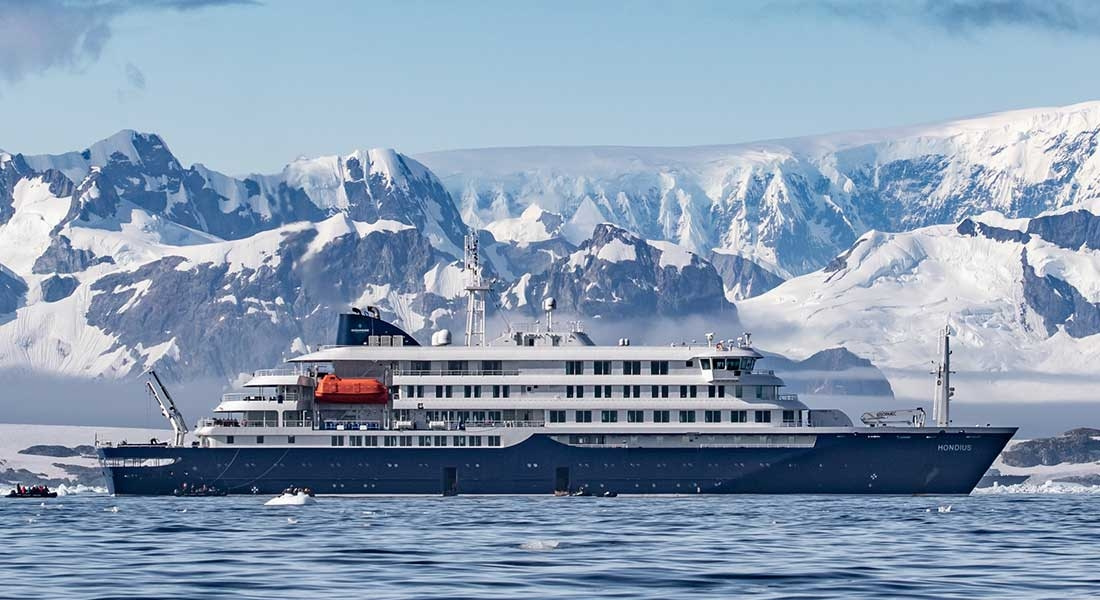
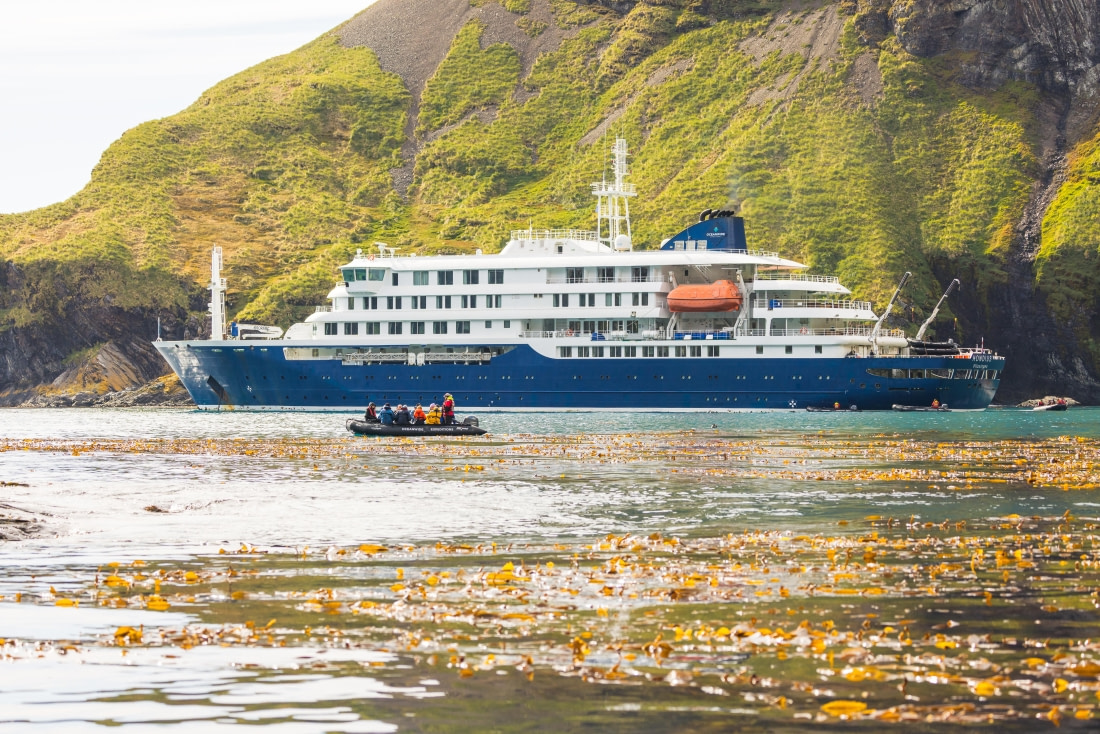
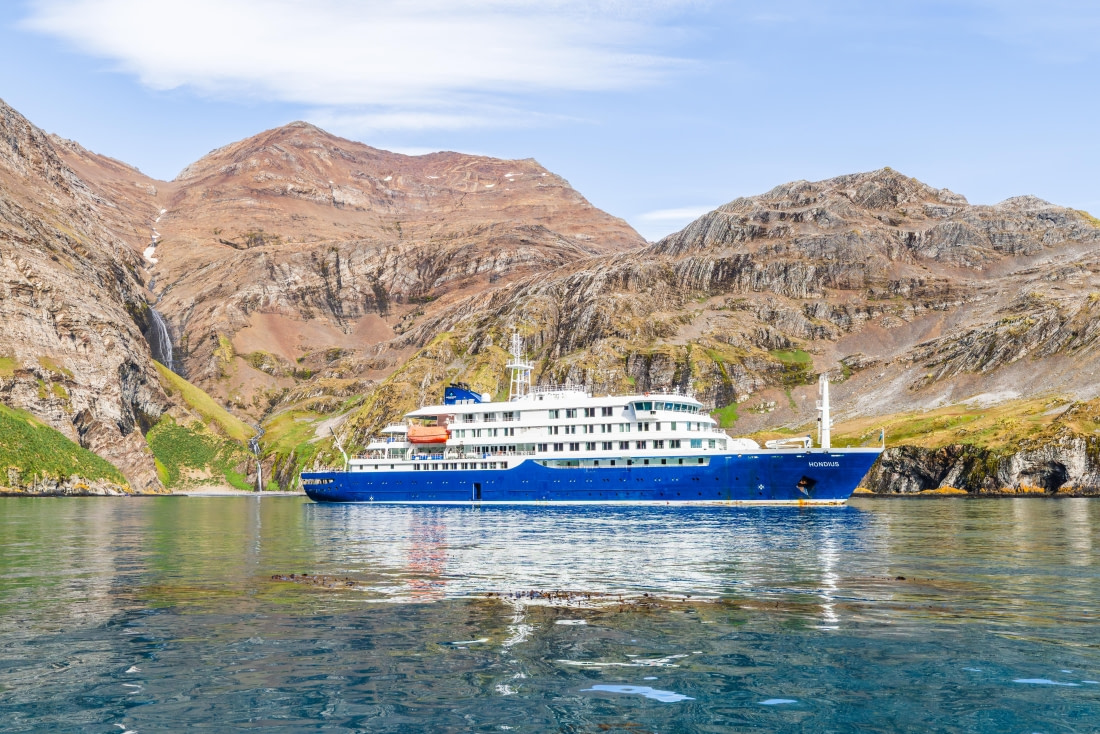
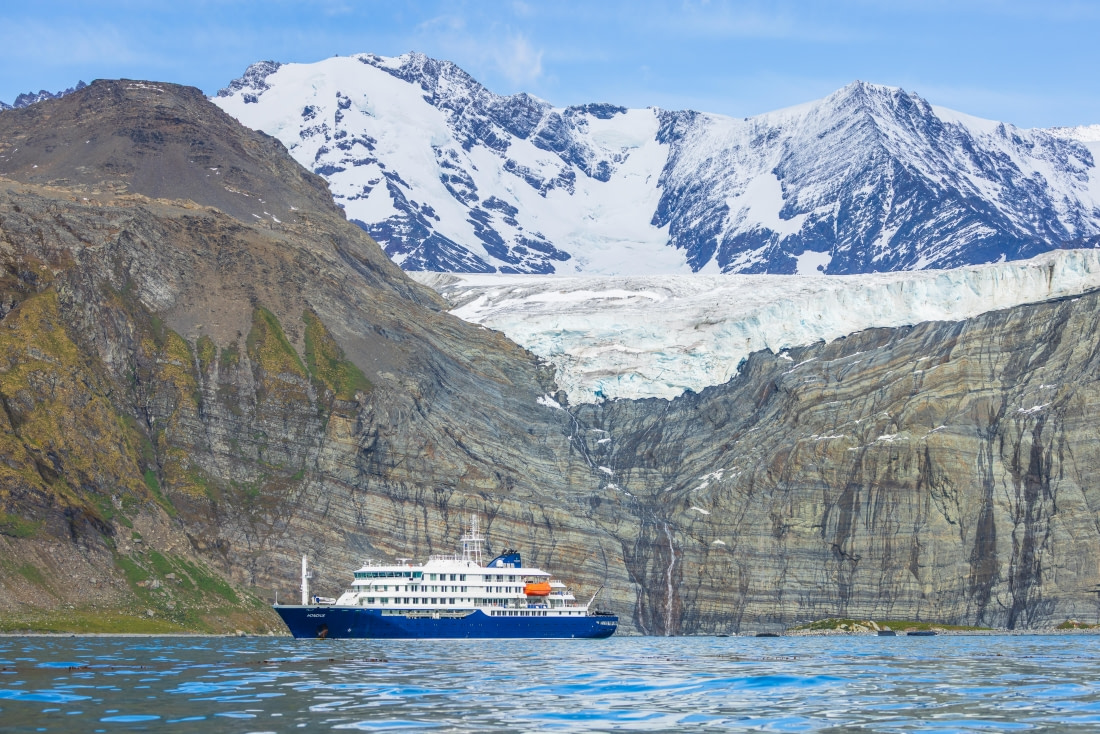
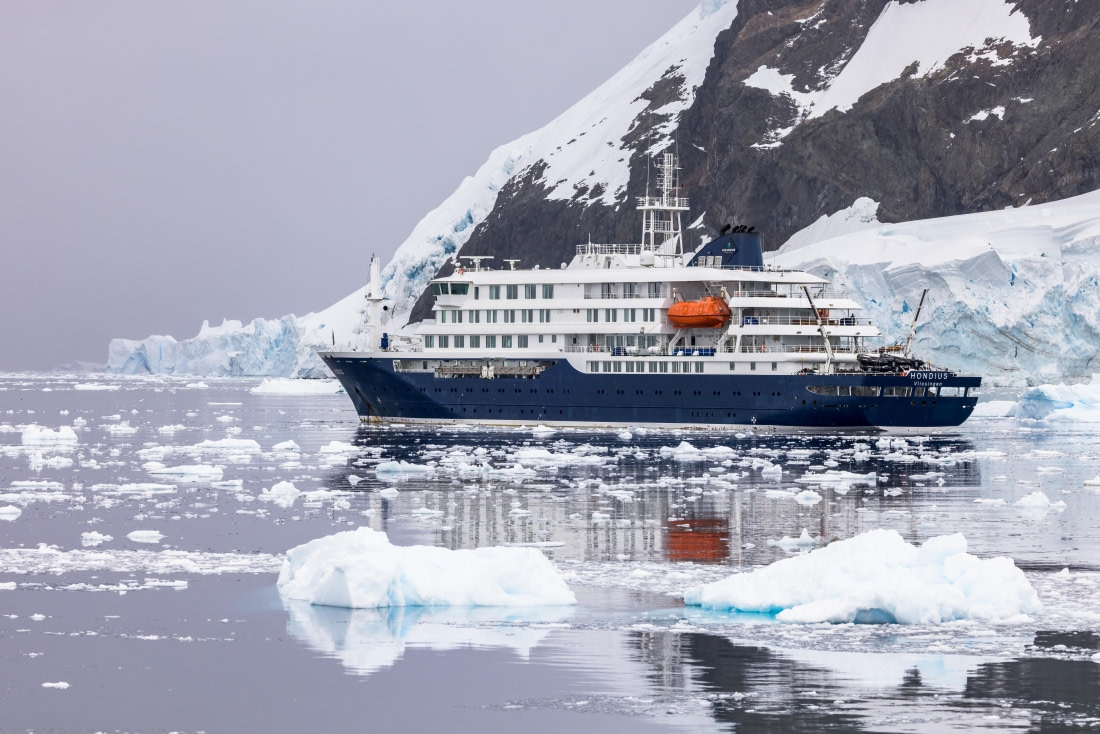
Die Hondius ist das weltweit erste registrierte Schiff der Polar-Klasse 6 und wurde von Grund auf für Expeditionskreuzfahrten gebaut.

Mehr über die MS Hondius »
Loading