HDS26-26, trip log, Antarctica - Discovery and learning voyage

by Oceanwide Expeditions

Photo gallery

Logbook

Day 1: Ushuaia, Embarkation Day - Setting sail for Antarctica

Ushuaia, Embarkation Day - Setting sail for Antarctica
Date: 08.01.2026
Position: 54°48.5 S, 068°17.9 W
Wind: N1
Weather: Overcast
Air Temperature: +11

Our first day of the expedition began, with everyone coming aboard excited to go to Antarctica. After settling into our cabins and confirming that our luggage had arrived safely, most of us drifted into the lounge where tea and coffee were waiting. The mood was bright and chatty as people compared cabins and swapped stories about how long they had dreamed of making this journey.

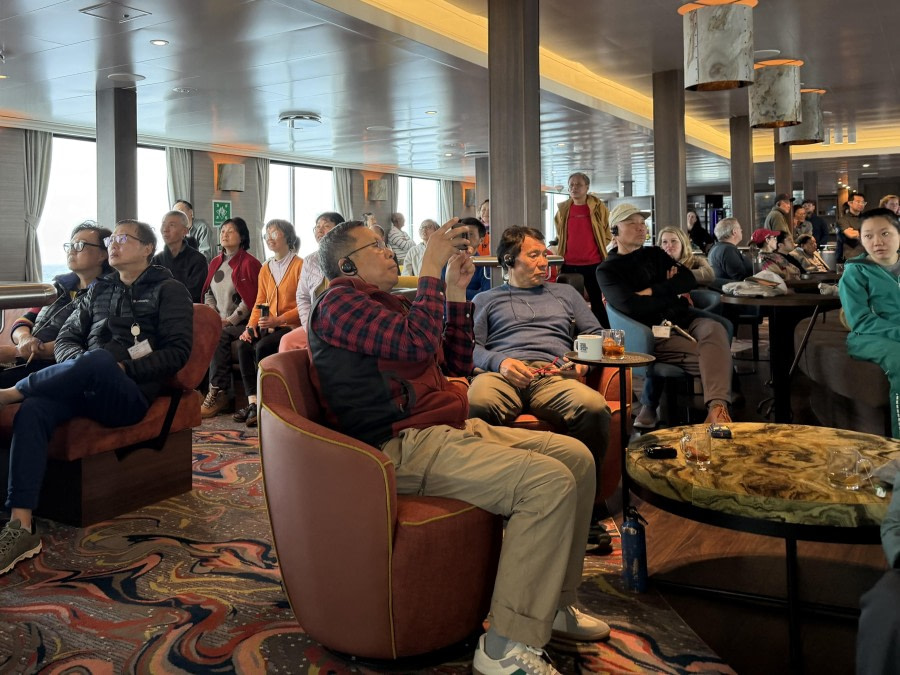
We were called to the lounge by our Expedition Leader Chris, to first inform us about safety on the ship.

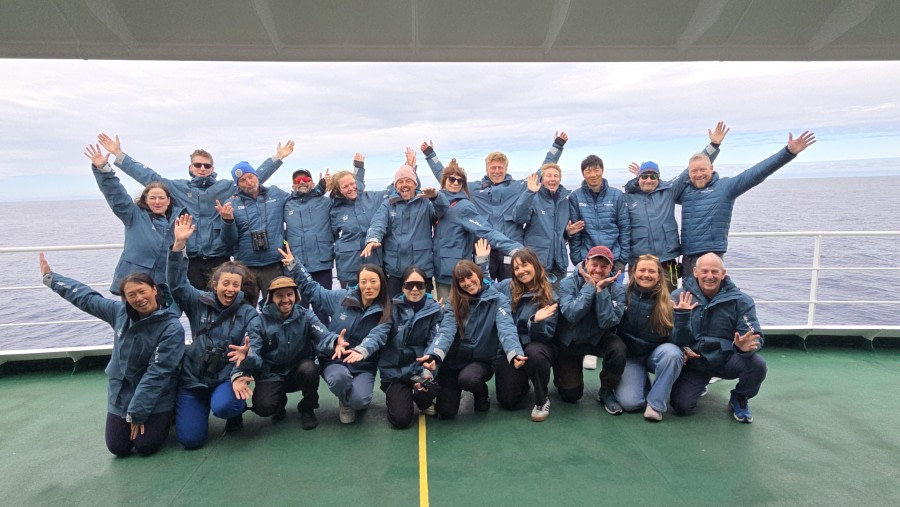
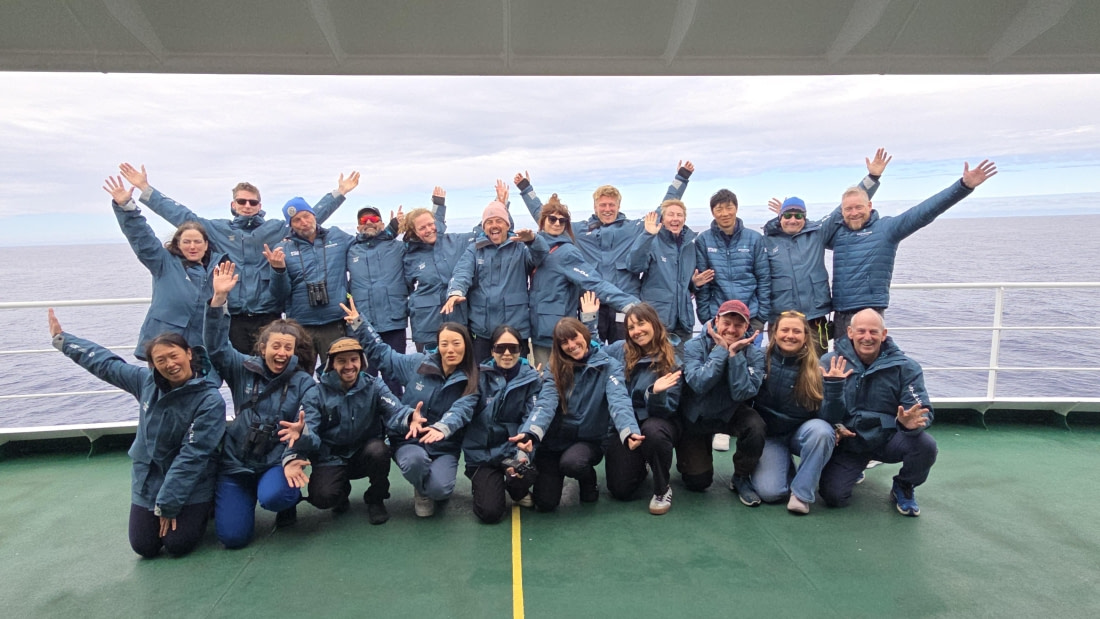
As we began the drill, we all gathered and put on our life jackets, confident that we now know what to do in case of an emergency. After the drill, Captain Ernesto invited us into the observation lounge with an inspiring welcome speech. Chris explained some what to expect from our adventure, and the expedition team also introduced themselves; 17 guides with each their speciality! With that done, we quickly went to the buffet dinner, meeting new people and exchanging stories.

As evening settled in, we could already feel a gentle roll underfoot, and some of us took extra precautions by paying the doctor a visit for some seasickness medication. There was a steady flow of passengers exchanging smiles as they collected tablets and advice.

Before turning in for the night we secured our belongings as instructed, aware that we would be sailing into open sea within hours. The ship creaked softly, and a few mugs rattled on their saucers as we made our way back to our cabins. It felt like the true beginning of the adventure a mix of anticipation, sea breeze and the pleasant uncertainty of what the next days would bring.

Day 2: Drake Passage - At Sea sailing towards Antarctica

Drake Passage - At Sea sailing towards Antarctica
Date: 09.01.2026
Position: 57°02.05’S / 65°43.3’W
Wind: N3
Weather: Overcast
Air Temperature: +6

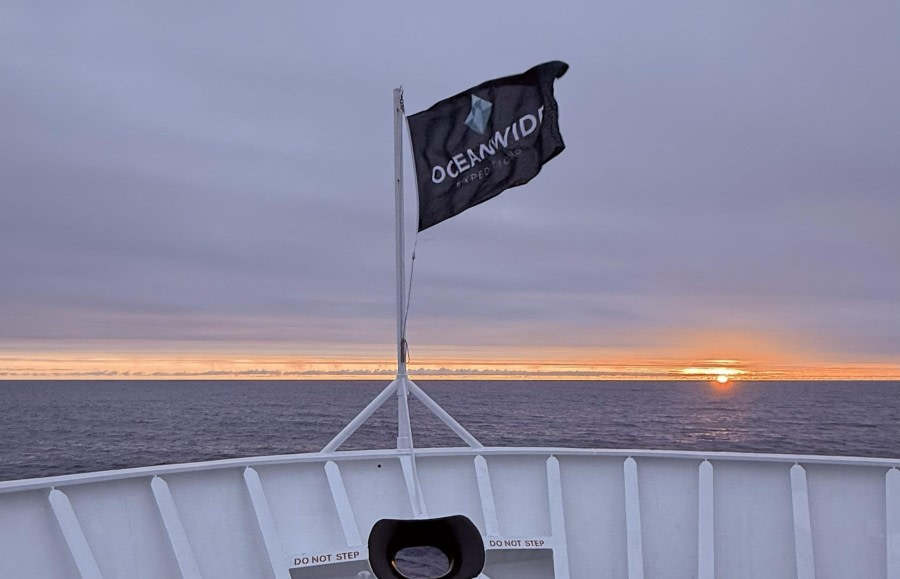
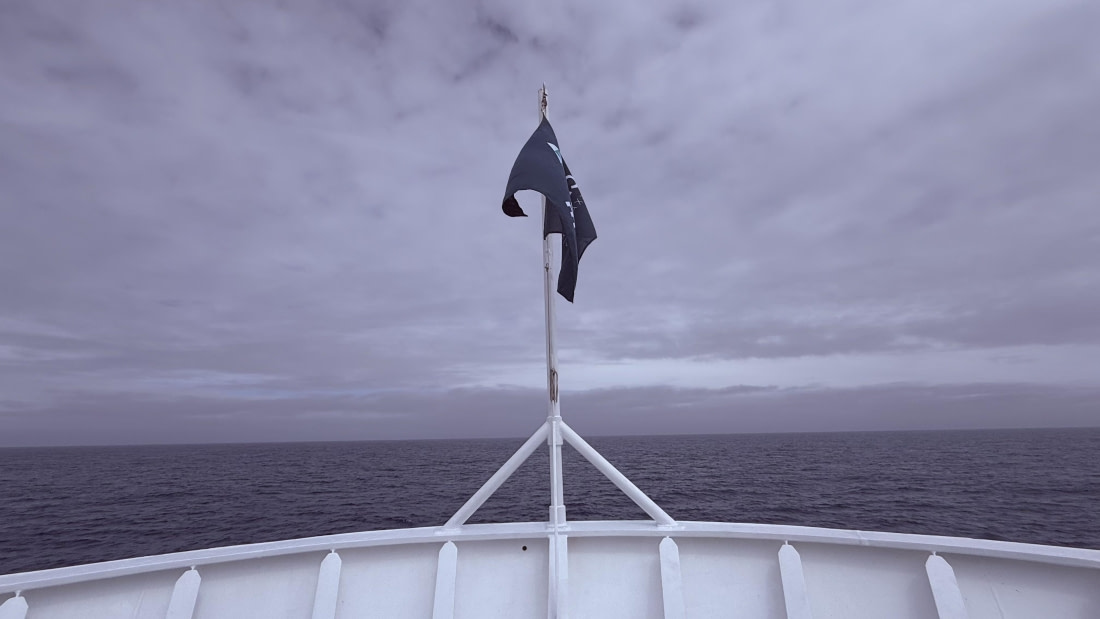
MV Hondius’s first day sailing south across the Drake Passage could scarcely have been more welcoming. We awoke to wonderfully calm seas and light winds, a rare gift in a stretch of ocean renowned for its unpredictability. Although the sky was overcast, no one on board complained; this was “Drake Lake,” not the notorious “Drake Shake,” and we would happily take grey skies over strong winds and towering swells any day.

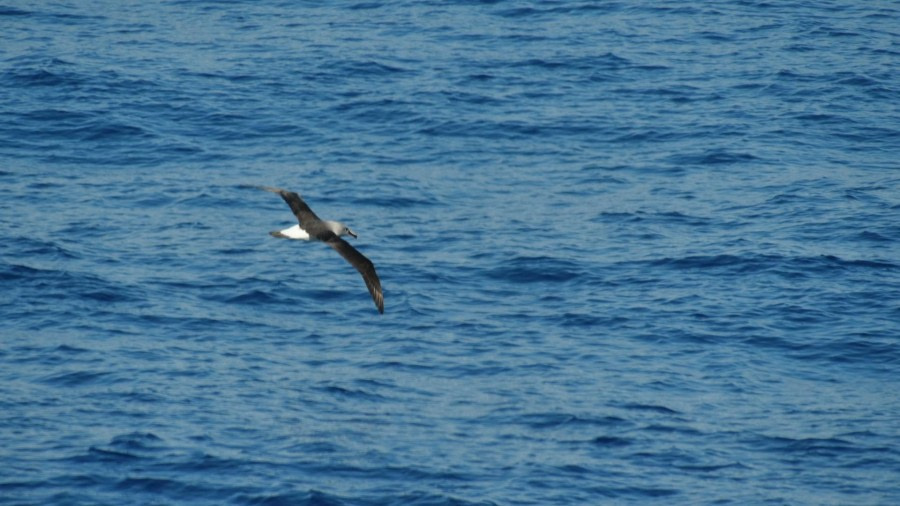
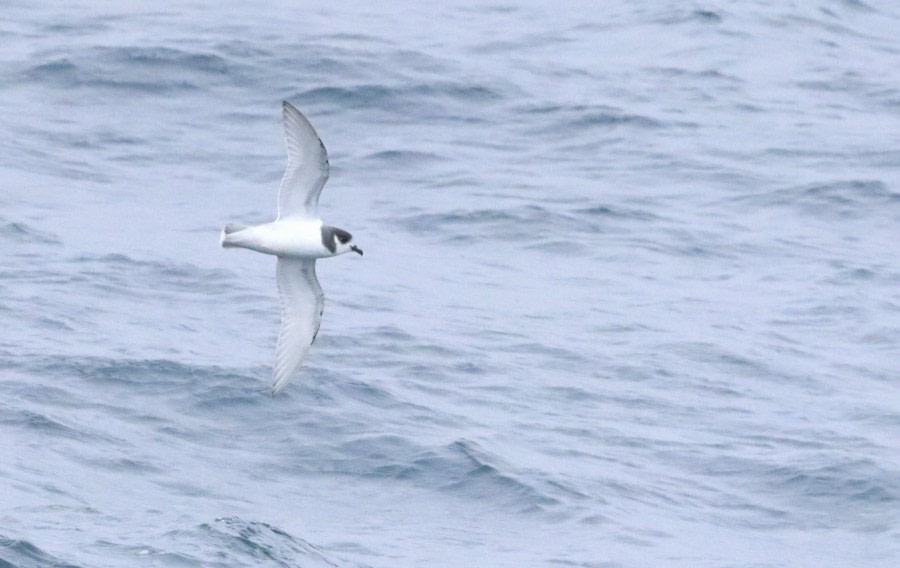
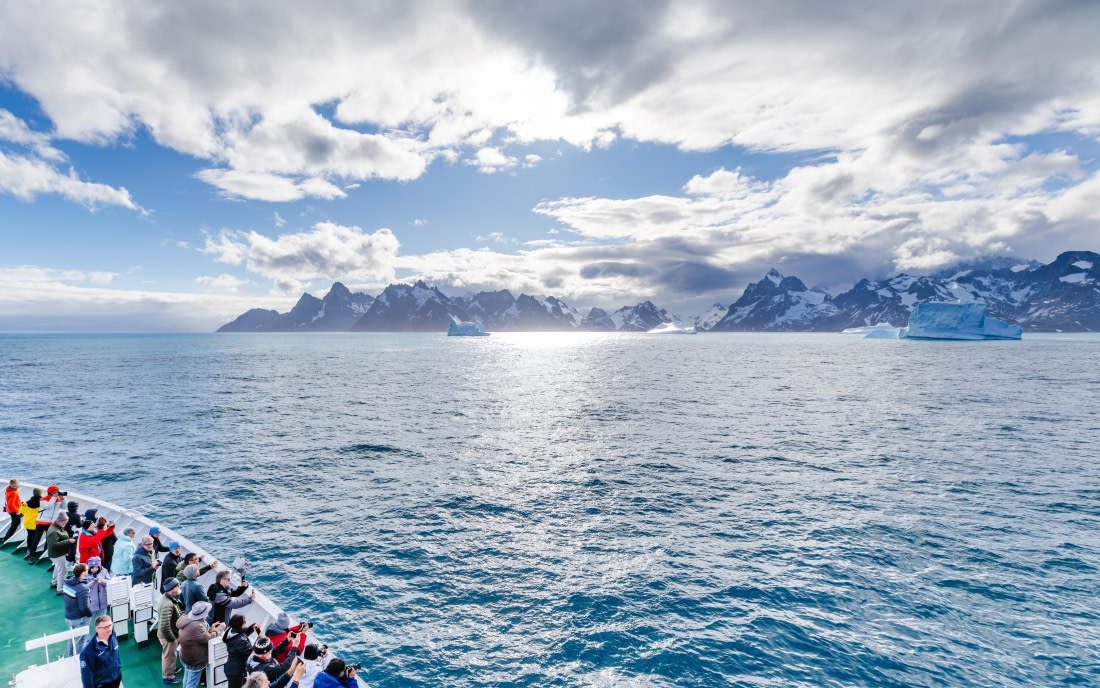
The gentle motion of the ship set a relaxed tone and allowed everyone to enjoy being out on deck as we headed south toward Antarctica. The benign conditions proved perfect for wildlife spotting, and the day quickly delivered. The skies around the ship were alive with seabirds taking advantage of the calm air. Black-browed Albatrosses glided effortlessly alongside the vessel, while Blue Petrels and White-chinned Petrels darted low over the water. Yet it was the appearance of several immense Wandering Albatrosses that truly captivated passengers. With their extraordinary wingspans and unhurried, majestic flight, they drew people to the railings again and again, cameras in hand, marveling at one of the Southern Ocean’s most iconic inhabitants.

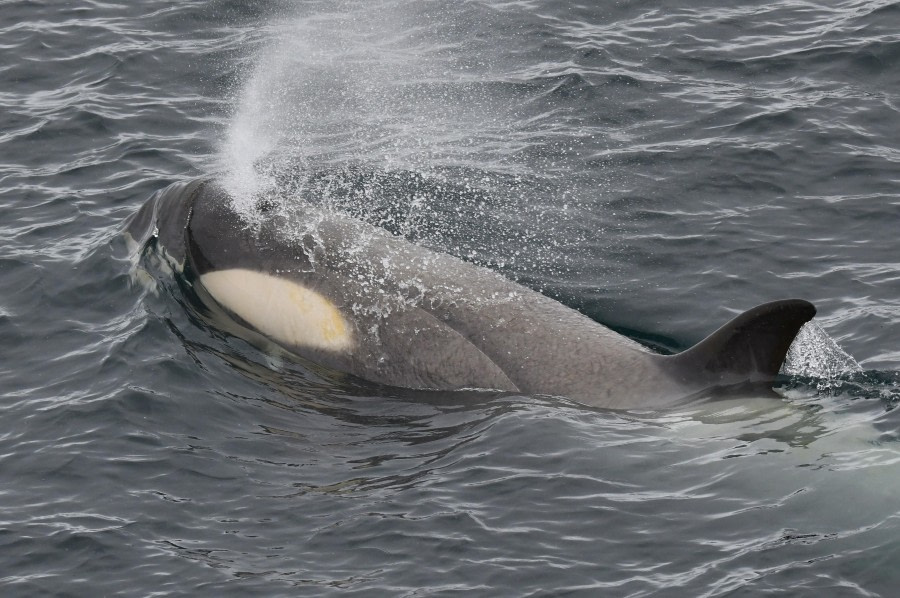
Birdlife was only part of the story. Excitement rose sharply when a group of more than ten Hourglass Dolphins suddenly whizzed past the ship, their striking black-and-white patterns flashing beneath the surface as they raced through the calm seas. The highlight, however, came when a pod of three to four Orca appeared, steaming north as we crossed paths. They surfaced several times, their tall dorsal fins cutting cleanly through the water, offering an unforgettable encounter that left the decks buzzing with awe and conversation long after they disappeared from view.

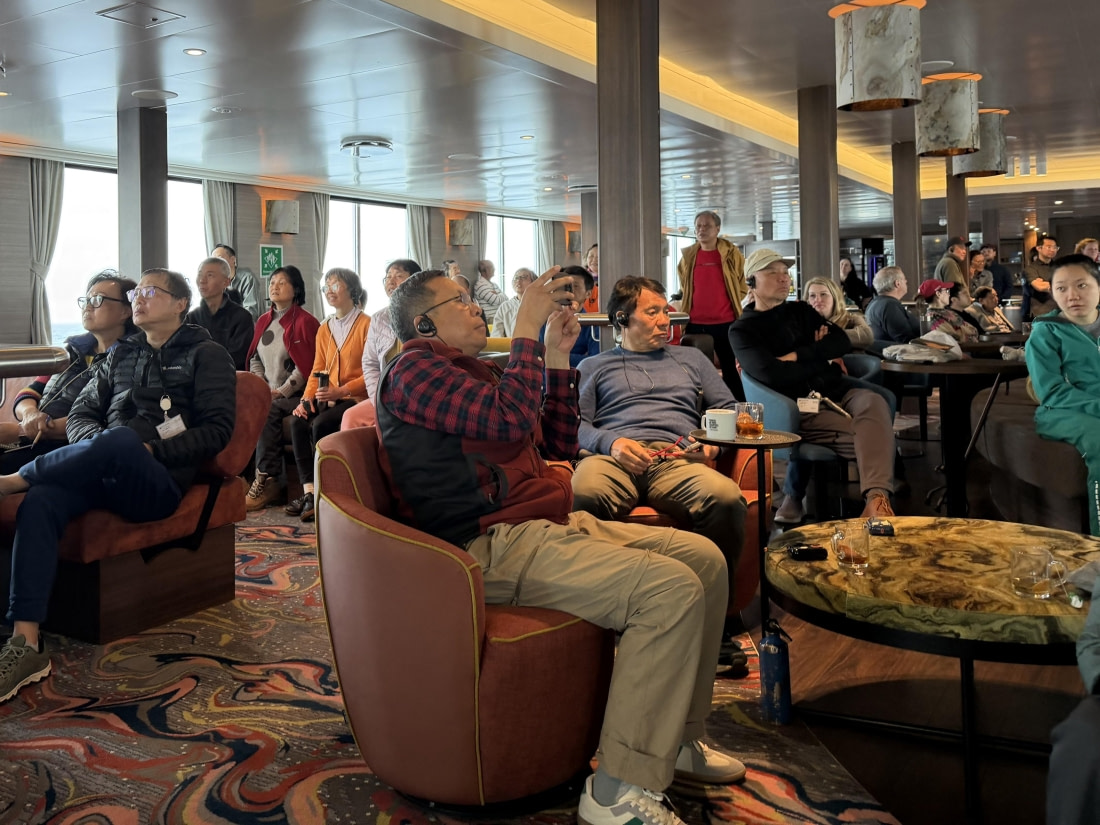
Complementing the wildlife sightings was a full and engaging lecture programme. Simon spoke passionately about the albatrosses we might encounter during the voyage, sharing insights into their behaviour, adaptations, and conservation challenges. This was followed by talks on whales and dolphins from Jerry, delivered in Mandarin, and Andi, in English, ensuring that everyone on board could deepen their understanding of the cetaceans we were so fortunate to see. With such calm conditions, it truly felt like the perfect day for both learning about and spotting marine life.

The afternoon shifted focus toward the adventures awaiting us in Antarctica. Kayaking and camping briefings built anticipation, as staff outlined what participants could expect from these unique experiences on the ice. Excitement grew as the reality of the coming days began to sink in. Later, Luce delivered an enthusiastic and fascinating talk on the underwater world of Antarctica. Drawing on her experience as a scuba diver, she offered a unique perspective on the vibrant, often unseen life beneath the icy surface.

As evening fell, we gathered for a delicious meal, reflecting on a remarkably rewarding first day at sea. Calm waters, memorable wildlife encounters, inspiring talks, and growing excitement for what lay ahead made it a perfect beginning to our Antarctic expedition aboard Hondius. The sunset was truly magnificent over the Southern Ocean, we could easily be the only people on the planet at that moment!

Day 3: Drake Passage - At sea sailing towards Antarctica

Drake Passage - At sea sailing towards Antarctica
Date: 10.01.2026
Position: 62°15.6’S / 065°18.2’W
Wind: W5
Weather: Clear
Air Temperature: +7

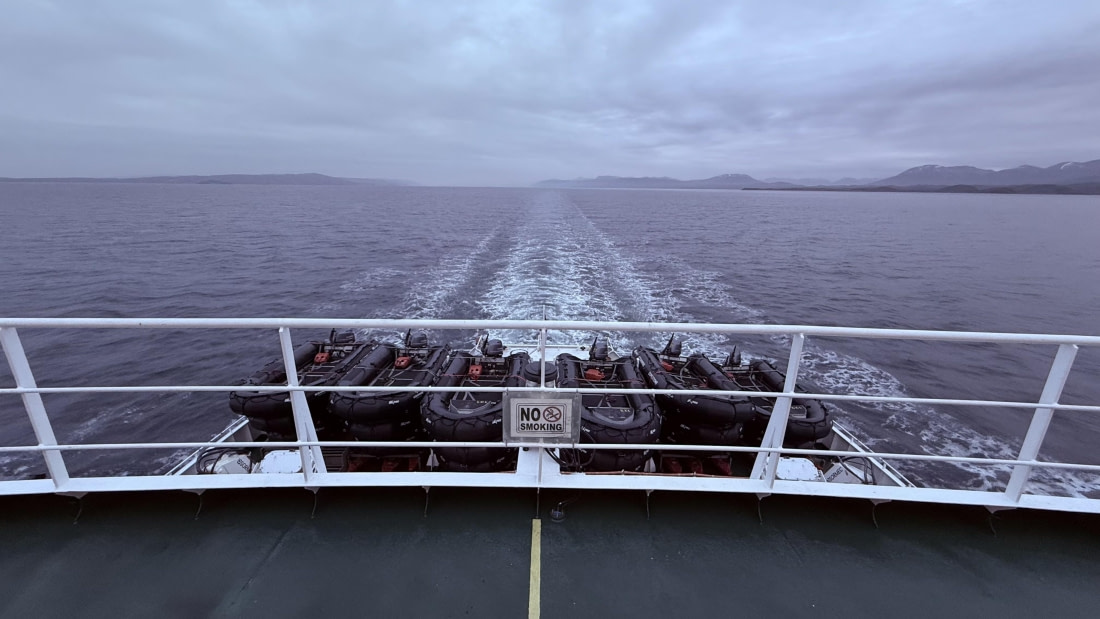
We were woken by Chris’ wake-up call and were pleased to find out the Drake was once again, perfectly calm. After a hearty breakfast, we made our way into the lounge for the first of our mandatory briefings. Here we learned everything about zodiacs, the small powerboats we would use to land on Antarctica. Sit and Slide became our mantra, the introduction to the life vest quickly becoming routine. We also learned about the self-organization of tour operators in IAATO and how we all together keep this spectacular place pristine and exactly as we found it.

During the day there was more than enough wildlife to enjoy from the outer decks. The people that preferred inside, spend it playing cards and getting to know our international group of travelers. But we had more stuff to do in preparation. We fitted our rubber boots and spent the afternoon cleaning them and checking all our outer gear for any organic matter that could pose threat to the Antarctic ecosystem. Potentially not our favorite part of the voyage, but an important one, nevertheless.

Our photography guide Valeria gave an interesting lecture about photographing Antarctic wildlife. Even on smartphones, great results could later this voyage be expected with Valeria’s tips and tricks. Immediately we tried our luck of photographing the first glimpse of the South Shetland Islands that are the first sign of Antarctica coming from South America. As it was unusually bright and clear day we could see them from over 60 kilometers away.

We enjoyed plated dinner by our excellent kitchen team and spent some time in the bar. As Hondius was sailing in thick fog late in the evening, most of us had already found their cabins to be ready for tomorrow’s first operations. The lucky few that stayed awake were treated with the first glimpse of the Antarctic peninsula when the fog suddenly lifted. Wildlife was all around, in the form of porpoising penguin and humpback whales.

Even though the Drake passage had been exceptionally kind to us, we were all excitedly awaiting those first steps on the land that now felt and was finally very, very nearby.

Day 4: Damoy Point and Port Lockroy

Damoy Point and Port Lockroy
Date: 11.01.2026
Position: 64°48.9’S / 63°31.5’W
Wind: NW2
Weather: Clear
Air Temperature: +4

The first day of operations for MV Hondius delivered an unforgettable introduction to the White Continent, combining wildlife encounters, scenic landings, and classic polar adventure under remarkably favourable conditions.

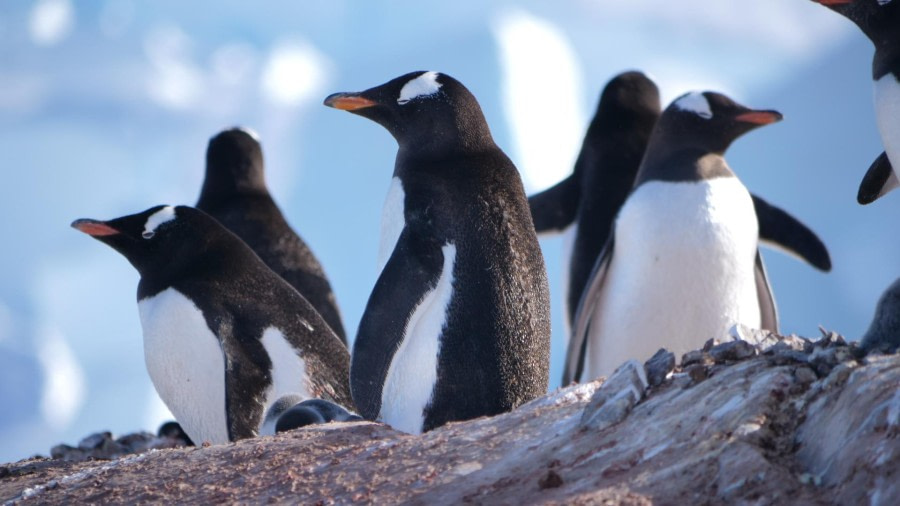
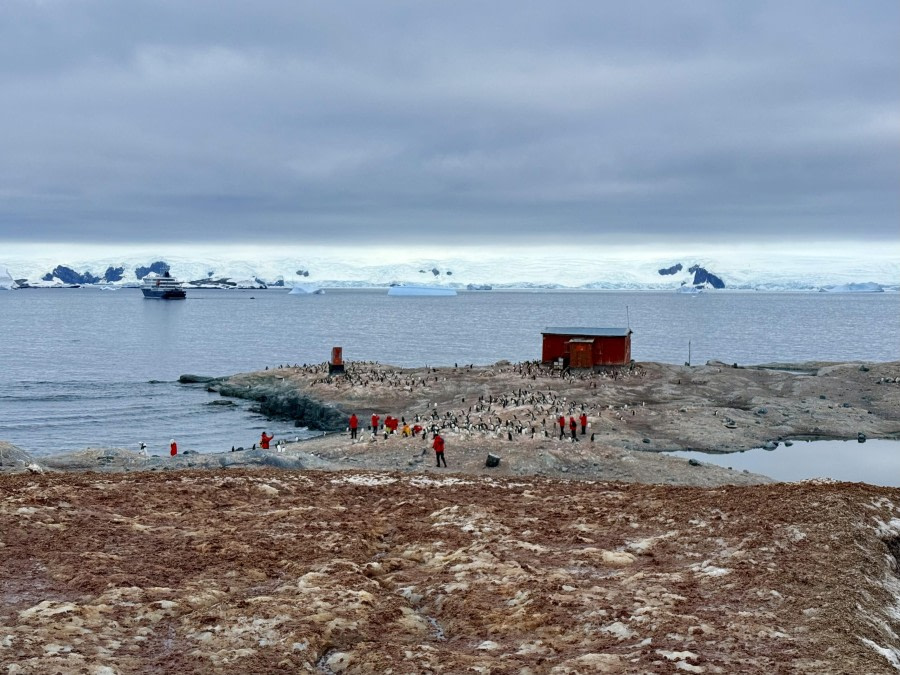
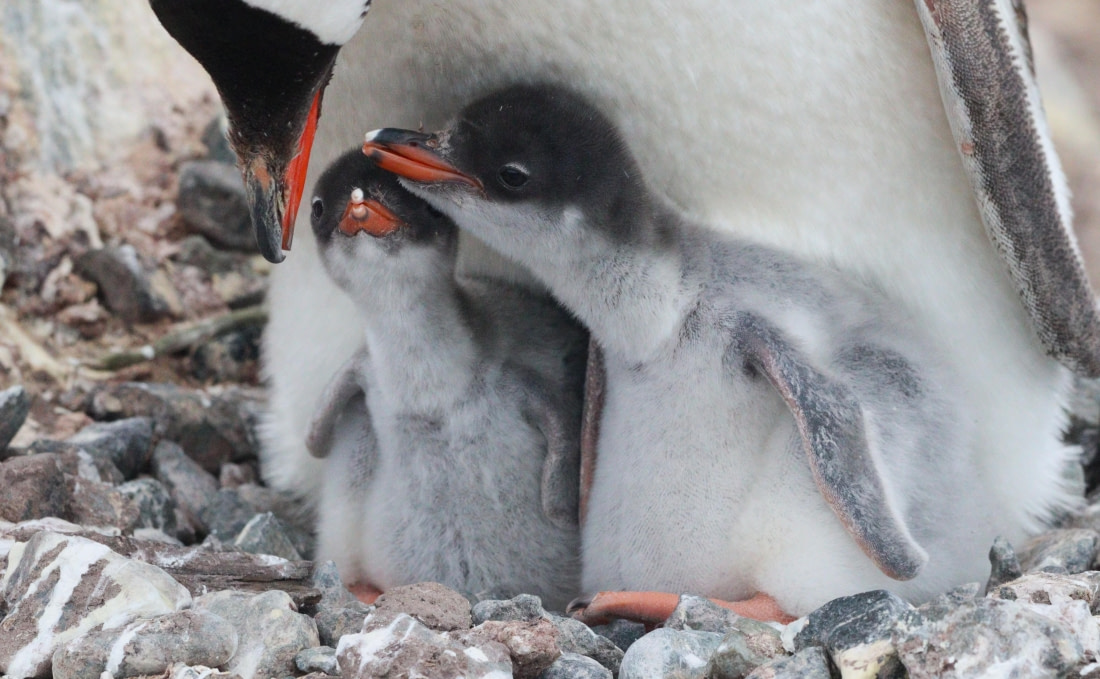
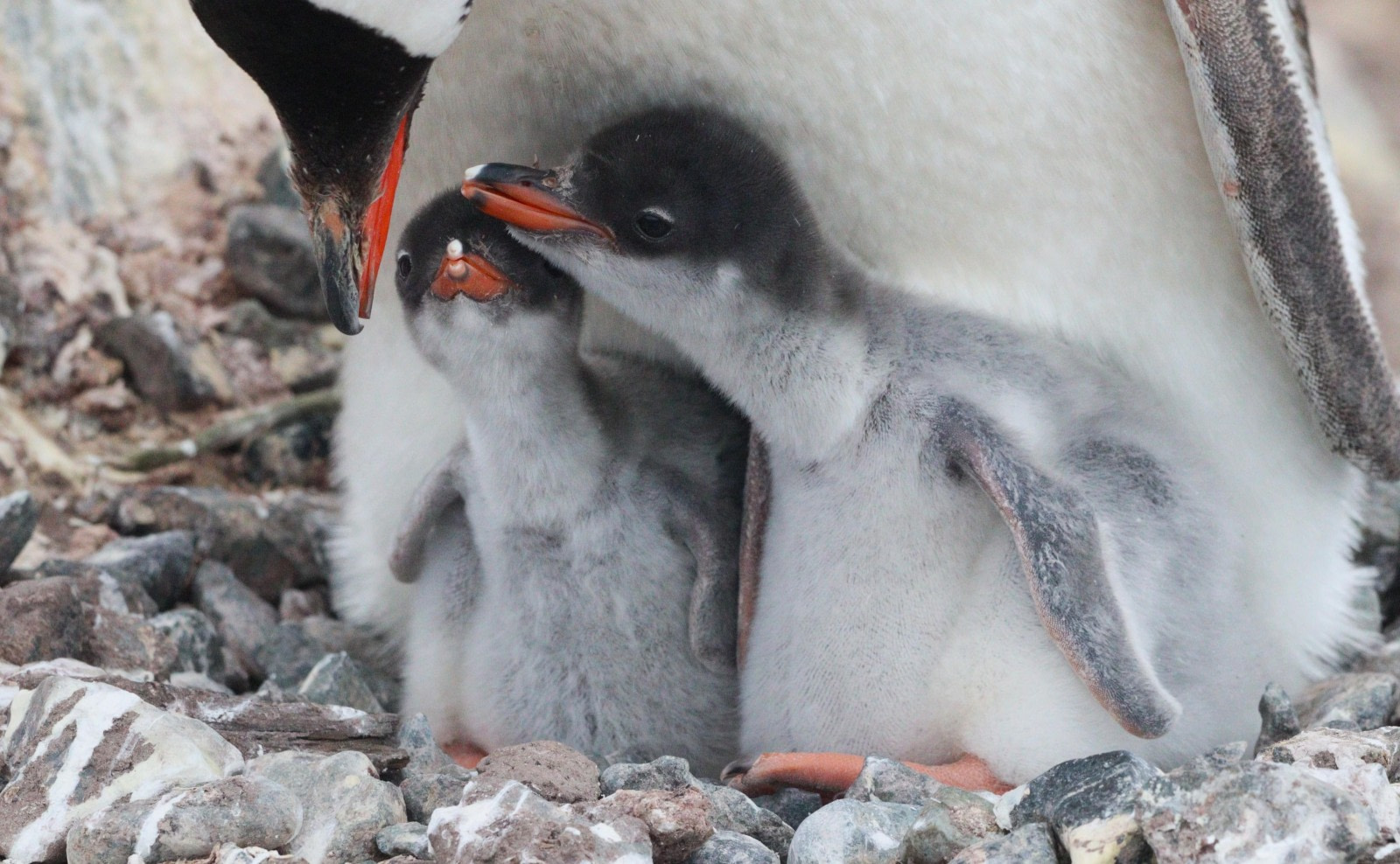
First day in Antarctica! We woke up in Damoy Bay, a beautiful location on Wiencke Island. The weather was stunning and the seas calm. The first group boarded the zodiacs and went to shore while the second half went for a zodiac cruise. Damoy Bay is home to thousands of nesting Gentoo pinguins and the chicks have hashed in the last weeks, allowing us to see the downy little youngsters I the nests. After 2 days on the ship everyone appreciated having a nice long walk to the 2 huts located about 1 km from the landing site. The Argentinian hut is a still active as on emergency hut while the British an impromptu museum, with everything kept as it was left in 1993.

The zodiac cruise took us out in the bay amongst the islands and icebergs. Pinguins were nesting on the rocks and a Weddel seal was spotted sleeping on the shore. The second group was even treated to a sighting of a pod of orca. The kayakers were out for a few hours on the completely still waters. What an amazing first landing!

After lunch, and for some a shot rest, we boarded the Zodiacs once again for a cruise at Port Lockroy. A British station is located on one of the islands in the bay and home 4-6 personal and 100s of pinguins in the summer. It was built as Britan’s first permanent Antarctic base in 1944. The station is now a heritage site with its own post office.

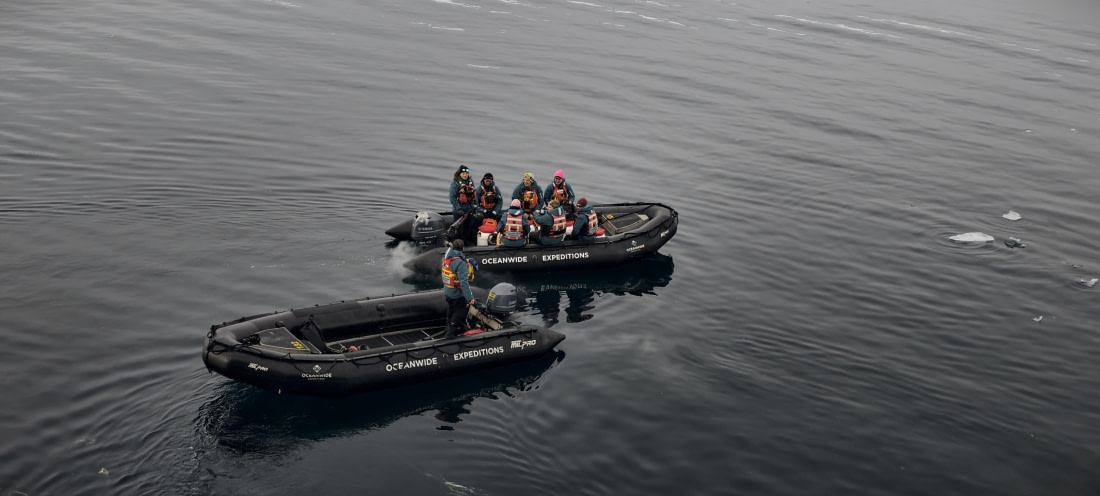
We split into pairs of 2 boats and went exploring. Beside the numerous gentoos a lone Adelie was spotted on an ice flow and a few Chinstraps in the water. Some of the groups also saw a leopard seal, a sleeping humpback whale and lots of lots of glaciers and icebergs. The kayakers went out once again and had a scenic paddle.

Just as we all gathered for the evening recap a large pod of orcas and a humpback appeared next the ship- recap instantly cancelled and we were treated to a rare sight of a baby orca traveling with its pod. This was a first day that will be hard to beat. The guides were joking that we might as well just go back home- we had seen it all!

Cruising through the Neumeyer strait we had dinner and while some enjoyed a drink in the bar most of us went straight to bed, tired and happy after an eventful day.

Day 5: Neko Harbour and Skontorp Cove

Neko Harbour and Skontorp Cove
Date: 12.01.2026
Position: 64°51.5’S / 62°32.2’W
Wind: S1
Weather: Clear
Air Temperature: +2

What a glorious morning! We awoke to beautiful blue skies and absolutely still waters in magnificent Neko Harbour.

Massive glaciers surrounded the peaceful bay, while a few smaller icebergs floated contentedly about. What really caught our attention, though, were the multiple humpback whales feeding all throughout the harbour. We would spot a pair of spouts in one area, only to have our attention soon diverted by another pair. At least six of the giant creatures made their presence known with their gentle breaking of the surface and the WHOOSH of their spouts. We were completely enthralled.

In the meantime, the gentoo penguins were bustling about the shoreline, bathing, feeding, heading to and from their nests. Curious and a little uncertain of their giant visitors, they soon went about their busy day without a care for us, although a few did try to collect our red poles as a treasure for their nests. Had they succeeded, they would assuredly have been the envy of the entire penguin neighbourhood.

From the high vantage point of the top of the walking loop, our view over the harbour was nothing short of dazzling. We watched the brash ice move in, crowding the landing site and adding an extra element of Antarcticness to the day while maintaining perfect weather. Although the face of the main glacier was mostly quiet, there was a significant but not very wide avalanche far to the other side of us that sent a cloud of snow pouring into the sky. The penguins did not seem to react at all, though the crashing noise certainly had us looking up. We did not see the famous tidal waves of Neko Harbour, but we did get to see a fog of powder in an otherwise blue sky.

While we were enjoying ourselves on land, in kayaks, and in the zodiacs, some of the expedition staff took the opportunity presented by the perfect weather to practice person-overboard drills. We watched in amusement as different teams pulled people out of the water, the occasional penguin gliding effortlessly by. Everyone seemed to come through the training well – and only a little water-logged.

After this already full morning, we were ready for a hearty lunch! Today is the day we eat mindfully, trying to be aware of our food choices and how they affect our larger environment, even down here in the polar Antarctic. Vegetarian is the theme of the day’s meals – without, of course, sacrificing flavour. Fortunately, the galley team did not disappoint, serving up a grand buffet of delights, including a scrumptious vegetarian pizza that was a fan favourite. Some of us then went to our cabins for a little nap – we had big plans for the evening still to come.

The afternoon found us all in boats: either a zodiac or a kayak. We meandered around Skontorp Cove, visiting multiple Weddell seals hauled out onto pieces of ice while marvelling at the heights of glacial towers. How had they not managed to topple yet? Some seemed to lean at impossibly precarious angles; surely they would collapse at any moment. But none did during our visit.

We cruised around the corner toward the Argentinian research station Almirante Brown Base, visiting steep cliffs full of nesting blue-eyed (Antarctic) shags, Antarctic terns, and several species of petrel. Occasionally a shag would swoop low over a zodiac on its way out to sea to fish, invariably leaving a crowd of smiles behind it. Gentoo penguins covered the research station, obviously quite at home there. A vibrant streak of aquamarine ran vertically down a cliff, alerting us to the presence of copper in the rock. Vibrant yellow and orange lichen coated the bluffs, adding depths of colours we were not expecting in a land of ice and snow. Wait, was some of the snow slightly pink? Indeed, large patches of “watermelon snow” could be seen throughout the area, caused by a blue green algae known as Chlamydomonas nivalis. Why, then, wasn’t the snow green, if its coloured by a blue green algae? The pink colour was caused by an internal “sunscreen” the algae uses to protect its green chlorophyll. Who knew?

After a slightly bouncy ride back to the ship, we gathered again for dinner, continuing our day of mindful eating with another fantastic array of vegetarian options. The vegetarians among us rejoiced, and the carnivores among us barely missed the meat. All of our taste buds were delighted.

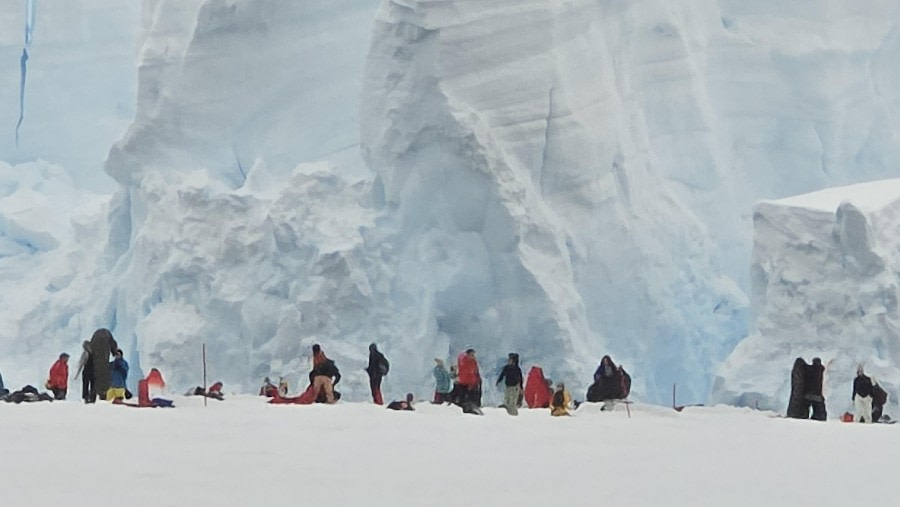
Now, when the evening would normally be drawing to a close, half of us still had one more excursion to go: it was time to go camping! We layered up, put on warm gloves and hats, and went ashore to the place chosen by our guides to spend the night in the crisp, open air. Once there, we used shovels to dig out our sleeping spot, piling the snow up to a make a wall to protect us from any wind that might show up during the night. Our sleeping bags went into our shells, we went into our sleeping bags, and we drifted off to a not-quite-as-comfortable-as-in-a-warm-bed sleep thinking, “How magical is this?”
Day 6: Hidden Bay, Lemaire Channel and Petermann Island

Hidden Bay, Lemaire Channel and Petermann Island
Date: 13.01.2026
Position: 64°56.8’S / 63°38.6’W
Wind: E4
Weather: Overcast
Air Temperature: +2

After breakfast, we boarded the Zodiacs for a morning cruise through the legendary Lemaire Channel, often referred to as the “Kodak Gap.” The sea was exceptionally calm, creating mirror-like reflections of the surrounding peaks.

Towering mountains rose steeply on both sides, their glaciers spilling down toward the water. Massive icebergs—some glowing blue from compressed ice—floated silently past as the Zodiacs carefully navigated the narrow passage.

The morning light filtered through the clouds, illuminating the channel in soft tones of silver and blue. The stillness was broken only by the sound of ice cracking and the distant calls of seabirds. Cameras were constantly clicking as every turn revealed another dramatic vista. We spotted Crabeater seals resting on ice floes and several Antarctic shags perched on rocky outcrops. A pair of Humpback whales was seen in the distance, surfacing slowly before disappearing beneath the glassy water.

As we emerged from the southern end of the Lemaire Channel, the scenery opened up to wide expanses of sea ice and distant islands. The cruise concluded with a quiet ride back to the ship, everyone soaking in the scale and beauty of the Antarctic landscape.

In the afternoon, we headed ashore at Petermann Island, one of the southernmost landing sites regularly visited by expedition ships. Snow crunching beneath our boots marked our arrival on solid Antarctic ground.

The island was alive with wildlife. Large colonies of Adélie penguins and Gentoo penguins occupied the rocky slopes, busily nesting and tending to their chicks. The constant movement and calls of the penguins brought a lively energy to the stark environment.

We followed marked paths to avoid disturbing wildlife, stopping frequently to observe penguin behaviour and admire panoramic views of ice-filled channels surrounding the island. The contrast between dark rock, white snow, and turquoise icebergs was striking.

From higher ground, we looked out over the surrounding waters where tabular icebergs drifted slowly past. The guides shared stories of early Antarctic explorers who had passed through this region, adding historical depth to the experience.

Several Weddell seals were spotted resting near the shoreline, barely reacting to our presence. South Polar skuas circled overhead, ever watchful for opportunities near the penguin colonies.

We returned to the Zodiacs for the short ride back to the vessel, taking one last look at Petermann Island and its bustling penguin communities.

The day offered two very different yet equally unforgettable Antarctic experiences. The serene, dramatic beauty of the Lemaire Channel in the morning was perfectly complemented by the energetic wildlife and immersive landing on Petermann Island in the afternoon. Together, they captured both the grandeur and the intimate life of the Antarctic Peninsula—an exceptional day at the end of the world.

Day 7: Spert Island and Mickelson Harbour

Spert Island and Mickelson Harbour
Date: 14.01.2026
Position: 63°53.1’S / 61°00.6’W
Wind: SSW3
Weather: Overcast
Air Temperature: +3

After enjoying all the humpbacks, the big pod of orcas, the glasslike surface and the beautiful sunset yesterday, we woke up realizing that we had left our “summer residence” of the last few days. Cloud cover and a bit of wind was the scene of this morning activity – a Zodiac cruise among the volcanic islands and islets of Spert Island. These islands were formed more than 150 million years ago, mapped by the Swedish Nordenskjold expedition in 1904 and named after an admiral, serving the British king 500 years ago. These eerie black rocks were full of caves, arcs and channels, some of them could be explored from the Zodiacs – some of them blocked by icebergs or reefs, but the bigger ones were like cathedrals with a very special acoustic when we were inside and could hear the waves and swells crashing the walls. Some mentioned, that we might see Gollum from the “Lord of Rings” or Orks, when we passed or entered all the dark caves. We also had the pleasure of witnessing both gentoos and chinstrap penguins porpoising next to our Zodiacs and even a couple of humpback whales passed by at the end of the trip. After warming up over a good lunch, and maybe a little nap, we were ready for the next activity.

The Zodiac cruise took us through the rocky waters of the bay at Mikkelsen Harbour. Some lucky guests spotted a very relaxed leopard seal, stretched out on its ice floe like it owned the place. Others saw whales in the distance. But everyone enjoyed the biggest surprise of all: a single Zodiac waiting in the middle of the bay.

There, our wonderful hotel and reception team served hot chocolate and rum for those who felt it was the right time (and place) for it. Hot drinks in cold Antarctica always taste better.

On the small islet - D'Hainaut Island - we stepped into history. We saw reminders of the whaling era from about 100 years ago. Whalebones were scattered around the landing site, along with the remains of a “water boat”, a simple rowing boat once used to collect ice and snow, which the whalers melted for drinking water. Like many nearby islands and almost 2000km of coastline on the Westcoast of the Peninsula, this one was charted by the 2 French expeditions led by Jean-Baptiste Charcot in the early 1900’s. The name however, was in honor of a Chilean officer taking part in an Antarctic expedition in 1952.

Mikkelsen Harbour was named after a Norwegian whaler, and his story was dramatic. He was just about to harpoon a whale when a calving glacier suddenly sent ice flying toward the boat. Mikkelsen was killed instantly, and the whale escaped and got to live another day. During our visit, we could see and hear several glacier calvings and snow avalanches, reminding us that this was a place where Mother Nature was clearly in charge.

Back on Hondius, we received the briefing for tomorrow’s plans: a visit and a hike on an active volcano!!!

The day ended with the rare opportunity of an Antarctic BBQ and dance, surrounded by tall snow-covered mountains, huge glaciers, and an almost perfectly calm bay. Wonder what the leopard seal thought of our taste in music - because it was still resting on its icefloe.

Day 8: Telefon Bay and Edinburgh Hill

Telefon Bay and Edinburgh Hill
Date: 15.01.2026
Position: 62°55.8’S / 060°39.7’W
Wind: SW3
Weather: Overcast
Air Temperature: +2

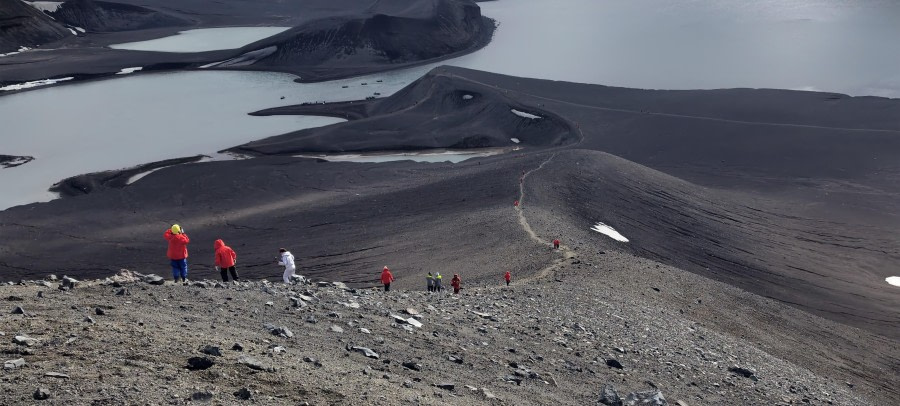
The day began early. Shortly after 07:00 we arrived at one of the most remarkable places in Antarctica: Deception Island, located in the South Shetland Islands. This extraordinary island is an active volcano, and our ship sailed all the way into its flooded caldera. Surrounded by volcanic cliffs, we landed at a place called Telefon Bay.

From the shore, we set off on a long hike up to a nearby mountain. Step by step, the views expanded, until we could look out across the entire volcanic island.

Two research stations were visible from the peak, where researchers monitor seismic activity and study this still-active volcano.

After the hike, those feeling especially adventurous took part in a polar plunge, entering the icy Antarctic waters, measured at approximately 4°C (39°F). Cold, and unforgettable, it was a moment many will remember for a lifetime.

As the ship continued its journey during lunch, guests gathered for a photography workshop on board. The session focused on composition, light, and storytelling through images, offering helpful tools to capture the beauty of Antarctica.

The long afternoon transit proved more than worthwhile when we arrived at our second destination, Edinburgh Hill. This astonishing natural wonder is formed by massive hexagonal basalt columns, created millions of years ago as slowly cooling magma fractured into striking geometric shapes. These towering columns rise up to 200 meters (600 feet) above the sea, creating a wonderful sight.

Exploring the area by zodiac, we cruised along the dramatic rock walls, surrounded by glaciers that occasionally calved with thunderous sound echoing across the water. We saw a young elephant seal resting peacefully on the beach, and several chinstrap and gentoo penguins taking a break on land.

Today, we experienced two truly incredible and unique locations in Antarctica, each offering a completely different perspective on the power and beauty of this remote continent. It was a perfect way to conclude our time here. As evening approached, we set course toward the Drake Passage, carrying with us unforgettable memories of the adventure at the edge of the world.

Day 9: At sea leaving Antarctica

At sea leaving Antarctica
Date: 16.01.2026
Position: 60°35.3’S / 062°15.1’W
Wind: NE3
Weather: Clear
Air Temperature: +3

Our sea day aboard Hondius began with an unfamiliar sight: the Drake Passage, calm and almost glassy, as if offering us a gentle farewell from Antarctica. Known as one of the most tempestuous stretches of ocean on Earth, where the Atlantic, Pacific, and Southern Oceans collide, the Drake is famous for towering swells and roaring winds. Today, however, it felt more like a blessing than a trial, allowing us to reflect on the remarkable journey behind us.

The morning started on a sentimental note as we returned our beloved muck boots. Those sturdy companions had carried us across icy beaches, penguin highways, and snowy ridges, and handing them back felt like closing a special chapter of our expedition. Shortly after, our Expedition Leader shared his experiences of living in Antarctica. Listening to stories of long polar nights, isolation, scientific research, and the raw power of the environment gave us a deeper appreciation of what it truly means to call this frozen continent home, even temporarily. Antarctica, protected by the Antarctic Treaty System since 1959, remains devoted to peace and science, a global collaboration unlike any other.

After lunch, we gathered for a fascinating lecture by Jodi and Jerry on the Race to the South Pole. The dramatic rivalry between Roald Amundsen and Robert Falcon Scott unfolded before us, a tale of preparation versus perseverance. Amundsen’s success in 1911 was rooted in his deep understanding of polar travel and use of skis and dogs, while Scott’s tragic expedition became a powerful reminder of how unforgiving Antarctica can be.

The highlight of the afternoon came unexpectedly when a pod of extremely rare strap-toothed beaked whales passed our ship. These elusive deep-diving cetaceans, also known as Layard’s beaked whales, are among the least observed whales in the world. They are famous for the extraordinary teeth of the males, which curve over the upper jaw and limit how wide they can open their mouths. Living mostly in the Southern Ocean, they spend much of their lives in deep waters, diving over 1,000 meters in search of squid, making sightings like ours exceptionally special.

During our evening recap, we learned more about these mysterious whales and revisited the legends of the Southern Ocean: the iconic orcas. Apex predators with complex social structures and highly specialized hunting techniques, they remain one of Antarctica’s most intelligent and captivating residents.

We ended our day with another delicious plated dinner in the dining room, sharing stories, laughter, and gratitude. Surrounded by calm seas and rich memories, we felt the quiet magic of a perfect Drake Passage day and the lasting impact of our Antarctic adventure.

Day 10: At sea towards Ushuaia

At sea towards Ushuaia
Date: 17.01.2026
Position: 56°50.3’ S, 066°17.8’W
Wind: N3
Weather: Clouds
Air Temperature: +6

Today was our second day sailing toward Ushuaia. The morning began with informative and engaging talks: Pierre shared his knowledge about humpback whales, followed by Simon’s presentation on penguins. It was the perfect way to deepen our understanding of the Antarctic species we were so lucky to observe throughout the voyage.

Just before lunch, Captain Ernesto surprised us one last time as we sailed past the legendary Cape Horn — one of the world’s most renowned capes and a place every sailor dreams of witnessing at least once.

After our final lunch buffet, Marcel gave a presentation on Oceanwide’s exciting destinations, undoubtedly awakening new dreams and future travel plans for many of us.

During the afternoon, Valeria shared valuable photography and editing tips, which were incredibly helpful. We definitely have countless photos to sort through — memories of a lifetime. Later on, the captain and the expedition team hosted a cocktail ceremony to thank us for this unforgettable journey. We watched a touching slideshow prepared by some of the guides, filled with images from the trip, before the expedition leader provided practical information about disembarkation to ensure a smooth return to land.

To close the day — and this fabulous adventure — we shared our final dinner while sailing through the beautiful Beagle Channel.

Day 11: Disembarkation in Ushuaia

Disembarkation in Ushuaia
Date: 18.01.2026
Position: 54°17.4’ S, 036°28.9’W
Wind: N2
Weather: Overcast
Air Temperature: +11

Our last morning came gently as the ship slipped back into Ushuaia, the harbour bathed in the soft glow of early light. Even before breakfast, suitcases lined the corridors outside our cabins, a quiet reminder that the voyage was ending. Breakfast was relaxed and comforting, filled with calm conversation and shared laughter as everyone revisited their most memorable moments of the journey. Not long after, we went ashore where our luggage awaited us neatly arranged on the pier. Goodbyes echoed through the group as travellers embraced, shook hands, and offered heartfelt thanks to the crew who had cared for us so thoughtfully throughout the expedition. Casting one last look at our dear Hondius that had carried us across the Drake Passage and through extraordinary days among the ice, we stepped into the cool Ushuaia morning, taking the memories of Antarctica with us, for life.

Kayaking experience

The kayaking experience during this Discovering Antarctica voyage was both meaningful and deeply rewarding. We brought nearly ninety guests onto the water, many of them with only basic prior experience, yet all were able to explore secluded bays, tidewater glaciers, small islands, penguin rookeries, and colonies of seabirds.

From their kayaks, they encountered whales and seals at close range, approached historic sites and scientific stations, and—perhaps most memorably—experienced the profound silence that defines Antarctica.

Kayaking offers a singular perspective in this environment. It allows for an intimate, unmediated connection with the landscape, one that fosters presence, humility, and lasting memory. It is an experience that leaves a quiet but enduring mark on those fortunate enough to live it.

For me, as a Patagonian kayak guide, returning to Antarctica was a privilege. Sharing its essence—freedom, simplicity, and the unique sensation of paddling through one of the last truly untouched places on Earth—was an honor.

Thank you for being part of this journey. I look forward to crossing paths again.

Details

Tripcode: HDS26-26
Dates: 8 Jan - 18 Jan, 2026
Duration: 10 nights
Ship: m/v Hondius
Embark: Ushuaia
Disembark: Ushuaia

Have you been on this voyage?

Aboard m/v Hondius

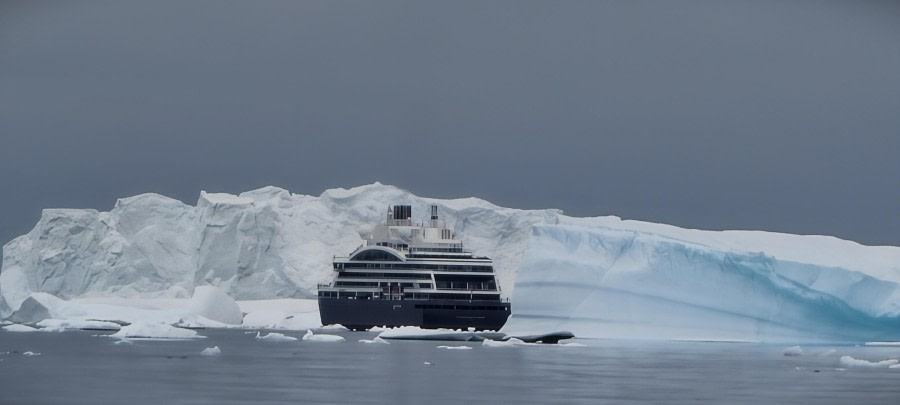
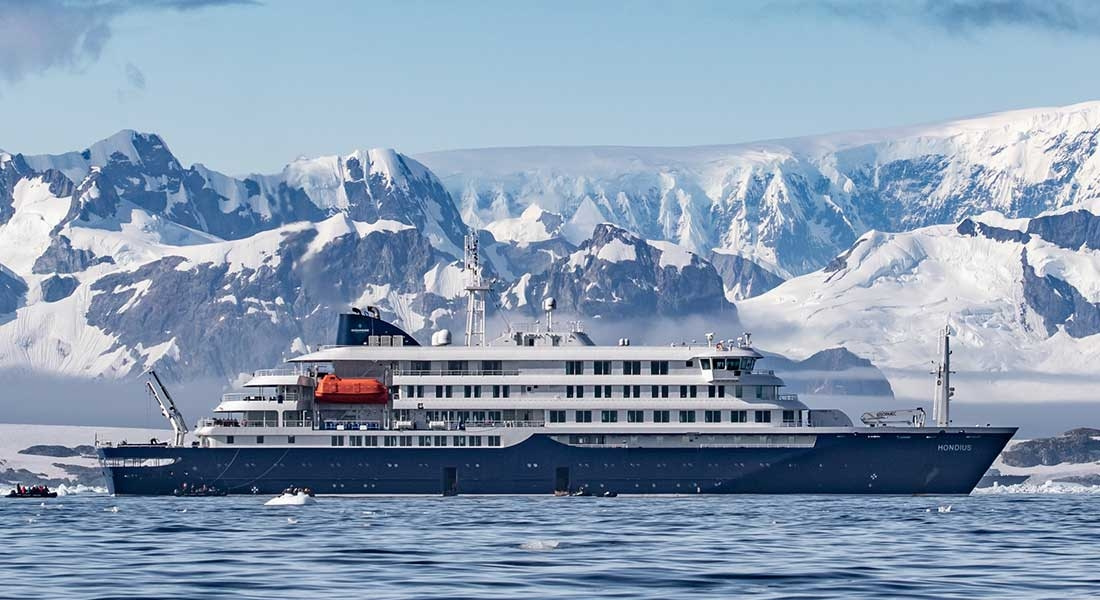
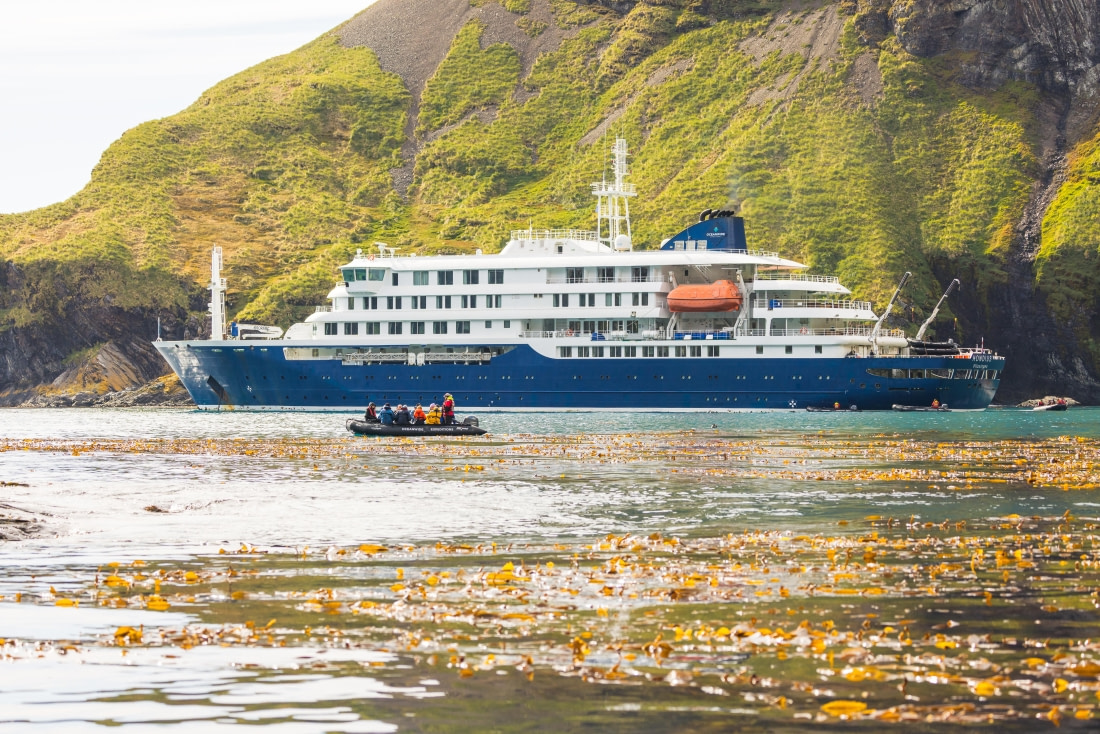
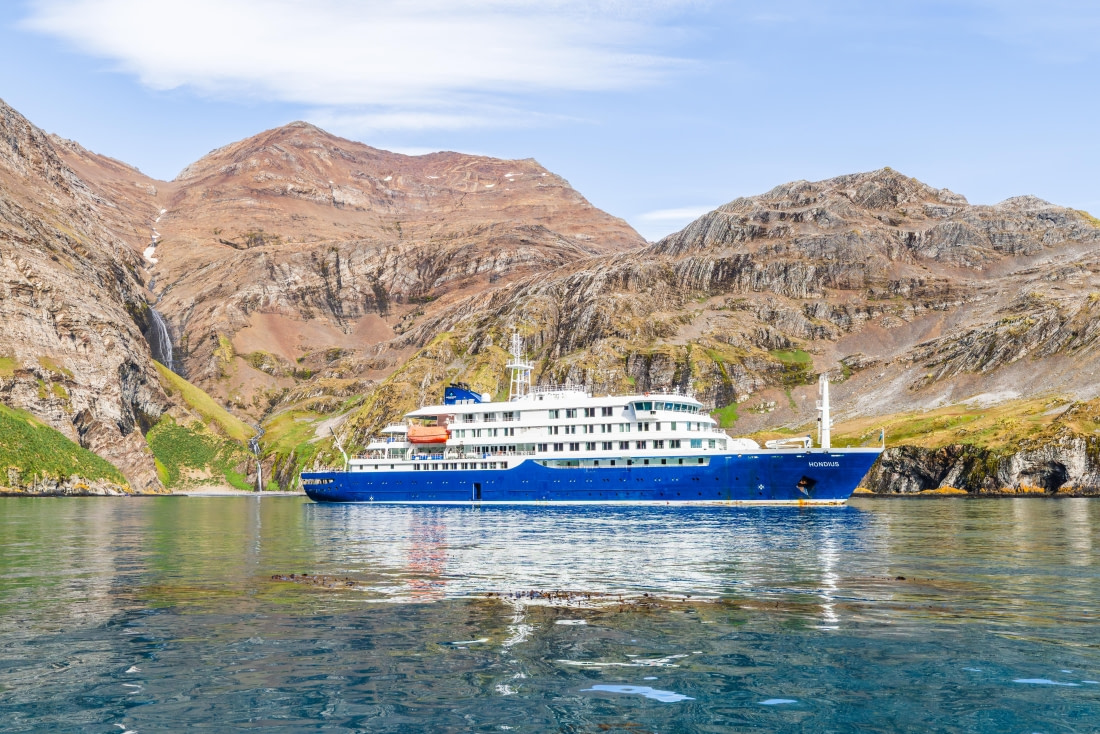
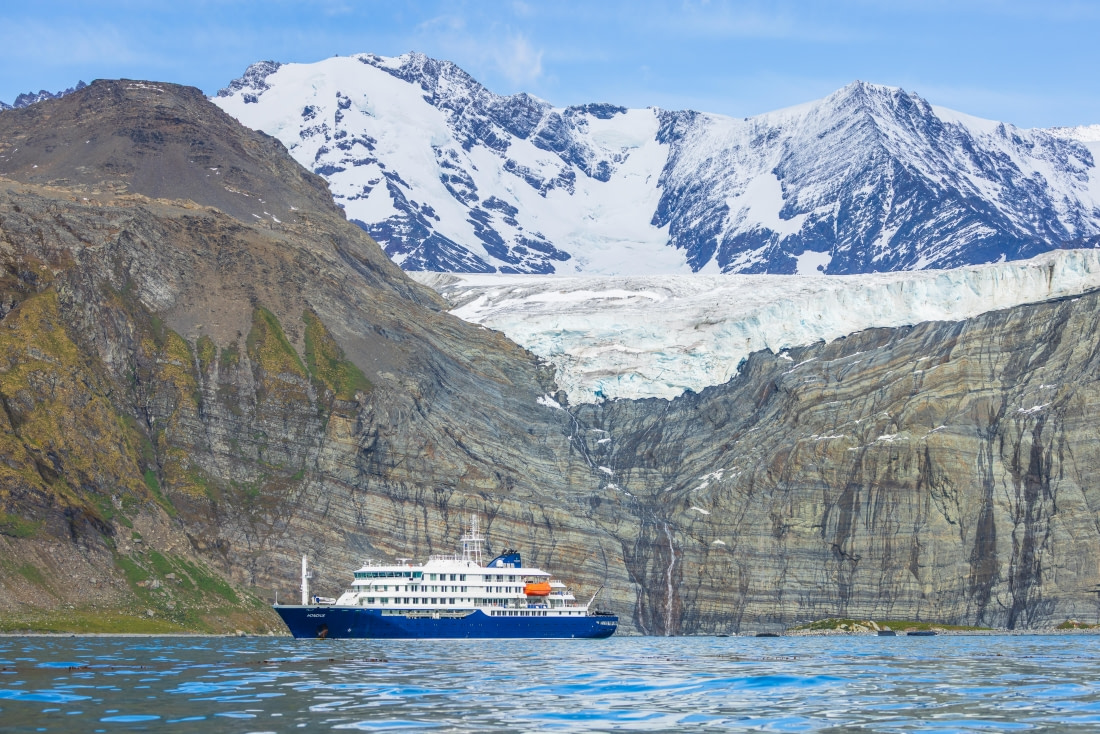
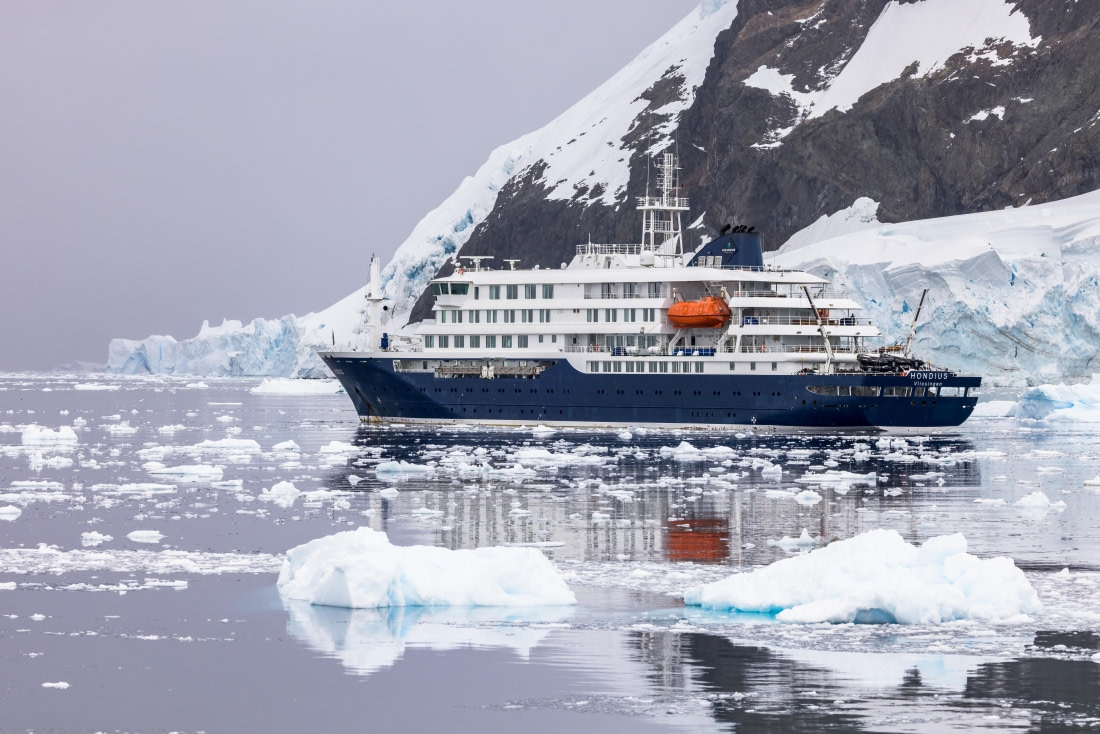
Hondius is the world’s first-registered Polar Class 6 vessel and was built from the ground up for expedition cruising.

More about the m/v Hondius »
Loading