Name: Svalbard Reindeer (Rangifer tarandus platyrhynchus)
Length: 1.5 to 1.6 metres (4.9 - 5.3 feet)
Weight: 50 to 90 kg (110 - 198 pounds), males being larger
Location: Svalbard
Conservation status: Least concern
Diet: Vegetarian
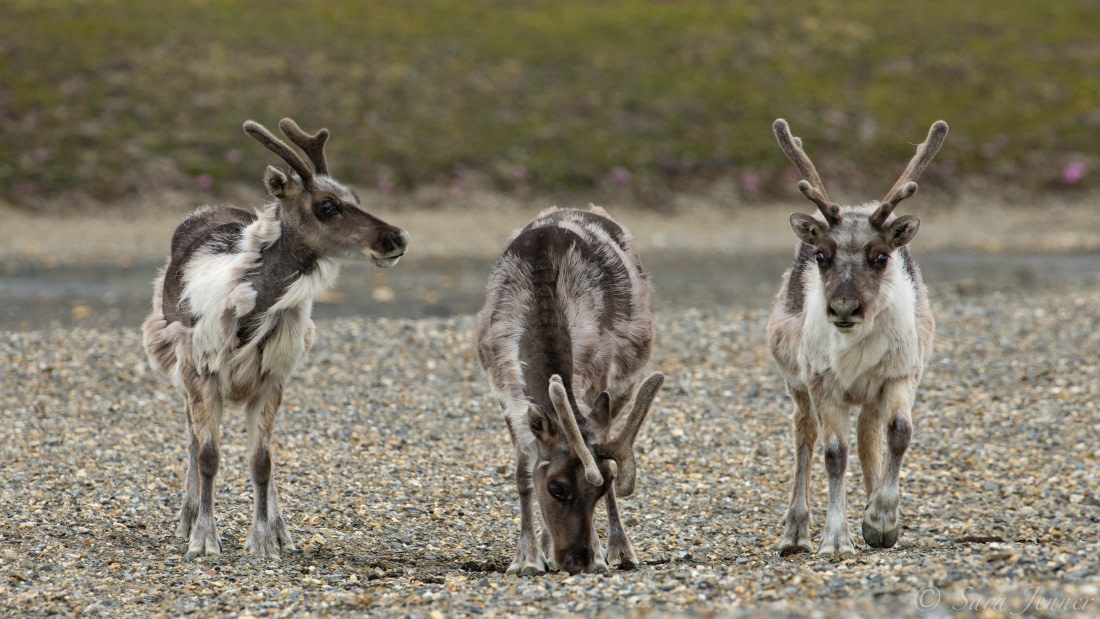
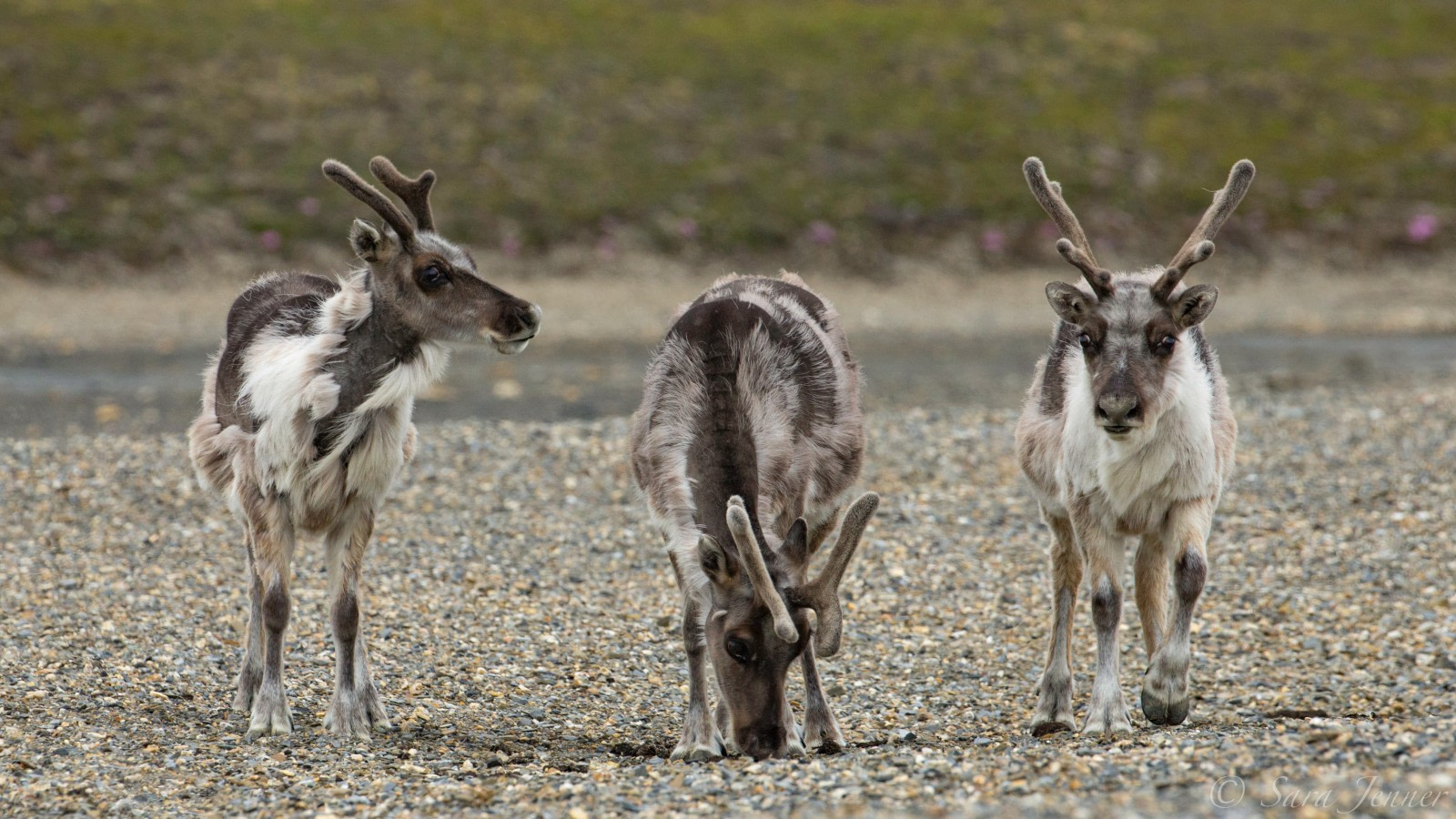
Appearance: White with darker coloring along their backs and faces

How do Svalbard reindeer feed?
During the winter, Svalbard reindeer forage in areas where snow has less chance to accumulate. These include mountain slopes, ridgelines, and plateaus. During the summer and when access to food is easier, these reindeer spend most of their time feeding in order to accumulate enough fat to survive the next winter.
Are Svalbard reindeer social?
Svalbard reindeer tend to form small groups of about five members during the summer. These smaller groups may also gather during the winter due to limited feeding grounds. Svalbard reindeer are generally curious about people, slowly approaching to check them out before deciding if they should run or go back to feeding.
How fast do Svalbard reindeer move?
Svalbard reindeer can reach speeds of up to 80 km (50 mph) at a sprint. They are generally sedentary, however, and shuffle along as they feed.

What are Svalbard reindeer birthing rituals like?
These reindeer reach sexual maturity around age three, and breeding season begins in October. Successful males will collect up to ten females to create a harem. Pregnancy lasts about seven months, and a single calf may be born to each pregnant female in June. During the nursing period (about three months), Svalbard reindeer calves grow from about 3 kg (6.6 pounds) to about 10 kg (22 pounds) when weaned.
How long do Svalbard reindeer live?
Svalbard reindeer live for an average of 10 years, but some have been noted for living as long as 17 years.
How many Svalbard reindeer are there today?
There are about 10,000 Svalbard reindeer alive today.

Do Svalbard reindeer have any natural predators?
Svalbard reindeer have no natural predators. Starvation is the most significant factor keeping the population of this species in check.
7 sweet Svalbard reindeer facts
- Svalbard reindeer are the smallest subspecies of reindeer.
- Their weight varies considerably between seasons. In spring the average Svalbard reindeer male weighs 65 kg (143 pounds), growing to 90 kg (198 pounds) by autumn.
- Svalbard reindeer fur grows lighter in color during winter.
- Male reindeer develop antlers from April through July, shedding the velvet covering in late summer. They then lose the antlers at the beginning of winter. On the other hand, female reindeer grow antlers beginning in June and keep them for an entire year.
- Svalbard reindeer are the only reindeer species in Svalbard.
- These reindeer were almost hunted to extinction in the early 1900s, but dedicated recovery programs helped them repopulate.
- Birth rates can vary wildly from year to year depending on how hard the winters were in the previous season. Birth rates (the number of females that get pregnant) can be anywhere from 10% to 90% among Svalbard reindeer.