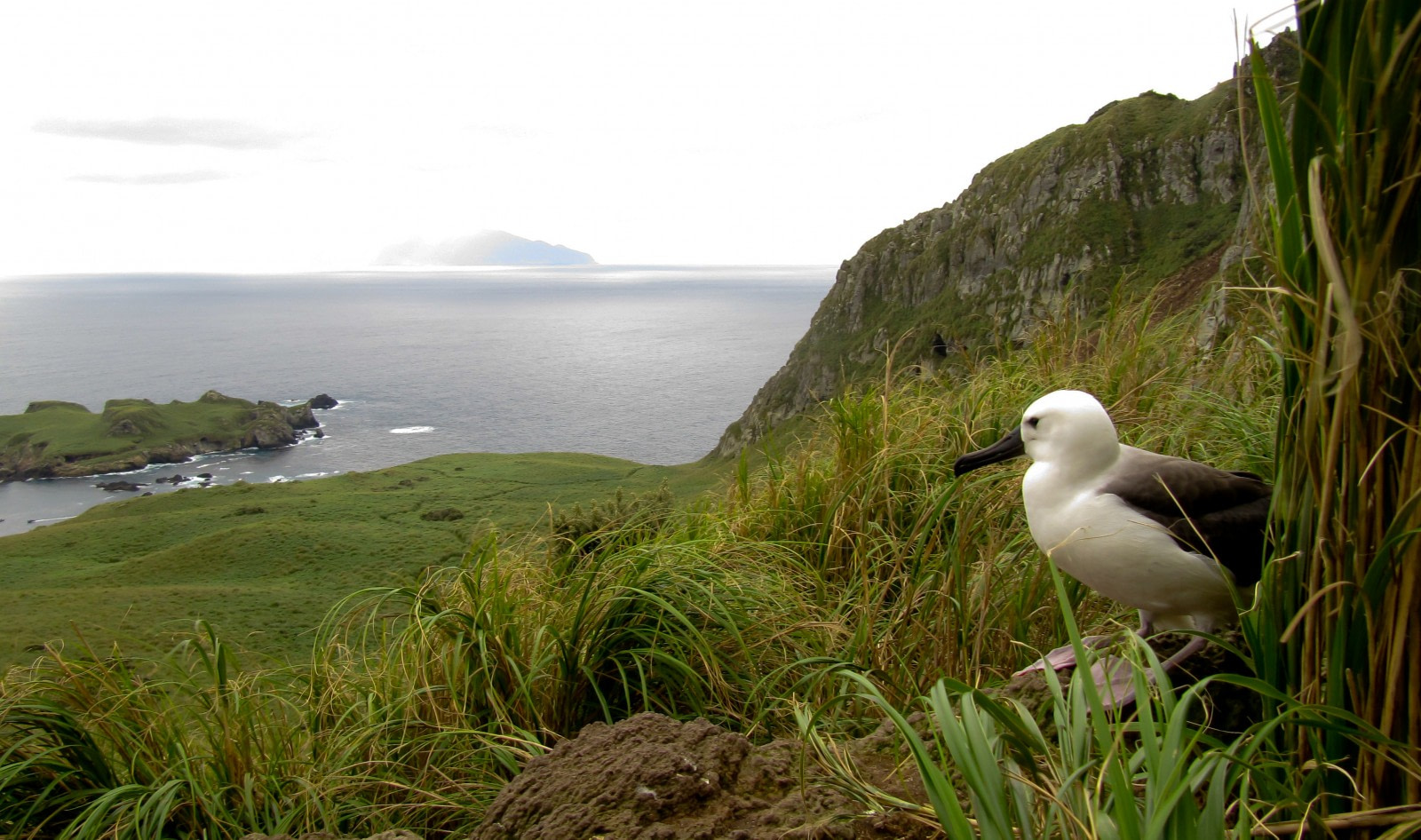
The largest no-take marine protection zone in the Atlantic has just been established around Tristan da Cunha
What is generally considered an unlucky day in Western superstition became a very lucky day for the wildlife of Tristan da Cunha.
On Friday, November 13, the Tristan da Cunha government announced the establishment of a no-take marine protection zone (MPZ) almost three times the size of the United Kingdom. This new conservation area, which covers 687,00 square km (265,000 square miles), is currently the largest of its kind in the Atlantic and the fourth largest no-take zone in the world.

The Tristan da Cunha MPZ bans fishing and all other extractive activities within its area of coverage, hence its “no-take” provision. This provides an iron-clad sanctuary for the area’s vulnerable populations of northern rockhopper penguins, blue sharks, beaked whales, endangered albatrosses, and many other animals.

No-take zones are the most stringently valuable of all conversation areas. They’re also the rarest, comprising only 1% of all MPZs worldwide. Naturally, this degree of protection is not easy to accomplish, taking over 20 years of hard work, cooperation, and international financial support to actualize. Hyperbole aside, it is a feat not likely to be matched in our lifetimes.
The Tristan da Cunha MPZ is now part of the “Blue Belt,” a collection of conservation areas the UK plans to expand to over 4 million square km (1.5 million square miles) of protected ocean by 2030. If this can be achieved, roughly 30% of the world’s oceans will be included.

The islands of Tristan da Cunha are located over 2,700 km (1,600 miles) from South Africa and 3,700 km (2,300 miles) from South America. The main island is the most remote inhabited landmass on Earth. Populations of elephant seal and fur seal, still recovering from 19th-century hunting, live and breed offshore, in addition to humpback whales, Shepherd’s beaked whales, southern right whales, long-finned pilot whales, sperm whales, and species of dolphin.

Tens of millions of seabirds also live on Tristan da Cunha, along with multiple endemic land birds. Of the 25 seabird species that breed there, four are globally threatened and can only be found on Tristan da Cunha. These include Atlantic petrels, spectacled petrels, Tristan albatrosses, and Atlantic yellow-nosed albatrosses.

Also, nearly all of the world’s northern rockhopper penguins (called pinnamins by Tristan locals) have breeding rookeries around the archipelago. These beloved seabirds are so much a part of Tristan da Cunha culture, in fact, that islanders often call themselves “rockhoppers.”

The Tristan da Cunha MPZ represents one of the year’s most significant conservation efforts. It protects a temperate marine system that has remained virtually untouched by the modern world, and the goal of the MPZ is to keep it that way. This is music to our ears, since our rare Tristan da Cunha trips are filled with wildlife we dearly love but seldom see.

This conservation milestone was accomplished by the people of Tristan da Cunha in partnership with the UK government, Royal Society for the Protection of Birds (RSPB), National Geographic Pristine Seas, Wyss Foundation, British Antarctic Survey, Kaltroco, Blue Nature Alliance, Natural History Museum, Becht Family Charitable Trust, Blue Marine Foundation, Don Quixote II Foundation, and the University of Plymouth.
If you’re interested in knowing more about the waters and wildlife this MPZ protects, check out this beautifully shot video by the RSBP.