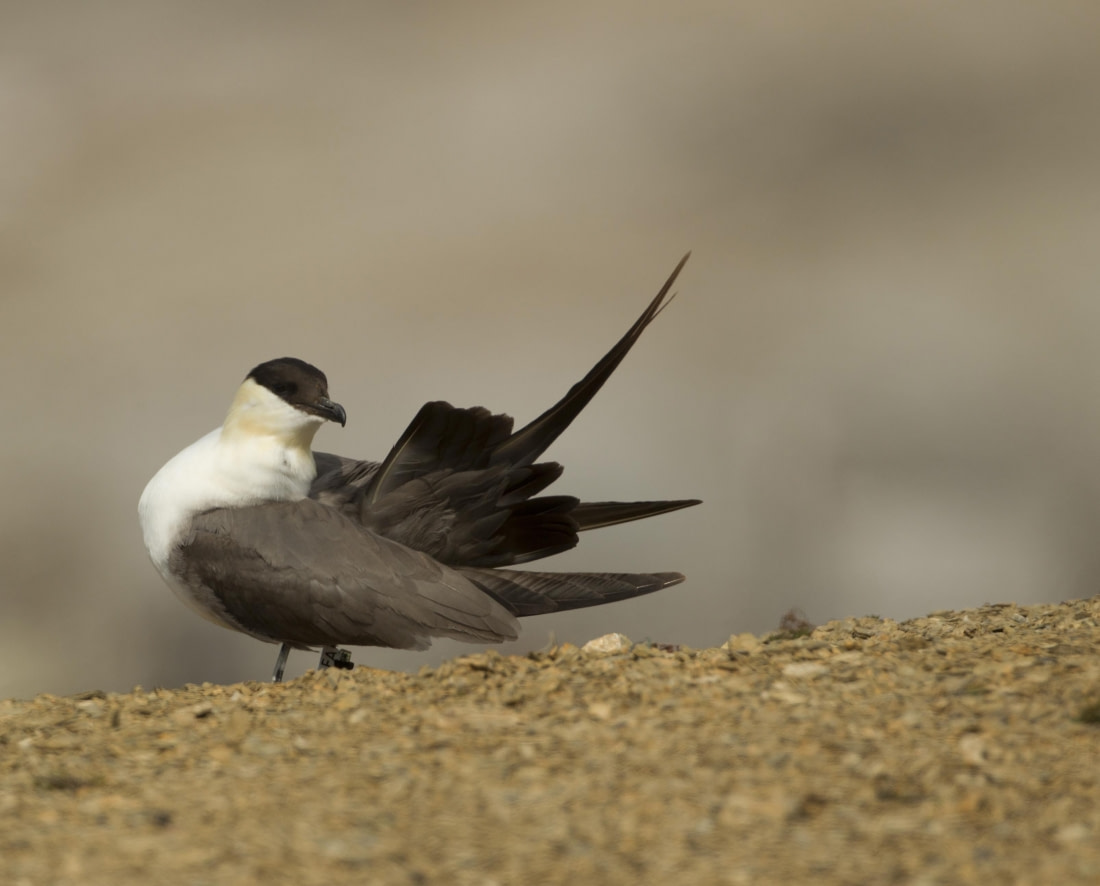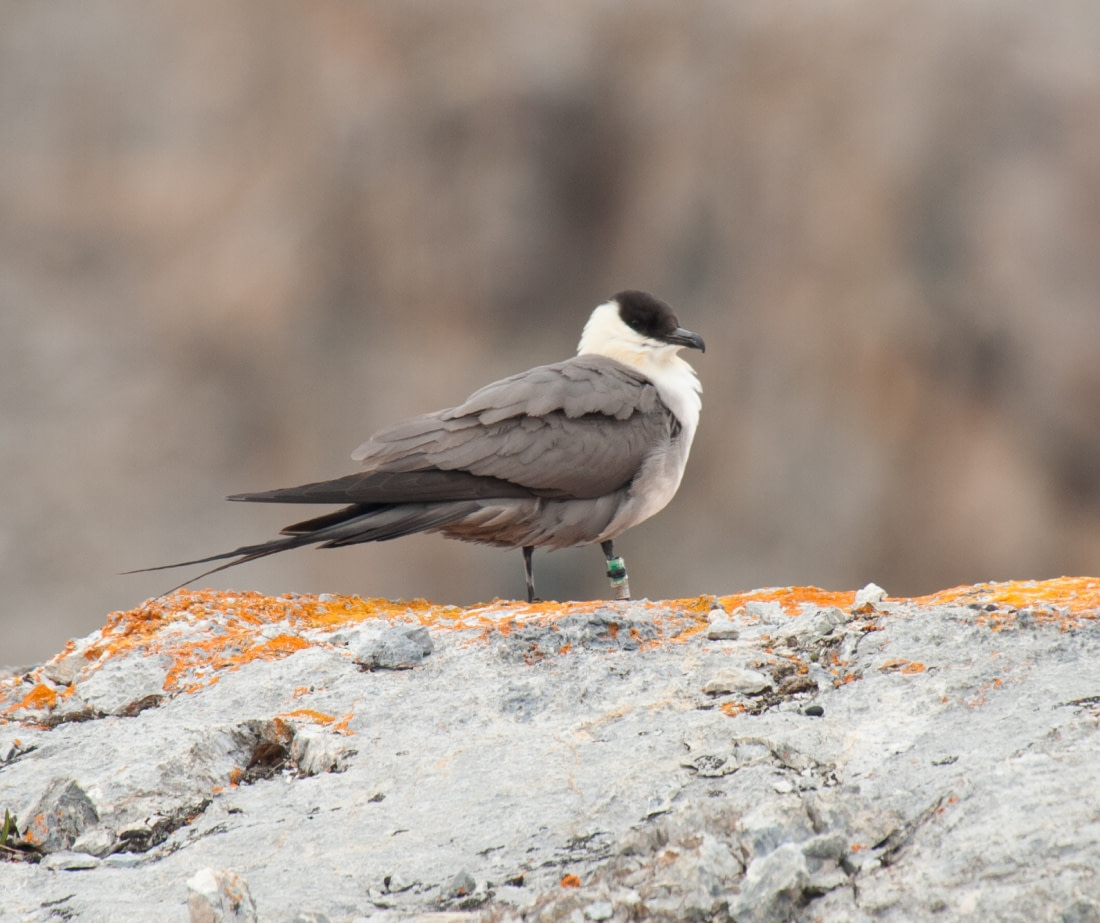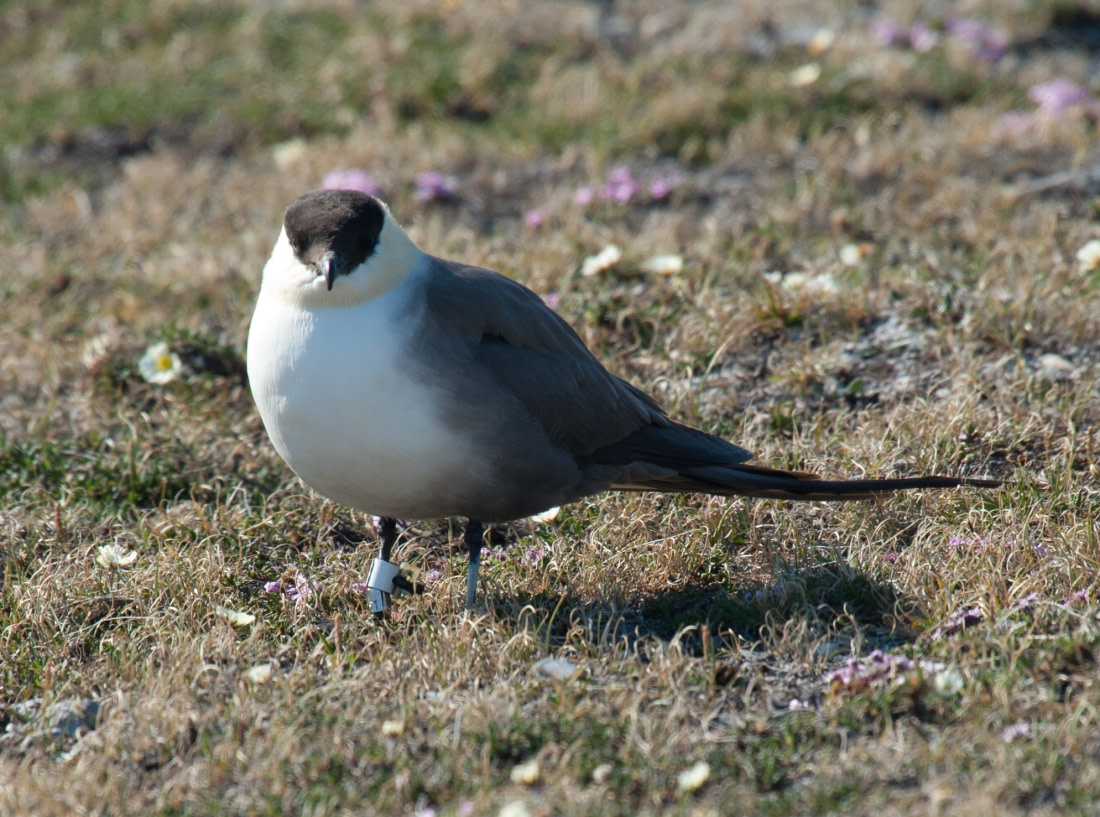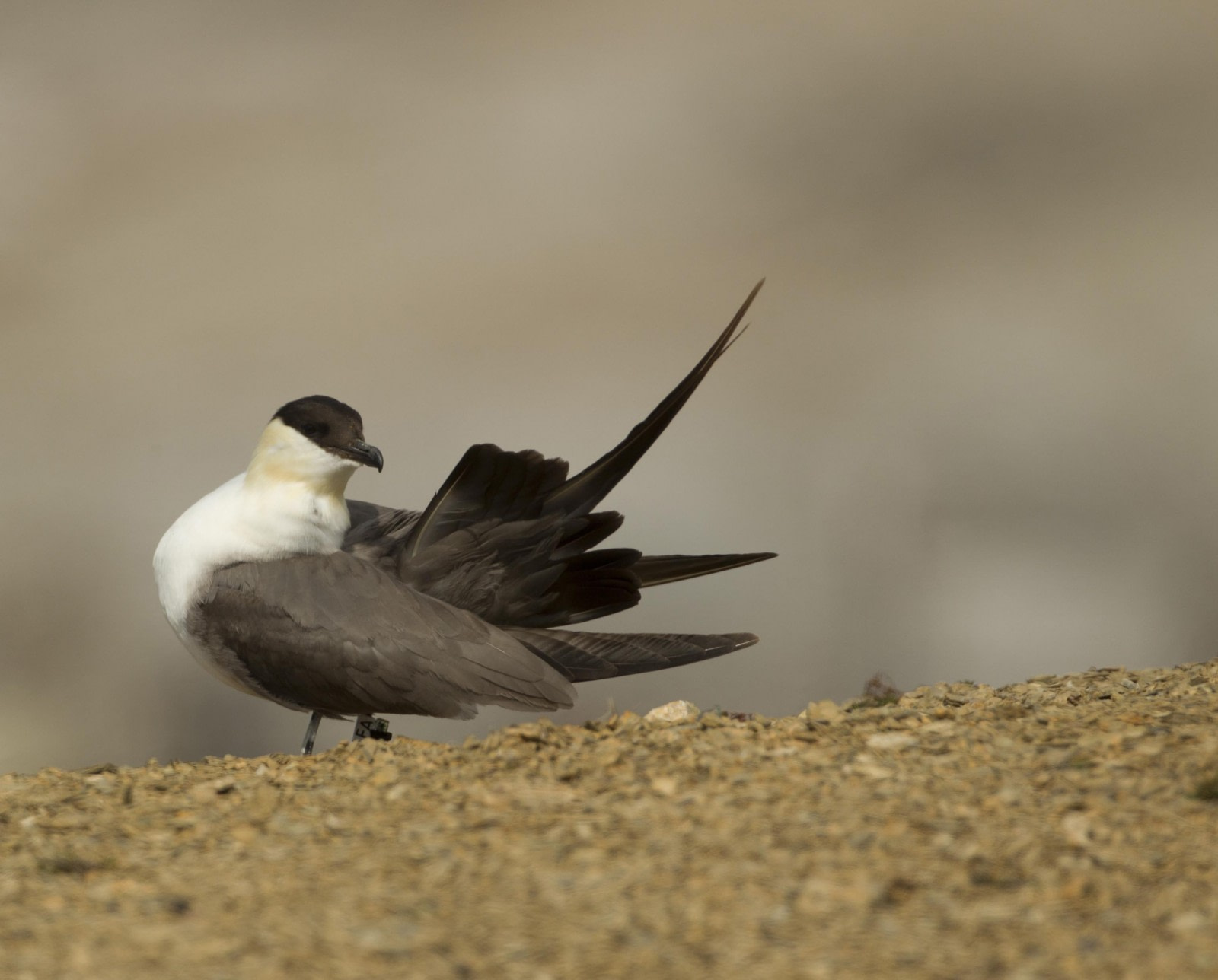
Name: Long-tailed Jaeger, Long-tailed Skua (Stercorarius longicaudus)
Length: 40 to 60 cm.
Weight: 230 to 450 grams.
Location: High Arctic regions. Winters southern Pacific and Atlantic.
Conservation status: Least Concern.
Diet: Fish, smaller birds, small mammals, carrion, fruit.
Appearance: White belly, black wings, grey back. Black cap on head, yellow cheeks and nape. Long streaming tail-feathers. Dark bills.
How do Long-tailed Jaegers feed?
Long-tailed Jaegers are bullies, harassing other birds returning home after making a catch. They will cause the other bird to drop their fish where the Long-tailed Jaegers can retrieve it.
During the breeding season they will rely more on hunting down the rodent population. They will hover over their prey, then swoop down to pounce and peck its victim to death.

Are Long-tailed Jaegers social?
Long-tailed Jaegers that are not breeding sometimes form small flocks so they can forage together.
How fast do Long-tailed Jaegers fly?
Long-tailed Jaegers can reach speeds of up to 50 km per hour.
What are Long-tailed Jaeger birthing rituals like?
Long-tailed Jaegers reach sexual maturity at 3 years of age.
The breeding season begins in June. Nests are located on dry tundra. The nests are usually little more than a scrape in the ground, positioned to have a good view of the surrounding area. Long-tailed Jaegers are highly territorial and will vigorously chase away intruders in their area.
How many eggs are laid in any given year is related to the abundance of rodent prey in the area. At most 2 olive-brown eggs are laid. In years with a low rodent count some adults will not attempt to mate at all.
Incubation lasts around 24 days. Chicks are able to leave the nest about 2 days after hatching, which allows them to run and hide in vegetation to avoid predators. Most of the rearing is done by the female adults while the males handle the bulk of the hunting and territory defence duties.
The juveniles fledge (are able to take their first flight) around 25 days after hatching.

How long do Long-tailed Jaegers live?
Long-tailed Jaegers live for about 9 years.
How many Long-tailed Jaegers are there today?
Estimates are hard to find since the Jaegers spend so much of their time at sea and their breeding numbers can take huge swings depending on the rodent prey population of any given year. Therefore worldwide population estimates range anywhere from 150,000 all the way up to 5,000,000 individuals.
Do Long-tailed Jaegers have any natural predators?
Long-tailed Jaeger eggs and young are prey for Arctic Foxes and various rodents.
7 Stupendous Long-tailed Jaeger Facts
- Long-tailed Jaegers are the smallest members of the Skua family.
- Up to half of the Long-tailed Jaegers length can be made up of its tail (including its streamers). The tails can reach up to about 30 cm in length.
- There are 2 subspecies of Long-tailed Jaegers:
1. Stercorarius longicaudus pallescens – Greenland, North America, eastern Siberia
2. Stercorarius longicaudus longicaudus – Russia, northern Scandinavia - The long streamers (extended central tail feathers) are only present on breeding adults. They are lost outside of the breeding season.
- Long-tailed Jaegers breed the furthest north of all the northern-breeding Skua species.
- Long-tailed Jaegers are also the most widely distributed of the northern-breeding species.
- Long-tailed Jaegers spend almost all of their lives out at sea, returning to dry land only for breeding.