Blog
Type
Region
Destination
-
Show all
Ship
Highlights
-
Show all
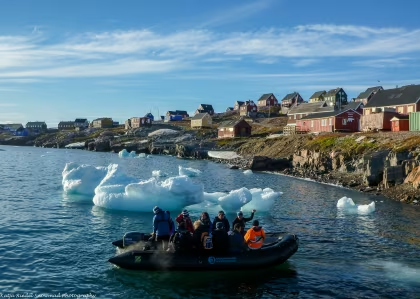
Scoresby Sund: the Greatest Greenland Adventure
Would you like to discover a world of towering ice spires, magnificent glaciers and breathtaking fjords? There is such an adventure for you in Eastern Greenland. Few places can make the claim to be the biggest, the grandest or the most inspiring but Scoresby Sund (or Sound) is one of those remarkable locations.

The world is changing for Greenland's native Inuit people
You may know them as ‘Eskimos’, but the people of the Arctic are officially called the Inuit. Historically, they were hunters in the truest sense. For hundreds of years they survived the world’s harshest conditions, living off their prey of whales, seals, polar bears, muskoxen, birds, fish and caribou. This has always been their way of life. One that is now changing.
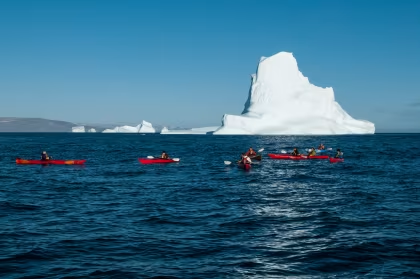
Kayaking In Greenland
The kayak is a quick, agile boat, invented by the Inuit, the native people of Greenland. For centuries, perhaps thousands of years these skilled hunters and fishermen used this light, mobile platform to hunt their prey. They still do.
Oceanwide Expeditions presents new corporate identity
Since 1993, Oceanwide Expeditions has been taking passengers deep into the Arctic and Antarctica on voyages that focus on wildlife, nature and activities.
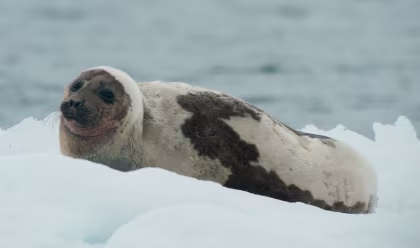
Harp seals harping on in Greenland
Harp seals are moderately sized species, averaging 1.6 metres in length and weigh around 130 kilograms. Both the males and females are of similar size and weight, with males only slightly larger than the females. They have a thick, robust body with a small broad and flat head, short narrow flippers and a narrow muzzle.
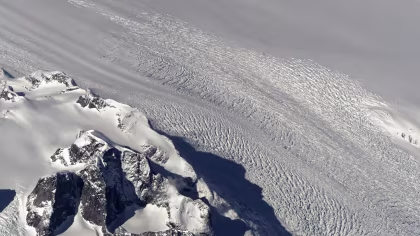
Ice streams and lakes under the Greenland Ice Sheet
The Greenland ice sheet is not a static body of ice but instead a dynamic body of dense, flowing and deforming ice. Snow deposited on the central parts of the ice sheet is gradually compressed to ice that slowly flows towards the ice margin.
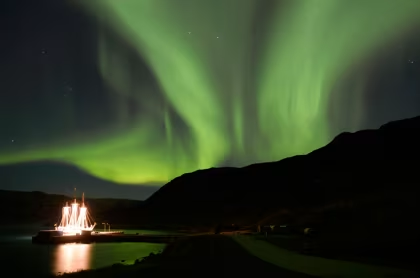
The Northern Lights dancing across the skies
The Northern Lights most commonly occur in a belt of radius 2,500 kilometres centred on the magnetic North Pole. This auroral zone extends over northern Scandinavia, Iceland, the southern tip of Greenland and continue over northern Canada, Alaska and along the northern coast of Siberia.
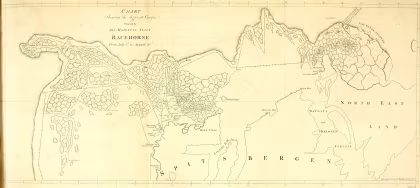
First to the North Pole: Five Failed but Brave Expeditions
Constantine Phipps, 2nd Baron Mulgrave and officer in the British Royal Navy, was the first person to make a voyage to the Arctic with the intent of reaching the North Pole, sailing the vessels Racehorse and Carcass beyond Svalbard to the Seven Islands in 1773.
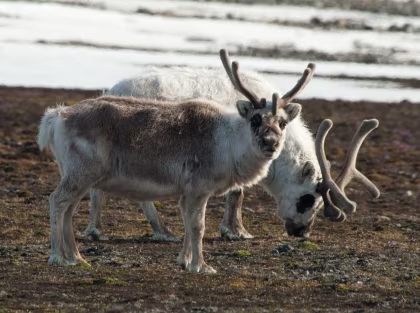
Amphibian, reptiles and herbivore mammals in the Arctic
Arctic ecosystems are relatively young in terms of geological time, having developed mainly over the past three million years. In general, species richness is lower in the Arctic than in southerly regions, which is consistent with general scientific observations that biodiversity declines from the Equator the poles.
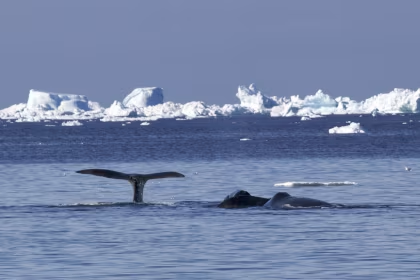
The bowhead whale, whaling about the Arctic
Bowhead whales are only found in the cold Northern Hemisphere waters around the Arctic. They are large species that can be up to almost 20 metres long with enormous heads that are around a third of the total body length of adult whales.
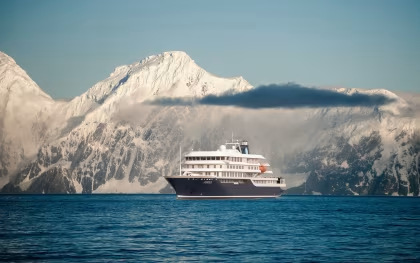
Oceanwide announces new vessel Hondius
Due to an increased demand for polar cruises, Oceanwide Expeditions, the leading exploratory Polar cruise company since 1993, has commissioned the building of an innovative 180-passenger vessel.
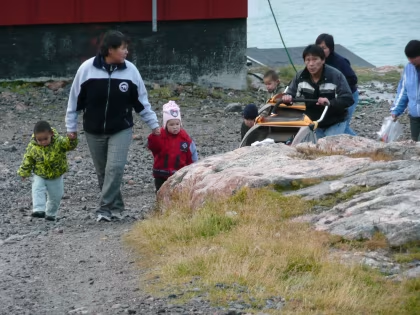
Greenlandic Inuit Beliefs
Traditionally, Greenland Inuit believe that humans as well as animals have both soul and body, where the soul performs the breathing and is independent of the body. In this sense the Inuit believe that the soul continues to live after death.
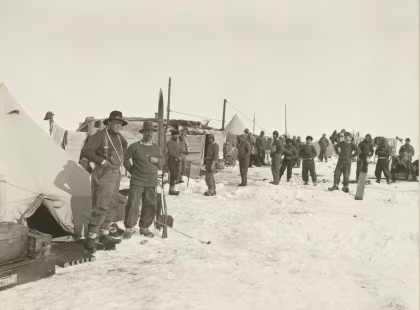
Exploration of the Polar Regions
From the Vikings via the first whale and seal hunters to Scott and Amundsen, from the maritime explorers Franklin and Nordenskiöld to present-day polar tourism, a quick tour through history reveals some of the aspect which motivated people to extend their horizons. Existential need, sheer curiosity, imperial greed, polar science and a taste for adventure all converged in regions which pardon no mistakes.
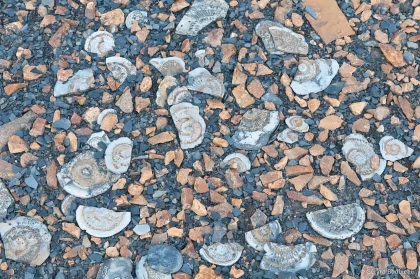
Svalbard a Disneyland for geologists
Svalbard is located in the north-western corner of the Eurasian plate. For a long period Svalbard was part of a large continent that included North America, Greenland and Eurasia. At one time both Northeast Greenland and Svalbard were submerged under the depths of the ocean before surfacing again. It is because of this geological history that Svalbard is a geologist’s heaven.
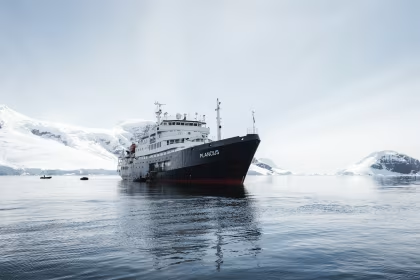
A Photo-Tour of our Cruise Ship the m/v Plancius
Welcome aboard the Plancius! She was originally named the Hr. Ms. Tydeman and was built as an oceanographic research vessel for the royal Dutch Navy in 1976.
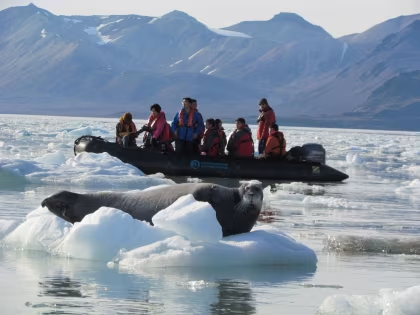
Six Seal Species You Might See On Your Greenland Cruise
Seals play a big role in the history of Greenland. They’ve been a source of food, clothing, and other supplies for centuries and without them it’s possible that there wouldn’t even be a Greenland as we know it at all.
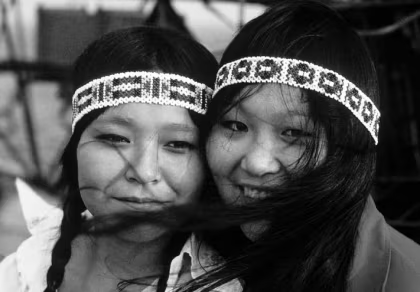
Traditional Lifestyles of the Inuit
The Inuit are an indigenous Arctic people who speak the languages of the Eskaleutian family and who reside in four countries surrounding the North Pole: Greenland, Canada, the United States, and Russia.
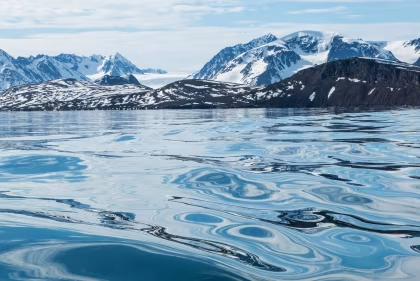
Freshwater ecosystems in the Arctic
The Arctic, which may be of a surprise, is home to an abundant and diverse range of freshwater ecosystems including lakes, ponds, rivers and streams in addition to deltas and wetlands. Some of the rivers and associated deltas located in the Arctic are the world’s largest including the Lena, Ob and Yenisei.
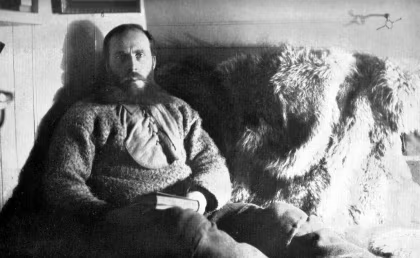
The disastrous expedition in the Arctic west
In 1902, Otto Sverdrup, captain of the Fram on Nansen’s expedition, led his own expedition to the Arctic north of Canada. Over the period of the expedition, which started in 1898, Sverdrup and his 15-man crew chartered over 250,000 square kilometres of the Arctic using the Fram and sledges. During the expedition Ellesmere Island’s west coast was explored and new islands discovered.
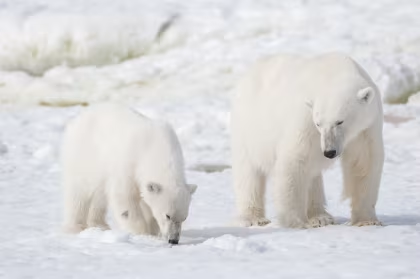
The polar bear: king of the Arctic food chain
The polar bear is the world’s largest species of bear and the largest land predator. There is a large difference in size between male and female polar bears with the male weighing anything from 350 to 800 kilograms. Females in contrast weigh less than half.

Tourists Help Clean Spitsbergen Beaches
Tourists of the “Eco Volunteer, North Spitsbergen” trip organized by Oceanwide Expeditions have been cleaning the beaches of Northwest Spitsbergen. Tourists on this specially-designed cruise spend half of their cruise cleaning beaches of detritus washed up by the tide.
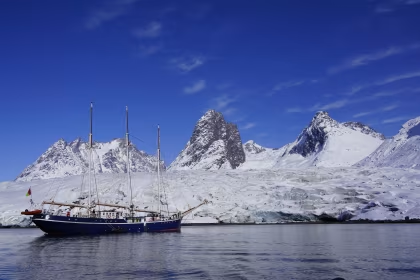
5 Misconceptions You Might Have About Greenland
Greenland isn’t dark the entire year round. It isn’t always bitterly cold either...
