Blog
Type
Region
Destination
-
Show all
Ship
Highlights
-
Show all

The First Float of m/v Hondius
On the morning of Saturday, June 9, a newly constructed polar expedition cruise vessel slid down the timber-and-steel slipway of a sprawling Croatian shipyard, plunging into the pale blue waters of the rocky Adriatic coast. The launch of this vessel, one of 28 new expedition ships currently on order, might have seemed commonplace, even insignificant, to the world at large.

The Art of the Arctic: Interview with Udo Prinsen
Most of us lucky enough to visit the Arctic recognize instantly how picturesque it is, far more striking than even the most expertly captured photograph can convey.
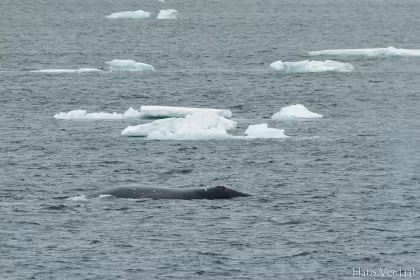
Bring out the Bowheads: Our Largest Whale Count in Years
Researchers aboard Oceanwide Expeditions vessel m/v Plancius spotted between 104—114 bowhead whales during a June 1st cruise along the east Greenland pack ice. Hailing from Wageningen Marine Research and staffed as Oceanwide expedition guides, the scientists spotted the whales over the course of seven hours while on a voyage organized by Oceanwide, Inezia Tours, and Natuurpunt, Belgium’s largest conservation entity. This number exceeds all previous bowhead whale counts, potentially a good sign given the rarity of the whale as well as its classification as critically endangered by the IUCN.
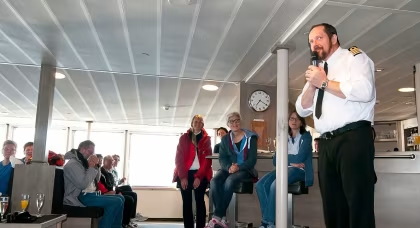
Polar Perfectionism: Interview with Captain Levakov
Turning our attention to the control room, we steal a few informative (and highly entertaining) moments with one of our most seasoned polar captains, Evgeny Levakov. A veteran of the colder side of nautical life, Captain Levakov has been piloting ships since 2002, leading everything from week-long Arctic cruises to expansive 33-day Antarctica voyages. And among the many things he’s learned in all those berg-bejeweled years is that polar captaining isn’t a gig for gamblers.
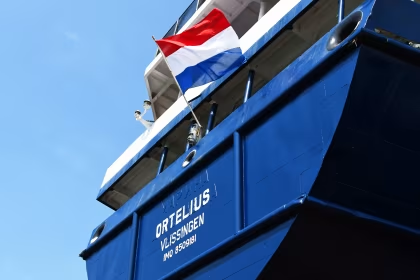
A New Flag for a Veteran Vessel, Ortelius
Vlissingen, located in the south western part of the Netherlands, has been Oceanwide Expeditions “Homeport” since the company was established more than 20 years ago. When our vessel Plancius was being built, there was no hesitation which name should be mentioned as homeport for the vessel and thus since it’s delivery in 2009 Plancius is flying the Dutch flag and has Vlissingen on its stern as being its homeport.
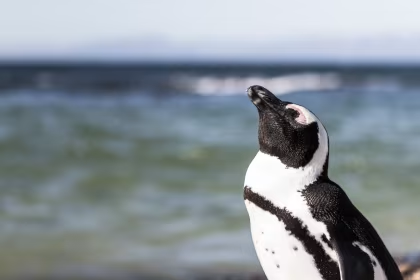
How Arctic Wildlife Differs from Antarctic
While there are definite similarities between the north and south poles, at the same time, the two regions are vastly different. Though both are cold and dry, each pole is unique in its terrain and climate. While the Antarctic is harsh and inhospitable, home to only two native vascular species of plants, the Arctic tundra can support a wider range of fauna with its warmer temperatures and a greater diversity of plant life. Here are just some of the different animals that you can expect to see in the Arctic as opposed to the Antarctic.
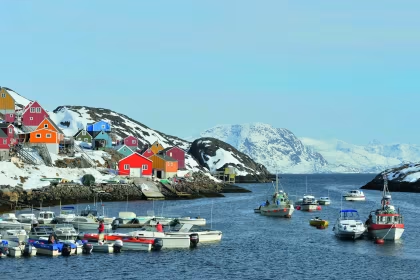
Amazing Greenland
If you ever get the chance to take a trip to Greenland, you will be amazed by its coastlines, fjords, ice-covered peaks, and great expanse of snow-covered land. You will also notice that Greenland is a rugged area with a rich diversity of life, making it a dream location for scientists as well.
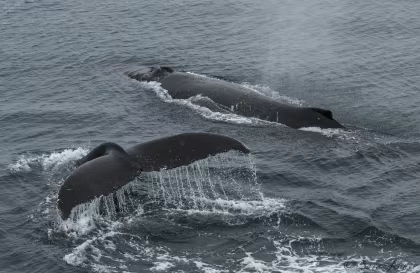
Polar Marine Visitors: the Whales of Antarctica and the Arctic
Whales are the world’s largest mammals, found in the Arctic and Antarctica. This article covers some of the major species you may see on voyages to these remarkable areas.
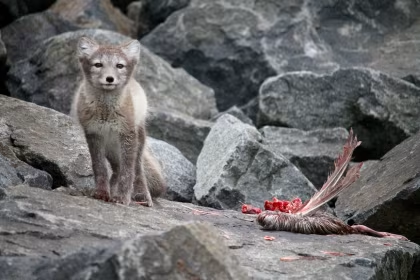
Arctic Foxes: Constant Gardeners of the Arctic
The Arctic fox is a circumpolar species found across the Arctic, extending from Greenland, Iceland, and Svalbard across Eurasia to North America. The species also extends its range northwards over the sea ice, having been spotted close to the North Pole.
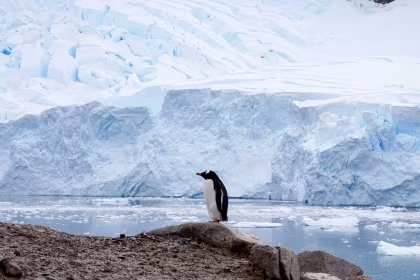
Top 10 Polar Research Stories of 2017
Before the first month of the new year becomes a thing of distant memory, and with it everything that happened the year before, let’s take a quick backward glimpse at the defining polar research moments of 2017.
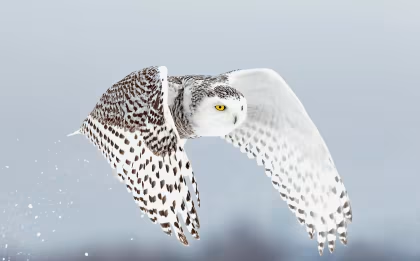
Secrets of the Snowy Owl: Habitat, Adaptations, and Other Facts
The snowy owl (Bubo scandiacus), also known as the great white owl or Arctic owl, is one of the most distinctive bird species on the planet. While you won’t find them in all areas of the Arctic – they don’t exist in Svalbard due to the lack of lemmings – they are seen in the polar regions of Eurasia and North America and are a potential visitor during Greenland cruises. The binomial species name,“scandiacus,” is derived from Scandinavia, as this is where the bird was first discovered. The snowy owl is the official bird of Quebec, and they are a must-see for countless bird watchers and naturalists.
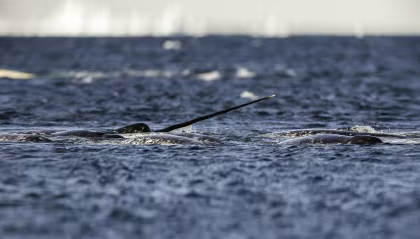
Narwhals: 10 Facts About an Elusive Arctic Unicorn
The narwhal is an Arctic-based whale that spends most of its life in the waters off Greenland, Svalbard, Russia, and Canada. Some estimates put 90 percent of its total global population in Baffin Bay, between Western Greenland and Canada. Narwhals are in fact only one of three whale species that spend their entire lives in the Arctic, the others being bowhead and beluga whales.
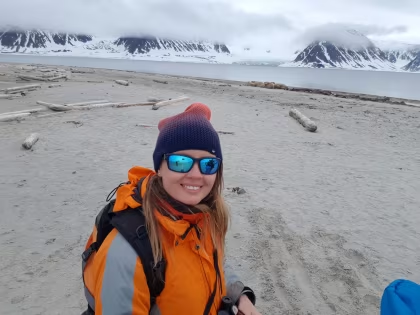
A Travel Pro’s Take on the Arctic Cruise Experience: Interview with Mariola Burejko
We’ve heard what it’s like to cruise the polar regions from the perspective of the passengers, the guides, the captains. But what about the folks we don’t so often hear about, the intermediary professionals responsible for finding, recommending, and booking us Arctic or Antarctic trips in the first place? Surely the mavens of the travel industry, who love seeing new corners of the world so much they’ve chosen as a career what for most people is merely a beloved hobby, have much to say about what sets polar expedition cruises apart from the standard travel fare. To find out, we sat down with Mariola Burejko, business development director for LiveAboard.com, and asked a few questions about her recent Arctic cruise around the Norwegian archipelago of Svalbard.
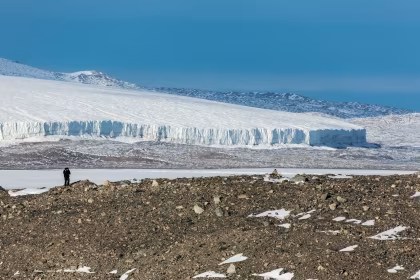
The Secret Life of Glaciers: How They Form, Move, and Melt
One of the greatest natural sights you’ll ever see on an Arctic or Antarctic adventure is glaciers. These gigantic bodies of ice have been slowly but steadily creeping their way from the mountains to the oceans for countless years, like great rivers of ice – both a time capsule and indicator of our rapidly changing environment.
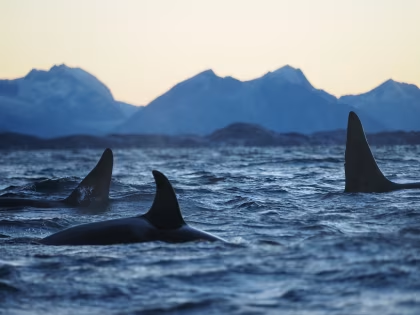
Orcas of the Polar Seas
The orca, or killer whale as it is also known, is the top marine predator and possibly the most widespread vertebrate on Earth. It is found in all the world’s oceans, including the Antarctic and Arctic regions.
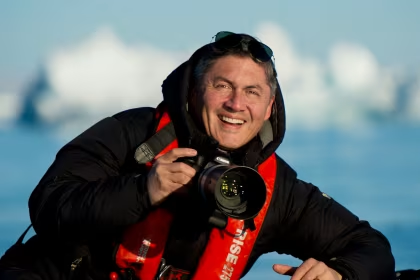
Chosen by the Sea: Interview with Captain Ernesto Barria
Ortelius sits dry-docked in a cavernous basin of brick and steel, lost in scaffolding like a sidelong building undergoing renovation. Men in dark blue jumpsuits and bright blue hardhats, heavy gray gloves and greasy gray boots, stomp over the rattling mesh walkways carrying hoses and lit cigarettes and bulky pieces of nautical maintenance equipment, one of which resembles a pneumatic cattle gun that, in the wrong hands, could wreak some serious havoc. Recently arrived from the Arctic, Ortelius is receiving its seasonal upkeep here in Vlissingen, a small Dutch port town near the Belgian border.
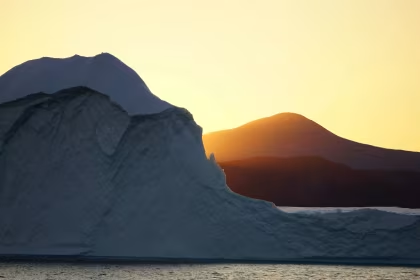
Light in the Land of the Midnight Sun
The midnight sun, also known as the polar day, is a natural phenomenon seen within the Arctic and Antarctic circles. During the polar summer, the sun stays above the horizon 24 hours a day – meaning no sunrise or sunset, just constant daylight. This unique phenomenon is caused by the seasonal tilt of the Earth toward the sun during the Arctic or Antarctic summer.
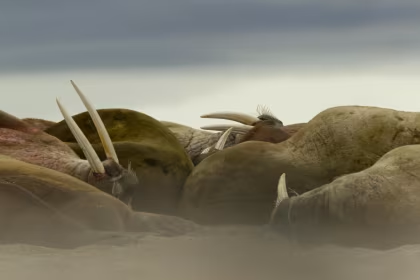
15 Toothy Facts About the Atlantic Walrus
The walrus is one of the most recognizable animals on the planet, and for good reason. Try sneaking into a cinema with those tusks!
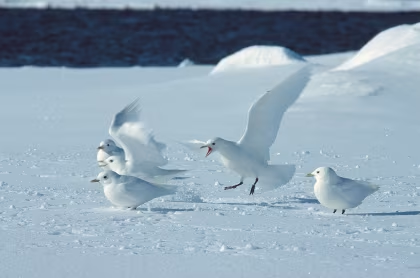
Birds of the North: 29 Arctic Birds and Seabirds
Arctic wildlife exists in a category unto itself, and for good reason. But often Arctic birds get undeservedly overlooked. Here are 22 all-too-unsung species and their most fascinating facts.
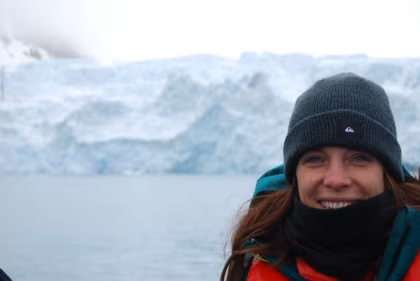
The Doctor Is In: Interview with Lauke Bisschops
Forget choosing between sprawling city hospitals and small boutique clinics, subways compared to streets, ambulances versus Uber versus your own speeding automobile. When you’re cruising in the Arctic and Antarctic, the nearest hospital is a long way off, and in terms of the health care, everyone has access to the same kind – and the same person. During her voyage around the Arctic archipelago of Svalbard, Dutch polar cruise doctor Lauke Bisschops told us all about her experience treating injuries, illnesses, and a surprising lack of sea sickness.
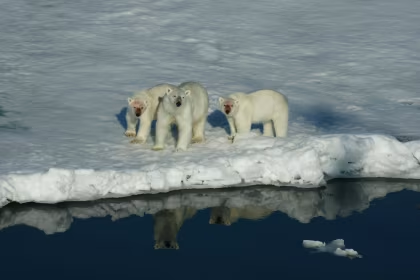
Polar Bear Primer: Eight Facts About the Arctic Wanderer
Polar bears are found throughout the Arctic region in 19 subpopulations, including Alaska, Canada, Greenland, Norway, and Russia. In these areas, polar bears favour the edges of pack ice where currents and wind interact. In these areas, the continuous melting and refreezing pattern creates ice patches and leads, which are open spaces in the sea between sea ice.
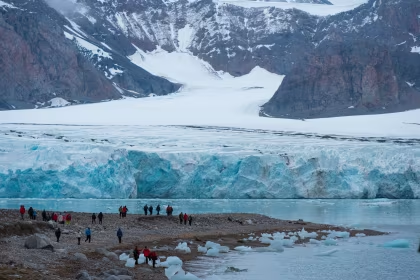
16 Conversation-Starting Svalbard Facts
It might seem odd that an icy, snowy, bear-packed cluster of islands at the edge of the world could be such a hotspot (so to speak) of outdoor tourism. But once you visit Svalbard, this apparent oddity starts to make a lot more sense.
