Blog
Type
Region
Destination
-
Show all
Ship
Highlights
-
Show all
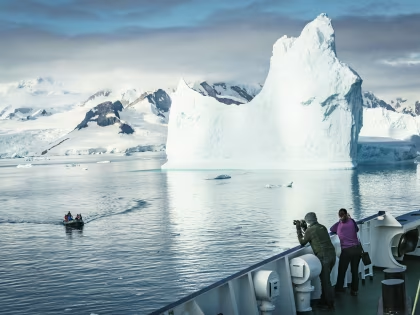
Antarctic Explorer’s Voyage
There’s off the beaten track, and there’s really off the beaten track. And then there’s the Antarctic Explorer’s Voyage, a far-ranging polar expedition cruise that lets you visit areas of Antarctica we rarely if ever offer – or any other cruise operator, for that matter.
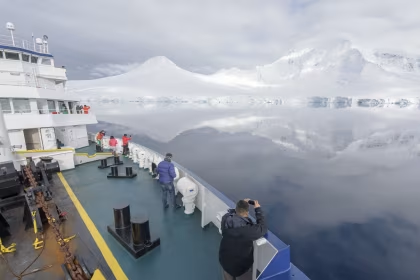
A Brief History of Arctic & Antarctic Cruises
These days you can book a few tickets, take a few flights, and embark on an expedition cruise to areas that just over a century ago represented the outer limits of earthly exploration.
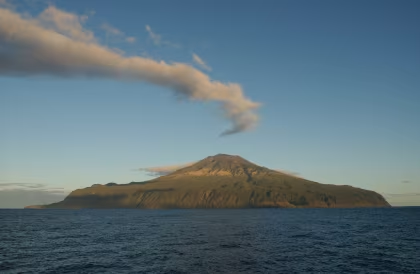
Tristan da Cunha Collection: 18 Pics from Earth's Most Remote Islands
The best pictures aren't always in the first place you look. In fact, sometimes they're about as far away as you can get. And it's hard to imagine a more far-flung earthly destination than Tristan da Cunha.
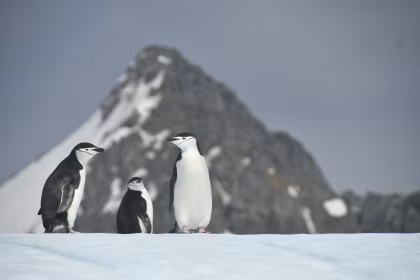
11 South Orkney Animals: Whales, Seabirds, and Penguins Aplenty
The South Orkney Islands are frequently forgotten as an Antarctic travel option. But they shouldn’t be: Forming part of the Scotia Sea Islands tundra ecoregion, the South Orkneys are home to a healthy supply of wildlife despite their rough conditions.
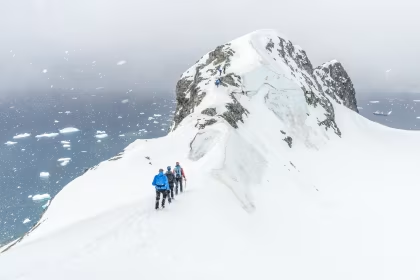
The Ins, Outs, and Ups of Polar Mountaineering & Ski Mountaineering
To shed some light on these ultimate outings, here’s a rough guide to polar mountaineering and ski mountaineering, telling you what the activities entail, where you can do them, and why they’re the best way to put some elevation in your polar vacation.
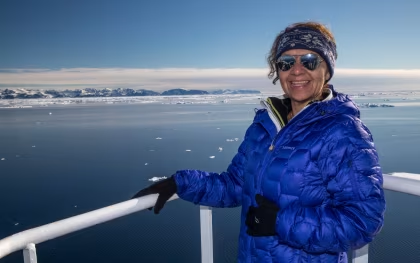
Selling Spectacular: Interview with Maria del Pilar Fernández
We regularly interview our expedition guides and crew, gushing about all the fantastic locations these lucky souls get to call their office. But what about the Oceanwide staff whose office is, well, an office?
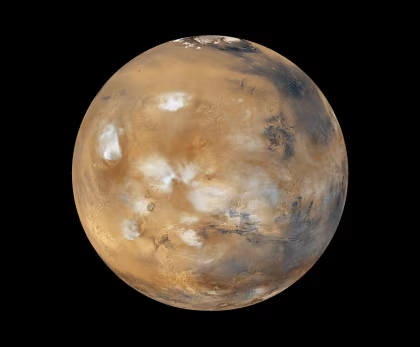
Earth vs. Mars: Polar Regions Compared
It’s common knowledge that Mars, like Earth, has its own polar regions – lovingly referred to as the Martian ice caps. But is that all there is to it, or are there distinctions between these regions?
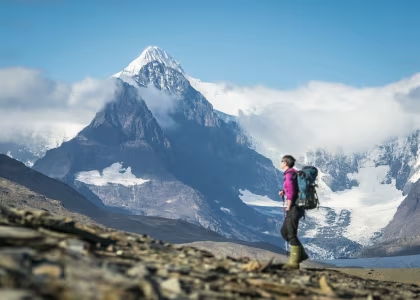
Path of Polar Heroes: Hiking Shackleton’s Historic Route
Our voyages touch on much of the same ground the giants of polar history explored, endured, and (to a lesser degree) enjoyed during their historic expeditions, most of which describe acts of such superhuman resolve they almost defy belief.
![Arctic vs. Antarctica: A Traveler’s Guide [Infographic]](https://cdn.oceanwide-expeditions.com/media-dynamic/cache/list_photo_avif/media/default/0001/30/dd1cbbce099f43f0af78975c90ad48612751cd23.avif)
Arctic vs. Antarctica: A Traveler’s Guide [Infographic]
Sunrises vs. sunsets, coffee vs. tea, Wonder Woman vs. Superman. The world contains a virtually limitless supply of things to compare, contrast, juxtapose, differentiate. But few things so perfectly express the polarities of our planet as its literal magnetic poles – or more generally, the Arctic (north) vs. Antarctica (south).
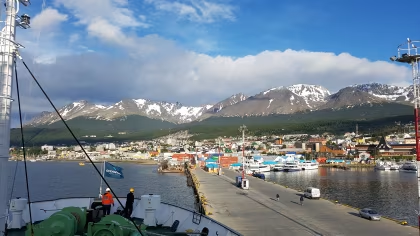
Seven Things to Do around Ushuaia
We often recommend arriving early to Ushuaia before embarking on an Antarctica cruise, and for good reason: Ushuaia, on top of being the southernmost city in the world, has in recent years developed into a decidedly charming tourist destination.
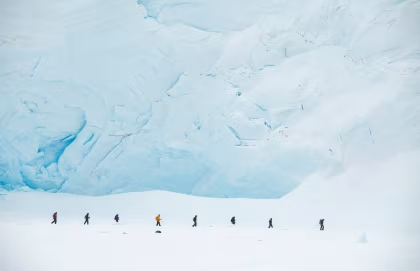
Antarctica in Pictures: Photos from 2018
Until you join us in Antarctica yourself, enjoy these stunning photos from the past year.
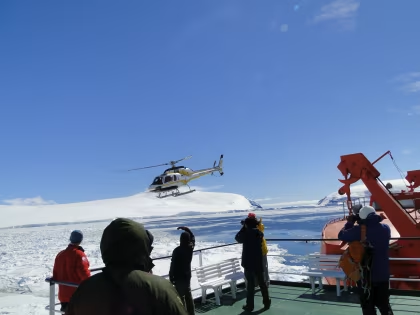
The Wonderful Weddell Sea: Places, Pics, and Impressions
When talking about Antarctica, it’s easy to slip into familiar verbiage: amazing, astounding, extraordinary, exceptional. And though most Antarctic locations deserve these descriptions, some do so more than others. The Weddell Sea is a prime example.
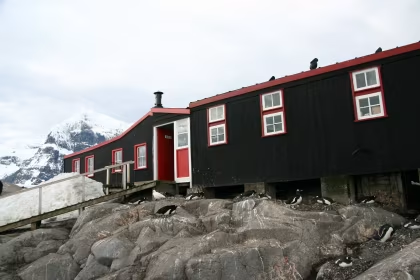
Port Lockroy: History, Post Office, and Resident Penguins
Sometimes it’s so easy to focus on all the beautiful coastlines, fjords, and other natural wonders of Antarctica that we overlook the man-made attractions in between.
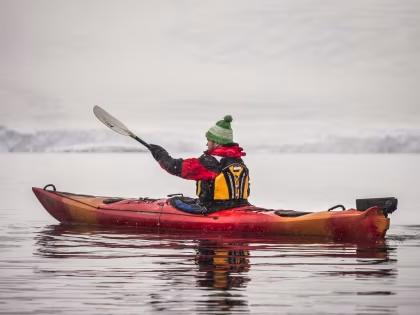
Kayaking in Antarctica and the Arctic
Though our focus is always providing our passengers maximum possible polar shore time, sometimes off-shore time is just as important. For this, there’s no better adventure than polar kayaking.
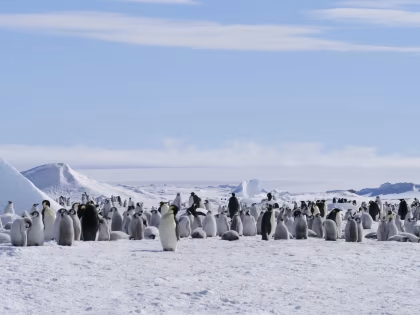
Emperors Everywhere: Letter from Snow Hill Island, Antarctica
Yesterday marks two years in a row that we’ve been able to take our guests to the spectacular but seldom-visited Snow Hill Island emperor penguin colony.
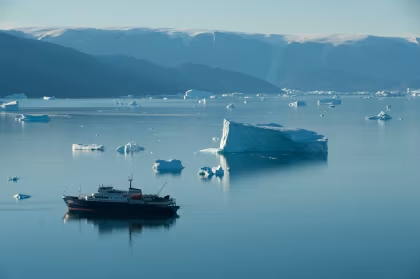
AECO, IAATO & OEX: Polar Travel Partnerships
Nature-based travel asks its share of responsibilities to the planet, and travel in ecologically vulnerable areas even more so. Thankfully, the polar regions have two vital and widely respected organizations in their corner: AECO and IAATO.
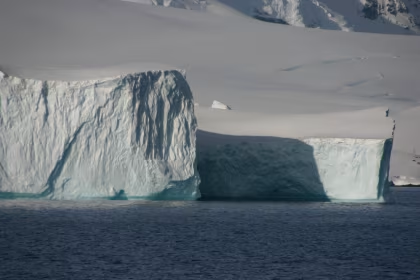
Antarctica: When to Visit, How to Plan, What to Expect
If Antarctica is an astonishingly exotic location coveted in equal measure by ice enthusiasts and continent hoppers (and it is), it also asks a lot in return for its prestigious polar status.
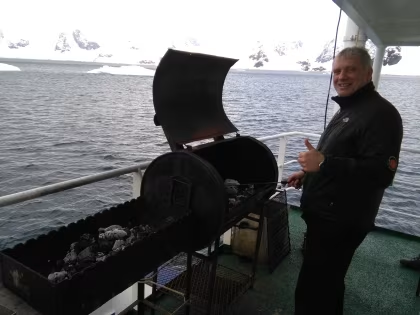
A Moveable Feast: Interview with a Polar Cruise Chef
Polar cruises are luxurious, but they aren’t luxury cruises. The beds are wonderfully comfortable, but nobody expects goose-down pillows. The bar is appropriately well stocked, but no bottles of triple-cask Macallan 21 glow atop the shelves. The food is delicious, ample, and hearty, but…
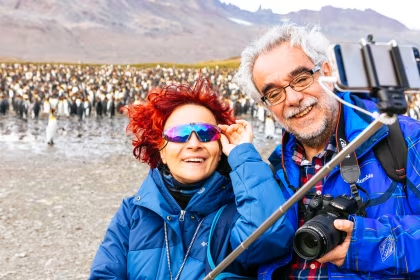
Two for the Snow: Polar Cruises for Couples
You know the old saying, “Cold hands, warm heart.” We’re not doctors or anything, but in our opinion that bodes well for couples who visit the polar regions.
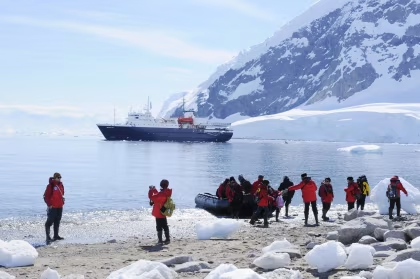
The Seven Best Things to Do in Antarctica
Unless you’re a scientist, there’s no such thing as a means-to-an-end trip to Antarctica. Merely being there is reason enough to make the journey - even, we would wager, for most scientists who travel to Antarctica solely for research.
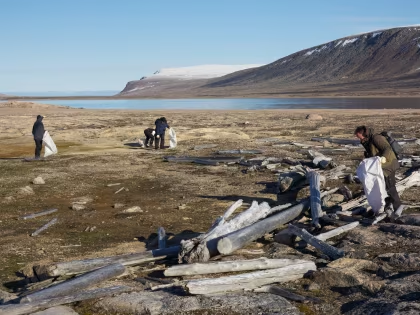
Keep It Green: Our Commitment to Sustainable Polar Travel
It doesn’t make much sense for polar travel if every time we visit the Arctic and Antarctica we leave them worse than we found them. And that’s just considering things from a purely human perspective, which we don’t.
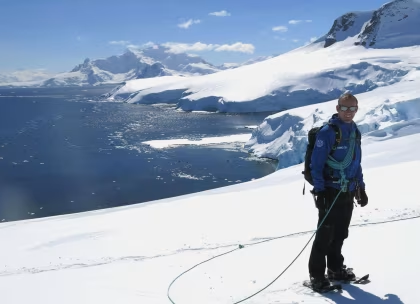
Polar Mountain High: Interview with a Ski and Mountaineering Guide
There are good jobs, and there are great jobs. And then there are jobs where you climb mountains and ski back down them and get paid for it. These are different jobs entirely. Tim Blakemore, one of Oceanwide’s mountaineering and skiing guides, has one of these jobs.
