| Date: |
03.07.2025 |
| Position: |
79°31.5’N / 012°29.8’E |
| Wind: |
E5 |
| Weather: |
Partly cloudy |
| Air Temperature: |
+11 |
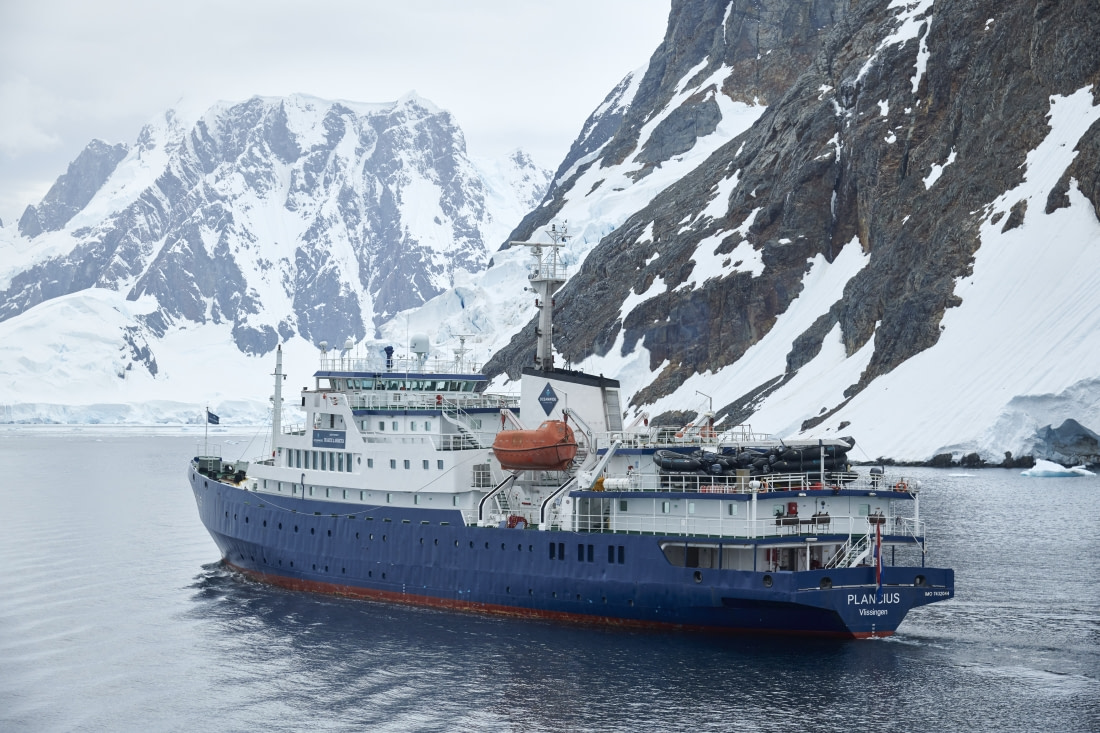
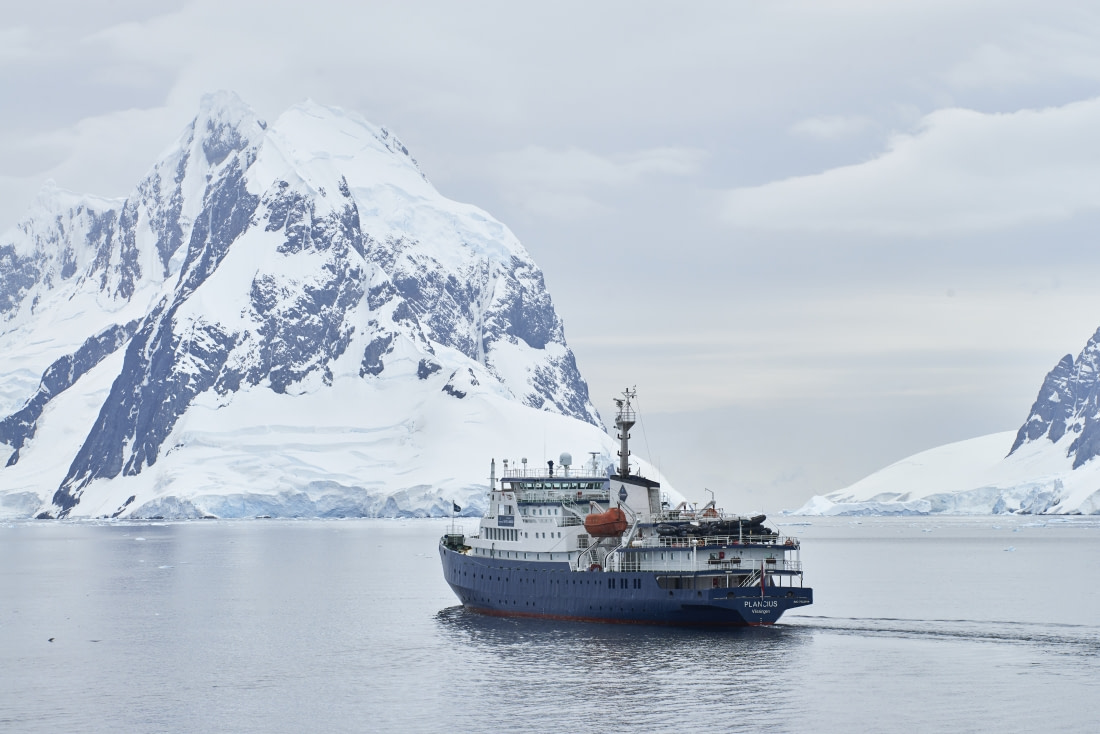
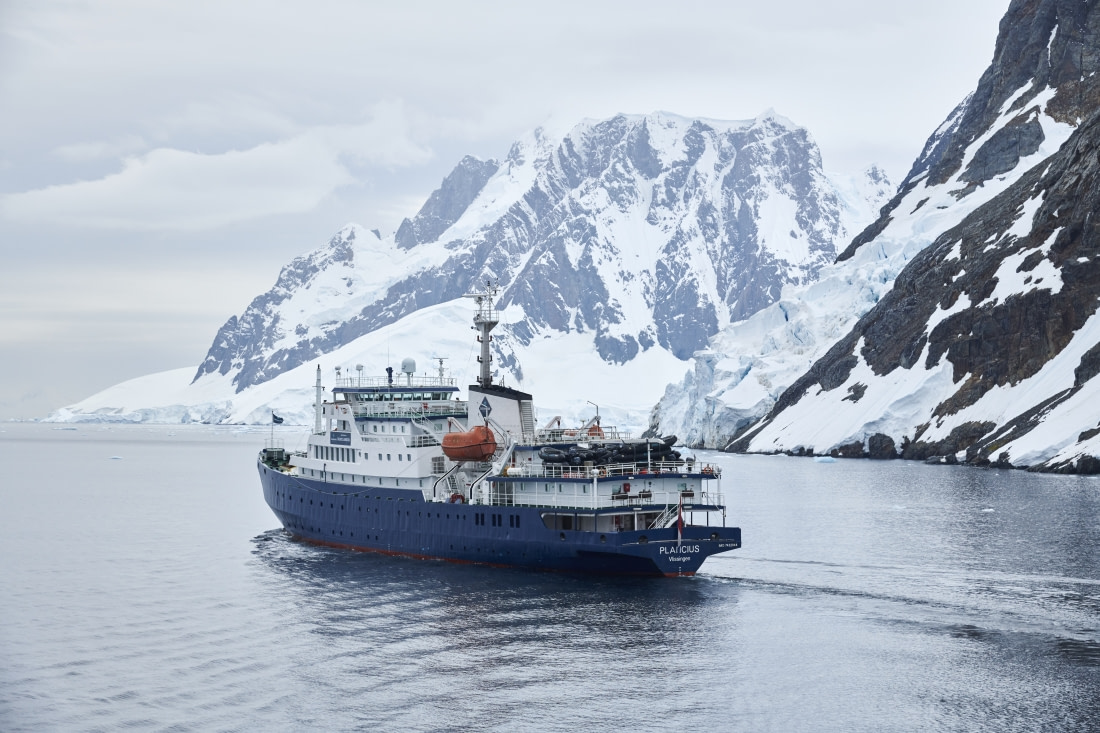
Early risers gathered on deck, braving the strong winds. The surrounding landscape was simply too stunning to stay in bed. Snow-covered mountain slopes rose steeply on all sides, forming an artistic pattern of vertical black-and-white stripes.
As we approached our morning destination, we were relieved to see the wind gradually die down, allowing us to cruise through calm waters.
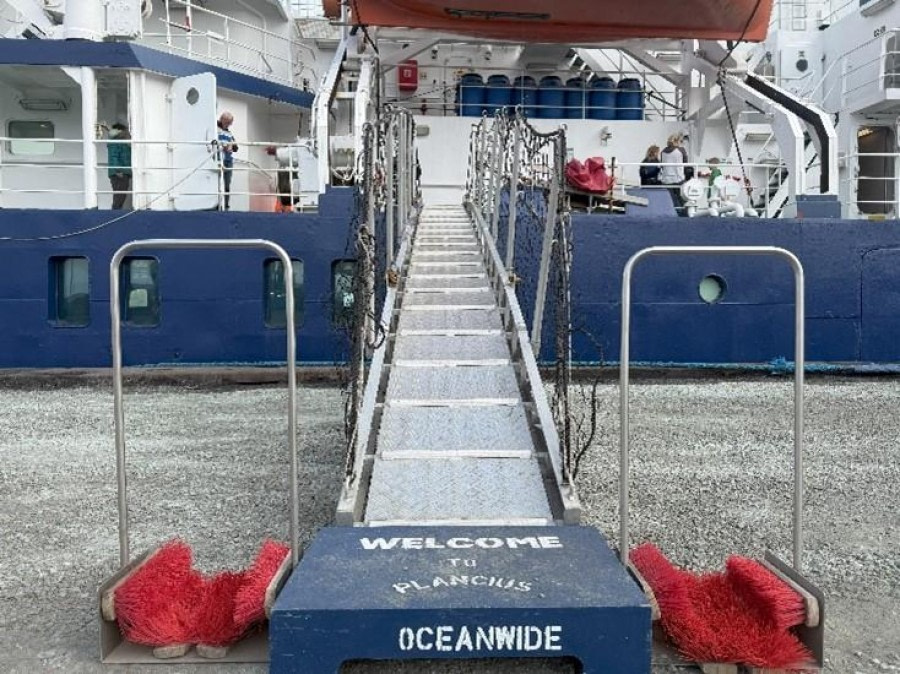
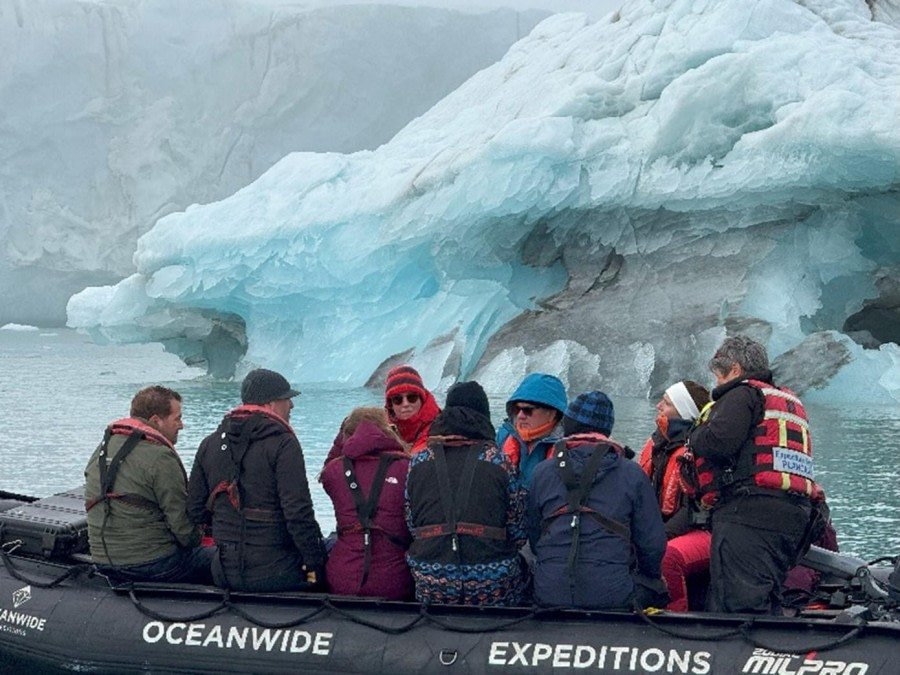
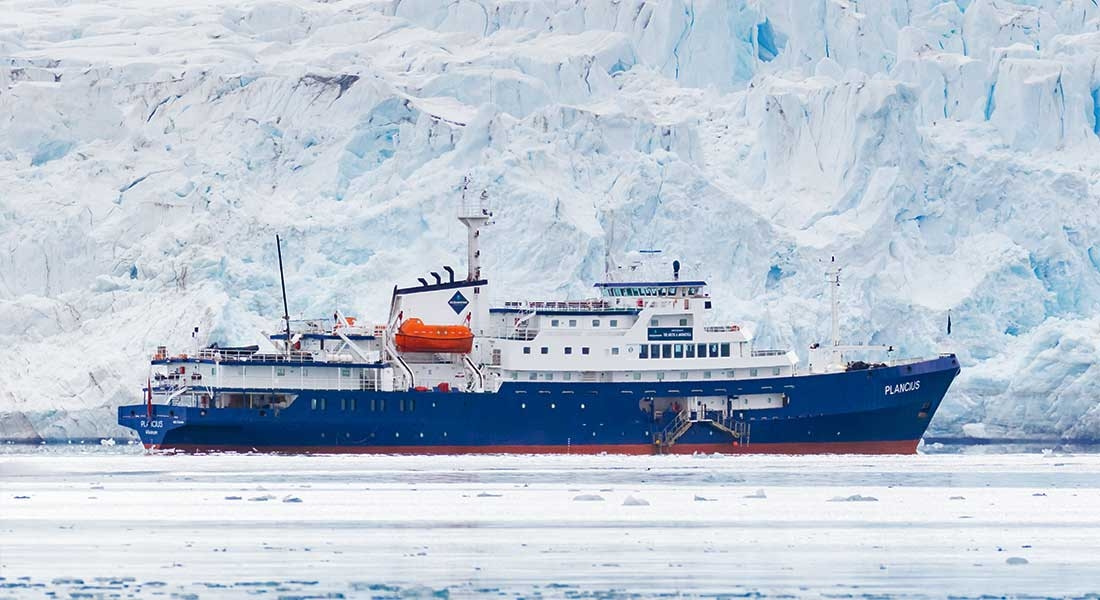
Following Plan A, a line of warmly dressed people made their way to the gangway to board the Zodiacs. Moments later, one Zodiac after another departed the ship, heading slowly toward the glacier front of Monacobreen. Named after Duke Albert I of Monaco, this magnificent glacier stretches over 5 km across and extends 43 km inland. At first, we were simply overwhelmed by the unique landscape—unlike anything most of us had ever experienced. There was so much to see and discover. A beautifully blue, glowing iceberg immediately caught our attention. Cameras were raised, photos snapped, and a chorus of oohs, aahs, and wows echoed across the water. The variety of colors, shapes, and textures in the ice was breathtaking.
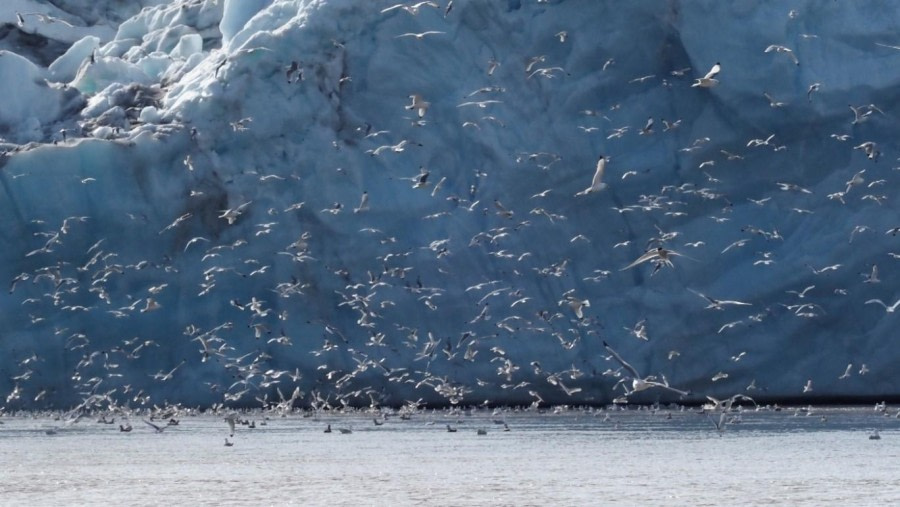
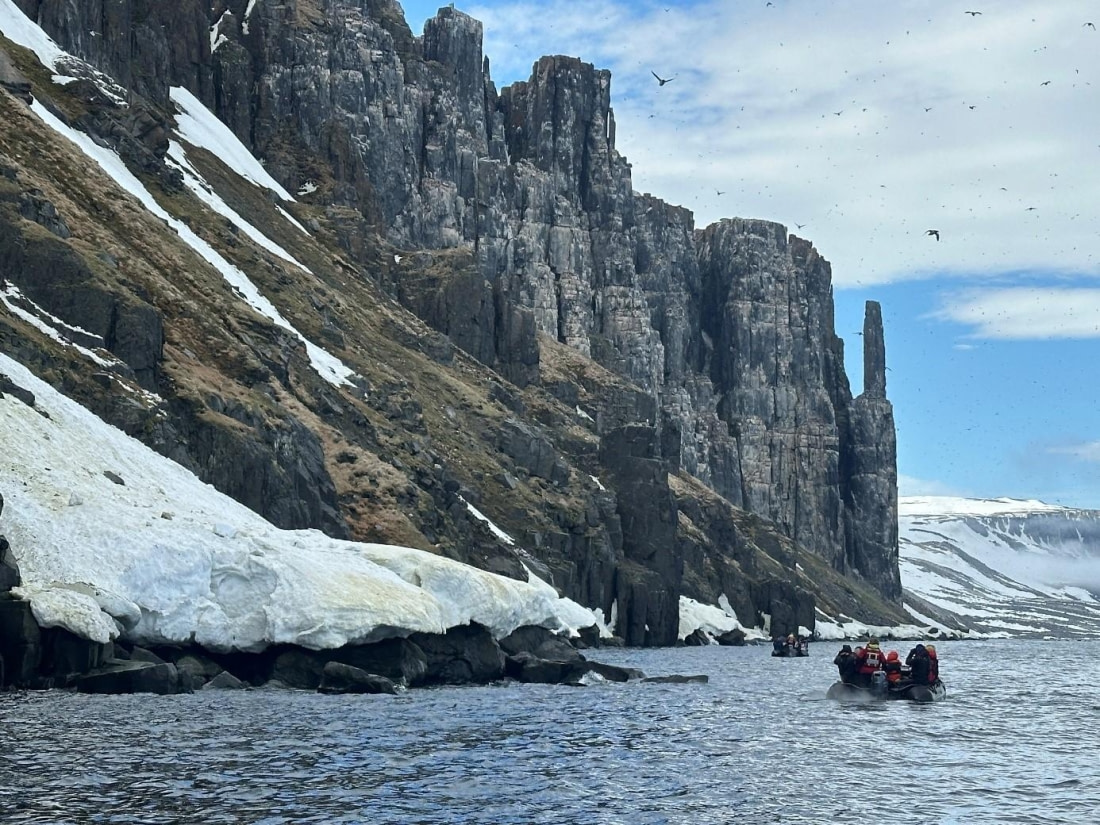
As we cruised along the glacier’s jagged front, marked by narrow and wide vertical cracks, we spotted groups of resting kittiwakes and Arctic terns, along with the large and striking glaucous gull—beautiful, photogenic birds. To our delight, we also saw an ivory gull, a highly sought-after sighting for bird enthusiasts.The cruise ended at the contrasting face of Seligerbreen, a smaller glacier that, until just a decade ago, was still connected to Monacobreen. The effects of a warming climate are visibly taking their toll.
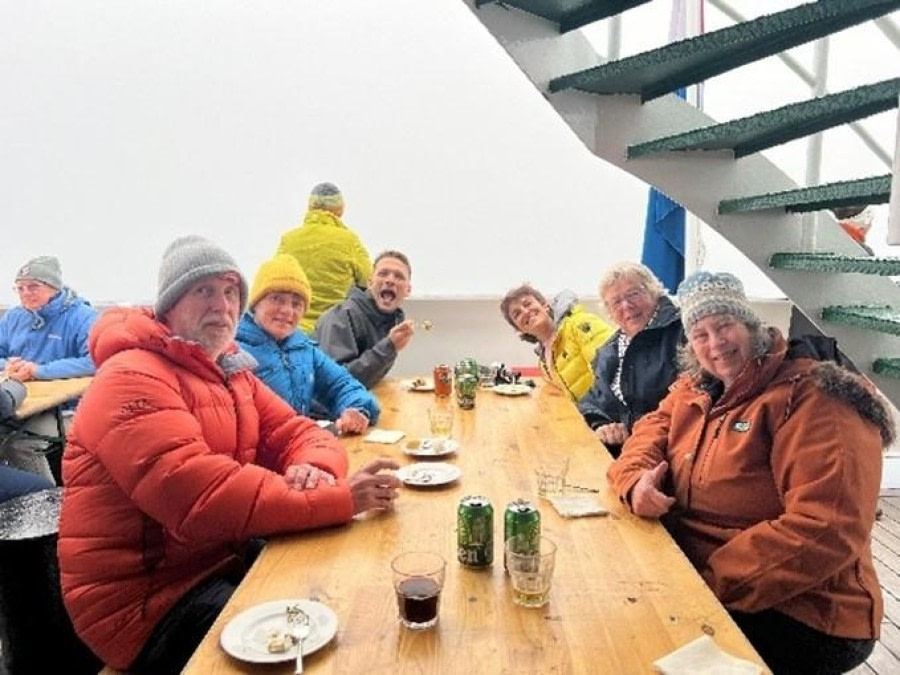
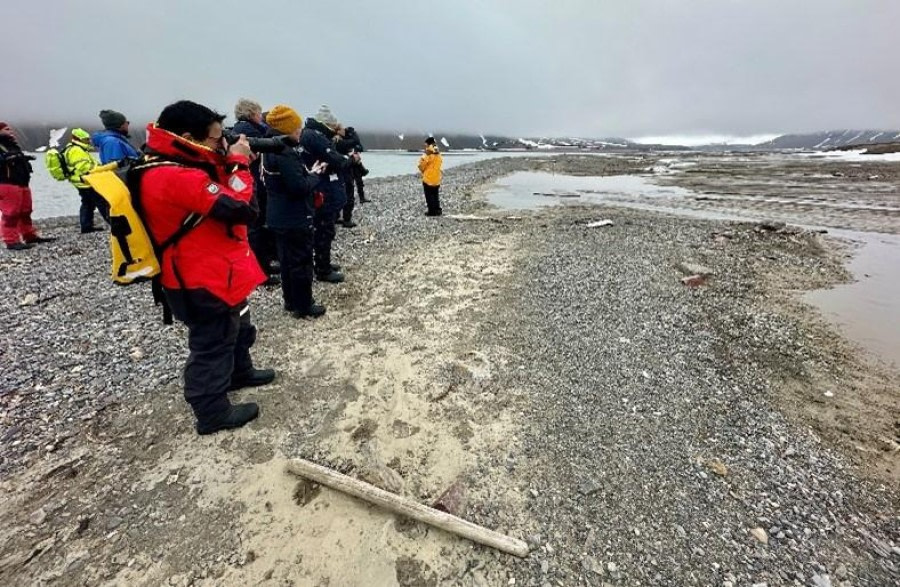
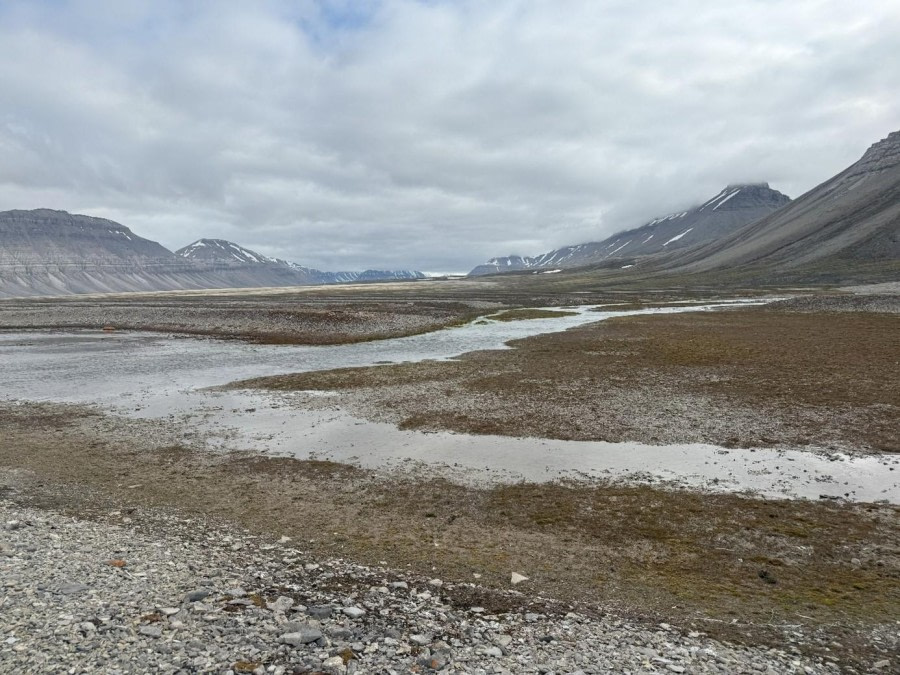
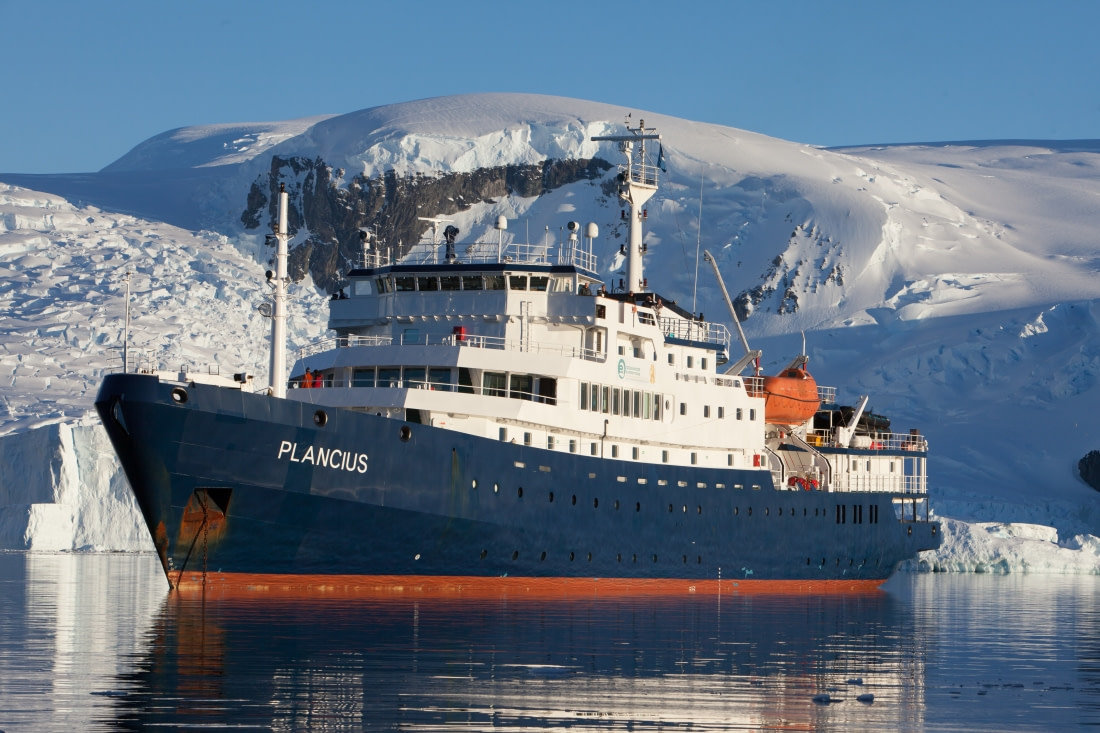
Back on board, we shared our many impressions over lunch. The air was filled with joy and excitement. Meanwhile, Plancius relocated to our afternoon destination in Bockfjorden. The sea remained calm, making it easy to shuttle ashore and land on a beach strewn with rounded rocks.
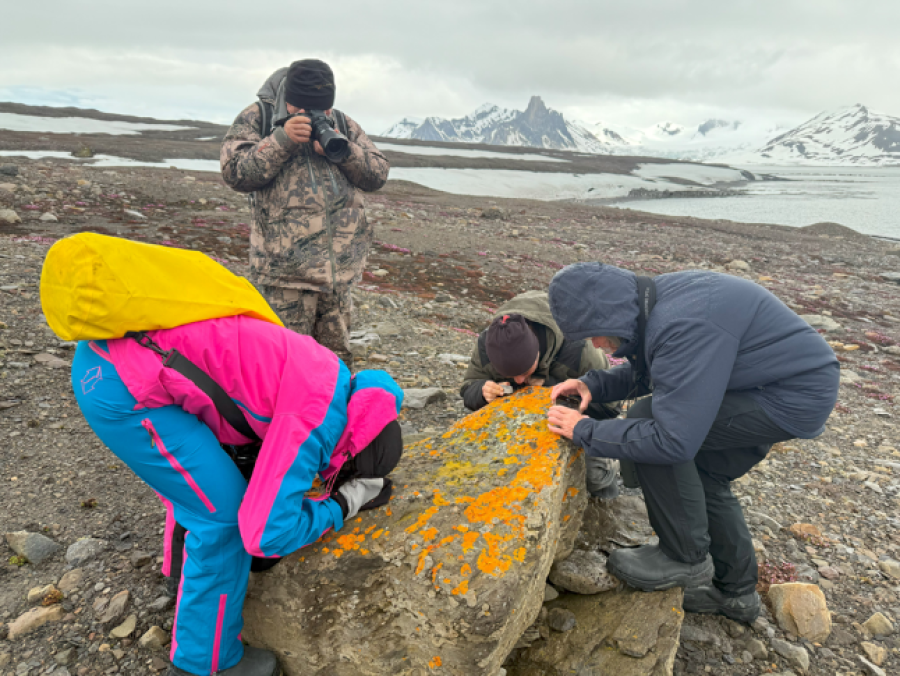
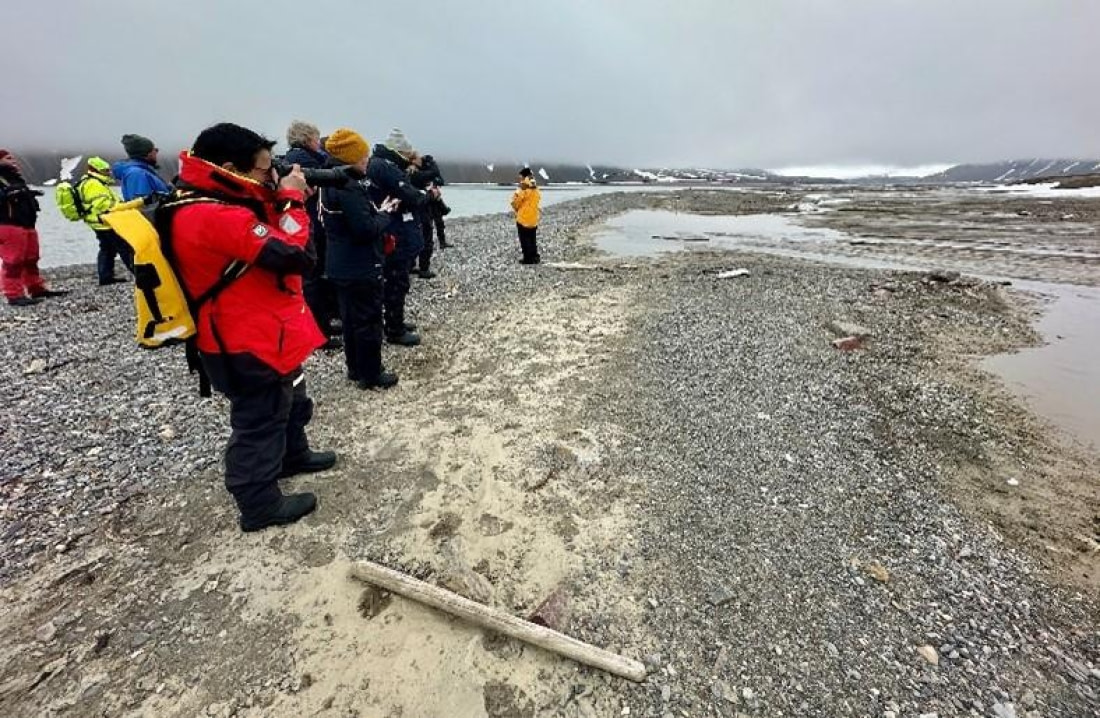
The ground was carpeted with blooming mountain avens (Dryas octopetala), their white flowers acting like tiny parabolic dishes, focusing sunlight to retain warmth. We began hiking. The "slow" group soon stumbled upon the lower jaw and several teeth of a white-beaked dolphin, sparking an impromptu mini-lecture by Dan and Ursula—nature’s classroom at its best. The higher we climbed, the more flowering plants we found: alpine bistort (Polygonum viviparum), rosy hairy lousewort (Pedicularis hirsuta), and countless white Arctic bell-heather (Cassiope tetragona). Thanks to the eagle-eyed vision of one guest, we even spotted a nesting ptarmigan.
Meanwhile, the medium and long hikers had reached a rather unexpected and unique spot for this far north—a sinter terrace with a hot spring. Though the water only trickled out, it reached an astonishing 60°C! After a few hours, we all regrouped at the beach for the shuttle ride back to the ship, which lay anchored in front of a striking mountain of red rock.
An informative recap, a delicious dinner, and some final moments on deck rounded out an incredible day—one that ended late in the evening, but left lasting memories.