• Home
  • Triplogs
  • PLA06-25, trip log, Around Spitsbergen, In the realm of polar bear & ice

PLA06-25, trip log, Around Spitsbergen, In the realm of polar bear & ice

by Oceanwide Expeditions

Fotogalerij

Logboek

Day 1: Longyearbyen, Embarkation

Longyearbyen, Embarkation
Datum: 01.07.2025
Positie: 78°14.8’N / 014°58.4’E
Wind: SE5
Weer: Partly cloudy
Luchttemperatuur: +10

The air buzzed with excitement as we gathered on the coalpier of Longyearbyen, nestled in the stark, stunning wilderness of Svalbard.

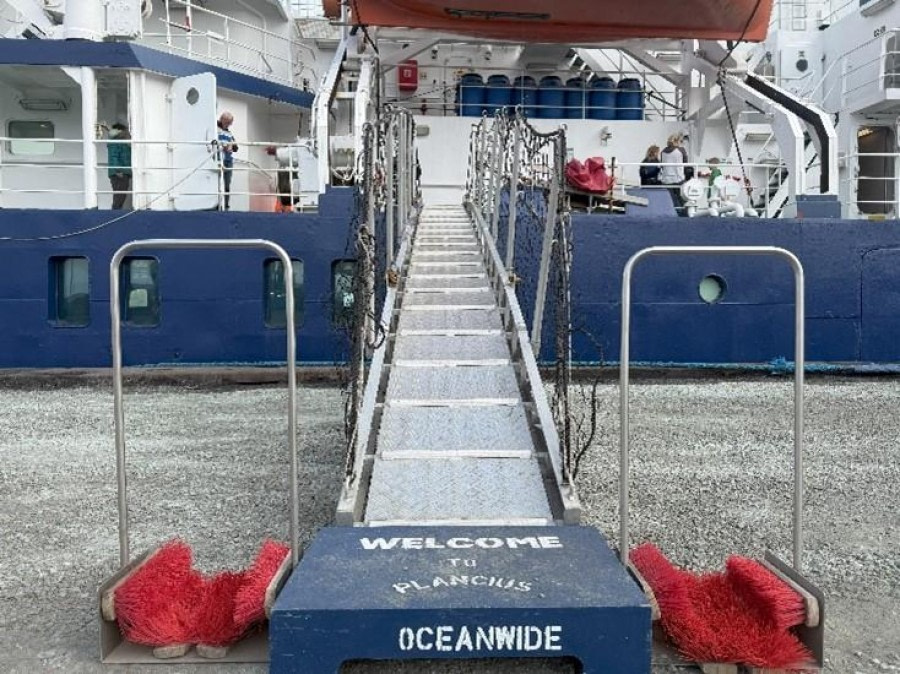
Some of us had used this last day exploring the cosy town of Longyearbyen. Wit its many shops and coffee places it’s a friendly and welcoming little village. However at 16:00 we were expected at the main pier for our shuttle to our beautiful and gracious ship the M/V Plancius.

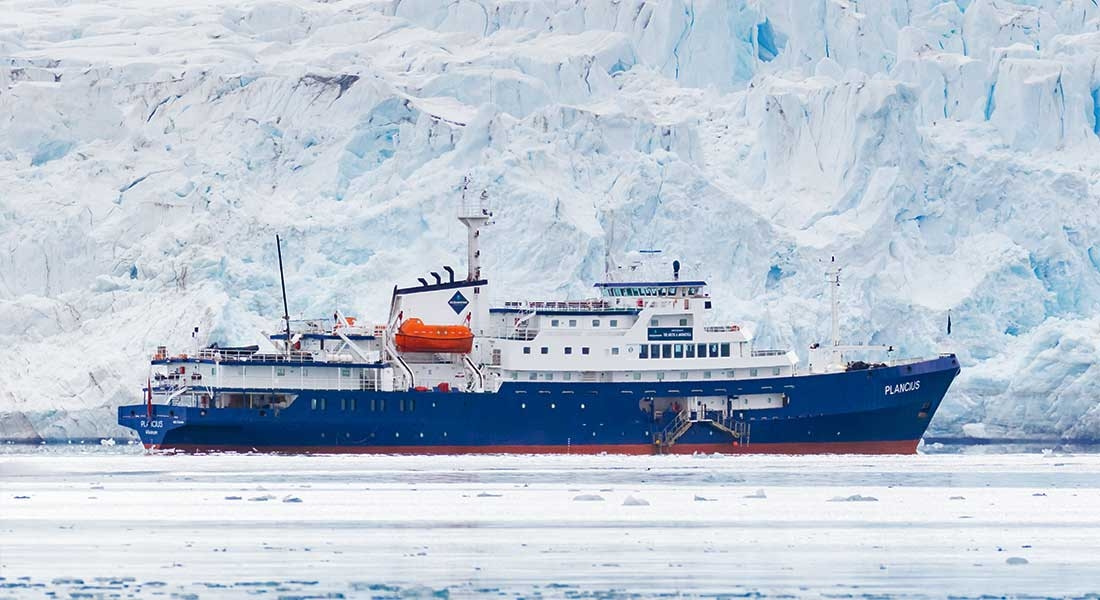
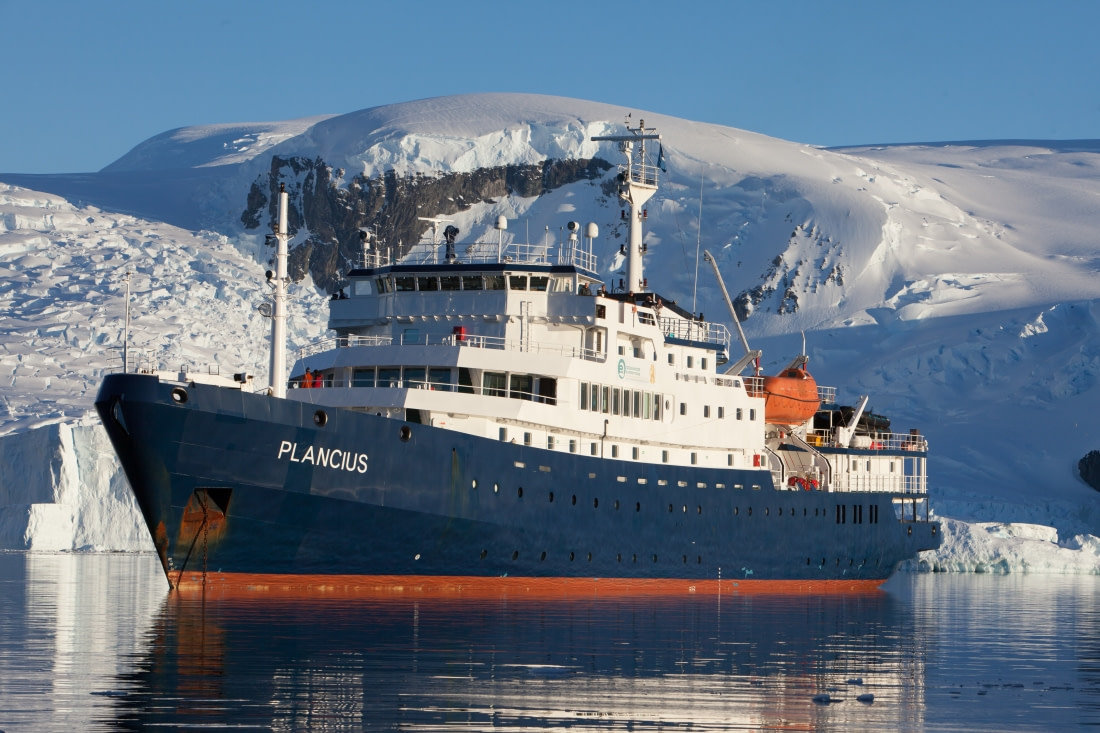
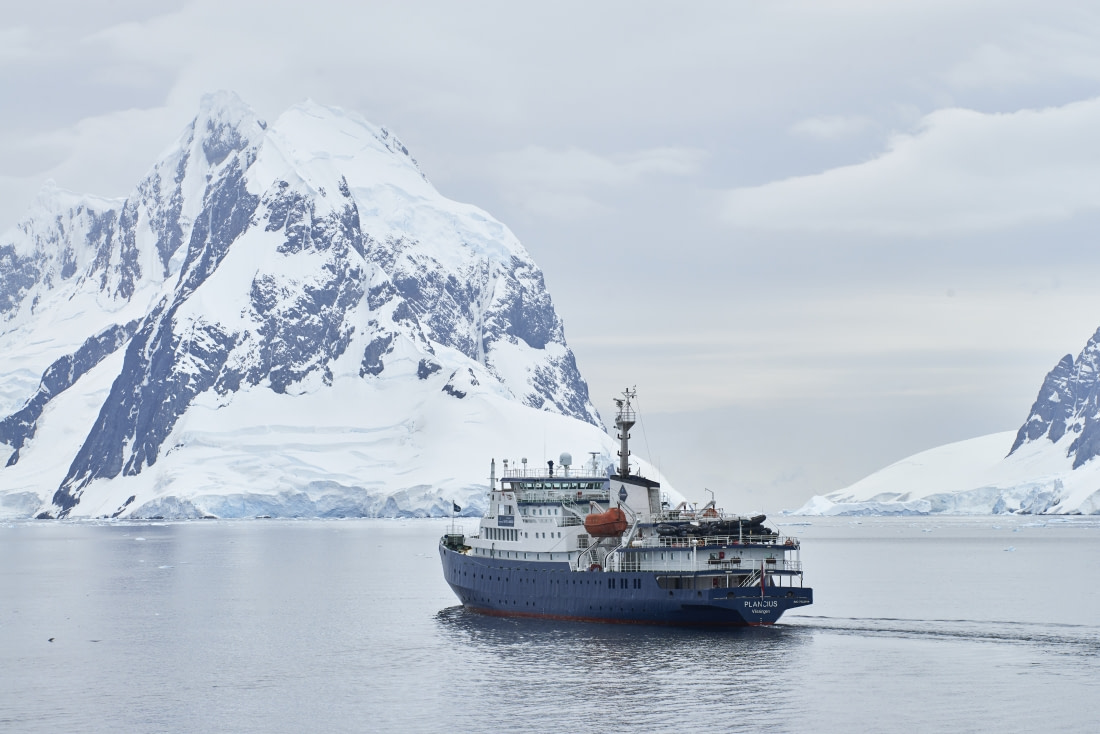
Once on board we had the opportunity to familiarize ourselves with the ship's layout—its winding corridors, cozy cabins, and the various decks that would soon become our floating home. Friendly crew members and expedition staff, always smiling and welcoming, were quick to introduce themselves, offering help and answering questions as we explored.

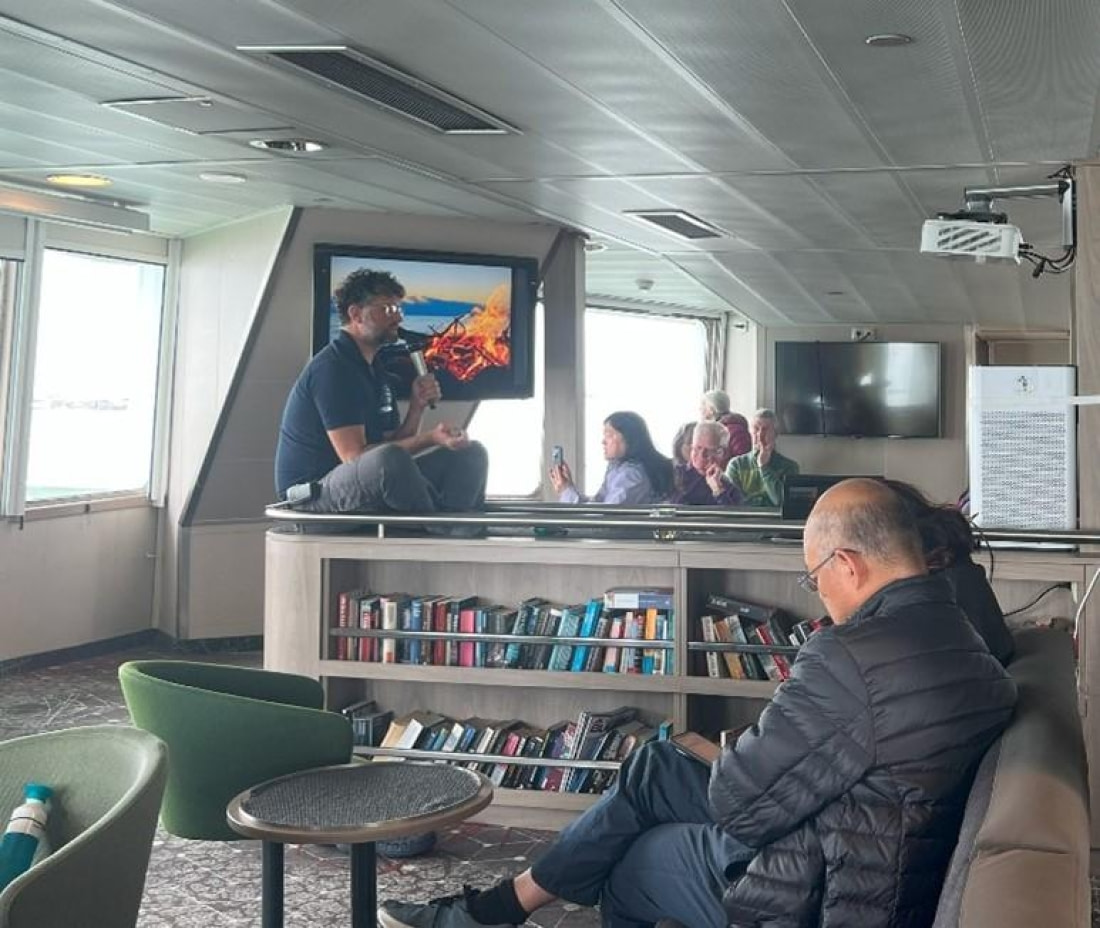
Soon, we gathered in the panoramic lounge, its large windows offering great views of the surrounding landscape. There, we attended the mandatory safety drill, followed by an informative presentation by our Expedition Leader Philipp, outlining the voyage ahead—our route, the planned landings, and what to expect in the coming days.

Afterwards, we headed to the dining room for our first dinner on board. The atmosphere was warm and lively, with the hum of conversation and clinking cutlery filling the space. Over a delicious meal, we began to settle in, bonding with fellow passengers and sharing the growing anticipation of the journey into the Northern area of the Svalbard archipelago.

Day 2: Lilliehöökbreen, Signehamna and Ny Ålesund

Lilliehöökbreen, Signehamna and Ny Ålesund
Datum: 02.07.2025
Positie: 79°16.2’N / 011°33.9’E
Wind: SW3
Weer: Overcast
Luchttemperatuur: +11

Our Arctic exploration continued as we awoke in the stunning innermost reaches of Lilliehöökfjord, greeted by the magnificent Lilliehöökbreen glacier. We savored a delightful breakfast buffet while cruising this majestic glacial bay. A mandatory briefing followed, covering essential conduct in polar bear country and safe Zodiac operations.

After the briefing, we made our morning landing at Signehamna in Krossfjord. This area showcases a remarkable glaciated landscape, sculpted by the powerful forces of past ice ages, evident in its U-shaped valleys and polished rock surfaces. The terrain is also notably characterized by extensive patterned ground, a periglacial phenomenon where repeated freeze-thaw cycles in the permafrost create distinct geometric patterns like stone circles and polygons on the surface. Beyond its geological interest, Signehamna holds profound historical significance, being home to the remains of German weather stations "Knospe" (also known as "Haudegen") and "Nussbaum" from the 1940s. These stations were clandestinely established during World War II by the German military to gather crucial meteorological data, which was vital for U-boat operations and naval movements in the Arctic and North Atlantic. Operating under extreme isolation and harsh conditions, these stations represent a unique chapter in Arctic wartime history. We split into groups to explore the undulating terrain before returning to the ship for lunch.

The afternoon brought us to Ny-Ålesund, originally established in 1917 as a mining settlement, which has since transformed into the world's northernmost permanent settlement and a vital, international Arctic research center. Our arrival at the port was particularly interesting due to the strong 40-knot winds, making the mooring a skillful display by the crew. During our visit, we also had the opportunity to explore the local museum, providing further insight into the history of this unique Arctic outpost. After that, Valeria provided an explanation of Roald Amundsen's history in front of his statue. She highlighted how Ny-Ålesund served as the base for his historic airship expeditions to the North Pole, including the Norge flight in 1926, which made him first to reach both poles. We also visited the Amundsen mast, where his airship was tethered.

Back on board by 18:30, we had a recap of the day and a briefing for tomorrow. Notably, Daan shared his experiences living in Ny-Ålesund during the recap. Dinner was served at 19:30, a perfect end to an eventful day.

Day 3: Monacobreen and Jotunkjeldene

Monacobreen and Jotunkjeldene
Datum: 03.07.2025
Positie: 79°31.5’N / 012°29.8’E
Wind: E5
Weer: Partly cloudy
Luchttemperatuur: +11

Early risers gathered on deck, braving the strong winds. The surrounding landscape was simply too stunning to stay in bed. Snow-covered mountain slopes rose steeply on all sides, forming an artistic pattern of vertical black-and-white stripes.

As we approached our morning destination, we were relieved to see the wind gradually die down, allowing us to cruise through calm waters.

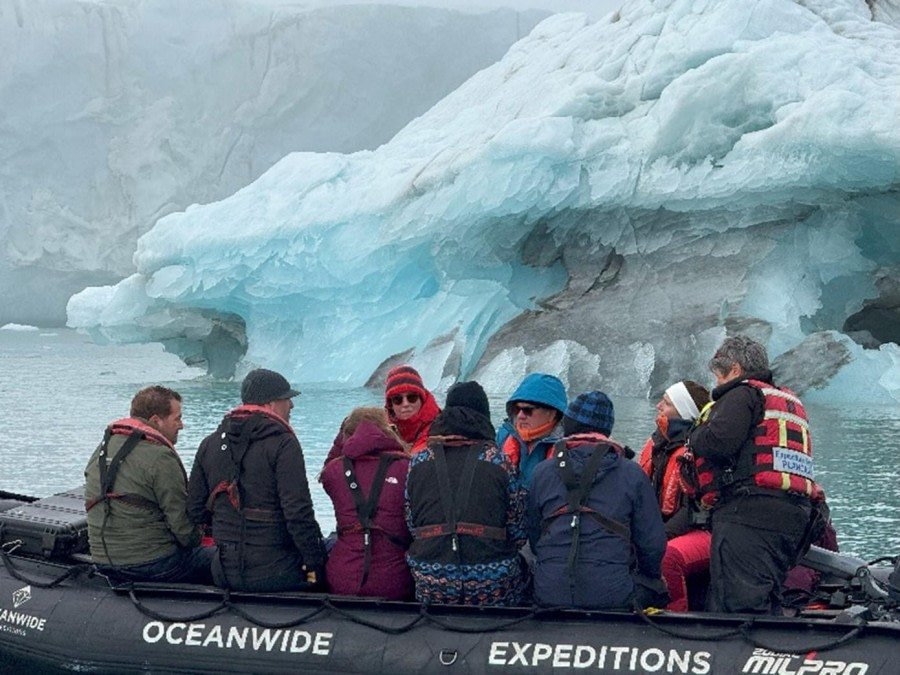
Following Plan A, a line of warmly dressed people made their way to the gangway to board the Zodiacs. Moments later, one Zodiac after another departed the ship, heading slowly toward the glacier front of Monacobreen. Named after Duke Albert I of Monaco, this magnificent glacier stretches over 5 km across and extends 43 km inland. At first, we were simply overwhelmed by the unique landscape—unlike anything most of us had ever experienced. There was so much to see and discover. A beautifully blue, glowing iceberg immediately caught our attention. Cameras were raised, photos snapped, and a chorus of oohs, aahs, and wows echoed across the water. The variety of colors, shapes, and textures in the ice was breathtaking.

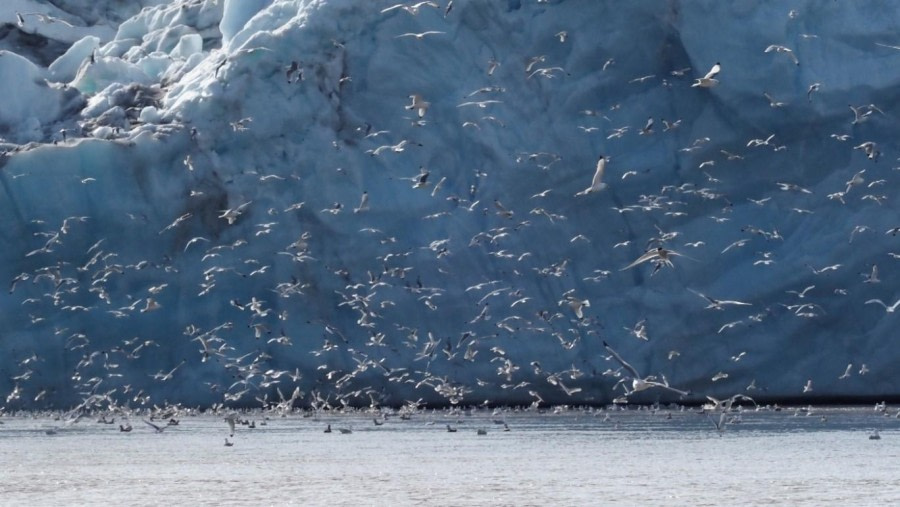
As we cruised along the glacier’s jagged front, marked by narrow and wide vertical cracks, we spotted groups of resting kittiwakes and Arctic terns, along with the large and striking glaucous gull—beautiful, photogenic birds. To our delight, we also saw an ivory gull, a highly sought-after sighting for bird enthusiasts.The cruise ended at the contrasting face of Seligerbreen, a smaller glacier that, until just a decade ago, was still connected to Monacobreen. The effects of a warming climate are visibly taking their toll.

Back on board, we shared our many impressions over lunch. The air was filled with joy and excitement. Meanwhile, Plancius relocated to our afternoon destination in Bockfjorden. The sea remained calm, making it easy to shuttle ashore and land on a beach strewn with rounded rocks.

The ground was carpeted with blooming mountain avens (Dryas octopetala), their white flowers acting like tiny parabolic dishes, focusing sunlight to retain warmth. We began hiking. The "slow" group soon stumbled upon the lower jaw and several teeth of a white-beaked dolphin, sparking an impromptu mini-lecture by Dan and Ursula—nature’s classroom at its best. The higher we climbed, the more flowering plants we found: alpine bistort (Polygonum viviparum), rosy hairy lousewort (Pedicularis hirsuta), and countless white Arctic bell-heather (Cassiope tetragona). Thanks to the eagle-eyed vision of one guest, we even spotted a nesting ptarmigan.

Meanwhile, the medium and long hikers had reached a rather unexpected and unique spot for this far north—a sinter terrace with a hot spring. Though the water only trickled out, it reached an astonishing 60°C! After a few hours, we all regrouped at the beach for the shuttle ride back to the ship, which lay anchored in front of a striking mountain of red rock.

An informative recap, a delicious dinner, and some final moments on deck rounded out an incredible day—one that ended late in the evening, but left lasting memories.
Day 4: Chermsideøya, Isflabukata and BBQ

Chermsideøya, Isflabukata and BBQ
Datum: 04.07.2025
Positie: 80°28.1’N / 012°29.78’E
Wind: Variable
Weer: Overcast
Luchttemperatuur: +6

This morning we woke up to silky calm seas and great visibility over the mountains as we sailed towards Chermsideoya, an island at the far North of Svalbard which would be our first destination of the day.

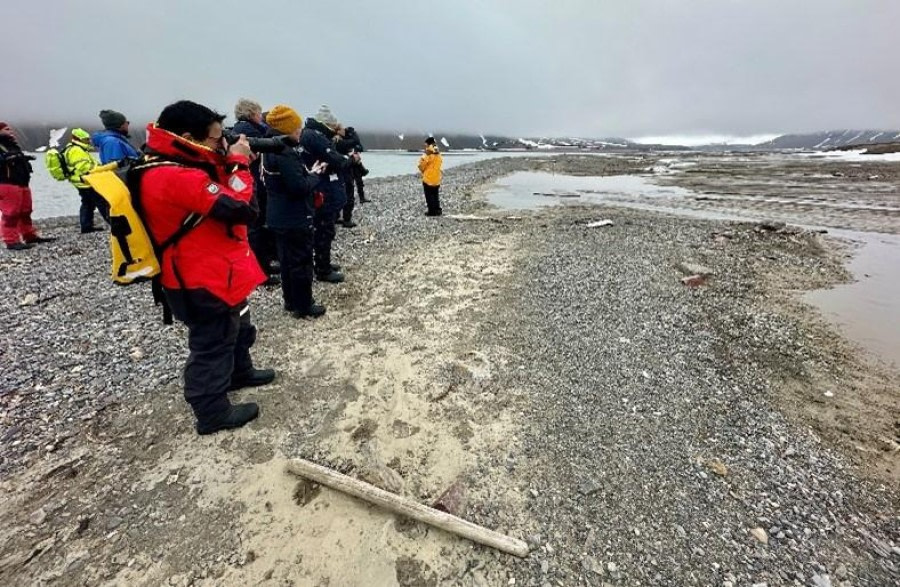
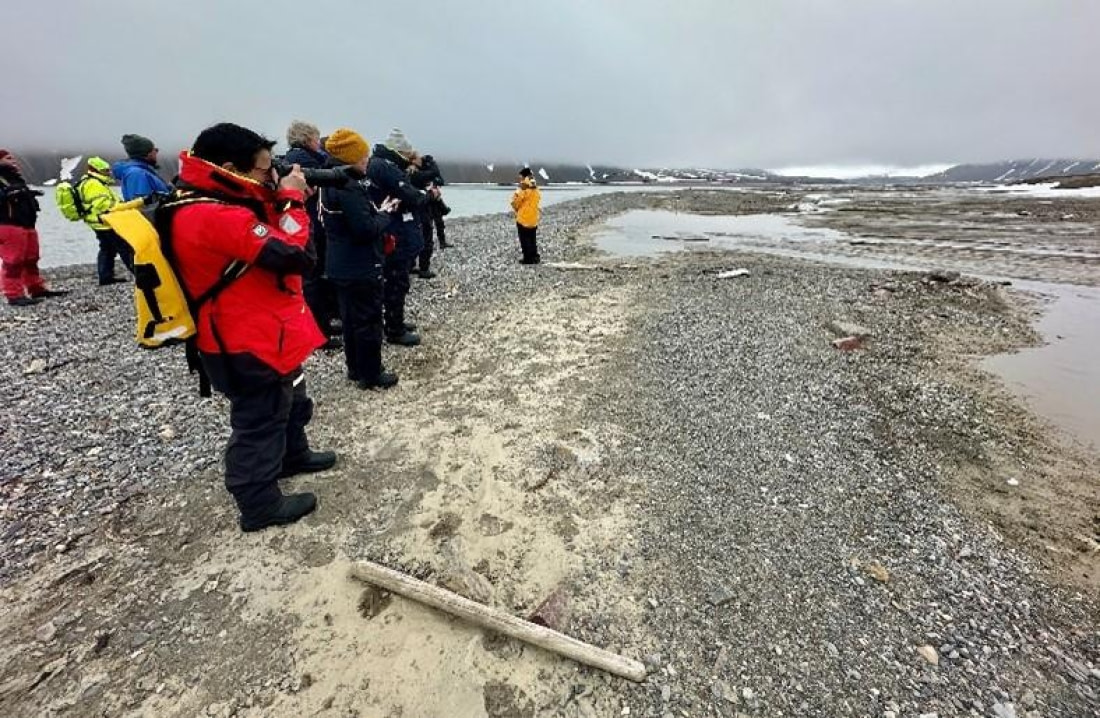
It was a short but beautiful ride in on the zodiacs and we landed on a beach covered in sand, rocks, and lots of large pieces of drift wood. The guides explained to us how the drift wood can arrive here with the ocean currents all the way from the forests of Siberia.

We split into our three hiking groups. The long hikers, or mountain goats, went with Philipp and Koen up to a high peak to enjoy the panoramic views of the island. The middle group stayed lower but headed out to enjoy the views of the sea and some of them were lucky enough to see some distant beluga whales and some walrus swimming in the still glassy water. The leisurely hikers, or beach gang as they are now known, stayed close to the landing site to learn more about the historical artefacts that were left on the beach by several different expedition parties.

There was no wind but we could certainly feel a chill in the air as we were further north than the day before. We could hear and see snow buntings, a dunlin on the shore, and our usual friends the arctic terns calling around us.

We enjoyed a buffet lunch on board the ship as we sailed towards our afternoon destination of Phippsoya. Phippsoya is the largest of the seven islands, situated in the very north of Svalbard, and as a result of its location, there are often polar bears seen here. The aim of our visit to Phippsoya was to hopefully see some walrus hauled out on the beach. Thick fog started to descend on us as we sailed nearer and eventually the island loomed out of the fog and into view. We scanned with our binoculars to look for the walrus but sadly we could not see them. Instead of doing a walk to see them we decided do to a quick landing on the island to stretch our legs and experience the landscape which is known as ‘The Polar Desert’.

We began heading to the shore and around fifty passengers had landed on the beach when a radio call from Daan informed all the staff that there was a bear onshore. Immediately we were instructed to put our life jackets back on and return to the ship. For a brief time, the bear was visible from the ship through our binoculars and telescopes and everyone was excited by the afternoons events.

In the evening recap we heard about the plans for our day in the ice and we learnt about arctic plants from Ursula and polar bears from Steffi. We then had a treat from the hotel and galley team who arranged for us to have a barbeque on the back deck. It was a real novelty to have dinner outside in the arctic fog and we danced well into the night, with excitement about what the next day might bring.

Day 5: Pack Ice day, Looking for Polar Bears

Pack Ice day, Looking for Polar Bears
Datum: 05.07.2025
Positie: 81°50.7’N / 016°56.2’E
Wind: SW4
Weer: Overcast
Luchttemperatuur: +2

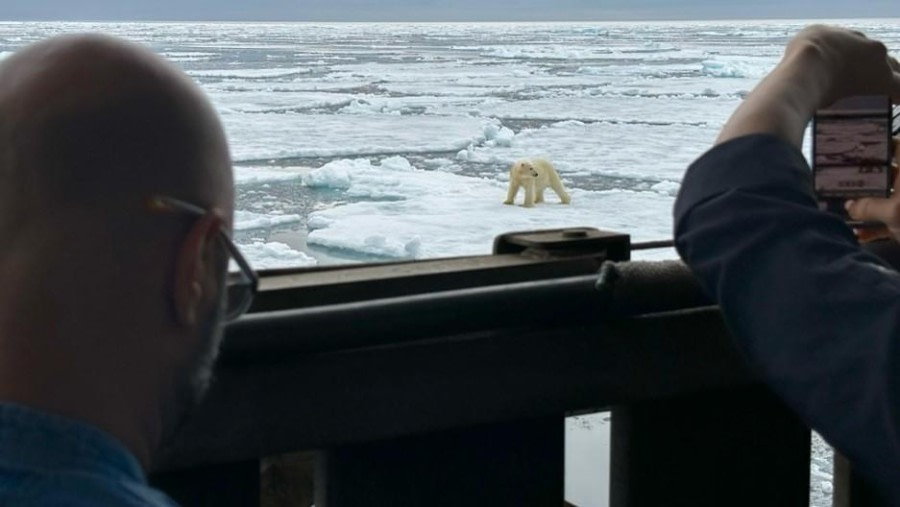
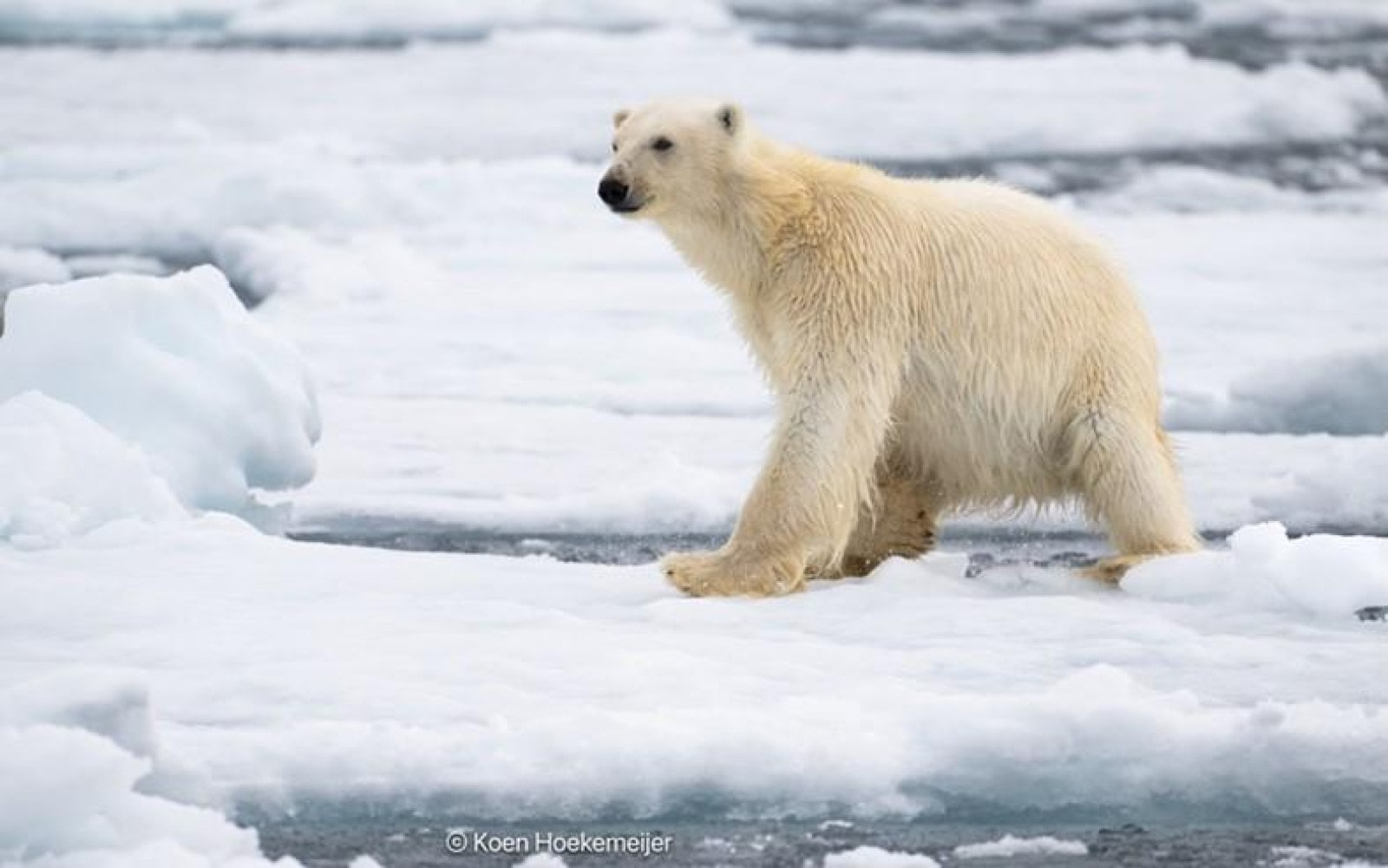
It was Saturday morning and maybe because it was the weekend, Philipp allowed us to sleep in a bit. However, Philipp didn’t stick to his promise for a late morning as he woke us up at 07:15. However Philipp had the best reason to do so as Chief Officer Martin had spotted a polar bear in the ice! What a way to wake up! We dressed up warm quickly and then made our way out to see where the bear was on the ice.

Spotting bears in the ice is extremely challenging and starting the day like this was fantastic. Our experienced captain Evgeny navigated the ship skillfully through the beautiful ice flows at slow speed. Our charming M/V Plancius is a very silent ship and as such it’s perfect for approaching wildlife in a non-disturbing manner.

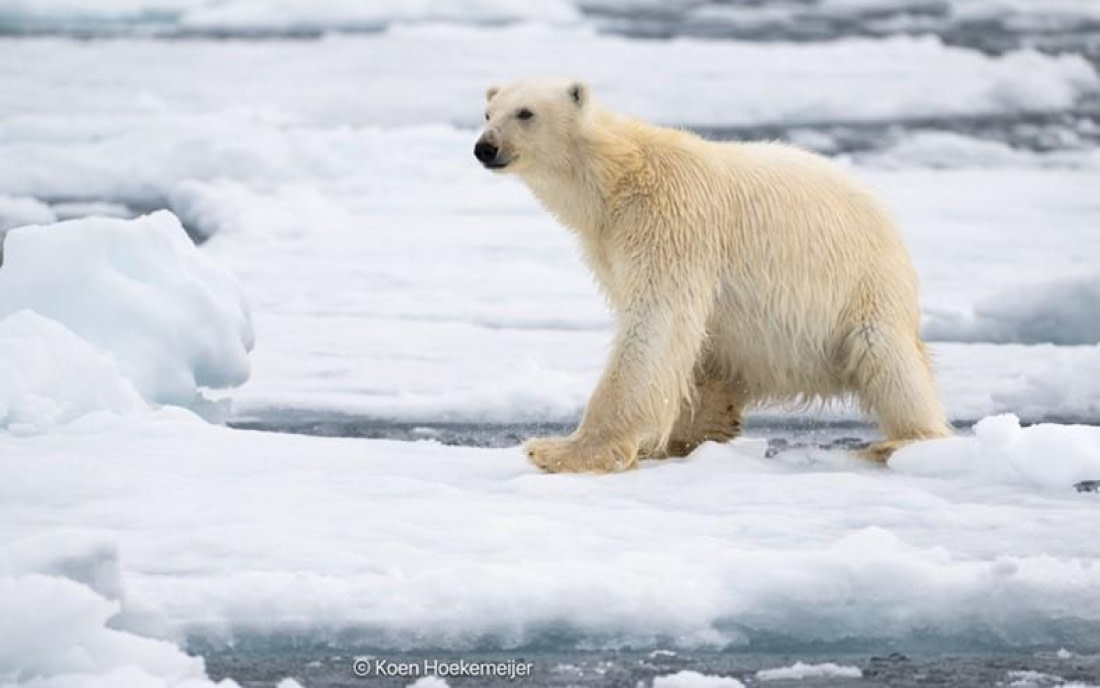
The bear was lying on an ice flow and it was amazing to see such a resilient animal in the wild. To see with our own eyes the harsh environment where polar bears live and survive was surreal. At times she lifted her head and this was when we took more and more photos. Then she decided to get up and go for a short stroll. To reach other ice floes she sometimes had to swim and climb back onto the ice. But polar bears are classified as marine mammals and they are excellent swimmers. With their sharp nails they easily find grip on the ice to climb back on. Seeing this behavior and seeing the bear walk on the ice was nothing short of fantastic. Yet the best was still to come as she started approaching the ship to have a look at us. At times she was only a few meters away from M/V Plancius allowing everybody to have this truly unique and magical encounter.

After some time, we left the bear and many of us went back inside to have breakfast before it was too late. We didn’t get much time off though as soon another announcement was made by Philipp; a second bear had been spotted!

This bear stayed a bit further away from the ship, but with the fog it made for a dramatic scene with the polar bear perfecting it. This bear gradually walked away from us and then disappeared into the fog.

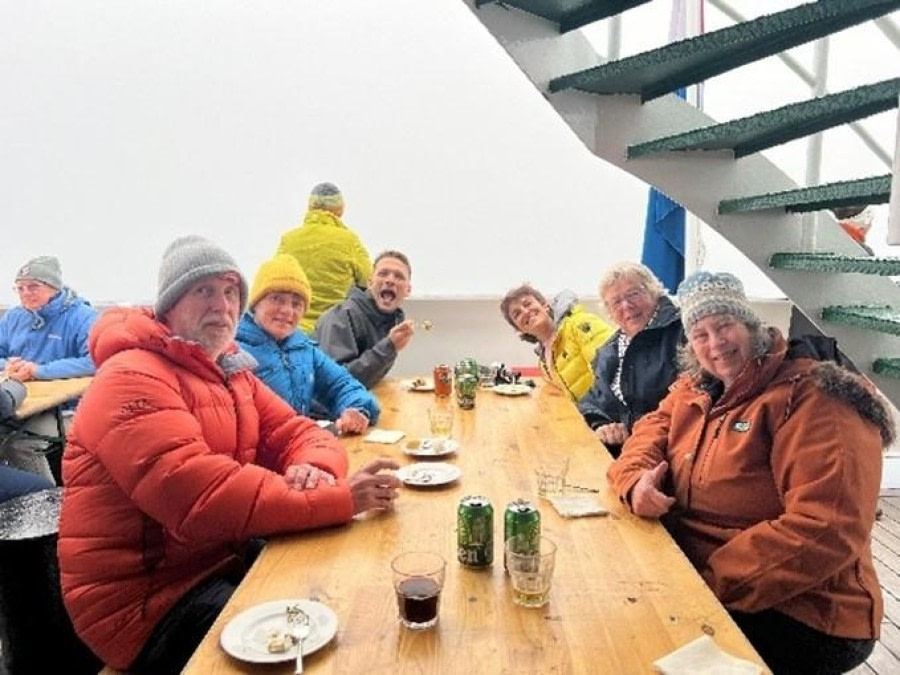
We carried on and finally we could sit down and have a coffee ;). What a day it had been already!

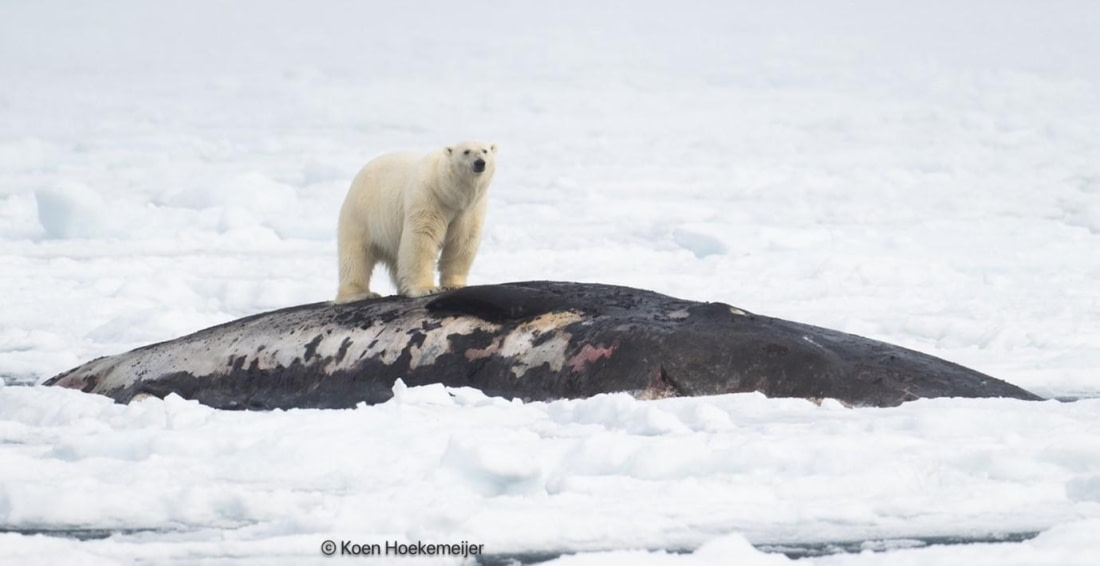
While the lounge was buzzing with excitement, the fog seemed to sneak in on us. Nevertheless, the ship kept course through the ice and then suddenly a silhouette on the ice appeared. It turned out to be a whale carcass and there was a bear on top of it! Our third bear already and it wasn’t even lunch time. The captain carefully navigated the ship closer by and with the fog lifting we got a front row view of this once in a lifetime encounter. The whale was a dead sperm whale which for the polar bears meant a lot of food. Polar bears like blubber and fat and this sperm whale had plenty of that to offer. It seemed hard though to get through the thick skin of the whale so the bear was trying different spots on the whale to get some of the meat and blubber. Whale carcasses sometimes wash ashore on the main land, but finding one like this in the pack ice is rare. The risk for the bears is that the carcass eventually will deflate and sink to the bottom. Hopefully the bears will manage to fill their stomachs with plenty of food before that happens.

Lunch was announced and since we were not going to move for the next few hours, it was good to eat something knowing the bear would still be out there. But while we were enjoying the delicious food, Philipp announced another bear. This bear surely had smelled the decaying carcass and made its way down to have a taste of the whale. The bear that had been on the carcass was now sleeping next to it, but when it saw the other bear approaching it retreated to avoid a confrontation. The other bear was clearly higher in the hierarchy and once our first bear was far away enough, it made its way back and started eating.

Here and there cameras were running out of battery or even memory, but seeing such a scene with your own eyes is equally important. Survival on the ice in optima forma.

Then it was time to leave the carcass and we set sail towards the ice edge. The plan was to follow the ice edge and see what else we could find. We didn’t find another bear, but we hadn’t run out of luck just yet as a whale blow was spotted and this turned out to be a rare Bowhead whale. Bowhead whales have been hunted to the brink of extinction and they only recover slowly. Their numbers are estimated to be in the hundreds only and they’re also an elusive whale species so seeing one so clearly from the ship was yet another special moment.

Last but not least, we also managed to cross 82’N something many of us were hoping for.

While recap started, the bridge team set course back to Svalbard to make it in time for our morning activities the next day. We enjoyed our dinner in the restaurant while smiling and trying to reflect on the amazing day we had just spent in the ice. It was a day on the ship, but the bears surely kept us busy!

Time to look at some or many photos, and a good night sleep after!

Day 6: Faksevågen, Alkefjellet and Torellneset

Faksevågen, Alkefjellet and Torellneset
Datum: 06.07.2025
Positie: 79°39.4’N / 017°46.2’E
Wind: SSE2
Weer: Partly cloudy
Luchttemperatuur: +2

We awoke early this morning, excited for the day ahead. A cloudy sky and calm waters awaited us!

We all went to the restaurant for a hearty breakfast. Shortly afterwards, the first activity began. We headed to the gangway, where we boarded the familiar Zodiacs.

Faksevågen in Lomfjorden was our destination. Lomfjorden is a side bay in the northern part of Hinlopenstretet. While not the world’s largest fjord, it has a beautiful side bay on its western side called Faksevågen. We divided into three walking groups. We saw several kinds of flowers and lichens. The long-distance walkers were delighted to spot a reindeer and her beautiful calf.

Walking through soft fog, we arrived at a viewpoint with a lovely view. We also had the opportunity to see a purple sandpiper on its nest.

After this exciting start to the day, it was time to head back and enjoy a well-deserved lunch.

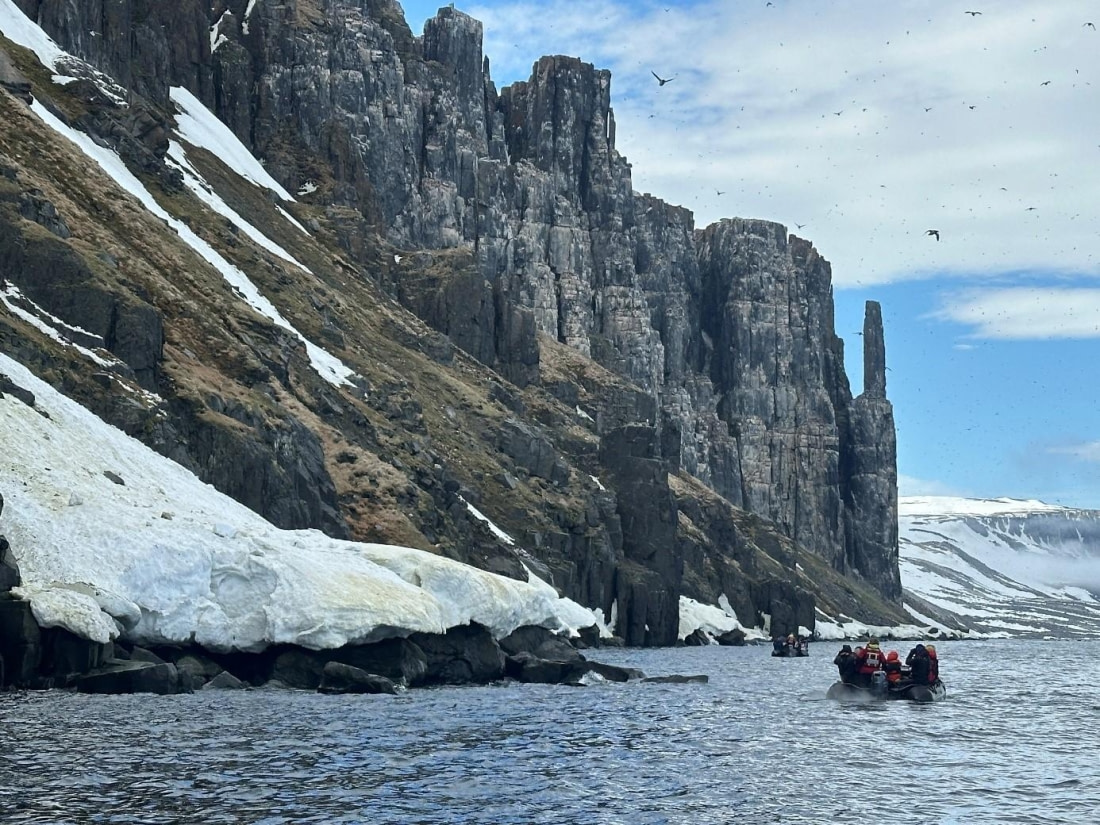
Our next destination was the famous cliffs of Alkefjellet, which stretch for several kilometres and are home to hundreds of thousands of Brünnich’s guillemots. Even without the birds, the dramatic cliffs would be well worth a visit—but the guillemots are undoubtedly the main attraction, never failing to impress those lucky enough to witness this natural wonder. During our Zodiac cruise, we had the opportunity to fully appreciate this incredible place.

Then it was time to return to the ship for some warm tea or coffee. During the recap, Philip told us about the plans for the following day. Enric explained the geology of the cliffs. Daniel spoke about the circle of life in the Arctic Ocean, and Steffi taught us all about the Brünnich’s guillemot!

An early dinner was served, as the day’s adventures weren’t over yet.

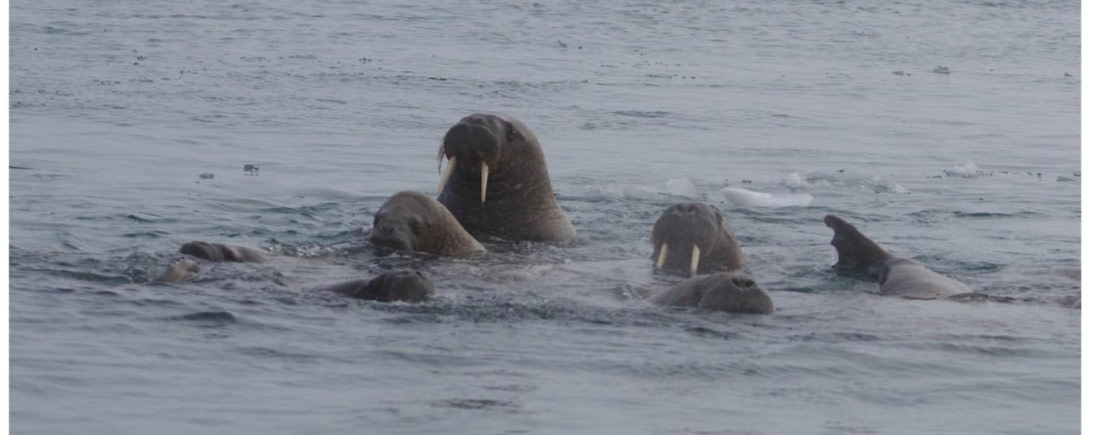
We sailed through the fog to reach our final destination. As we arrived, the fog cleared and revealed the landing site—full of walruses.

Torellneset is a headland on the southwestern side of Nordaustlandet in the Svalbard archipelago. It is named after the geologist Otto Martin Torell. Located south of the Vegafonna glacier, it marks the southwesternmost point of Gustav Adolf Land. The island of Perthesøya lies offshore from the headland.

A soft fog rolled in again, adding to the mystery of the scene. After taking hundreds of pictures of the walruses and watching them interact and swim, it was time to return to the ship.

At almost 10 p.m., we ended this magical day—one that will be remembered for a lifetime.

Day 7: Sundneset and Negribreen

Sundneset and Negribreen
Datum: 07.07.2025
Positie: 78°35.0’N / 017°46.1’E
Wind: Variable
Weer: Fog, cloudy
Luchttemperatuur: +2

Day 7 dawned in Freemansundet, Spitsbergen's iconic sund in the east, but a thick blanket of fog enveloped our surroundings. Unfortunately the shore less than 2 NM distant was invisible. The area is magic but if there is no sight in the arctic environment, you better do not go on land. So, our morning activity was canceled for obvious reasons.

Ursula captivated us with a fascinating lecture on walruses. She focused on their main characteristics, highlighting their immense size, their thick, wrinkled hide, and their most distinctive feature: their long, prominent tusks. These tusks, which can grow quite long in both males and females, are elongated canine teeth used for navigating, foraging on the seabed, and hauling their massive bodies onto ice or land. We also learned about their sensitive whiskers (vibrissae) which help them find food in murky waters, and their ability to slow their heart rate and dive to considerable depths in search of clams and other benthic organisms. Following her, Daan delivered a thought-provoking presentation on climate change in the Arctic, presenting compelling data and raising awareness about the critical implications for this fragile ecosystem. His reflections prompted a deeper understanding of our collective role in preserving this unique wilderness.

After a morning of insightful discussions, a delicious lunch awaited us, providing a welcome break and time to reflect on the morning's lectures.

The afternoon brought a shift in our plans, and with the fog still lingering, we opted for an exhilarating Zodiac cruising experience at Negribreen glacier. This proved to be a serendipitous change, offering unparalleled, close-up views of the majestic tidewater glacier that dominates the Hornsund landscape. We navigated carefully through a labyrinth of icebergs, marveling at their sculptural forms. A truly unforgettable highlight was encountering a playful group of belugas, their ghostly white forms gracefully navigating the icy waters, their presence a stark reminder of the vibrant marine life thriving amidst the dramatic glacial landscape.

Back on board, we gathered for our daily recap and a briefing for the following day, sharing our awe-inspiring experiences from the Zodiac cruise. Dinner followed, a perfect conclusion to another remarkable day in the Arctic.

Day 8: Gåshamna and Treskelen

Gåshamna and Treskelen
Datum: 08.07.2025
Positie: 76°56.7’N / 015°48.9’E
Wind: S2
Weer: Fog
Luchttemperatuur: +7

Tuesday morning, we woke just before sailing into the southernmost fjord, Hornsund. Visibility around the ship was good, but Hornsund itself looked very foggy. Our destination was a place called Gåshamna, but we were soon distracted by a young humpback whale feeding right in front of the ship.

Of course, we couldn’t miss such a sight. Solina, our third officer, slowed the ship down. “Humpy,” as we quickly named her, was curious and came very close. We could see her entire body beneath the water, including her striking white flippers. She was foraging in very shallow waters, which meant she lifted her tail many times, giving us a clear view of its underside— a key feature for identifying individual whales.

After about 45 minutes of whale-watching, we repositioned the ship in front of Gåshamna. Once again, we were lucky—the fog cleared, and Philipp decided it was safe to land. We landed near the remains of whales hunted in the 17th and 18th centuries. In those times, large ovens were used to boil down the blubber after flensing. It was both sobering and fascinating to see the bones and skulls still lying on the tundra.
Around them, green moss and plants had taken root, nourished by nutrients slowly released from the decaying bones. It felt especially meaningful to have seen a living whale just before, a reminder that whales are slowly returning to Spitsbergen.

As usual, we split into three groups. The long hikers made their way far up the mountain, climbing a scree slope. As we ascended, the fog began to roll in again, and by the time we reached the highest point, visibility was gone. On the descent, we slid down patches of snow—some on our feet, others with heels dug in, depending on personal preference. The medium and leisure groups stayed near the whale bones. They hiked up to get a better view of the bird cliffs and even discovered a dead redwing—a vagrant bird that had taken a wrong turn and ended up on Spitsbergen.

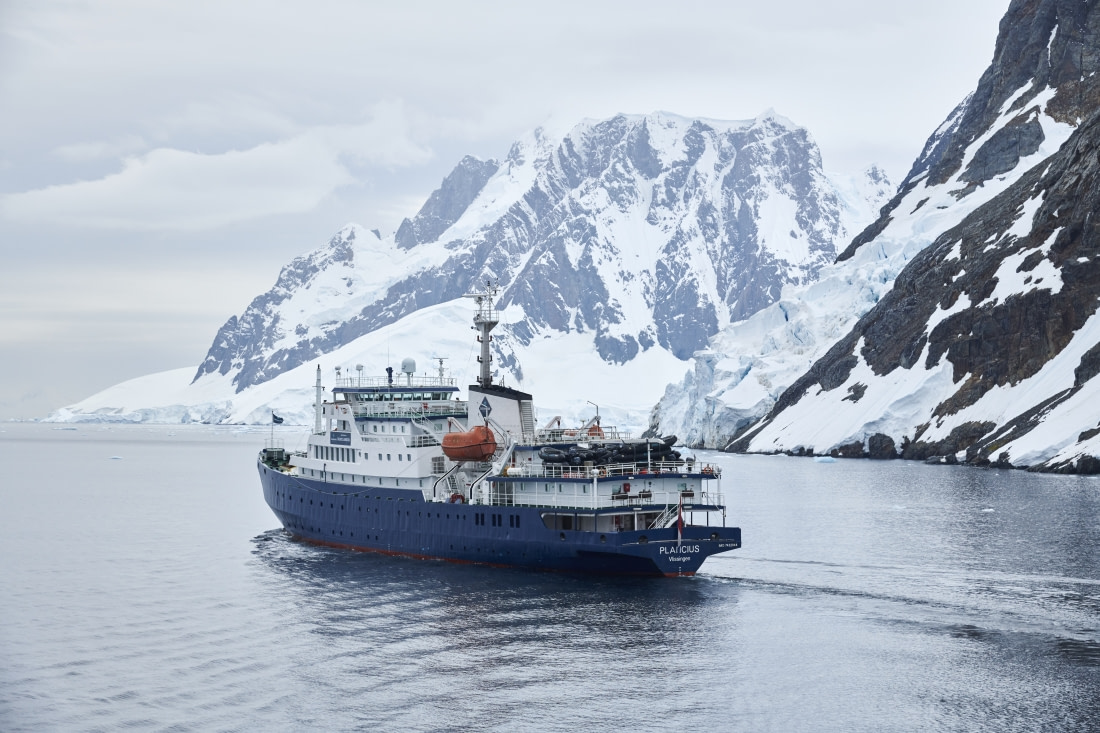
Lunch was postponed so we could enjoy a longer stay on land. We returned to the ship for another delightful meal. After lunch, Plancius sailed past Samarinbreen, a stunning glacier front with some fast ice still clinging on.

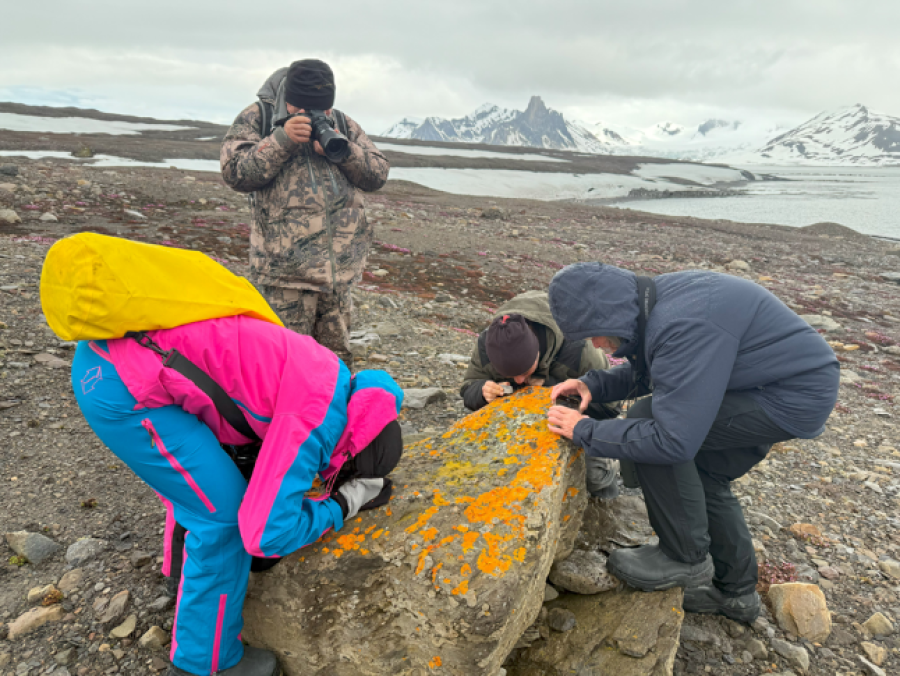
At 15:30, we set out for our next adventure: a landing at Treskelen, a small spit on the opposite side of Hornsund fjord. We came ashore on a pebbled beach with snow-covered ground just above it. From there, we walked to a sedimentary rock plateau covered in square cracks. The long hikers explored the spit for a view from its tip, while the medium hikers were lucky enough to spot lakes with red-throated divers. The leisure group got down on all fours to examine lichen, plants, and fossils in detail. That evening during the recap, we learned that we’d be sailing back to Isfjorden, the largest fjord, to spend another day there. Koen gave a talk on baleen whales, explaining their foraging behavior and reproductive cycles. Vale helped us grasp the scale of Arctic animals by using a rope to represent their sizes—from Arctic foxes to blue whales. Then Ursula captivated us all with a heartfelt presentation on the importance of showing children the beauty and vulnerability of animals and the Earth. She does this through her artwork, which features animals from the Arctic and beyond. The highlight was when the guides carried in a life-sized humpback whale made of fabric—it filled almost the entire lecture room.

We were tired but fulfilled—most of us turned in early after another incredible day in the Arctic.

Day 9: Gipsvika and Skansbukta

Gipsvika and Skansbukta
Datum: 09.07.2025
Positie: 78°25.7’N / 015°48.9’E
Wind: SSE2
Weer: Overcast
Luchttemperatuur: +7

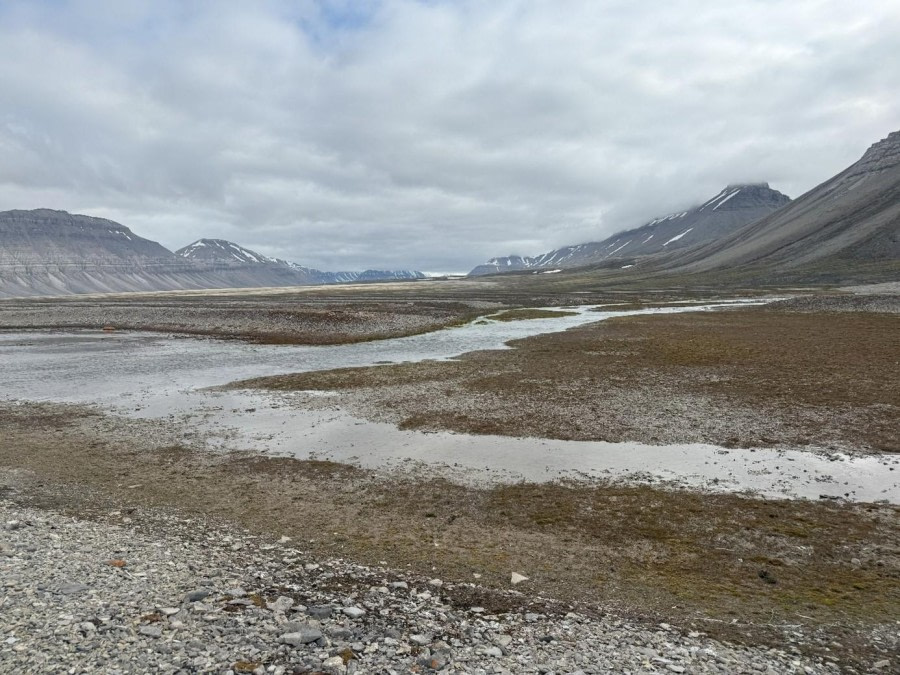
On our final morning, we started in Gipsvika — and finally saw the sun again. After days of fog while circumnavigating Spitsbergen, this sudden burst of light lifted our spirits. We landed in a wide valley and split into our usual hiking groups to explore an area rich with vegetation. The medium hiking group eventually split into two, allowing the birders their own group to explore the freshwater pools that dotted the valley.

The scale of the landscape was simply breathtaking. Sunlight danced across the towering, steep mountains, creating a spectacular light show. We spotted puffins high up on the cliffs, while reindeer grazed peacefully in the valley below. The birding group discovered a young ringed plover family with four tiny chicks — a sight they proudly shared with the slower group. The middle hikers reached a small plateau, taking in sweeping views of the high Arctic landscape. The long hikers explored the entire valley, even crossing some muddy ground.

Eventually, we all made it back to the beach, where we discovered the swell had picked up. The Expedition Team had a very wet job getting us back into the zodiacs — a true expedition moment! By now, everyone understood why waterproof outer layers are essential. What a magical morning in a place that made us all feel small in the best possible way.

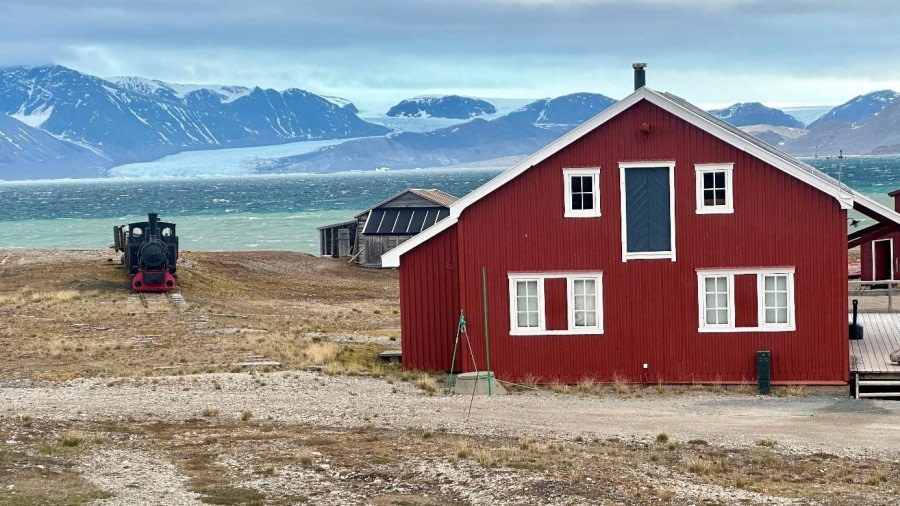
As we enjoyed lunch, our bridge team navigated us to our afternoon destination: Skansbukta, on the northern shore at the entrance to Billefjorden. There, we found a small cabin, rusting train tracks, and a barge — remnants of a gypsum mine established in the early 20th century. Despite being reopened after an initial closure, the mine was ultimately abandoned due to the poor quality of the material and the remoteness of the site.

The landing at Skansbukta was truly special. We had the freedom to walk around within a safe perimeter set up by the guides. A lone walrus was lounging on the beach, so the Expedition Team roped off the area to ensure we kept a respectful distance. Around the corner, puffins were taking off from their nesting sites. Despite the crowd, the experience of watching these iconic birds soar on the Arctic winds was unforgettable. For many of us, it was the first time seeing puffins, adding the perfect finishing touch to our wildlife encounters.

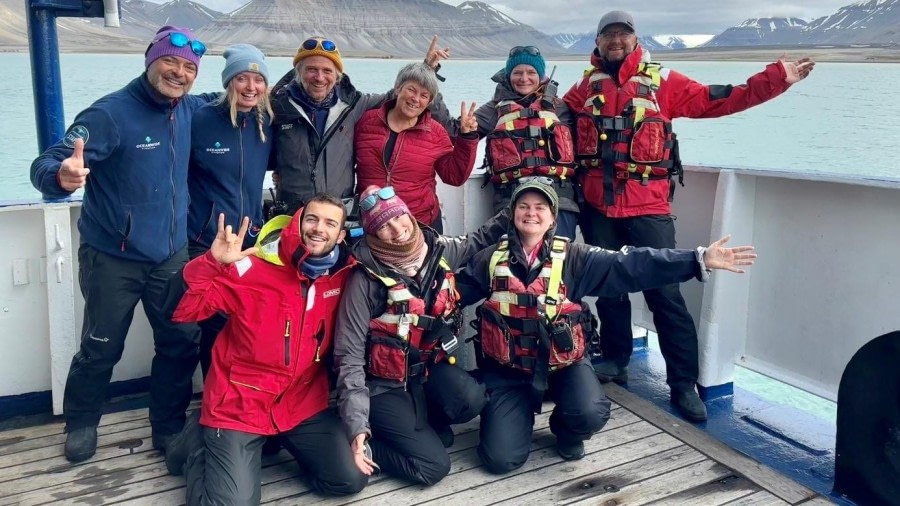
We ended this special landing with hot chocolate, a celebratory shot — and for the brave, a dip in the Arctic Ocean. What a finale to an incredible trip. We couldn’t have wished for anything more: the landscapes, the wildlife, and, above all, the people we shared these past ten days with.Emotions ran high as we boarded the zodiac for the last time and returned to our beloved Plancius.

The evening was filled with laughter, stories, heartfelt appreciation, and a stunning slideshow of memories — a celebration of the moments we’ll carry with us in our hearts and souls.

Day 10: Longyearbyen, Disembarkation

Longyearbyen, Disembarkation
Datum: 10.07.2025
Positie: 78°13.9’N / 015°37.6’E
Wind: NE1
Weer: Overcast
Luchttemperatuur: +8

This morning, we were woken up one more time by Philipp’s soft morning voice. Surely we will miss him waking us up! Unfortunately, the only activity planned for today was our disembarkation and saying our farewells and goodbyes to our fellow guests that had become our friends in the past week. However, Oceanwide wouldn’t let us leave the ship with one last breakfast. So, after we had put our big luggage pieces in the hallways, we made our way to the restaurant for one more delicious breakfast and to see the wonderful dining room crew once again. Although some of us felt melancholic that the expedition was about to end, we also felt happiness and gratitude for the past seven days that had been so intense and wonderful. T

]hen the time had arrived to leave the beautiful M/V Plancius, the ship that had brought us to so many places and that had allowed us to observe fantastic wildlife, landscapes and the mesmerizing pack ice. We will surely miss this little blue ship.

Today we were docked at the general pier so no need to dress up in those waterproofs again, no today we could walk down the gangway and set foot in Longyearbyen once again. Some of us went to town whereas others made their way to the airport. However, one thing we all had in common was this wonderful trip and the amazing memories it has given us. Saying goodbye is never easy, but it often also means that you’ve had a fantastic time and that made it totally worth it.

The wonderful expedition team waved us goodbye while the buses slowly departed and the ship slowly became smaller. Off to new adventures and maybe one day back on board with Oceanwide Expeditions. Thank you and goodbye!

Details

Reiscode: PLA06-25
Reisdatum: 1 jul. - 10 jul., 2025
Duur: 9 nachten
Schip: m/v Plancius
Inscheping: Longyearbyen
Ontscheping: Longyearbyen

Op deze reis geweest?

Aan boord van m/v Plancius

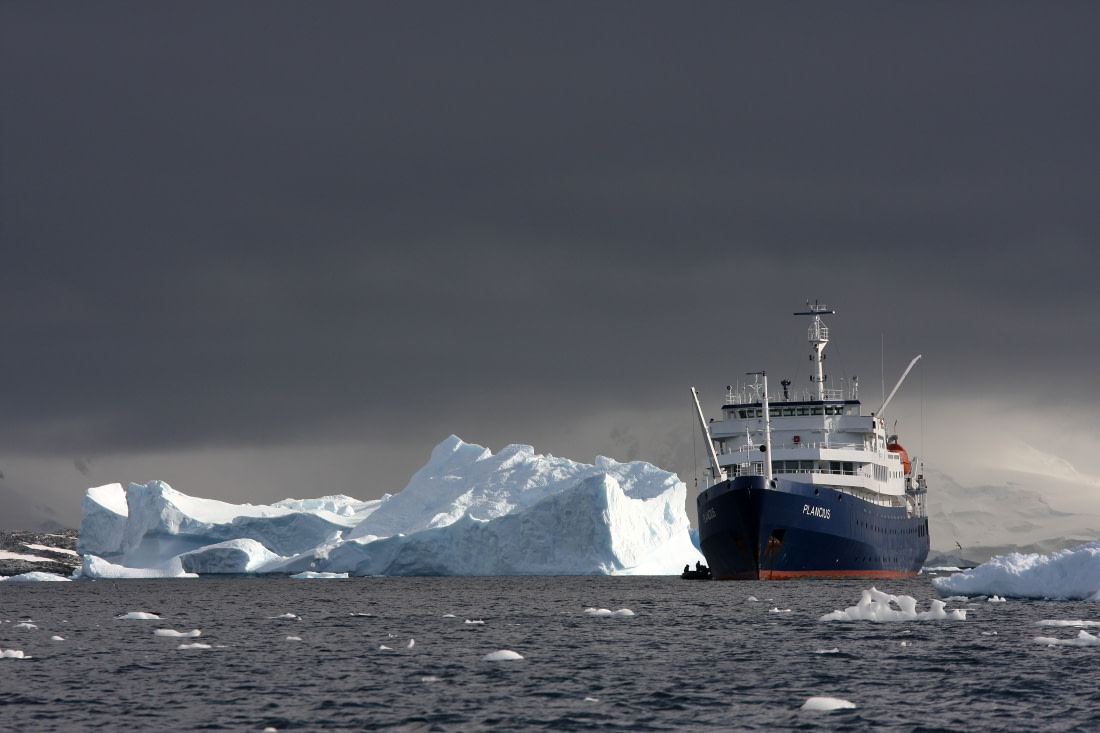
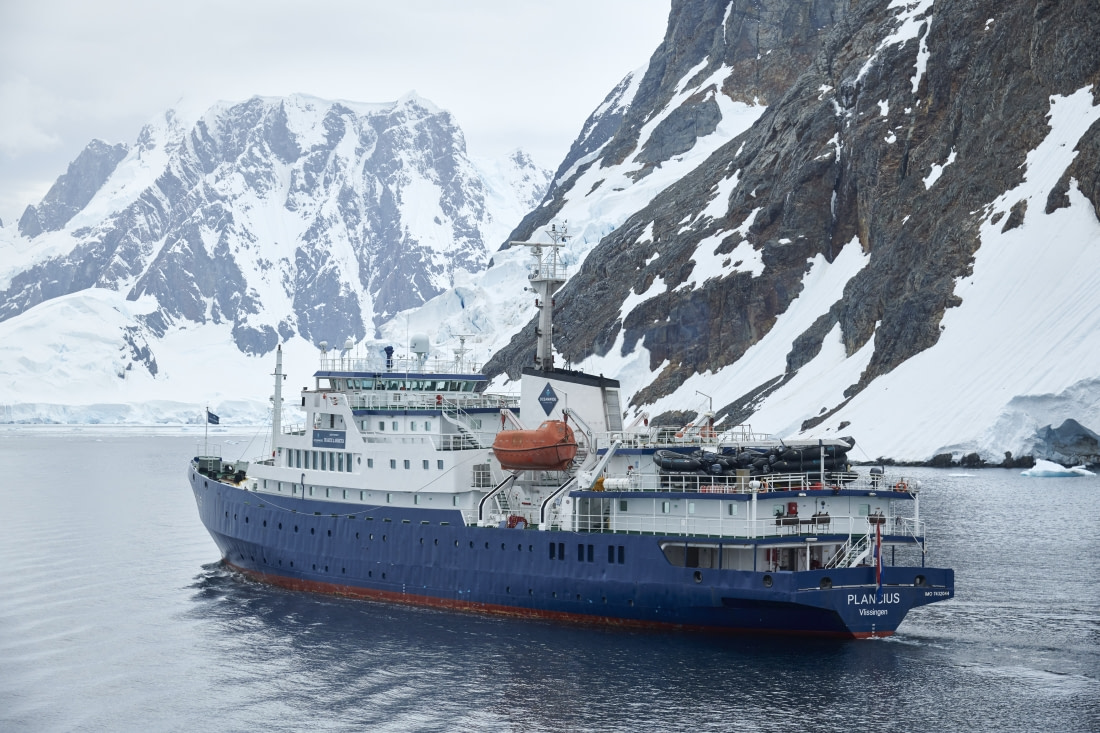
Ons oudste schip, de Plancius, is een klassieke keuze voor een aantal van onze populairste poolreizen.

Meer over de m/v Plancius »
Loading