• Home
  • Triplogs
  • OTL23-25, trip log, Weddell Sea - In search of the Emperor Penguin, incl. helicopters

OTL23-25, trip log, Weddell Sea - In search of the Emperor Penguin, incl. helicopters

by Oceanwide Expeditions

Photo gallery

Logbook

Day 1: Embarkation Day, Ushuaia

Embarkation Day, Ushuaia
Date: 21.11.2025
Position: 54°48.5’S, 068°17.9‘W
Wind: SE1
Weather: Cloudy
Air Temperature: +8

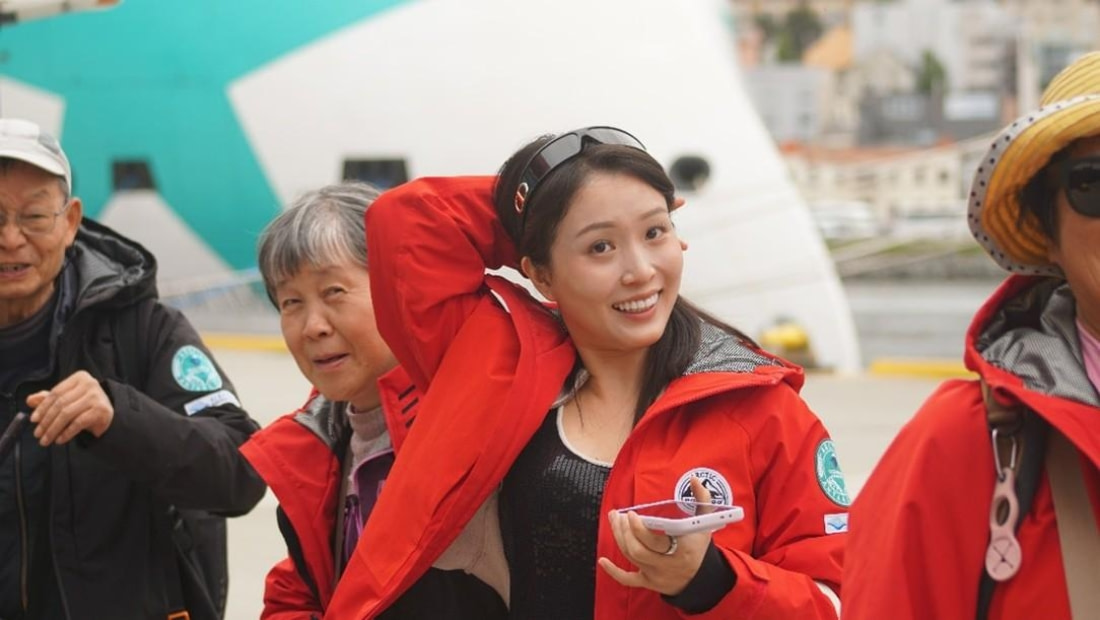
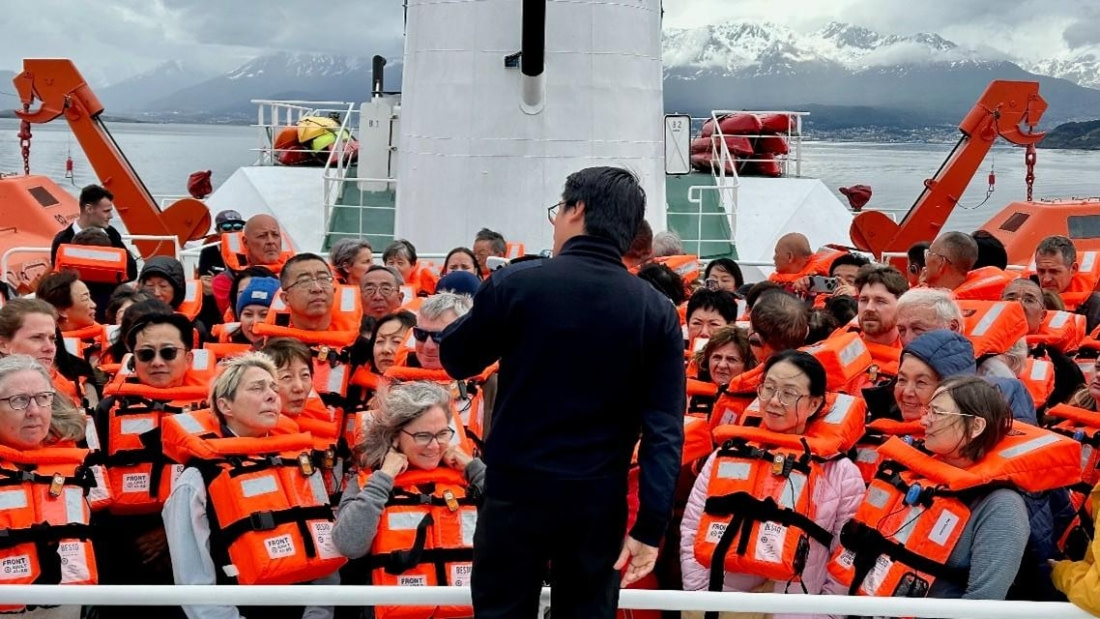
After exploring the town of Ushuaia, it was time to make our way to the pier to board m/v Ortelius. Everyone was intrigued and excited to see what our home would be for the next ten days. The hotel department showed us to our cabins and then we made our way to the lounge for a safety briefing. We were shown how to stay safe during the voyage, and we then took part in an abandon ship drill.

We could enjoy the views of the beagle channel as we set sail before being invited to the lounge again for the Captain’s Welcome evening. Here we met Captain Remmet, and toasted the voyage. We also met our Expedition Leader Pippa who introduced us to the Expedition team and explained to us what to expect from our time onboard.

We enjoyed a well-earned buffet dinner before heading back to the lounge for a mandatory briefing about IAATO, where Pippa informed us about how to safely explore Antarctica.

Many of us were tired from travelling and from the anticipation of beginning our exciting journey and headed to our cabins for an early night. Others stayed up to watch the sun go down and enjoy the birds and scenery of the Beagle Channel and enjoy a drink at the bar with our new ship mates.

Day 2: Sailing towards Antarctica

Sailing towards Antarctica
Date: 22.11.2025
Position: 57°41.5’S, 064°57.7‘W
Wind: NW5
Weather: Overcast
Air Temperature: +5

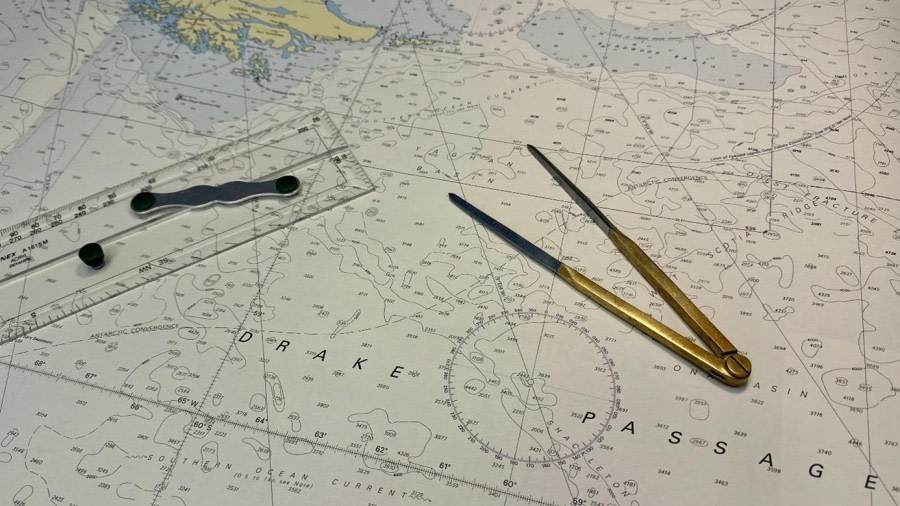
This morning, we were excited to wake up to our first full day of the journey. The drake passage was surprisingly smooth given the approaching front looming in from the west.

The keen birdwatchers were thrilled to spot some exciting Southern Ocean birds throughout the morning including the wandering albatross, the southern royal albatross, the grey-headed albatross and the black-browed albatross.

After a great breakfast, Expedition Leader Pippa and Assistant Expedition Leader George invited us to the lounge for a briefing about helicopter operations, so that all would go smoothly on the day of operations.

Expedition guide Gary then gave a very entertaining talk about penguins, giving us an introduction to the species we would hopefully come across and the behaviour and biology which helps them to survive in Antarctica.

After a wonderful lunch we managed to go down to the lower decks despite the rocking and rolling ship and collect our muck boots and any spare hire equipment. Afterwards Beth gave and insightful lecture on ice in Antarctica.

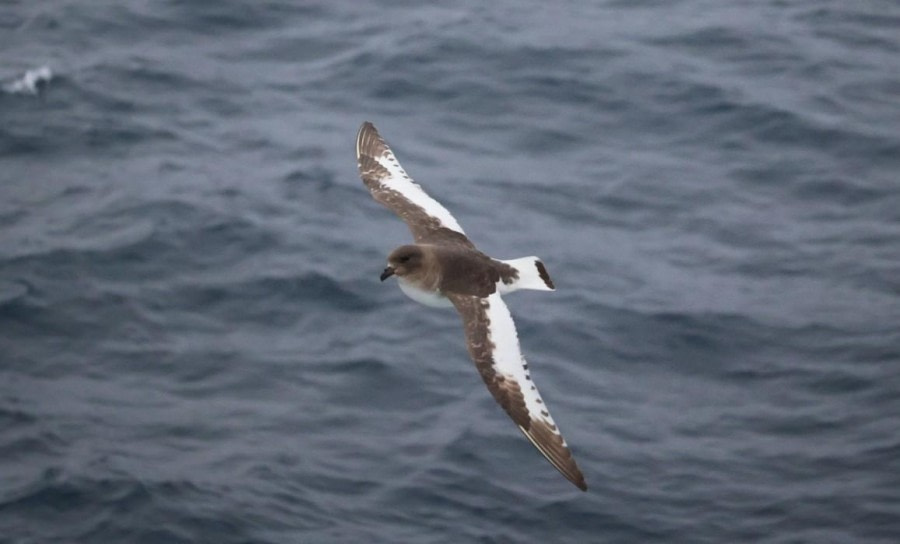
The low cloud stuck around creating quite the eery ambience. But again, we managed to spot some species of petrels, a southern fulmar and an Antarctic prion, that were gracefully flying in and out of the mist.

The day at sea flew by and soon it was time to gather for the first of our daily recaps. Pippa informed us about the plans for tomorrow, where we would be visiting the remarkable Deception Island, and informed us about our helicopter practice run and biosecurity measures that would be taking place the following day. Gary told us about how the seabirds make use of the wind and use dynamic soaring to travel effortlessly across the waves. Jess, Saskia, and Beth then showed us just how large the wingspans of the birds we had been seeing were using a piece of string. Everyone was very impressed to see just how large the wingspan of the wandering albatross is.

After a delicious plated dinner and a chance to get to know each other some more, the ship chugged along southbound and at around 22:00hrs we crossed the 60 degree mark of southern latitude and officially sailed into Antarctic waters.

Day 3: At sea and Deception Island

At sea and Deception Island
Date: 23.11.2025
Position: 62°34.2’S, 062°01.0‘W
Wind: NE9
Weather: Overcast
Air Temperature: -1

We were woken up by our Expedition Leader Pippa at 07:45, with the message that we were already almost across the Drake Passage. Last night we went at a good speed and, again, we were gently rocked to sleep, as the Drake treated us well. Now and then we felt we were weightless for a bit. But that added to the excitement. This morning, we were warned about slippery decks, as it had started snowing. That real Antarctic feel came over us. When we looked outside, through our portholes, we immediately felt we were getting closer to the seventh continent on this special journey south.

To be prepared to go on land we first had to complete mandatory IAATO Biosecurity in the lounge. We were called down by groups and had to bring all our outer garments, bags, poles, tripods that we were planning to use in Antarctica. It had to be checked and/or cleaned. In the end all of us got ticked off and we were ready to enter the pristine southern continent whenever we arrived.

Then at 11:30 Jess invited us up into the lounge to join her for her lecture about cetaceans of the Southern Ocean. She introduced us to the many species that we might see on our trip and taught us some interesting facts and the differences between whales, dolphins and porpoises. Soon after, lunch was ready, and we could enjoy another lovely meal in the dining room prepared by the galley team.

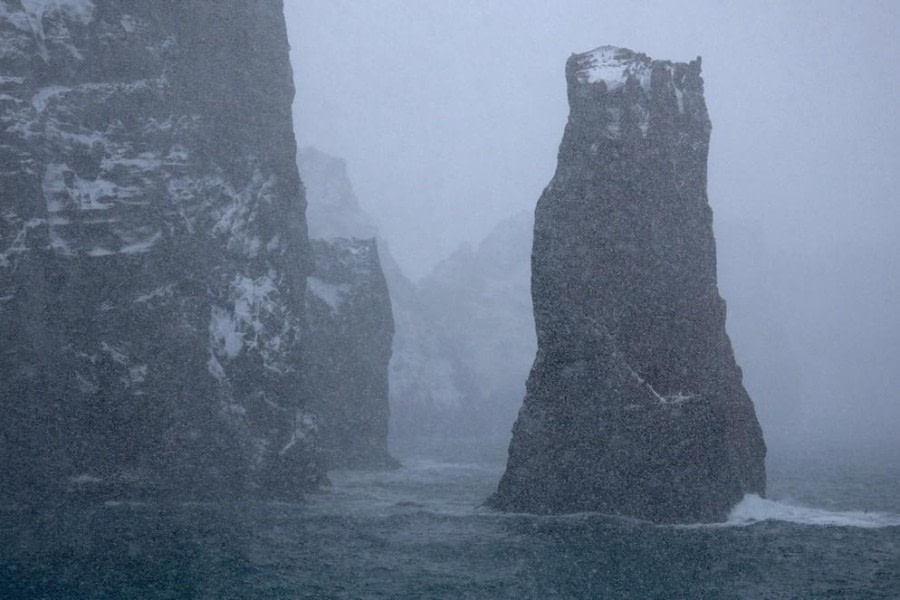
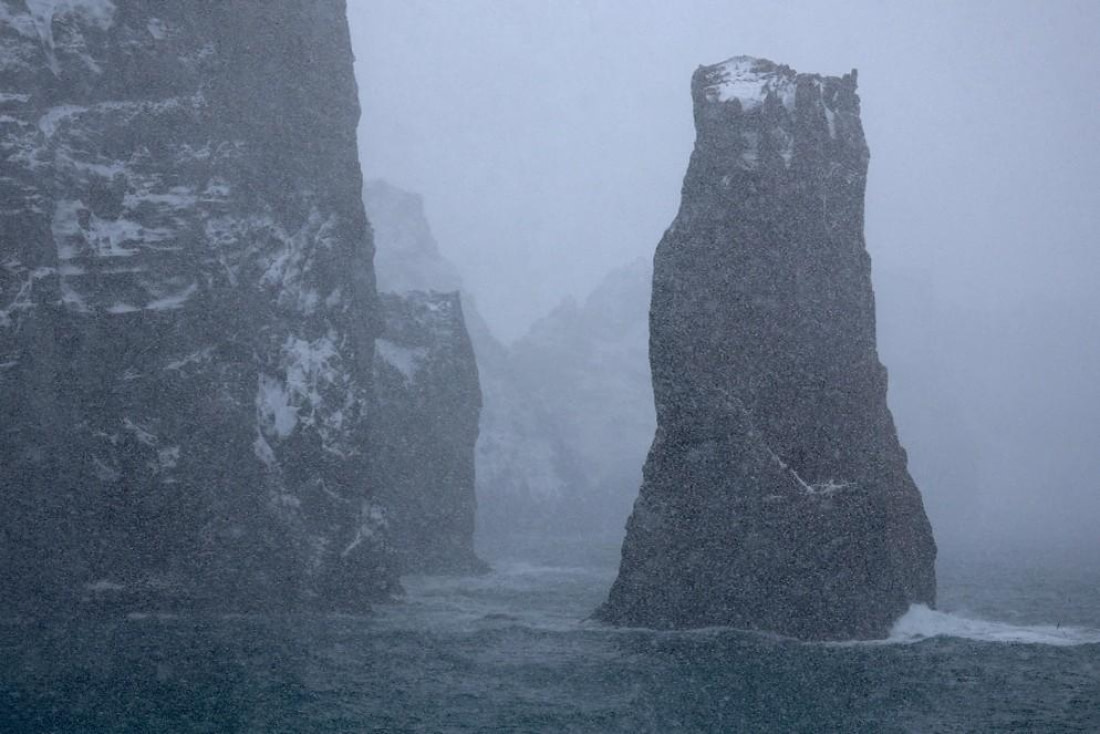
Then we slowly got closer to our destination for the afternoon. Out of the fog arose Deception Island, part of the South Shetland Islands. We were about to sail into Port Foster, the flooded caldera of this active volcano. With 45 knots of wind and snow blowing horizontally, it was a challenge to navigate into the narrow entrance called Neptune’s Bellows. Within this passage of only 230 meters wide, there was an additional hazard to be considered. Just 2,5 meters below surface, in the middle of the route, lies Raven Rock. The experienced Bridge Team, under command of Captain Remmert Koster, maneuvered our Ortelius smoothly past it.

At 15:45 we were called down to the gangway to get ready for our first landing on this trip, at Whaler’s Bay. We were excited! It was cold, but to be able to step on land again after two days at sea was for many of us that had been seasick, it was a good feeling. The striking contrast between history and amazing geology was almost surreal. We were given the chance to walk around and explore the historic Norwegian whaling station and see the remains of old research buildings from British scientists that were forced to leave the island after its most recent eruption in 1970. A thick layer of snow covered the black beaches; this combined with the fog and many shades of white and grey made Deception Island look almost magical.

After a few hours of wandering around, taking in this beauty and photographing the landscape and penguins that were combing the beach too, we were ready to head back. A few brave souls took the challenge to do the polar plunge and straight after jumped into the Zodiacs, to be brought back for a warm shower on board. At 19:00, we were invited back up to the lounge to join the Expedition Team for our daily recap and briefing, where Pippa shared her plans for the next day. At 19:30, our hotel manager Volodymyr informed us that dinner was ready, and the dining room team were waiting to welcome us. Everybody was hungry after our afternoon in the cold and enjoyed the great food!

Day 4: Palaver Point

Palaver Point
Date: 24.11.2025
Position: 64°00.5’S, 061°48.8‘W
Wind: Var 2/3
Weather: Partial Cloud
Air Temperature: +1

This morning, Pippa woke us up at 6:45am to magnificent conditions in the Gerlache Strait. Some were fortunate to spot a humpback whale off the bow before breakfast, and the birders were treated to a southern giant petrel and Antarctic tern.

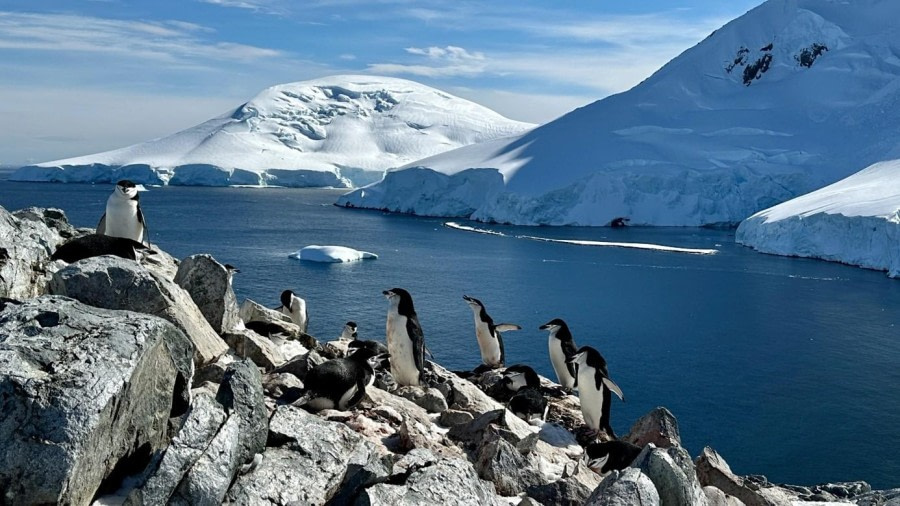
At 8:30am the first shuttles were heading towards Palaver Point on Two Hummock Island. After fitting snowshoes, we were able to really stretch our legs and wander around capturing stunning scenes of nesting Chinstrap penguins with the backdrop of awe-inspiring glaciers. There was even a humpback whale that made a brief appearance near the ship again. The chinstrap penguins were busy collecting stones and getting their nests ready and some already had eggs. They were noisy as that socialized together and occasionally a few fights broke out.

After lunch we were straight into a practice helicopter run so that there would be no surprises on the real day. The Chilean DAP Helicopter team were extremely patient in their explanations, and it was a real successful and productive run through.

As we sailed northeast up towards our destination in Antarctic Sound dodging icebergs into the afternoon, many enjoyed cards, coffee, reading and more sightseeing. Some were lucky to spot Adélie penguins on passing icebergs, as well as breaching humpback whales.

Just before dinner, Pippa gave an update on the ice and weather conditions for the next few days; Saskia introduced us to volcanoes in Antarctica; Jess gave a talk on krill; Wei made us laugh about penguin poo and finally George gave a great little presentation on the laws of the sea and the zoning legalities.

As we sailed on through relatively calm seas northeastwards up the Bransfield Strait we were accompanied by an Antarctic petrel to finish off a fantastic day in this very special part of the world.

Day 5: Sailing through the Antarctic Sound

Sailing through the Antarctic Sound
Date: 25.11.2025
Position: 63°16.3’S, 056°59.0‘W
Wind: S10
Weather: Overcast
Air Temperature: -5

Good morning, good morning came the wake-up call today! “It’s a beautiful sunny day outside and we are just at the northern end of Antarctic Sound”. And what a day it turned out to be. The day started crisp and cold with strong 50-60 kt winds keeping all but the bravest inside. As we motored into the Antarctic Sound over the morning, the wind dropped nicely, just as predicted. The sea was scattered with big icebergs with many nice large tabular bergs south toward the entrance to the Weddell Sea. For a brief while in the morning, we had a few snow flurries, but that cleared up as we entered some of the loose pack ice to see how far we could push our way south. We passed Hope Bay, the home of Argentina’s Esperanza Station, where the first ever baby in Antarctica was born. The station is famous for having periods with whole families living in Antarctica in Argentina’s move to present their territorial claims in Antarctica. Some of our phones came to life as surprisingly, there is mobile phone service around the station. Hope Bay was also the site of part of the epic Nordenskjold tale of survival and rescue. Three men wintered over in a tent pitched inside a small stone hut there in 1902.

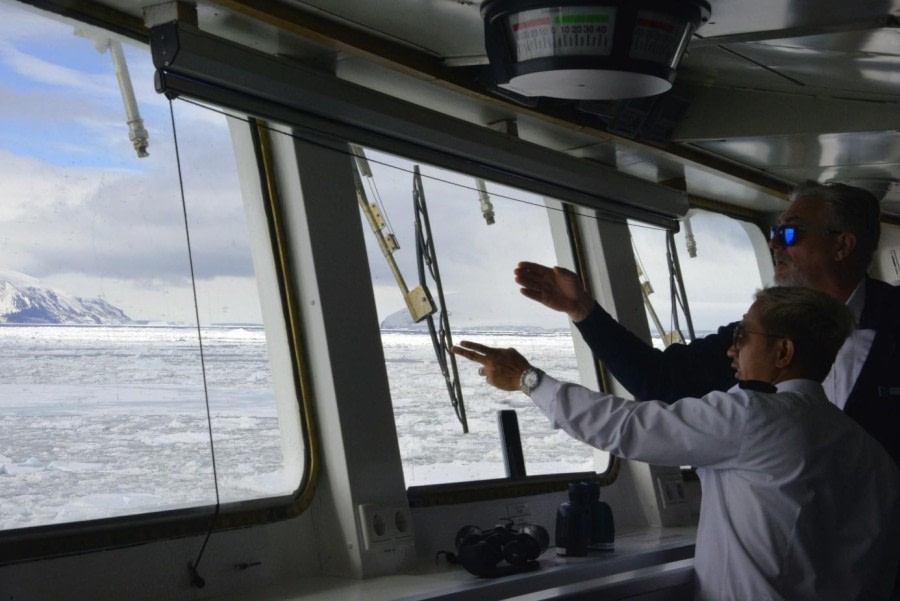
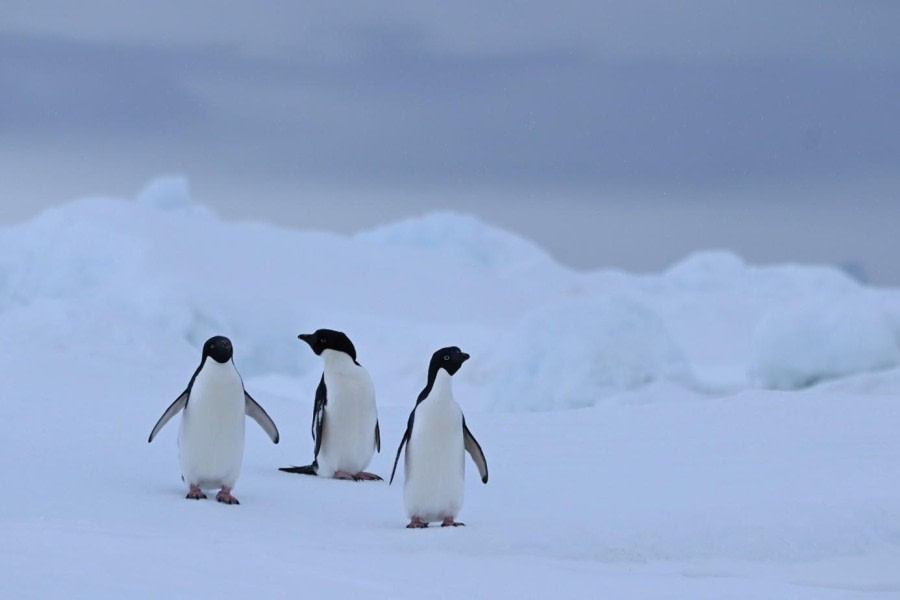
Soon after we passed Hope Bay, we ventured into the pack ice in our hopes of going further south. A new experience for most on board, it was a fascinating and exciting process as our Captain and bridge team chose our path through a maze of variously thick and sparse sea ice, icebergs, bergy bits and brash. We had flocks of snow petrels, scattered Adélie penguin groups and even a couple of crabeater seals all using the pack ice as a convenient platform or backdrop for their foraging and resting. In the late morning, George gave us a talk on geopolitics, outlining the development of the Antarctic Treaty and some of the successes and challenges that have been solved as well as some that loom for our near future.

The day slid by with ice around the ship. We managed to push down into the southern end of the Antarctic Sound, only to be met with ice pack that was too thick for us to consider going on. The Captain changed course and we entered Fritdjof Sound for a different attempt. We got a little farther south, but again, blocked by thick ice. The decision was made to send out a scout helicopter to check the conditions and the distance to the colony while we stayed stationary in the pack ice at our farthest south position with the ship. Meanwhile, Allan gave us the full story of Nordenskjold and his 1901-1903 expedition to the area. The Swedish expedition built a hut on Snow Hill Island with the intention of spending one winter there and performing research over a full summer. That turned into an epic of survival over two winters when the relief ship, the Antarctic, got stuck in the ice and was crushed. With one party of three men at Hope Bay, the rest of the ship’s crew at Paulet Island and Nordenskjold’s team at Snow Hill Hut, it was nothing short of a miracle that everyone found each other. With the sad exception of a single death due to heart trouble, everyone else was eventually recovered by the SS Uruguay. As Allan wrapped up, the helicopter returned and after dinner at our briefing we all got the fantastic news. Things looked promising for tomorrow and the next day. If the forecast holds for tomorrow, we would attempt take everyone to the colony over the next two days. With fingers crossed for the weather to hold, everyone shuffled off to bed ready to dream of emperors tomorrow.

Day 6: Antarctic Sound & Fridtjof Sound

Antarctic Sound & Fridtjof Sound
Date: 26.11.2025
Position: 63°37.5’S, 056°43.5‘W
Wind: SE 3
Weather: Cloudy
Air Temperature: -5

Overnight Ortelius remained in her ‘ice garage’ at the southern end of Fridtjof Sound, providing a quiet and motionless night for everyone on board. The morning brought still conditions that were broken occasionally by the distant squawk of Adélie penguins. The expanse of heavy ice that had brought us to a halt yesterday, remained unbroken as far as the eye could see ahead of the ship. There was still no hope of us going any further south.

Unfortunately, the skies were overcast with a low cloud base and an occasional light flurry of snow that reduced visibility further. These were not good flying conditions, and as many suspected, it resulted in a delay to our planned activities. The helicopter pilots agreed to review weather conditions at 10:00. In the meantime, the Expedition Team and helicopter engineers set about loading the helicopters with all the equipment that had to be taken to the landing site.

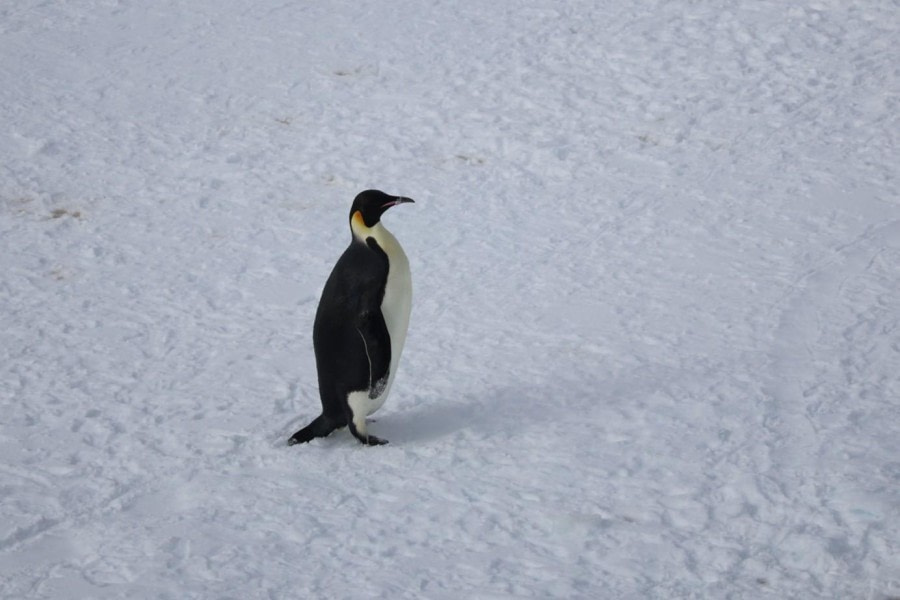
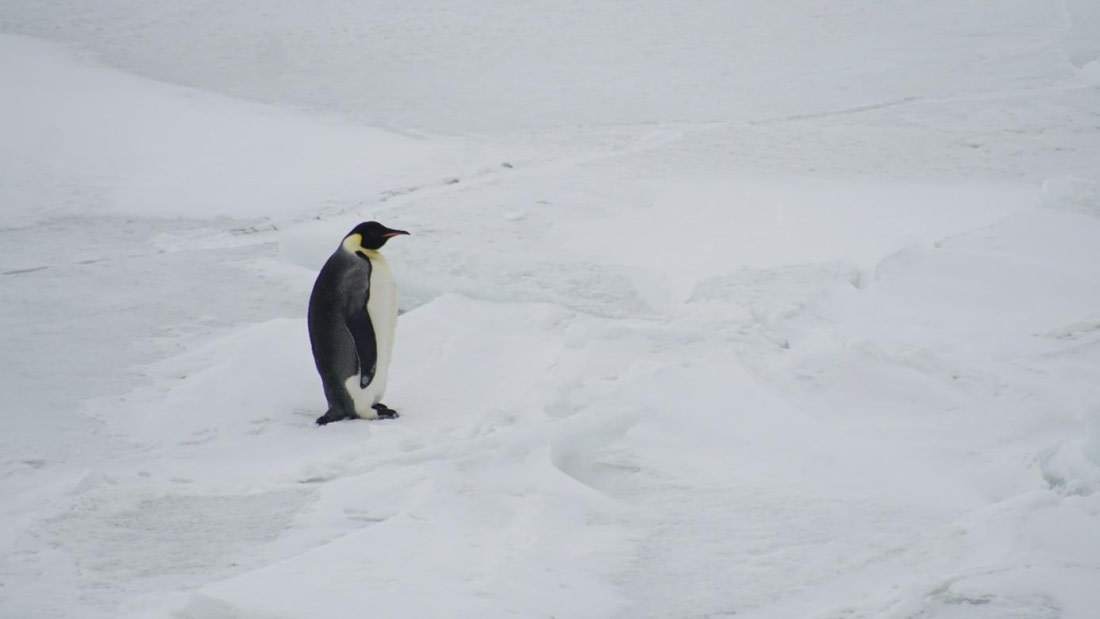
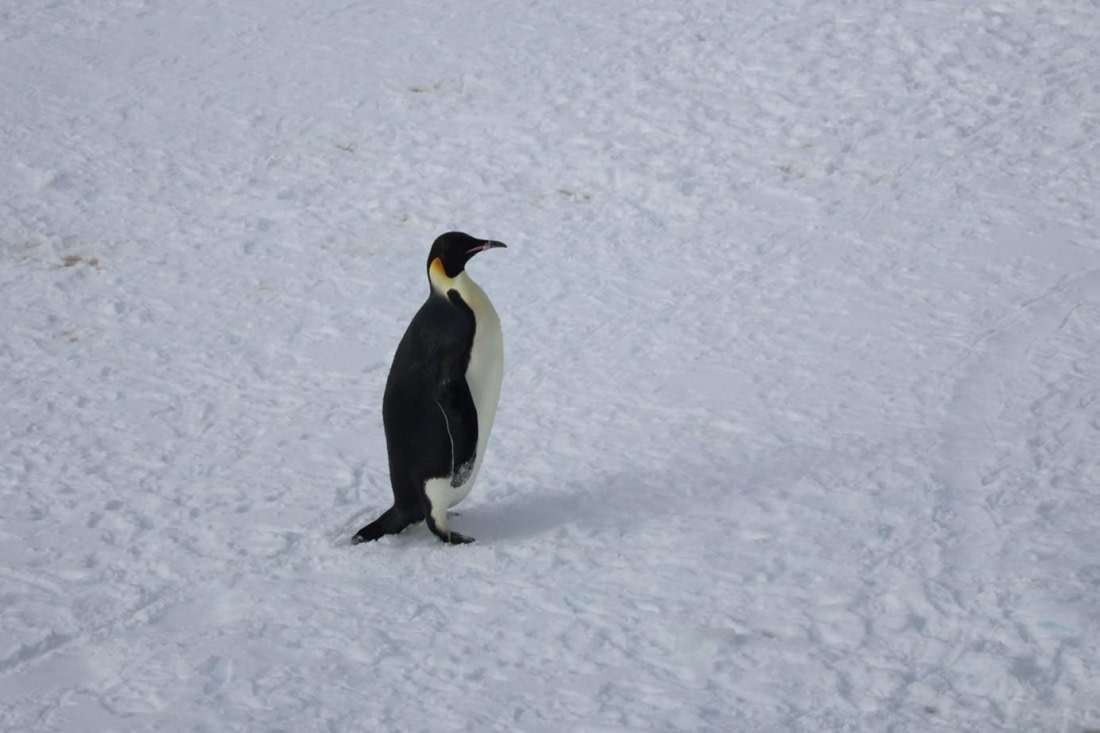
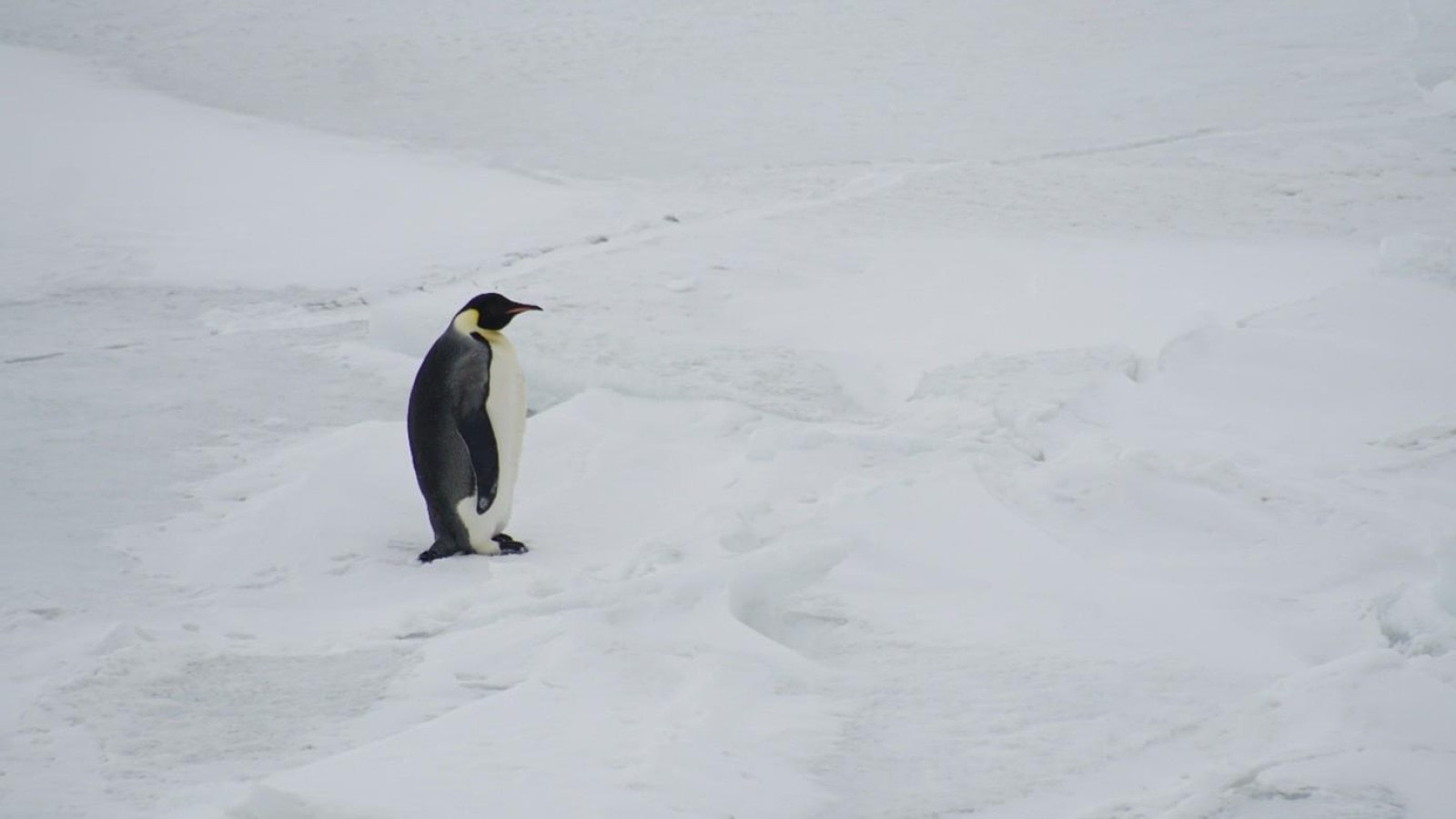
A wave of great excitement ran through the ship when it was announced that a lone emperor penguin had appeared on the ice just off our starboard side. It was close enough to provide an excellent view and hung around long enough to be well photographed. What a joy it was to finally see one of these magnificent creatures. There followed a flurry of fantastic wildlife sightings from the ship. Soon after the emperor disappeared back into the water, another announcement alerted us to the presence of a minke whale off our port side. And then, even greater excitement when a pod of orcas (large type B) showed up, also on the port side. Their pod numbered somewhere in the region of 10 individuals, with one large male, two females with calves, and a mixture of other animals. It was a truly fantastic sight.

The 10:00 weather check revealed no obvious improvement in our immediate area. So, a phone call was made to Marambio, a large Argentinian station on Seymour Island, next-door to Snow Hill Island. They reported low clouds, snow showers and variable - but generally poor - visibility. The hold on helicopter operations continued, with another weather check scheduled for 12:00. Meanwhile, a lecture on the geology of the region was offered by Expedition Guide Beth. However, just before she started, we were informed that the pod of Killer whales had returned, causing a rush for cameras and an exodus to the open decks. They didn’t stay around for too long, and Beth was able to present her lecture before lunchtime.

The weather check at 12:00 did not bring good news. Another call to Marambio Station revealed an un-forecasted worsening in the weather. The snow was falling heavier, and visibility was extremely poor in their area. Our visual reference in the direction that we needed to go was the distinctive outline of Cockburn Island, some 35 nautical miles away. It had been visible for much of the morning but had now faded from view. Just before lunch Pippa called everyone to the bar for an update. She delivered the very sad news that we could not fly to Snow Hill today, and that our one remaining day tomorrow did not give us enough time to fly everyone there. Sadly, this meant that all hopes of reaching the emperor penguin colony had now gone. This was a bitter pill to swallow. When relying on the unpredictable Antarctic weather for cooperation, it very often disappoints.

We wanted to make use of the helicopters, and the weather in our immediate area was still OK, so it was announced that there would be scenic flights in the afternoon. However, as preparations got underway, it started to snow, and the visibility was soon lost. Sadly, flying was out of the question. We then moved to plan C (or was it D, E, F or G?), a Zodiac cruise through Fridtjof Sound. But just before that activity got started, Antarctica fired another curveball in our direction. Several large icebergs that had remained grounded and motionless nearby over the last 24 hours or so, were now free-floating and moving with the strong current towards Ortelius. Understandably, Captain Remmert wanted to move the ship as soon as possible. The Zodiac cruise was postponed while we slowly made our way northwards through Fridtjof Sound, pushing through heavy sea ice and weaving our way between colossal icebergs. The strong current in this narrow channel swirled and moved the ice around at an alarming rate, and at one point Ortelius was pushed off her heading by a large icefloe resulting in a close, but controlled encounter with an iceberg.

At the north end of Fridtjof Sound, our progress was halted by an impenetrable barrier of heavy sea ice which stretched clean across the deepest part of the channel. It was not there when we arrived the day before, having drifted in overnight with the current. We now had to wait for the tide to turn and move this brute out of our way. Always keen to seize an opportunity, our fearless leader Pippa announced that we would lower all the Zodiacs and go out for an exploratory cruise. This was to be a true taste of Antarctica! The sub-zero temperatures quickly froze the spray that splashed against the sides of the Zodiacs, as the drivers guided their craft among the ice floes. Groups of Adélie penguins were found resting on ice, while gentoo penguins swam into the channel heading for their colony on nearby Jonassen Island. At Chaucheprat Point we admired the geology in the dramatic cliffs where Snow Petrels could be seen flying to and from their nests. The biting cold soon had us heading back to the warmth of our ship, where a hot shower and delicious dinner awaited us. The day ended with a gathering in the bar to learn about the plans for tomorrow and Gary and Jess gave us some more information about how sea ice is formed and the orcas we encountered.
Day 7: Brown Bluff & Scenic flights

Brown Bluff & Scenic flights
Date: 27.11.2025
Position: 63°30.1’S, 056°48.9‘W
Wind: Var 2
Weather: Cloudy
Air Temperature: +2.7

Today was going to be a day of surprises. We had gone to bed last night with a clear idea that today was going to be an adventure. We had aims and ambitions but with the ice conditions being so dense and the snow flurries that were coming through, disobeying the forecast, everybody on board curiously looked forward to what entertainment the day would hold.

We were woken by Pippa to a snow-covered deck and visibility only as far as the nearest snow laden mountains. The sea ice looked spectacular and mystical as we made our way through the freezing sea surface towards Brown Bluff. This is a landing site on the Antarctic Peninsula itself, with imposing big cliffs of volcanic origin.

Out on deck the conditions were very cold. We looked through our binoculars at the ice between us and Brown Bluff trying to find out if there was a clear route. To our delight, the experienced bridge team managed to get us through the ice. The announcement came shortly after breakfast that we had made it to Brown Bluff, and the ice conditions allowed us to make a landing!

We donned our warmest layers and life jackets ready for some time ashore viewing the dense Adélie colony and clusters of gentoos. The water was glassy calm creating beautiful reflections of the ice bergs along the coast. The penguins all seemed very busy, some in large groups waddling with intent along the snowy shoreline. The rest of the flat coastal area was challenging to walk on where the penguins had not compacted it down by the repeated to-ing the fro-ing. First, we saw the gentoo penguins, which seem to be pushing Adélie’s to a more confined area at this landing site as they increase their range into Adélie dominated beaches. They were mainly tending to their two eggs however some were a bit behind and were still at the mating phase. Atop one of the large ventifact boulders was a kelp gull. Its partner returned with a beak full of nesting material, which looked like a beard as it flew carrying it.

Above us were the impressive orange brown cliffs which give this sites its name. We were delighted to realize the cloud level was rising and there were even some blue patches to be seen. This was first drawn to our attention as we were extremely warm in all our layers which we had come out in this morning. The improving light also meant that the color of the cliffs popped as the sun moved round to the midday north. Every moment was entertaining when there are these many penguins around. Their main activities proved to be tending to their nests by stealing stones from the neighbors and preening their feathers which often needed cleaning after a projectile poo from the neighbors – not specifically launched in revenge.

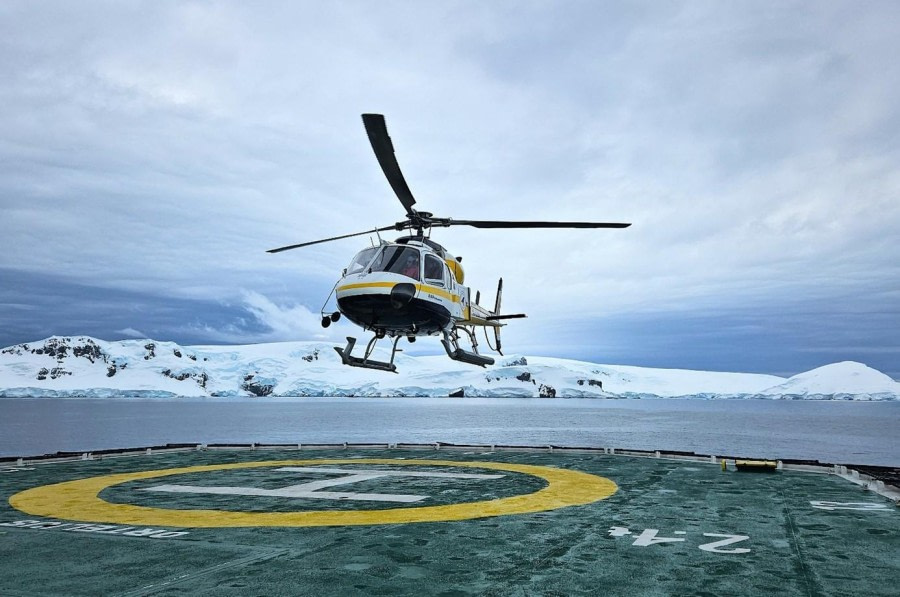
On returning to Ortelius we could already see the heli deck was prepared for operation as the fencing was laid flat and Romeo’s cover had been removed. This could only mean one thing. Once we were all back on board, the exciting announcement came from Pippa that our first flight would be possible this afternoon as the conditions had cleared sufficiently! This was turning out to be a superb day!

After a quick lunch for some, we rolled into the next operation by making our way to the departure lounge. Our dry run had really helped us to get an idea of how the whole process works but doing it for real added a lot of excitement into the mix. The conditions were beautiful out on deck for those who were not called up yet. We slowly meandered around the ice in front of Brown Bluff as the helicopters, Romeo, Victor and Tango, came and went. By mid-afternoon there was an exciting call that an emperor penguin had been spotted on the starboard side of the ship. Those who were able to make their way out on deck had hours of entertainment as the curious emperor kept us moving as it alternated from port to starboard, then under the bow then at the aft all the while jumping out on the odd ice floe to test our reaction speeds with a camera. It was incredible to see how clear the water was as we kept the emperor in sight even after it dived below the surface. Our indication as to which side he was on usually came from the characteristic call that it made. Later in the afternoon it was hard to pick apart the emperor’s sound from everyone else on board who had also enjoyed mastering it!

The scenic flight on the helicopter was magnificent as we perused this magical landscape that is truly characteristic of Antarctica. Huge tabular ice bergs. Impressive extensive sea ice. Vast areas of glaciers pouring down to the coast. It was breathtaking.

The light only improved as the night when on, drawing more people to the outer decks to photograph the persistent emperor penguin. Before the last flight was back on board, dinner was called. Today, it was a special evening as we had a BBQ dinner on deck. It was the perfect moment to wrap up warm and enjoy the incredible scenery as the sun fell lower in the sky, lighting up the glaciers, the sea ice crunched as we passed through, and the dance music began to get everyone moving. The atmosphere was wonderful as we excitedly shared stories of the day and showed our awe for our surroundings. It wasn’t long before the dining room staff, guests of all nationalities and the guides were dancing together on the top deck.

The excitement soon moved to the warmth of the bar with the musicians amongst us set the tone for the evening. We were all delighted to have made a continental landing on Antarctica and got into the air on board the helicopters where we could see the region from a new perspective!

Day 8: Ships cruise & Scenic flights

Ships cruise & Scenic flights
Date: 28.11.2025
Position: 63°23.9’S, 059°56.2‘W
Wind: SE 4
Weather: Cloudy
Air Temperature: -0,3

Overnight we left the beautiful, icy Antarctic Sound behind and sailed to the westside of the Antarctic Peninsula. Along the way we encountered some more ice around Astrolabe Island. We had to slow down a little for that and therefore we woke up this morning, still heading south. It was cold and windy outside, but our Expedition Leader Pippa told us it should die off over the next few hours.

After breakfast, a lot of us are out on deck, spotting birds and enjoying the incredible scenery while we were cruising through the north part of the Gerlache Strait. The high mountains of the peninsula, covered in snow and separated by enormous glaciers loom in the background. On the horizon we saw massive tabular icebergs floating and around Ortelius, and we spotted several smaller, but still impressive icebergs. In between the waves, in the distance, we saw blows of a few whales. It is just a magical wonderland.

At 10:30 Allan invited us up in the lounge to join him for his lecture on “Dogs of Antarctica”. Listening to him with his soothing storytelling voice, talking about the unsung heroes of Antarctic exploration – the sled dogs. That was a great break in our morning. We came closer to our destination today. Trinity Island. During Allan’s talk we sailed down the east coast, looking at the peaks. Just before lunch we got close to an inlet in the south of the island, called Mikkelsen Harbour.

We listened to the announcement from our Expedition Leader Pippa. The wind died down, and the weather conditions were looking really good. This afternoon we are up for another scenic flight in the helicopters. This time it is over Trinity Island.

Lunch therefore was served earlier today, at 12:00 lunch. The galley team, again, did a great job!

At 13:45 the first group was called out to the ‘departure lounge’. To make it as fair as possible we started from group 6 going up. The first ones flying were already eager to get checked in by the Expedition eam. And shortly after they walked outside to get into the helicopter.

The pilots were eager to show us again the beauty and especially the vastness of Antarctica. We took off towards Trinity Island with its large snow sheets and glaciers on the mountains. We looked down on the massive crevasses and soaring like a bird, we dropped down to water level and flew over big icebergs that were stranded in the shallow waters in a bay on the other side of the mountain range. The grey-bluish clouds gave this magical atmosphere to the landscape. With hardly any wind we could see the blue ‘feet’ of the icebergs under the water. Some of us even saw whales from the air.

On the southwest coast of Trinity there is a spot called Spert. It is a combination of caves, canyons and rocky stags, calved by the crushing waves of the Southern Ocean. We flew by and couldn’t believe the beauty of this place. We all returned to the ship with a big smile. What a great last afternoon here in this incredibly beautiful place on earth.

At 18:30, Pippa invited us up to the lounge to share her plans for the next day which were followed by dinner. Stories about the great flights this afternoon buzzed around in the dining room.

Later that evening up in the bar we watched the National Geographic documentary “Endurance”. A spectacular movie that showed us two sides of the story of the Endurance. First, the quest from the 2022 expedition led Mensun Bound, who miraculously found the final missing piece of this legendary expedition. And weaving through this story, the survival story of Sir Ernest Shackleton and his 27 men after the Endurance sank was shown. With all original footage made by the photographer Frank Hurleyin 1914-1916. We could relate to their battle, braving the same unpredictable sea ice conditions that doomed the Endurance 109 years ago in the Weddell Sea.

Day 9: Drake Passage

Drake Passage
Date: 29.11.2025
Position: 61°29.5’S, 062°42.2‘W
Wind: NE 4/5
Weather: Overcast
Air Temperature: 0

It was a leisurely start to the day as Ortelius charged northwards across the Drake Passage. There wasn’t very much wind, but there was a large swell of 2½ to 3 meters, generated by a storm system that had recently passed through the area. The movement of the ship - although not that bad - was enough to keep some people in their bunks and ensured that there were many empty seats at breakfast. Despite the swell, Ortelius maintained full speed towards South America.

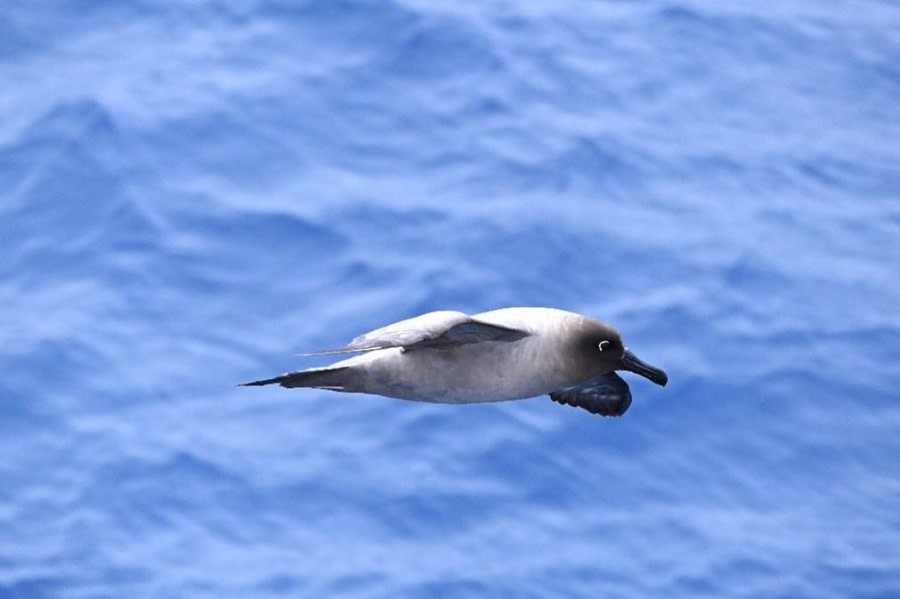
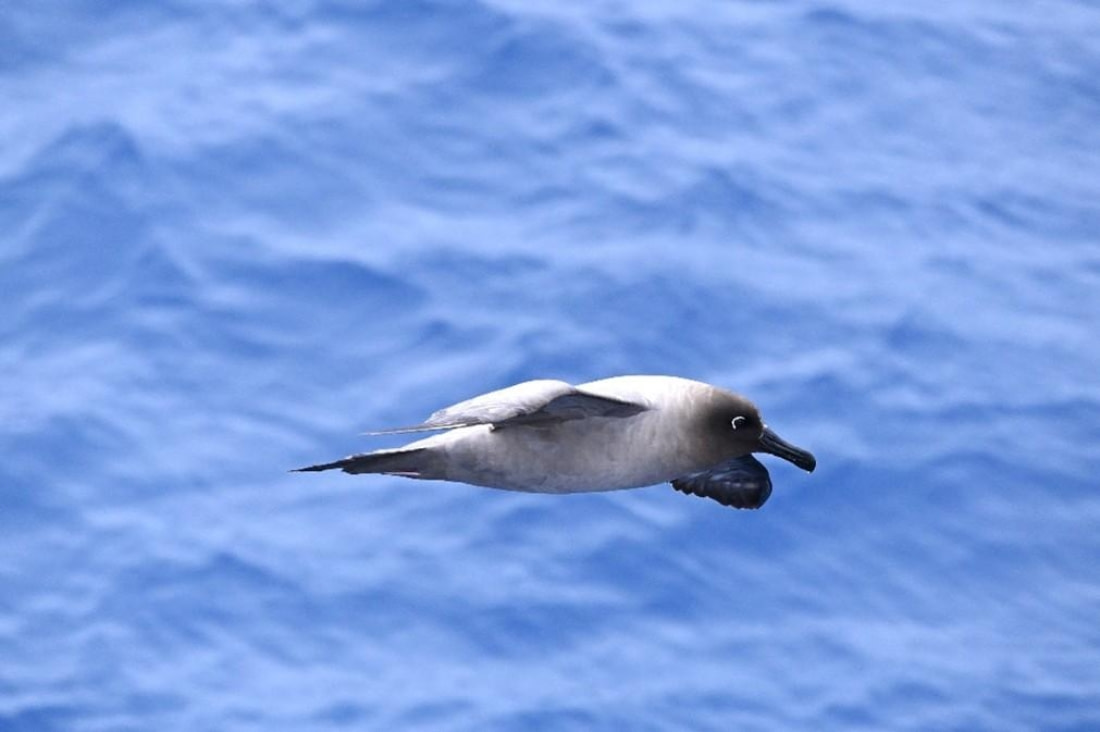
For those who ventured to the bridge, the ship was in company with the usual bird life for the region and latitudes – petrels, prions, fulmars, and of course a variety of albatrosses. The most delightful among this airborne parade was several Antarctic petrels. Birding enthusiasts were also excited to see light-mantled, grey-headed and black-browed albatrosses flying around the ship. The ease with which these remarkable birds roam the Southern Ocean is so humbling. The adoration for these incredible birds is hard to put into words, especially when we consider the mariner’s legend that every albatross carries the soul of a sailor lost at sea. It is the bird of good omen for all who work upon the oceans of the World. The words of English poet Samuel Taylor-Coleridge (1772-1834), from his epic work ‘The Rime of the Ancient Mariner’ are so fitting……

At length did cross an Albatross, through the fog it came.

As if it had been a Christian soul, we hailed it in God’s name.

At 09:30 Expedition Guide Sam kicked off the lecture program for the day with his talk about ‘Living in Antarctica’. Illustrated with his own images and videos, Sam’s lecture gave an overview of the 18-months (summer-winter-summer) that he spent at New Zealand’s Scott Base in the Ross Sea. Next up at 11:30 was Gary, who told us ‘The Truth about Skuas’. Although a renowned penguin expert, Gary has also conducted in-depth research on skuas and revealed some of the surprising secrets of these highly intelligent and often misunderstood birds.

After lunch we were called to the Lecture Room on Deck 3 to return our muck boots, helicopter cards and dry bags, if we had borrowed one. Then, for many, there was the opportunity to enjoy a little siesta, with the motion of the ship gently rocking everyone into a relaxing sleep. At 15:00, Expedition Guide and historian extraordinaire Saskia wowed an audience in the bar with her story of the Belgian Antarctic Expedition, led by Adrien de Gerlache on the ship Belgica in 1897-99. It is an astonishing story where the ship became trapped in ice and was forced into an unplanned over-wintering, the very first in Antarctica. This resulted in most of the crew going mad. Among the crew, and one who kept his head throughout the whole ordeal, was a young Roald Amundsen making his Antarctic debut.

At 18:00 we gathered in the bar for the daily recap and briefing on the next day’s activities. Chief Engineer Guntis gave us a talk on the inner workings of the ship and George talked to us about becoming Antarctic Ambassadors. Then dinner was served, followed by another movie night in the bar. This was a showing of the delightful, animated penguin classic, ‘Happy Feet’. Our very own Gary Miller was chief penguin consultant on the project, and it was brilliant to hear an introduction to the movie by Gary before it started. And so, ends the first day of our return journey across the Drake Passage.

Day 10: Drake Passage

Drake Passage
Date: 30.11.2025
Position: 56°37.5’S, 065°33.4‘W
Wind: WNW 6
Weather: Overcast
Air Temperature: +6.2

We woke up with mixed feelings today as it was our last full day on Ortelius. After breakfast we began to prepare for life outside of the ship, including paying our bar bills at reception.

We started the lecture program by listening to a fascinating talk by Pippa about the days of whaling in the Southern Ocean. In the mid-morning, Jess continued the whale theme and gave a talk about the role that marine mammals play in the ecosystem titled ‘What whales do for us’.

In the morning, we saw the beautiful southern royal albatross, a huge seabird with a 3.5m wingspan soaring around the ship along with our cape petrel friends. We spent our free time in the day packing our belongings and getting ready for the next stage of our travels. We continued to enjoy the seabirds of the Southern Ocean soaring above the waves in between packing and napping.

In the afternoon, George gave a talk about the future of Antarctica with regards to geopolitics. It was thought provoking to think about what the future holds for this unique and special continent.

In the early evening, we were invited to the lounge for the Captains Farewell cocktails. This was a nice excuse to dress up a little and toast to the end of an exciting voyage. Here Pippa told us about the plans for disembarking in the morning and everything we needed to know about luggage and logistics. She thanked all the departments for their efforts over the last ten days. We then received a real treat from Beth. She had been working on producing a slideshow of photographs and videos of our journey which we could take home and show to our friends and family.

We gathered in the dining room for a final plated dinner and enjoyed getting the chance to meet and thank all the hotel department, galley team, and dining room team.

Day 11: Disembarkation Ushuaia

Disembarkation Ushuaia
Date: 01.12.2025
Position: 54°48.5’S, 068°17.9‘W
Wind: Var 1/2
Weather: Overcast
Air Temperature: +8

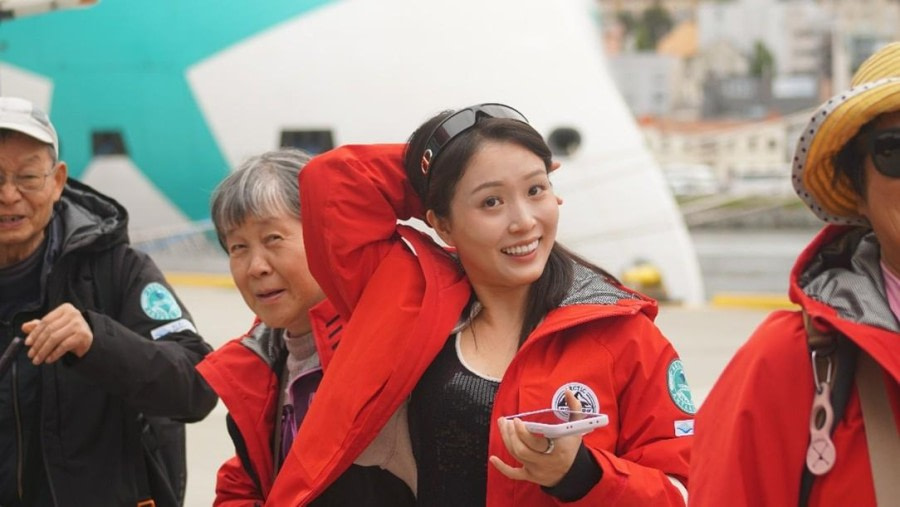
Pippa woke us up for the final time. It was amazing how quickly ten days had whizzed by and after leaving our large luggage outside our rooms we headed to breakfast. We said goodbye to the dining room team who had kept us so well fed and cared for throughout the trip. We gathered our belongings and headed to the gangway to say bye to the crew, staff, and new friends we had made. Some of us hopped straight on the bus to the airport to head home, while others set off to explore Ushuaia and continue travelling in Patagonia. This was a trip that really reminded us of the power of nature, and we saw firsthand just how wild and rugged Antarctica is. The highlights of this trip will stay in our thoughts for many years to come. We got to see Antarctica from the sky, a unique perspective on this incredible landscape. We stepped onto the mainland at Brown Bluff. We got to see one of the most impressive apex predators when we saw the orcas. And of course, we had two very special visitors come and inspect us at the ship, the beautiful and curious emperor penguins.

On behalf of Oceanwide Expeditions, Captain Per Andersson, Expedition Leader Pippa Low, Hotel Manager Volodymyr Cherednychenko and all the crew and staff of M/V Ortelius, it was a great pleasure and a privilege traveling with you!

Total distance sailed on our voyage: 1641 nautical miles

Most southern point sailed: 63° 37.0’ S, 056° 43.5’W

Details

Tripcode: OTL23-25
Dates: 21 Nov - 1 Dec, 2025
Duration: 10 nights
Ship: m/v Ortelius
Embark: Ushuaia
Disembark: Ushuaia

Have you been on this voyage?

Aboard m/v Ortelius

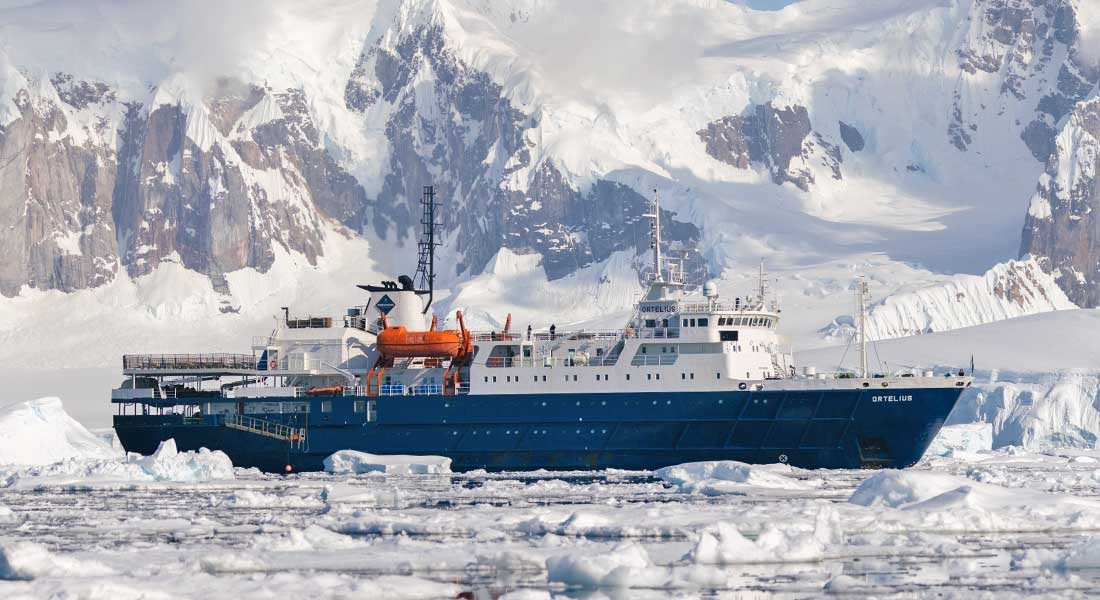
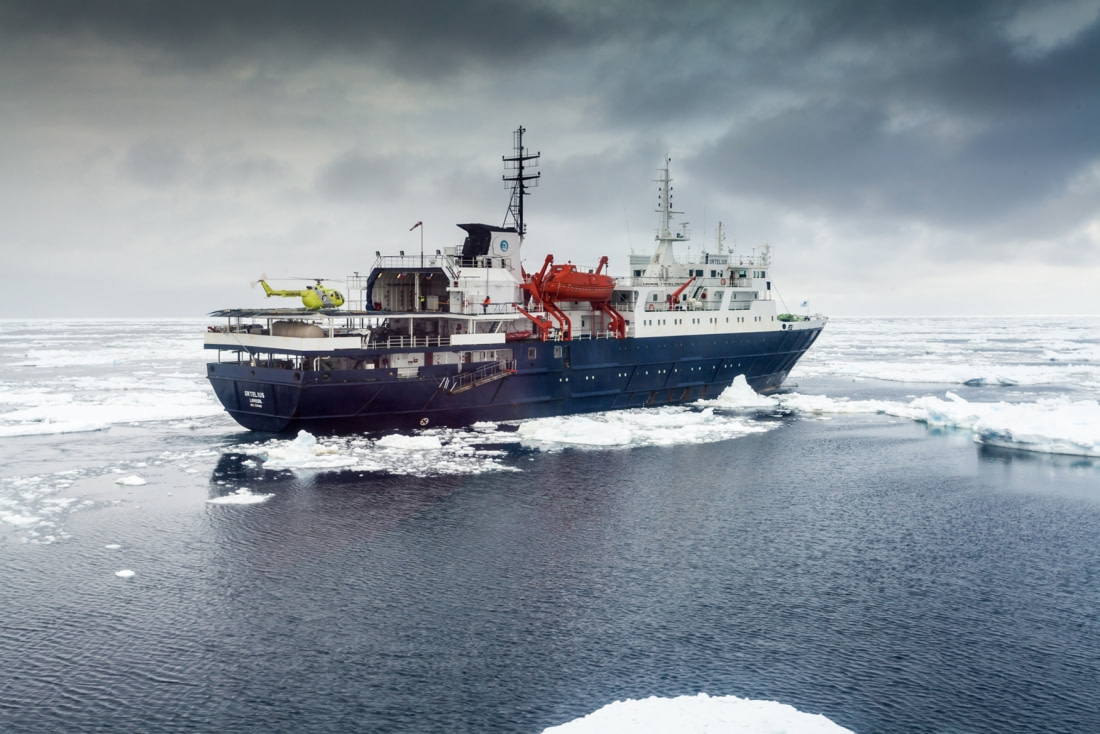
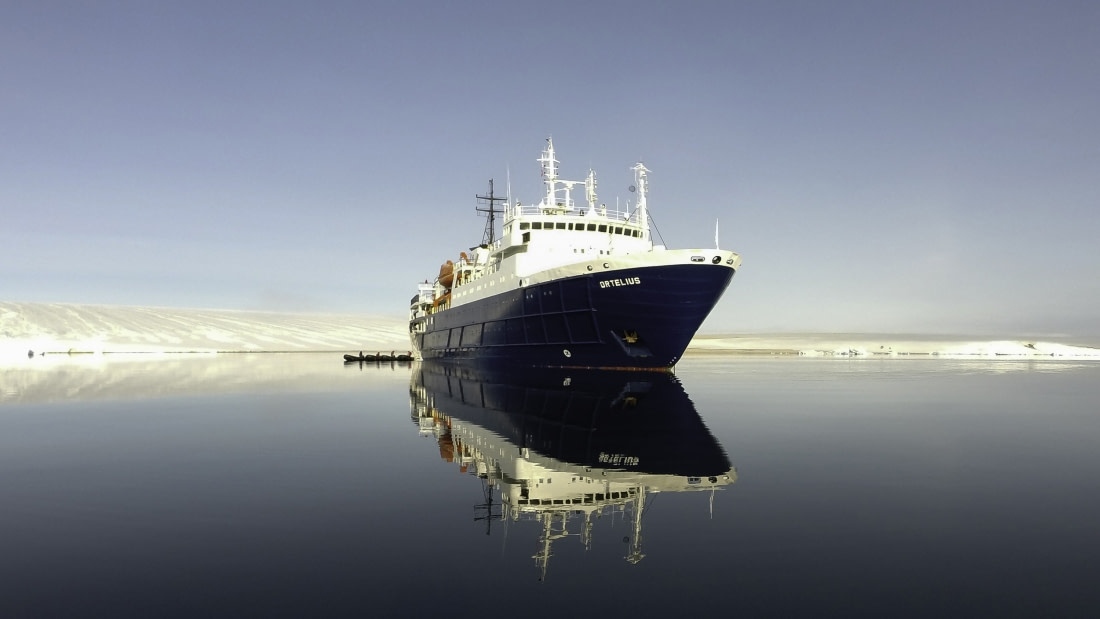
The ice-strengthened Ortelius is thoroughly outfitted for polar exploration and, when necessary, helicopter flights.

More about the m/v Ortelius »
Loading