OTL08-26, trip log, Around Spitsbergen, In the realm of Polar Bear & Ice

by Oceanwide Expeditions

Photo gallery

Logbook

Day 1: Longyearbyen, Embarkation Day

Longyearbyen, Embarkation Day
Date: 12.07.2026
Position: 78°18.4’ N / 015°16.1’ E
Wind: SW-8
Weather: Rain
Air Temperature: +4

Our expedition began today in Longyearbyen, the world’s northernmost permanent settlement and the gateway to the High Arctic. While some guests had already spent several days exploring the town, others arrived just in time for embarkation. Before boarding, many wandered through its colourful streets, framed by dramatic mountains and the calm waters of Isfjorden.

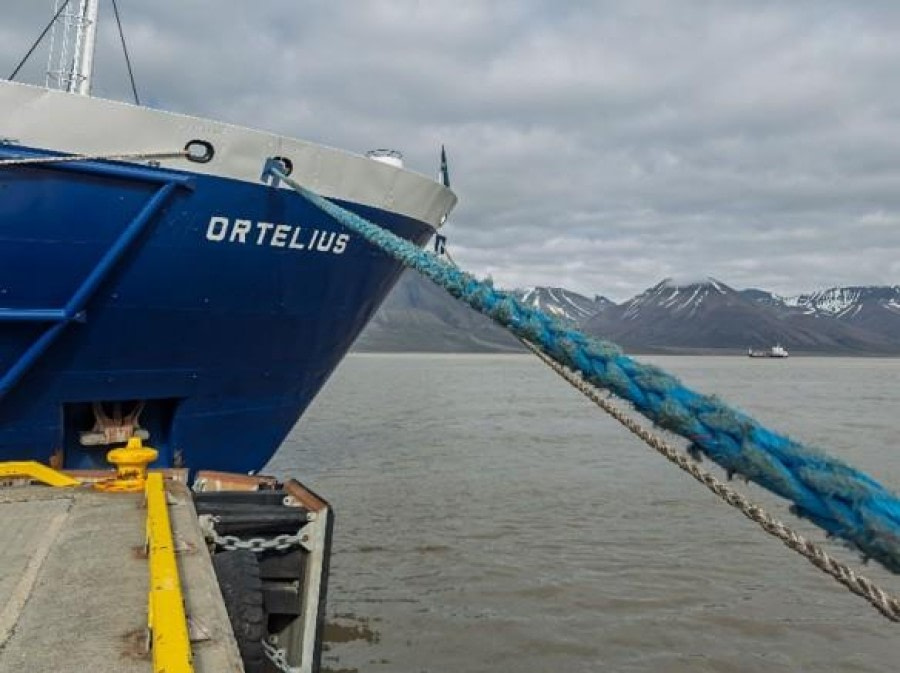
In the afternoon, we joined MV Ortelius alongside at Kullkaia, where the expedition team and hotel staff welcomed everyone on board. After settling into our cabins and becoming familiar with our new home, we gathered in the lounge for the mandatory safety briefing and SOLAS muster drill, practicing the ship’s emergency procedures under the guidance of the crew.

With all passengers safely embarked, Ortelius cast off and began her journey through Adventfjorden and into Isfjorden. Expedition Leader Adam officially welcomed everyone to the voyage, introduced the expedition team and explained the flexible expedition philosophy that would guide the coming days. Rather than following a fixed itinerary, our plans would adapt to weather, sea ice, wildlife and the opportunities that make every Arctic voyage unique.

Our first dinner offered a chance to meet fellow travelers and share the growing excitement for the adventure ahead. The evening concluded with the distribution of our expedition Muck Boots, essential equipment for the many landings to come.

With complete preparations, Ortelius continued into the Arctic night. Tomorrow, the real exploration would begin.

Day 2: Lilliehöökfjorden

Lilliehöökfjorden
Date: 13.07.2026
Position: 79°20.2’N / 011°41.7’E
Wind: W-4
Weather: Rain/Fog
Air Temperature: +3

Day two began with an important reminder of life in the High Arctic: here, plans are only ever provisional. Strong westerly winds kept us on board, teaching us our first lesson in expedition travel—the weather is always in charge. As Ortelius rolled through the two-metre swell, many of us began earning our sea legs, embracing the rhythm of life at sea and the excitement of not knowing exactly what the Arctic would reveal next.

Seeking calmer waters, we navigated into Lilliehöökfjorden, where the magnificent glacier of the same name towered before us. The sheltered fjord provided a welcome break from the motion, allowing us to enjoy lunch while taking in the spectacular scenery. Sometimes, the best discoveries are the unplanned ones.

As we continued our journey north, we gathered in the lecture room for Gabi's presentation on Roald Amundsen. Looking beyond the famous achievements, we gained a glimpse into the explorer's character, motivations and remarkable life—an inspiring introduction to one of the Arctic's greatest figures as we followed in the wake of polar history ourselves.

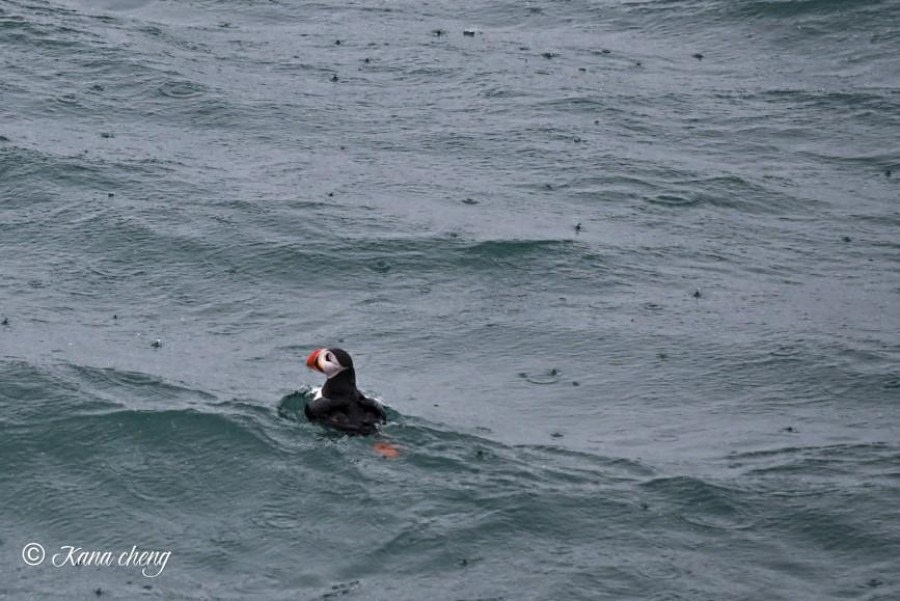
Continuing north, we passed through the narrow Sorgattet Strait, leaving Moseøya to port before entering the sheltered waters of Smeerenburgfjorden, nestled between Danskøya and the northwestern coast of Spitsbergen. Here we were rewarded with wonderful wildlife encounters as walruses repeatedly surfaced and dived in search of food, while the skies filled with kittiwakes, fulmars and glaucous gulls, ever watchful for feeding opportunities.

During the evening recap, plans for tomorrow were revealed, and anticipation quickly spread throughout the ship. Although our first full day had unfolded differently than expected, it had already captured the true spirit of Arctic exploration—adapting to nature, enjoying unexpected moments, and discovering that the journey itself is every bit as rewarding as the destination. We ended the day with a peaceful dinner in the shelter of the fjord, eager for whatever adventures tomorrow might bring.

Day 3: Texas Bar and Monacobreen

Texas Bar and Monacobreen
Date: 14.07.2026
Position: 79°33.7’N / 012°33.1’E
Wind: SW-5
Weather: Overcast
Air Temperature: +5

Our first full day of operations began in one of northern Spitsbergen's most beautiful fjords—Liefdefjorden. Our destination for the morning landing was the historic Texas Bar, and excitement was high as we prepared to finally set foot on Arctic tundra. Conditions were exceptionally calm, with the fjord mirroring the surrounding peaks almost perfectly. As we approached the shore by Zodiac, the landscape revealed itself in vivid shades of green, dotted with tiny Arctic flowers blooming among mosses, grasses and dwarf shrubs.

After landing, everyone gathered at the historic Texas Bar hut. Despite its inviting name, Texas Bar was never a bar, but a trapper's cabin built in 1927 by Norwegian trappers Hilmar Nøis and Martin Pettersen. Cabins like this provided vital shelter for hunters who spent long, dark winters in some of the most remote corners of Svalbard.

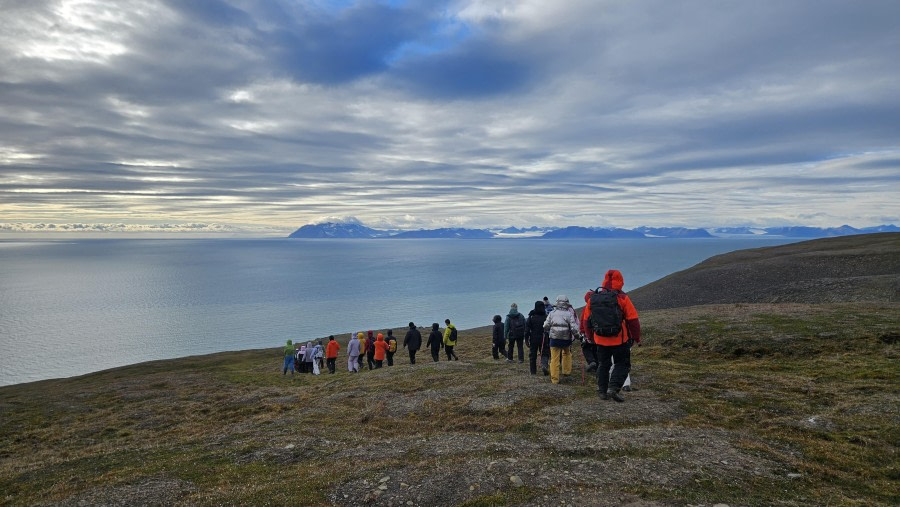
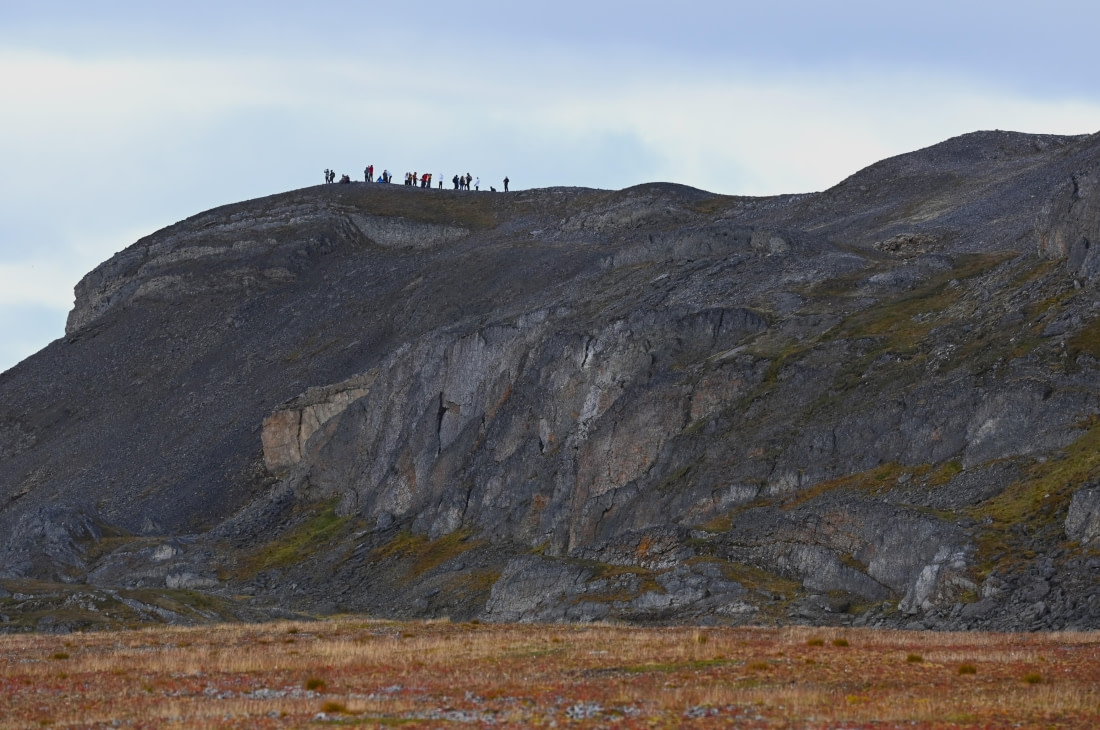
Guests then set off on a choice of long, medium and leisure hikes. The long hikers climbed to spectacular viewpoints overlooking Liefdefjorden and Monacobreen, while others explored the flowering tundra closer to the landing site, taking time to appreciate the remarkable silence and beauty of the Arctic landscape.

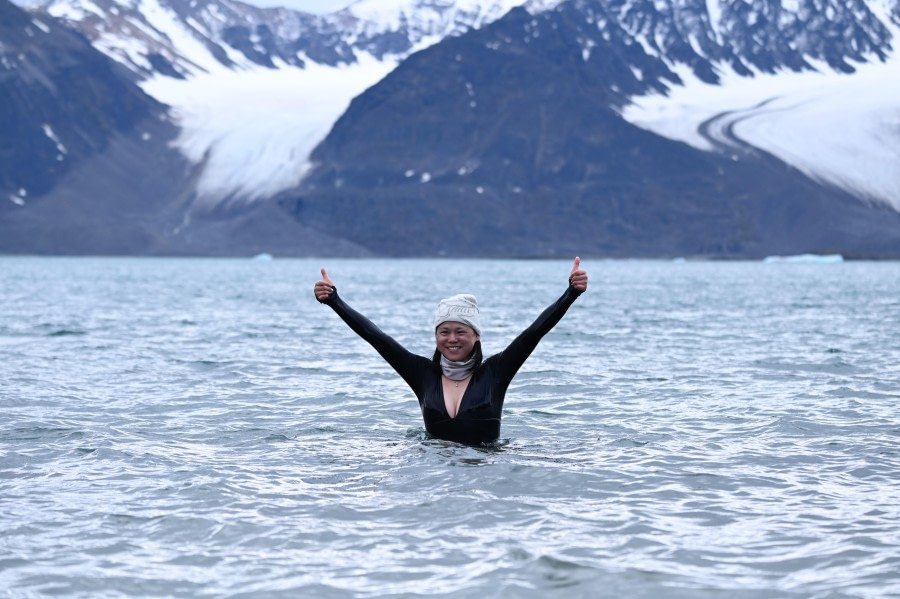
After several hours ashore, a surprising number of us decided to experience the Arctic from an even more direct perspective. One by one, we braved the icy water for a polar plunge. It was over in seconds, but the exhilaration—and sense of achievement—lasted much longer.

Back on board, we enjoyed another delicious lunch before continuing deeper into Liefdefjorden for an afternoon Zodiac cruise at Monacobreen. This immense tidewater glacier flows from the interior of northern Spitsbergen before meeting the sea, its towering front rising above the bay in fractured walls, deep blue crevasses and sculpted pillars of ice.

As we approached, the air grew noticeably colder and the glacier came alive. Deep cracks echoed across the fjord as ancient ice shifted, while thunderous booms rolled between the mountains. Then came the moment everyone had hoped for: a large section of the glacier calved into the sea, sending towering blocks of ice crashing into the water and creating waves that rippled across the bay.

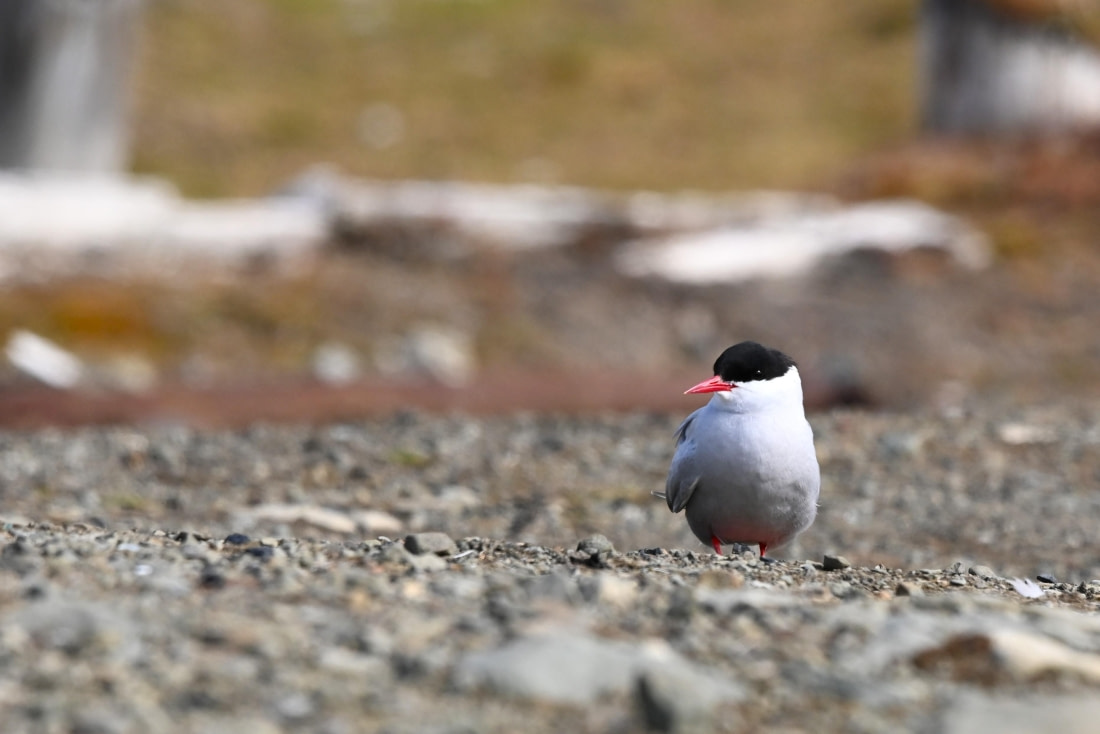
Drifting through the brash ice, we found the glacier front teeming with wildlife. Kittiwakes, Brünnich's guillemots and Arctic terns fed actively on polar cod, capelin and the rich abundance of amphipods, krill and other marine life concentrated by the glacier. Against the immense wall of ice, their constant movement and calls filled the fjord with energy and life.

After nearly three unforgettable hours at Monacobreen, we slowly made our way back to Ortelius for the evening recap and another wonderful dinner, reflecting on a day that had delivered exactly the kind of Arctic adventure we had all been hoping for.

Day 4: into Pack Ice

into Pack Ice
Date: 15.07.2026
Position: 80°45.7’N / 014°03.3’E
Wind: W-4
Weather: Cloudy
Air Temperature: +1

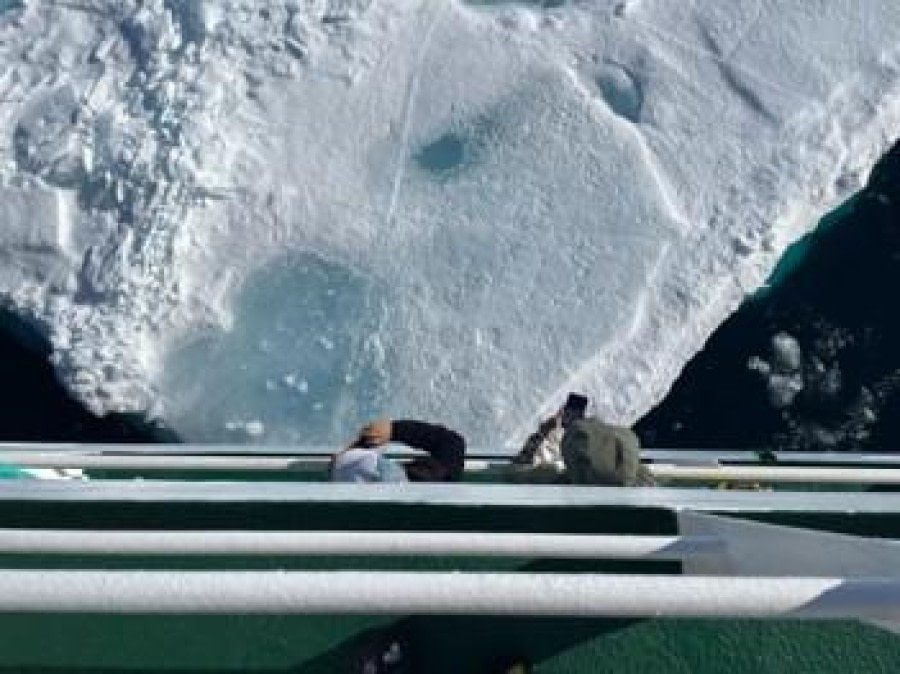
Today we awoke surrounded by sea ice. Some early risers were already on deck as Ortelius reached the edge of the pack ice under glorious Arctic sunshine. The frozen seascape stretched all the way to the horizon, an endless mosaic of white and blue illuminated by the low morning light. During the night we had sailed north, far from land, into an area rarely visited. Satellite ice charts had shown that a large expanse of pack ice remained here, offering us a unique opportunity to experience one of the Arctic's most remarkable environments.

For the entire day we navigated among ice floes of every shape and size. Visibility was exceptional, allowing us to scan the horizon in every direction as everyone eagerly searched for wildlife—especially the king of the Arctic. Most of the ice surrounding us was first-year sea ice, formed during the previous winter and destined to melt away before the next. Many floes were decorated with brilliant turquoise melt ponds, while others were riddled with holes, signs of a season nearing its end.

Although no bears appeared today, the ice was full of life. Bearded seals lounged peacefully on the floes while others surfaced alongside the ship. Fulmars, kittiwakes and Brünnich's guillemots accompanied us throughout the morning, and lucky observers even spotted the elegant ivory gull, one of the Arctic's most iconic birds. It was remarkable how such an apparently barren landscape could support so much life.

At 10:00, Rustyn invited us to the lounge for an engaging lecture on all things ice, explaining how it forms, the different types of ice, it’s behavior and characteristics.

Following another morning of wildlife watching, we enjoyed a delicious lunch before some guests took the opportunity to rest while others remained on deck as fog slowly drifted across the ice, transforming the landscape into an almost dreamlike world.

In the afternoon, Gabi presented her lecture, "The Bear Necessities," taking us on a fascinating journey through humanity's changing relationship with polar bears across cultures and centuries. From mythology and exploration to hunting, zoos and modern conservation, the talk offered a unique historical perspective on one of the Arctic's most iconic animals.

Afterwards, the expedition team surprised everyone with hot chocolate, topped with whipped cream and a splash of rum for those who wished, served behind the bridge as we enjoyed our final moments among the drifting ice.

Just when it seemed the day could not offer any more surprises, the bridge announced whales. As we sailed south away from the ice, we first encountered a magnificent fin whale, the second-largest animal on Earth. Shortly afterwards, an even greater prize appeared—a blue whale. Captain Ernesto and the bridge team carefully manoeuvred Ortelius to give everyone unforgettable views of the largest animal ever to have lived on our planet. Watching this gentle giant surface against the vast Arctic Ocean was a truly humbling experience and a perfect finale to an extraordinary day.

Today we reached the northernmost point of our voyage at 80°48.952'N, 13°54.549'E. During the night, Ortelius turned south once more, setting course for the west coast of Spitsbergen, where new landscapes and adventures await us.
Day 5: Alkefjellet, Torellneset and Bråsvelbreen

Alkefjellet, Torellneset and Bråsvelbreen
Date: 16.07.2026
Position: 79°34.7’N / 019°36.2’E
Wind: SE-4
Weather: Overcast
Air Temperature: +4

What a day this turned out to be. Our planned wake-up call from Expedition Leader Adam was scheduled for 07:15, but an hour earlier, at 06:15, his calm voice came over the intercom with the kind of news every Arctic traveller hopes to hear: "Polar bear ahead."

Still nearly two nautical miles away, there was no need to rush. Thanks to the sharp eyes and years of experience of the bridge team, we could already follow the bear as it strolled leisurely along the shoreline. From Gabi's lecture the previous day, we knew that although a polar bear may appear relaxed, it can still cover around five kilometres an hour. Its creamy-white fur stood out beautifully against the grey-brown coastline as the captain expertly positioned Ortelius to give everyone spectacular views. Just as the bear disappeared behind the glacier at the far end of the bay, breakfast was announced—perfect timing.

Inspired by such a memorable start, we immediately switched to Plan B. Instead of our original morning landing, we set out on a Zodiac cruise in search of the bear. Although we never relocated our first visitor, the search rewarded us with breathtaking views of Gimlebreen and several walruses resting on the sea ice. As we returned towards Ortelius, the bridge team located another polar bear, giving us a second excellent sighting before we enjoyed a well-earned coffee break. Meanwhile, the ship repositioned to our original destination: the towering bird cliffs of Alkefjellet.

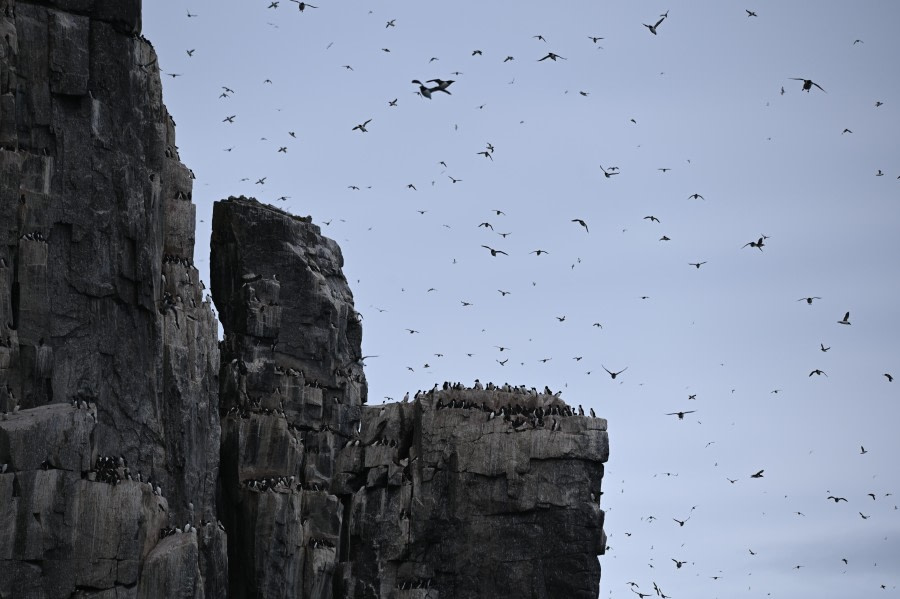
Nothing quite prepares you for Alkefjellet. Rising almost 100 metres above the sea, the basalt cliffs were alive with around 60,000 pairs of Brünnich's guillemots, packed shoulder to shoulder on impossibly narrow ledges. Rather than building nests, they laid their single pear-shaped eggs directly on the bare rock, their distinctive shape helping prevent them from rolling off the cliff. Hundreds of birds constantly streamed overhead or plunged into the sea, creating an unforgettable chorus of calls and beating wings. Below the cliffs, opportunistic Arctic foxes searched for eggs and fallen chicks among the rocks, moving with surprising speed despite their small size.

After lunch and a short break, we crossed to the southern shores of Nordaustlandet, Svalbard's second-largest island. While around 80% of the island lies beneath an immense ice cap, the raised beaches and tundra of Torellneset are remarkably ice-free during summer. Here we encountered a large herd of walruses hauled out on the beach before stretching our legs on a gentle walk across the colourful tundra. Delicate Arctic flowers, including the iconic Svalbard poppy, brightened the landscape, a striking reminder of how much life flourishes during the brief Arctic summer.

Following another excellent dinner, we sailed towards one of the great natural wonders of the Arctic: Bråsvellbreen, the longest glacier front in the Northern Hemisphere, stretching for around 160 kilometres. Shortly after 21:30 we arrived at this immense wall of ice, forming part of the vast Austfonna Ice Cap. Although fog gradually drifted in, the bridge team carefully manoeuvred Ortelius close enough for us to appreciate the sheer scale of this extraordinary glacier before we continued south towards tomorrow's destination.

From unforgettable polar bear encounters and bustling seabird colonies to walruses, Arctic tundra and one of the world's largest ice caps, today showcased the incredible diversity of Svalbard. It was a day few of us will ever forget.

Day 6: Sundneset and Kapp Lee

Sundneset and Kapp Lee
Date: 17.07.2026
Position: 78°05.2’N / 020°45.5’E
Wind: S-1
Weather: Overcast
Air Temperature: +6

After another hearty breakfast, it was time to board the Zodiacs and head ashore at Sundneset. The weather was once again on our side, promising another wonderful day of exploration. The long hikers landed first to give themselves enough time to complete their route, while the medium and leisure groups followed shortly afterwards.

As the morning unfolded, everyone found their own way of enjoying this beautiful corner of Svalbard. The hikers climbed through the rugged landscape, taking in sweeping views of the surrounding mountains and fjords, while the beachcombers explored the shoreline, discovering the intricate details of the Arctic tundra beneath their feet.

Then the radio crackled.

The expedition team had spotted a polar bear on land, not far from the route of the long hikers. In an instant, the atmosphere shifted from peaceful exploration to calm professionalism. The decision was made to evacuate the shore.

Our guides quickly gathered their respective groups while keeping a constant watch on the bear and its movements. The beachcombers, closest to the landing site, boarded the Zodiacs first, followed by the medium hikers. Finally, the long hikers, who had been nearest to the bear, safely returned to the beach and boarded the waiting boats.

Fortunately, the bear showed little interest in our presence, allowing the operation to remain calm and orderly. Although everything unfolded smoothly, it was a powerful reminder that we are visitors in the Arctic. Wildlife always has the right of way, and the vigilance, experience and teamwork of the expedition staff ensured a safe outcome for everyone.

In the afternoon, we headed out once more for a Zodiac cruise at Kapp Lee, on the eastern coast of Edgeøya. This historic site offers a fascinating glimpse into Svalbard's whaling and trapping past while also being one of the archipelago's finest places to observe walruses.

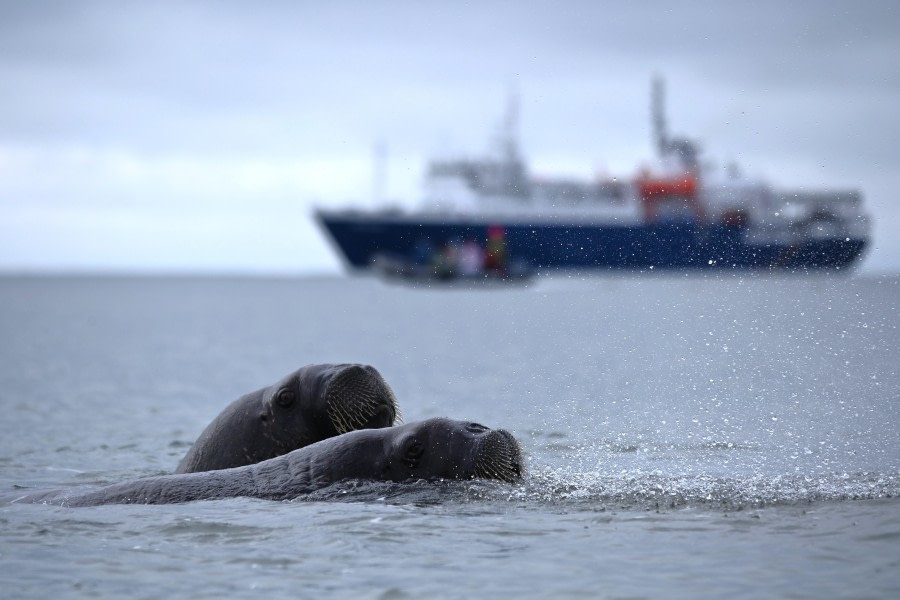
It did not take long before we were surrounded by the unmistakable sights, sounds—and smells—of a large walrus haul-out. Curious individuals slipped into the water to investigate us, swimming surprisingly close to the Zodiacs before returning to the beach. Watching these enormous marine mammals move so gracefully through the water was a memorable experience.

The rugged coastline was alive with wildlife. Glaucous gulls and Brünnich's guillemots patrolled the cliffs and shoreline, while a large flock of pink-footed geese added even more life to the landscape. Towering mountains, dramatic skies and the rich history of Kapp Lee combined to create another unforgettable afternoon in the Arctic.

As we returned to Ortelius, there was plenty to reflect on. From an unexpected polar bear evacuation to close encounters with walruses, the day had once again reminded us that no two days in Svalbard are ever the same. After another excellent dinner on board, we settled in for the evening, eager to discover what tomorrow would bring.

Day 7: Burgerbukta

Burgerbukta
Date: 18.07.2026
Position: 77°02.6’N / 015°54.1’E
Wind: N-2
Weather: Overcast
Air Temperature: +6

Overnight, Ortelius sailed south to reach Burgerbukta in time for our morning Zodiac cruise. Before turning into the bay, conditions had us all wondering whether the operation would be possible. Whitecaps rolled across the sea, strong winds swept the coast and low clouds hid the mountains. It seemed nature had other plans. Then, as Captain Ernesto guided us into the shelter of the bay, everything changed. The sea became calm, the wind eased, and the clouds slowly lifted, revealing the dramatic peaks and breathtaking scenery that surrounded us.

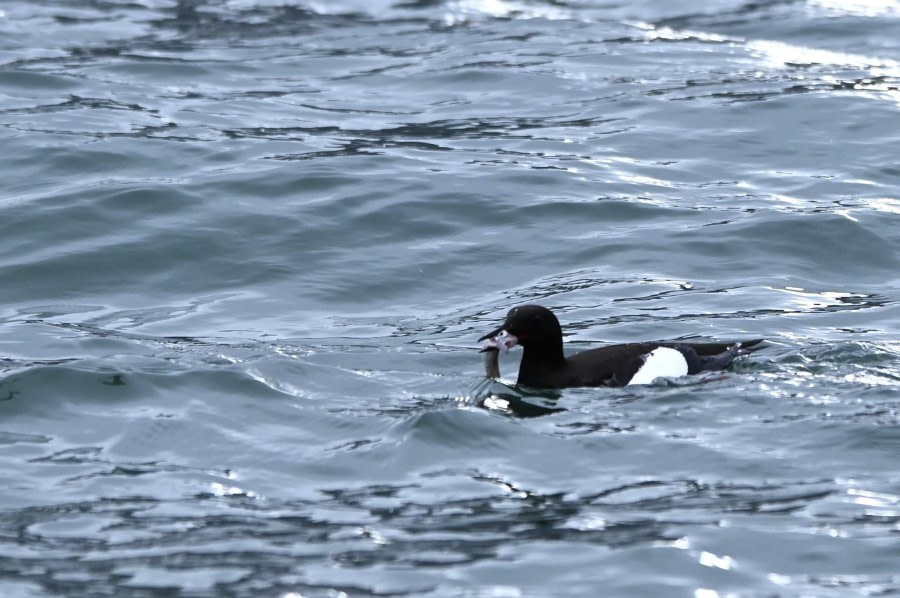
With perfect conditions at last, all Zodiacs were launched for a three-hour cruise through this spectacular glacial landscape. Iron-rich mountains glowed in shades of red and orange, while countless waterfalls tumbled from hanging glaciers into the fjord below. Wildlife was everywhere: black, common and Brünnich's guillemots shared the cliffs with little auks, eiders, kittiwakes and northern fulmars. We slowly navigated between impressive icebergs that had recently calved from the glacier, listening to the gentle crackling and popping of the brash ice beneath our boats. Among the ice floes, a curious bearded seal briefly surfaced to inspect us before disappearing back into the icy water.

We continued deeper into the bay towards the glacier front, the highlight of the morning. Although there was little active calving, the towering wall of ice clearly showed the marks of years of retreat. As the Arctic light shifted, the glacier transformed from minute to minute, with sunshine breaking through the clouds before giving way once again to dramatic shadows. Eventually, katabatic winds descended from the glacier, bringing colder air and a light drizzle, reminding us that it was time to return to the comfort of Ortelius.

Back on board, we sailed towards our planned afternoon landing at Gåshamna, where several hiking options had been prepared. Unfortunately, the weather that had spared us earlier had caught up with us. After careful assessment, the bridge and expedition team decided conditions were no longer suitable for a safe landing. Once again, nature made the final decision.

The unexpected afternoon aboard proved just as rewarding. Over a warm cup of tea, Clara and Gonzalo introduced us to the fascinating world beneath the Arctic surface with an engaging lecture on polar diving, revealing a hidden ecosystem few of us will ever have the chance to witness firsthand.

As the weather eased later in the day, the expedition team surprised us with a very special Arctic evening. Dinner was served on the open deck, where the galley team prepared a delicious Arctic BBQ complete with grilled favourites, corn on the cob and warm drinks. Surrounded by glaciers and mountains, guests and crew gathered together to celebrate another unforgettable day. Before long, music filled the deck and what began as dinner turned into an evening of dancing, bringing together different nationalities, generations and cultures. It was a wonderful reminder that some of the best expedition memories are made not only ashore, but also together on board.

Day 8: Colesbukta

Colesbukta
Date: 19.07.2026
Position: 77°55.1’N / 013°12.2’E
Wind: NW-6
Weather: Cloudy
Air Temperature: +4

We awoke with plans for a morning landing at Bamsebu, a small hunting cabin on the shores of Van Keulenfjorden, famous for the many beluga whale skeletons that still lie scattered along the beach—a reminder of Svalbard's commercial hunting era. As we enjoyed breakfast, however, the Arctic reminded us once again who makes the final decisions.

Although the forecast had looked promising, the winds had been underestimated. Gusts quickly strengthened to more than 40 knots, whipping across the fjord and making a safe landing impossible. Rather than disappointment, there was a familiar feeling throughout the ship. By now, we had all learned to put on our expedition hats, embrace the unexpected and look forward to discovering what Plan B would bring.

The bridge team turned Ortelius north in search of calmer waters, carefully navigating towards the shelter of Colesbukta. By lunchtime we had arrived in much gentler conditions, and before long the Zodiacs were once again lowered, ready to take us ashore.

Colesbukta offered a completely different atmosphere from anywhere we had visited so far. Once an important Russian coal mining settlement, the bay still holds the remains of abandoned buildings, rusting machinery and old infrastructure dating back to the Soviet era. Long since reclaimed by nature, the settlement now stands silent beneath the surrounding mountains—a fascinating place where Arctic wilderness and human history exist side by side.

Our afternoon hike took us through this haunting landscape, where weathered buildings, empty windows and forgotten equipment seemed frozen in time. The silence was almost tangible. Some groups paused along the route for a few minutes of complete stillness, simply listening to the wind and absorbing the atmosphere. In those quiet moments, Colesbukta felt almost otherworldly—peaceful, melancholic and deeply reflective, inviting us to imagine the lives once lived in this remote corner of Svalbard.

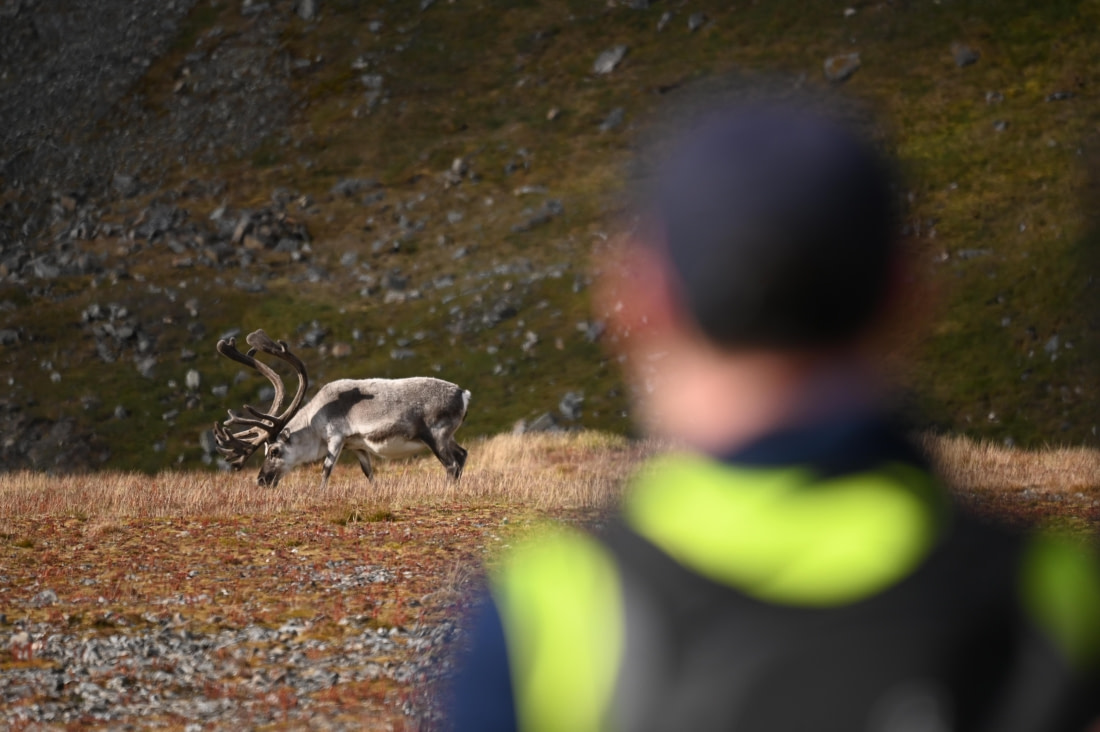
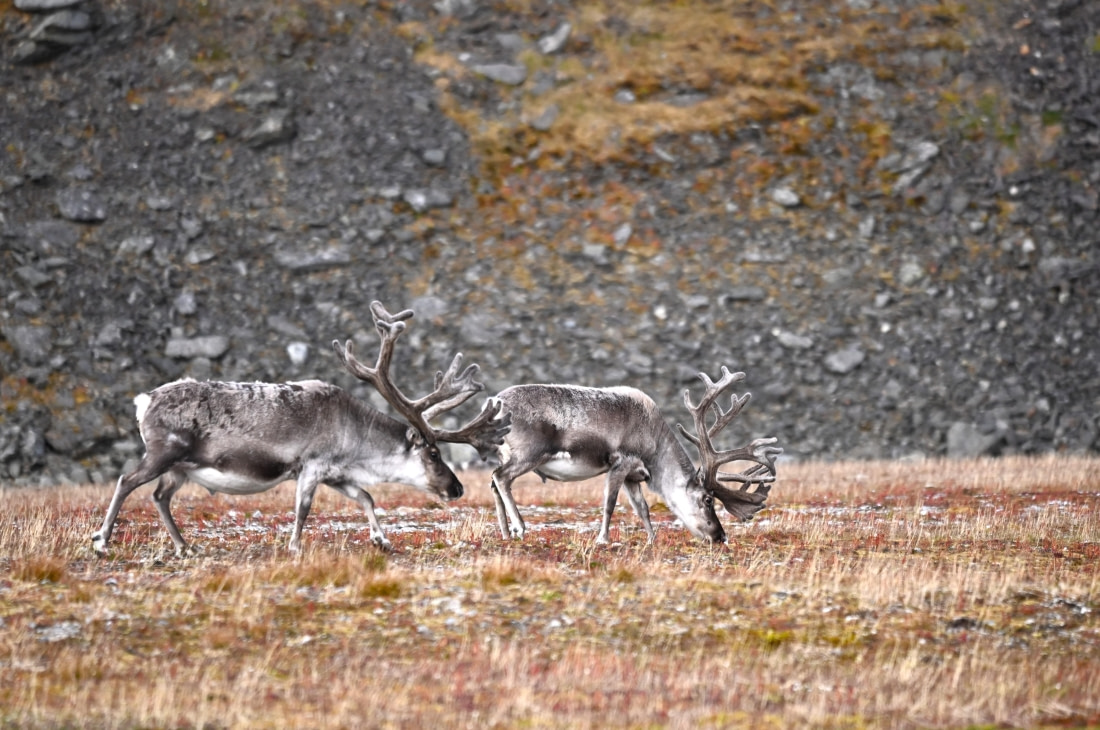
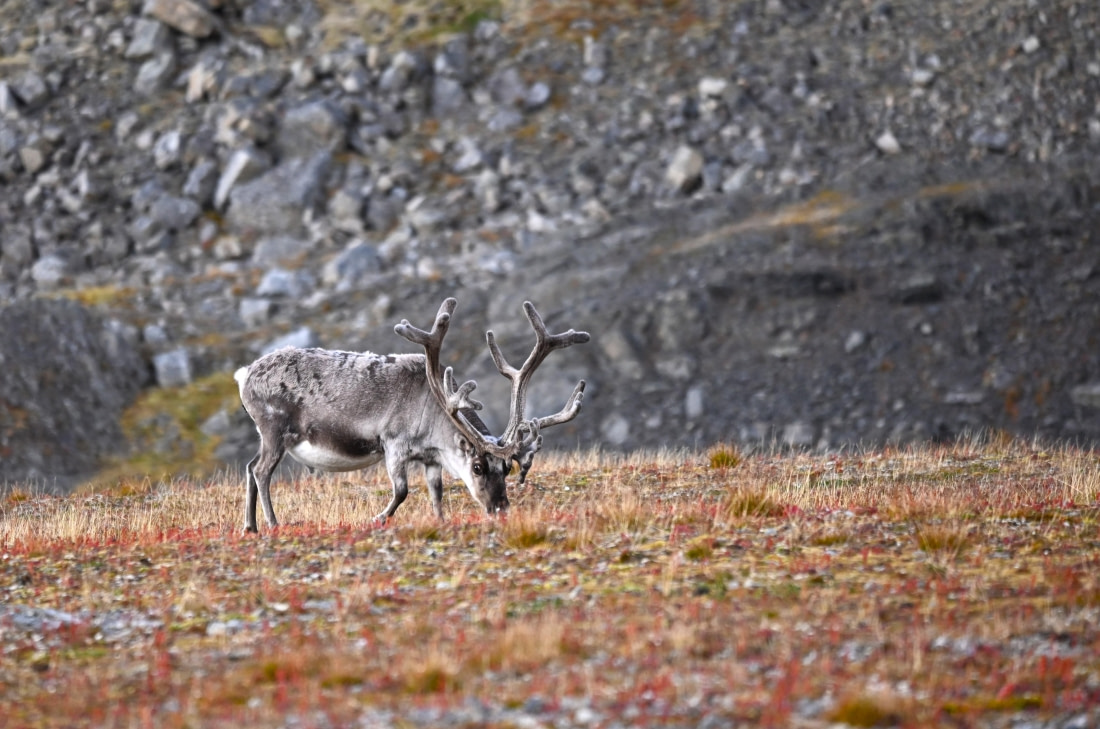
As we wandered between relics of the mining settlement and across the surrounding tundra, it became clear how quickly nature is reclaiming what people once built here. Mosses, lichens and Arctic flowers now soften the abandoned structures, while seabirds and reindeer have become the bay's most common inhabitants.

Back on board, conversations over dinner reflected on yet another day that had unfolded very differently from the original plan. Once again, flexibility had rewarded us with an experience few had expected. Instead of Bamsebu, we had discovered one of Svalbard's most atmospheric historical sites—a place where history, wilderness and silence combined to create a truly unforgettable afternoon.

Day 9: Selmaneset and Alkhornet

Selmaneset and Alkhornet
Date: 20.07.2026
Position: 78°14.5’N / 013°56.9’E
Wind: SW-3
Weather: Cloudy
Air Temperature: +5

Our final full day of exploration began at Selmaneset, where we stepped ashore to discover one of Svalbard's remarkable geological treasures. This remote headland is renowned for its fossil-rich limestone, formed over 400 million years ago when these rocks lay beneath a warm, tropical sea near the Equator. As we wandered across the weathered ground, many of us searched for beautifully preserved fossil corals, brachiopods, crinoids and other ancient marine creatures, each one offering a fascinating glimpse into an Arctic that looked unimaginably different from today.

Whether joining the longer hike or taking a leisurely stroll along the shoreline, it was impossible not to pause and imagine the extraordinary journey these rocks have taken through time—traveling across continents before becoming part of the High Arctic landscape we were exploring today.

After another excellent lunch on board, we sailed to our final landing of the voyage at the spectacular bird cliffs of Alkhornet. Towering dramatically above the entrance to Isfjorden, these fertile cliffs support thousands of nesting seabirds whose nutrients have transformed the surrounding tundra into one of western Spitsbergen's richest habitats.

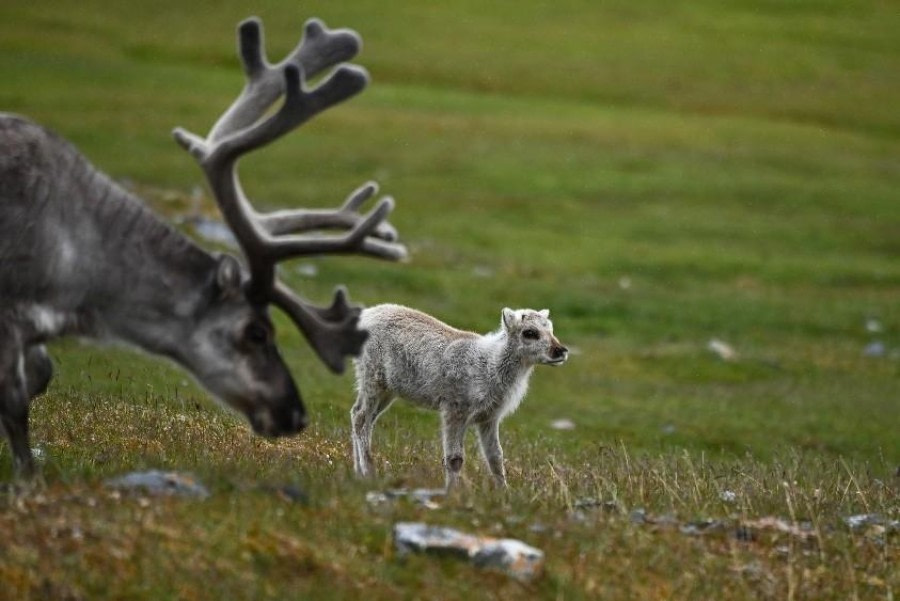
The wildlife certainly lived up to Alkhornet's reputation. Arctic foxes were exceptionally active beneath the cliffs, taking advantage of the abundance of birds and food brought down from the colonies above. Some particularly lucky guests counted as many as nine foxes, darting across the tundra, resting among the rocks or carrying food back towards their dens. It was a remarkable finale to a voyage filled with unforgettable wildlife encounters. Adding to the magic were several Svalbard reindeer calves, peacefully resting among the lush green tundra while their mothers grazed nearby. Perfectly camouflaged and lying almost motionless, they rewarded careful observers with some wonderfully intimate moments and a fitting reminder that the brief Arctic summer is a season of new life.

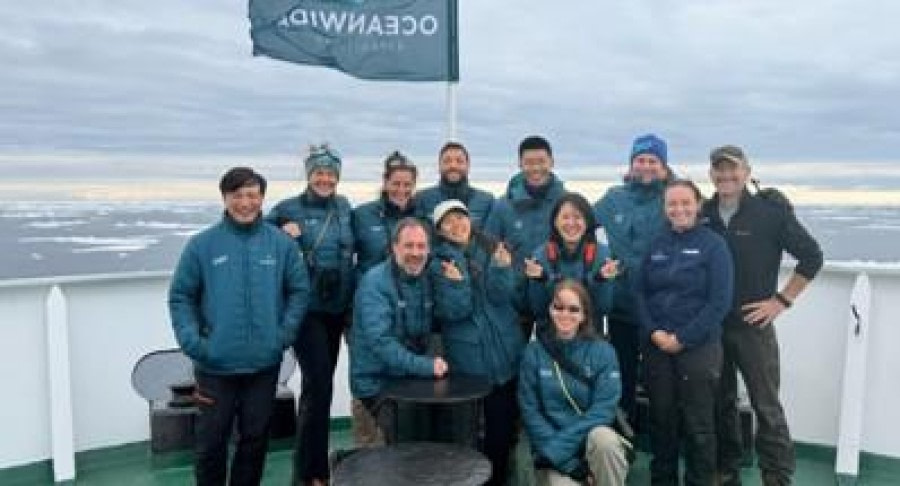
As we returned to Ortelius, there was a growing sense that our expedition was drawing to a close. During the evening, we gathered for the traditional Captain's Cocktails, celebrating an extraordinary circumnavigation of Spitsbergen. Kana's beautiful slideshow allowed us to relive the highlights of the voyage, from glaciers and pack ice to polar bears, walruses and countless unforgettable landscapes. As the final photographs faded from the screen, the lounge erupted into a heartfelt standing ovation for the captain, expedition team, hotel staff and crew, whose passion and dedication had made the journey so memorable.

It was a perfect ending to an incredible expedition. Together, we had completed a full circumnavigation of Spitsbergen, experienced the Arctic in all its diversity, and created memories that will stay with us long after the voyage has ended.

Day 10: Longyearbyen, Kulkaia. Disembarkation Day

Longyearbyen, Kulkaia. Disembarkation Day
Date: 21.07.2026
Position: 78°14.6’ N / 015°33.2’ E
Wind: SE-4
Weather: Overcast
Air Temperature: +7,5

The waters of Isfjorden were calm as MV Ortelius made her final approach to Longyearbyen, completing our circumnavigation of Spitsbergen. Just over a week earlier, this had been the place where excitement and anticipation filled the air. Now, as Captain Ernesto Barría gently brought the ship alongside the Coal Pier with the support of the bridge team, those same mountains welcomed us back.

The first guests were already awake, quietly enjoying one last cup of coffee in the lounge while watching Longyearbyen slowly come into view. At 07:15, Adam's familiar voice echoed through the ship one final time. Suitcases were placed outside our cabin doors, breakfast was shared once more, and, behind the scenes, the expedition team carefully organised our luggage on the quay with the same dedication they had shown throughout the voyage.

Over the past days, we had found polar bears across distant shores, drifted among sea ice at almost 81° north, listened to glaciers breathe, walked through abandoned settlements and ancient landscapes, watched Arctic foxes beneath towering bird cliffs, and discovered that the Arctic is as much about quiet moments as extraordinary wildlife. Every change of plan became a new opportunity, and every landing another reminder that the greatest privilege here is simply to witness nature on its own terms.

On behalf of Oceanwide Expeditions, Captain Ernesto Barría, Expedition Leader Adam Burke, Hotel Manager Volodymyr Cherdnychenko, and every member of the crew, expedition team and hotel staff aboard MV Ortelius, thank you for sharing this remarkable journey with us.

Until we meet again—fair winds and following seas.

Total distance sailed on our voyage: 1057.9 nautical miles

Details

Tripcode: OTL08-26
Dates: 12 Jul - 21 Jul, 2026
Duration: 9 nights
Ship: m/v Ortelius
Embark: Longyearbyen
Disembark: Longyearbyen

Have you been on this voyage?

Aboard m/v Ortelius

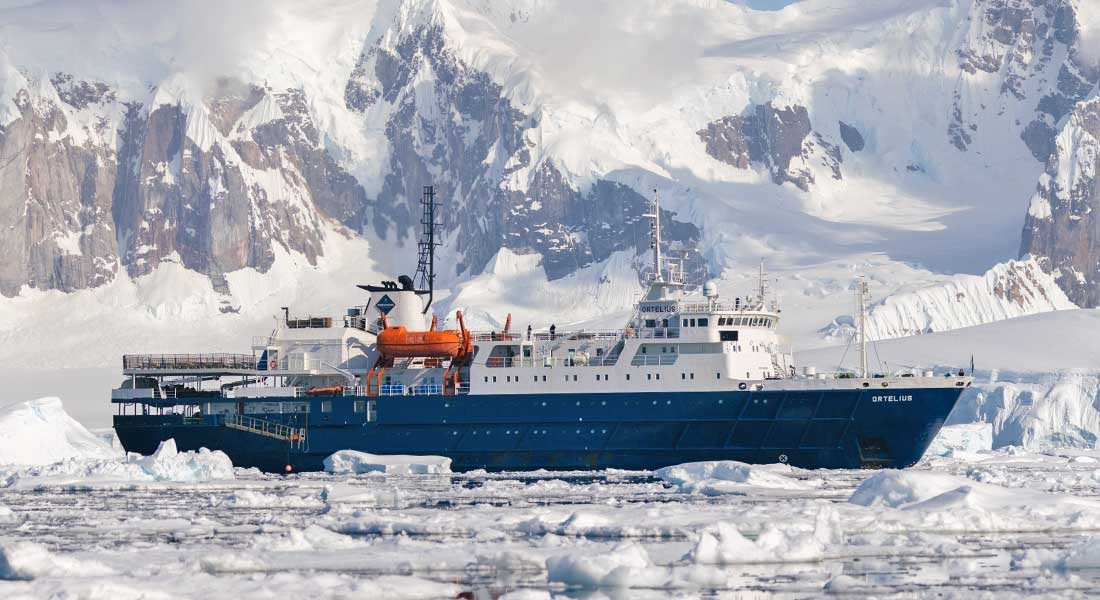
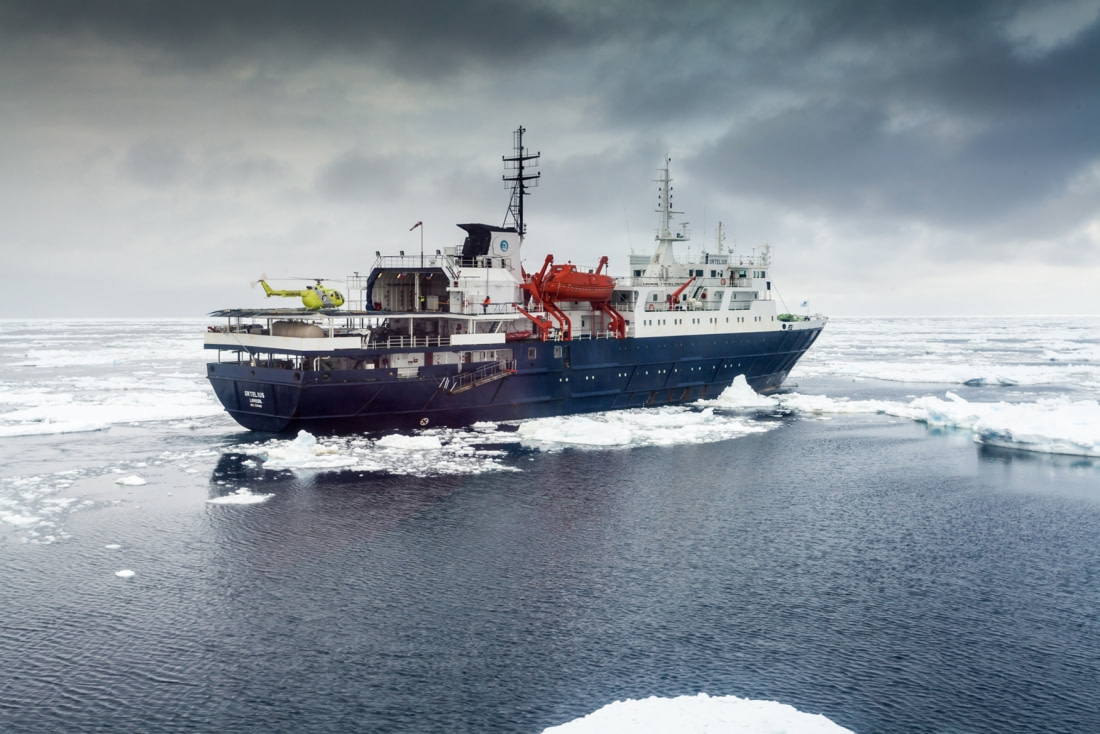
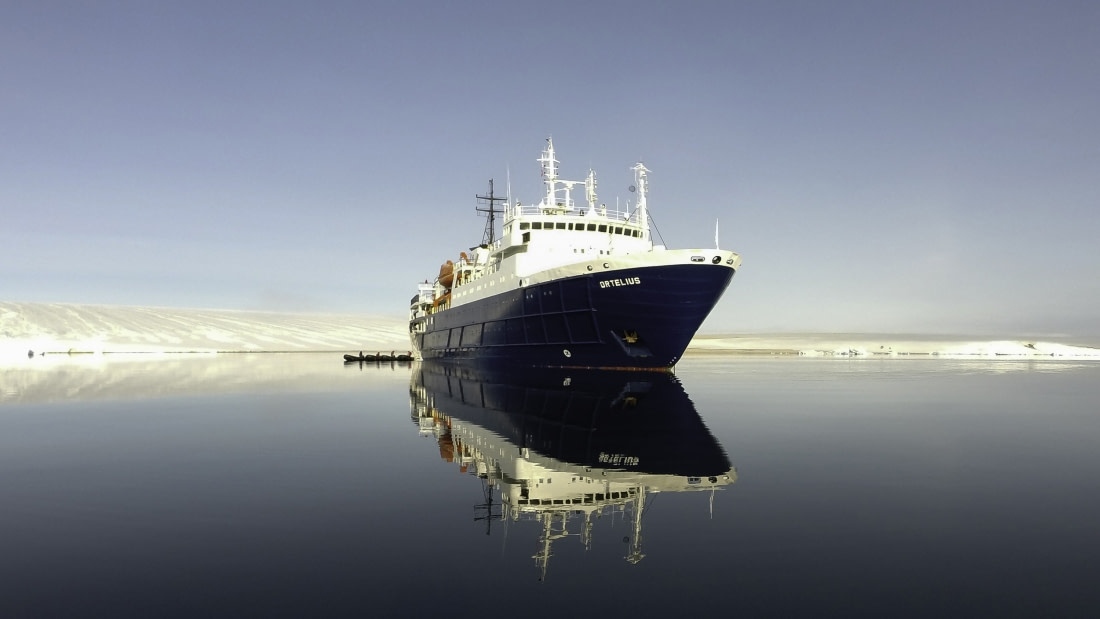
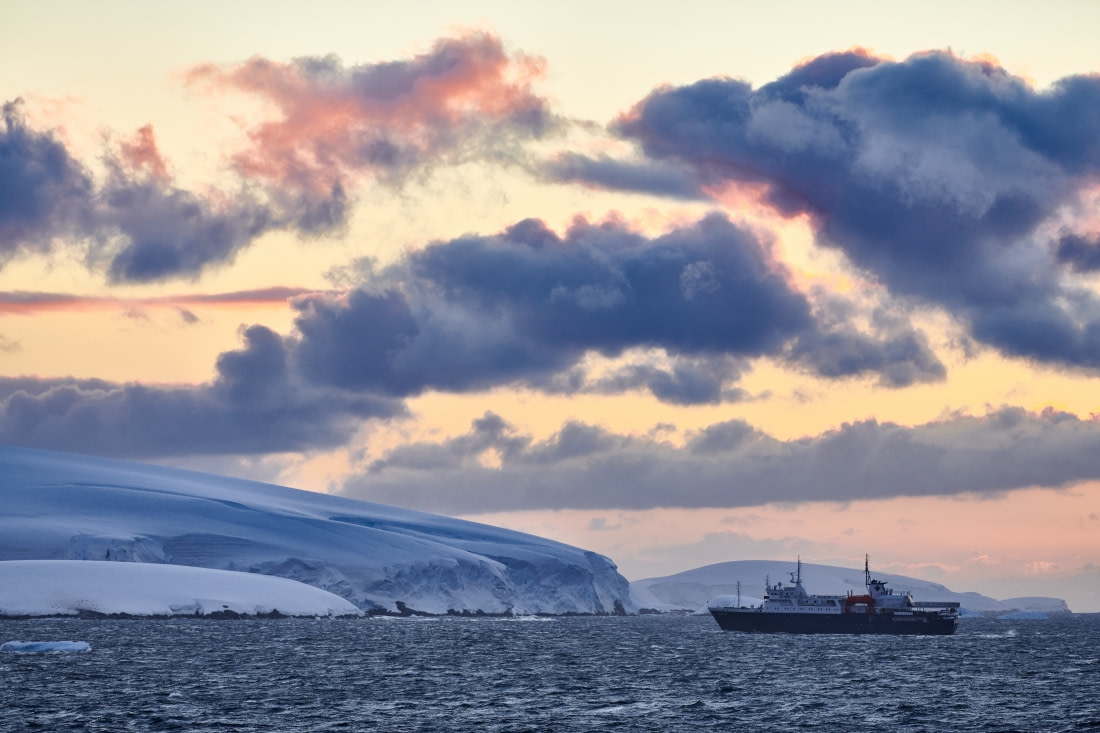
The ice-strengthened Ortelius is thoroughly outfitted for polar exploration and, when necessary, helicopter flights.

More about the m/v Ortelius »
Loading