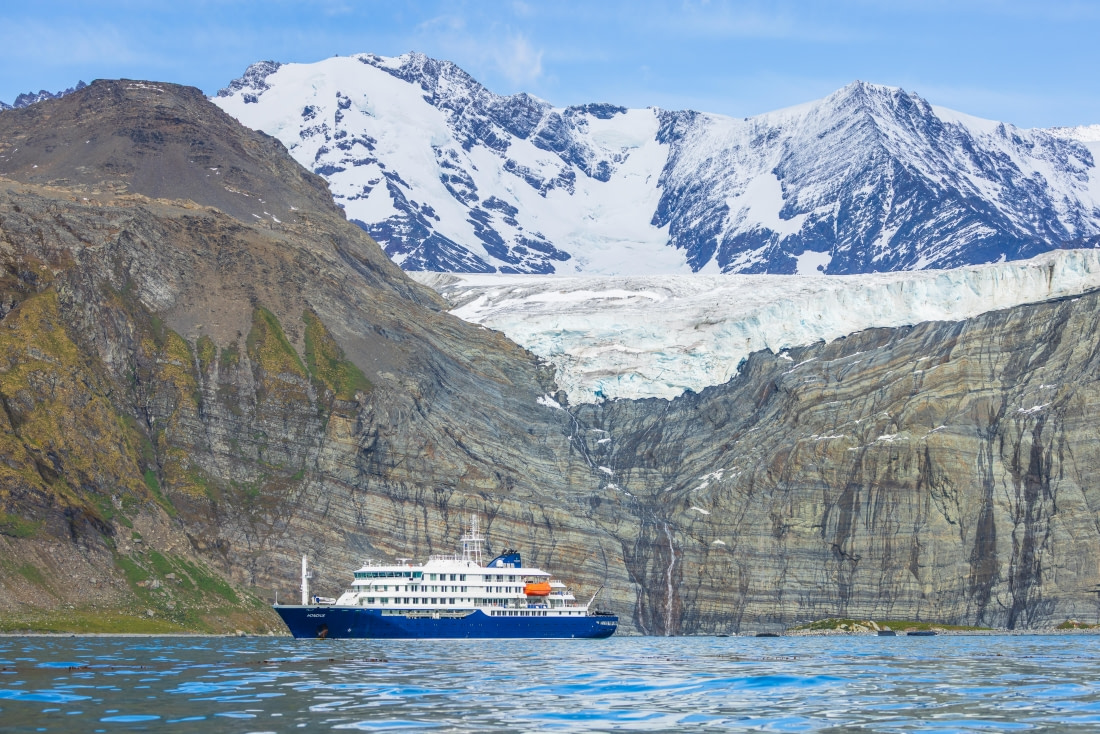
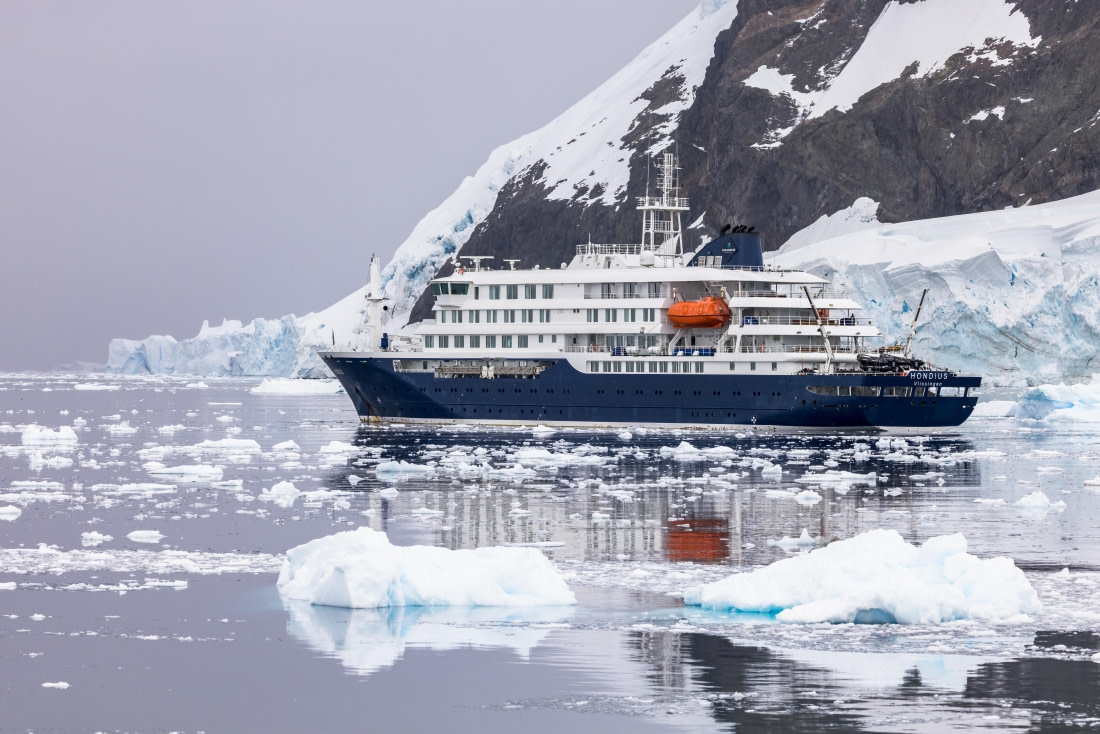
HDS21-26, trip log, Falkland Islands - South Georgia - Antarctic Peninsula

by Oceanwide Expeditions

Photo gallery

Logbook

Day 1: Embarkation, Puerto Madryn

Embarkation, Puerto Madryn
Date: 03.11.2026
Position: 42°45.75S / 69°75’W
Wind: NE5
Weather: Overcast
Air Temperature: +13

Our expedition officially began today in Puerto Madryn, as we gathered our luggage and made our way along the long pier to board Hondius. There was a real buzz of excitement as we prepared to embark on our journey to the Falkland Islands, South Georgia and Antarctica. With the Falkland Islands as our first destination, we were all eager to get underway and discover what lay ahead.

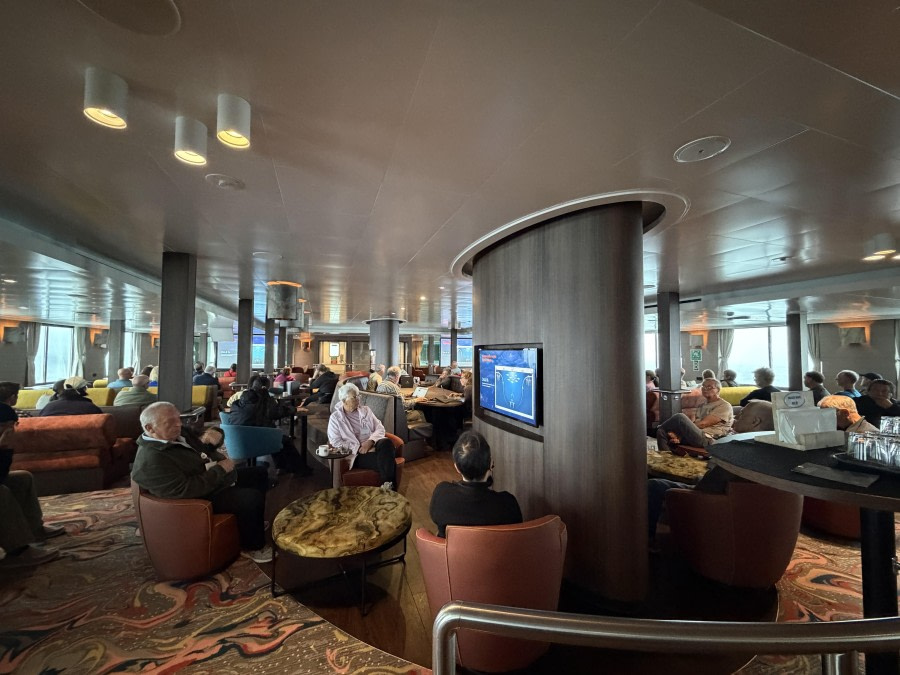
Once aboard, we settled into our cabins, checked that all our luggage had arrived safely and began familiarising ourselves with our new home at sea. Tea and coffee were available in the Observation Lounge on Deck 5, providing a welcome opportunity to relax after the journey to the ship.

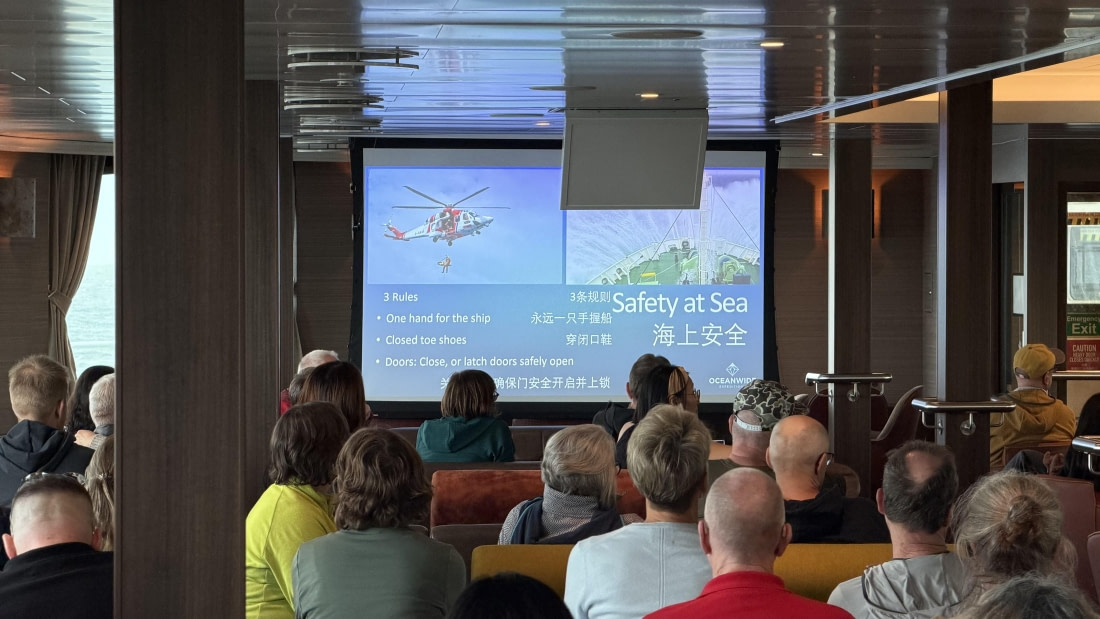
At approximately 5.00 pm, we gathered for the mandatory safety briefing, led by our Expedition Leader, Chris and Chief Officer, Sven. We learnt about the ship's safety procedures, emergency alarms and muster stations, before practicing what to do in the event of an emergency. An important introduction to expedition life, reminding us that safety and looking after one another will be essential throughout our voyage.

At approximately 6.15 pm, we joined the Captain, Ernesto and the Expedition Team in the Observation Lounge for a celebratory toast to the adventure ahead. This was followed by a welcome briefing where we were introduced to life on board and outlined the plans for the coming days.

Our first evening concluded with a buffet dinner in the Restaurant on Deck 4 at 7.30 pm. As we shared our first meal together, conversations turned to the adventures ahead and the wildlife and spectacular landscapes we hoped to encounter.

And so, with the Falkland Islands our first stop, our journey into the wild South Atlantic begins!

Day 2: At Sea

At Sea
Date: 04.11.2026
Position: 45°07.5’S / 65°19.3’W
Wind: WNW5
Weather: Cloudy
Air Temperature: +11

Our day began with the first wake-up call from our Expedition Leader, Chris, welcoming us to a beautiful, sunny morning at sea. The ocean was remarkably calm, and the sunshine provided a perfect start to our journey towards the Falkland Islands. After a delicious breakfast in the Dining Room, we were ready for our first full day of expedition life.

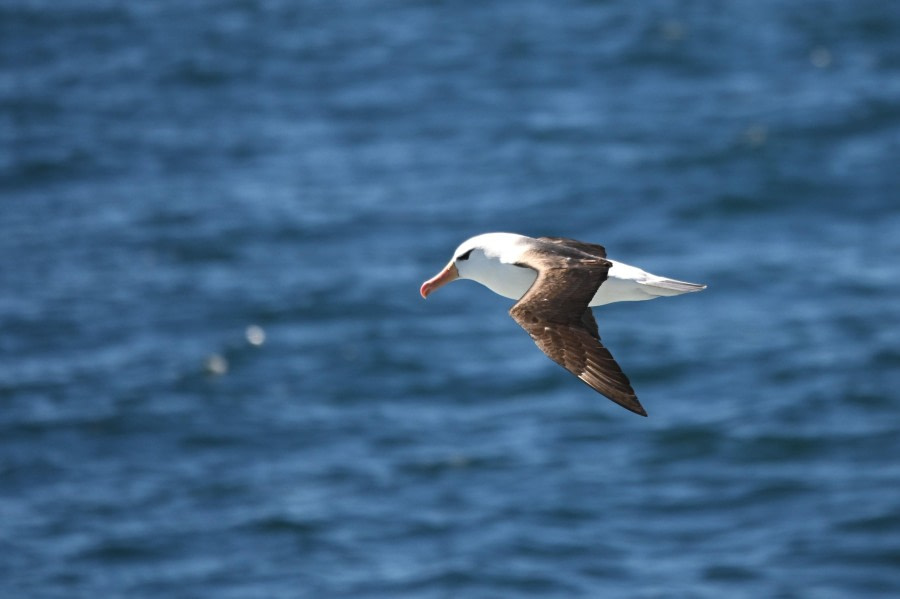
Having departed Puerto Madryn, on the coast of Argentine Patagonia, we were now sailing eastwards across the South Atlantic. These productive waters are rich in marine life, attracting an abundance of seabirds, whales and dolphins. We were already getting a taste of what lay ahead, with black-browed albatrosses and giant petrels gliding effortlessly alongside the ship.

At 10.15 am, Marcelo invited us to the Observation Lounge for a fascinating presentation on the history of the Falkland Islands, also known as Islas Malvinas. We learnt about the early European explorers, the origins of the islands' various names, the arrival of settlers and the complex history and sovereignty dispute that have shaped this remote archipelago.

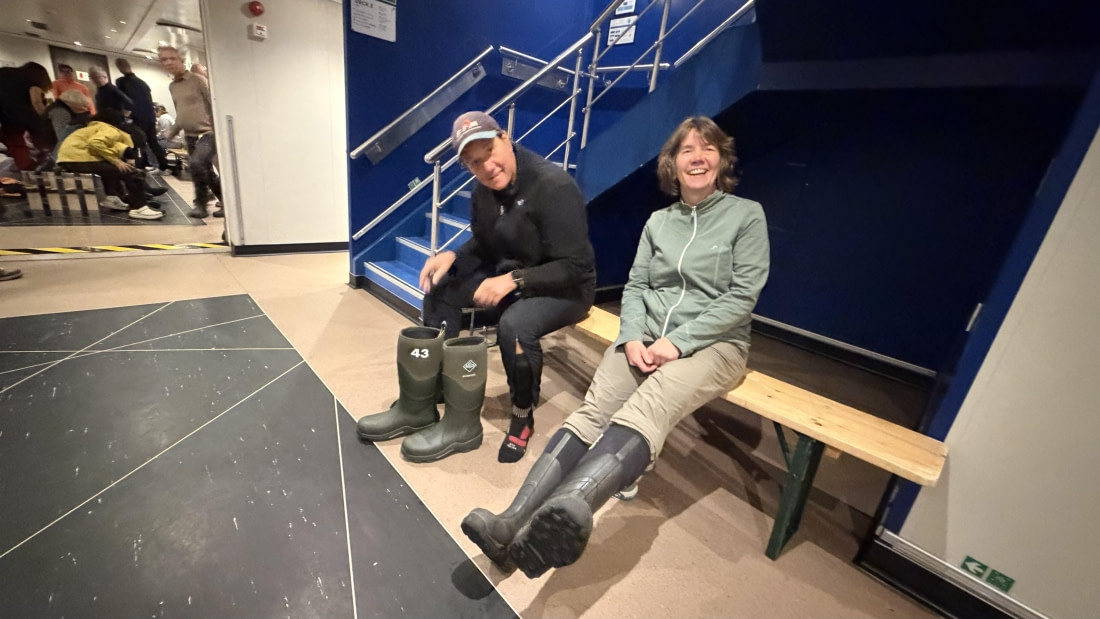
Meanwhile, the wildlife show continued outside, with magnificent seabirds soaring above the waves. Before lunch, it was time to collect another essential piece of expedition equipment: our Muck Boots! The Expedition Team helped us find the correct sizes, and there was plenty of laughter as we tried on our new footwear and got used to walking in them. We also took the opportunity to clean and prepare our clothing and equipment, ensuring everything was free of seeds, soil and other foreign material to help protect the fragile environments we would soon visit.

After an excellent buffet lunch, the afternoon brought an extraordinary surprise. An excited announcement over the ship's speakers alerted us to a southern right whale nearby. We hurried out onto deck, cameras and binoculars at the ready, just in time to witness this magnificent animal breaching repeatedly, throwing its enormous body out of the water before crashing back into the sea. It also raised its impressive tail flukes above the surface, giving us wonderful photographic opportunities. The display continued for so long that some of us even had time to return to our cabins for cameras before coming back for more. What an unforgettable first whale encounter of our voyage!

At 4.15 pm, Matt welcomed us to the Observation Lounge for a presentation on photography in the polar regions. With so many wonderful wildlife encounters already behind us, his practical advice on photographing animals and landscapes was particularly timely.

And the surprises weren't over! Dolphins appeared alongside the ship, swimming close to the vessel and adding yet another special encounter to an already spectacular day.

Later, we gathered in the Observation lounge for our evening recap. Lucia shared fascinating insights into the southern right whale, while Valeria offered some useful mobile photography tips to help us capture the many special moments still to come.

After another delicious dinner, we spent the evening sharing photographs and stories from the day. With beautiful sunshine, calm seas, albatrosses, giant petrels, a spectacular southern right whale and playful dolphins, we could hardly have asked for a better first full day at sea.

And the best part? We hadn't even reached our first landing yet! With the Falkland Islands getting closer, we went to bed full of anticipation for the adventures still to come.

Day 3: At Sea

At Sea
Date: 05.11.2026
Position: 49°25.65’S / 62°03.3’W
Wind: SSW4
Weather: Overcast
Air Temperature: +14

Fortunately there was no wake-up call this morning. After the rush of embarkation and the first full day finding our feet, this was a day to wake at our own pace and settle into the rhythm of the ship.

A sea day is never an empty day on an expedition ship. Much of it was given over to a task that matters more than it might first appear: biosecurity. Scattered across the lounges and cabins, we worked through our clothing and equipment, cleaning every backpack, pocket and strip of Velcro that would go ashore. Brushes and paperclips did the fiddly work in the Observation Lounge, teasing out the seeds and grit that can hitch a ride between landing sites. South Georgia and the Falklands are fiercely protective of their native plants and ground-nesting birds, and a single foreign seed carried in on a bootlace can do real harm. An hour spent with a brush now is part of what keeps these places as they are.

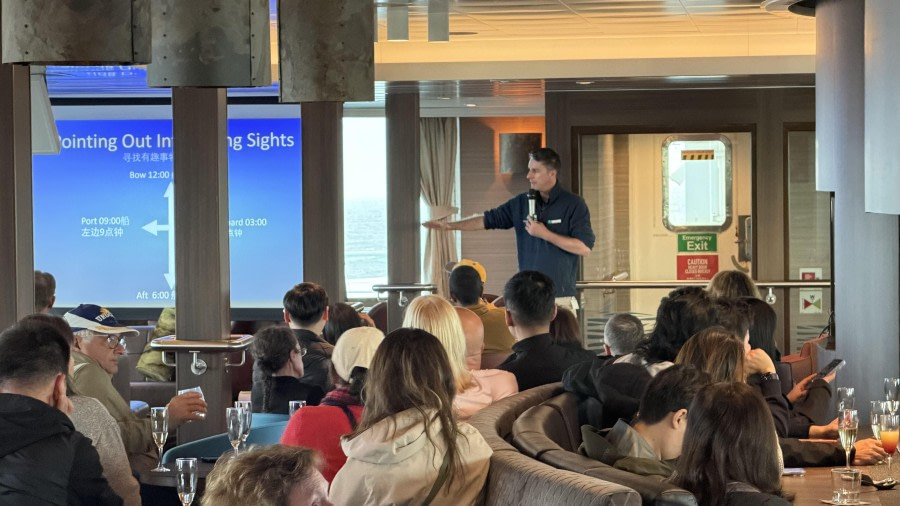
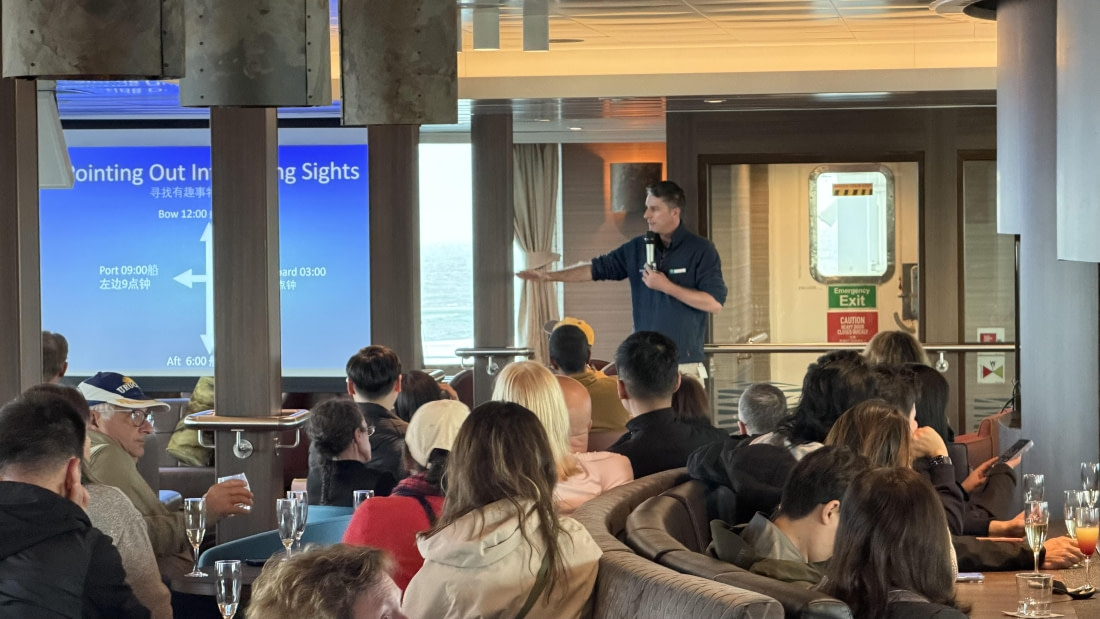
Mid-morning brought everyone together in the Observation Lounge for the mandatory IAATO and Zodiac briefing. The Expedition Team ran through the rules that govern how we behave in the Antarctic and sub-Antarctic, the distances we keep from wildlife, and the practicalities of getting in and out of a Zodiac safely. It is the groundwork that makes everything in the days ahead possible, and it set the tone for the expedition to come.

After lunch, Saskia took to the lounge with a presentation on the birds of the Falkland Islands, a fitting way to prepare for landfall. For many aboard, the Falklands are first and foremost about birds, and there would be plenty to look forward to. The talk gave names and context to the species we might soon be seeing, so that the shapes wheeling past the ship would mean something more than just movement on the water.

We then gathered again for recap, the daily ritual of going through what the day had brought and looking ahead to the next. The team shared their thoughts and laid out the plan for our arrival in the Falklands.

The day saved its best for the evening. Conditions held, and before and after dinner the northwest Falklands began to rise out of the sea ahead of us. The Jason Islands were our first sight of land since leaving port, a low scatter of islands off the far corner of the archipelago, and people drifted out onto the open decks to watch them draw closer.

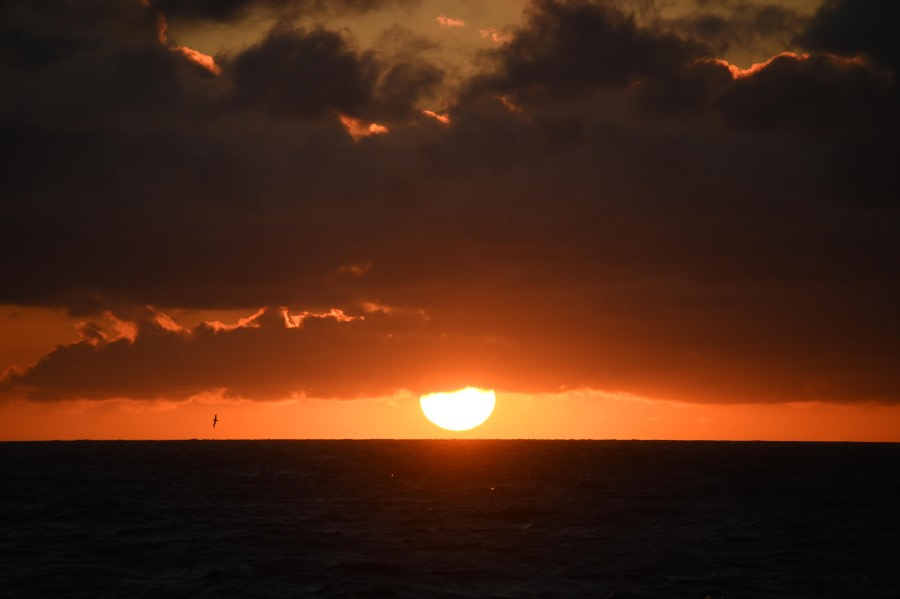
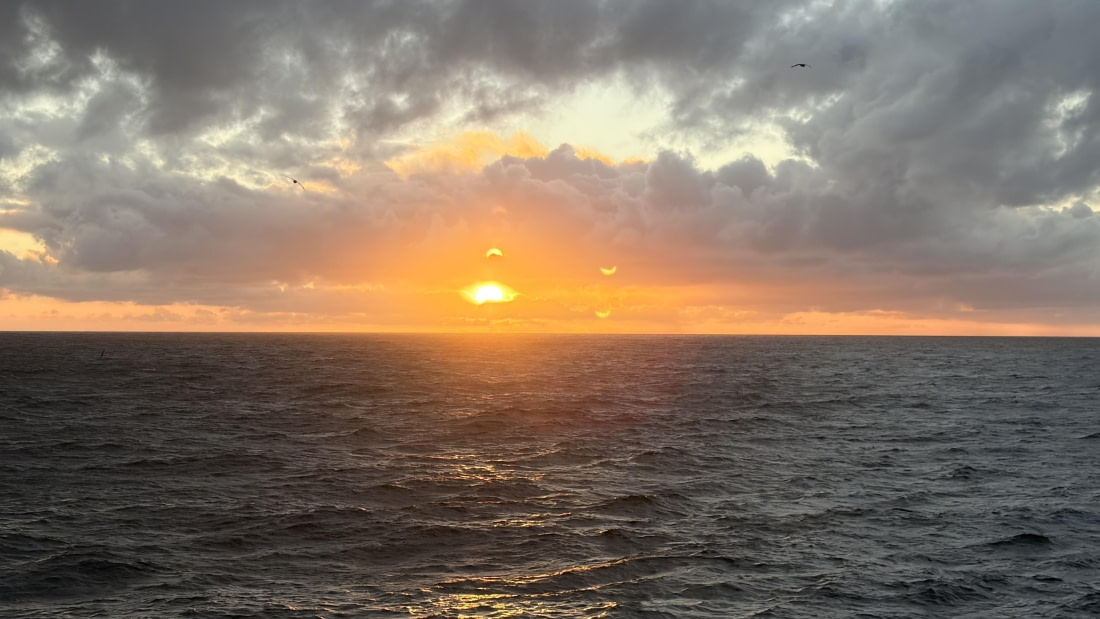
The sun set around 8pm, and the ship was busy with birds, drawn in across the water in the long golden light of a Southern Ocean evening. After days of nothing but sea in every direction, that first smudge of land on the horizon is always a quiet thrill.

As we came closer, the islands took shape properly. Steep and rocky, ringed with surf, their slopes busy with the white speckle of nesting seabirds. These islands hold some of the great seabird colonies of the South Atlantic, and even from the ship the sheer density of birds on the ground was clear.

The Falklands were close now, and the real business of the expedition was about to begin. We turned in with the sound of birds still carrying across the water and the islands dark against the last of the evening light.

Day 4: Saunders, Carcass, Falkland Islands

Saunders, Carcass, Falkland Islands
Date: 06.11.2026
Position: 51°16.45’S / 60°04.9’W
Wind: NW4
Weather: Calm
Air Temperature: +3

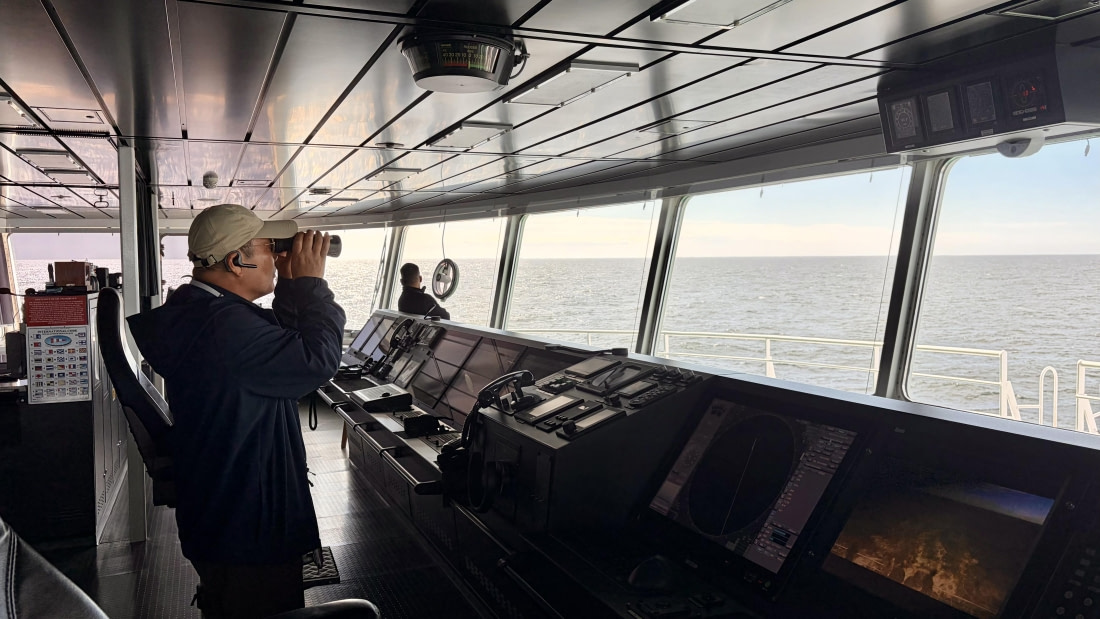
It was chilly on the bridge. Captain Ernesto Barria stood leaning against the instrument panel, gazing into the distance. Beside him was Chris, our expedition leader. Outside, the sun was shining and a fresh wind whipped the flag at the bow of Hondius. It was half past six in the morning.

Saunders Island lay to starboard. The swell was too high to attempt a landing at our usual site, so we decided to try an unfamiliar location on the island’s sheltered, leeward side. This caused some concern, as our only information came from scraps found online and assurances from locals that it was just as good as the usual landing site. As it turned out, they were absolutely right.

At 6.45 am, Chris made the wake-up call, followed shortly by Albert, our hotel manager, inviting everyone to breakfast in his booming voice. While some of us were still enjoying our coffee, the expedition team was already launching the Zodiacs. This was the first landing of the season, and even the guides were excited, as none had visited this particular site before.

Soon, we were boarding the Zodiacs in groups of ten and speeding towards a large sandy beach. The sun was shining, the wind was ruffling our hair, and it was hard to believe we were on a polar expedition. Three jeeps were waiting on the beach, where the island’s owners had come to welcome us personally.

Our walk took us past kelp and upland geese, Magellanic penguins sheltering in their burrows and, along the coast, two sei whales spouting among the waves. We also discovered a magnificent colony of black-browed albatrosses nesting on a steep slope. Their mournful, trumpet-like calls accompanied us as we watched them incubating their eggs. Nearby, a pair of turkey vultures was doing the same.

Further along, the albatross colony gave way to imperial shags, busy building their nests with twigs and grass. But the highlight was undoubtedly the rockhopper penguins. Hopping from rock to rock and chattering noisily, they provided endless entertainment. We could happily have stayed there until evening, but time was running out. After saying goodbye to the island’s owners and browsing the souvenirs, we returned to Hondius for lunch.

The afternoon brought another landing, this time on Carcass Island. The wind remained strong, but Captain Barria cleverly turned the ship so that the shell doors were on the sheltered side, making boarding the Zodiacs straightforward.

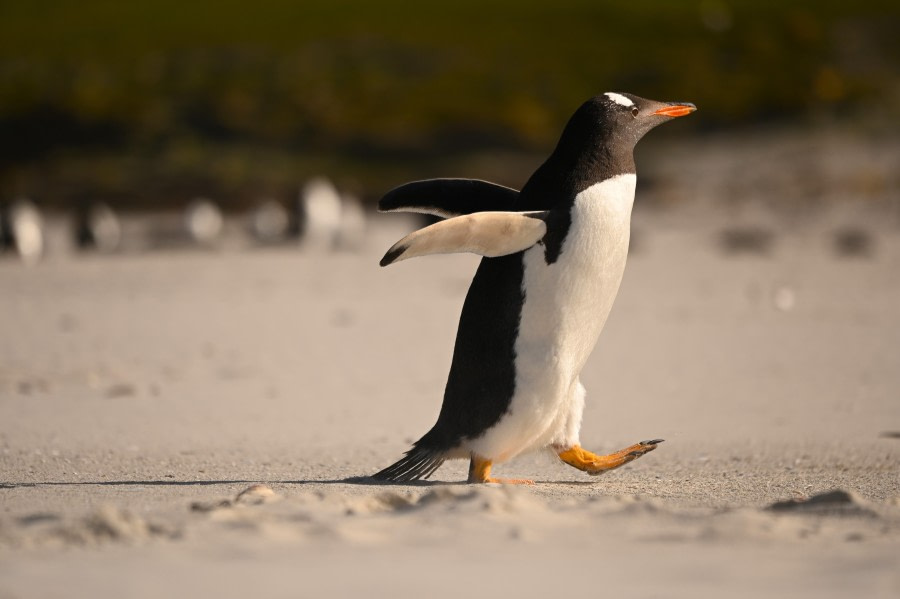
On shore we encountered Magellanic and gentoo penguins, as well as geese and flightless steamer ducks. This was only the beginning: a four-kilometre walk awaited us to reach the small settlement where the island’s owners lived. The route climbed steeply before following the shore of a bay, with Hondius clearly visible in the distance.

At the settlement, our hosts welcomed us into their home, where tea, coffee, biscuits and cakes had been prepared. Although the food on board was excellent, it was impossible to resist such a tempting spread!

Sadly, it was soon time to return to the ship. We said goodbye to our generous hosts, hoping that one day we might visit again. Back on board, the daily recap and dinner awaited us.

Tomorrow: Stanley, the capital of the Falkland Islands.

Day 5: Stanley, Falkland Islands

Stanley, Falkland Islands
Date: 07.11.2026
Position: 51°27.25’S / 57°43.2’W
Wind: NW5
Weather: Overcast
Air Temperature: +9

Even before our morning wake-up call, we were treated to a spectacular arrival into Stanley Harbour. As the ship approached the capital of the Falkland Islands, we headed out onto the decks to enjoy the scenery and watch as we navigated The Narrows, the narrow entrance to Stanley Harbour. Surrounded by rolling hills and colourful houses, our arrival was a wonderful start to the day.

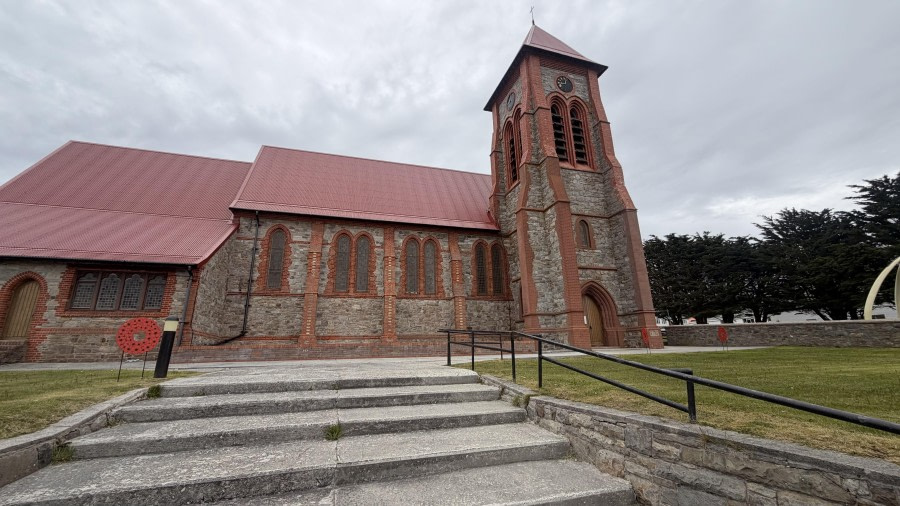
After breakfast, we prepared to go ashore and explore Stanley, also known as Puerto Argentino. Founded in the 1840s, the town developed around its natural harbour and became an important stopping point for sailing ships rounding Cape Horn. Its history is closely linked to maritime exploration, shipwrecks, sheep farming and the 1982 Falklands War. Today, its colourful houses, red telephone boxes, historic buildings and coastal setting give it a distinctly British character in the heart of the South Atlantic.

Once ashore, we had time to explore at our own pace. Some of us wandered through the streets, browsed the local shops and visited the museum, while others enjoyed photographing the town and soaking up its relaxed atmosphere. It was a lovely opportunity to experience this remote island community and perhaps pick up a souvenir or two.

After several enjoyable hours, we made our way back to the jetty. However, the weather had changed, and the strengthening wind made the Zodiac return more challenging. At the shell door, our experienced Zodiac drivers carefully manoeuvred alongside the ship while the ABs helped us safely back aboard. The Bridge Team also worked closely with the crew to maintain the safest possible position for the operation. It was an impressive display of communication, experience and teamwork, and we were grateful to everyone involved in getting us safely back on board.

After lunch, we headed out on deck once more to enjoy our final views of the Falkland Islands as the ship sailed back through The Narrows and out towards the open South Atlantic. Our next destination was South Georgia, one of the most extraordinary wildlife destinations in the Southern Ocean, renowned for its dramatic mountains, enormous glaciers, vast king penguin colonies and beaches crowded with seals.

Later, we gathered in the Bar for our evening recap. Anthonie introduced us to the Antarctic Treaty System and the international agreements that help protect Antarctica. Sid explained how we could participate in citizen science projects during our voyage, contributing valuable observations to scientific research. Saskia rounded off the session with a fun challenge: guessing when we would spot our first iceberg! With South Georgia drawing closer, the friendly competition added to the excitement.

After another delicious dinner, we watched the sun set over the South Atlantic, bringing a beautiful end to a memorable day. From our arrival into Stanley and exploring its charming streets to the challenging Zodiac operation and the magnificent wandering albatross, we had enjoyed another wonderful day of adventure.

The Falkland Islands were now behind us, and a new chapter awaited. South Georgia, here we come!

Day 6: Scotia Sea

Scotia Sea
Date: 08.11.2026
Position: 52°13.25’S / 51°59.5’W
Wind: NW4
Weather: Overcast
Air Temperature: +9

Following our departure from the Falkland Islands yesterday, the expedition team gave us a gift this morning: no early wake-up call, allowing everyone to enjoy a well-deserved lie-in. After a restful sleep, we gathered in the dining room for a relaxed breakfast at 8:00 AM.

Although the forecast predicted rough seas with waves topping 3 metres, the Southern Ocean treated us to surprisingly cooperative conditions. Swells hovered around a manageable 2.3 to 2.5 metres, giving everyone enough sea legs to venture out onto the observation decks.

Later in the morning, we convened for our mandatory biosecurity inspection. Protecting the fragile and pristine ecosystems of South Georgia is paramount, and thanks to everyone’s diligent gear-cleaning beforehand, the process went exceptionally smoothly and quickly. Vacuumed pockets, scrubbed boots, and checked Velcro ensured we were officially cleared for arrival.

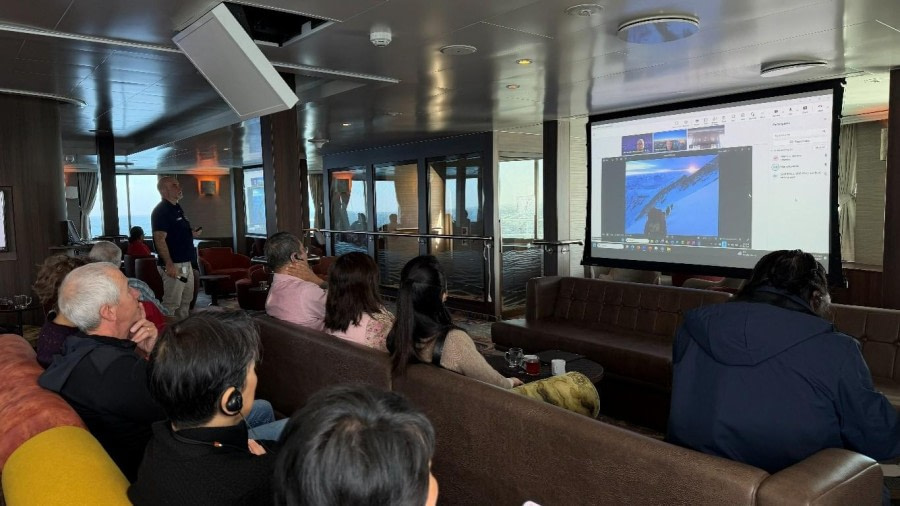
At 6:15 PM, we gathered in the main lounge for our daily expedition recap. Expedition Leader Chris walked us through the weather forecast for the next two days as we continue our transit toward South Georgia, followed by several short, engaging insights shared by members of the expedition team.

After another fantastic dinner, we wrapped up the day with a evening movie screening focused on Sir Ernest Shackleton’s legendary polar expeditions. It was the perfect blend of relaxed entertainment and rich historical context—putting into perspective the legendary waters we are currently crossing.

Day 7: Approaching South Georgia

Approaching South Georgia
Date: 09.11.2026
Position: 52°58.9′S / 44°07.0″W
Wind: WNW7
Weather: Overcast
Air Temperature: +9

We woke up after a rolling night, greeted by Koen over the ship’s announcement system with some exciting news: our first iceberg! A wonderful milestone and a reminder that we are getting deeper into the Antarctic world.

After breakfast, the morning was dedicated to learning more about the places we are sailing through.

First, Enric gave us a lecture about the geology of South Georgia, introducing us to the fascinating geological history of this remote island.

This was followed by Juan’s lecture about Larsen and the history of whaling in South Georgia. He also introduced us to some of the historic places and locations we might visit or spot along the way, adding another layer of meaning to the landscapes we are about to explore.

After lunch, we moved our clocks one hour forward, adjusting to the new time zone.

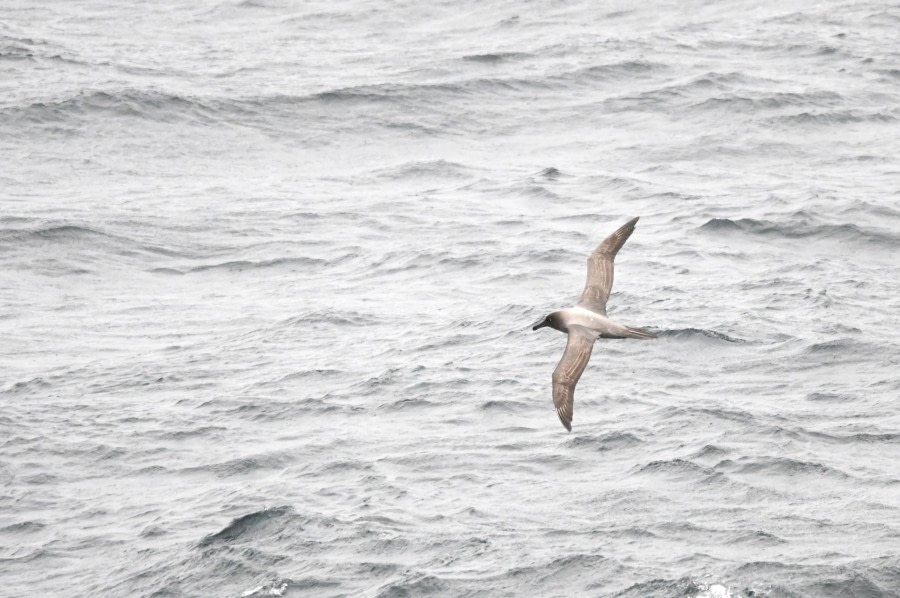
The afternoon brought some wonderful birding opportunities out on deck. We spotted sooty albatrosses, Pintado Petrels and prions soaring around the ship, making the most of the wind and waves. After all the excitement of the morning, we enjoyed a relatively easy and relaxed afternoon.

Later, Lucia gave us a fascinating lecture about King Penguins, helping us prepare for some of the wildlife encounters that will lie ahead. We also had a few seal sightings along the way.

Then came the daily expedition team recap: although it didn't quite go according to plan!

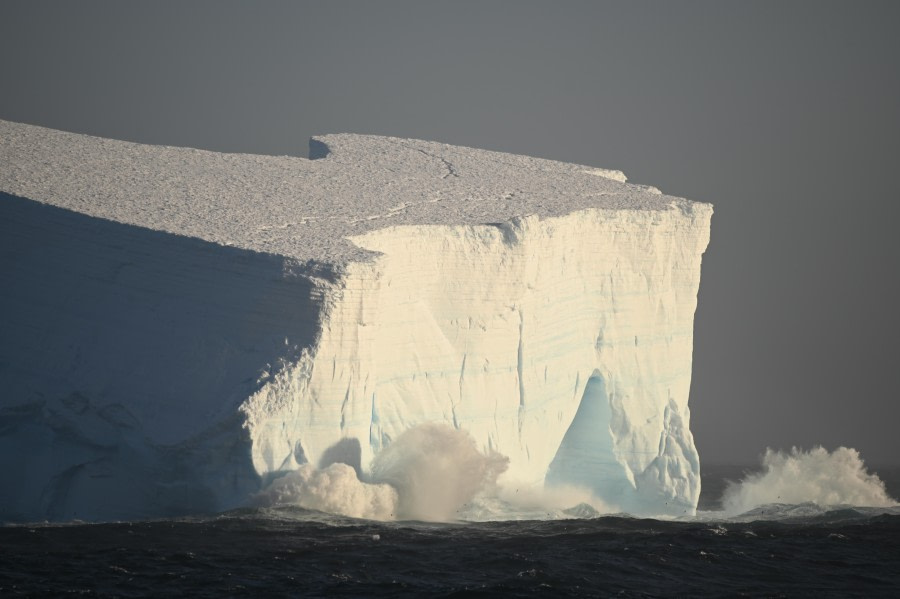
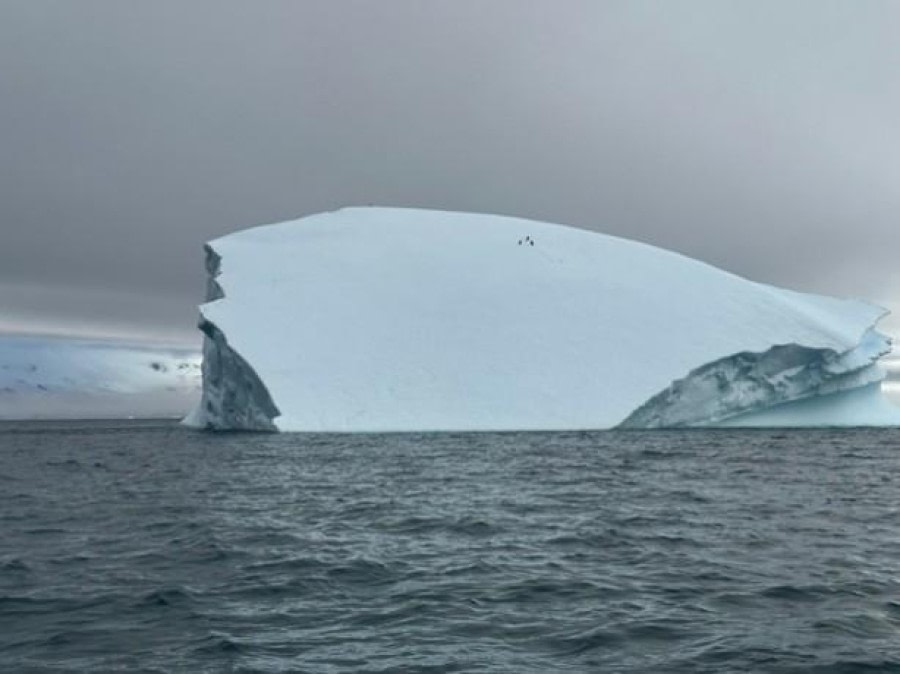
We learned about the possible plans for tomorrow, but the presentation was later interrupted by the sight of another enormous tabular iceberg alongside the ship. This time, there were even penguins resting on the iceberg, while several whale blows appeared in the surrounding waters.

It was one of those truly magical moments when everyone stopped what they were doing and simply watched. The light was extraordinary, it painted the landscape in beautiful colours, and the whole scene felt almost unreal. A perfect reminder of why we are here.

After this unexpected spectacle, we enjoyed dinner in the dining room and slowly brought another memorable day aboard.

A new precaution begins today: for the first time on this expedition, we started blacking out the ship at night to reduce the risk of bird strikes. By switching off exterior lights and using the blinds in all our windows, we help protect the seabirds that may be attracted to the ship during darkness.

A day of first icebergs, fascinating lectures, wonderful seabirds, unexpected wildlife encounters and an unforgettable Antarctic sunset. And we are only getting started! We will finally arrive to South Georgia tomorrow!

Day 8: Expedition Morning, Stromness

Expedition Morning, Stromness
Date: 10.11.2026
Position: 53°55.05’S / 37°05.8’W
Wind: W6
Weather: Partly overcast
Air Temperature: +13

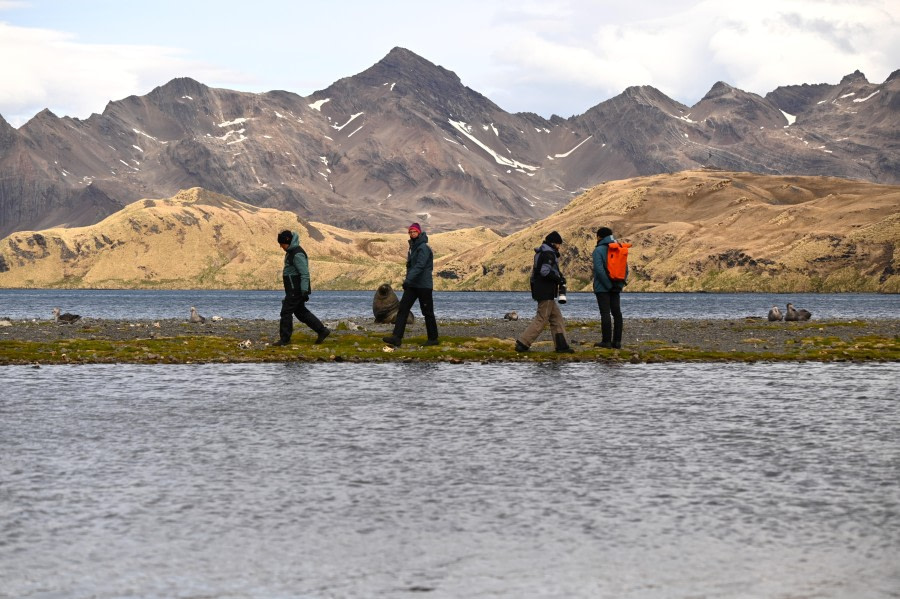
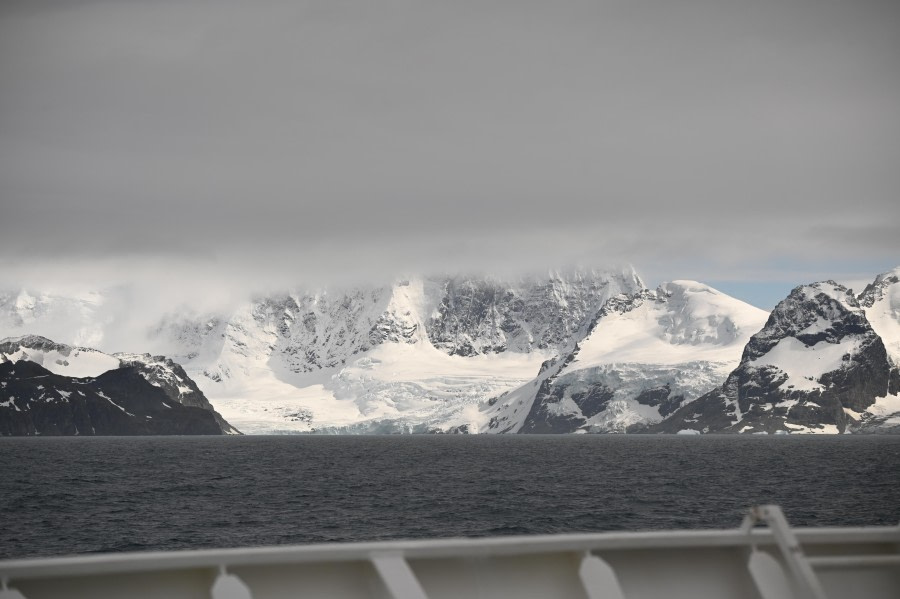
Chris was on the PA bright and early with the wake-up call, and for the first time in days there was land outside the window. After a couple of days at sea we'd made it to South Georgia. The wind had other ideas for the north-west coast though, far too strong to operate there, so we carried on further down the north-eastern side of the island. Nobody was complaining. From the decks we got our first proper look at the place: snow and ice on the mountain tops, and surprisingly green hills running right down to the water.

After breakfast Marcelo, our historian, set up a museum of sorts in the lecture room with things from his own collection of Antarctic memorabilia. Maps, medals, postcards, diaries and a whole lot of odds and ends from the old expeditions. It's the kind of stuff you'd normally only see behind glass, so being able to have a good look at it was a real treat, and it was hard to drag yourself away.

By the afternoon we were at Stromness, and conditions were good enough for a landing, our first in South Georgia. Behind the beach are the remains of the old whaling station, rusting buildings and machinery. It ran as a whaling station from 1912 to 1931, then as a ship repair yard until 1961. These days the seals run the place. Fur seals and elephant seals were spread out all along the beach, and the fur seals made it pretty clear whose beach it was.

From the beach you could pick a long or a short walk. The long o ne went up the valley to Shackleton's Waterfall, the last stretch of the famous crossing. In 1916, after losing Endurance to the Weddell Sea ice and sailing the little James Caird around 1,300 km from Elephant Island, Shackleton, Worsley and Crean landed at King Haakon Bay, on the wrong side of the island. With no map of the interior, no tents and screws from the boat stuck in their boots for grip, they walked over the mountains and glaciers for about 36 hours. On the morning of 20 May they heard the whistle at Stromness calling the whalers to work. The last obstacle was the waterfall, which they got down by lowering themselves on a rope, and that afternoon the three of them, filthy and bearded, turned up at the station manager's house. Standing at the bottom of it after our own (much easier) walk up the valley, it's hard to imagine doing it with 36 hours of mountains behind you.

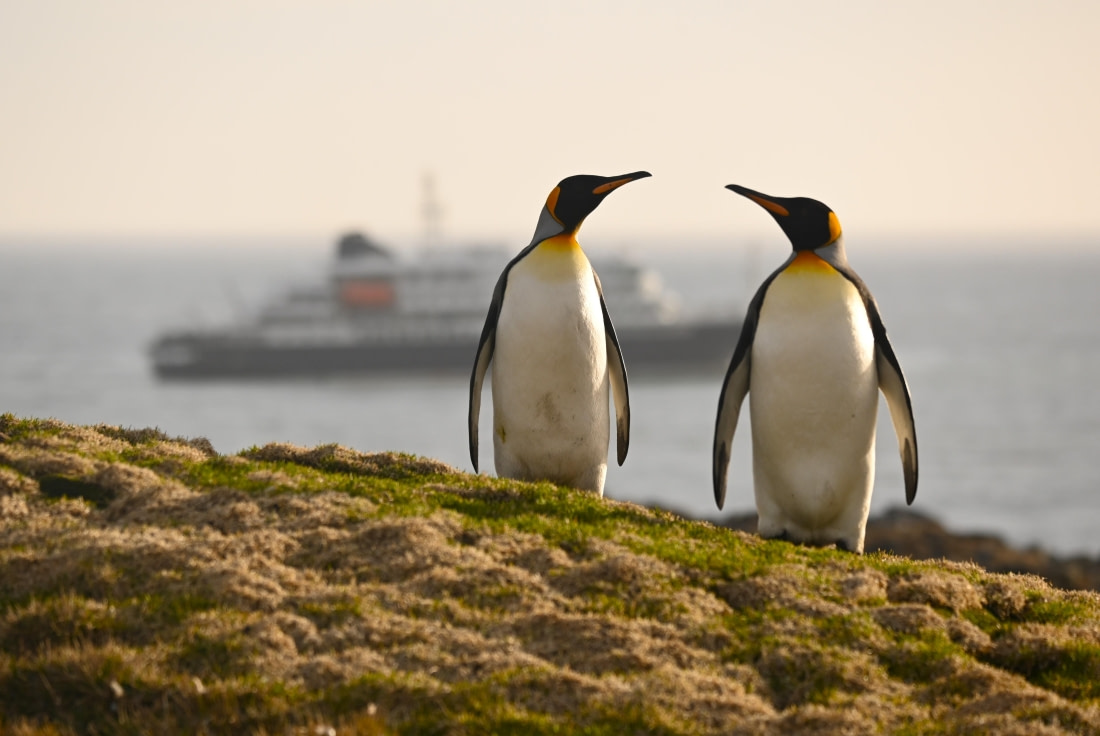
The short walk went up to a gentoo penguin colony, with the birds busy on their nests. A few king penguins were hanging around as well, which got the cameras going.

Not bad for our first day in South Georgia.

Day 9: St Andrews, South Georgia

St Andrews, South Georgia
Date: 11.11.2026
Position: 54°26.05' S / 36°10.5’W
Wind: VAR
Weather: Overcast
Air Temperature: +3

Our day began very early, with a 4.15 am wake-up call from our Expedition Leader, Chris. As the sun rose, the sky turned beautiful shades of pink and orange, reflecting across the snow-covered mountains and ocean. Above us floated spectacular lenticular clouds, a familiar sight in South Georgia. These lens-shaped clouds, often resembling flying saucers, are formed by strong winds passing over the mountains.

We were anchored at St Andrews Bay, an exposed location that can be affected by heavy ocean swells. Thankfully, conditions were favourable, and our landing went ahead as planned. We split into two groups: while the first went ashore to visit the world's largest king penguin colony, the second enjoyed a Zodiac cruise along the shoreline. We later swapped activities so everyone could experience both.

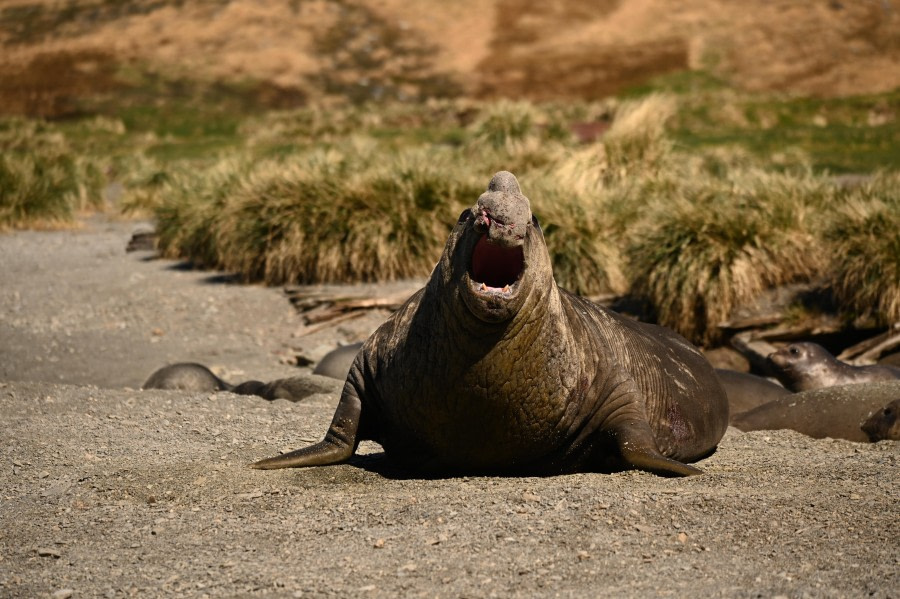
What an incredible morning! As we landed, we were welcomed by enormous southern elephant seals, some engaged in territorial battles, while curious king penguins waddled towards the water. We crossed grassy areas where sleepy fur seals barely lifted their heads, elephant seal pups suckled from their mothers, and king penguins stood proudly with their newly laid eggs tucked into their brood pouches.

Our walk continued across two river streams. While the first was relatively easy to cross, the second was more challenging, as sediment and feathers from moulting penguins obscured the rocky riverbed. With help from the Expedition Team, we linked arms and carefully made our way across.

Along the riverbanks, we spotted numerous king penguins undergoing their annual moult. For approximately three to four weeks, they shed their old feathers and grow a new waterproof coat. During this time, they cannot return to sea to feed, so they remain ashore, conserving their energy.

As we climbed the final hill, the calls of penguins grew louder. Reaching the top, we were greeted by an extraordinary sight: thousands upon thousands of king penguins, calling to one another and searching for their partners and chicks. For many of us, who had watched David Attenborough's documentaries and dreamed of visiting this remarkable place, the experience was almost surreal. To finally be standing among this incredible wildlife was simply unforgettable.

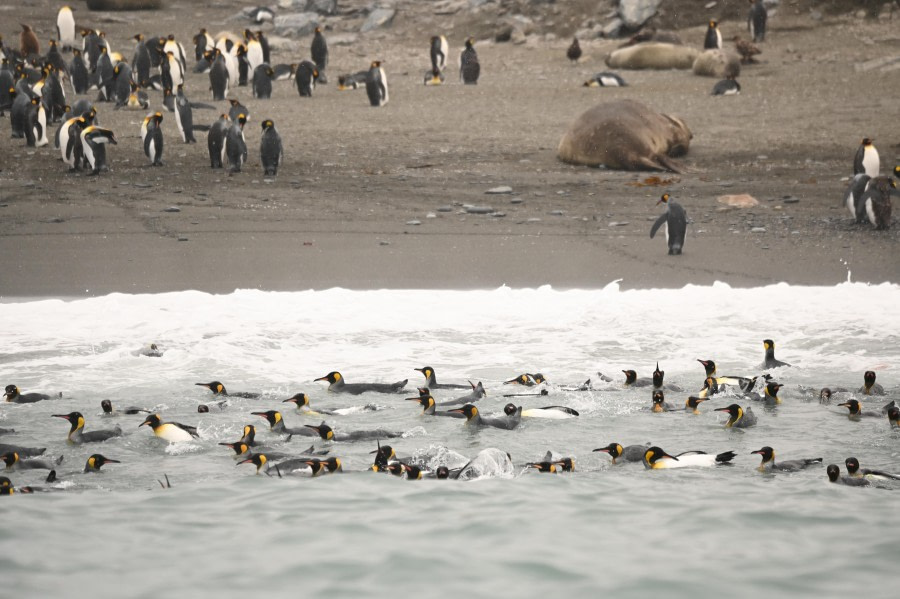
The beach was equally fascinating, with enormous male elephant seals, known as beachmasters, weighing up to four tonnes, competing for dominance and their harems. These giants were impressive when fighting, but equally comical when stretched out on the beach, snorting and sleeping away the morning. From our Zodiacs, we also watched rafts of penguins preening in the water, while giant petrels bobbed in the surf.

After such a memorable morning, we returned to Hondius for a delicious lunch prepared by Head Chef Ralf and his galley team. Many of us enjoyed a short rest before the afternoon's sailing.

Heading north towards Cumberland Bay, our destination for the following morning, we cruised through Hound Bay. Just outside the bay, we encountered several feeding humpback whales. With sunshine and light winds, conditions were perfect for watching these magnificent giants from the ship.

During our evening recap, Chris outlined the plans for the following day, Saskia announced the winner of our iceberg-spotting competition, and Sascha answered questions from the guest question box. Another delicious three-course dinner brought the day to a close.

From thousands of king penguins and enormous elephant seals to feeding humpback whales, South Georgia had already exceeded our expectations. It had been a long but truly extraordinary day, filled with wildlife encounters and memories to last a lifetime.

Good night from South Georgia!
Day 10: Grytviken, Jason Harbour

Grytviken, Jason Harbour
Date: 12.11.2026
Position: 54°17.35’S / 36°29.0’W
Wind: WNW3
Weather: Partly overcast
Air Temperature: +4

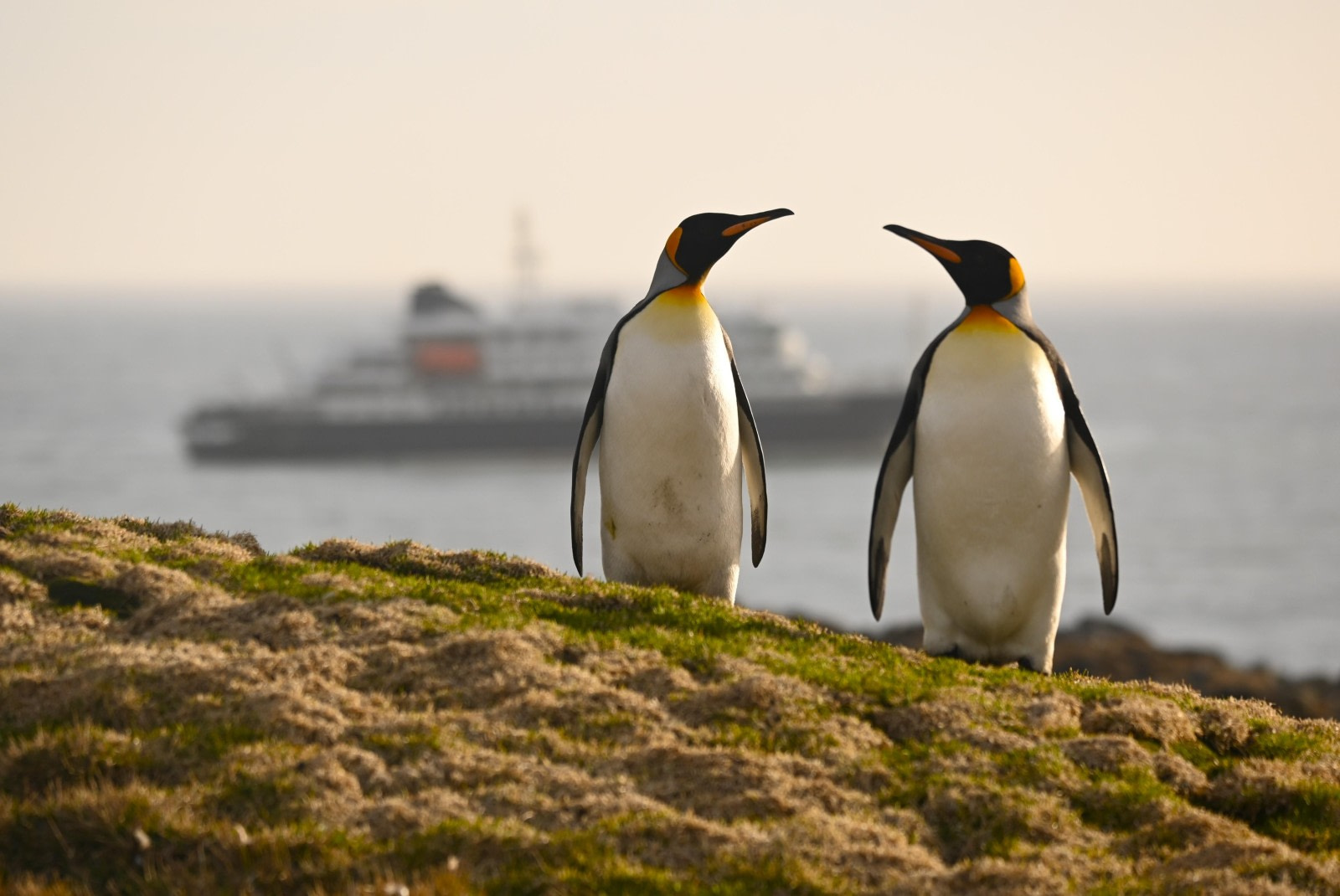
Stepping ashore at Grytviken, in the sheltered waters of King Edward Cove, Cumberland Bay, was like stepping back in time. Surrounded by snow-covered peaks, the rusting remains of the former whaling station tell a powerful story of South Georgia’s industrial past. Yet nature has reclaimed much of the landscape. Antarctic fur seals lounged beside corroded machinery, while king penguins wandered among the abandoned buildings – a remarkable contrast between the island’s harsh history and its thriving wildlife today.

Grytviken, meaning ‘Pot Cove’ in Norwegian, was established in November 1904 by Norwegian mariner and entrepreneur Captain Carl Anton Larsen, under the Compañía Argentina de Pesca. Its sheltered anchorage and freshwater supply made it an ideal location for the first permanent shore-based whaling station in the sub-Antarctic. At its peak, more than 400 workers were employed during the austral summer, processing thousands of whales. The station developed into a small industrial town, complete with enormous blubber cookers, meat-processing facilities, workshops, a hospital, cinema and the Norwegian Lutheran church, consecrated on Christmas Day 1913.

After decades of intensive whaling, declining whale populations eventually made operations uneconomical. Grytviken closed in December 1964, having processed more than 54,000 whales. Today, the historic site is managed by the Government of South Georgia and the South Sandwich Islands. The South Georgia Museum, housed in the former station manager’s villa, provides further insight into this extraordinary period of history. Following extensive environmental remediation, visitors can walk among the industrial relics, including the beached whaling vessels Petrel, Dias and Albatros. It is a sobering place to reflect on the scale of past exploitation and the importance of protecting the Southern Ocean today.

A short walk along the shoreline brought us to the small whalers’ cemetery and the grave of Sir Ernest Shackleton, one of the most celebrated figures in polar exploration. South Georgia holds a special place in his story. In May 1916, following the loss of Endurance, Shackleton and five companions sailed the lifeboat James Caird approximately 800 miles from Elephant Island before undertaking an extraordinary crossing of South Georgia’s mountainous, glaciated interior to reach help and organise the rescue of their stranded crewmates.

Remarkably, it was also in Grytviken that Shackleton’s life came to an end. He died of a heart attack aboard Quest on 5 January 1922, aged just 47. At his widow’s request, he was returned to South Georgia for burial, the island she recognised as his spiritual home. His funeral took place in Grytviken’s wooden church on 5 March 1922. Today, his grave is marked by a Scottish granite headstone, unveiled in 1928, bearing a quotation from Robert Browning: ‘I hold that a man should strive to the utmost for his life's set prize.’ The ashes of his loyal second-in-command, Frank Wild, were later interred beside him in 2011. Following expedition tradition, we paused at the graveside to pour a small measure of whisky and raise a toast to ‘The Boss’ – a particularly memorable and fitting moment.

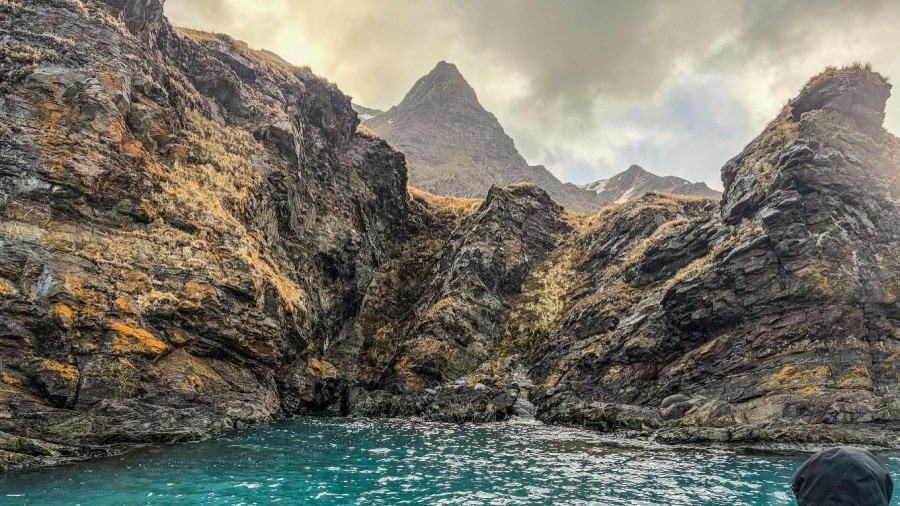
Following our visit to Grytviken, we relocated to Jason Harbour in Cumberland West Bay for an exploration by Zodiac MK5. Named after Larsen’s sealing vessel Jason, which surveyed the inlet in 1894, this sheltered bay is framed by dramatic mountain peaks and glacial scenery. The rugged Zodiac MK5s provided a stable platform as we carefully navigated shallow kelp beds, submerged rocks and occasional katabatic gusts funnelled down from the surrounding mountains.

Moving slowly along the rugged coastline, we encountered an impressive concentration of wildlife. Bull southern elephant seals dominated the pebble beaches, while territorial Antarctic fur seals kept a watchful eye on our approach. Groups of king penguins gathered at the water’s edge, with giant petrels and brown skuas circling overhead. From the low vantage point of the Zodiacs, we also spotted the historic 1911 mail refuge hut near the landing beach. It was a wonderful reminder that even in these remote corners of South Georgia, human history and wild nature remain closely intertwined. The excursion offered a different perspective on the island, combining spectacular coastal scenery, abundant wildlife and fascinating glimpses into its maritime past.

Day 11: Ocean Harbour

Ocean Harbour
Date: 13.11.2026
Position: 54°37.65’S / 35°55.3’W
Wind: WN7-9
Weather: Cloudy
Air Temperature: +4

This morning did not look promising. The wind was up, gusting hard out of the west, and Gold Harbour, with the Bertrab Glacier hanging above it, one of the most spectacular landings in all South Georgia was completely exposed. There was no way to put Zodiacs in the water there safely, and everyone on board knew it before the leader even said it out.

What happened next was the kind of morning that defines a good expedition. Rather than write the day off, the expedition leader Chris and the team check the forecast models, the anemometer and the charts, looking for a place where the wind would bend around a headland instead of hitting us square on. Ocean Harbour was the answer: a narrow, deep-cut bay just to the south, protected by high ground, with a completely different character from Gold Harbour and, as it turned out, a great deal to offer.

We landed in the afternoon. The beach was crowded — fur seals sprawled across the sand and the tussock, some of them sparring, most of them simply asleep. Further along, elephant seals lay hauled out in the wallows. Behind the beach lay the remains of the old whaling shore station, and at the head of the bay the rusting ribs and hull of a long-abandoned sailing ship still stand where she was driven ashore more than a century ago — a quiet, sobering piece of South Georgia's history, and a place we visited with care and respect.

Later blue and red group swap on land and cruised the bay by Zodiac. Gentoo penguins were coming home from the feeding grounds in a steady stream, porpoising through the chop and popping up onto the rocks in small groups.

The weather never really improved. But nobody lost a day. The team refused to give up on it, kept watching the sky, and found us a Plan B that turned into a memorable landing and a beautiful afternoon on the water. Huge thanks to the expedition leader Chris and the whole team — and to the guests, who took the change in plan with patience.

That is South Georgia: you don't get the day you planned; you get the day the island allows.

Day 12: At Sea

At Sea
Date: 14.11.2026
Position: 55°13.55’S / 36°41.0’W
Wind: NW8
Weather: Overcast
Air Temperature: 0

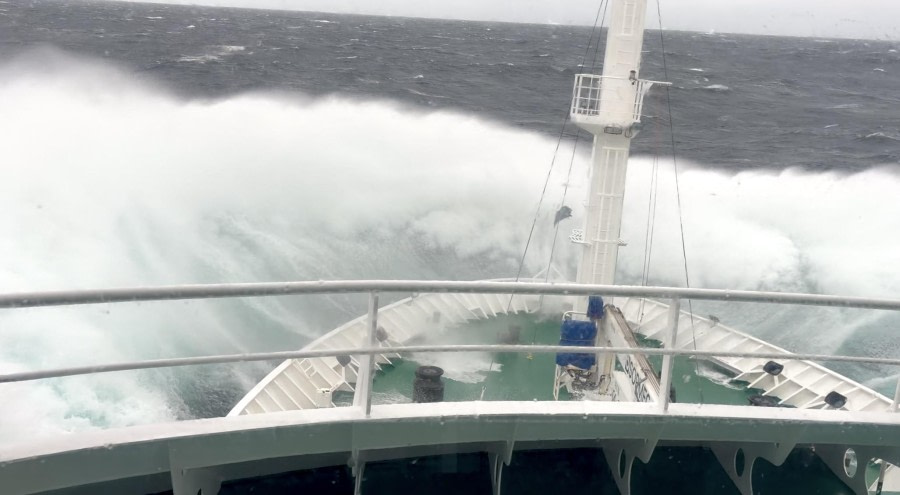
We woke up today to a rolling and pitching ship, with rough seas waiting for us outside. The ocean was certainly making its presence felt! Huge waves came crashing against the bow, while wind gusts exceeded 60 knots and waves reached around 5 metres. Despite the challenging conditions, there were plenty of people up and about, ready to make the most of the day. The outer decks were closed for safety reasons.

Those feeling well enough headed to breakfast, followed by an interesting lecture from Koen about the exploration of Antarctica. A great opportunity to learn more about the history of exploration in this remote part of the world and prepare ourselves for what lies ahead.

After that, we enjoyed a relatively easy morning and lunch. With the ship continuing to rock and roll, most people chose to take it easy during the afternoon, catching up on some much-needed rest.

Later in the day, Sid gave an engaging lecture about hunting in the dark and the fascinating diving techniques used by animals in the polar regions. An insight into how wildlife has adapted to survive and thrive in these extreme environments.

As usual, we gathered with the expedition team for our daily recap, sharing stories and looking ahead to what comes next. Dinner followed, and with the rough seas continuing, an early night was on the agenda for many.

One little bonus before bedtime: tonight we turn our clocks back one hour to Argentine time, giving us an extra hour of sleep!

A good night to rest, recharge and hopefully let the ocean calm down a little.

Good night, and good luck with the weather!

Day 13: At Sea

At Sea
Date: 15.11.2026
Position: 57°12.45'S / 41°28.1'W
Wind: S8-9
Weather: Overcast
Air Temperature: -3

We woke up once again to the relentless motion of the Southern Ocean. Much like the previous day, the storm showed no signs of easing, and Hondius continued to battle its way through the rough seas. Waves reaching up to seven meters crashed against the ship, making every movement onboard a challenge. With no scheduled wake-up call, everyone was free to wake up at their own pace and adjust to the conditions outside.

Despite the weather, the day offered two particularly interesting opportunities to learn more about Antarctica and life aboard Hondius.

At 10:30, we gathered in the Lecture Room, where Enric delivered a fascinating presentation on the geology and glaciology of Antarctica. The lecture focused on the enormous ice sheet covering the continent: how it formed, how it developed over geological time, and the scientific methods that have allowed researchers to understand what lies beneath its seemingly endless frozen surface. It was particularly interesting to discover how scientists have managed to investigate the hidden landscape underneath the ice and gradually build a picture of Antarctica's geological structure.

We also explored the tectonic configuration of the continent, understanding how Antarctica is divided into two main geological regions: East Antarctica and West Antarctica. Separating these two very different areas is the impressive Transantarctic Mountain Range, which runs across the continent and plays a fundamental role in its geological structure. The presentation offered a much clearer understanding of the forces that shaped Antarctica long before it became the frozen continent we know today. It was a reminder that beneath all that ice lies a complex and ancient geological world, much of which remains hidden from view.

After lunch in the Dining Room, the afternoon brought a rather different perspective on life aboard the vessel. At 15:00, Chef Ralf invited us to the Observation Lounge for a lecture about the galley and the inner workings of Hondius' kitchen. It was a particularly interesting opportunity to discover what happens behind the scenes and how such an operation functions in the middle of the Southern Ocean.

Ralf gave us an insight into the organization of the kitchen, the daily routines of his team, the logistics involved in preparing meals for everyone onboard, and the impressive quantities of food that need to be stored and managed throughout the expedition. It is easy to take the meals served in the Dining Room for granted, but understanding everything that happens behind the scenes gave us a new appreciation for the work involved. Keeping a kitchen running smoothly on a ship that is constantly moving, especially in conditions like those we were experiencing, is no small achievement. It was fascinating to get this glimpse into an essential part of life onboard that passengers rarely get to see.

At 18:15, we joined the Expedition Team in the Lounge for the daily recap, bringing together the main highlights and discoveries of the day. Despite the continuing storm and the limitations imposed by the weather, the lectures had given us plenty to think about.

Dinner followed at 19:00 in the Dining Room, as Hondius continued its journey through the restless Southern Ocean. Another day at sea, with no landings, but certainly not a day without discoveries. Between the geological secrets hidden beneath Antarctica's ice and the fascinating logistics of feeding an entire expedition, we gained a better understanding of both the continent we were heading towards and the ship carrying us there.

Day 14: At Sea

At Sea
Date: 16.11.2026
Position: 59°28.2'S / 47°16.3'W
Wind: SW4
Weather: Overcast
Air Temperature: -3

After two days battling the rough conditions of the Southern Ocean, we finally woke up to a noticeable change in the weather. The storm was behind us, and although Hondius was still moving with the ocean, the waves had settled considerably, reaching around two to three meters. Compared with the previous days, the difference was remarkable. The ship was noticeably more comfortable, and the improved conditions brought a renewed sense of excitement as we continued our journey south towards Antarctica.

The morning was dedicated to learning more about the continent we were getting closer to. At 09:15, Sasha gave a presentation on the geography of Antarctica, while Li offered a parallel lecture in Mandarin about the differences between Antarctica and the Arctic. Later, at 11:00, Lucia introduced us to the fascinating world of penguins, with Kana delivering the same subject in Mandarin. These presentations helped prepare us for what we were about to encounter in the coming days, offering some useful context about the continent and its wildlife.

After lunch, at 14:00, it was time for an important step in our approach to Antarctica: the biosecurity inspection. Passengers were called by deck to have their boots, backpacks and outer layers checked and cleaned. It was a reminder that visiting Antarctica comes with a responsibility to protect it.

At 16:00, we headed outside to the open decks on Deck 6 for a rather special moment. Instead of another lecture or briefing, we were welcomed with hot chocolate and rum, accompanied by some lovely music. With the ocean finally calmer and Antarctica getting closer with every nautical mile, the atmosphere was fantastic. People gathered outside, enjoying their drinks, the fresh polar air and the shared excitement of knowing that we were approaching one of the most remote and extraordinary places on Earth. It was a simple celebration, but one that made the anticipation feel very real.

The afternoon also included a birding and photography workshop led by Saskia and Matt. With the sea conditions improving, it was the perfect opportunity to spend time on the outer decks, learning more about observing seabirds and capturing wildlife in the challenging light and conditions of the Southern Ocean. It was particularly well timed, as we were now entering an increasingly exciting stage of the expedition.

At 17:45, we gathered in the Lounge for the daily recap with the Expedition Team, going through the day's highlights and discussing the plans for our upcoming Antarctic adventures. Dinner followed at 18:30, but the evening was far from over.

At around 20:00, one of the most entertaining events of the voyage began: the South Georgia Heritage Trust auction. Mat and Enric took on the roles of auctioneers, bringing plenty of energy, humor and enthusiasm to the evening. A fantastic selection of unique items and once-in-a-lifetime experiences went under the hammer, creating a lively atmosphere as passengers competed to place their bids.

Among the highlights was the bottle of Endurance whisky, which became the evening's jackpot, selling for an impressive £400. The Oceanwide flag that had flown from the bow of Hondius followed closely, reaching £375. Another particularly special prize was the opportunity to become part of the Expedition Team for a day: joining the landing, being the first person to step ashore and spending some time on your own on the Antarctic continent. This unique experience raised £325.

Beyond the excitement of the bidding, the auction had a meaningful purpose. In total, we raised £2,120 for the South Georgia Heritage Trust, a UK-registered charity established in 2005 dedicated to protecting and preserving South Georgia's environment, wildlife and cultural heritage. It was wonderful to see everyone getting involved in support of such an important cause.

As the auction came to an end, we could look back on a day that marked a real turning point in our journey. The storm was finally behind us, the ocean had become friendlier, and the anticipation of reaching Antarctica was growing by the hour. After days of rough seas, the combination of improved weather, shared celebrations and an evening full of laughter and generosity made this a memorable day at sea. The White Continent was getting closer.

Day 15: Point Wild, Elephant Island

Point Wild, Elephant Island
Date: 17.11.2026
Position: 61°04.7'S / 54°47.7'W
Wind: VAR
Weather: Overcast
Air Temperature: +2

The wake-up call came at 5am. Normally that would get a few groans, but after three days at sea nobody was complaining. We wanted to get off the ship. Out on deck, Elephant Island was right in front of us, dark rock and snow coming down to the water. There was hardly any wind and the sea was flat, so the zodiacs went in and we headed off for a cruise at Point Wild.

This little spit of rock is where 22 of Shackleton’s men spent the winter of 1916. Their ship, the Endurance, had been crushed in the Weddell Sea ice, and after months on the drifting pack they reached Elephant Island in three lifeboats. Shackleton took five men and sailed the James Caird about 800 nautical miles to South Georgia to get help. The others stayed here under Frank Wild, living under two upturned boats and eating penguins and seals. They waited four and a half months. On 30 August 1916 Shackleton came back on the Chilean tug Yelcho, captained by Luis Pardo, and got every one of them out. There’s a bust of Pardo on the point now. It’s a tiny beach, and from the zodiac it was hard to picture 22 men getting through a winter on it.

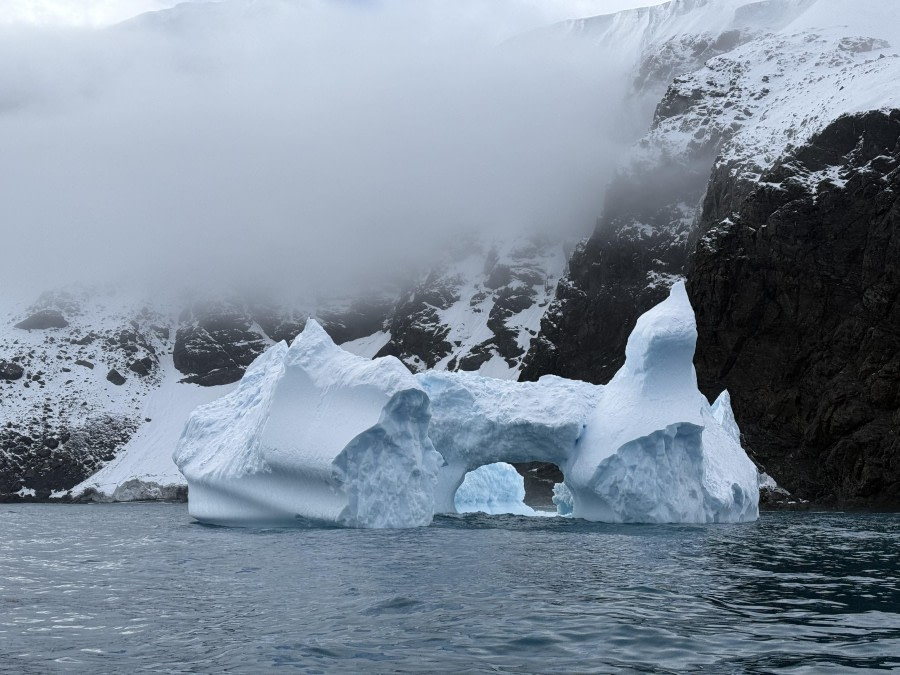
It was also our first real taste of Antarctica. A glacier came right down to the sea next to the point, and the rocks were full of chinstrap penguins, the ones with the thin black strap under the chin. A few shot through the water right next to the boats. Then the drivers took us out between the icebergs. Some were huge and blocky, some had arches worn through them, and some of the smaller pieces were so blue they almost looked lit from inside. We could have stayed out there a lot longer.

Back on board we had breakfast, and then Isabelle gave her lecture on Antarctic krill. They’re small, but almost everything down here depends on them, from penguins and seals to the big whales.

In the afternoon our expedition leader told us about the time he spent living and working at Scott Base, New Zealand’s station on Ross Island. He covered the work, the people and what it’s like to live on the ice for months.

After recap and dinner, Sasha told us about his first Antarctic expedition. Plenty of us went to bed thinking about our own first day down here, and about what tomorrow will bring.

Day 16: Cierva Cove, Portal Point

Cierva Cove, Portal Point
Date: 18.11.2026
Position: 63°58.3'S / 60°49.5'W
Wind: W6
Weather: Partly overcast
Air Temperature: 0

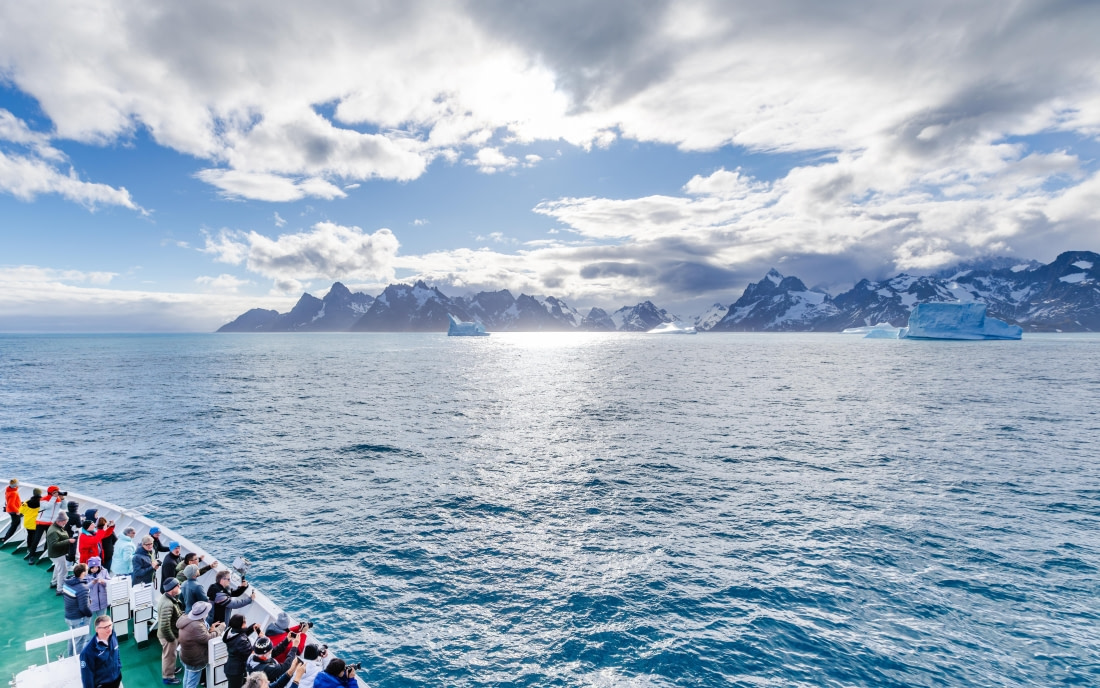
We spent the morning cruising through Cierva Cove aboard Hondius. From the decks, we had plenty of time to take in the spectacular scenery and observe the ice more closely as we passed. A couple of seals were resting on the floating ice, giving us a lovely opportunity to watch them from the ship.

The passage from Cierva Cove to Portal Point was a highlight in its own right. Along the way, we spotted several humpback whales, and there was certainly no shortage of things to look at, with whales surfacing in the water and impressive mountains rising along the coastline. The mountains of the Antarctic Peninsula were shining brightly in the sunlight, and so were the smiles on our passengers’ faces!

Lunch was served at 12:30, and at 13:45 we gathered for our daily recap. By 14:30, the first passengers were already boarding the Zodiacs for the afternoon's activities. Our destination was Portal Point, a narrow, snow-covered headland at the entrance to Charlotte Bay. After spending the morning admiring the Peninsula from the ship, we now had the opportunity to set foot on the Antarctic mainland.

The Blue Group went ashore first, while the Red Group explored the waters around the headland by Zodiac. Seeing the ice from a small boat offered a completely different perspective after our morning aboard Hondius. One of the highlights of the cruise was spotting a leopard seal resting on the ice.

At 16:15, the groups swapped activities. Those returning from the Zodiac cruise took their turn ashore, while those who had just walked on the continent headed out to explore Portal Point from the water.

That evening, we gathered on the open aft deck on Deck 5 for an Antarctic barbecue. With music playing, the deck soon turned into a dance floor. Just a few hours after setting foot on the Antarctic mainland, we were already dancing the evening away off its coast!

Day 17: Neko Harbour, Danco Island

Neko Harbour, Danco Island
Date: 19.11.2026
Position: 64°51.05'S / 62°35.2'W
Wind: VAR
Weather: Snow
Air Temperature: 0

It was a cold and snowy day, but nothing could stop us from exploring the breathtaking beauty of Antarctica!
Our morning adventure began with a landing at Neko Harbour, where we were greeted by an incredible sight. A group of humpback whales was busy feeding in the surrounding waters, giving our guests the wonderful opportunity to enjoy some close-up whale watching from the Zodiacs. It was truly a special experience to see these magnificent giants in their natural habitat.

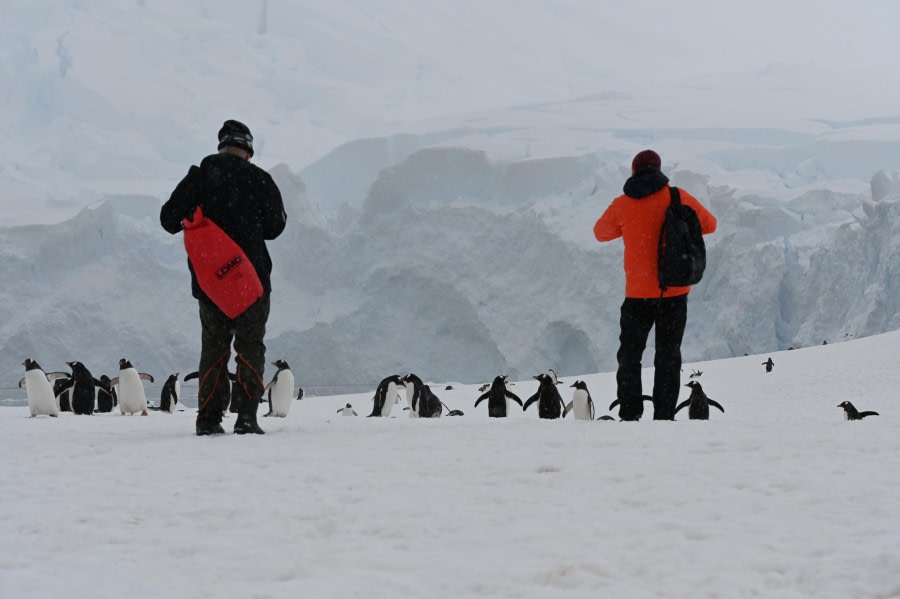
At the landing site, numerous Gentoo penguins were going about their daily routines. Although making our way up the snow-covered hill was certainly not the easiest task, the effort was well worth it. Watching some of the penguins sliding and gliding down the snowy slopes was an absolute delight and brought plenty of smiles to everyone's faces.

Just as we were approaching the end of our operation, an enormous ice calving took place nearby, sending a huge wave across the water. What a spectacular and unforgettable sight! Thankfully, everyone was safe, but it was certainly a powerful reminder of the ever-changing nature of the Antarctic environment.
Despite the snowy conditions and the fact that we all returned to the ship with rather wet clothes, everyone had a fantastic morning filled with memorable encounters and extraordinary scenery.

After a short lunch break, it was time to head out for our afternoon expedition. This time, we made our way to Danko Island, where a surreal landscape awaited us. The area was surrounded by enormous icebergs and scattered brash ice, creating a breathtaking scene that almost made us feel as though we had landed on another planet.

We spent some wonderful time cruising around this spectacular area by Zodiac, taking in the magnificent ice formations and enjoying encounters with some whales and seals sharing the same waters. It was lovely to cruise alongside these curious neighbours and say a little hello along the way.

At the landing site, the expedition team had prepared a trail to help us make our way up the snowy hill. Once ashore, we were welcomed by plenty of Gentoo penguins going about their business. And just when we thought we had seen it all, a surprise visitor appeared! A lone Adélie penguin suddenly showed up at Danko Island, seemingly a little lost but happy to come ashore and say hello. What a lovely unexpected encounter!

Although it was another wet and snowy afternoon, not a single complaint could be heard. After all, snow and Antarctica are simply the perfect combination! The weather only added to the magic of the day, making the landscape even more enchanting.

Back onboard, everyone enjoyed a lovely buffet dinner before calling it an early night. With another exciting day of Antarctic exploration waiting ahead, it was time to get some well-deserved rest and recharge for our next adventure.

Another beautiful day in Antarctica, filled with whales, penguins, spectacular ice, and memories to last a lifetime!

Day 18: Whalers Bay, Yankee Harbour

Whalers Bay, Yankee Harbour
Date: 20.11.2026
Position: 62°59.7'S / 60°33.7'W
Wind: NW5
Weather: Overcast
Air Temperature: 0

Our 6:45 am wake-up call gave us time to add a warm layer and head out on deck for our approach to Deception Island. At around 7:00 am, Hondius sailed through Neptune’s Bellows, the narrow entrance to the island’s flooded volcanic caldera. The channel is only about 230 metres wide, with Ravn Rock lying just 2.5 metres beneath the surface. As the bridge team carefully guided us through, the waters inside the caldera opened up ahead. Quite a place to find ourselves at breakfast time!

At Whalers Bay, the Blue group went ashore while the Red group headed out on a Zodiac cruise. The morning’s packing list included something unusual for an Antarctic landing: swimwear. It was time for the polar plunge, giving those brave enough the chance to swim in Antarctic waters inside a volcano!

Back aboard Hondius, we enjoyed lunch at 12:30 pm before gathering in the Observation Lounge at 13:45 for our daily recap. Our afternoon destination was Yankee Harbour, a sheltered bay on Greenwich Island once used by sealing vessels. This time, the Red group went ashore first while the Blue group explored by Zodiac.

On land, a particularly unusual gentoo penguin caught our attention. Its entire body was white, apart from its familiar black head, making it stand out clearly from the typically coloured birds nearby.

There was also a lovely surprise out on the water. Albert, our hotel manager, and Ralf, our chef, had taken their own Zodiac and were serving guests hot chocolate during the cruise. Seeing two familiar faces from aboard Hondius was a welcome treat, made even better by a warm drink.

Over dinner, guests shared stories from the day's adventures: a white-bodied gentoo, hot chocolate delivered by Zodiac and a morning swim inside Deception Island’s volcanic caldera. As Hondius headed towards open sea, we were reminded to check our cabins, secure loose belongings and close drawers firmly in preparation for the passage ahead.

Day 19: At Sea, Drake Passage

At Sea, Drake Passage
Date: 21.11.2026
Position: 60°43.05'S / 61°42.3'W
Wind: NW5
Weather: Fog
Air Temperature: +1

We are sailing through one of the most legendary stretches of water on Earth. Following an unforgettable journey through the frozen wilderness of the Antarctic Peninsula, our ship is now heading north towards Ushuaia, at the southernmost tip of South America. As the icebergs gradually disappear and the rolling swells of the open ocean take over, we find ourselves crossing the historic passage separating Antarctica from Cape Horn.

Although these waters are widely known as the Drake Passage, their discovery is a fascinating chapter in maritime history. In January 1526, more than 50 years before Sir Francis Drake reached the region, Spanish navigator Francisco de Hoces, commanding the San Lesmes during the Loaísa expedition, was blown south by a violent storm near the eastern entrance to the Strait of Magellan. Reaching approximately 55° south, he encountered the open ocean beyond Tierra del Fuego, becoming the first European known to have discovered this connection between the Atlantic and Pacific Oceans. Spanish historical records and maps subsequently referred to these waters as the Mar de Hoces (Sea of Hoces).

Interestingly, in 1578, Francis Drake was also driven south by fierce winds after leaving the Strait of Magellan. However, he turned north again and never actually crossed the passage. Despite this, English cartographers eventually adopted his name for the region, and the Drake Passage became the internationally recognised name in much of the English-speaking world. Today, sailing these waters offers a remarkable connection to the early explorers who faced the same unpredictable winds and challenging conditions.

Life aboard remains just as engaging as our time in Antarctica. The expedition team organised an excellent programme of presentations in the Observation Lounge, beginning with Saskia's fascinating lecture on the birds of the Southern Ocean. With giant albatrosses and petrels gliding effortlessly alongside the ship, her presentation came to life before our eyes. She explained the remarkable adaptations that allow these seabirds to travel thousands of miles across the ocean, highlighting species such as the wandering albatross, Cape petrel and southern giant petrel, as well as the importance of protecting their fragile habitats.

Later, Marcelo introduced a special presentation featuring Romanian ultramarathon runner Maria Danila, who shared her extraordinary experience of running 100 kilometres in Antarctica on 8 November 2026, alongside Admiral Marian Savulescu of the Romanian Navy, who visited Antarctica in 2017. Maria's account of enduring sub-zero temperatures, fierce winds and treacherous icy terrain was truly inspiring, demonstrating the extraordinary strength and resilience of the human spirit.

Anthonie then delivered a thought-provoking lecture on climate change. Having recently witnessed Antarctica's magnificent glaciers, pristine snowfields and fragile wildlife, we could all appreciate the importance of his message. He discussed the rapid warming of the Antarctic Peninsula, the retreat of ice shelves and the wider consequences for our oceans and global climate. He also reminded us of our responsibility to share what we have witnessed and support the protection of this extraordinary environment.

During the daily recap, Juan shared useful recommendations for Ushuaia, including local restaurants, regional specialities, museums and activities. Koen concluded the programme with an informative presentation on the Antarctic Treaty System and the challenges facing its future.

As we continue north towards Tierra del Fuego, the combination of maritime history, extraordinary wildlife and inspiring presentations has made this sea crossing a memorable part of our expedition. We eagerly await our first glimpse of Ushuaia's surrounding mountains, carrying with us unforgettable memories of the White Continent.

Day 20: At Sea, Drake Passage

At Sea, Drake Passage
Date: 22.11.2026
Position: 56°27.45'S / 65°30'W
Wind: NNW
Weather: Sunny
Air Temperature: +6

With South America slowly coming into view, we enjoyed our last full day at sea aboard the Hondius. The ship continued to roll as we made our way towards Ushuaia, giving everyone a chance to slow down, catch up and enjoy the final moments on board.

Sid kicked off the morning with a lecture on diving at the End of the World, sharing some fascinating insights into the challenges of diving in these remote and often extreme waters. Matt followed with an introduction to Oceanwide's cruises in both polar regions, giving everyone a glimpse of where their next adventure might take them.

After lunch, Valeria got everyone involved in her workshop on how to prepare the perfect mate, introducing us to this much-loved South American tradition.

The highlight of the day came in the evening when we joined the Captain and Expedition Team for Captain's cocktails and a briefing about tomorrow's disembarkation. Sasha then presented her voyage slideshow, which took us right back to the beginning of our journey. As the photos appeared on screen, we revisited the incredible places we'd explored, the wildlife we'd encountered and the many moments we'd shared along the way. It was a lovely, emotional trip down memory lane and a reminder of just how much we'd experienced together over the past three weeks.

Afterwards, we headed to dinner, knowing that tomorrow would bring our time on the Hondius to an end.

Day 21: Disembarkation, Ushuaia

Disembarkation, Ushuaia
Date: 23.11.2026
Position: 54°48′34.6″S / 68°18′05.5″ W
Wind: None
Weather: Sunny
Air Temperature: +6

After 21 incredible days exploring the Falkland Islands, South Georgia and Antarctica, we finally arrived in Ushuaia, bringing our expedition aboard the MV Hondius to an end.

We started the morning with breakfast on board before getting our luggage ready for disembarkation. Once the port agent cleared the ship, guests began making their way ashore, with transfers arranged for those heading straight to the airport.

Eventually, everyone was able to disembark and say their final goodbyes. It was time to leave behind the ship that had been our home for the past three weeks and take with us the memories of an unforgettable adventure.

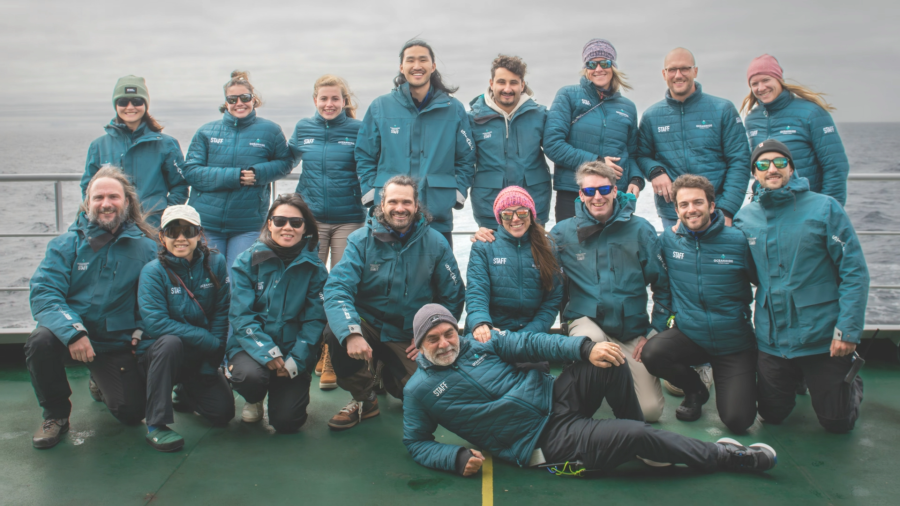
From incredible wildlife encounters and spectacular landscapes to the friendships made along the way, this voyage certainly gave us plenty to remember. A big thank you to all our guests, the expedition team and crew for making these past 21 days so special.

We wish everyone a safe journey home and hope our paths cross again on another adventure!

Details

Tripcode: HDS21-26
Dates: 3 Nov - 23 Nov, 2026
Duration: 20 nights
Ship: m/v Hondius
Embark: Puerto Madryn
Disembark: Ushuaia

Have you been on this voyage?

Aboard m/v Hondius

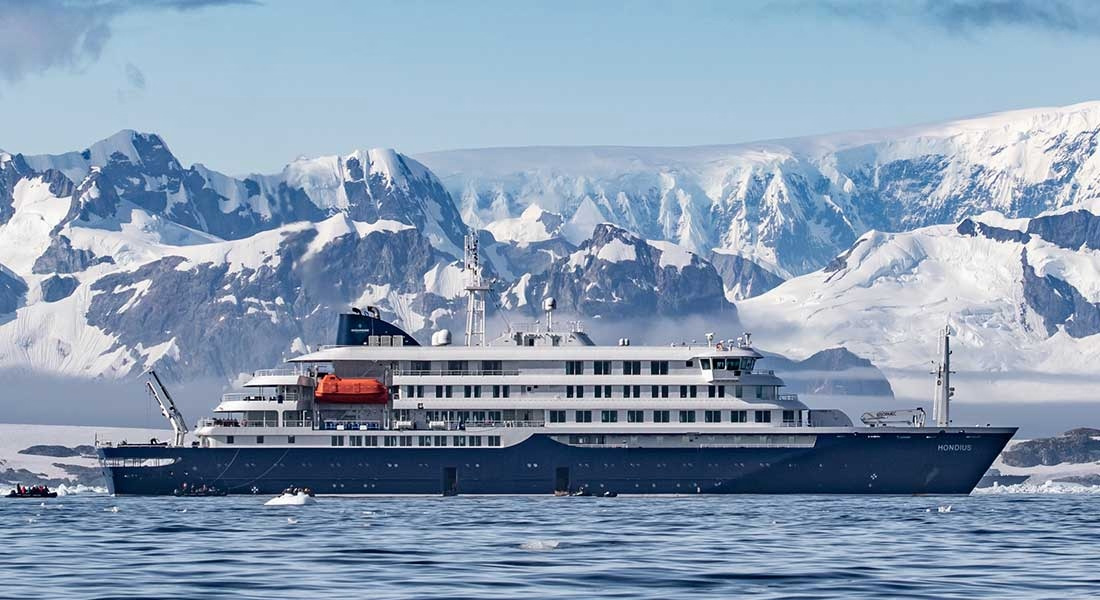
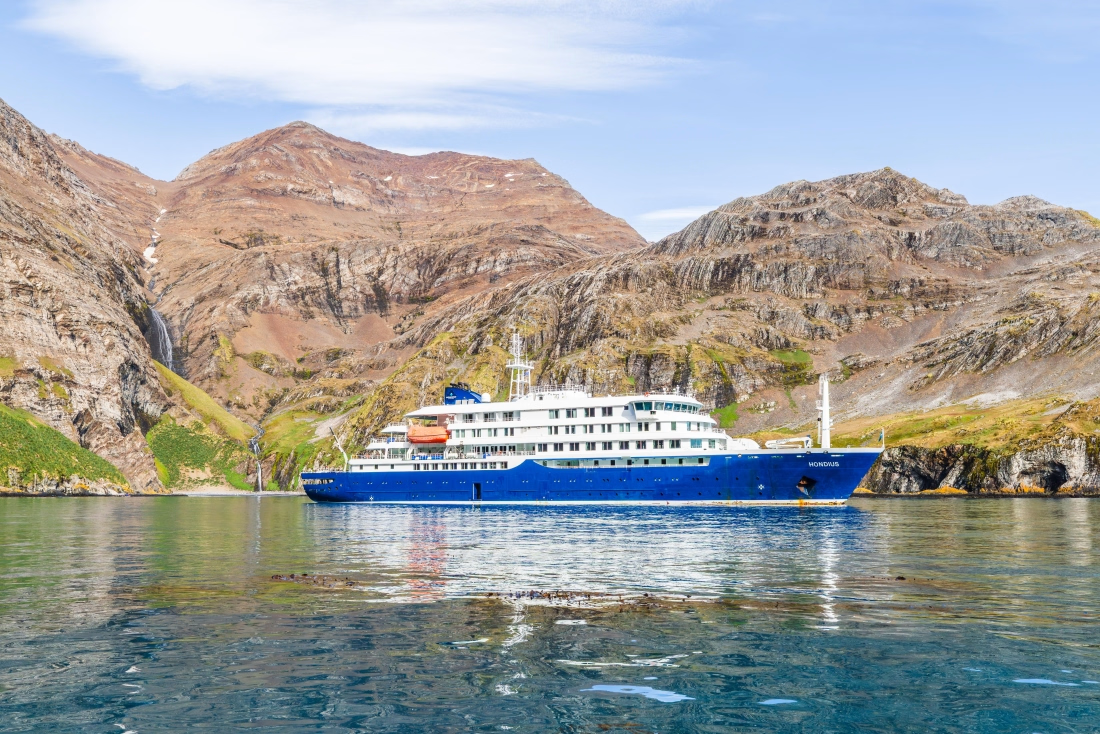
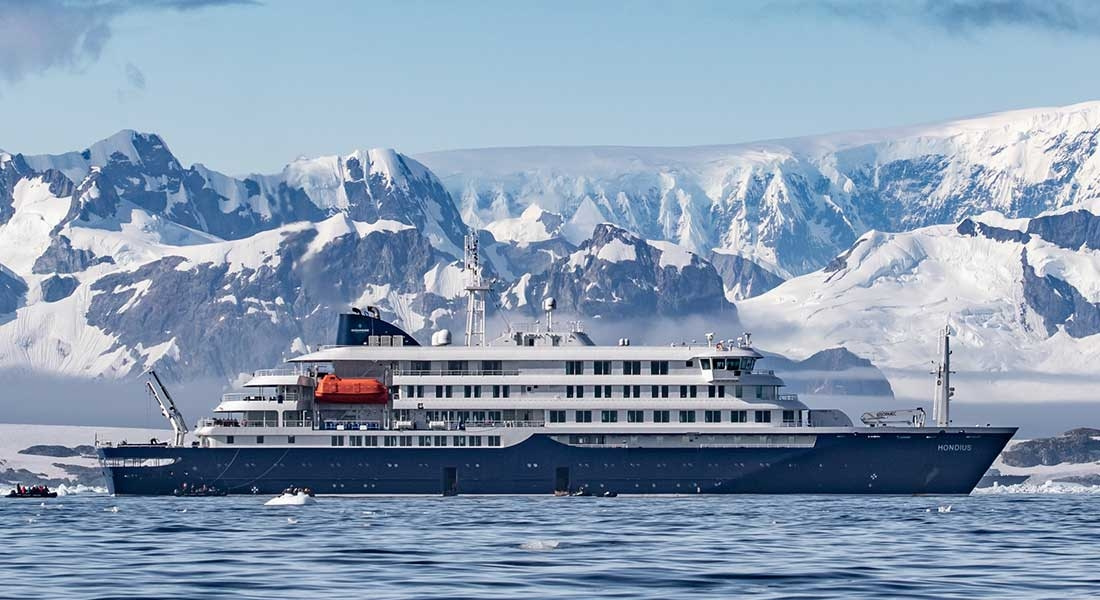
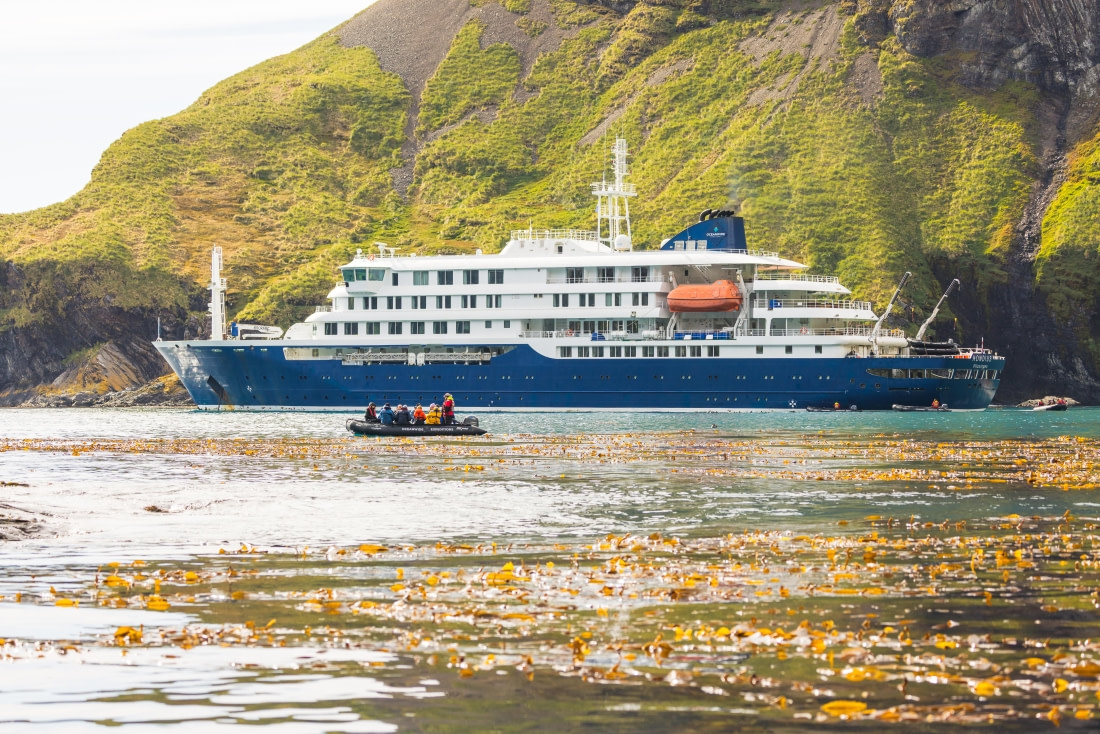
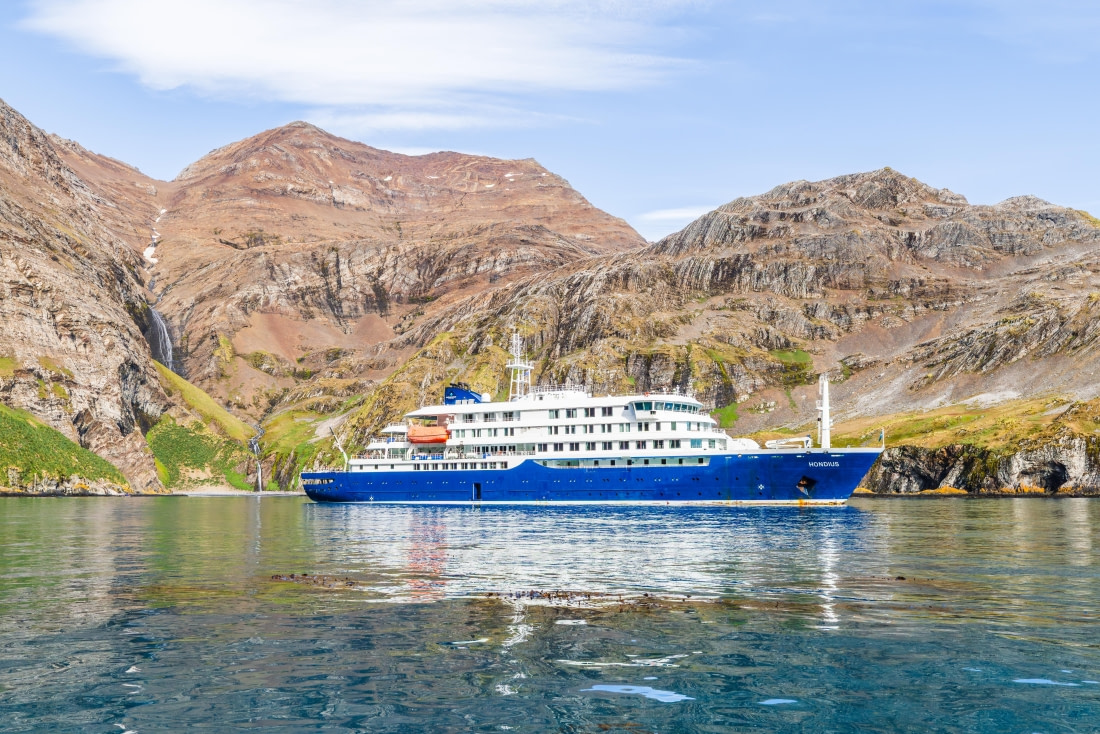
Hondius is the world’s first-registered Polar Class 6 vessel and was built from the ground up for expedition cruising.

More about the m/v Hondius »
Loading