Icebergs: meaning, definitions, facts
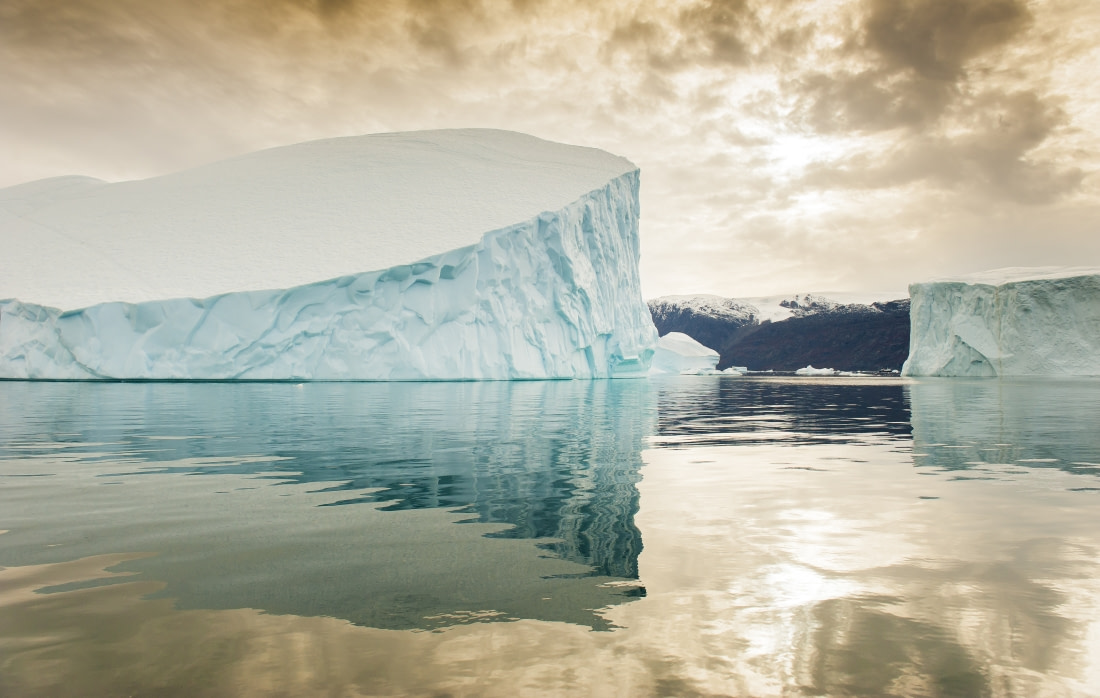
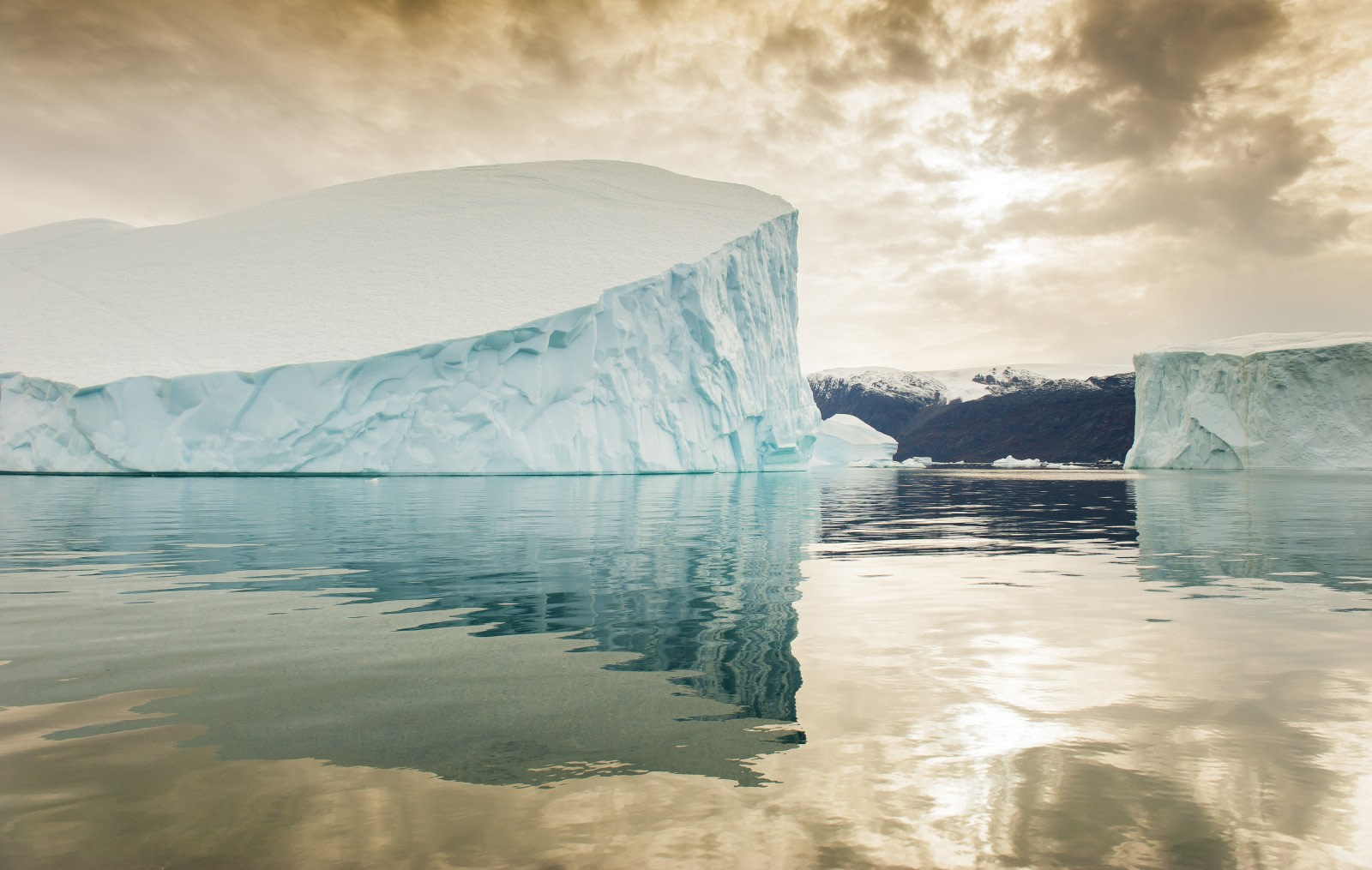
Few pieces of natural phenomena are more linked to Antarctica and the Arctic than icebergs, chunks of floating freshwater ice whose bulk (around 90%) lies hidden below the surface of the water. They are formed when pieces of ice from ice shelves and glaciers break off, or calve, falling into the water. The natural buoyancy of icebergs comes from the air bubbles trapped inside them, which may be tens of thousands of years old. Icebergs are not to be confused with ice floes, which are flat and smaller sheets of broken sea ice.

Arctic and Antarctic icebergs
Icebergs occur in both the Arctic and Antarctica, though each region produces slightly different icebergs. Arctic icebergs tend to be smaller and less numerous, and their shape is usually more irregular than Antarctic icebergs. This is thought to be due to the rugged and creviced topography on which most Arctic glaciers form.
Antarctic icebergs, by contrast, are generally larger and can sometimes weigh several billion tons. In fact, they can be the size of small islands. (Iceberg B-15 was larger than Jamaica.) Large tabular icebergs occur only in Antarctica, and many smaller icebergs break off of them.

Antarctica’s iceberg behemoths
Though icebergs occur in both the far north and far south, Antarctica is known to produce the real giants. In July 2017, the Larsen C Ice Shelf, the fourth largest ice shelf in Antarctica, produced one of the most colossal icebergs ever witnessed in the modern world: A68, larger than the state of Delaware and twice as large as Luxembourg.
Years before this, in the spring of 2000, the B-15 iceberg broke off from Antarctica’s Ross Ice Shelf. B-15 remains the largest berg ever recorded. At its most massive, it was larger than the island of Jamaica, boasting 11,000 square km (4,200 square miles) of surface area, a width of 37 km (23 miles), and a length of 295 km (183 miles).
Before either of these icebergs formed, the tabular A23a iceberg broke off the Filchner–Ronne Ice Shelf in 1986. It remained stuck on the seabed for many years, but in 2020 it finally started to move. As of November 2023, A23a was spotted passing the northern tip of the Antarctic Peninsula and heading toward the Southern Ocean.

Icebergs, ice shelves, glaciers, and global warming
When climates rise, ice shelves and glaciers calve at a faster rate and produce more icebergs. Many scientists blame human-caused global warming, claiming this accelerated calving is the result of carbon dioxide and other pollutants released by industry. Others argue that the breaking off of giant icebergs is not necessarily a harbinger of worse ice conditions to come.