Blog
Type
Region
Destination
-
Show all
Ship
Highlights
-
Show all
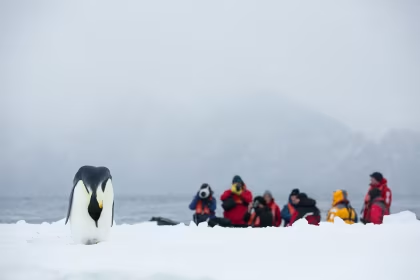
Five Reasons You Should Cruise the Ross Sea Immediately
In our quest for the little-known holiday destination (that’s still popular enough to have its own fully developed spa and gift shop), we travelers sometimes overlook the truly underrated gems this planet has hidden up its sleeve.
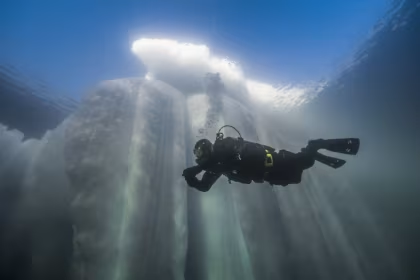
Why a Polar Diving Cruise Should be Your Next Great Decision
Not so very long ago, all you had to do to qualify as a thrill-seeker was hop a ship to the polar regions and make it back with all your fingers – or your life, if you weren’t picky.
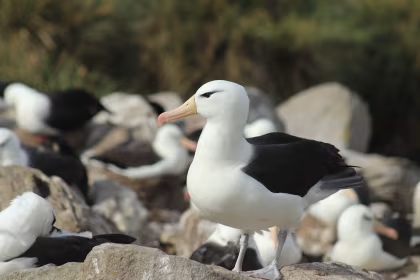
15 Falklands Bird Photos
Few places offer as unique and abundant a selection of birds, particularly seabirds, as the remote sub-Antarctic archipelago of the Falkland Islands. With this in mind, we’ve compiled 15 images of the most photogenic birds in the Falklands. Some were taken by you, some by us, but every one of them was lovingly photographed during our exciting Falkland Island voyages.
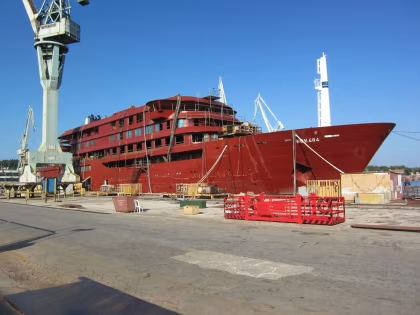
The First Float of m/v Hondius
On the morning of Saturday, June 9, a newly constructed polar expedition cruise vessel slid down the timber-and-steel slipway of a sprawling Croatian shipyard, plunging into the pale blue waters of the rocky Adriatic coast. The launch of this vessel, one of 28 new expedition ships currently on order, might have seemed commonplace, even insignificant, to the world at large.
A Diving Dream Fulfilled
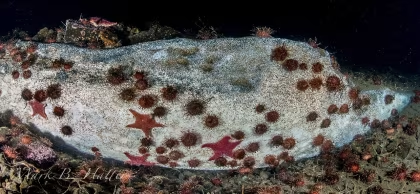
Last January, Mark Hatter accomplished a dream he’d been training two years to fulfill. Booking his berth aboard our m/v Ortelius and making the long flight to Ushuaia, Argentina, he and two of his friends sailed down the famous Drake Passage, bound for Earth’s southernmost continent.
Polar Perfectionism: Interview with Captain Levakov
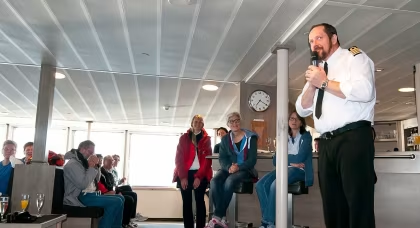
Turning our attention to the control room, we steal a few informative (and highly entertaining) moments with one of our most seasoned polar captains, Evgeny Levakov. A veteran of the colder side of nautical life, Captain Levakov has been piloting ships since 2002, leading everything from week-long Arctic cruises to expansive 33-day Antarctica voyages. And among the many things he’s learned in all those berg-bejeweled years is that polar captaining isn’t a gig for gamblers.
Humpback Whales: the Stars of the Western Antarctic Peninsula
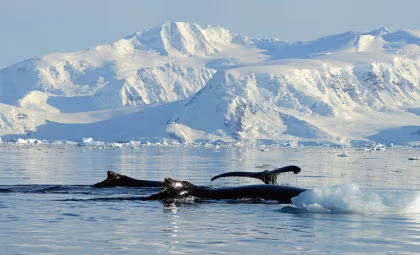
The marine ecosystem of the West Antarctic Peninsula (WAP) extends from the Bellingshausen Sea to the northern tip of the peninsula. The WAP includes the Antarctic Sea Ice Zone, a very productive system that supports large stocks of marine mammals, birds, and Antarctic krill. One of the stars of this region, which you can see on your whale-spotting Antarctica cruise, is the humpback.
A New Flag for a Veteran Vessel, Ortelius
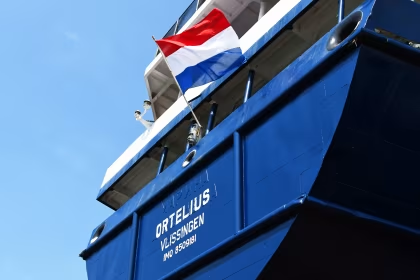
Vlissingen, located in the south western part of the Netherlands, has been Oceanwide Expeditions “Homeport” since the company was established more than 20 years ago. When our vessel Plancius was being built, there was no hesitation which name should be mentioned as homeport for the vessel and thus since it’s delivery in 2009 Plancius is flying the Dutch flag and has Vlissingen on its stern as being its homeport.
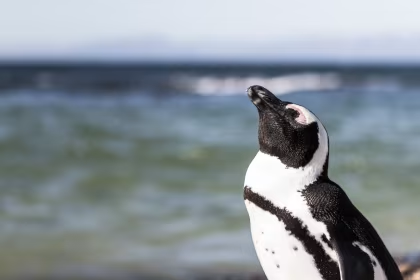
How Arctic Wildlife Differs from Antarctic
While there are definite similarities between the north and south poles, at the same time, the two regions are vastly different. Though both are cold and dry, each pole is unique in its terrain and climate. While the Antarctic is harsh and inhospitable, home to only two native vascular species of plants, the Arctic tundra can support a wider range of fauna with its warmer temperatures and a greater diversity of plant life. Here are just some of the different animals that you can expect to see in the Arctic as opposed to the Antarctic.
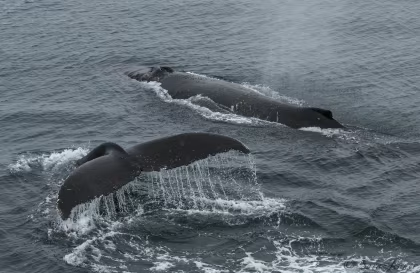
Polar Marine Visitors: the Whales of Antarctica and the Arctic
Whales are the world’s largest mammals, found in the Arctic and Antarctica. This article covers some of the major species you may see on voyages to these remarkable areas.
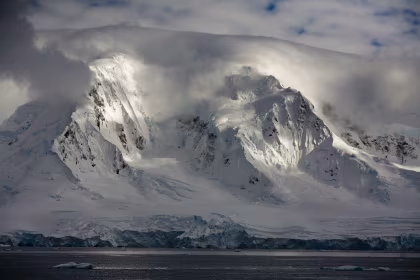
The Ancient Fossil Forests of Antarctica
Over a hundred years ago, Robert Falcon Scott’s expedition to Antarctica discovered fossils of plants on the Beardmore Glacier, less than 500 km (310 miles) from the South Pole. Edward Wilson, who was the expedition’s chief scientist, recorded the findings in his diary, stating that “most of the bigger leaves were like beech leaves in shape and venation.”
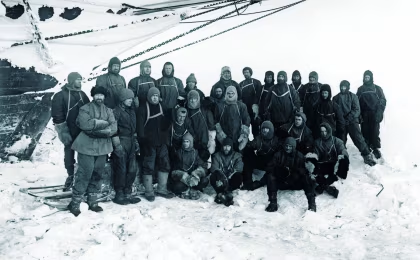
Retracing the Steps of Antarctica’s Early Explorers
For a long time in human history, there was a belief that a large continent must lie at the southern end of the Earth to provide balance to the known lands in the Northern Hemisphere. By the 15th century, many European maps had even placed a sizable landmass called Terra Australis in the far south, though the real continent was to remain undiscovered for quite some time.
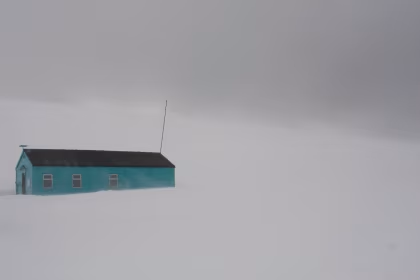
The Research Stations of Antarctica and the sub-Antarctic
Numerous research stations operate throughout the Antarctic and sub-Antarctic, engaged in all manner of scientific inquiry. This article will cover the stations under the management of the British Antarctic Survey (BAS), which conducts year-round terrestrial and atmospheric research in some of the most compelling polar locations on Earth.
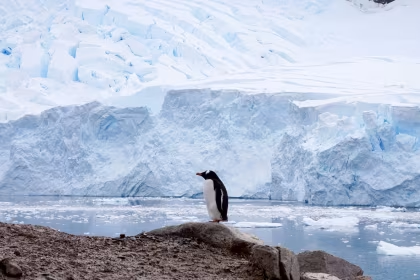
Top 10 Polar Research Stories of 2017
Before the first month of the new year becomes a thing of distant memory, and with it everything that happened the year before, let’s take a quick backward glimpse at the defining polar research moments of 2017.
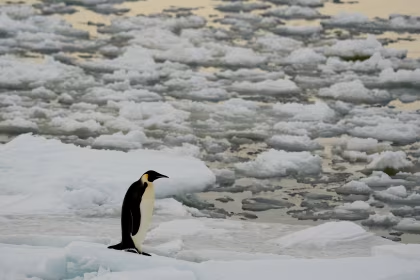
The Ways and Wildlife of the Weddell Sea
The Weddell Sea is located off the coast of Antarctica, at the very south of the Atlantic. Its geographical location is 75 degrees south and 47 degrees west, and it covers the Argentine, Chilean, and British territories of Antarctica. The harsh weather conditions and abundant pack ice have made the Weddell Sea difficult for people to access, but modern icebreaker ships have started to open up this area to explorers.
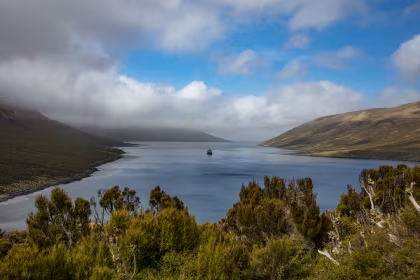
Visiting the Nearly Unknown: New Zealand’s Campbell Island
Campbell Island is located south of Bluff, New Zealand. It's best known for its flora and fauna. Read on to discover which wildlife you can find here.
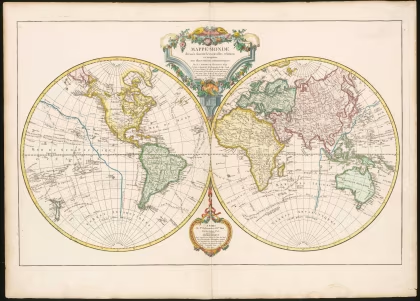
The History of Antarctica in Maps
Long before human eyes ever beheld Antarctica, the ancients were convinced it existed – or at least something like it. Ptolemy, a Greco-Roman astronomer who lived around 100 – 170 CE, thought that an enormous far-southern landmass must exist in order to provide a planetary counterweight to the large continents of the north.
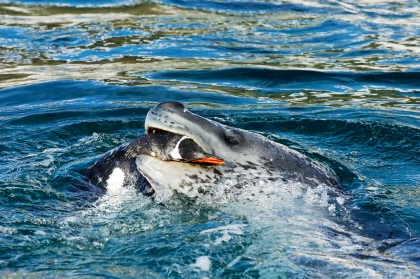
The Wildlife of Antarctica’s Seas and Skies
Antarctica is one of the most pristine environments on Earth, home to whales, penguins, seals, and birds, providing nature lovers with a treasure trove of wildlife memories to take back home.
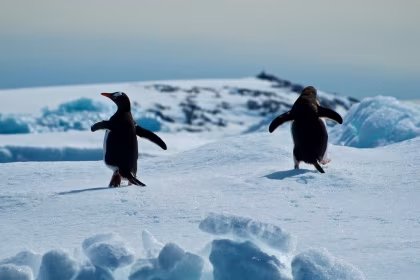
Eight Ultimate Antarctica Adventures
Antarctica has adventure in its bones. Long before most travelers even reach the continent, they have to cross the Drake Passage, an oft-tumultuous waterway considered by many a hallmark of high adventure in itself. Once you do reach the Antarctic shores, the variations of landscape and wildlife are as multiform as the activities you can pursue there. While not all of these activities can or should be shoehorned into a single article, this piece will give you a survey of the top eight. Like everything in the polar regions, these activities are subject to weather conditions – and your own threshold for adventure.
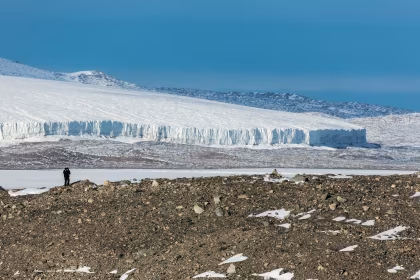
The Secret Life of Glaciers: How They Form, Move, and Melt
One of the greatest natural sights you’ll ever see on an Arctic or Antarctic adventure is glaciers. These gigantic bodies of ice have been slowly but steadily creeping their way from the mountains to the oceans for countless years, like great rivers of ice – both a time capsule and indicator of our rapidly changing environment.
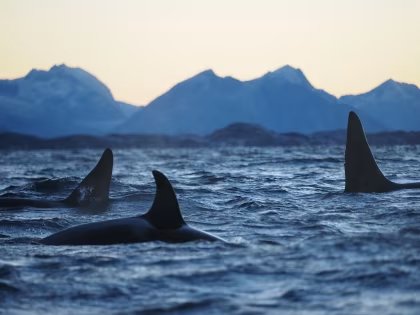
Orcas of the Polar Seas
The orca, or killer whale as it is also known, is the top marine predator and possibly the most widespread vertebrate on Earth. It is found in all the world’s oceans, including the Antarctic and Arctic regions.
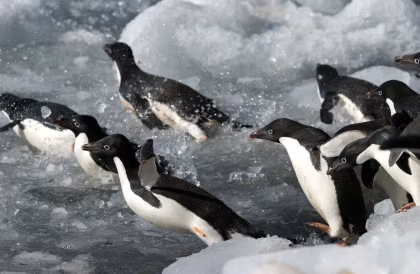
Adélie Penguins: the Little People of the Antarctic
Described as “an object of endless pleasure and amusement” by Apsley Cherry-Garrard, survivor of Robert Falcon Scott’s ill-fated Terra Nova expedition to the South Pole, the Adélie penguin stands with the regal and iconic emperor penguin as one of only two penguin species found on mainland Antarctica. Though their blue-black bodies, sooty orange beaks, white bellies and white-rimmed eyes cannot compare to the sleek, long beaks and yellow-trimmed necks of the aptly-named emperor penguin, Adélie penguins make up for the plainness of their ornamentation with a lively, playful nature, never failing to showcase their unique and charming personalities.
