Blog
Type
Region
Destination
-
Show all
Ship
Highlights
-
Show all
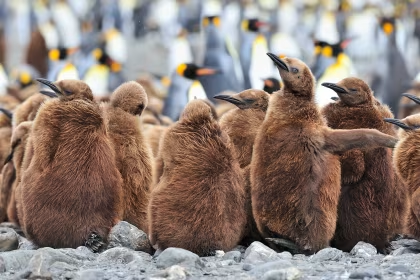
Oceanwide Expeditions Birding Contest
Our 2017 Antarctic Birding Competition has come to a close with over 150 feather-oriented entries. We’re delighted with the entries we received and want to thank everyone, both contestants and voters, for participating. We thought we’d take a moment and make sure everyone who participated is up to speed about what’s been happening while you wait for the Grand Prize announcement.
Life migrating through the Polar Front
Since James Cook’s second voyage in 1772-1775 to Antarctica, which saw the first descriptions of Antarctic animals, scientists have progressively revealed the composition of the Antarctic and sub-Antarctic region’s biodiversity. Since then scientist have undertaken numerous expeditions and scientific research projects to understand the unique continent’s ecosystems.

Five of History’s Greatest Polar Explorers
Today’s visitors to the Polar regions follow in the footsteps of some of the most famous explorers in history. Here’s a list of 5 great explorers to brave the harsh lands of the Arctic and Antarctica.
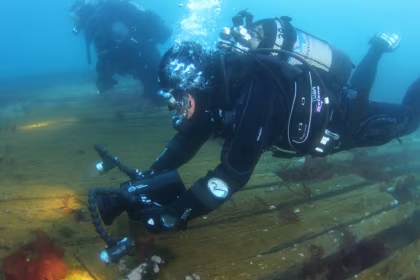
Wreck Diving in Antarctica
Scuba diving in Antarctica is a unique experience, no doubt about it. How many other places can you swim beneath icebergs and possibly see a penguin into the bargain? But that's not all Antarctic diving has to offer. There are shipwrecks, too. And with us, you can go wreck diving to one of them.
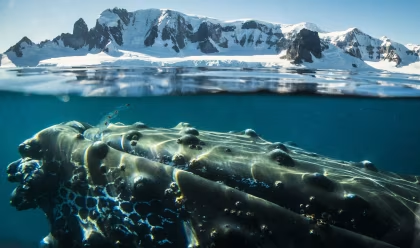
Baleen Whales – The Gentle Giants of the Ocean
There are many species of baleen whales: 15 in total. In this blog we will tell you much more about baleen whales, so you can expand your knowledge.
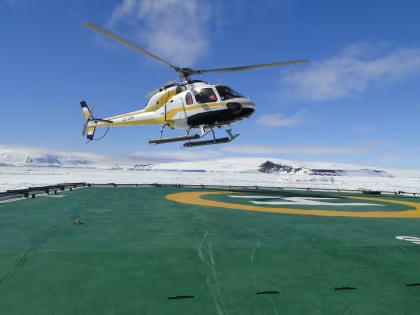
A helicopter flight over Antarctica
Dutch journalist Gemma Venhuizen embarked on the m/v Ortelius during the Weddell Sea cruise ‘In search of the emperor penguins – including helicopters’. Flying over the Antarctic Peninsula was a dream coming true.
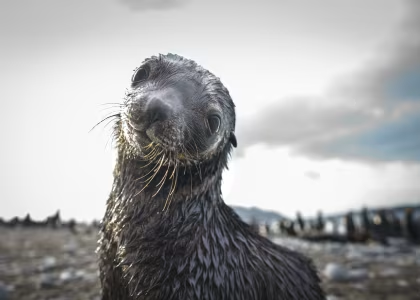
The secrets of Antarctic seals revealed
There live only six species of seals in the Antarctic: Southern Elephant Seals, Antarctic fur seals, crabeater seals, leopard seals, ross seals and weddell seals. While we know of them, there are many secrets of their lives that we have yet to discover.
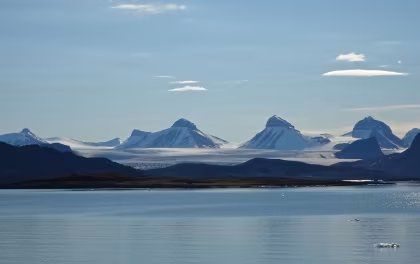
The Arctic Borderland of Kongsfjorden, Svalbard
Kongsfjorden is a glacial fjord in Svalbard that is home to a rich mixture of Arctic flora and fauna.
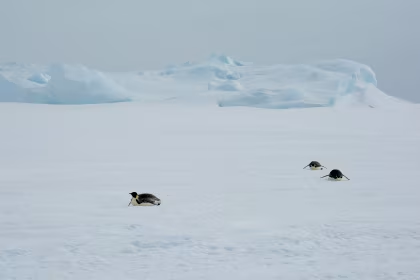
Encounter with the emperor penguin in Antarctica
Dutch journalist Gemma Venhuizen embarked on the MV Ortelius during the Weddell Sea cruise 'In search of the emperor penguins'. She had several encounters with this majestic penguin species - both from the sea and from the air.
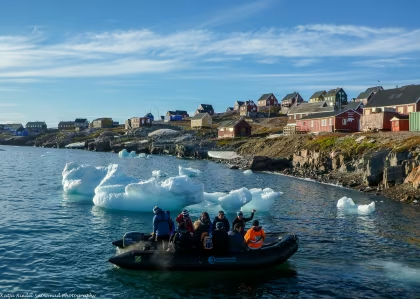
Scoresby Sund: the Greatest Greenland Adventure
Would you like to discover a world of towering ice spires, magnificent glaciers and breathtaking fjords? There is such an adventure for you in Eastern Greenland. Few places can make the claim to be the biggest, the grandest or the most inspiring but Scoresby Sund (or Sound) is one of those remarkable locations.

The world is changing for Greenland's native Inuit people
You may know them as ‘Eskimos’, but the people of the Arctic are officially called the Inuit. Historically, they were hunters in the truest sense. For hundreds of years they survived the world’s harshest conditions, living off their prey of whales, seals, polar bears, muskoxen, birds, fish and caribou. This has always been their way of life. One that is now changing.
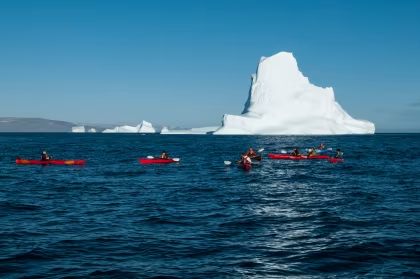
Kayaking In Greenland
The kayak is a quick, agile boat, invented by the Inuit, the native people of Greenland. For centuries, perhaps thousands of years these skilled hunters and fishermen used this light, mobile platform to hunt their prey. They still do.
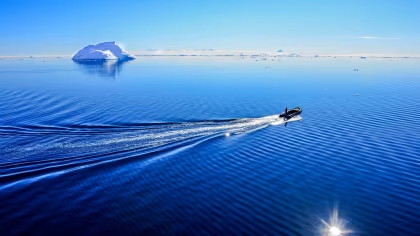
Oceanwide Expeditions presents new corporate identity
Since 1993, Oceanwide Expeditions has been taking passengers deep into the Arctic and Antarctica on voyages that focus on wildlife, nature and activities.

The First Overwintering Hut in Antarctica
In 1899, Carsten Borchgrevink and his nine crewmen became the first to overwinter in a hut in Antarctica.

What to pack for your Atlantic Odyssey voyage?
When packing, don’t weigh yourself down with too many clothes or too much gear. Select informal, practical clothing for your trip that can be worn in layers.
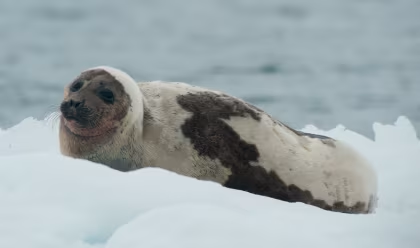
Harp seals harping on in Greenland
Harp seals are moderately sized species, averaging 1.6 metres in length and weigh around 130 kilograms. Both the males and females are of similar size and weight, with males only slightly larger than the females. They have a thick, robust body with a small broad and flat head, short narrow flippers and a narrow muzzle.
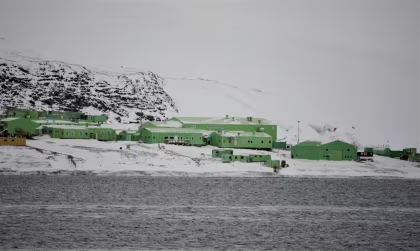
Scott Base’s 60th anniversary
The Trans-Antarctic Expedition (TAE), also known as the Commonwealth Trans-Antarctic Expedition (CTAE), aimed to complete the first overland crossing of the Antarctic Continent: a 3,473-km journey from the Weddell Sea all the way to McMurdo Sound via the South Pole. The TAE consisted of two teams: The Crossing Party, led by Dr Vivian Fuchs of Britain and the Ross Sea Party, led by New Zealand explorer, Sir Edmund Hilary. The Ross Sea Party’s role in the TAE was to support the Crossing Party’s attempt by building a base at McMurdo Sound, laying supply depots and establishing a vehicle route from the Polar Plateau through the Western mountains and back to Ross Island.
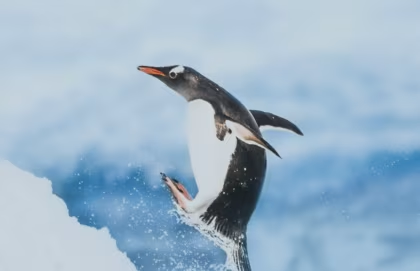
Oceanwide Expeditions’ 2016 Photo Contest Winners
It’s pretty difficult to take a bad picture when you’re on an Arctic or Antarctic cruise. You’re going to be surrounded by opportunities to shoot staggeringly beautiful landscapes, bird life, animals, the auroras, historic locations, and your friends and family taking it all in.
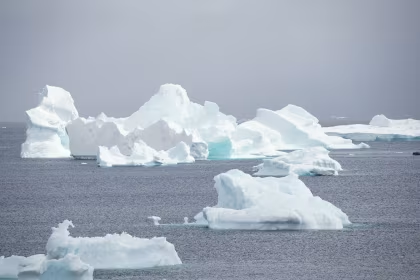
The Antarctica State of Mind
The grandeur and wonder of Antarctica is beyond words. Staring at my screen and not knowing where to start, I took a glance at the dark grey sky and chaotic streets of Shanghai. The messiness of my life now is so far from the empty silence of Antarctica.
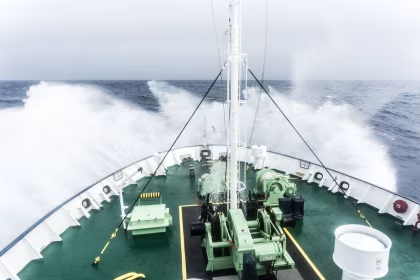
What to Expect When Crossing the Drake Passage
Positioned between the southern tail of South America and the Antarctic Peninsula's north-sweeping arm is a lively little waterway known as the Drake Passage.
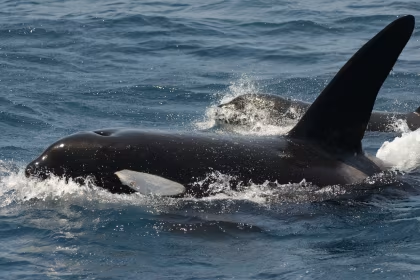
Eight Antarctic Whales You Might See During Your Expedition Cruise
They're powerful, they're beautiful, they're really, really big. Whales are a wonder of the natural world, and one of the best places to spot them is Antarctica. But which whale species might you see there?
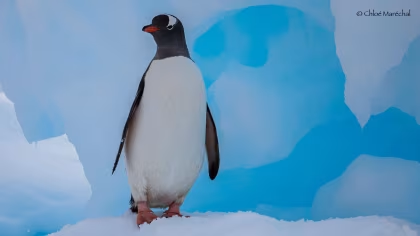
Wild in Antarctica
Recently, one of my best friends told me about a trip she was taking to Antarctica, which would fulfill her goal of travelling to all seven continents.
