Blog
Type
Region
Destination
-
Show all
Ship
Highlights
-
Show all
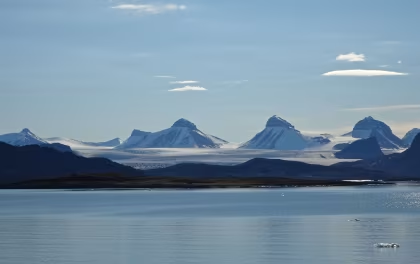
The Arctic Borderland of Kongsfjorden, Svalbard
Kongsfjorden is a glacial fjord in Svalbard that is home to a rich mixture of Arctic flora and fauna.
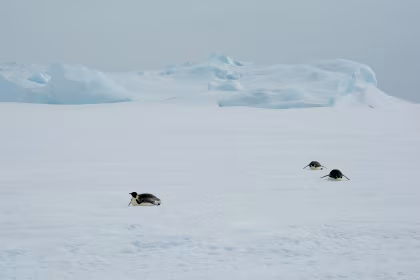
Encounter with the emperor penguin in Antarctica
Dutch journalist Gemma Venhuizen embarked on the MV Ortelius during the Weddell Sea cruise 'In search of the emperor penguins'. She had several encounters with this majestic penguin species - both from the sea and from the air.
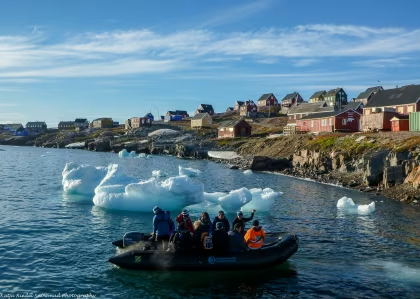
Scoresby Sund: the Greatest Greenland Adventure
Would you like to discover a world of towering ice spires, magnificent glaciers and breathtaking fjords? There is such an adventure for you in Eastern Greenland. Few places can make the claim to be the biggest, the grandest or the most inspiring but Scoresby Sund (or Sound) is one of those remarkable locations.

The world is changing for Greenland's native Inuit people
You may know them as ‘Eskimos’, but the people of the Arctic are officially called the Inuit. Historically, they were hunters in the truest sense. For hundreds of years they survived the world’s harshest conditions, living off their prey of whales, seals, polar bears, muskoxen, birds, fish and caribou. This has always been their way of life. One that is now changing.
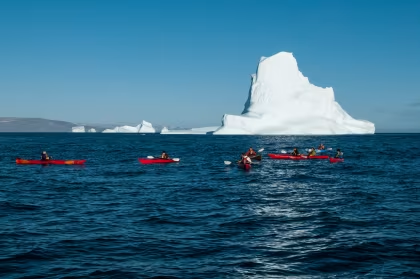
Kayaking In Greenland
The kayak is a quick, agile boat, invented by the Inuit, the native people of Greenland. For centuries, perhaps thousands of years these skilled hunters and fishermen used this light, mobile platform to hunt their prey. They still do.

The First Overwintering Hut in Antarctica
In 1899, Carsten Borchgrevink and his nine crewmen became the first to overwinter in a hut in Antarctica.
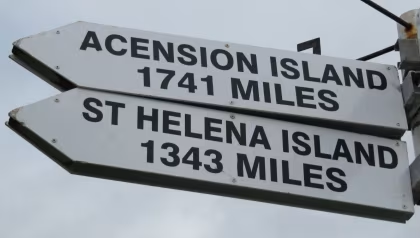
What to pack for your Atlantic Odyssey voyage?
When packing, don’t weigh yourself down with too many clothes or too much gear. Select informal, practical clothing for your trip that can be worn in layers.
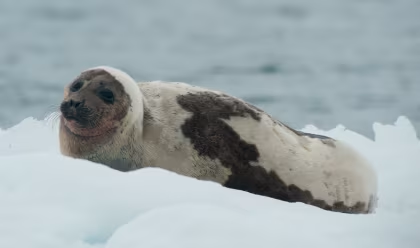
Harp seals harping on in Greenland
Harp seals are moderately sized species, averaging 1.6 metres in length and weigh around 130 kilograms. Both the males and females are of similar size and weight, with males only slightly larger than the females. They have a thick, robust body with a small broad and flat head, short narrow flippers and a narrow muzzle.
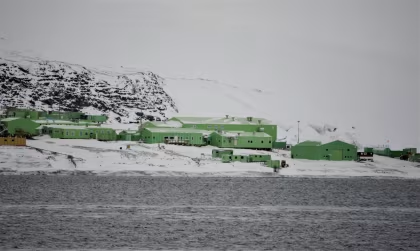
Scott Base’s 60th anniversary
The Trans-Antarctic Expedition (TAE), also known as the Commonwealth Trans-Antarctic Expedition (CTAE), aimed to complete the first overland crossing of the Antarctic Continent: a 3,473-km journey from the Weddell Sea all the way to McMurdo Sound via the South Pole. The TAE consisted of two teams: The Crossing Party, led by Dr Vivian Fuchs of Britain and the Ross Sea Party, led by New Zealand explorer, Sir Edmund Hilary. The Ross Sea Party’s role in the TAE was to support the Crossing Party’s attempt by building a base at McMurdo Sound, laying supply depots and establishing a vehicle route from the Polar Plateau through the Western mountains and back to Ross Island.
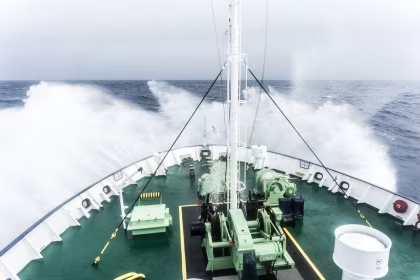
What to Expect When Crossing the Drake Passage
Positioned between the southern tail of South America and the Antarctic Peninsula's north-sweeping arm is a lively little waterway known as the Drake Passage.
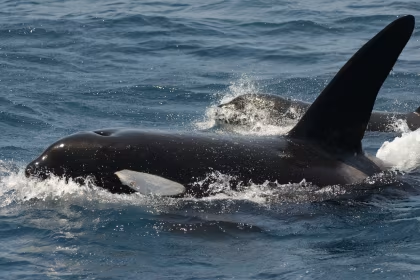
Eight Antarctic Whales You Might See During Your Expedition Cruise
They're powerful, they're beautiful, they're really, really big. Whales are a wonder of the natural world, and one of the best places to spot them is Antarctica. But which whale species might you see there?
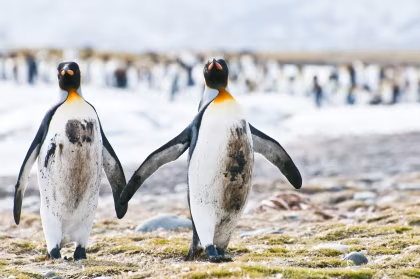
Paradiesen auf Erden: Falkland Islands und South Georgia - Die Pure Wildnis.
... meine reise zu den pinguinen ans südliche ende der welt. hart erkämpft der stürmische seeweg über den südatlantik ins subantarktische gewässer, umschwirrt von hunderten von albatrossen. angekommen in den letzten paradiesen auf erden: falkland islands und south georgia - die pure wildnis.
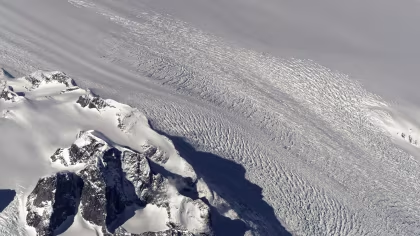
Ice streams and lakes under the Greenland Ice Sheet
The Greenland ice sheet is not a static body of ice but instead a dynamic body of dense, flowing and deforming ice. Snow deposited on the central parts of the ice sheet is gradually compressed to ice that slowly flows towards the ice margin.
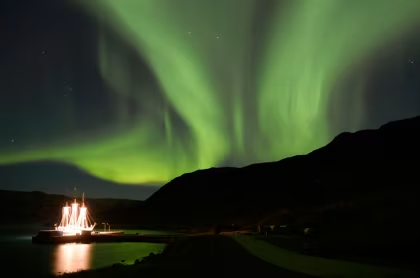
The Northern Lights dancing across the skies
The Northern Lights most commonly occur in a belt of radius 2,500 kilometres centred on the magnetic North Pole. This auroral zone extends over northern Scandinavia, Iceland, the southern tip of Greenland and continue over northern Canada, Alaska and along the northern coast of Siberia.
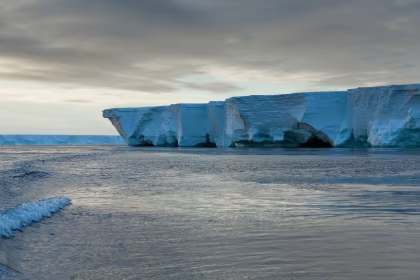
Science of the Ross Ice Shelf
Antarctica’s Ross Ice Shelf is enormous in size, covering 487,000 sq. km – the size of France – and has a thickness ranging from a few hundred metres near the sea to over 1,200 metres away from the floating edge.
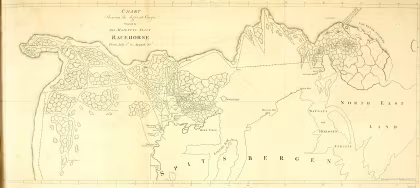
First to the North Pole: Five Failed but Brave Expeditions
Constantine Phipps, 2nd Baron Mulgrave and officer in the British Royal Navy, was the first person to make a voyage to the Arctic with the intent of reaching the North Pole, sailing the vessels Racehorse and Carcass beyond Svalbard to the Seven Islands in 1773.
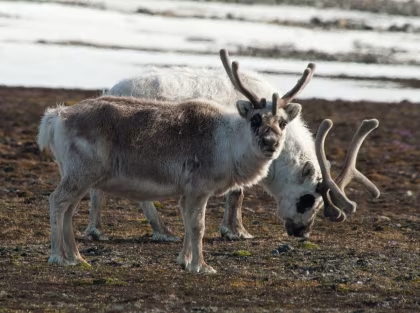
Amphibian, reptiles and herbivore mammals in the Arctic
Arctic ecosystems are relatively young in terms of geological time, having developed mainly over the past three million years. In general, species richness is lower in the Arctic than in southerly regions, which is consistent with general scientific observations that biodiversity declines from the Equator the poles.
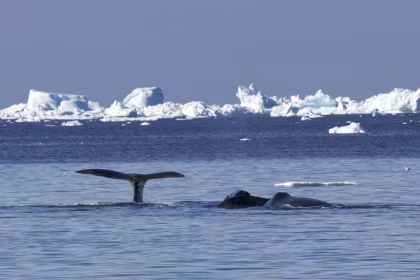
The bowhead whale, whaling about the Arctic
Bowhead whales are only found in the cold Northern Hemisphere waters around the Arctic. They are large species that can be up to almost 20 metres long with enormous heads that are around a third of the total body length of adult whales.
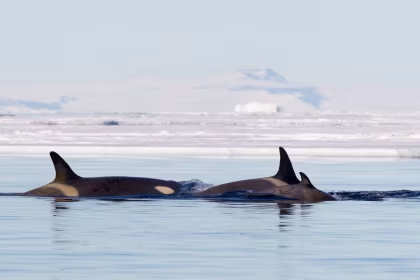
Antarctica’s first Marine Protected Area
In October of this year, the Commission for the Conservation of Antarctic Marine Living Resources, which is comprised of 24 countries including the United States, the European Union, Australia and New Zealand, reached a consensus on a New Zealand/United States proposal to establish a large-scale Marine Protected Area (MPA) in the Ross Sea region.
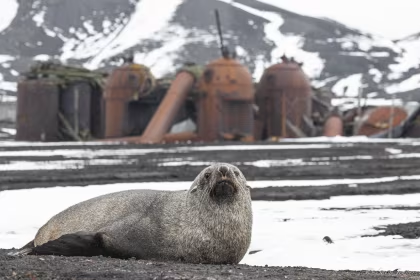
Deception Island deceptively active
In Antarctica, the South Shetland archipelago is home to Deception Island, a volcanic-rounded island that is 15 km in diameter with a shield volcano. The volcano is mainly basalt-andesite and was one of the first parts of Antarctica to be discovered, probably around 1820 by UK and USA sealers. It has the longest history of human occupation than any other site in Antarctica is the island served as a whaling station from the first 30 years of the 20th century, as the site of a British Antarctic station, then Chilean and Argentine stations.
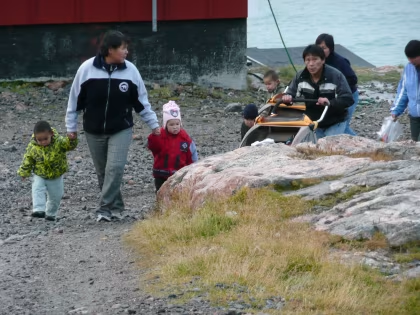
Greenlandic Inuit Beliefs
Traditionally, Greenland Inuit believe that humans as well as animals have both soul and body, where the soul performs the breathing and is independent of the body. In this sense the Inuit believe that the soul continues to live after death.
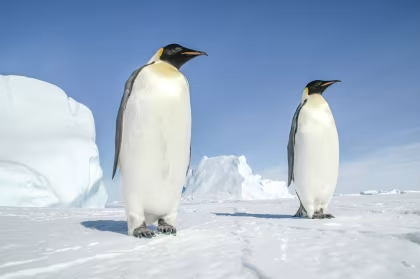
Antarctic Icon: 44 Facts About the Emperor Penguin
Emperor penguins are truly the emperors of Antarctica as not only do they survive through the harsh Antarctic winters but they also are capable of breeding during the worst weather conditions on Earth.
