Blog
Type
Region
Destination
-
Show all
Ship
Highlights
-
Show all
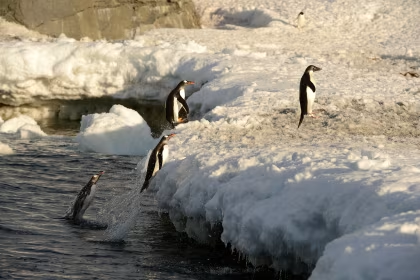
10 Terrific Antarctic Bird Facts
Antarctica is a fantastic cruise destination for birdwatching, with around 45 distinct species you may be able to see.
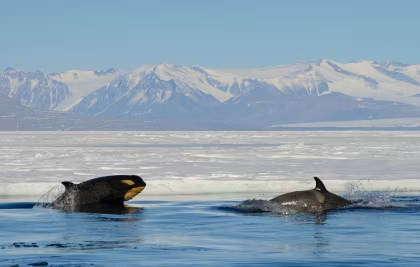
The Ross Sea Becomes Earth's Largest Protected Marine Area
The Ross Sea in Antarctica will become the world’s largest protected marine park. This has been signed in Hobart today by 24 countries and the European Union. Fishing (including krill and whales) will be banned in a protected zone of the size of France and Spain combined.
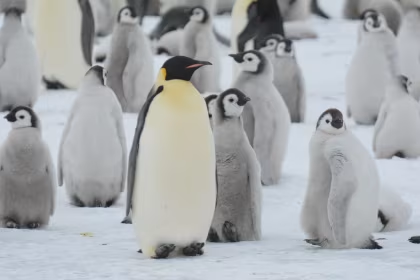
12 Tips to Help Keep Birds Safe During an Antarctic Cruise
One of the most wonderful experiences you can have on an Antarctic cruise is investigating the multitudes of penguins in their natural habitat. Naturally, passengers are often concerned about the possibility of disturbing the penguins (and other Antarctic birds), causing an upheaval in their breeding and nesting patterns.
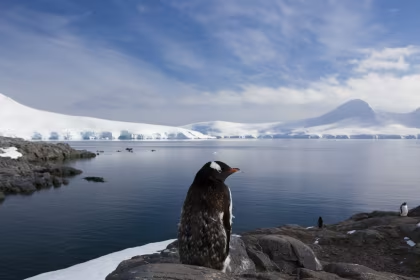
Guidelines for visitors to Antarctica
Activities in the Antarctic are governed by the Antarctic Treaty of 1959 and associated agreements, referred to collectively as the Antarctic Treaty System.
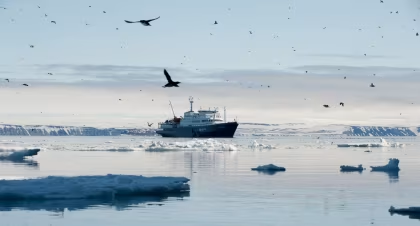
Scott’s ponies becoming unstuck
‘’English-men where flabbergasted…they had never dreamt that dogs could run in that way before a sledge, and already they felt contempt for their dear ponies. Suddenly they were gripped by wild excitement, cheered, and waved their caps. Our drivers returned their greetings and cracked their whips’’.
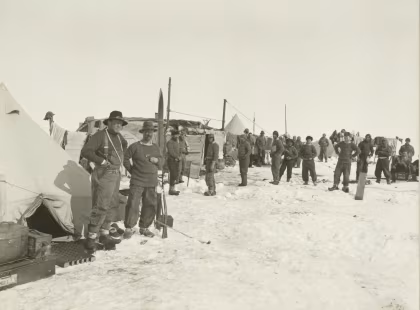
Exploration of the Polar Regions
From the Vikings via the first whale and seal hunters to Scott and Amundsen, from the maritime explorers Franklin and Nordenskiöld to present-day polar tourism, a quick tour through history reveals some of the aspect which motivated people to extend their horizons. Existential need, sheer curiosity, imperial greed, polar science and a taste for adventure all converged in regions which pardon no mistakes.
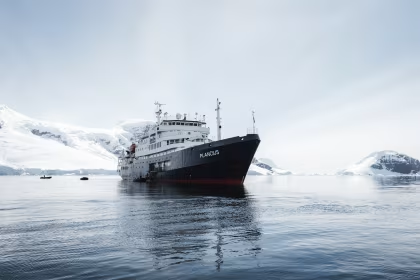
A Photo-Tour of our Cruise Ship the m/v Plancius
Welcome aboard the Plancius! She was originally named the Hr. Ms. Tydeman and was built as an oceanographic research vessel for the royal Dutch Navy in 1976.
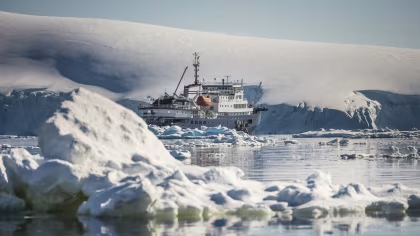
Want a Sneak Preview of Your Antarctica Cruise?
You’ll have to put some effort into taking a bad picture of Antarctica. The landscapes offer starkly beautiful vistas in every direction.
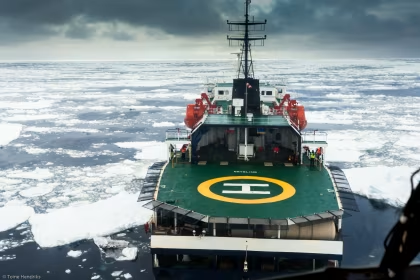
Explore the Ross Sea and Antarctica’s Largest Ice Shelf
Oceanwide Expeditions’ “Spectacular Ross Sea” voyage takes passengers through the Ross Sea, an immense bay south of the Antarctic Circle, one of the planet’s most remote areas and where few expeditions venture. It sails from South America to New Zealand (and in reverse) on the ice-strengthened vessel “Ortelius” – specially equipped with two helicopters to access hard-to-reach sights and afford aerial views of jaw-dropping scenery. The 32-day trip departs on Jan. 13, 2017, from Ushuaia, Argentina; and on Feb. 15, 2017, from Bluff, New Zealand.
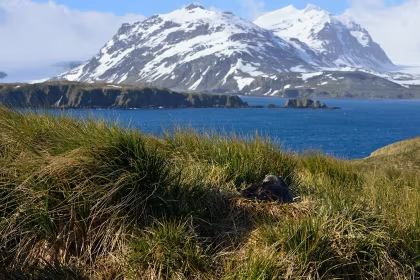
Flowers in Antarctica
The Polar Regions are one of the most inhospitable environments for plants and animals to live in. In Antarctica life faces difficulties from low temperatures, high winds, solar radiation and freezing of cells. Life is made even more difficult when the Antarctic continent is plunged into darkness for during winter and then full light during the summer.
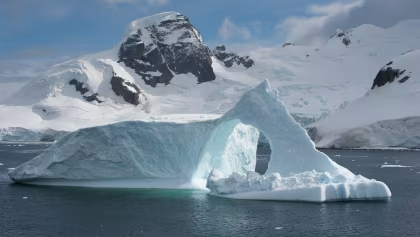
All things ice in the Antarctic
The first recorded sighting on an iceberg in Antarctica was on 1 February 1700 when Edmond Halley was on an expedition to measure the Earth’s magnetic field. Today scientists have classified Antarctic ice as two types: Land and sea ice.
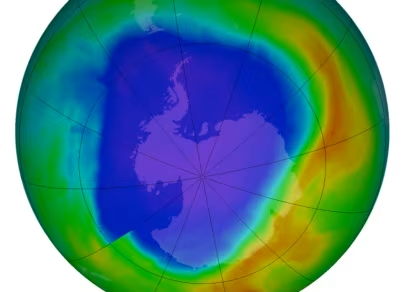
The ozone layer in Antarctica
Scientists have calculated that if the ozone layer was brought down to sea level it would be 3 mm thick, while in the Antarctic the ozone can be as low as 1 mm thick. Ozone in the stratosphere is being depleted by a variety of human-made gases with a ‘hole’ forming over Antarctica.
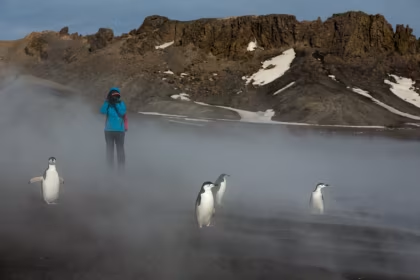
Graham Land: A landscape dominated by volcanoes
At the upper tip of the Antarctic Peninsula lies Graham Land, a jagged, glaciated part of Antarctica with a landscape dominated by volcanoes. Despite the volcanoes being over 200 million years old they are far from extinct with volcanic activity occurring today.

Shackleton’s Push to the South Pole
On the evening of February 11, 1907, Irish-born polar explorer Ernest Shackleton, already among the more famous polar explorers, announced his intention to embark on a momentous Antarctic expedition. His goal: to reach the South Pole.
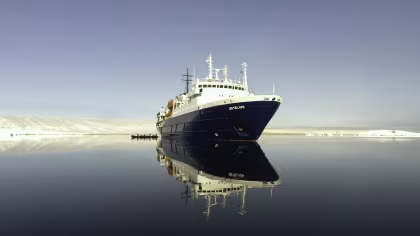
19 Photos of Life on Ortelius
It’s understandable that most of your questions are going to revolve around what you can do once your Arctic or Antarctic cruise reaches its destination. Still, you may very well be curious about the journey itself; after all (depending on your cruise) you may be spending as much as a month aboard a ship.
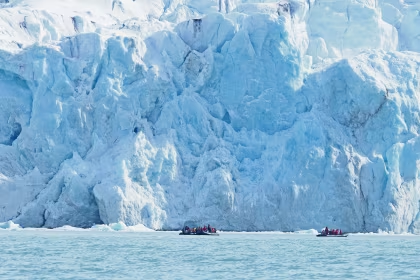
Get to Know Your Ice
Ice. It does everything from cooling your drink to helping to regulate the temperature of the entire planet. Let’s take a look at the ways we encounter ice in the world and its wide variety of names.
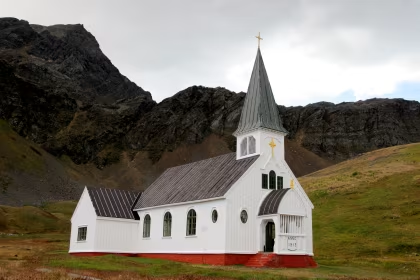
Churches in Antarctica
'Below 40 degrees South there is no law, below 50 degrees South there is no God', goes the old adage. When faced with a storm in the turbulent and freezing waters of the Drake Passage, one might think so.
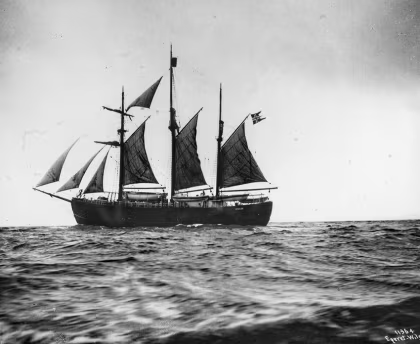
Amundsen’s Race to the South Pole
Amundsen had acquired Fram from Fridtjof Nansen on the understanding it was to be involved in an expedition to the Arctic. However, before it could set sail it required a number of repairs, including a new diesel engine as it had been out of commission for many years. On June 7 1910, Fram left Oslo for the first leg of what was supposed to be the first leg of a voyage to the North Pacific via Cape Horn: Amundsen’s original plans was to explore the northern part of the polar basin where the North Pole was situated which the first Fram expedition under Nansen in 1893-96 had failed to reach.
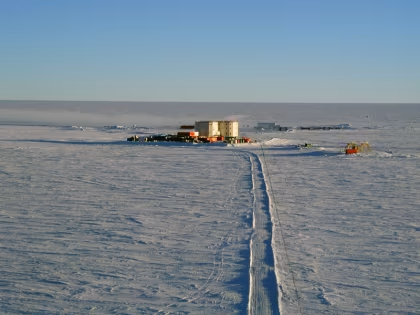
Day and night in Antarctica
The abnormal day and light cycles cause great impact on humans, and scientists are using Antarctica to study its effects and how to prevent them.
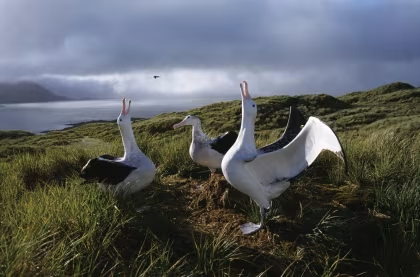
Albatross, penguin and krill research in Antarctica
In the Antarctic region, a great deal of research is being conducted by national Antarctic programmes including the UK’s, Australia’s and Japan’s on understanding species in the air, on the ground and in the sea and how their species are interconnected without variables including human impacts and climate change.
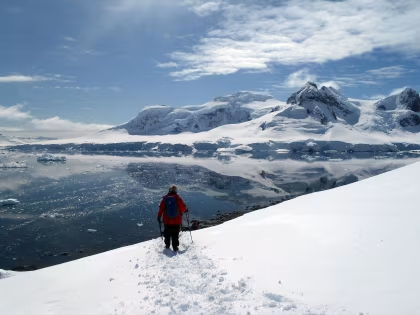
Explore Antarctica Without Leaving Your Couch
There are many ways to explore Antarctica from home. Check these great resources to discover the White Continent without leaving your couch.
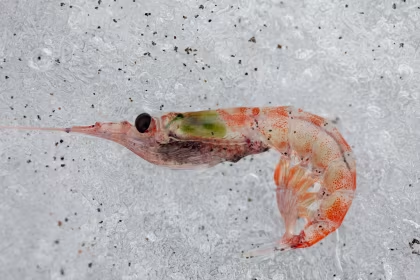
Antarctic krill: Antarctica's Superfood
The size of a paper clip, pink, krill is a shrimp-like crustacean that does not look like much. Without them, though, the Earth marine ecosystems would collapse completely.
