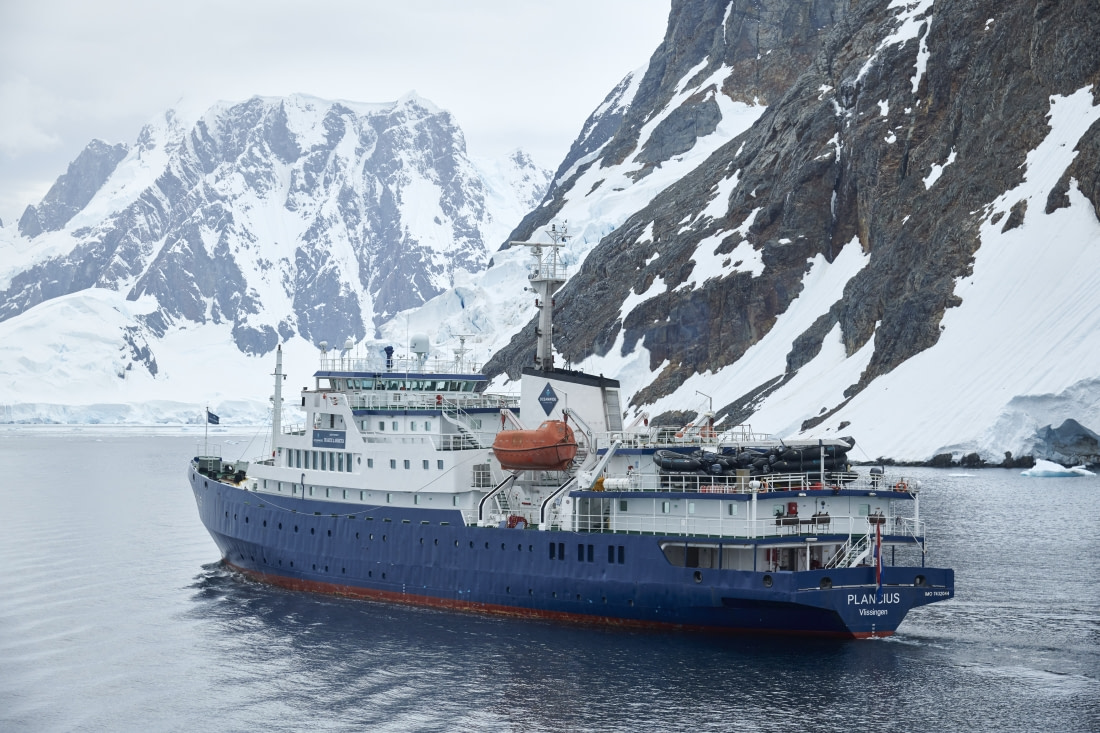
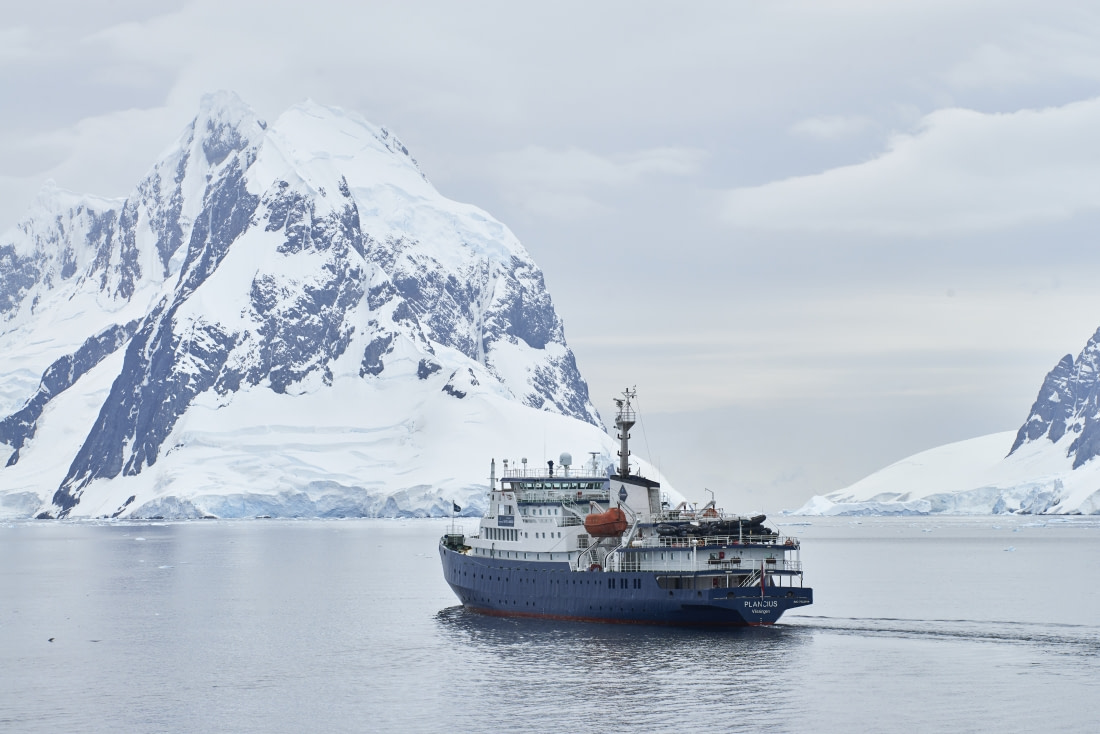
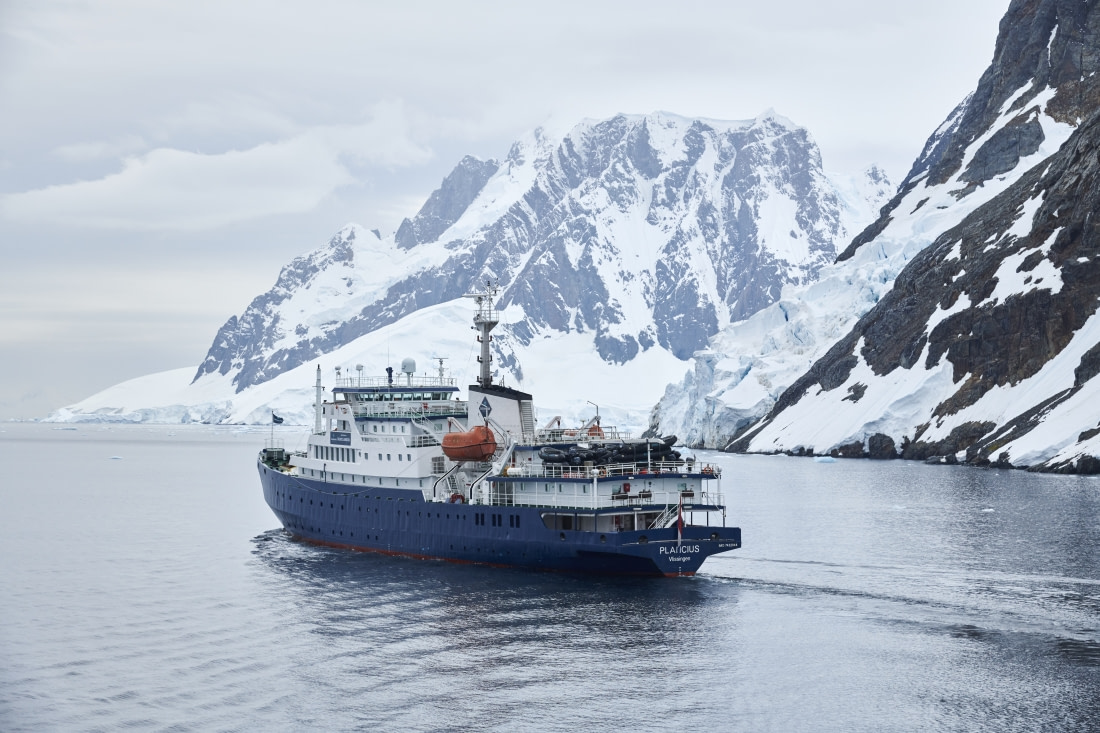
PLA12-26, trip log, Northeast Greenland Extreme

by Oceanwide Expeditions

Photo gallery

Logbook

Day 1: Embarkation Day - Akureyri

Embarkation Day - Akureyri
Date: 25.08.2026
Position: 65°50.3’N / 018°09.3’W
Wind: N4
Weather: Partly Cloudy
Air Temperature: +7

A lovely sunny afternoon as we gathered on the small new touristic pier in Akureyri. Most of us had travelled the long way from Reykjavik to the north of Iceland by bus and it had been a great road trip along the western coast and across some minor mountain passes. Now, at the pier, the excitement for this fantastic trip to Northeastern Greenland started to build up.

Happy to recognize and reconnect with some familiar faces amongst the expedition staff team: Pippa, Chloe, Koen, Marco, Sven, Michelle and Charlotte were some of the guides with whom we had travelled either in the Arctic or the Antarctic a few years back.

Starting at 16:00, and right after the passport control, the embarkation process started. Most of us had been on board MV Plancius before and therefore we found our way through familiar corridors, whilst new passangers were accompanied by the friendly crew staff and eventually ended up gathering at the Observation Lounge.

As usual safety came first, with the mandatory briefings and lifeboat drill providing an important introduction to life at sea. Once everyone had familiarized themselves with the procedures and their muster stations, attention could turn to the adventure that lay ahead. The expedition program then officially got underway with an introduction from Expedition Leader Pippa, followed by an opportunity to meet the expedition team. Their enthusiasm and knowledge offered an exciting glimpse into the experiences, wildlife encounters and discoveries that awaited us during the voyage.

The formalities continued with a warm welcome from Captain Christophe and Hotel Manager Marleen, accompanied by canapés and glasses of bubbles. It was a fitting way to celebrate the beginning of the expedition, as guests gathered together, exchanged introductions and raised a glass to the journey ahead.

At 18:00, the ship cast off, as Akureyri gradually slipped into the distance, the vessel began its journey out through the fjord. The scenery was magnificent, with steep mountains, calm waters and the unmistakable beauty of the Icelandic landscape providing a memorable backdrop to the first evening on board.

It was the perfect beginning to an expedition cruise: sunshine over Northern Iceland, a warm welcome on board, the excitement of setting sail and, before the first evening was even over, a spectacular encounter with one of the ocean's most magnificent creatures.

Day 2: At Sea, Denmark Strait

At Sea, Denmark Strait
Date: 26.08.2026
Position: 68°31.3’N / 020°43.3’W
Wind: W5
Weather: Overcast
Air Temperature: +4

Today was very much a day of preparation, learning, and the anticipation as we continued our journey through Greenland. The day began with a cheerful wake-up call and breakfast in the dining room. After breakfast, we gathered in the observation lounge for an engaging presentation by Michelle about the People of Greenland. It was a fascinating introduction to Greenland’s people, culture, history, and way of life, giving us a deeper understanding of the place we are travelling through.

The morning continued with an important AECO, polar bear safety, and Zodiac briefing by our Expedition Leader Pippa. This mandatory session covered the essential safety procedures we will need to follow during our upcoming excursions. Given the remote environment and the possibility of encountering wildlife, it was an important and very practical part of preparing for our adventures ashore. After lunch, the expedition team began distributing our Muck Boots. We were called deck by deck to collect them from the boot room, and it suddenly felt very real that our shore excursions were getting closer.

Later, we returned to the observation lounge for a lecture by Sven about the geology of Greenland. Learning about the geological forces that have shaped this enormous island added another dimension to our understanding of the spectacular landscapes that awaited us during the next days. The mountains, cliffs, ice, and rock suddenly seemed to tell a much older story, shaped over millions of years. Afterwards, Mark gave us an engaging presentation about the Birds of the Arctic. It was fascinating to learn more about the different bird species that inhabit this harsh environment and how they have adapted to life in the Arctic. It also made us much more aware of the wildlife we might encounter as our journey continues.

The day finished with our Daily Recap, when we met with the expedition team in the observation lounge to reflect on everything we had learned and hear about what was ahead. We then enjoyed a plated dinner in the dining room as we arrived at Scoresbysund, with the evening light casting a beautiful glow across the cliffs of Cape Brewster, while the blows of humpback whales were visible around the ship. Hundreds of Black-legged kittiwakes were feeding at the Eastern entrace of Scoresby sund were a wintet polynya keeps these waters free of sea ice during the winter time and grants access with an icebreaker to this remote area of the planet.

Here it is where our trip started!

Day 3: Nordostbugt & Bjørneøer

Nordostbugt & Bjørneøer
Date: 27.08.2026
Position: 71°17.8’N / 024°55.9’W
Wind: SW2
Weather: Partly Cloudy
Air Temperature: +11

On our first day of activities in Eastern Greenland, many of us were up and about on the outer decks quite early, shortly after sunrise. The slightly overcast sky dimmed the early morning sunlight, creating beautiful shades across the serene scenery of Hall Bredning, dotted with icebergs and bergy bits of all shapes and sizes.

MV Plancius slowly approached the northwestern corner of Jameson Land, a vast peninsula located on the northern side of the broad entrance to Scoresby Sund. The sea was calm and smooth, and slowly the sun began to pierce through the clouds, illuminating the scene. A vast plain, where potential muskoxen were grazing, stretched out in front of us, backed by an impressive glacial moraine and jagged mountains.

After breakfast, we were called to the gangway and, divided into small groups, went ashore, where the Expedition Staff welcomed us to Eastern Greenland. A small group of fast hikers took off across the peat bog and towards the moraine in search of adventure, whilst the rest of us were divided into leisure and medium groups and set out to explore the southern tip of this vast peninsula on foot.

Anywhere we looked, we were mesmerized, either by the serene and silent landscape, with the bay dotted with icebergs, or by the small details of the Arctic tundra. Along the shoreline, a couple of Long-tailed Ducks patrolled the coast, while Black-legged Kittiwakes and Glaucous Gulls scanned the sky. The search for muskoxen, however, did not bear any fruit, although we were equally content and grateful for the incredible weather that had welcomed us on our first day. Nordostbugt has a long history of human occupation, and just above the landing site, a small winter settlement from the Thule culture was discovered and partially excavated in the mid-20th century. Observing the remains of their dwellings, dug into the Arctic tundra, was a reminder of the endeavour of this group of people, who moved along the eastern coast of Greenland from the XII century onwards.

At noon, we returned to the ship, and during lunchtime, Captain Christophe and his bridge team repositioned MV Plancius towards the west and into the maze of islands that make up the Bjørneøer, also known as the Bear Islands.

A small archipelago of a dozen metamorphic and rocky islands tucked away at the entrance to Øfjord, one of the long and deep branches of the fjord system that characterizes Scoresby Sund. The islands were named by explorer Carl Ryder during his 1891–92 expedition, after a polar bear was shot there.

This time, we explored the area on board the Zodiacs, skimming across the deep blue water filled with turquoise icebergs. Observing the flukes and tidewater lines created by water erosion on the icebergs was great fun and very interesting. During the cruise, we also had the chance to spot a male muskox grazing on the steep cliffs on the southern side of Tassermit, and eventually we ended up in the protected harbour of Jytte Havn, where Plancius was anchored.

Gathered in the lounge with Pippa and the rest of the staff, we were informed about the plans for the following day. We also learned about photographic composition from Koen and the history of Grundsvirkirken, one of the iconic granitic peaks in the northwestern part of Scoresby Sund.

Day 4: Vikingbugt & Helgenæs

Vikingbugt & Helgenæs
Date: 28.08.2026
Position: 70°16.8’N / 025°18.2’W
Wind: N1
Weather: Clear Sky
Air Temperature: +11

Expedition leader Pippa woke us this morning with news that the plan she'd given us the previous evening at recap had already changed: we were swapping the morning and afternoon activities. Plancius was now making her way into Vikingebugt, toward the tide water Brede Gletscher.

After breakfast, we gathered at the gangway to start our zodiac cruise, though we waited longer than usual before boarding. Once in the zodiacs, our driver explained the delay: a polar bear had been spotted swimming not far from Plancius. A bear in the water is vulnerable, so we couldn't approach it besides, it would have been dangerous. The team therefore decided to relocate the zodiac cruise, which took a little extra time to arrange.

Once underway, we headed toward a glacier meltwater waterfall in the middle of a moraine. As the zodiacs set off, a female polar bear was spotted with her yearling cub: what a treat! We watched them feeding along the shoreline, then moving together up the moraine ridge, where they ended up cuddling at the top. It was genuinely adorable.

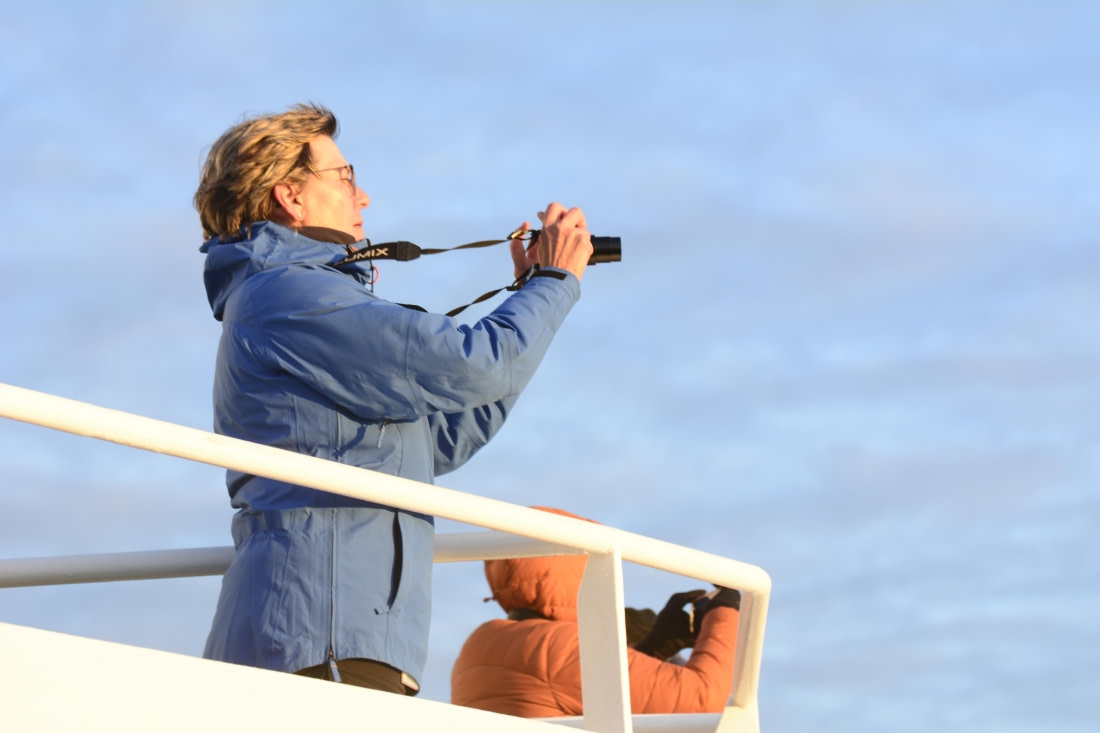
After this encounter, the cruise continued as the sun rose higher. We cruised among icebergs and along the brash ice. As we re-embarked Plancius, the swimming bear was spotted once more, and we rushed to the outer deck to watch it through our binoculars.

The ship needed to relocate to the entrance of the bay for the afternoon activity. From the dining room, we watched Plancius sailing through the brash ice among the icebergs. A restaurant with a view indeed!

The afternoon brought something different: the staff offered us a perimeter landing at a site called Helgenaes, letting us roam freely among the basalt columns, the patterned ground, and the tundra. Some of us even spotted old polar bear tracks. Purple patches of fireweed, Greenland's national flower, dotted the landscape, along with mountain sorrel and Arctic mouse-ear. As we were shuttled back to the ship, our driver made a detour so we could observe the impressive basalt columns from the sea.

The day ended with a moonrise and beautiful colors across the sky. Some of us settled in for a drink in the lounge, while others were already drifting off to sleep.

Day 5: Ittoqqortoormiit & Raffle Ø

Ittoqqortoormiit & Raffle Ø
Date: 12.09.2026
Position: 70°28.8’N / 021°57.7’W
Wind: SE2
Weather: Partly Cloudy

This morning we could sleep in! Fifteen minutes before breakfast opened at 8 AM, the wake up call of Pippa sounded in our cabins. Good morning!

Looking out of our porthole, we could already see the colourful houses of Ittoqqortoormiit, the most isolated town in Greenland and our destination for today. Ittoqqortoormiit means “the place with the big houses” in the East Greenlandic dialect. It was established in 1925 by Ejnar Mikkelsen, now the town has around 300 inhabitants.

A little after 10am, we boarded the Zodiacs to go ashore. We could visit the Evangelical Lutherian Church with its wooden interior, blue curved roof beams that resemble whale ribs, and cozy lights. From the ceiling hangs a replica of the ship ‘Gustav Holm’ that transported 70 people from Ammassalik area to Ittoqqortoormiit in 1925, to establish a permanent settlement on these grounds.

Also were we welcomed in the house of Magda & Isaak for a Kaffemik. Kaffemik is a Greenlandic word that literally means “via coffee”. A kaffemik is social engagement by way to coffee, often an all day affair with 50 people or more coming and going. Greenlanders hold kaffemik to celebrate special events of all kinds – births and birthdays, first days of school and confirmations – but the real enjoyment comes from being in a room filled with people.

While others in the world might go out for such an occasion, Greenlanders keep the festivity close to home. The honoree throws their own party, usually preparing for days in advance and often pulling out all the stops with fine china and decorative table linens. When the big day comes, their home becomes a revolving door of celebration with old friends, family from out of town, colleagues, and brand new friends all through the day.

As a traveler, attending a kaffemik is more about getting a special look at Greenlandic life. We could step into the home of a local, and get a feel of what it’s like to live like a Greenlander. At 11.30, Isaak fed his dogs. Lined up along the river bed, full of excitement, his dog were waiting for this. The 10-week-old puppies could still run free, but preferred their mum above all.

Lunch was ready for us in the dining room and after lunch it was time to learn more about Polar bears, but just when Koen wanted to start his lecture, Mark spotted an Orca. It took a while before it showed it selves again, but than we saw that is was a big male. A little later we got to see also a second smaller one. Such a rare sighting, to see Orcas this far North!

At 16.30 our sister ship Rembrandt van Rijn came by to pick up some provisions. She is a beautiful three-master. In a sheltered by, coordinated with our captain Christophe, her captain Ismael was able to put the ship alongside of us. The provisions were put by the forward crane from Plancius onboard of Rembrandt van Rijn. After that we continued our voyage North.

During recap Pippa told us the plans for tomorrow and we learned more about the geology and Greenland’s national flower, the broad-leaved fireweed Chamaenerion latifolium.

Dinner was ready at 07 PM, all tasted well, but the dessert was a special one: Whale blows were seen around the ship. With binoculairs, we could recognize groups of Fin whales and Humpback whales.Yet another exciting day has come to an end.

Day 6: Skipperdal & Ella Ø

Skipperdal & Ella Ø
Date: 30.08.2026
Position: 72°25.5’N / 024°53.3’W
Wind: SSW3
Weather: Clear sky
Air Temperature: +8

The day began cool and overcast at Skipperdal, setting a suitably atmospheric tone for a day of exploration in East Greenland. As the expedition team prepared for the morning landing, guests were offered a choice of Long, Medium and Leisurely walks, allowing everyone to experience the landscape at their own pace.

Skipperdal quickly revealed the richness of its Arctic environment. One of the first wildlife highlights was an Arctic hare, perfectly adapted to its surroundings and an excellent example of the species that can thrive in this remote landscape. Out on the lake, Red-throated Divers were spotted, their presence adding another dimension to the morning's exploration.

The landscape also offered plenty of evidence of the larger mammals that inhabit East Greenland. A Musk Ox skull was discovered, providing an opportunity to consider the anatomy and history of these iconic Arctic animals. Not long afterwards, the discovery became even more impressive when 13 Musk Oxen were spotted on the mountainside. Watching the animals against the dramatic terrain offered a memorable glimpse of musk ox in their natural environment.

The Leisurely group enjoyed a particularly rewarding encounter when they spotted a Stoat. Small, elusive and rarely encountered, the animal was a welcome addition to the day's wildlife sightings. Birds were also well represented, with Snow Buntings, a couple of Northern Wheatears and three Redpoll recorded during the morning. Autumn had clearly arrived in the vegetation. The changing colours of the Arctic plants complemented the reds, oranges and earthy tones of the surrounding rocks, creating a striking natural palette across the landscape. In the cool, subdued light, the scenery felt especially dramatic.

Back on board, the expedition programme continued with recap ahead of the afternoon landing. Pippa outlined the plans for the following day, preparing everyone for the next opportunity to explore ashore. Chloe then introduced the fascinating subject of the Greenland Shark, sharing insights into one of the Arctic's most extraordinary and long-lived marine inhabitants. Marco followed with a recap of the morning's observations of the intriguing “stripey rocks”, helping guests to understand more about the geological features encountered during the expedition. Finally, Sven gave a presentation on the Sirius Dog Patrol, introducing guests to the remarkable work of the patrol and the important role it continues to play across Greenland.

In the afternoon, the expedition moved on to Ella Ø, where the scenery was every bit as dramatic. Steep mountains, rugged rock formations and the quiet waters of the lake created an impressive setting for another landing. The lakes once again provided excellent birdwatching opportunities, with Long-tailed Ducks and Red-throated Divers observed on the water. Along the shoreline and slopes, the autumnal colours of the Arctic Birches and Willows added warmth to an otherwise rugged landscape. There was plenty to discover among the vegetation. Bearberries and Bilberries were abundant, their colourful fruits standing out amongst the changing foliage. The plants provided a reminder of the surprisingly productive life that exists within the short Arctic growing season.

For the expedition guests, it was a day that demonstrated just how much can be revealed by slowing down, looking closely and allowing the Arctic landscape to tell its story. The day concluded with the traditional ‘Arctic dinner’ outside on deck three, followed by lots of dancing as the dramatic Arctic scenery glided past.

Day 7: Blomsterbugt & Walterhausen Glacier

Blomsterbugt & Walterhausen Glacier
Date: 31.08.2026
Position: 73°22.5’N / 025°19.7’W
Wind: S3
Weather: Partly cloudy
Air Temperature: +8

Today was another unforgettable day on our expedition through Northeast Greenland. We headed ashore at Blomsterbugt in Northeast Greenland National Park, where we had three different hiking options to choose from: short, medium and long. Each group offered its own way of experiencing this incredible landscape, and no matter which route we took, we were treated to some fantastic wildlife sightings. Musk ox and Arctic hares were spotted by all three groups, making the morning feel like a true Arctic adventure.

One of the most memorable sights was an amazing lake with water that had turned a striking red colour from the sediment runoff coming down from the surrounding landscape. It was such an unusual and beautiful sight, and something we certainly weren’t expecting to see.

After our hikes, we returned to the ship for lunch before heading back out onto the water for an afternoon of spectacular scenery. We cruised through the magnificent Keiser Franz Fjord and continued into Nordfjord towards Walterhausen Glacier.

As we approached the glacier, we slowly made our way through the brash ice and icebergs, eventually getting to around 300 metres from the glacier front. Being that close to such an enormous wall of ice was an incredible experience. The scale and beauty of the glacier, surrounded by floating ice, made for a truly special afternoon.

During our evening recap, we enjoyed a fascinating talk from Ueli, who shared stories from his time working at six different sites close to Keiser Franz Joseph Fjord. He explained how he had collected samples of rocks and water and gave us a fascinating insight into the scientific work being carried out in this remote part of Greenland.

One of the stories that really stayed with us was his account of helping to rescue a baby musk ox. Hearing about the experience brought the wildlife we had seen during the day to life in a completely different way, and it was certainly one of the highlights of the recap.

Pippa, our Expedition Leader, gave us an exciting preview of tomorrow’s plans. After another amazing day, we were all left wondering what adventures the next day would bring. We finished the evening with a delicious plated dinner and plenty to talk about after a day filled with wildlife, incredible landscapes, glaciers and wonderful stories. It had been another fantastic day in Northeast Greenland.

Day 8: Germania Havn (Sabine Ø) and Kap David Gray (Shannon Ø)

Germania Havn (Sabine Ø) and Kap David Gray (Shannon Ø)
Date: 01.09.2026
Position: 74°31.8’N / 018°49.7’W
Wind: S3
Weather: Clear Sky
Air Temperature: +4

On first day of September we awoke to yet another stunning day. The rising sun and the clouds made for a dramatic landscape whereas the icebergs and stunning surroundings completed a perfect morning. We were further north and it felt like that too. The air felt crisper and we could almost smell that winter was upon us.

We had arrived at Germania Havn where we would land for our morning hikes. Germania Havn, also known as Germania Harbour, is a natural marine bay and historic anchorage located on the south coast of Sabine Ø or Sabine Island. It was named during the Second German North Pole Expedition of 1869–1870, led by Captain Karl Koldewey. Their expedition ship the Germania overwintered in the harbor.

Sabine Ø was named after the British geophysicist General Sir Edward Sabine, who had conducted pendulum gravity experiments on the island during an 1823 Arctic expedition.

Once ashore we all set out for our respective hikes. The sportive hikers had planned to reach the summit of Germania Bjerg with an elevation of 302 mtr. The others took it a bit more relaxed and hiked the tundra landscape while taking photos and enjoying the sun which had come out more dominantly. Some Arctic Hares were spotted and in some areas the hiking became more challenging due to snow patches as well as swampy areas that tried to take our boots.

During the morning, all groups also visited the nearby hut. The hut is a former fur trapper station and was built in 1919. It was restored in 1999 by Danish organisation Nanok and has been maintained by them since.

Currently the cabin serves as an emergency and field shelter and is often used by members of scientific expeditions as well. The expedition team had opened the hut and it was really nice to have a look inside this relatively large hut. Many of signed the guestbook before we walked out and started making our way back to the landing site.

During lunch we repositioned to our location for the afternoon, Kap David Gray part of Shannon Ø. The weather was still pleasant with the sun out and little wind. The landing was slightly delayed as the expedition team spotted a creamy coloured object in the landscape which was hard to identify, but once the all clear sign was given we made our way ashore. The arctic tundra seemed vast and empty, but it turned out to be full of life once we took a more detailed look.

The long hikers set out towards stunning bassalt column cliffs, whereas the medium groups each took their own direction and the leisurely group mostly walked with their eyes focussed on the vegetation which offered a vast variety of species.

Chloe had initiated an iNaturalist Blitz walk where we could photograph basically everything we saw and the app Chloe had installed would instantly inform us what type of plant of flower we had photographed.

Although we didn’t spot any polar bears, we found quite some tracks that reminded us of their presence throughout the entire East Coast of Greenland.

Back on the beach some of us were called to the rescue as our zodiacs accidentally had beached and needed to be pulled back into the water. It took some effort, but then the boats were free and we were shuttled back to the ship.

After recap we enjoyed delicious food prepared by the wonderfull galley team. After dinner many of us went to the bridge or the outside decks to enjoy the beautiful evening light before going to bed. Another wonderful day had ended, good night!

Day 9: Store Koldewey and Danmarkshavn

Store Koldewey and Danmarkshavn
Date: 08.09.2026
Position: 76°41.3’N / 018°50.5’W
Wind: W3
Weather: Clear sky
Air Temperature: +4

Our ninth morning into this fantastic trip in the Arctic and surprises were still laying ahead. The PA sounded a bit earlier this morning, with the call from EL Pippa announcing polar bears had been spotted earlier in the morning on the eastern coast of Store Koldewey on our approach to our morning activity.

Turned out that a mother with two cubs, were walking on terrace at 40m above sea level, therefore granting a great visibility to all of us who quickly had dressed up and walked about the outher decks. The sighting was thrilling and the gentle morning light made it even better for a good starting of the day. The bear family disappeared from sight after a quarter of an hour and we headed to breakfast.

Obviously the morning landing was swapped with a zodiac cruise and quiclly after 9am, we embarked the zodiacs driven by the experienced staff team. On the approach towards the shoreline, the same group of bears were found, and observing them floating from the boats at a respectful distance was another of the treat of this trip. The cubs were standing near their mum, observing us from the land, although showing no sign of distress. Once again the golden morning light of the Arctic at these latitudes heighted the encounter.

Polar bear cubs remain with their mother for around 2.5 to 3 years, a remarkably long period compared with many other bear species. During this time, the mother provides them with protection, warmth, and nourishment while teaching them the essential skills they need to survive in the harsh Arctic environment. The cubs gradually learn how to hunt seals, navigate across sea ice, and cope with the extreme conditions of their frozen habitat. Once they become independent, the young bears leave their mother to begin their own lives, while she will eventually be ready to reproduce again.

Respecting wildlife is key for a great expedition and after some time, the guides drove slowly the boats away and we went for a cold, although exciting cruise in the small fjords and inlets that dotted the northeastern coast of the island. Beautiful hues of turquoise and blues, were visible and photographed in the maze of iceberg and bergy bits that were scattered in the area.

Once the morning operation was wrapped up and lunch was served in the restaurant, captain and the bridge team, proceeded with the navigation towards Danmarkhavn. This was a small cove located in the southern shore of Germania land. Named after the ship MV Danmark, which provided support and aid for the 1906-08 Arctic Danish expedition. A base was built here to allow for the winter surveying of the extreme Northerneastern coast of Greenland, and later on in 1948 a scientific and metereological station was built and it is still manned to today.

MV Plancius dropped anchor in the middle of the bay and we went on shore on the western corner of Danmarkhavn as per program. Divided in the usual groups, we had three hours to explore the plains and the hills dotted by amazing banded gneisses from the Paleoproterozoic. Amongst the oldest rocks we had found so far in the Northeastern Greenland national park.

The landscape was fantastic and enhanced by once again a beautiful afternoon light, and the wildlife encounter even better. Rock ptarmigans were spotted feeding on the tundra, whilst some of us had the chance to see a Gyrfalcon, the only bird of prey found in the coast of Greenland at these latitudes. On the slopes of Harefjellet, plenty of Arctic Hares were leisurely feeding and allowed us to come closer for some good photographs before standing on their long hind legs and jumping away.

The evening concluded with some exciting plans for the following day, accompanied by Koen and Charlotte’s informative recaps and the delicious buffet dinner prepared by the experience galley team led by chef Khabir.

Day 10: Depotnæsset and Skærfjorden

Depotnæsset and Skærfjorden
Date: 03.09.2026
Position: 77°33.8’N / 018°51.2’W
Wind: SE2
Weather: Partly Cloudy
Air Temperature: +1

A high drape of grey clouds welcomed the first historical navigation of MV Plancius into the waters of Skærfjorden. The wake-up call sounded in our cabins, and soon after, we headed out to marvel at the views of the icy waters at our northernmost position on the northeastern coast of Greenland. It was a special morning, being able to sail into such a remote area of the island and the Arctic itself, where few expedition ships had ventured before.

Ahead of us lay the gentle and rolling slopes of the Stormlandet Peninsula, whereas on the starboard side appeared the low-lying island of Île de France, also known as Qeqertaq Prins Henrik. The region was first explored by the ship Belgica in 1905 under the leadership of Adrien de Gerlache, a well-known Belgian polar explorer. Aboard Belgica was also the Duke of Orléans, Philippe, hence the French original toponymy for the area we were sailing into today.

Disembarkation, as usual, was organized around 8:30 after breakfast, with the long hikers going first and heading out to the west with Koen and Chloe, followed by the rest of the medium and leisurely walkers. We set foot on mainland Greenland for the last time during the trip. We were mesmerized by the iceberg graveyard laid out on the eastern side of the landing spot.

Depotnæsset bears its name from the original location where depots had been established during the Danish Arctic Expedition, which helped chart the area a few years after de Gerlache's discovery.

The terrain was characterized by a ground moraine laid down during the Quaternary glaciations, dominated by scattered medium- to large-sized boulders of banded and augen gneiss, amphibolite, and the occasional red Devonian sandstone, which colourfully dotted the ground. Our guides took us along a gentle slope to a vantage point. For a while, a Gyrfalcon made an appearance, much to the happiness of all the birdwatchers and wildlife lovers.

We soaked in the Arctic landscape as we admired, in awe, Skærfjorden, filled with grounded icebergs and ice floes. A few minutes of “Arctic silence” made us appreciate and enjoy the fortunate moments we had experienced during the trip and the special place we were able to reach today.

The morning activity concluded with a short Zodiac cruise around the iceberg graveyard, and eventually we found ourselves enjoying lunch prepared by Chef Khabir and his team.

The time to leave the eastern coast of Greenland had eventually arrived, and with our bearing due east, we exited the waters of Skærfjorden on our way to the sea ice. The afternoon continued with ice cream served in the lounge, right before Marco presented his talk on sea-ice formation and dynamics in the Arctic Basin. It was an interesting and thorough presentation, enriched by maps, graphs, and videos about the behaviour of the sea ice in the waters that lay ahead.

Soon after, it was time for plans and a prolonged recap with Charlotte, Mark, and Chloe, which led us to dinner, where we savoured the beautiful light casting shades across the low clouds ahead.

What a privilege it had been to navigate into the Greenlandic waters and explore the rich diversity and geological history of the fjords of Northeast Greenland National Park!

Day 11: In Search of Wildlife in the Greenlandic Pack Ice

In Search of Wildlife in the Greenlandic Pack Ice
Date: 04.09.2026
Position: 77°25.9’N / 006°03.7’W
Wind: W2
Weather: Partly Cloudy
Air Temperature: +1

Today, we woke up to a truly spectacular sight: a beautiful ice world stretching as far as the eye could see — the frozen Arctic Ocean. As we munched our way through breakfast, the ship slowly navigated its way between the ice floes. Once breakfast was finished, we spent the morning out on deck, taking in the incredible beauty all around us.

Towards the end of the morning, we heard the exciting news that Koen had spotted a Polar Bear. The ship slowly made its way closer, and we were treated to a lovely sighting as the bear walked gracefully across the pack ice. We couldn’t get too close, as the ice was incredibly dense and far too thick for Plancius to enter. Instead, the ship continued carefully manoeuvring through the ice for the rest of the day, surrounded by this extraordinary frozen landscape.

In the middle of the afternoon, Pippa surprised us on deck with a scrumptious cup of rum, hot chocolate and cream — what a treat! Chloe then gave her fantastic Plankton lecture, which many of us know and love from previous trips.

During dinner, the Expedition Team had another bear sighting, this time spotted by Mark. The announcement came just after the starters, and we all rushed outside to find a mother Polar Bear with her two cubs, feeding on a kill. It was absolutely incredible. The cubs played around with their mum, occasionally stopping to watch us, before returning to their meal or prancing across the ice, perfectly framed against the beautiful orange sky as the sun began to set.

We were completely blown away and felt incredibly blessed to witness such a magical moment.

As the ship slowly moved away, the sun sank lower and lower towards the horizon, and the orange hues deepened with every passing minute. The pack ice turned pink and orange as far as the eye could see, while the ocean became a perfect mirror, reflecting the spectacular evening sky.

Wow. What an incredible day!

Day 12: Across the Fram Strait on the way to Svalbard

Across the Fram Strait on the way to Svalbard
Date: 05.09.2026
Position: 77°02.0’N / 008°34.8’W
Wind: S3
Weather: Overcast
Air Temperature: +2

A leisurely morning as we got up and about the ship, with the outer decks a bit frozen from the mist that veiled the ship during the early hours of the day. MV Plancius was still navigating through the sea ice, in spite of the attempts by the bridge team to bring her into more open waters and try to get around this long lobe of sea ice that extended southwest from the Arctic Ocean. The absence of wind and the low temperatures allowed for an early stage of frazil ice formation, and even nilas were visible around the ship and in the open-water gaps amongst the floes.

A very different atmosphere from yesterday, nonetheless truly and dramatically Arctic!

Welcomed by the cheerful smiles of the dining team, we had breakfast and gathered in the lounge for an informative lecture about the pinnipeds we had seen during the previous days. Not only did Pippa give a thorough presentation about the different species that live in the Arctic, but she also talked about their feeding and reproductive behaviour.With the ship eventually out of the sea ice, the captain informed us that we were steaming south in search of a thin lead to cross the sea ice to the east. We headed to lunch with good hope, and right after changing the time to Central European Time, we were called by Michelle to the Observation Lounge for yet another informative talk, this time about the “Discovery and Exploration of Spitsbergen.”

Meanwhile, the sun had come out, casting a beautiful yellow light on the ice floes that lay on the port side. The wind was over 20 knots, with Northern Fulmars and juvenile Kittiwakes enjoying a glide or two around the ship. Eventually, in the late afternoon, Chief Officer Elizbar brought the ship into a narrow lead, and with skilful manoeuvring and some determined pushing, we at last made it to the other side.

The plan for the following day was laid out during the recap, with more interesting information shared by Pippa, Chloe, and Mark regarding polar bear feeding behaviour, Ivory Gulls, and tardigrades.

Dinner time, followed by a few chats at the bar, before heading to our cabins, with MV Plancius now steaming full ahead to the northeast in search of the pointy peaks of Spitsbergen!

Day 13: Approaching Svalbard

Approaching Svalbard
Date: 06.09.2026
Position: 77°20.7’N / 003°56.3’E
Wind: S5
Weather: Overcast
Air Temperature: +3

The morning dawned overcast as the expedition ship continued its journey across the Greenland Sea, making its way between Greenland and Svalbard. Although the skies offered little sunshine, the sea remained full of life. Northern Fulmars accompanied the ship throughout the morning, gliding effortlessly alongside the vessel and providing a constant reminder that even on a day at sea, the Arctic is never truly empty.

A handful of Atlantic Puffins were also spotted during the morning. Their appearances were brief, but each sighting brought excitement as passengers gathered to watch these colourful seabirds before they disappeared back into the grey expanse. As the morning progressed the ship was joined by many Kittiwakes which a pair of Long-tailed Skuas took to harassing.

The morning's programme continued indoors with an engaging lecture from Charlotte on the whales of the Arctic. She explored the remarkable variety of whale species found in these northern waters, along with their adaptations to life in one of the planet's most challenging environments. The presentation offered plenty to think about as the ship continued through the waters of the Greenland Sea towards the possibility of sightings along the continental shelf.

Later in the morning, attention turned from wildlife to the landscape itself with a geology workshop led by Marco and Sven. The session provided an opportunity to look more closely at the geological forces that have shaped the Arctic, bringing another dimension to the journey. After days of seeing dramatic landscapes in Greenland, it was fascinating to gain a deeper understanding of the processes behind them.

Following lunch, Koen gave a presentation about future voyages with Oceanwide. The talk offered a glimpse of adventures still to come, with information about possible destinations and the experiences that future expeditions might bring. For many on board, it was an enjoyable opportunity to start thinking about where their next expedition might lead.

As the afternoon drew to a close, the atmosphere became more celebratory. Passengers gathered for the Captain's Farewell drinks, marking the final stages of what had been a memorable expedition. There was plenty of conversation and laughter as everyone reflected on the experiences shared during the voyage.

The evening brought one final highlight: the premiere of Sven's slideshow. Bringing together photographs and memories from the expedition, the presentation provided a fitting visual journey through the days spent exploring the Arctic. Familiar faces, spectacular landscapes and unforgettable wildlife encounters appeared on the screen, prompting smiles and plenty of reminiscence among those watching.

Although it had been a day at sea, there had been no shortage of discovery. From fulmars and puffins to Arctic whales and ancient geology, the day offered a final reminder of the variety that makes an expedition voyage so special. As the ship continued onward beneath the overcast skies, the expedition was drawing to a close — but the memories were only just beginning to settle in.

Day 14: Longyearbyen, Disembarkation

Longyearbyen, Disembarkation
Date: 07.09.2026
Position: 78°30.9’N / 015°31.3’E
Wind: S3
Weather: Overcast
Air Temperature: +8

Rippled waters and a low, cloud-blanketed sky welcomed MV Plancius on her approach to Adventfjorden, the small and sheltered bay in which the settlement of Longyearbyen is located. This was the final destination of our exquisite and magnificent voyage.

At a quarter past seven, Pippa wakes us up again; breakfast will be served in a quarter of an hour. We wake up in Longyearbyen and look back on a journey, during which we experienced the beautiful, peaceful Arctic, with sunshine and lovely weather. We watched birds on land, at sea and in the sky, musk ox and Arctic hare grazing, a stoat foraging and dolphins and whales on our way. We marvelled at the wonderful play of light and the impressive coastline.

Some big hugs were exchanged with the crew and staff members, while emails and phone numbers were exchanged so that we could stay in touch and perhaps meet again on future adventures. The buses were ready to shuttle us into the town centre, and from the pier, we waved a fond goodbye to the ship and the crew who had been our home for the past couple of weeks.

On behalf of Oceanwide Expeditions, Captain Christophe Colaris , Expedition Leader Pippa Low, Hotel Manager Marleen Van Moorsel and all the crew and staff of M/V Plancius, it has been a pleasure travelling with you.

Total Length of the Trip: 2021 nautical miles

Northernmost position on Greenland Eastern coast: 77⁰ 33.8’N; 018⁰ 51.2’ W

Details

Tripcode: PLA12-26
Dates: 25 Aug - 7 Sep, 2026
Duration: 13 nights
Ship: m/v Plancius
Embark: Akureyri
Disembark: Longyearbyen

Have you been on this voyage?

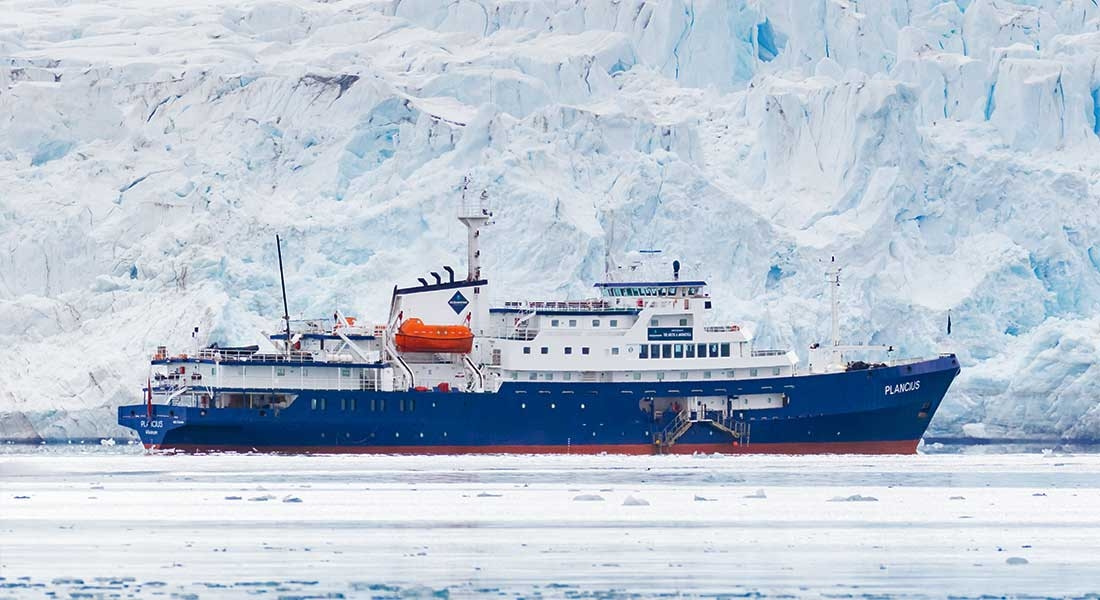
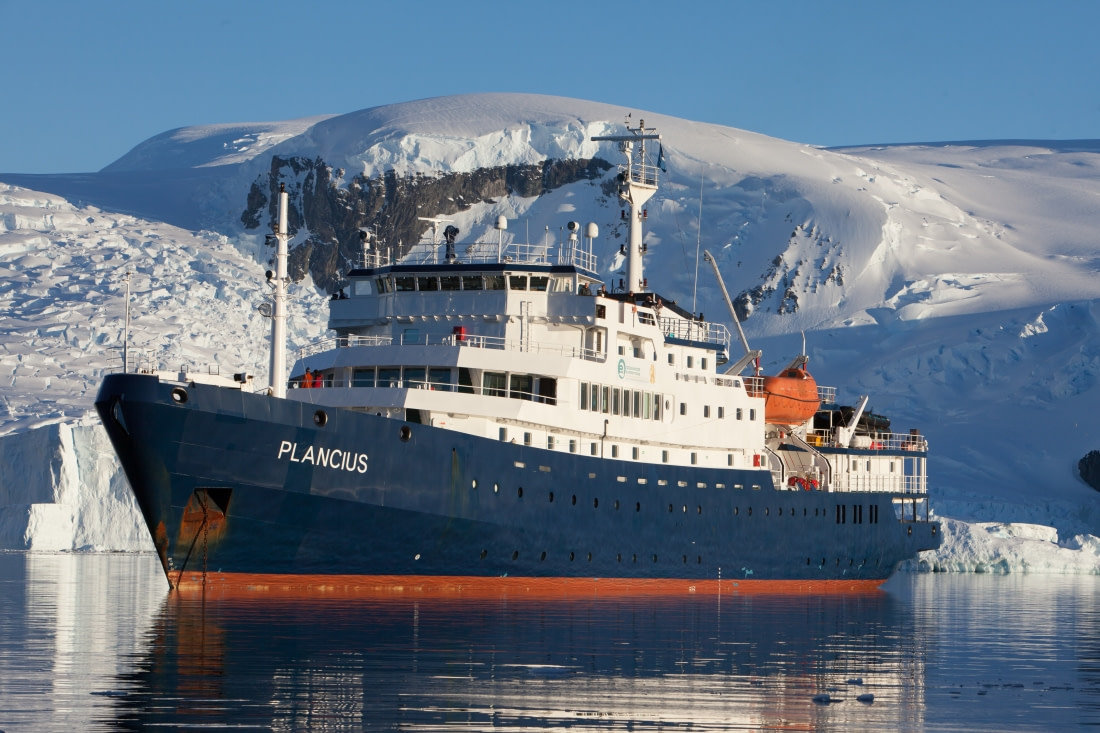
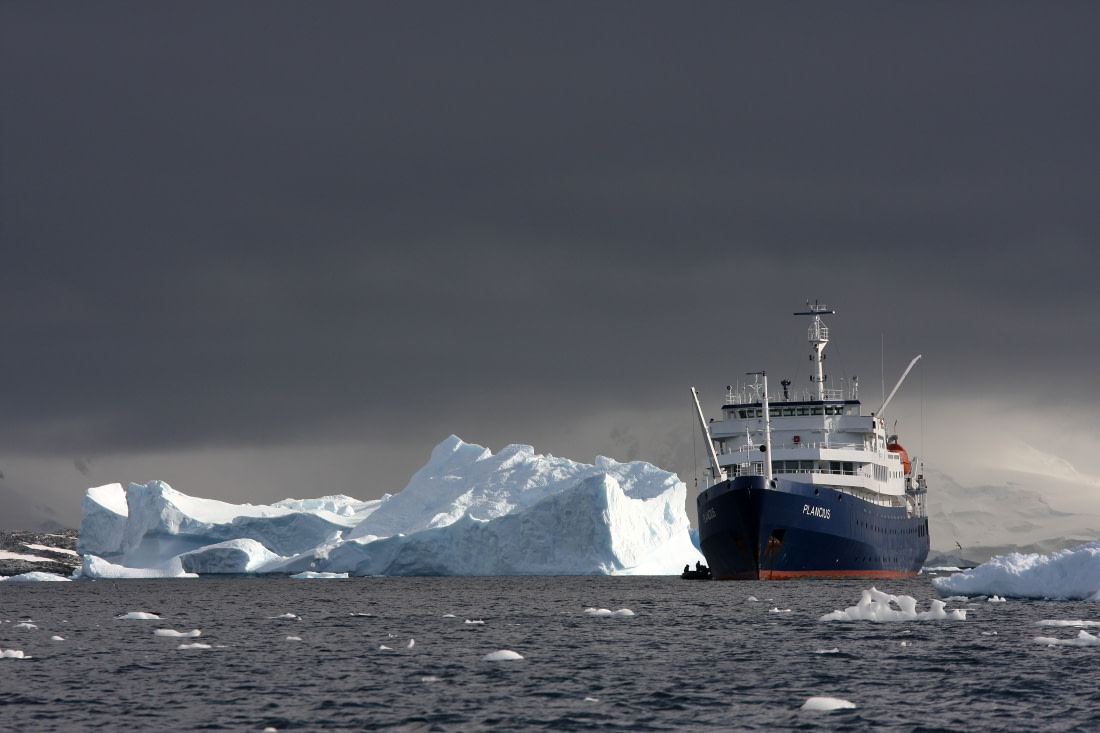
Aboard m/v Plancius

Our most longstanding vessel, Plancius is a classic choice for some of our most popular polar voyages.

More about the m/v Plancius »
Loading