Introducing Kongsfjorden, Svalbard
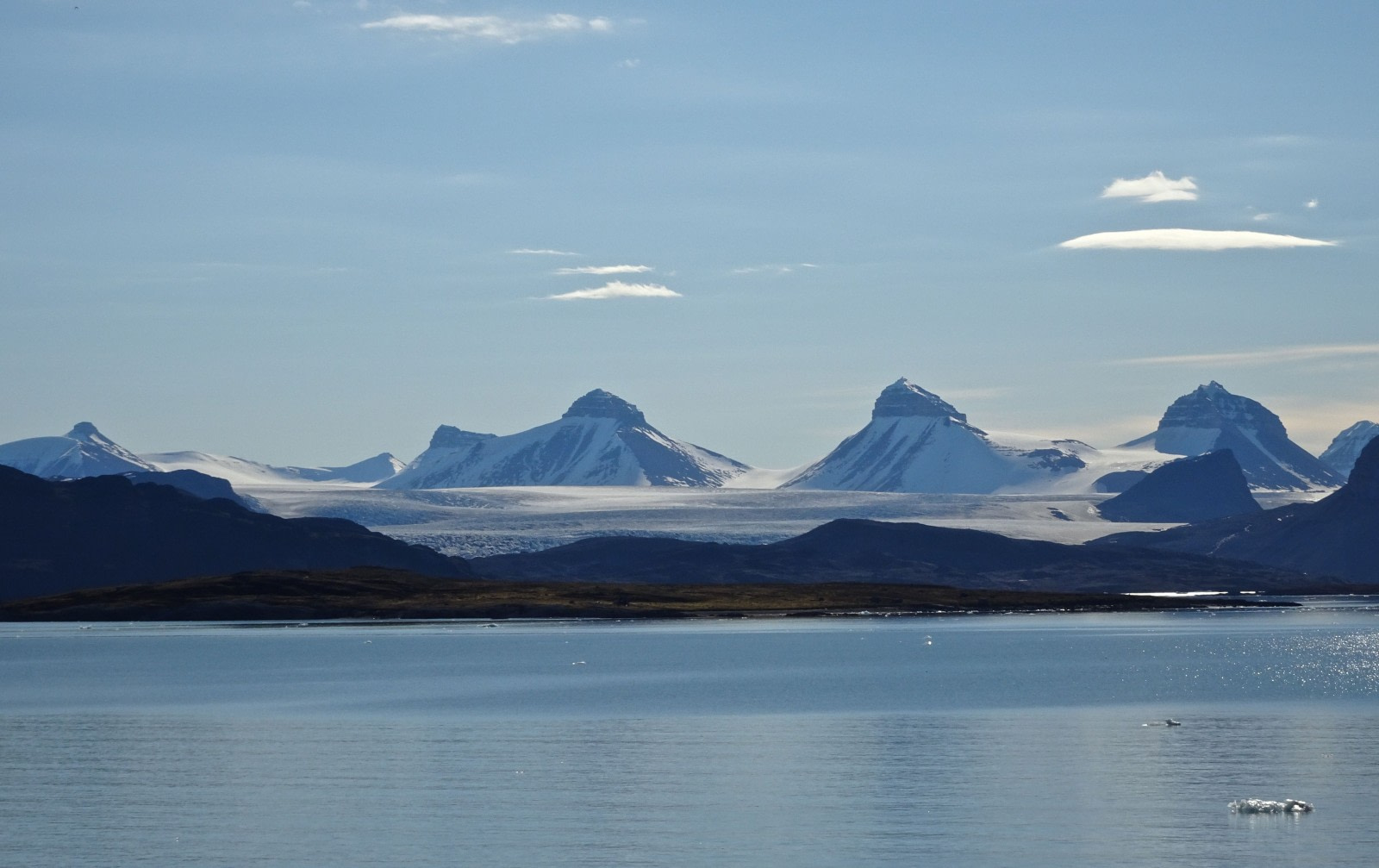
Kongsfjorden is a glacial fjord in Svalbard that is home to a rich mixture of flora and fauna.
Because it is an open fjord with no sill at its entrance, Kongsfjorden's influx of Atlantic waters characterize it as a sub-Arctic rather than Arctic environment.
As such, Kongsfjorden represents a border area between the Atlantic and Arctic biogeographic zones. The biodiversity and animal populations there are heavily influenced by the convergence of cooler and warmer waters.

Kongsfjorden's rich photoplankton environment
Scientists have found a pronounced seasonal growth pattern in photoplankton and distribution in Kongsfjorden.
In the polar winter photoplankton stops production, while in the spring more than 60 photoplankton taxa spring to life, culminating in a bloom in Kongsfjorden that coincides with similar blooms along the northern Norwegian coast. This indicates a strong light or day length control in Kongsfjorden.
The summer season in Kongsfjorden is characterised by a diverse range of photoplankton communities, with over 130 taxa recorded.

Shrimp and fish, mammals and birds
The most common shrimp in Kongsfjorden is Pandalus borealis, while the most common fish is the polar cod and capelin.
Kongsfjorden also has diverse mammal communities, including pinnipeds (seals and walruses), cetaceans (whales), and polar bears. Seabirds in Kongsfjorden include fulmars, marine ducks, gulls, and some shore birds.
The number of birds in Kongsfjorden varies according to the seasons, with a marked peak in spring and summer. This is attributed to migratory species that regularly pass through.

The variable food supply of Kongsfjorden
Within and between the seasons, there are changes in food availability in various parts of Kongsfjord that determine the spatial and temporal distribution of foraging by the top predators.
The retreating ice normally creates a highly productive area with an extensive photoplankton bloom in spring that results in prey organisms being concentrated in the upper water layers. These animals then attract both marine mammals and birds in the areas.
When the fast ice has melted, glacier fronts (which act as upwelling areas for zooplankton due to freshwater discharging from the bottom of the glacier) become the main feeding areas for marine mammals and birds during late summer and early autumn.

Sunbathing ringed seals
Ringed seals are distributed throughout the circumpolar Arctic and are the most abundant Arctic seal in the area. Kongsfjorden is an important breeding site for these species, which builds lairs in this habitat to protect themselves and their offspring.
Snow depth is a limiting factor for the location of these lairs, as the average depth in Kongsfjorden is only 20 cm (7.9 inches), quite shallow for the Arctic, so it provides few resources for lair construction.
The prime location for ringed seals in Kongsfjorden is in the inner fjord area, which contains glacier ice frozen into the annual ice. Because these ice structures tend to cause accumulation of drifting snow, they provide good snow depth for ringed seal lairs.
In March and April, some 50 - 100 seal pups are born. As spring comes around, the seals lay out to rest and sun themselves on the ice surface. In June, adult and young adult seals spend most of their time out in the water while they undergo their annual moult.
At present there is a high concentration of ringed seals on the remaining sea ice in Kongsfjorden. After moulting, these seals leave the fjord and move along the coast or more northward to the pack ice.
Breeding-aged seals then return in early winter and maintain holes in the ice, as the inner part of Kongsfjorden becomes ice-covered.

Kongsfjorden's water-loving bearded seals
Bearded seals also call Kongsfjorden home, though this species prefers the drifting pack ice as its breeding habitat. Because of their large body size, bearded seals are protected from the cold, while their aquatic nature protects them from predators.
These seals are seldom found more than a meter away from the water, and their young swim and dive within hours of birth.
Bearded seals are found at low densities, with often only around 25 pups born each year. Pups remain with their mothers for around three to four weeks.
Female bearded seals mate with males that have managed to attract them with their singing. In June, bearded seals moult and can often be found on land fast ice in clusters.

And let's not forget the walruses
Walruses in Svalbard breed mainly in the Franz Josef Land area. They spend their winter on pack ice in the southern and northeastern ranges of Svalbard as well as nearer to Russia.
Walruses are often found in Kongsfjorden from spring until late summer.

Whales cruising around Kongsfjorden
Beluga whales are among the more commonly sighted whales in the Kongsfjorden area. Pods of these whales can sometimes be seen in the area for days at a time from early spring through the summer months.
Minke whales have also been spotted in the outer areas of Kongsfjorden from late spring to the summer months, with the occasional minke making its way into the inner fjord area.
Fin whales too have been known to forage in Kongsfjorden, but they usually remain in coastal and offshore waters as opposed to inside the fjords.

Seabirds that make the fjord home
There are nine species of sea birds that live in Kongsfjorden. The common eider is the largest, followed by the black-legged kittiwake.
Nearly all the birds of Kongsfjorden are migratory, leaving the fjord during the winter months. Their arrival time in spring and departure time in autumn varies among the species, meaning the peak time for birds in the area is during a three-month period from mid-May to mid-August.
Other seabirds that breed in Kongsfjorden include the Arctic skua, long-tailed skua, greater black-backed gull, long-tailed duck, and red-throated diver.

Kongsfjorden's foragers and divers
The seabirds of Kongsfjorden can be broken into two groups based on foraging behavior.
First, there are pursuit divers that catch zooplankton and small fish. The diving depth of each bird is related to its body size. The largest, Brunnich's guillemots, make the deepest dives: around 200 meters (650 feet). The smallest, little auks, dive to around 30 meters (100 feet). Common eiders, meanwhile, are mainly benthic feeders that forage in shallow waters, diving to about 15 meters (50 feet).
Then there are the surface feeders or near-surface feeders, such as the northern fulmar, kittiwake, glaucous gull, and Arctic tern. The first three of these birds mainly feed on zooplankton and pelagic fish from the sea surface, but the Arctic tern sometimes goes below water for prey.
Notwithstanding its seal, walrus, and whale populations, Kongsfjorden's seabirds make it an ideal Arctic cruise attraction.