Blog
Type
Region
Destination
-
Show all
Ship
Highlights
-
Show all
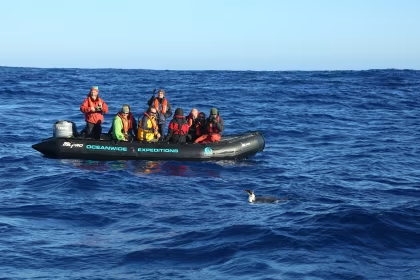
The Emperor Penguin of the Drake Passage
There are certain moments in life when a series of events combine to create an experience that is both unexpected and unforgettable. These are the times when you are reminded how fortunate you are to be a part of something that few people will ever have the opportunity to experience.
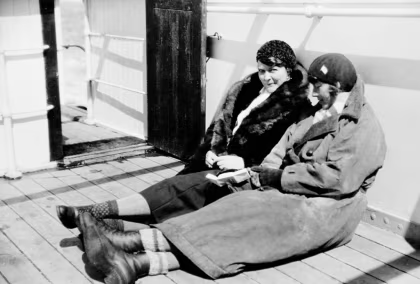
The First Women in Antarctica
Though the list of explorers, scientists, and scientific expeditions in Antarctica is as extensive as it is impressive, it has also been overwhelmingly one-sided in terms of gender - especially before the early years of the twentieth century.
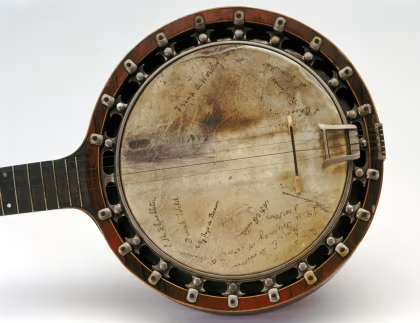
Leonard Hussey’s Banjo: brain food
The Endurance had been trapped in pack ice for 10 months when Sir Ernest Shackleton gave the order to abandon ship on 27 October 1915. He allowed each member of the Imperial TransAntarctic Expedition to bring 2lbs of personal gear with them as they set up camp on the floe—all except meteorologist, Leonard Hussey.
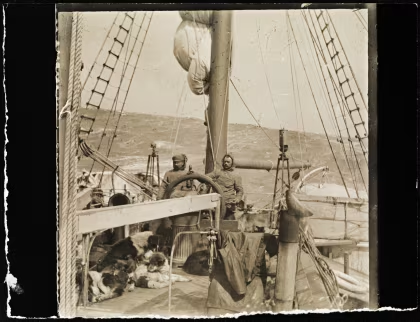
Roald Amundsen’s polar exploits
Roald Amundsen had been, unlike Scott, dedicated to exploration ever since he was 15 years old reading about Franklin’s Arctic expeditions. Amundsen wrote that ‘the narrative that appealed to me most strongly was the suffering he and his men endured. A strange ambition burned within me to endure those same sufferings’ and so he dedicated himself to becoming an Arctic explorer.
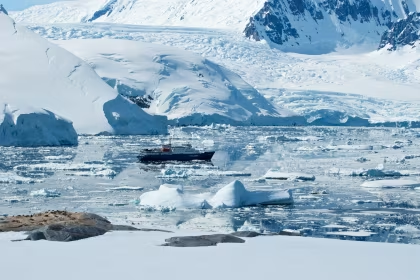
10 Books and Films To Prepare for your Antarctica cruise
Stunning landscapes. Marvellous wildlife. Astounding human survival stories. Here's a list of books and films that contain all of that. If you are thinking of embarking on a trip to Antarctica, once you've watched or read our recommendations, you will feel you have to be on a vessel, destination south, pronto.
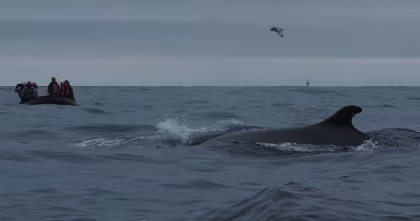
Of Treacherous Rocks & Audacious Fin Whales
The morning dawned beautiful and calm, the Plancius weaving her way through the seas ever nearing Antarctic Sound. The waters were fantastically gentle, with minimal amounts of swell and waves ever so gently rocking the ship. As we neared the jagged scarred mountains of rocks known as the South Shetland Islands, more and more icebergs loomed on the horizon. Soon the ship was nearly surrounded by large magnificent icebergs, massive tabular’s whose presence dwarfed our tiny vessel.
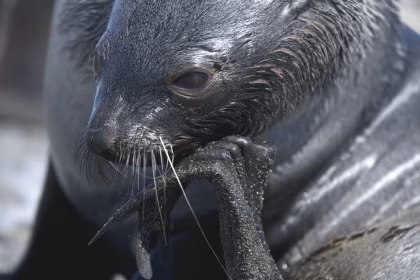
Coming Back from the Brink: The Fur Seals of Antarctica
Once hunted to the brink of extinction, the Antarctic fur seal is one of the most populous and charismatic species of seal found in Antarctica. Unlike other members of its large family, the fur seal has external ears, or pinnae, a short snout, and a thick coat of dark brown fur. Male seals tend to be larger than females, and range in weight from 91 kg (200 lbs.) to 215 kg (474 lbs.).
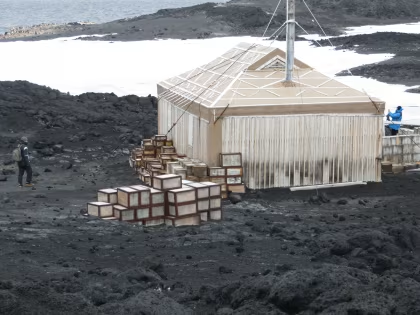
Abandoned Antarctica: Five Remarkable Stations Left Behind
For centuries, the most extreme scientists, explorers, fishermen, and travellers have called Antarctica home. The continent is peppered with research stations that represent the valiant efforts of humankind to study the unknown.
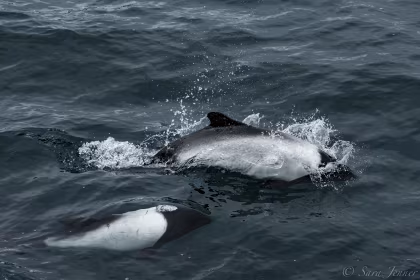
The Small but Social Commerson’s Dolphin
Despite the fact that Commerson's dolphins are among the least-known Antarctic cetaceans, these small but social dolphins go by several different names.
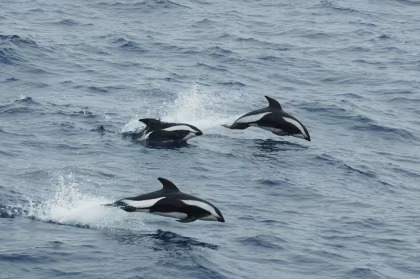
Antarctica’s Hourglass Dolphin
Hourglass dolphins are very rare, and yet they are not included in the threatened or endangered species list. Why? First, their habitat is the cold and remote subantarctic and Antarctic waters. Secondly, they are not hunted commercially, and thirdly, they are timid and usually avoid human contact.
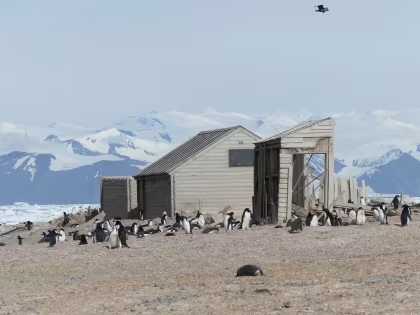
The First Buildings in Antarctica: Borchgrevink’s Historic Huts
Borchgrevink’s huts at Cape Adare are notable not only for their important role in the discovery of Antarctica, but also because they were the first buildings erected on that continent.
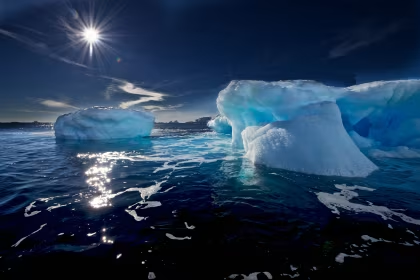
Everything you need to know about Antarctic icebergs
When one imagines icebergs, the first image that usually comes to mind is that of an immense spiky iceberg, majestically floating in the freezing waters. But in reality, any chunk of ice larger than 16 feet across and at least 98 feet thick can be called an iceberg
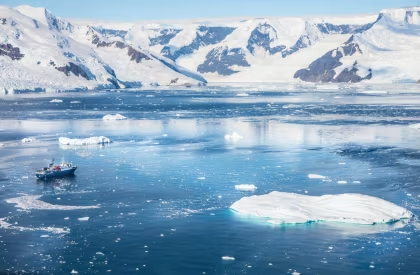
The first race to the South Pole in 50 years
James Clark Ross’s British Royal Navy expedition of 1839-1843 launched the most successful expedition to Antarctica by pioneering an entry into the region of sea that now bears his name, opening the door to the inhospitable continent for future expeditions to come.
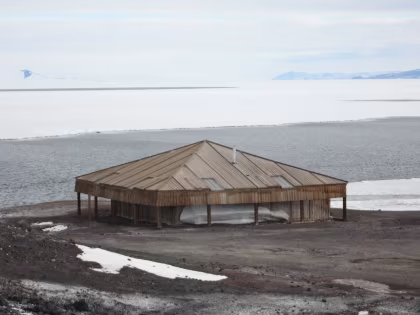
Protecting the heritage of Discovery Hut, Hut Point Antarctica
One building that became a testament to scientific endeavour is Discovery hut at Hut Point, on Ross Island. Discovery hut was Robert Falcon Scott’s first expedition base in Antarctica – established by the National Antarctic Discovery Expedition 1901-1904.
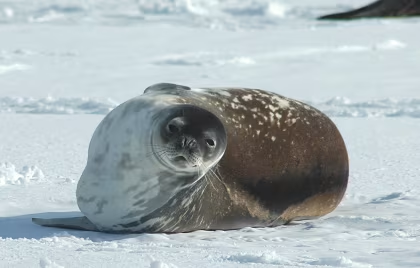
Weddell seals: The data collectors scientists of Antarctica
Weddell seals inhabit some of the coldest and darkest waters deep within the Ross Sea ice, making them the southernmost naturally occurring mammals on Earth.
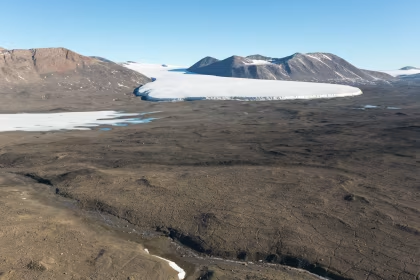
The Dirty Details of Antarctica's Dry Valleys
Located on the western coast of McMurdo Sound, the McMurdo Dry Valleys form the largest ice-free (relatively) area in Antarctica.
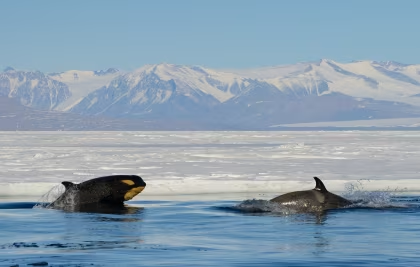
Orcas (aka Killer Whales) of Antarctica and the sub-Antarctic
Orcas, also known as killer whales, are found in every ocean but are most abundant in the Southern Ocean. Their population is estimated to be between 25,000 - 27,000, making them the third most abundant cetacean in Antarctica.
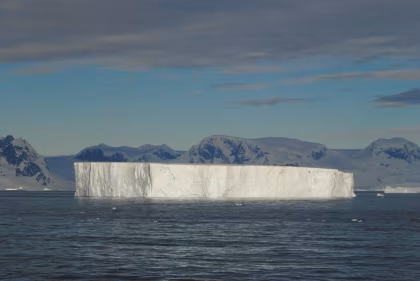
What the ice reveals about Antarctica
Antarctica is not just an ice-covered continent with penguins, whales and seals. Under the thick ice are hidden freshwater lakes that contain thousands of microbes that hint towards a diverse array of life.
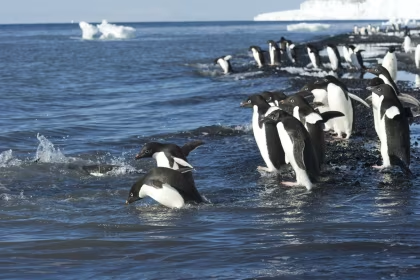
Adélie penguins in the Ross Sea - Antarctica
The Adélie penguin population in the Ross Sea is reported to be the highest in 30 years with up to a million Adélie penguin pairs breeding in the Ross Sea region over summer.
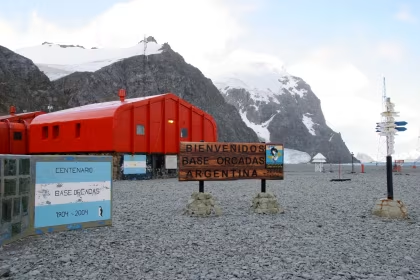
A Look Into the International Research Stations of Antarctica
There are currently 70 permanent research stations scattered across the continent of Antarctica, which represent 29 countries from every continent on Earth. Together, these countries, or ‘signatories’ of the Antarctic Treaty, must ensure the preservation and wellbeing of the natural land, and to cooperate with their fellow explorers.
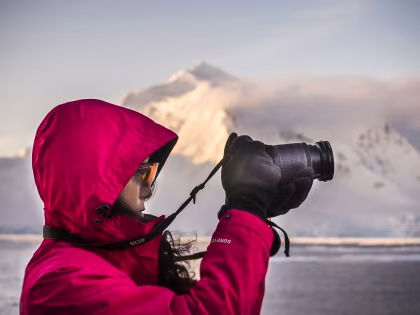
12 photo tips to make better pictures on your Antarctica cruise
In this article you get 12 photo tips from Oceanwide Expeditions to make better pictures on your trip.
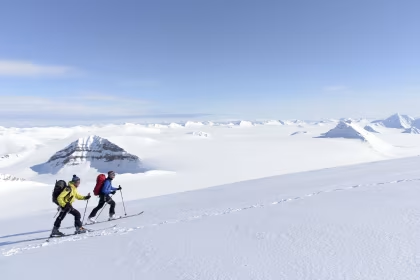
Ski mountaineering: a new activity onboard m/v Ortelius in Antarctica
Ski mountaineers climb high snow-covered and glaciated peaks and viewpoints, mostly roped up in small groups. It’s a thrilling experienced for those skiers experienced enough to ski downhill individually and master sometimes steep, and potentially dangerous alpine environment.
