Blog
Type
Region
Destination
-
Show all
Ship
Highlights
-
Show all

Chosen by the Sea: Interview with Captain Ernesto Barria
Ortelius sits dry-docked in a cavernous basin of brick and steel, lost in scaffolding like a sidelong building undergoing renovation. Men in dark blue jumpsuits and bright blue hardhats, heavy gray gloves and greasy gray boots, stomp over the rattling mesh walkways carrying hoses and lit cigarettes and bulky pieces of nautical maintenance equipment, one of which resembles a pneumatic cattle gun that, in the wrong hands, could wreak some serious havoc. Recently arrived from the Arctic, Ortelius is receiving its seasonal upkeep here in Vlissingen, a small Dutch port town near the Belgian border.
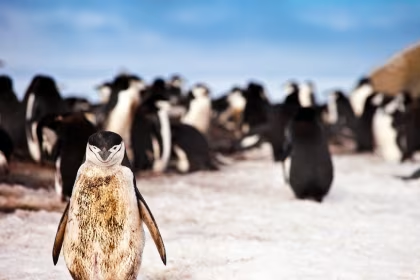
Seven Facts About Antarctic and Sub-Antarctic Penguins
There are 17 species of penguin on the planet today, but only eight penguin species can be seen in Antarctica and the sub-Antarctic islands, where we travel: chinstraps, emperors, Adélies, gentoos, kings, Magellanics, rockhoppers, and macaronis.
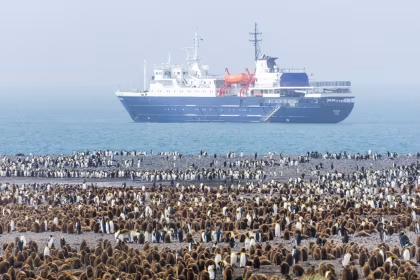
Three Antarctica Cruise Deals
For many travelers, Antarctica epitomizes the polar regions. But while embarking on an Antarctica cruise can be a life-changing experience, it can also be a bank-breaking proposition. Here are three cruise deals, each offering their own unique experience, that will provide you a much-coveted Antarctic adventure while minimizing the likelihood you’ll have to take out another mortgage to afford it.
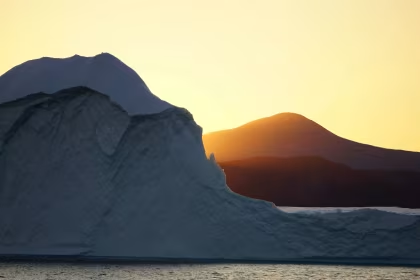
Light in the Land of the Midnight Sun
The midnight sun, also known as the polar day, is a natural phenomenon seen within the Arctic and Antarctic circles. During the polar summer, the sun stays above the horizon 24 hours a day – meaning no sunrise or sunset, just constant daylight. This unique phenomenon is caused by the seasonal tilt of the Earth toward the sun during the Arctic or Antarctic summer.
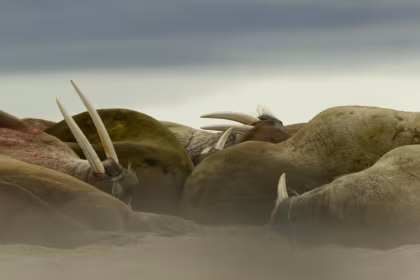
15 Toothy Facts About the Atlantic Walrus
The walrus is one of the most recognizable animals on the planet, and for good reason. Try sneaking into a cinema with those tusks!
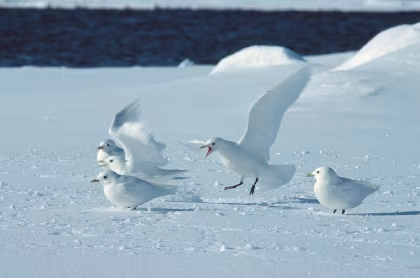
Birds of the North: 29 Arctic Birds and Seabirds
Arctic wildlife exists in a category unto itself, and for good reason. But often Arctic birds get undeservedly overlooked. Here are 22 all-too-unsung species and their most fascinating facts.

The Doctor Is In: Interview with Lauke Bisschops
Forget choosing between sprawling city hospitals and small boutique clinics, subways compared to streets, ambulances versus Uber versus your own speeding automobile. When you’re cruising in the Arctic and Antarctic, the nearest hospital is a long way off, and in terms of the health care, everyone has access to the same kind – and the same person. During her voyage around the Arctic archipelago of Svalbard, Dutch polar cruise doctor Lauke Bisschops told us all about her experience treating injuries, illnesses, and a surprising lack of sea sickness.
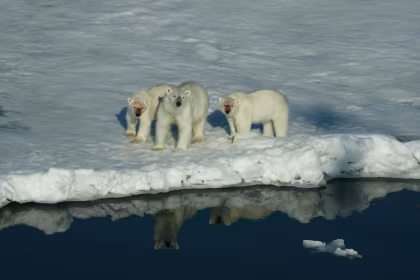
Polar Bear Primer: Eight Facts About the Arctic Wanderer
Polar bears are found throughout the Arctic region in 19 subpopulations, including Alaska, Canada, Greenland, Norway, and Russia. In these areas, polar bears favour the edges of pack ice where currents and wind interact. In these areas, the continuous melting and refreezing pattern creates ice patches and leads, which are open spaces in the sea between sea ice.
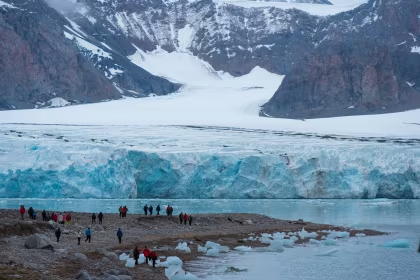
16 Conversation-Starting Svalbard Facts
It might seem odd that an icy, snowy, bear-packed cluster of islands at the edge of the world could be such a hotspot (so to speak) of outdoor tourism. But once you visit Svalbard, this apparent oddity starts to make a lot more sense.
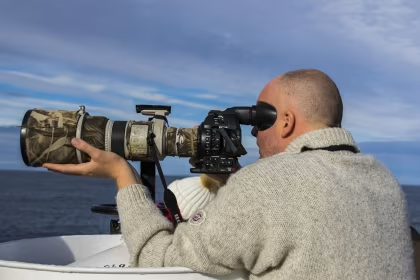
10 Tried-and-True Bird Photography Tips
It’s easy to understand our fascination with birds: They’re beautiful, graceful (usually), and most of them have the power of flight. But how do you capture that beauty, grace, and freedom in your photographs? Some will tell you it’s the lens, some the camera, and other bird photographers will say that some species are just naturally photogenic. Whatever the case, here are 10 tips that can only enhance bird photography.
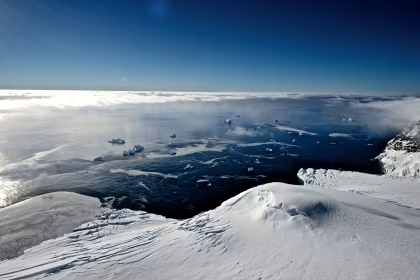
10 Weather-Fueled Facts about Antarctica
Most of us have at least a vague notion of what makes the North and South Poles so brutally, bone-chillingly cold: They receive less sunlight than the rest of the planet, what sunlight they do receive arrives at an angle, and they’re usually buried under endless mounds of ice and snow. This holds especially true for the South Pole and its centerpiece, Antarctica. Fewer people know, however, what drives Antarctic weather, or what results from it. Here are ten weather-related facts about the most southern continent that will put your polar meteorology ahead of the curve.
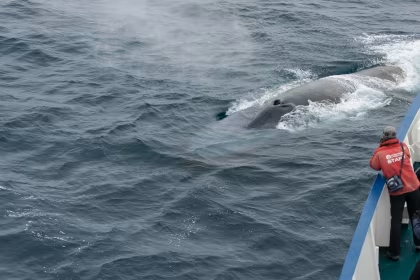
10 Bountiful Blue Whale Facts
We could write a book filled with fun and fascinating facts about blue whales, but here we will select the 10 most interesting blue whale facts in our opinion.

A Guide’s Guide: Interview with Michael Ginzburg
For adventure lovers, a common reaction to meeting polar expedition guides is that they have the coolest job on the planet.
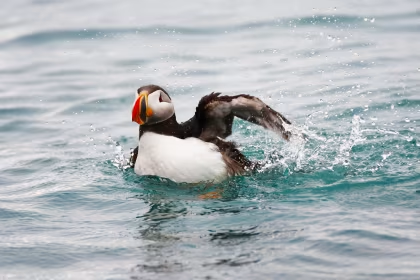
Puffins: Clown Birds of the Atlantic
Puffins belong to a family of 22 species of seabirds called Auks, pigeon-sized birds that live on a diet of small fish and crustaceans. Puffins catch their prey by swimming underwater and chasing it down. There are four species of puffins. One species, the Atlantic puffin, is around 18-20 cm (7-7.8 inches) in height and weighs between 350-600 grams (.8-1.3 pounds). It is found across a wide geographic area, all the way from France to the Gulf of Maine.
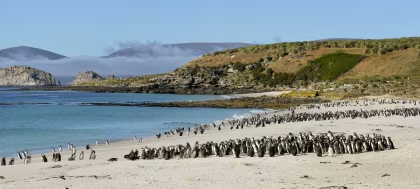
17 Reasons to Cruise the Falklands
You’ve seen the colossal penguin colonies of South Georgia. You’ve sailed among the plunging seals of the Antarctic Peninsula. You’ve watched whales in the Weddell Sea beside a backdrop of titanic tabular icebergs. But if you haven’t visited the Falkland Islands, you’re missing one of the touristic wonders of the far Southern Hemisphere. Here are 17 irrefutable reasons to add some of this sub-Antarctic archipelago’s 778 distinctive islands to your travel calendar.
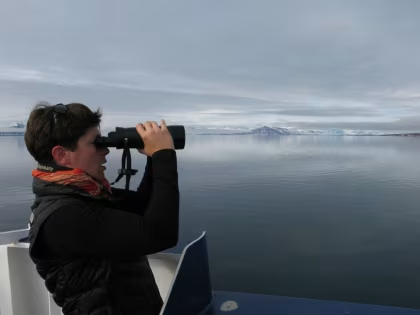
10 Popular Bird Watching Binoculars
Binoculars are so common a companion of outdoor enthusiasts that many pack them with hardly a second thought. They’re tossed into a backpack alongside bug spray, sunblock, and waterproof matches with not half the care afforded the typical cell phone. But to some outdoors groups, binoculars serve a highly specific and eminently indispensable purpose. And there is perhaps no group for whom this rings more true than for bird watchers. If you count yourself among this exceptionally technical clan of hobbyists, here are 10 birding binoculars you’ll want to know more about – even if you know about them already.
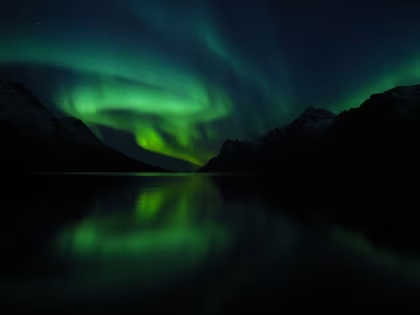
10 Illuminating Facts about the Northern Lights
According to Roman mythology, Aurora was the goddess of the dawn. The word “borealis,” however, is Greek for “wind.” The combined phrase “aurora borealis” therefore means “dawn wind,” known in English as the northern lights. This phenomenon has fascinated people for thousands of years, a fascination that clearly continues today: The northern lights are one of the major attractions of the Arctic, and indeed there are a number of northern lights cruises in the Arctic specifically devoted to viewing this magical lightshow
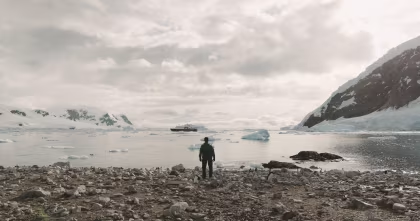
Oceanwide Finalist in Adventure in Motion Film Contest
The new corporate commercial for Oceanwide Expeditions, “Walk into the Waking Dream,” has just been nominated as a finalist in the Adventure in Motion short film competition.
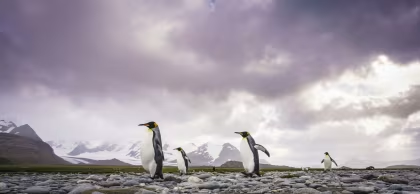
Penguins, Albatrosses, Petrels: The Winged Wildlife of South Georgia
South Georgia’s location south of the Antarctic Convergence gives the island more of an Antarctic climate than other terrain of the same latitude.

Inside the Svalbard Global Seed Vault
Literature, cinema, even video games have given us no small supply of global disaster scenarios. These often come in the form of annihilating wars, pulverizing natural catastrophes, or sweeping pandemics that leave bands of ragged survivors scrambling for boxed potatoes and bullets amid hordes of cannibalistic zombies.
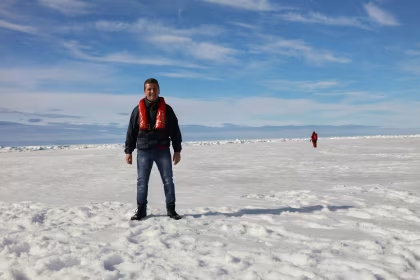
Behind the Scenes with Plancius Hotel Manager Sebastian Duma
A pleasant June evening, mild and warm – for the Arctic. Outside the panoramic windows of the m/v Plancius observation lounge, peaks and glaciers and rolling white snowscapes glide past unhurried. Conversation has softened to a post-dinner hum, and the bar is almost empty except for the breathless comings and goings of Charlotte the bartender restocking cocktail glasses.
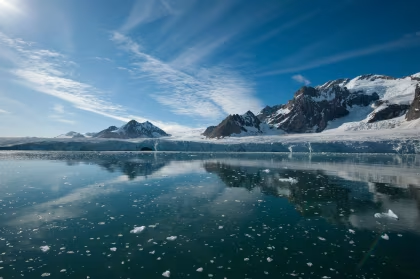
A Bug’s Life in Svalbard
When you think about Svalbard wildlife, you might imagine reindeer, Arctic foxes, polar bears – the primary animal attractions that draw passengers to an Arctic cruise. But in fact the Svalbard archipelago is a thriving location for over 1,000 species of terrestrial and freshwater invertebrates: animals that lack backbones. Despite this richness of life, however, these invertebrates are only found in the Isfjord and Kongsfjord areas of these wonderfully diverse islands.
