Blog
Type
Region
Destination
-
Show all
Ship
Highlights
-
Show all
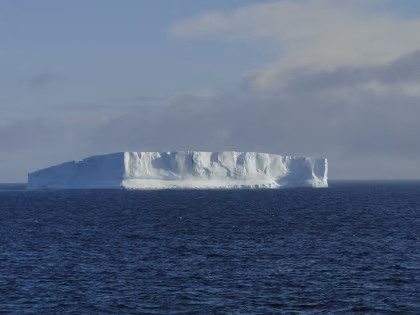
Weddell Sea: the Original Antarctic Adventure
According to the historian Thomas R. Henry, you have to be brave to visit the Weddell Sea. In 1950 he wrote in his book, The White Continent, about sudden “flash freezes” that occur in the area. In fact it was due to one of these flash freezes that Ernest Shackleton’s ship, Endurance, got stuck in January of 1915, forcing his crew to spend more than a year there before they could get out.
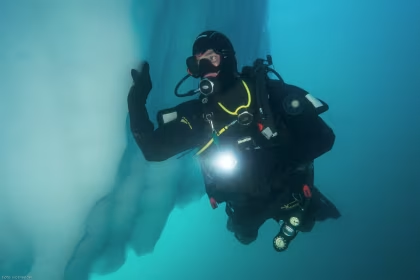
Polar Diving: A Supreme Underwater Adventure
If you’ve ever gone diving in warm, tropical waters you know how exciting that can be. In the ocean’s depths you’ll be met with an array of colors from schools of fish and the vibrant coral. In tropical waters, your biggest concern is the crowd of other divers exploring these waters along with you. But imagine diving in an environment where only a select few dare to venture. A place so unique only a special few divers have ever experienced its astonishing wonders. This is the magic, the challenge and the reward of polar diving.
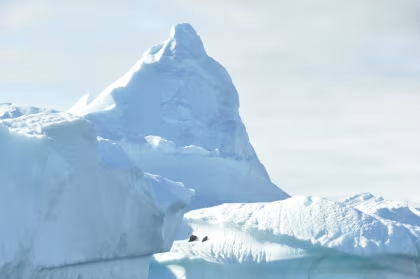
Life migrating through the Polar Front
Since James Cook’s second voyage in 1772-1775 to Antarctica, which saw the first descriptions of Antarctic animals, scientists have progressively revealed the composition of the Antarctic and sub-Antarctic region’s biodiversity. Since then scientist have undertaken numerous expeditions and scientific research projects to understand the unique continent’s ecosystems.

Five of History’s Greatest Polar Explorers
Today’s visitors to the Polar regions follow in the footsteps of some of the most famous explorers in history. Here’s a list of 5 great explorers to brave the harsh lands of the Arctic and Antarctica.
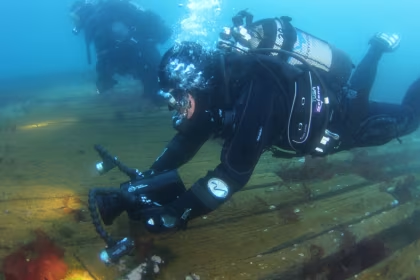
Wreck Diving in Antarctica
Scuba diving in Antarctica is a unique experience, no doubt about it. How many other places can you swim beneath icebergs and possibly see a penguin into the bargain? But that's not all Antarctic diving has to offer. There are shipwrecks, too. And with us, you can go wreck diving to one of them.
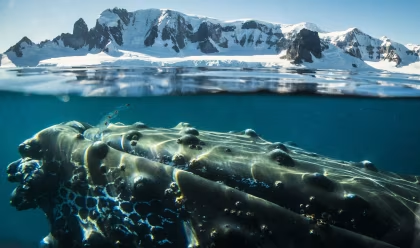
Baleen Whales – The Gentle Giants of the Ocean
There are many species of baleen whales: 15 in total. In this blog we will tell you much more about baleen whales, so you can expand your knowledge.
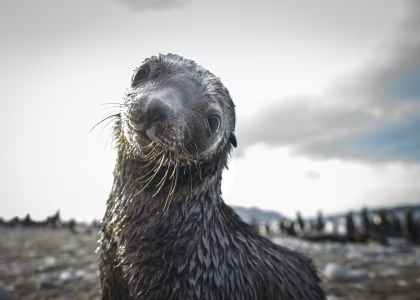
The secrets of Antarctic seals revealed
There live only six species of seals in the Antarctic: Southern Elephant Seals, Antarctic fur seals, crabeater seals, leopard seals, ross seals and weddell seals. While we know of them, there are many secrets of their lives that we have yet to discover.
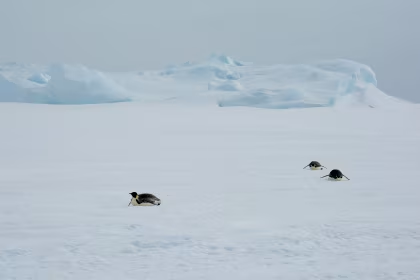
Encounter with the emperor penguin in Antarctica
Dutch journalist Gemma Venhuizen embarked on the MV Ortelius during the Weddell Sea cruise 'In search of the emperor penguins'. She had several encounters with this majestic penguin species - both from the sea and from the air.
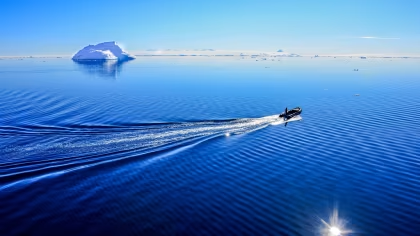
Oceanwide Expeditions presents new corporate identity
Since 1993, Oceanwide Expeditions has been taking passengers deep into the Arctic and Antarctica on voyages that focus on wildlife, nature and activities.

The First Overwintering Hut in Antarctica
In 1899, Carsten Borchgrevink and his nine crewmen became the first to overwinter in a hut in Antarctica.
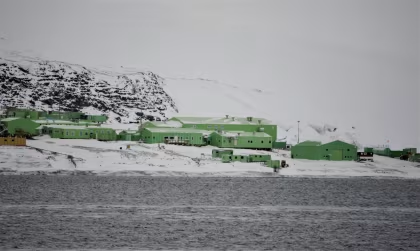
Scott Base’s 60th anniversary
The Trans-Antarctic Expedition (TAE), also known as the Commonwealth Trans-Antarctic Expedition (CTAE), aimed to complete the first overland crossing of the Antarctic Continent: a 3,473-km journey from the Weddell Sea all the way to McMurdo Sound via the South Pole. The TAE consisted of two teams: The Crossing Party, led by Dr Vivian Fuchs of Britain and the Ross Sea Party, led by New Zealand explorer, Sir Edmund Hilary. The Ross Sea Party’s role in the TAE was to support the Crossing Party’s attempt by building a base at McMurdo Sound, laying supply depots and establishing a vehicle route from the Polar Plateau through the Western mountains and back to Ross Island.
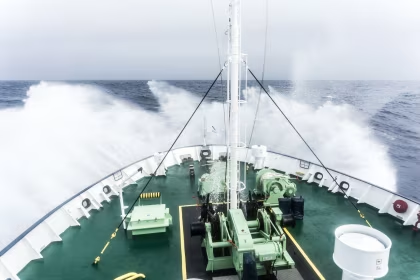
What to Expect When Crossing the Drake Passage
Positioned between the southern tail of South America and the Antarctic Peninsula's north-sweeping arm is a lively little waterway known as the Drake Passage.
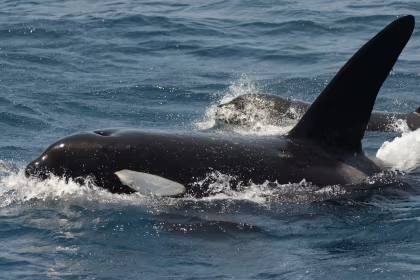
Eight Antarctic Whales You Might See During Your Expedition Cruise
They're powerful, they're beautiful, they're really, really big. Whales are a wonder of the natural world, and one of the best places to spot them is Antarctica. But which whale species might you see there?
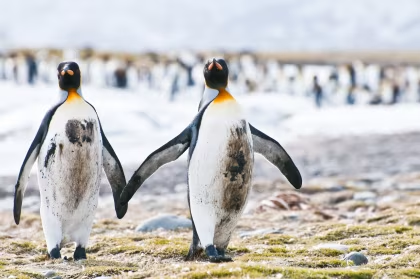
Paradiesen auf Erden: Falkland Islands und South Georgia - Die Pure Wildnis.
... meine reise zu den pinguinen ans südliche ende der welt. hart erkämpft der stürmische seeweg über den südatlantik ins subantarktische gewässer, umschwirrt von hunderten von albatrossen. angekommen in den letzten paradiesen auf erden: falkland islands und south georgia - die pure wildnis.
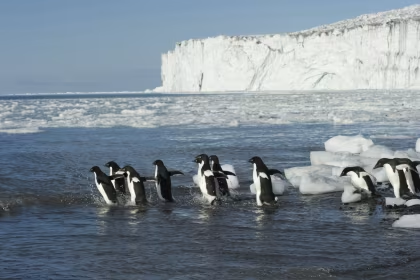
Oceanwide Supports Antarctic Protected Areas
Oceanwide Expeditions applauds the adoption of the Ross Sea region marine protected area recently adopted by the Commission for the Conservation of Antarctic Marine Living Resources (CCAMLR) and strongly supports more areas of protection.
Oceanwide on Marine Protected Areas in Antarctica
Oceanwide Expeditions welcomes the adoption of the Ross Sea region marine protected area adopted by the Commission for the Conservation of Antarctic Marine Living Resources (CCAMLR) in its XXXV meeting in October 2016.
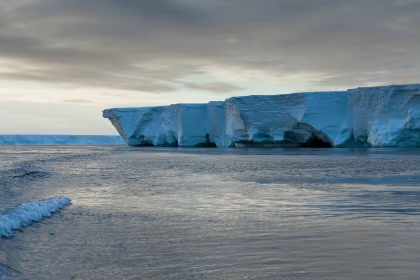
Science of the Ross Ice Shelf
Antarctica’s Ross Ice Shelf is enormous in size, covering 487,000 sq. km – the size of France – and has a thickness ranging from a few hundred metres near the sea to over 1,200 metres away from the floating edge.
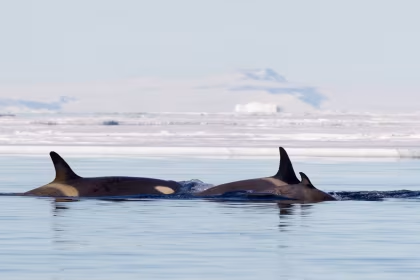
Antarctica’s first Marine Protected Area
In October of this year, the Commission for the Conservation of Antarctic Marine Living Resources, which is comprised of 24 countries including the United States, the European Union, Australia and New Zealand, reached a consensus on a New Zealand/United States proposal to establish a large-scale Marine Protected Area (MPA) in the Ross Sea region.
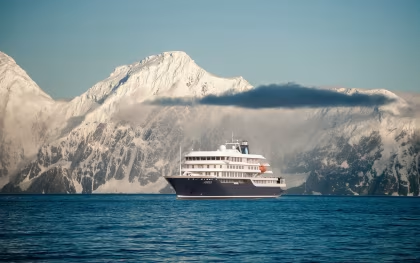
Oceanwide announces new vessel Hondius
Due to an increased demand for polar cruises, Oceanwide Expeditions, the leading exploratory Polar cruise company since 1993, has commissioned the building of an innovative 180-passenger vessel.
Deception Island deceptively active
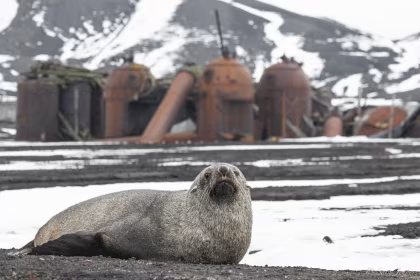
In Antarctica, the South Shetland archipelago is home to Deception Island, a volcanic-rounded island that is 15 km in diameter with a shield volcano. The volcano is mainly basalt-andesite and was one of the first parts of Antarctica to be discovered, probably around 1820 by UK and USA sealers. It has the longest history of human occupation than any other site in Antarctica is the island served as a whaling station from the first 30 years of the 20th century, as the site of a British Antarctic station, then Chilean and Argentine stations.
Oceanwide discounts voyages to celebrate Ross Sea protection news
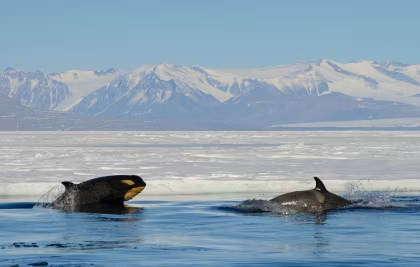
Oceanwide Expeditions is celebrating the news that the Ross Sea will become the world’s largest marine protected area by offering discounts on its two upcoming trips to this vast Antarctic wilderness.
Antarctic Icon: 44 Facts About the Emperor Penguin
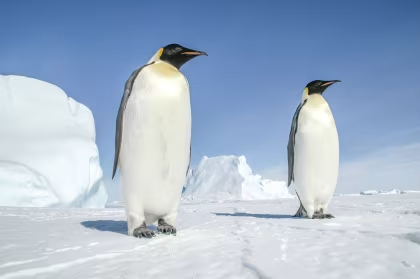
Emperor penguins are truly the emperors of Antarctica as not only do they survive through the harsh Antarctic winters but they also are capable of breeding during the worst weather conditions on Earth.
