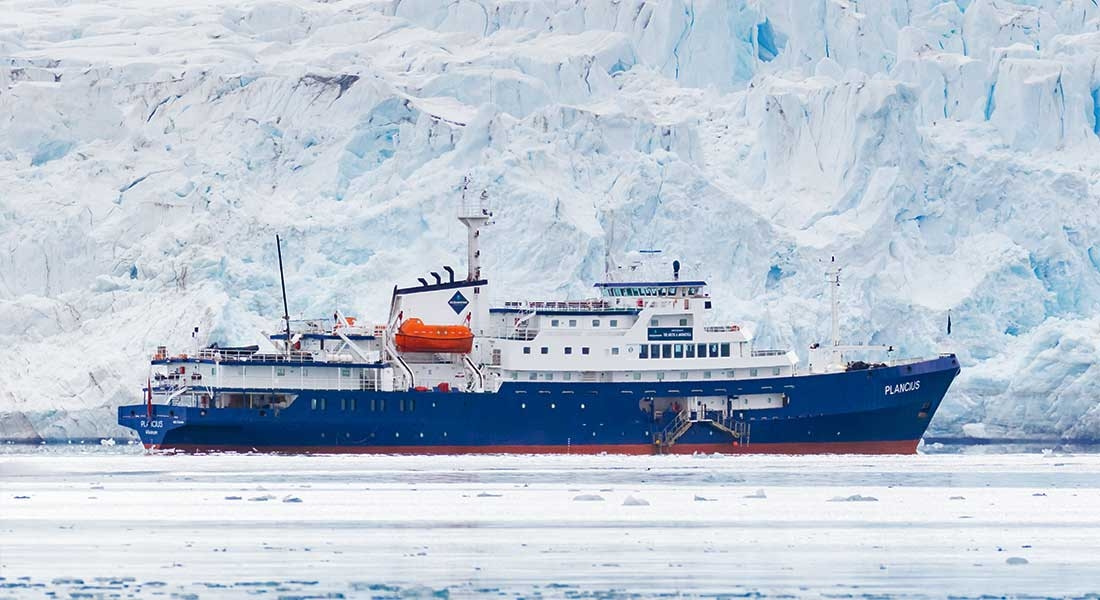
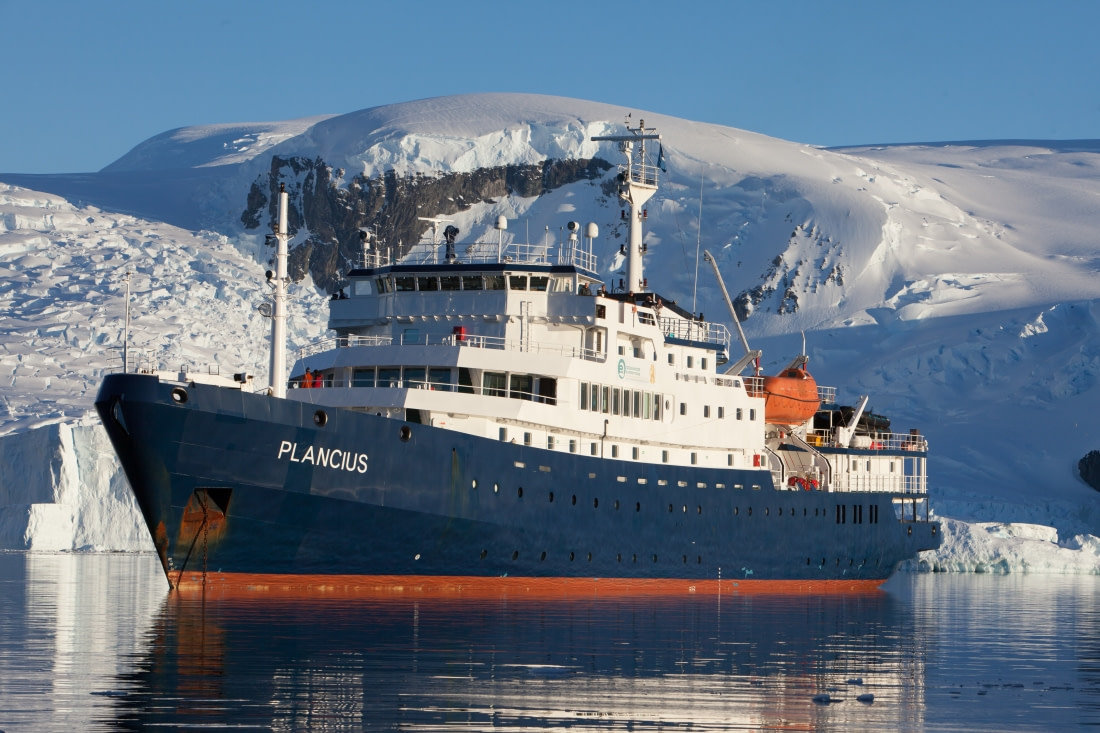
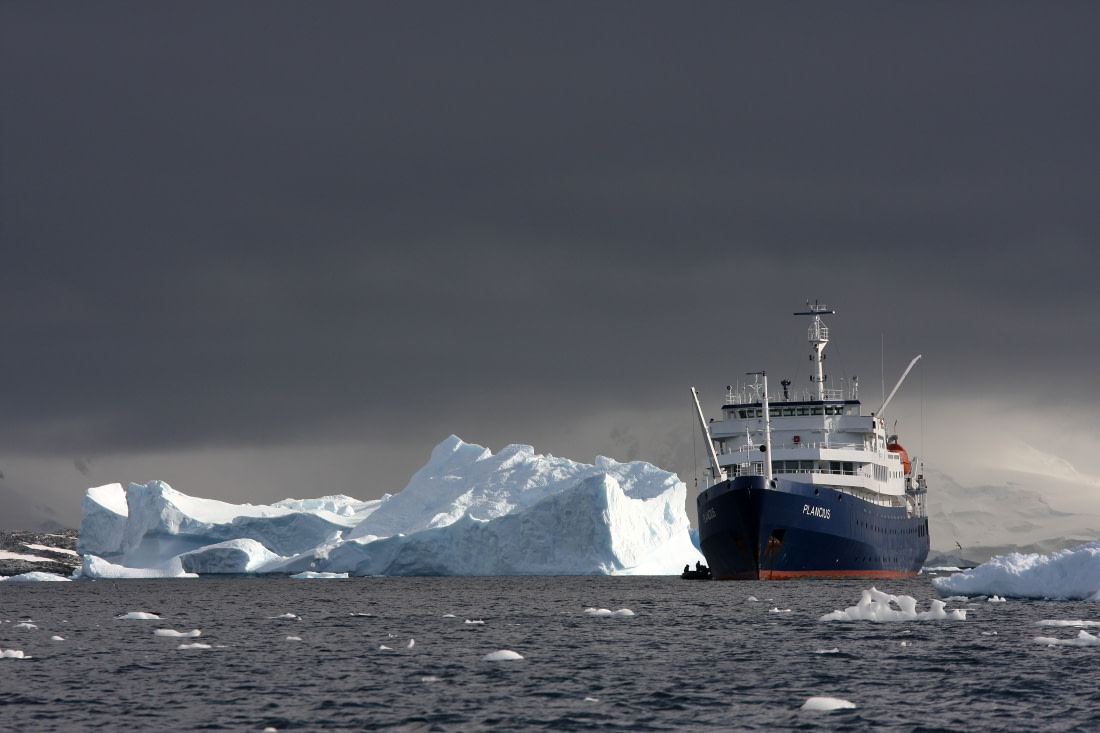
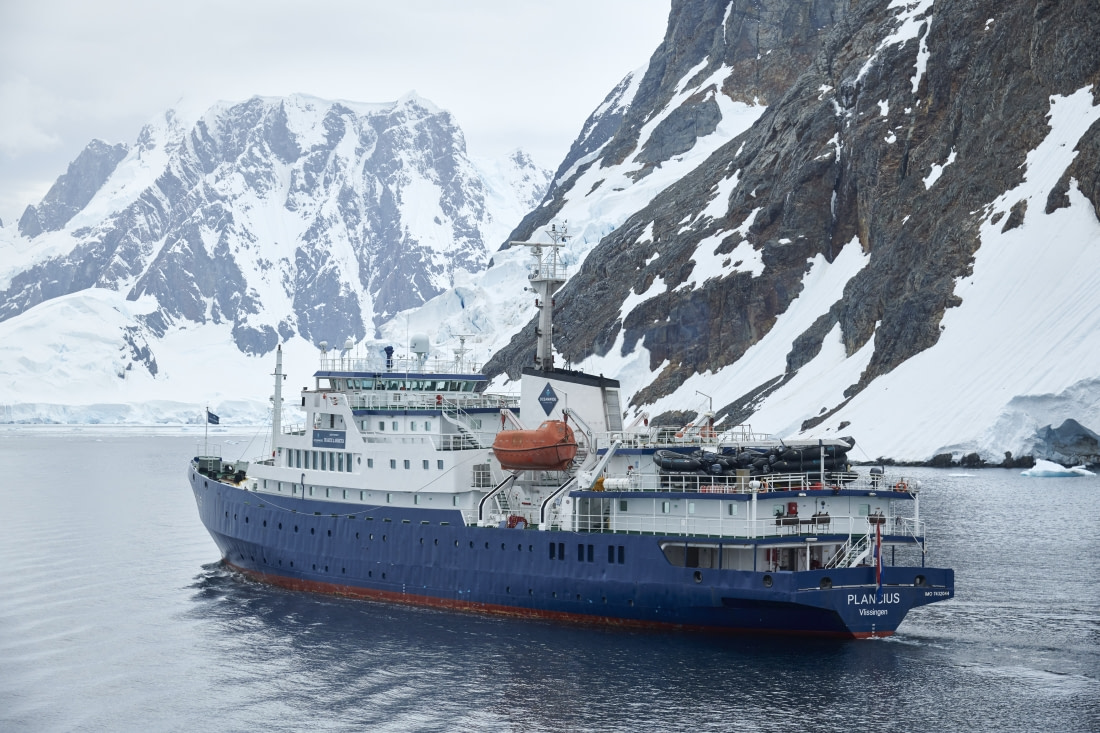
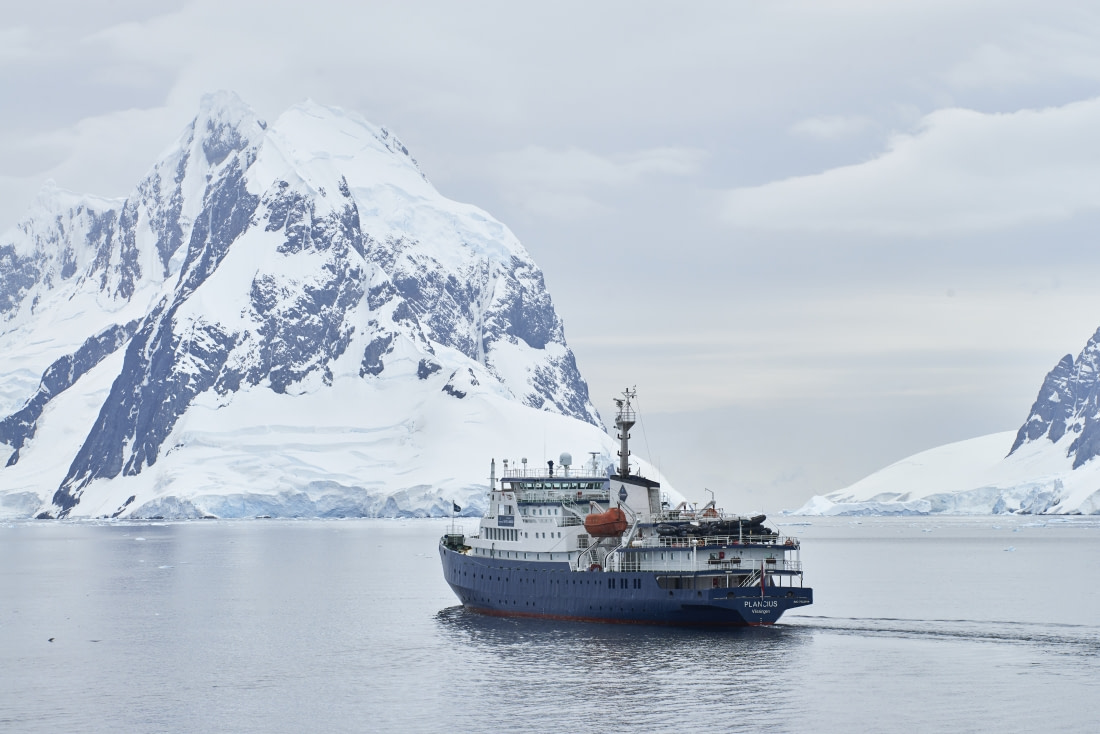
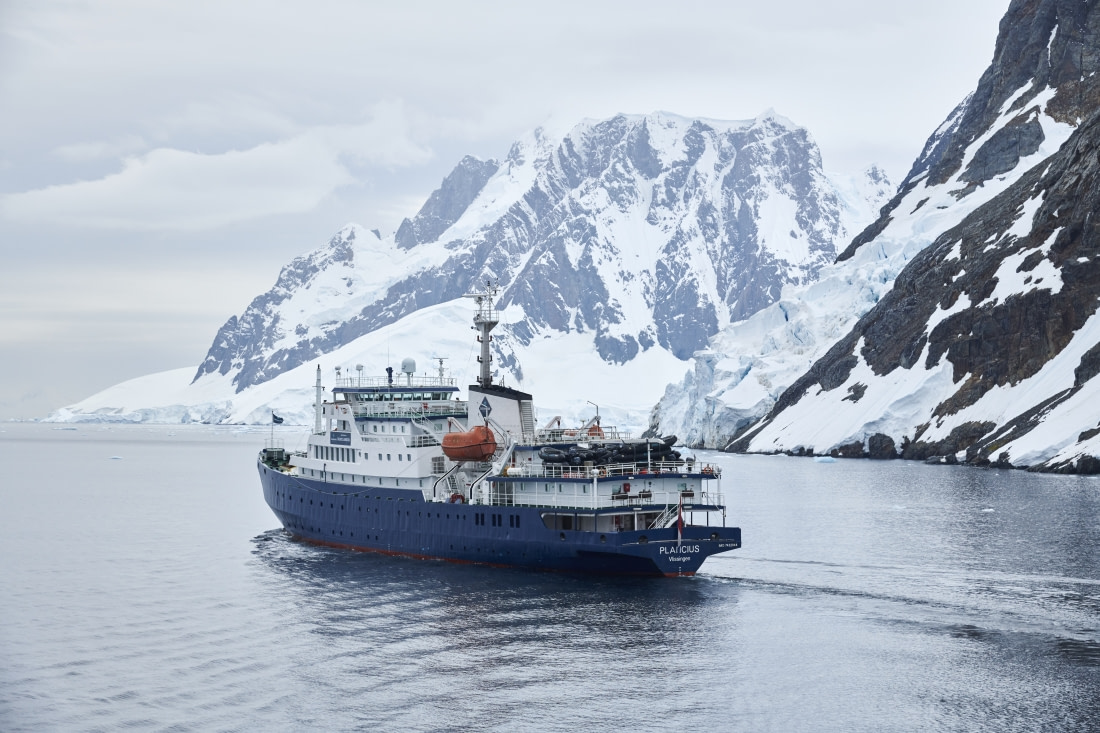
PLA08-26, trip log, Around Spitsbergen, In the realm of Polar Bear & Ice

by Oceanwide Expeditions

Fotogalerie

Logbuch

Day 1: Embarkation day

Embarkation day
Datum: 16.07.2026
Position: 78°14.1’N / 015°37.1’E
Wind: NW4
Wetter: Cloudy
Lufttemperatur: +4

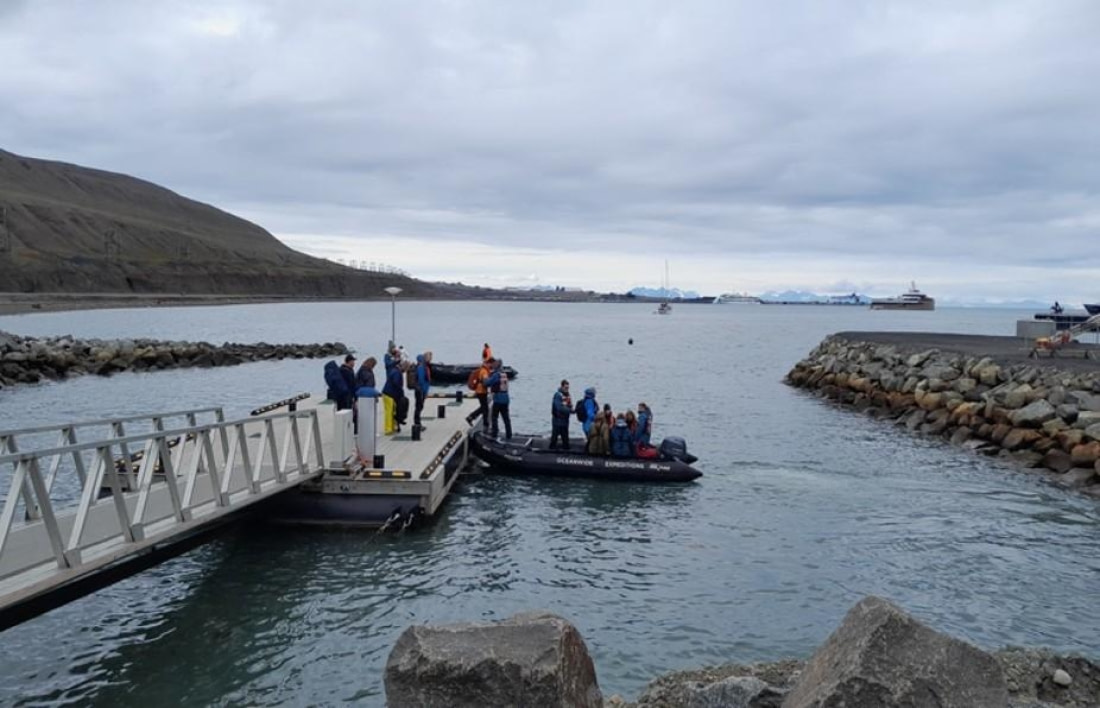
Many of the guest arrived at Longyearbyen on the day of embarkation. Throughout the afternoon the luggage was shuttled from the key out to MV Plancius on anchor in the bay. By 4pm there was an eager line of guests waiting to embark on the Zodiac journey! Our luck with the weather meant that we could save our wet zodiac journeys for later in the trip.

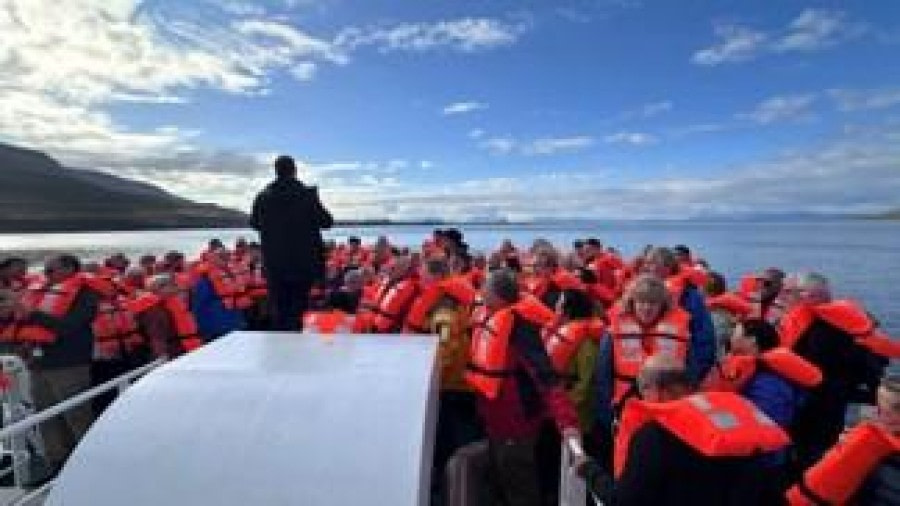
Once on board the evening went by quickly as we were busy with familiarisations, safety briefings, cocktails with Captain Christophe Colaris . Phlipp our expedition leader presented us the trip and the team of guides. After a first lovely first dinner, we had the Distribution of boots for next days.

As we set off out of Isfjord in the evening, and northward towards our first scheduled activity of the trip, there was time to enjoy the views of the flat table-topped mountains in the late evening light.

Day 2: Lilliehöök glacier & Ny Alesund

Lilliehöök glacier & Ny Alesund
Datum: 17.07.2026
Position: 79°12.2’N / 011°42.1’E
Wind: NNE 4
Wetter: Overcast
Lufttemperatur: +4

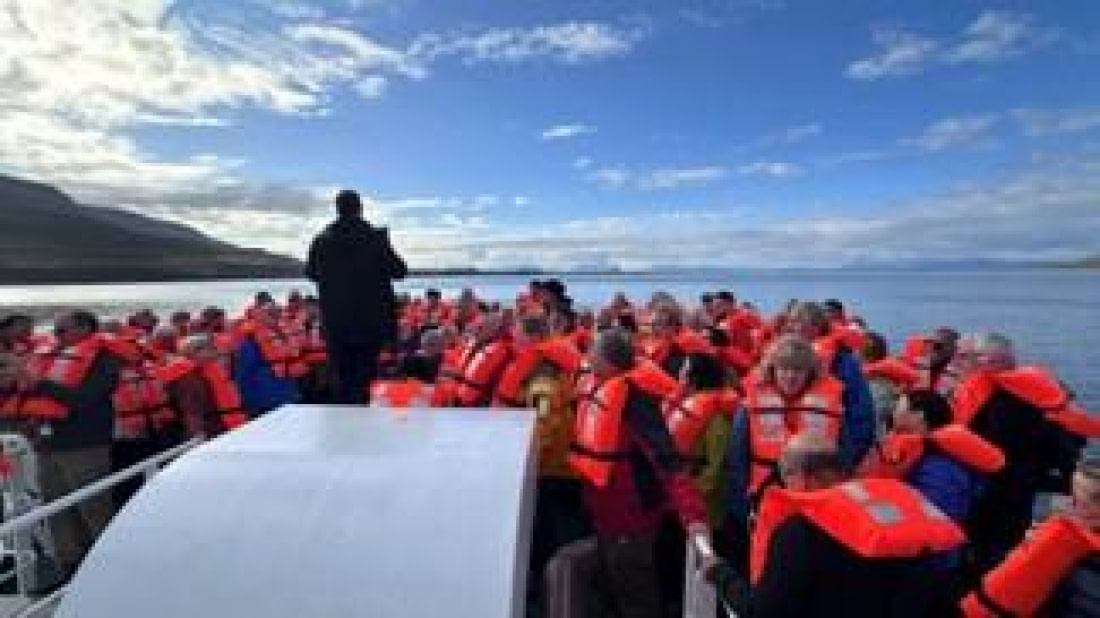
The day began with an early wake-up call at 07:15 am, followed by breakfast before guests gathered in the lounge for a mandatory AECO briefing. Philipp, our expedition leader introduced everyone to the principles of travelling safely in polar bear country and explained the procedures to Zodiac operations ahead of our first excursion.

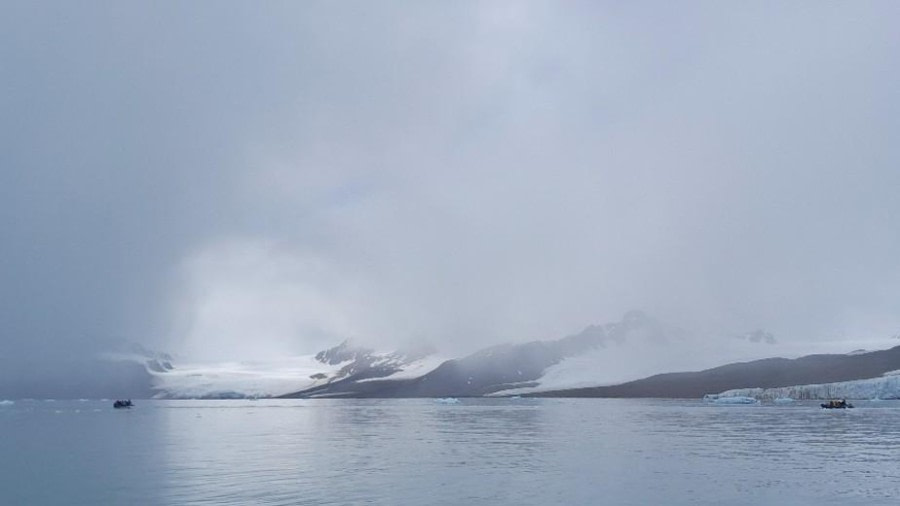
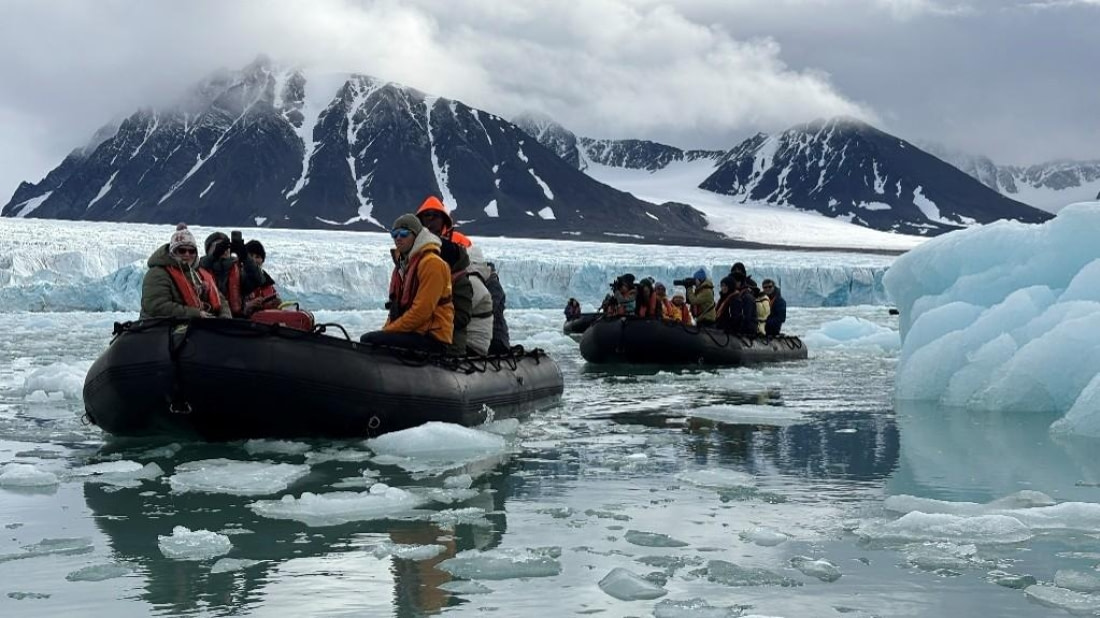
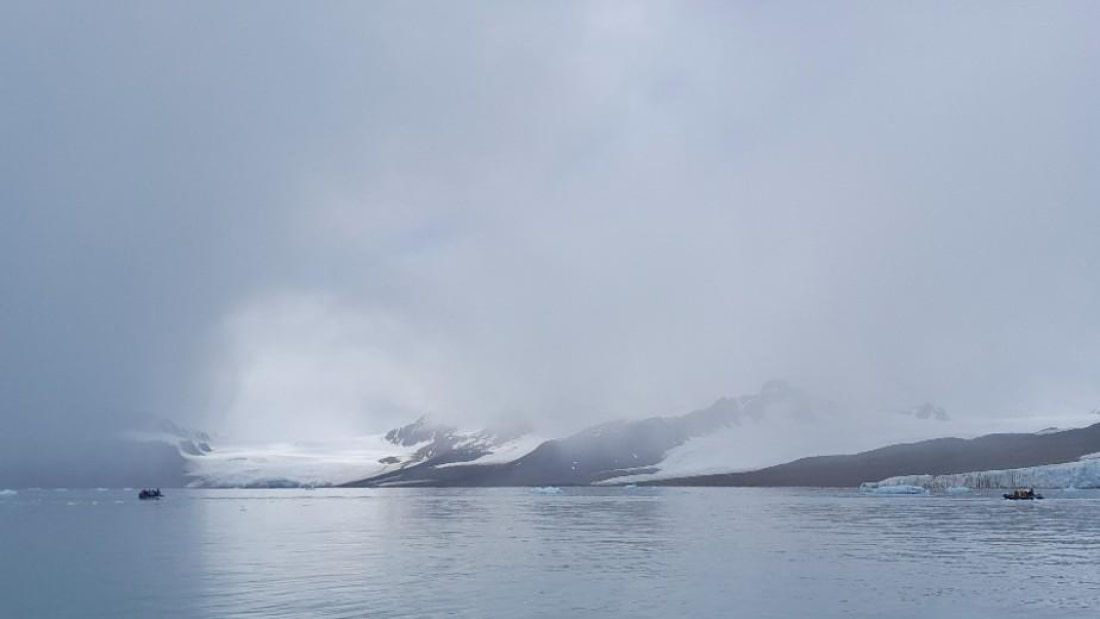
After the briefing, we put the theory into practice and boarded the Zodiacs to explore the magnificent front of Lilliehöökbreen, one of the most impressive tidewater glaciers in northwestern Spitsbergen. Cruising through the calm, ice-filled waters provided spectacular views of the glacier and its towering ice cliffs. The glacier was particularly active, and we were able to observe frequent calving events, with large blocks of ice breaking away from the glacier front and crashing into the sea. A variety of Arctic birdlife accompanied us throughout the excursion, adding even more life to the dramatic glacier landscape.

As we returned to MV Plancius, we were rewarded with the sight of a beluga whale swimming gracefully through the brash ice. Back on board, a delicious lunch and a hot cup of tea provided a welcome opportunity to warm up after our memorable Zodiac cruise.

As we sailed from Krossfjorden into Kongsfjorden en route to Ny-Ålesund, the expedition team spotted a polar bear near Kapp Guissez and quickly announced the sighting over the PA system. Guests and staff enjoyed watching the bear through their binoculars as it moved along the coastline. As the bear slowly disappeared from view, we continued our journey towards Ny-Ålesund.

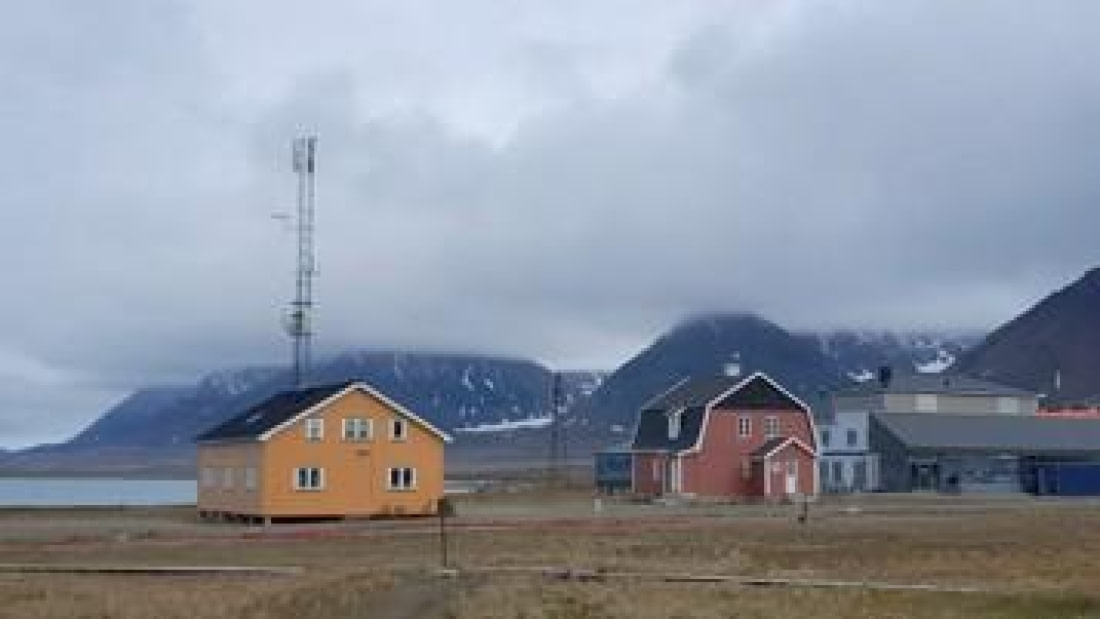
At 3:45 p.m., it was time to disembark from the ship and explore Ny-Ålesund, the world's northernmost permanent settlement and an international centre for Arctic research. Guests had time to explore the historic village, visit the museum, while respecting the strict radio silence regulations that protect the sensitive scientific instruments operating in the area. One of the highlights ashore were some Arctic foxes wandering around town. Later in the afternoon we gathered around the historic mooring mast of the airship Norge, where we learned about one of the most remarkable chapters in the history of Arctic exploration.

Back on board, we met in the lounge for the daily recap and briefing for tomorrow's adventures before gathering once again in the dining room for an enjoyable dinner. During the recap, Nathalie shared fascinating insights into the history of Ny-Ålesund, while Isabelle introduced us to some of the recent scientific research being carried out there, with a particular focus on the French-German research station called AWIPEV. It had been an outstanding start to our voyage, filled with spectacular glacier scenery, memorable wildlife encounters, and fascinating Arctic history. With sightings of three iconic Arctic mammals: a beluga whale, Arctic foxes, and a polar bear, the day offered everything that makes a voyage through Svalbard so special.

Day 3: Jacobsdbucta & Texas Bar & Monacobreen

Jacobsdbucta & Texas Bar & Monacobreen
Datum: 18.07.2026
Position: 79°43.1’N / 014°03.0E
Wind: NE4
Wetter: Cloudy
Lufttemperatur: +4

The MV Plancius has been sailing north throughout the night, and we wake to find ourselves at the entrance to Woodfjorden. Our Zodiacs are already waiting alongside the gangway, ready to take us ashore for our first landing of the voyage.

Jakobshamna is a sheltered bay, making for a calm Zodiac ride and a gentle landing on a pebble beach. Just beyond the shore lies a tranquil lagoon, perfectly reflecting the nearby mountains. Before setting off, Philipp, our Expedition Leader, offers three excursion options: a leisurely walk, a medium hike combining scenic viewpoints with plenty of time for photography and explanations, and a longer hike for those eager for a more energetic outing.

The pace is soon set as all three groups begin climbing the surrounding hills in search of the best viewpoints. Excitement briefly turns to tension when we come across an impressive polar bear footprint. Fortunately, Philipp reassures us that it is not fresh, and we can safely continue our hike.

The weather is glorious, and the tundra is surprisingly lush for such a high latitude. We discover a remarkable variety of Arctic plants, with colourful patches of mountain avens, several species of saxifrage, moss campion, and an abundance of mosses and lichens carpeting the ground.

At the end of the Zodiac cruise, we were lucky enough to spot a few belugas nearby as we made our way back to the Plancius.

Back on board, a well-earned lunch buffet awaits us. There is barely time to review the morning's photographs—or enjoy a quick nap—before Philipp's voice echoes through the ship once again, inviting us to prepare for an afternoon landing in Liefdefjorden, the "Fjord of Love."

Our destination is the historic Texas Bar, a small cabin built by the legendary Norwegian trapper Hilmar Nøis. Inside, shelves are lined with bottles of spirits, left behind by generations of visitors in keeping with a long-standing tradition. After exploring the cabin, each hiking group heads off in a different direction. The surrounding viewpoints reveal magnificent panoramas over the fjord: emerald-green waters, rocky islets, glacial valleys, scattered erratic boulders, and, in the distance, the spectacular Monaco Glacier. Nathalie entertains the leisurely walkers with stories of the trappers who once lived in these remote landscapes, while Karin and Philipp delight the long hikers by discovering a ptarmigan nest, complete with tiny chicks.

All too soon, it is time to return to the ship. During the daily recap, Philipp outlines the plans for tomorrow, Ursula introduces us to the fascinating world of belugas, and Karin helps us identify many of the Arctic flowers we admired during the day's walks.

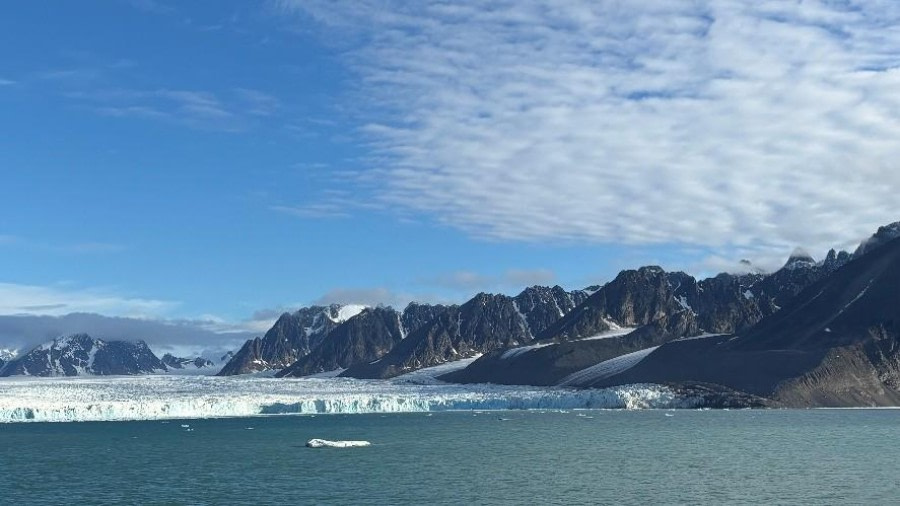
After dinner, the Captain treats us to a memorable cruise along the face of the Monaco Glacier. Beneath a brilliant blue sky and the lingering Arctic sunshine, the glacier glows in all its splendour—a perfect end to a wonderful day. As evening settles over Svalbard, the Plancius quietly resumes her course northward.

Day 4: Chermisdeoya and Pack Ice Day

Chermisdeoya  and Pack Ice Day
Datum: 19.07.2026
Position: 80°32.2’N / 020°09.5’E
Wind: NW5
Wetter: Overcast
Lufttemperatur: +1

Good morning, everyone. Today we woke up to true Arctic conditions. The wind was blowing up to 40 knots, it was cold, it was snowing and our gracious M/V Plancius moved slowly with the motion of the ocean. It didn’t look too friendly out there so as soon as breakfast was announced we made our way to the warm restaurant for a tasty start of the day.

The expedition team had planned two landings today, one on the beaches of Chermsideøya and later in the day a visit to Phippsøya was scheduled. During breakfast the expedition team were on the bridge assessing the situation and they decided the landing would be shortened, but we would go ahead. We could see the team members geared up and ready to go. However, the wind had picked up even more and it became clear that we would have very little protection from it. On top of that the visibility decreased and that made it significantly more challenging to scout for bears. Considering all these elements, the team cancelled the landing and it was decided to immediately head towards our second destination to see what it looked like there.

We enjoyed the navigation in these challenging conditions while we served ourselves a warm beverage in the warm and cosy in the lounge.

At 1100 Koen invited us to the lounge for a presentation on polar bears. We had already spotted one of these magnificent animals and it was interesting to hear more about their habitat, diet and mating behavior among other characteristics. After Koen’s lecture we definitely were motivated to find more polar bears! Shortly after the lecture we arrived at Phippsøya, one of the main islands of the Seven Islands group. It became clear quite quickly that weather conditions had not improved. With very limited visibility, strong winds and no shelter the expedition team also had to cancel our afternoon plans. However, when plan A gets cancelled there is always a plan B. And plan B was to head straight towards the edge of the pack ice to allow ourselves extra time in the ice and increase our chances of finding more polar bears.

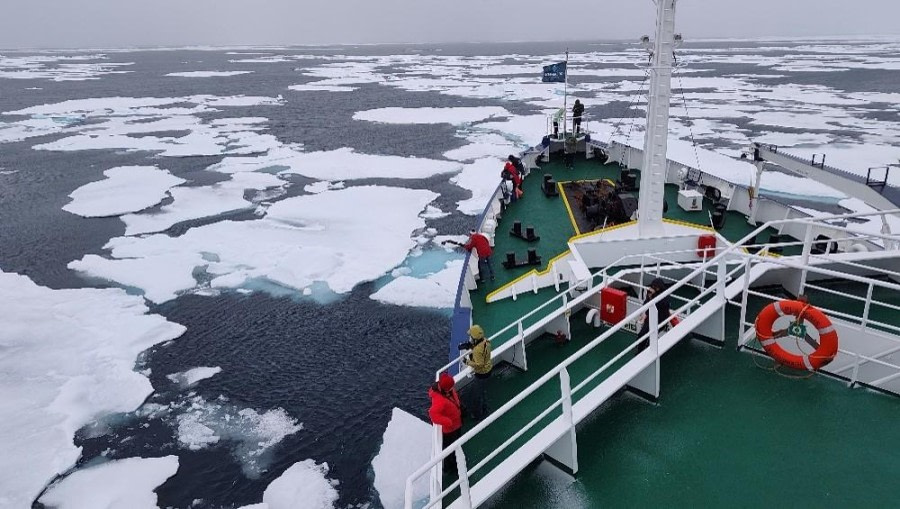
The sea state was slightly uncomfortable, but it added to the feeling of being on a true expedition. Karin is a biologist and botanist and she invited us to the lounge at 1500 for a lecture on plants and flowers that we can see in Svalbard. The extensive variation of vegetation in Svalbard is quite astonishing and it is fascinating how each species manages to survive the cold and dark winters and then flourish in such a short and still fairly cold summer. We arrived at the pack ice at the end of the afternoon and seeing the ice floes of frozen seawater was just mesmerizing. We were well above 80’N and we continued further north. It was quite surreal to realize how relatively close we were to the north pole. We didn’t find a bear just yet, but we had a whole day in the ice ahead and we were all stoked and excited about what we would find the next day. After dinner many of us went to bed early, whereas other played games in the lounge or watched the World Cup Final in the library. Good night everyone!

Day 5: Wildlife at the edge of the pack ice

Wildlife at the edge of the pack ice
Datum: 20.07.2026
Position: 81°04.0’N / 016°27.4’E
Wind: NW5
Wetter: Overcast
Lufttemperatur: -1

Most of us enjoyed the “Arctic sleep-in” while some needed a bit more time in bed as they stayed up until midnight to watch the World Championship final. Eventually however, it was time to get up, open the hatches or the curtains to take a first look out of the window. It offered a view onto open and calm water with large ice flows floating below a layer of fog. Fortunately, the visibility was good enough for the guides to start their one-hour long bridge watch rota to scout for wildlife throughout the day.

Meanwhile and more slowly than usual, the dining room started to fill with energetic guests all eager to the unfolding events of the new day.

After breakfast, a migration of well insulated guests started, heading to the outer decks, the bow and the bridge, considerably increasing the number of eyes scouting for wildlife. But throughout the morning, the fog covered the wider area around us, reducing the distance to detect a bear. Here and there a seal’s head popped out of the water and a Northern fulmar or two briefly visited the ship. It was quiet. However, neither the captain, the officers, the amble seaman nor the guides gave up scanning the surface with full concentration.

Our spirits were still high and positive when we went to lunch. Then, out of the blue, the bing-bong of the speakers sounded. A polar bear was sighted. It was Karin who had watched the icy surface towards the aft of the ship, when a small yellowish difference in the icy colours caught her eyes. A big thanks to her as we now got to see what we were all longing for: The King of the Arctic.

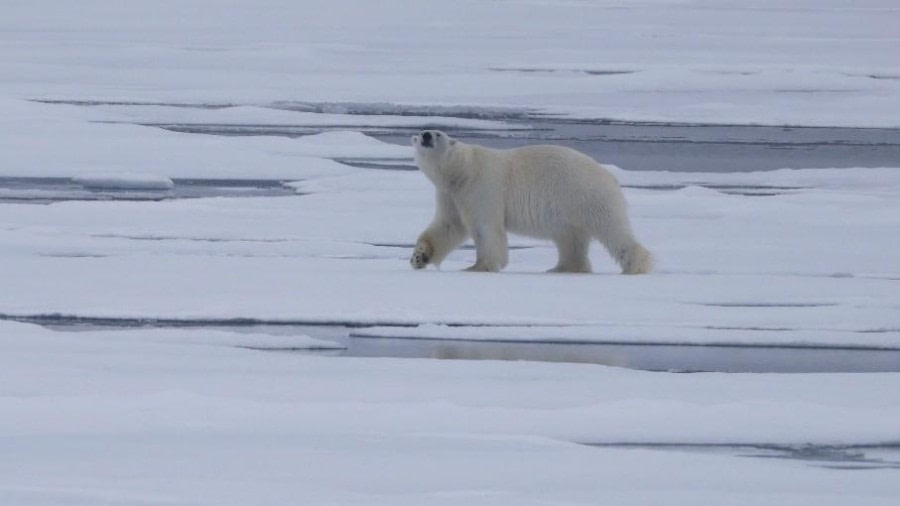
The big and well fed male polar bear was not too far away sniffing the air in search for food. He did know something already, we much later understood; there was the smell of a seal in the air. Needless to say, that the bear was not at all interested in this floating subject, the Plancius. Instead, he went into the water, swam slow but steady and diving below ice floes just to surface some moments later in the open water behind. Gradually it dawned on us and we got the feeling that he was on a mission. Finally, we discovered the resting bearded seal on the ice the bear had detected long before us. It seemed to be quite relaxed. Not aware that a predator was close.

The bear slowly and invisibly approached its head below the ice edge. It was less then 15 meters from the seal. We all felt the excitement of witnessing a truly special event in nature. A hunter using its skills to surprise its prey for a successful catch. Who do we care for? The life of the seal or the full belly of the bear? But no luck for the latter this time. The seal sensed its presence escaping into the depth of the ocean. The bear climbed out of the water without obvious signs of frustration. No drama, no growl. It resumed its pace heading into the vast icy world in search for another potential catch. Only we know that one out of 20 attempts of a hunting polar bear is successful making sure that enough seals will survive to sustain the population.

We continued our explorative tour through the pack ice sometimes surrounded by dense one year old ice floes with much fewer multiyear ice floes in between. At one point we reached our furthest most Northern position some 973 Kilometres from the North pole. Not that we felt a difference but it surely is a nice aspect of our journey to tell at home. Beside the encounter with the polar bear of course.

Later in the afternoon we were called up to the top deck where Marlen and her team surprised us with a hot chocolate. With or without rhum. It is these little things which make the voyage so enjoyable to us. For the rest of the afternoon, we took in the magic world of the High Arctic with all our senses. The silence, the special light, the fresh air, the vastness, the peace.

During recap Regis and Hélène gave us interesting insights into the world of sea birds like little aulks and Brünnich’s and black guillemots flying above the pack ice far from land. And of course the Northern fulmars, who we watched repetitively gliding past us standing on the upper deck. Their beauty is not obvious at first sight but close-ups views through binoculars reveal their unique subtle elegance and colouration. Belonging to the tube-noses, they carry a tube on top of the beaks to extract salt and detect odours in the air.

At one point in the early evening, we changed course and started heading south. Taking back unique memories and stories from a very unique place of the planet. The world of the true polar animals. Of course we will remember the beautiful polar bear who we have observed in its true habitat, the pack ice and exhibiting various behaviours including a hunt.

Day 6: Alkefjellet, Torellneset ship’s cruise Bråsvellbreen

Alkefjellet, Torellneset ship’s cruise Bråsvellbreen
Datum: 21.07.2026
Position: 79°56.5’N / 017°57.8’E
Wind: NW4
Wetter: cloudy
Lufttemperatur: +3

Today’s wake up call came earlier than expected. And it was not just a wakeup call. Fin whales had been spotted not far from us and we were heding closer to see them. As we came closer we could see a lot of birds picking food in the water surface. The fin whales where feeding and gave us a real show. Several of them surfacing really close to the ship. We also saw them catching food in the surface and some eaven swam sideways so that we could se half the fluke.

After this amazing experience we had breakfast. After breakfast our actual morning activity, a zodiac cruise by the big birdcliff Alkefjellet started. At first it was a bit windy but as we came closer to the cliff we got into shelter. All over the basaltic rocks there where birds nesting. The Brunichs guillemots sitting straight on the rocks with their little chicks. Some of us where lucky to actually see a chick. On some places Kittiwakes had built their nests and we also saw Glaucus gulls with their chicks.

As we had passed the steep cliffs and drove by some green slopes Philipp called out that he had seen a fox. And we all went to the spot where he was and could see a fox eating a dead bird. As the fox went up the hill we continued. But it did not take long until we had our next wildlife encounter. Two polarbears, a mother and a cub where sleeping in the grass below a cliff. We observed them for a while before we had a look at the little glacier in the bay and headed back to the ship. On bard we had lunch and rested a bit before we once more could here Phillips voice on the PA system. Another Polarbear had been spotted on a little island. As we came closer we could see that it was not only one, but two bears! As we left the bears to head to our next destination Torellneset, Ursula put on a slideshow on the screens in the lounge with arctic plants. As we approached Torellneset we got to know that it was not possible for us to land, since there was two polarbears on shore not far from the landing site.

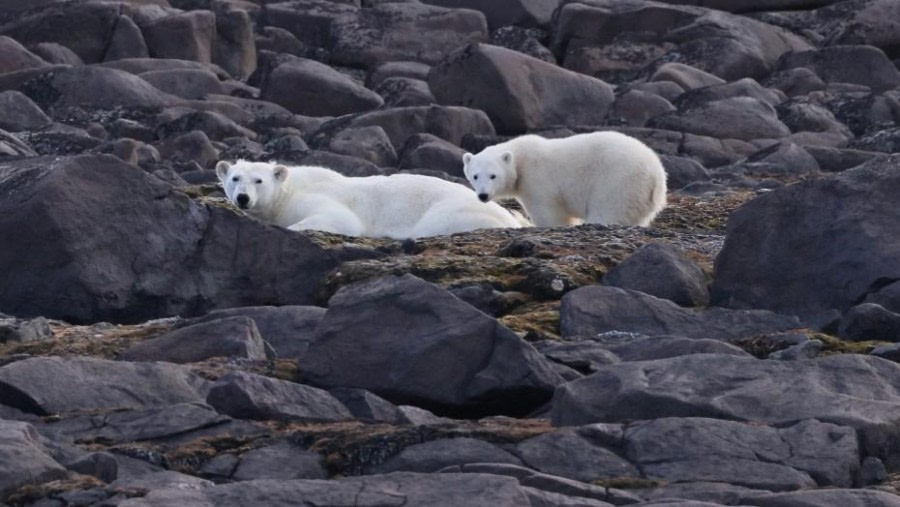
We went closer with the ship and could see the two bears in the distance as we came closer to the walrus. There was a big group in shore with males, females and young ones. With binoculars we where able to observe them nicely from the ship. After a while the ship turned, on the island oposit of Torellneset there was three other polarbears, a mother with two cubs. We went closer with the ship and stayed for quite a long time to observe them sleeping on the rocks of Perthesøya. But this day was not over yet.

After dinner we ship cruised along beautiful Bråsvellbreen with its stunning ice wall and many beautiful waterfalls.

Day 7: Newtonvika, Zodiac cruise: Negribreen

Newtonvika, Zodiac cruise: Negribreen
Datum: 22.07.2026
Position: 78°40.7’N / 021°24.7’E
Wind: W2
Wetter: cloudy and foggy
Lufttemperatur: +4

The morning finds most of us on the bridge or out on deck at 8:00 a.m sharp. During yesterday's briefing, Philipp announced that Plancius would attempt the challenging passage through Heleysundet, a narrow and dramatic strait separating the eastern coast of Spitsbergen from the northern tip of Barentsøya. Few captains choose to navigate this channel, as its powerful tidal currents can make the passage particularly demanding.

Fortunately, our captain is more than up to the task, and we eagerly await the crossing. The expedition team has described the strait as spectacular, framed by towering basalt cliffs and rugged rocky outcrops. Unfortunately, we must take their word for it. A dense blanket of fog hides everything from view. No cliffs, no coastline, nothing but swirling grey. Even to our inexperienced eyes, however, the strength of the current is unmistakable as it ripples and churns around the ship. With calm precision, the captain guides Plancius safely through the narrow passage, and before long we emerge into quieter waters.

With visibility still so poor, we begin to wonder whether a landing will even be possible this morning. Then welcome news arrives from the expedition team: they have found a fog-free landing site—and, even better, a walrus haul-out awaits us there. After yesterday, when polar bears prevented us from landing at every planned site, we are eager to stretch our legs.

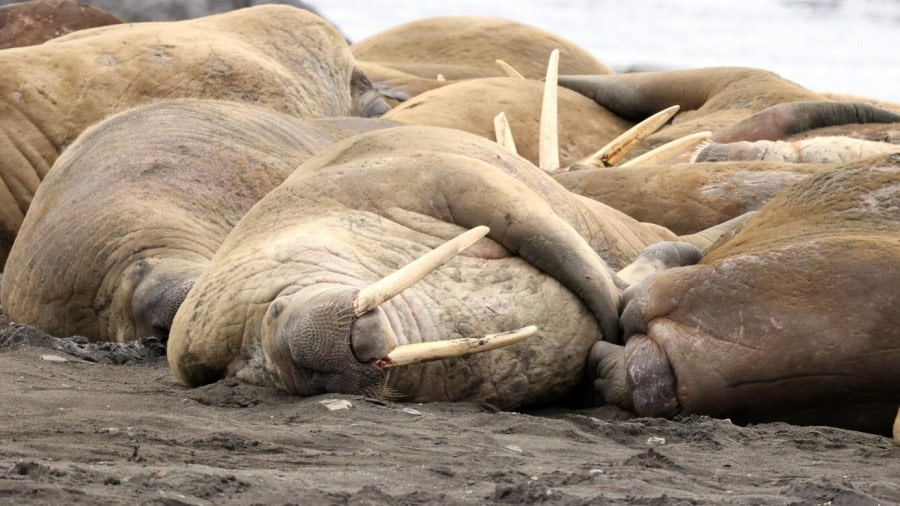
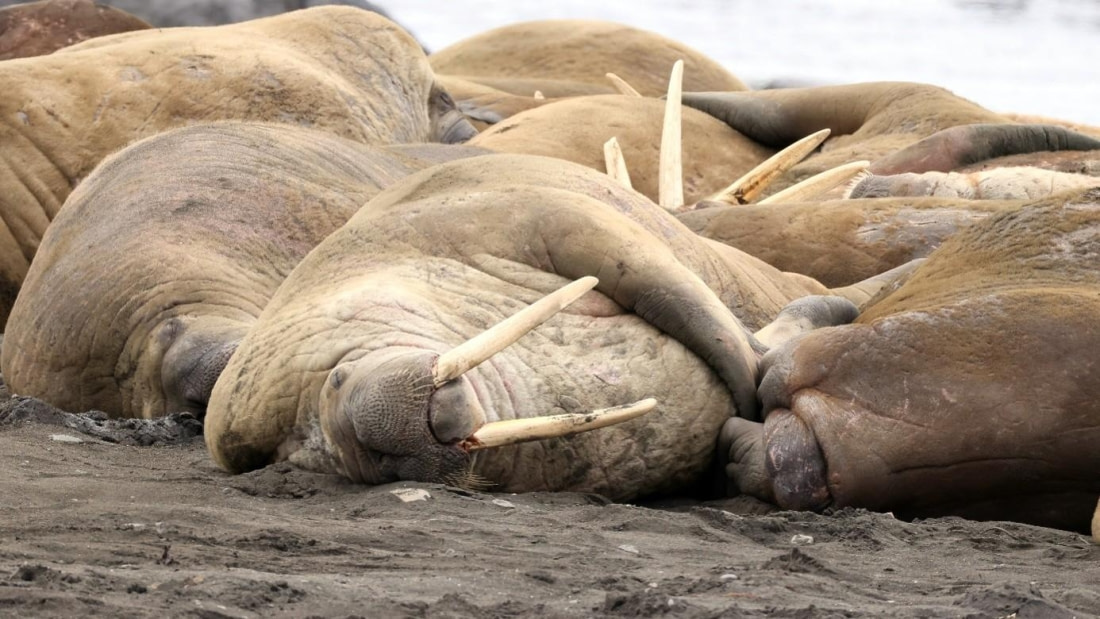
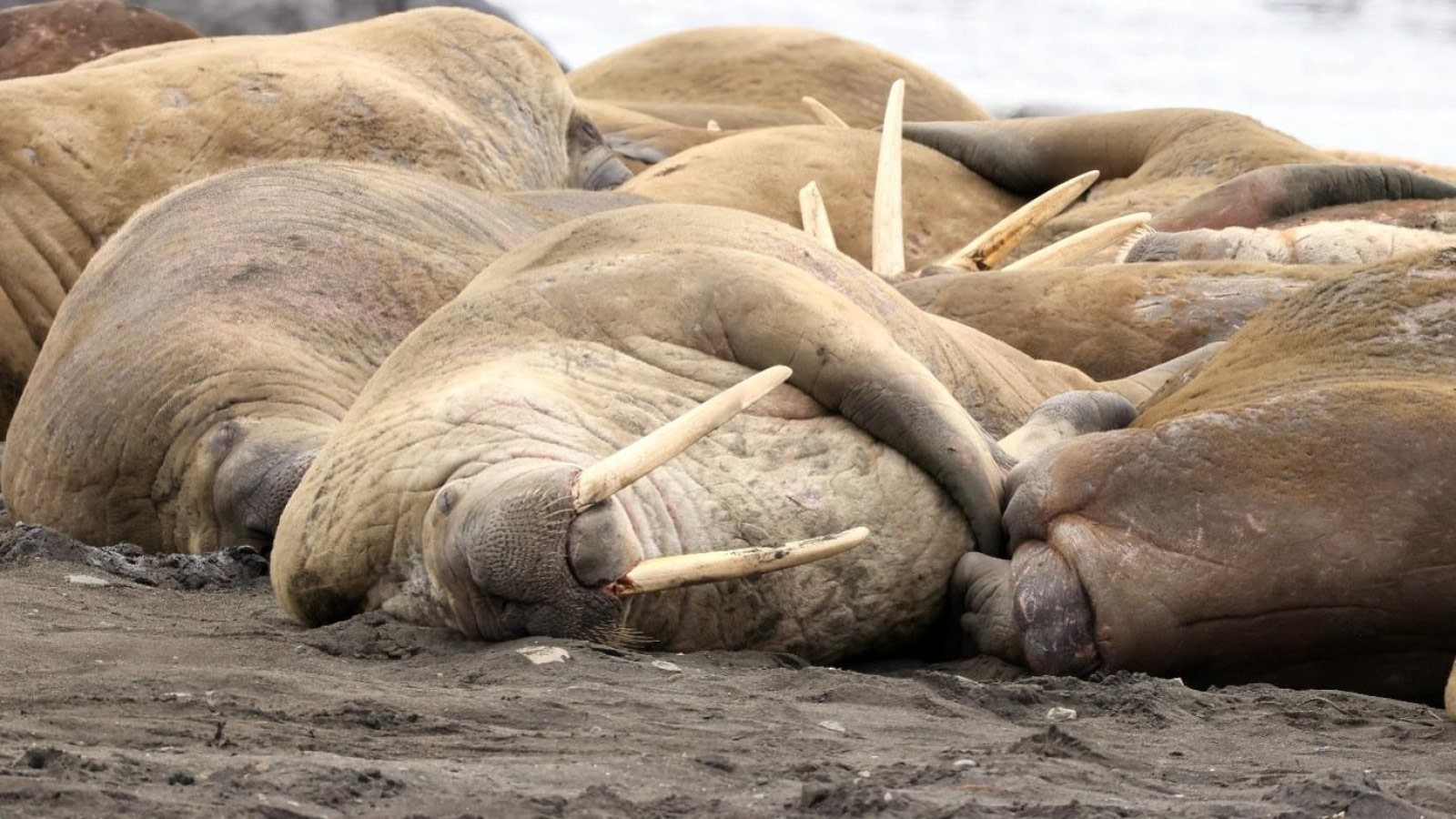
The Zodiacs glide gently onto a pebble beach, and our group sets off on a slow, silent approach to the walruses. A gathering of large males lies sprawled across the shore, seemingly oblivious to our presence. For long moments, the only sounds are the clicking of camera shutters, punctuated by the walruses' grunts, groans and snorts. They appear to be posing for us as they scratch themselves, yawn, or lazily shift position. A few are missing a tusk, perhaps the result of battles fought long ago.

Afterwards, we enjoy a stroll across the beautiful tundra, bordered by glacial moraines. The landscape is painted in delicate, muted colours: soft yellow mosses, scattered patches of wildflowers, and the blue waters of the bay completing the scene.

During lunch, Plancius sails towards the impressive and highly active ice front of Negribreen. Along the way we pass several magnificent icebergs, including a striking tabular iceberg that reminds many of Antarctica.

In the afternoon, we set out on a Zodiac cruise through an eerie world of blue and white ice. Icebergs of every imaginable shape and size drift silently around us as the boats weave carefully through fields of brash ice. The immense glacier front seems endless. Every now and then, a seal surfaces briefly before disappearing beneath the water once more, and we are delighted by the graceful appearance of the elusive ivory gull.

The day concludes with our customary recap. Philipp announces that Plancius is now heading south, leaving behind the rounded, weathered landscapes of eastern Svalbard in favour of the dramatic alpine peaks awaiting us in the southwest. Nathalie ensures that we can now confidently distinguish salty sea ice from freshwater icebergs, and Ursula rounds off the evening with an engaging presentation on walruses.

As Plancius continues her voyage south, another memorable day in the Arctic comes to an end, with new adventures already waiting beyond the horizon.
Day 8: Treskelen, Hornsund, Landing: Gåshamna, Hornsund

Treskelen, Hornsund, Landing: Gåshamna, Hornsund
Datum: 23.07.2026
Position: 76°52.9’N / 015°12.4’E
Wind: SW3
Wetter: Cloudy
Lufttemperatur: +6

After yesterday’s zodiac cruise along the majestic Negribreen, Plancius started the longest leg of our voyage. Overnight we sailed 194 nautical miles (360 km) heading South through the Storfjorden along the east side and finally around the Southern tip of Spitsbergen. As the sea was very calm, unusually calm in fact, we had made good progress arriving before breakfast in the Southernmost Fjordsystem of the west coast, named Hornsund. After half an hour of extra sleep, Phillip called it “sleep-in”, we were all well rested and ready for a walk or hike at Treskelen. The landscape surrounding the fjord was quite different to the east coast with high mountain peaks and vertical rock faces.

As usual the guides disappeared half an hour before we were supposed to go to the gangway. They were just in the process of preparing rifles, barrels and other equipment when Phillip was called up to the bridge. Turned out that the officers had discovered two bears near the landing site. Maybe some of us had a quick thought of “Not again…”. But the news to see polar bears # 11 and # 12 was too exciting to get sad about the missed landing.

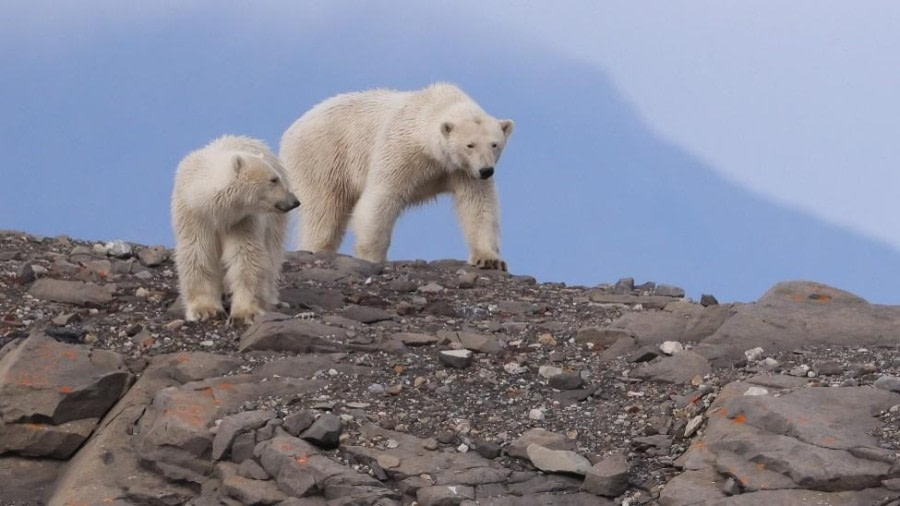
At first sight they looked the same size. But when standing side by side the difference in height and mass became obvious. Turned out to be a female and her last years cub. Both looked rather healthy although the mum could gain some more weight before winter arrives. For some time, we observed them from the ship as they walked along the slope and even down to the water line. The mother took the lead and the young followed behind, discovering and learning at its own pace. We were so, so lucky as they could have easily gotten out of sight behind the rocky ridge, but they remained visible instead.

We were all standing out on deck, with binoculars raised, cameras clicking and mobile phones held in front of the eyes. Soon we discovered that the female wore a white collar around her neck with a satellite tag recording her spatial movement patterns. The highlight was them walking right on top of the ridge with the spectacular mountains in the background. Eventually they disappeared leaving a hundred happy guests, guides and crew behind.

As we had gained extra time due to cancelled landing, Plancius sailed into Samarinvågen for a scenic cruise until the bing-bong announced today’s lunch during which the ship turned and headed slowly over to the afternoon’s landing site.

Despite many eyes scouting, no polar bear was discovered this time so that plan A took place. The guides once again got the rifles, barrels and equipment ready and soon after we were shuttled over to the landing site at Gåshamna. Standing close to the ancient whale bones, covered by moss and plants, Nathalie and Ursula gave us a short introduction to the extensive whaling during the 17th and 18th century. The countless large bones, mandibles and skulls of large whales were piled up in-between the remains of the blubber ovens. The oil stored in the bones slowly leaked out over time releasing nutrients in the surrounding soil nurturing pioneering plants like mosses and lichens. It was a truly special place and a reminder that the over-exploitation of whales from the past has damaged the marine ecosystem of Svalbard to date.

After the short journey into the past, we started our discovery walks. Soon after the fast hikers were seen hiking up an extremely steep ridge gaining height for a spectacular view over the various fjords in the Hornsund. The leisurely group explored the area slowly taking extra time to discover the beauties usually overlooked. The medium walkers took it slower, walking over rather barren ground to finally reach a nice lookout. Near the water line remains of houses were well visible. Curious as we are we headed down to take a closer look. Luckily for us, Nathalie appeared and gave us some interesting insights into the people who have lived here most probably before the Vikings had arrived. The explorative people of the Pomors travelled from Russia to hunt seals and walrus in far Svalbard.

Finally, it was time to gather at the landing site where dozens bravely jumped, ran or walked into the freezing water. Well done to all who successfully did the Polar Plunge entertaining the rest of us who applauded and cheered in support.

Back on bord Nathalie shared her knowledge on the times of past whalers and Isabelle gave us interesting insights into another important player of the oceans’ ecosystems; the seaweed. But the day was not over yet. By far not as Plancius sailed deep into the Eastern fjord of Burgerbukta. Surrounded by amazing mountains and another glacier front we all met at the aft deck to enjoy a tasty outdoor barbecue followed by a long-lasting party. Rumour has it that there were lots of highly active and expressive dancers on stage.

Finally, midnight was not far anymore, the life on board quiet down as everybody fell asleep. Probably dreaming of the mother bear and her cub. A sighting most probably being one of the special highlights of our journey.

Day 9: 6 July, Gipsvika, Sassenfjord, Skansbukta, Billefjord

6 July, Gipsvika, Sassenfjord, Skansbukta, Billefjord
Datum: 24.07.2026
Position: 78°15.9’ N, 015°17.5’E
Wind: NE2
Wetter: Overcast
Lufttemperatur: +7

Our final full day in Svalbard was a wonderful combination of exploration, wildlife, history, and celebration. After enjoying another delicious breakfast on board, we made our first landing at Gipsvika, in Sassenfjord. As usual, guests were divided into three hiking groups, allowing everyone to explore the area at their own pace. Gipsdalen is a broad valley framed by steep slopes, offering spectacular views and fascinating geology. Walking across this vast, barren landscape almost felt like stepping onto the Moon, with its striking colors, sparse vegetation, and dramatic rock formations creating an otherworldly atmosphere. Along the way, we were fortunate to spot several Svalbard reindeer peacefully grazing across the valley. During our hikes, we also observed the remarkable geological formations that tell the story of Svalbard's ancient past, while discovering the remains of coal mining activities that began here in 1921. The contrast between the rugged Arctic wilderness and the traces of human history made this a particularly memorable morning.

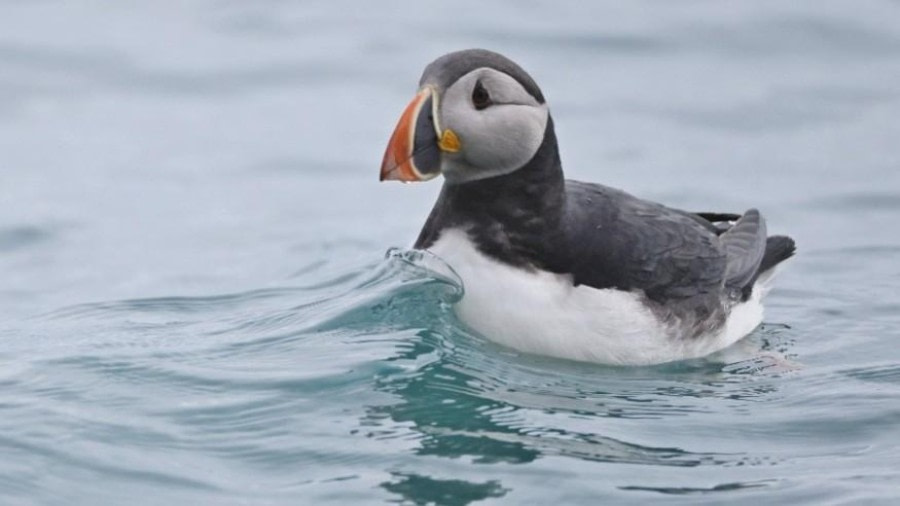
In the afternoon, we headed to Skansbukta, at the entrance of Billefjord, for our final landing of the voyage. Like Gipsvika, Skansbukta bears the marks of another unsuccessful mining venture from the early twentieth century, surrounded by dramatic cliffs and beautifully sloping hillsides. We were all delighted to get close views of Atlantic puffins, whose colorful beaks and lively behavior never fail to bring smiles. Another highlight was finding the beautiful Boreal Jacob's-ladder (Polemonium boreale) in full bloom—a rare Arctic flower that adds a splash of color to this spectacular landscape. As if perfectly timed for our farewell landing, the sun finally appeared, bathing the bay in warm light and creating a wonderfully relaxed and enjoyable atmosphere.

Back on board, we gathered for the Captain's Cocktail, one of the most emotional moments of the voyage. During the expedition recap, we looked back on the many unforgettable experiences we had shared over the past days before raising a toast to our Captain and the entire Expedition Crew and Expedition Team, whose dedication made this adventure possible.

The emotions continued as we watched the traditional slideshow, reliving our incredible journey through images that captured so many special moments and memories. But the day still had one last surprise in store. After a delicious final dinner, the Captain treated us to an evening cruise past the iconic abandoned settlement of Pyramiden. Seeing this fascinating ghost town in the soft Arctic light was the perfect ending to an unforgettable expedition.

Now, with hearts full of memories, there is only one thing left to do—pack our bags and prepare to say farewell to the High Arctic. Thank you for sharing this extraordinary adventure with us, and we hope to welcome you back aboard another expedition one day.

Day 10: Disembarkation

Disembarkation
Datum: 25.07.2026
Position: 78°15.9’ N, 015°17.5’E
Wind: NE2
Wetter: Overcast
Lufttemperatur: +7

This morning we arrive in Longyearbyen, where our journey comes to an end. As we enjoy one final breakfast on board, our luggage is already being transferred ashore from MV Plancius. Before long, it is time to say goodbye to the ship that has been our comfortable home in the Arctic over the past days.

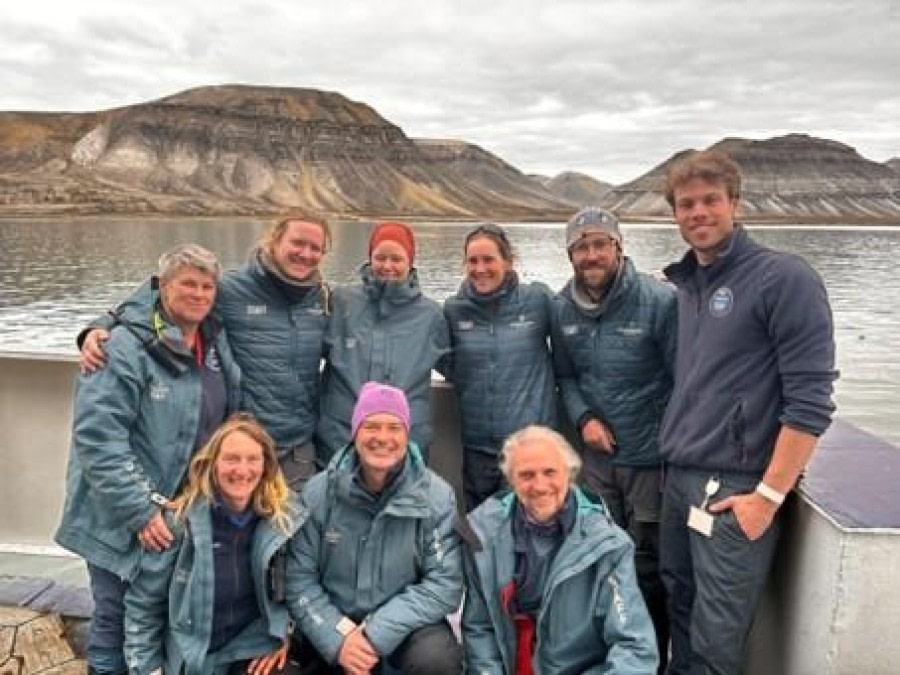
With countless unforgettable memories to take home, we look back on an extraordinary expedition. Together, we have explored spectacular landscapes, encountered remarkable Arctic wildlife, experienced the pack ice, and shared many special moments along the way. Now it is time to bid farewell to MV Plancius, to the wonderful crew who looked after us each day, to the Expedition Team who shared their knowledge and enthusiasm with us, and of course, to one another.

On behalf of the entire Oceanwide crew and Expedition Team, we would like to thank you all for joining us on this journey. Thank you for your enthusiasm, your curiosity, your flexibility, and for the many wonderful moments we have shared. It has been a true pleasure to travel with you.

We wish you a safe journey home and hope to welcome you aboard again on another expedition someday, perhaps back in the Arctic, perhaps in Antarctica, or at another fascinating destination somewhere in the world. Until then, we wish you all the very best and many more unforgettable adventures.

Total distance sailed on our voyage: 1,285nm

Northernmost position: 81°14.013’N, 017°05.450’W

Einzelheiten

Reisecode: PLA08-26
Daten: 16 Jul - 25 Jul, 2026
Dauer: 9 Nächte
Schiff: MS Plancius
Einschiffung: Longyearbyen
Ausschiffung: Longyearbyen

Herunterladen

Waren Sie auf dieser Reise?

An Bord von MS Plancius

Unser ältestes Schiff, die Plancius, ist eine klassische Wahl für einige unserer beliebtesten Polarreisen.

Mehr über die MS Plancius »
Loading