HDS04-25, trip log, North Spitsbergen Explorer

by Oceanwide Expeditions

Fotogalerie

Logbuch

Day 1: Longyearbyen: Setting Sail into the Arctic wilds

Longyearbyen: Setting Sail into the Arctic wilds
Datum: 23.06.2025
Position: 78°15.0’ N, 014°48.6’E
Wind: W2-3
Wetter: Overcast
Lufttemperatur: +6

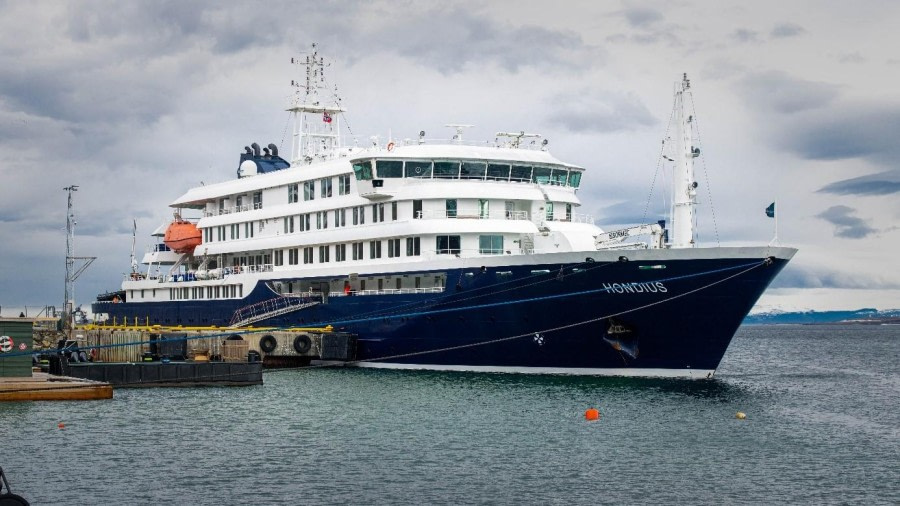
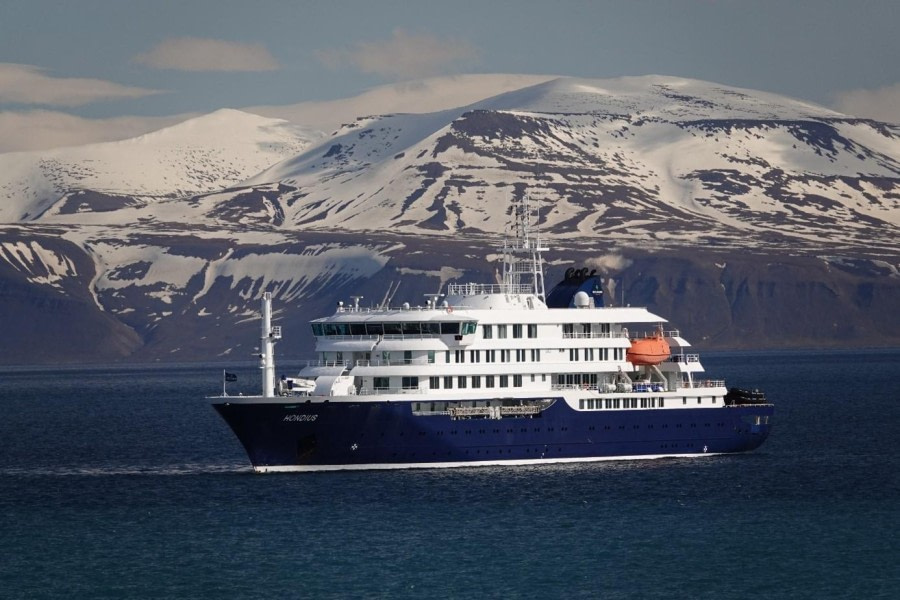
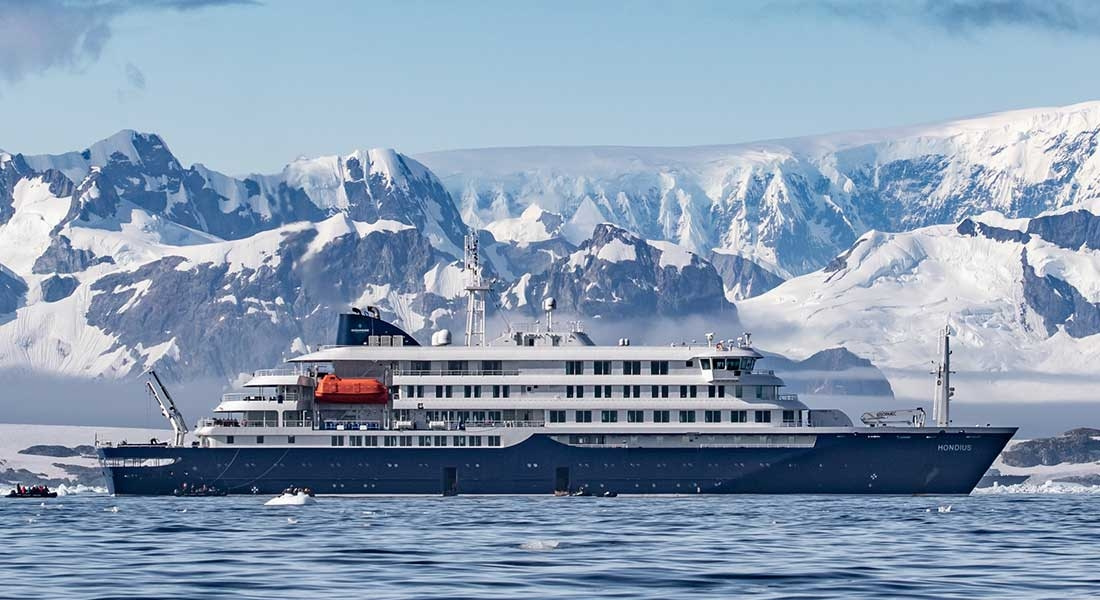
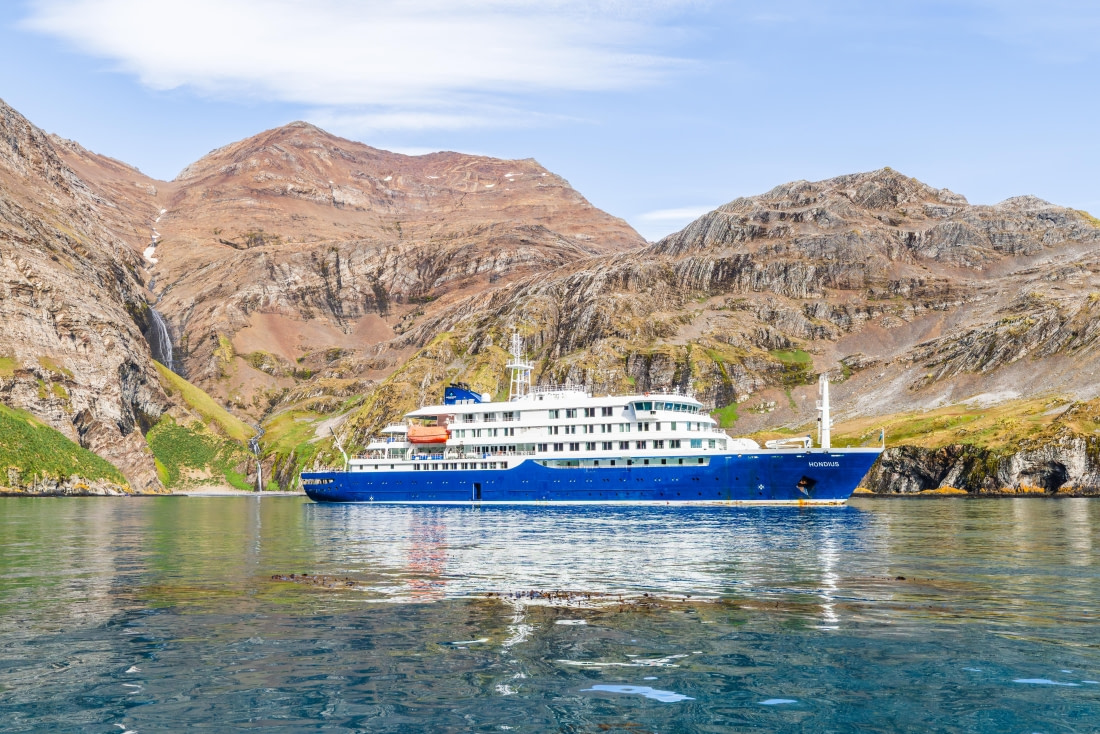
The remote frontier of Longyearbyen stirred with quiet anticipation as many of us arrived on the very day our adventure was set to begin. By afternoon, the stillness of the bay was punctuated by the hum of activity—luggage was whisked from the quay to the Hondius, anchored at the pier of Longyearbyen, waiting like a steel sentinel in the icy waters.

By 4PM, excitement buzzed through the brisk Arctic air. A line of eager guests had gathered, eyes bright with the promise of wilder rides lay ahead.

Once aboard the Hondius, time seemed to slip by unnoticed. Between orientation briefings, safety drills, receiving our Muck boots, welcome cocktails with our charismatic Captain Jan, and a beautifully prepared first dinner, the hours melted away. Yet as we cast off and the vessel carved a path out of Isfjord, the true wonder began to unfold.

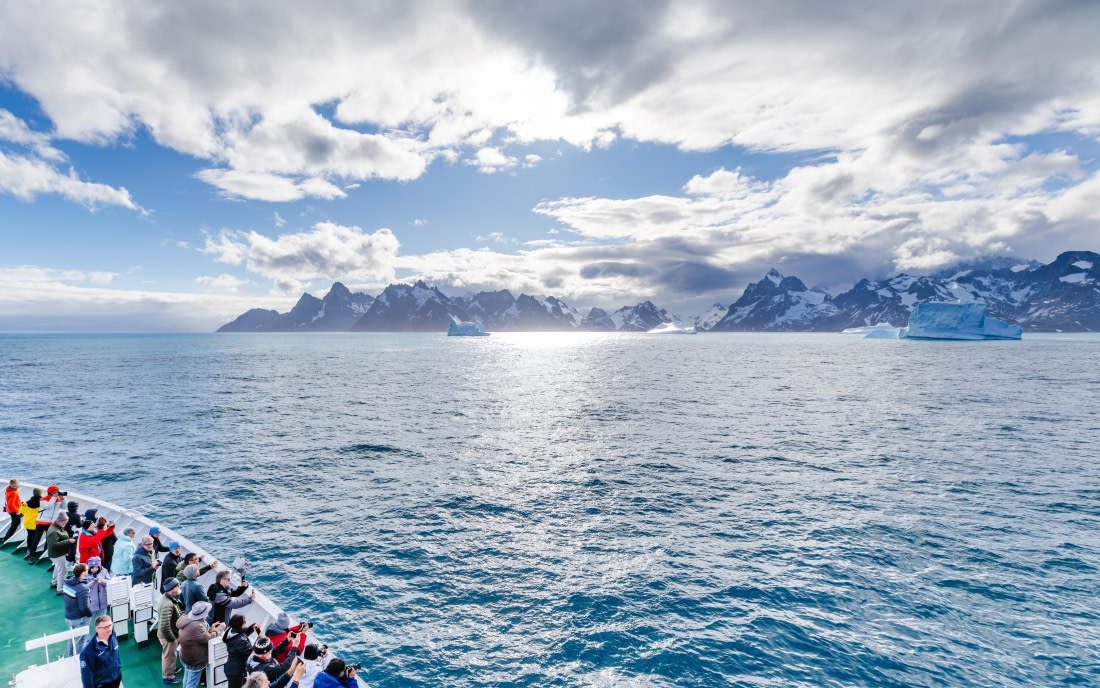
Bathed in the soft glow of the Arctic evening, Spitsbergen’s flat-topped mountains stood like ancient fortresses along the fjord. We were finally on our way—northward into the raw heart of the wilderness, where ice met sky and the silence held secrets millions of years old.

Our voyage had just begun.

Day 2: Gullybukta & Gravneset

Gullybukta & Gravneset
Datum: 24.06.2025
Position: 79°29.2 N, 010°23.1’ E
Wind: N4
Wetter: Overcast
Lufttemperatur: +1

In calm seas and perfect weather, we sailed north along the west coast of Spitsbergen through the night. By breakfast, we had reached Magdalenefjord – named after the biblical Mary Magdalene.

This magnificent fjord, surrounded by jagged, pointed mountains, was once one of the most visited places in Spitsbergen. Today, however, we share it with just one other ship from the Oceanwide Expeditions fleet: the Ortelius.

Our first activity of the day is a Zodiac cruise into Gullybukta. But before we can board the Zodiacs, we attend the mandatory safety briefing.

Then we’re off: warmly dressed, life jackets on, and into the Zodiacs we go.

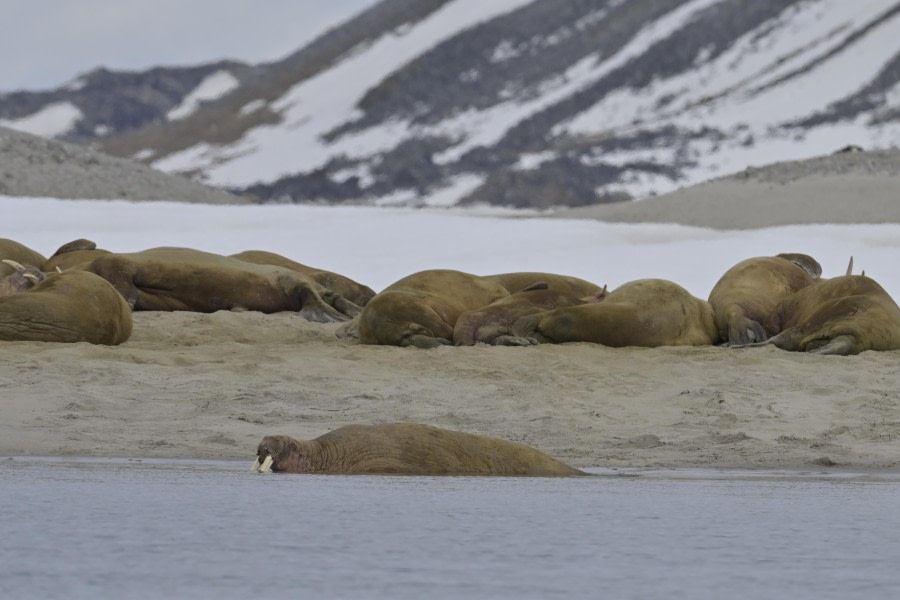
In Gullybukta – “Gully Bay” – there is a small walrus haul-out, a resting place for these impressive marine mammals. We’re allowed to approach within 150 meters – close enough to observe the animals well and, most noticeably, to smell the results of a diet that includes up to 70 kilograms of mussels per animal.

Counting them isn’t easy – the social animals lie so closely together, sometimes even on top of one another. Male walruses can weigh up to 1,500 kg, and females up to 900 kg. Their ivory tusks, which can weigh up to 5 kg, were once a major reason for intense hunting. Fortunately, those days are long gone, and walrus populations in Spitsbergen are recovering well.

But Gullybukta offers more than just walruses: stunning landscapes, a beautiful glacier – the Gullybreen – and plenty of seals, which we spot throughout our cruise.

Right on time for lunch, we return to the Hondius and enjoy the extensive buffet.

In the afternoon, our first landing is scheduled at Graveneset, a small peninsula where English whalers operated in the early 17th century and later buried their dead.

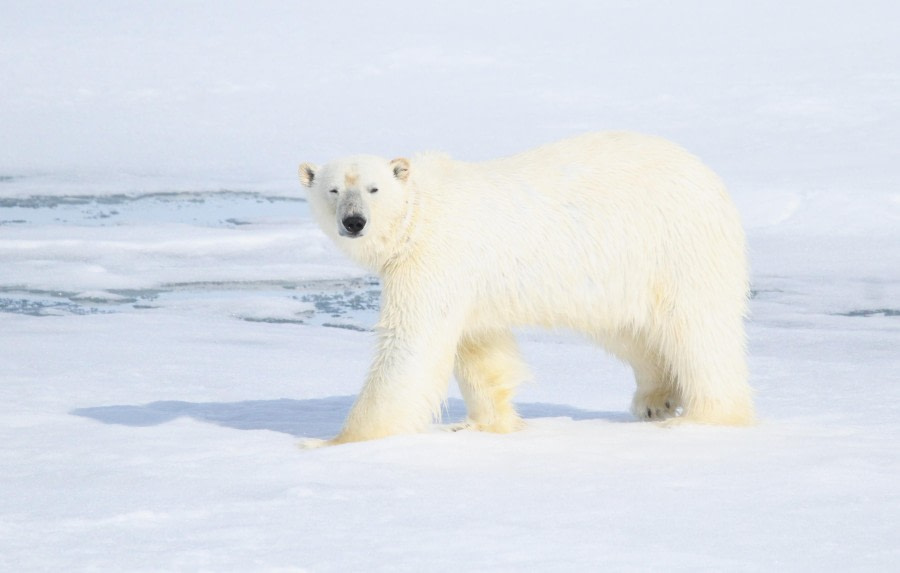
But plans change: on the opposite side of the fjord, we spot our second polar bear. The bear is very active, walking along the shore before eventually swimming across the fjord. From a respectful distance, we are able to observe it quite well.

Things get even more exciting when the bear approaches a shallow bay teeming with seals. The seals swim around the bear curiously, knowing they’re much faster in the water and have little to fear.

Just as we are about to leave Magdalenefjord, a third polar bear is spotted on the far side of the fjord. It crosses the water quickly, and almost simultaneously, both bears arrive at our originally planned landing site.

There’s a small hut at that location, used by two field inspectors working for the Norwegian Governor. From a safe distance in their boat, they observe one of the bears inspecting the hut before it settles down to rest on a small hill. The second bear disappears in the direction of Gullybukta.

We now leave the fjord for good and set course for Liefdefjord – our destination for tomorrow.

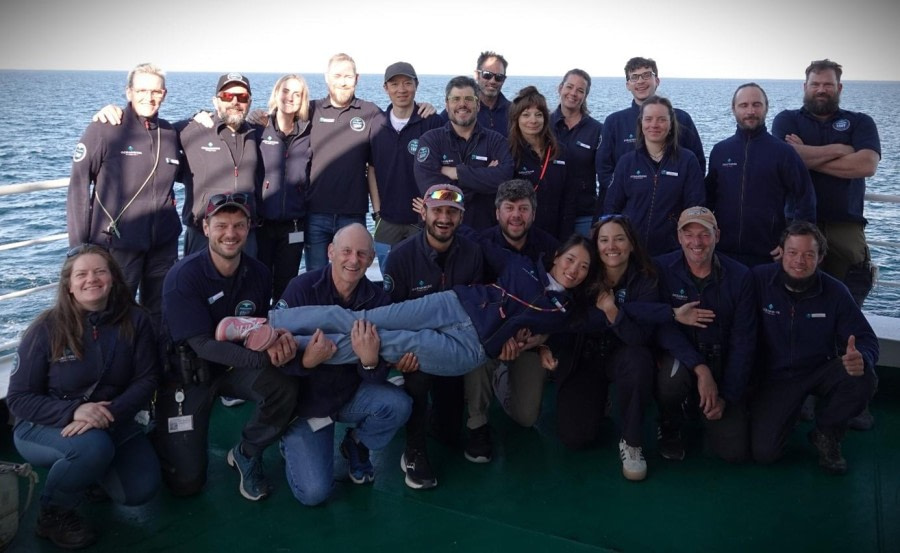
During the evening recap, Marcel shares the plans for the next day. Tiphanie gives a presentation about walruses and their surprisingly wide range of vocalizations, and Sven explains the key points of the Svalbard Treaty.

A wonderful day comes to an end, and in nearly glassy water, we sail into the bright Arctic night – continuing our journey northward.

Day 3: Texas Bar & Monacobreen

Texas Bar & Monacobreen
Datum: 25.06.2025
Position: 79.36.5°N, 012°44.1’E
Wind: NW2
Wetter: Overcast
Lufttemperatur: +5

Today we arrived just before breakfast in Liedfjord, and we understood right away why is it referred as “love bay”; we discovered this magnificent scenery with fog uncovering the mountain peaks as we were approaching. We spent the morning hiking around Texas Bar landing site. Some of us could see reindeers, Rockptarmigans. We were able to enjoy the beautiful views on top of Hornbaekpollen lagoon, and then we visited the famous hut of Texas bar where Jens explained us more about its history : a trapper’s hut built in 1927 by Hilmar Nøis and Martin Petterson Nøis used as a hunting district. This hut is such in a good state that it is still used by field scientist or locals during the spring season!

After that came one of probably the most exiting time of the cruise for adrenalin seekers : the polar plunge, about 30 of us were brave enough to jump in, and some even dipped their head in the water!

After lunch and for some of us… a warm shower, we enjoyed a zodiac cruise closer to the glaciers of the fjord. The weather made it hard to believe we were in the arctic. We cruised along Monacobreen, Seligerbreen, and Emmabreen, all this while enjoying a warm Chai Latte “to go” kindly prepared by our chef.

We were blessed by interesting wildlife : some spotted a bearded seal, and all of us stopped by the colony of Blacked-legged kikkiwakes feeding right under the edge of the glacier. A phenomenon very impressive (and noisy) when they are so many.

After a great plated dinner and delicious cheesecake, some of us enjoyed a beautiful show executed by the Bollywood dancers of the group on board.

Our day couldn’t not have endeed better, around 10pm we passed by Moffin island and the staff called us out on decks to observe walruses, one even swam right by the bow of the ship, and tagged along for the ride for several minutes. A true exciting day!

Kayak triplog

Texas Bar - We departed the ship early, the sea mirror-like beneath a hushed Arctic sky. Paolo helmed the zodiac through the calm, and after a short paddle briefing—covering technique and the subtle art of launching from a zodiac—we slipped quietly into the water.

Our first outing began in a protected lagoon, where common eiders floated between rocky outcrops, and kittiwakes called from high above. Arctic terns cut through the still air, diving with elegance into the clear sea. The moment felt suspended in time—just our kayaks, the birds, and the gentle rhythm of the morning.

Paddling north along the coast, we passed dramatic rock formations, ancient layers twisted and folded by geological time and glacial force. With no wind to speak of, our kayaks glided in near silence across the glassy surface. Conversation felt unnecessary; the landscape said everything.

We arrived at Texas Bar, a weathered old trapper’s cabin standing firm against the Arctic elements—a silent witness to years of ice and solitude. The group paddled strong, so we continued beyond the cabin, circling a small island just off the coast.

After roughly 7 kilometers of paddling, we rendezvoused with Paolo and headed back aboard. On shore, the day closed with a northern tradition: a bracing polar plunge—brief, shocking, and unforgettable.

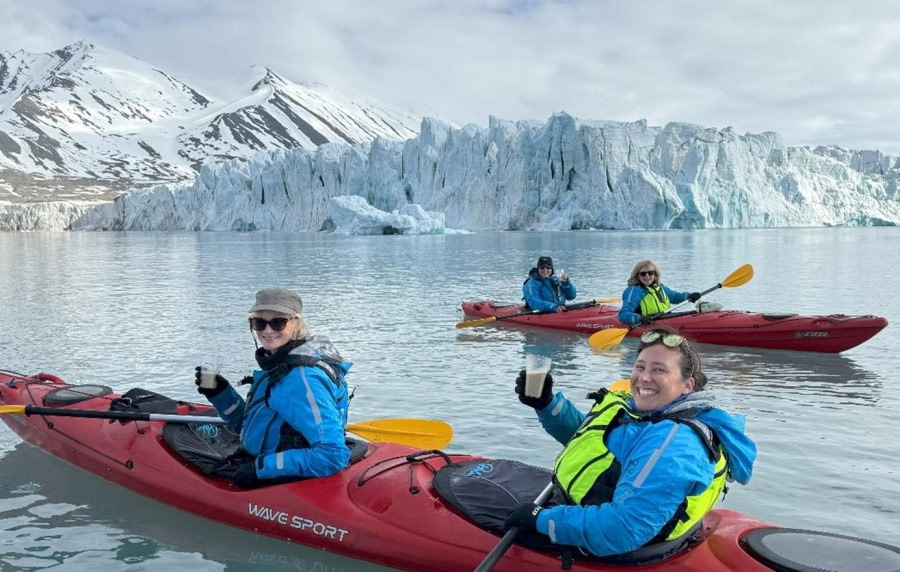
Monacobreen - In the afternoon, we ventured out to meet one of the Arctic’s great giants: Monacobreen. Spanning over 40 kilometers, the glacier’s towering face loomed before us, its jagged blue ice glowing in the late sun—a sight that made us feel wonderfully small.

We paddled cautiously, keeping a respectful distance from the glacier’s edge. Seracs hung precariously, and the risk of sudden calving loomed in the still air. Small floes drifted by, fizzing and cracking as ancient air bubbles escaped—an ambient whisper of millennia gone by.

Life clustered even here. Terns and kittiwakes hovered and dove, feasting at the foot of the ice wall. At one point, a zodiac approached with a surprise—hot chai lattes, warm and spiced, served mid-paddle. We drifted for a moment, sipping quietly, gazing out over the endless blue and white.

We continued along the glacier’s edge, tracing its contours in silence, hearts full. When the time came, Paolo returned to collect us. The kayaks were secured, and we cruised back to the ship with light on the water, ice in our memory, and the rare feeling that we had touched the edge of the world.

Day 4: Alkjefellet & Faksevagen

Alkjefellet & Faksevagen
Datum: 26.06.2025
Position: 79°33.0’ N, 017°41.8’ E
Wind: SSE1
Wetter: Overcast
Lufttemperatur: +6

We were awakened by our expedition leader Marcel inviting us to seize the day! We all made our way to the dining room to enjoy a hearty breakfast before it was time to board our zodiacs ready for our first activity of the day. Our first activity would be a landing at a place called Faksevagan, a beautiful hillside overlooking Lomfjord.

First the long hikers set off with Phillip to attempt to climb to the highest point for a beautiful view over the whole fjord. Next the medium and short hikers followed to enjoy their hikes along the shoreline and over the lower hillside. Purple saxifrage, mountain avens and arctic bell heather was scattered along the ground adding a pop of colour to the otherwise dark landscape. There was still some pieces of fast ice floating in the fjord which at times blocked the path of the zodiacs but all made it ashore who wanted to go. The weather was cool but with no wind which made for a lovely peaceful atmosphere.

After some time ashore we started making our way back to the ship for lunch. On the way back in the zodiacs we happened to find a walrus floating past the ship on an ice floe. He was very relaxed as we all arrived back on the ship. We all enjoyed another delicious lunch prepared by the galley team whilst the ship reposition for our second activity of the day. Our activity in the afternoon would be a zodiac cruise of a famous bird cliff called Alkefjellet.

After lunch we all loaded into our zodiacs once more to enjoy the wonders of the Brunnich’s guillemot colony living upon the dolomite cliff. The weather had cooled off a little since this morning and there was more wind with a flutter of snow. No matter we made our way to the cliff to enjoy the birds. Over 60,000 breeding pairs come to breed on all the nooks and crannies of the cliff during the short Svalbard summer. The air appeared to be buzzing like a beehive with birds in the air and the ones residing on the cliff were just as impressive sharing tiny ledges with 10s of other birds. The noise was incredible, it sounded like they were laughing at us looking down from their high point.

As we progressed along the cliff face the weather started to increase a little with more wind and snow. We were getting our first taste of true Arctic weather. We decided to have a quick look at the glacier then head back to the ship as the waves were getting larger. Some of us got wet on the way back but it was a wonderful experience. We made it back to the ship and headed up to the lounge for a hot drink to warm up and some chocolate cake. A little later we had some interesting presentations from the expedition team before being called down for another delicious dinner. What a great expedition day!!

Kayak triplog

Faksevågen - The day began under a soft, overcast sky, the wind stilled to almost nothing. The Arctic offered us calm water and a sense of quiet anticipation. Before launching our kayaks, we paused—spellbound by the sight of a walrus, asleep on a drifting piece of sea ice. Massive and undisturbed, it lay peacefully, its breath rising gently in the morning air.

We set off southward, hugging a shoreline of shale cliffs, their stratified layers a painter’s palette of greys, ochres, and deep browns. Each band of rock spoke to the geological history of Svalbard, a timeline of ancient upheavals pressed into stone.

Below lingering patches of snow, avalanche corridors funneled meltwater into the fjord, mixing with the salty sea. The effect was striking—stratification in motion. We paddled through visible bands of brackish water, where the fresh and salt layers resisted immediate blending, revealing the subtle physics of the Arctic ecosystem right beneath our bows.

Around the 7-kilometer mark, we neared the mouth of a small river and glided close to a grounded iceberg, worn and softened, yet still hauntingly beautiful. Its pale surface bore streaks of sediment and time, and its stillness contrasted the quiet flow of water around it.

Across the fjord, the land revealed dolomitic intrusions and even hints of marble—surprising signs of transformation in a land that often appears frozen in time. The geology here doesn’t just anchor the landscape—it shapes the experience.

As our paddle neared its end, we discovered an old trapper’s cabin, tucked into the shoreline. Built from driftwood logs, likely carried here by the great Siberian rivers, it stood as a fragile testament to the human will to survive in this stark and treeless place.

It was a morning of layers and contrasts—ice and stone, salt and snow, solitude and subtle human presence. A quiet, profound journey into the depths of the Arctic’s story.

Alkefjellet - In the afternoon, we made our way to the towering cliffs of Alkerfjellet, one of the Arctic’s great bird sanctuaries and home to tens of thousands of Brünnich’s guillemots.

Wind and choppy seas made it too difficult to launch directly beneath the cliffs, so we adapted. Alexis, piloting the zodiac, dropped us off in a sheltered bay about 5 kilometers to the south. There, in calm water, we launched smoothly and began our paddle northward—with the wind at our backs and anticipation ahead.

As we neared the cliffs, the first guillemots appeared—slicing through the air in sleek groups, then diving with effortless power. Soon, we were in the heart of the colony. The sky thickened with birds: circling, diving, calling. The air vibrated with life, motion, and sound.

The cliffs loomed high and dark above us, streaked with meltwater and echoing with avian chorus. The experience was surreal, cinematic—like paddling through the edge of another world, part wildlife documentary, part fantasy epic.

Though the sea near the cliffs stayed relatively calm, conditions offshore grew rough. Wisely, we returned to meet Alexis by zodiac after covering about 5 kilometers. The ride back to the ship gave us time to reflect on what we had just witnessed.

This wasn’t just a paddle—it was a deep encounter with the Arctic wild, a full immersion in one of its most vibrant ecosystems. As we glided silently among thousands of birds, we felt the Arctic not just as a location—but as a living, breathing presence.
Day 5: A day in the pack ice, A visit from the Ice King

A day in the pack ice, A visit from the Ice King
Datum: 27.06.2025
Position: 81°21.8’N / 017°02.9’E
Wind: N2
Wetter: Clear sky
Lufttemperatur: +5

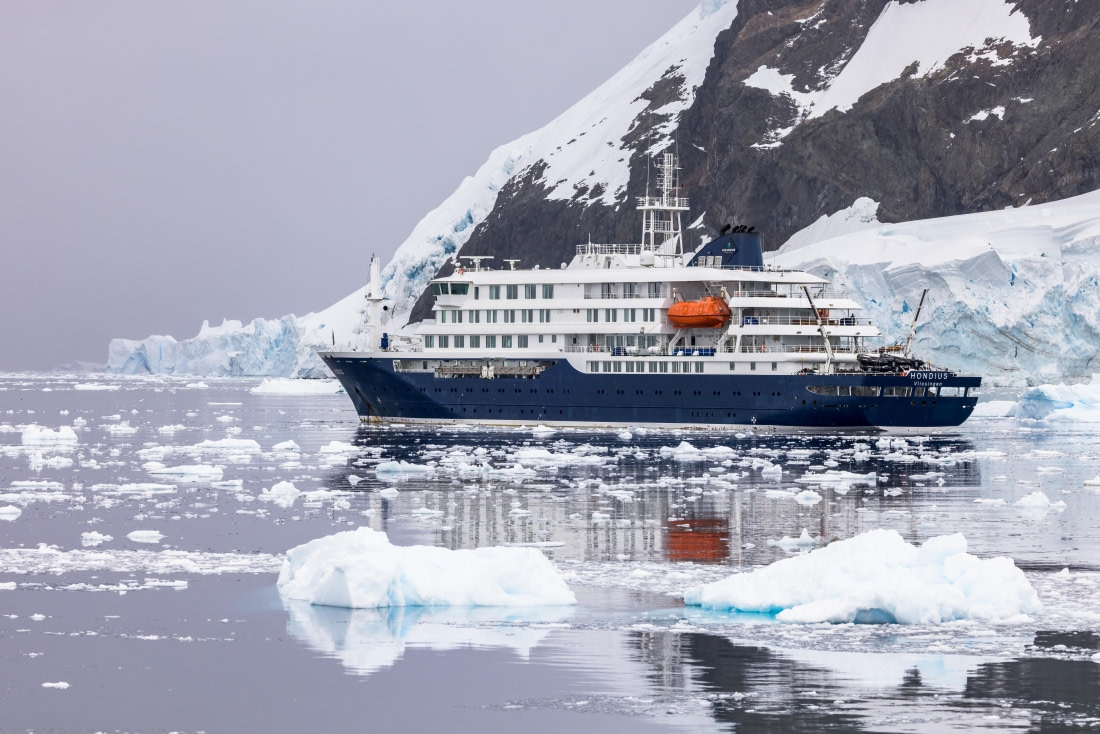
Today will remain etched in our memories as one of the most extraordinary days we’ve experienced in the Arctic. Under pristine blue skies and with glass-calm conditions, Hondius sailed deep into the high Arctic pack ice, reaching a latitude of 81°N. The ice was one-year sea ice, firm yet no match for our sturdy vessels slicing through the floes effortlessly, like a knife through butter.

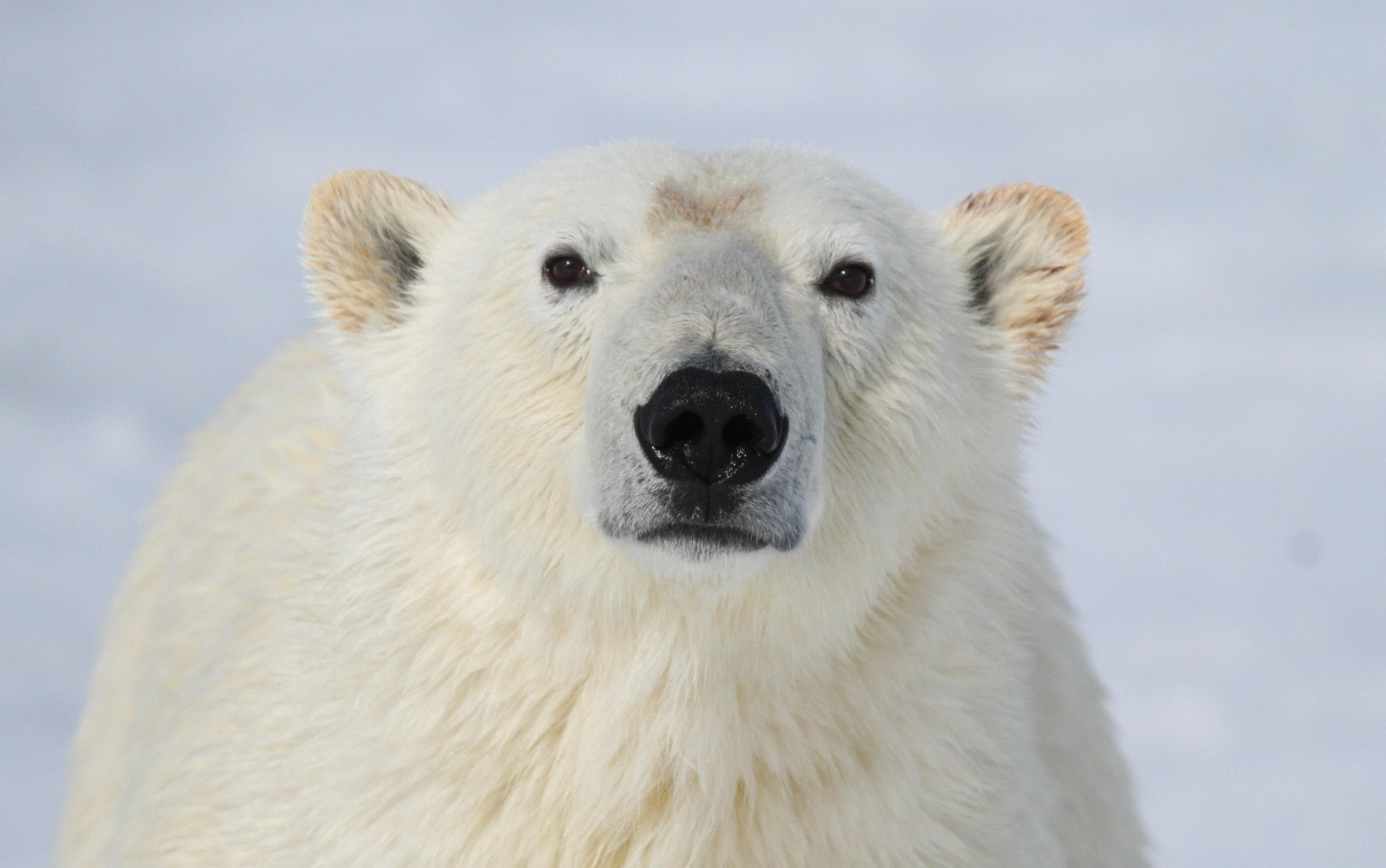
As we ventured farther into the frozen wilderness, Expedition Leader Marcel and the Captain identified a stable, robust ice flow suitable for a landing. Preparations began to disembark, and excitement filled the decks. However, just as the team was gearing up, Alexis, one of our sharp-eyed staff on Deck 8—alongside a vigilant guest—spotted movement in the distance. At first, just a speck. Then unmistakable: a polar bear, approximately 3 kilometers away, heading in our direction.

The landing was swiftly and wisely postponed. All eyes turned toward the bear as we maneuvered the ship closer — maintaining a respectful, non-intrusive distance. What followed was nothing short of magic.

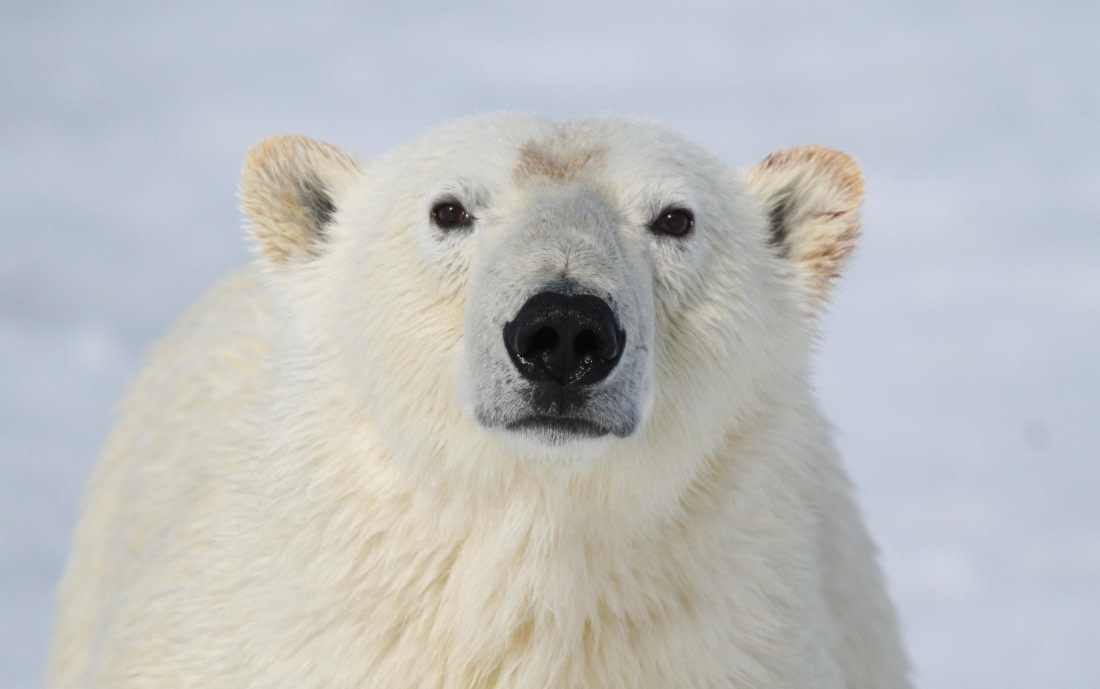
With breathless anticipation, we watched as the bear popped up from a seal breathing hole in the ice—likely having swum over 60 meters beneath the surface to reach it. After investigating the hole, the curious bear turned its attention toward Hondius, slowly approaching the ship. For several minutes, passengers and crew shared a profound moment of connection with this iconic Arctic predator. Eventually, the bear ambled away across the ice, continuing its search for seals in this rich hunting ground.

With the bear at a safe distance, the gangway was deployed, and we finally stepped out onto the sea ice. Walking on the flow was a surreal experience—feeling it gently rise and fall with the ocean swell beneath our feet. Surrounded by endless white, we were reminded of the raw power and delicate balance of this polar environment.

As we returned to the ship, hot chocolate was served on the bow, and spirits were high. But the Arctic had yet more in store. Not long after, a second polar bear was spotted — this one resting near another seal hole, its body language suggesting patient focus. We observed from afar, quietly and respectfully, from the outer decks. To witness a bear in such a natural, undisturbed moment was a privilege few ever know.

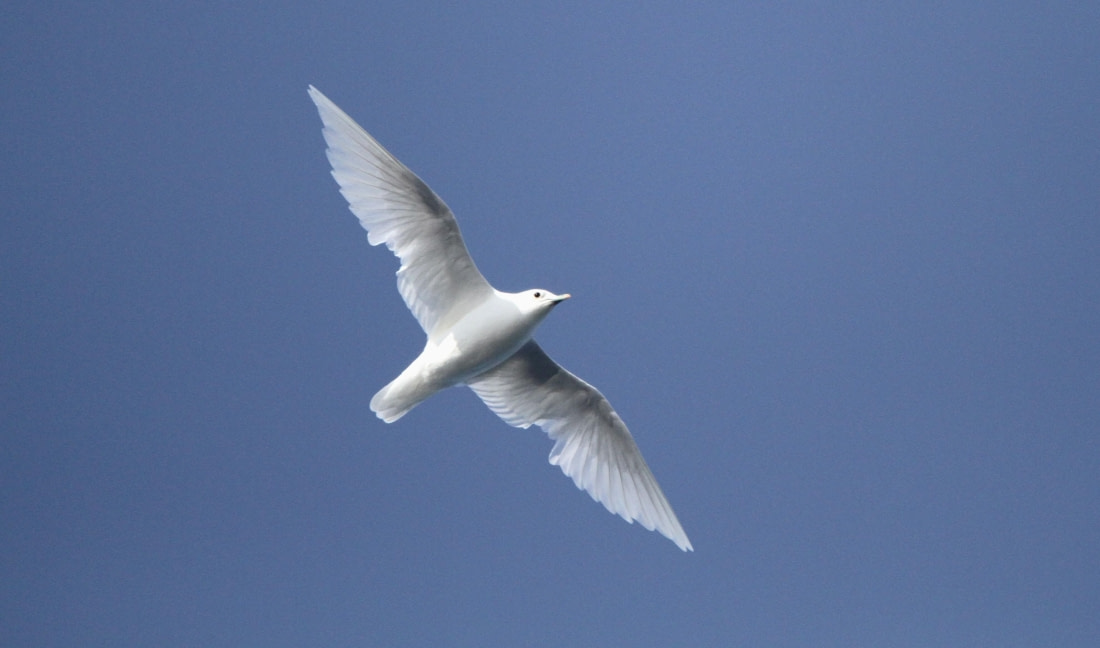
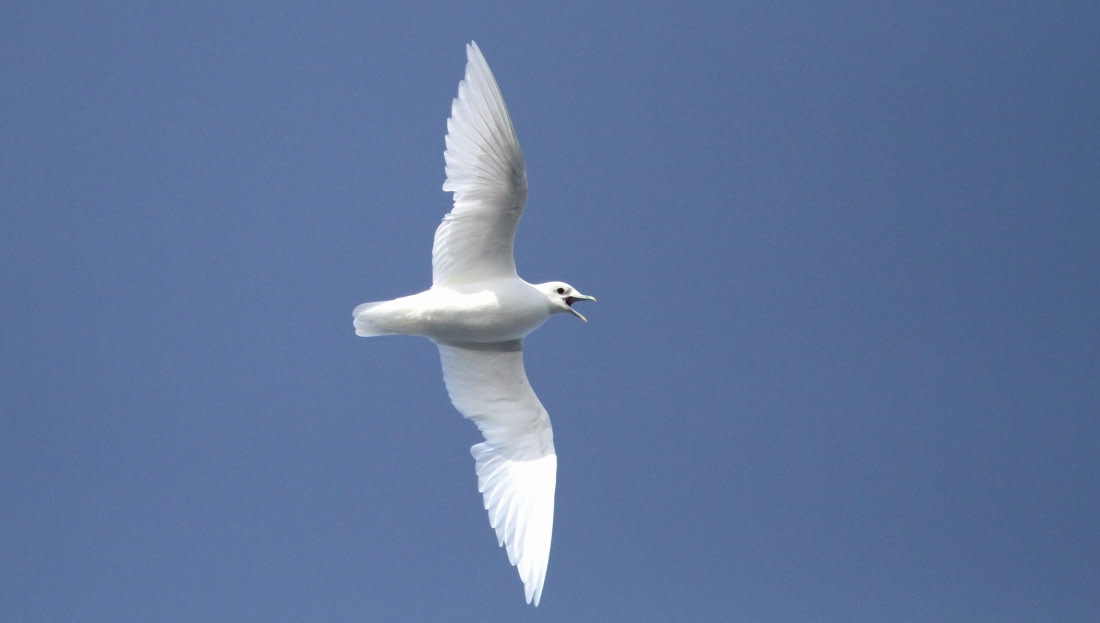
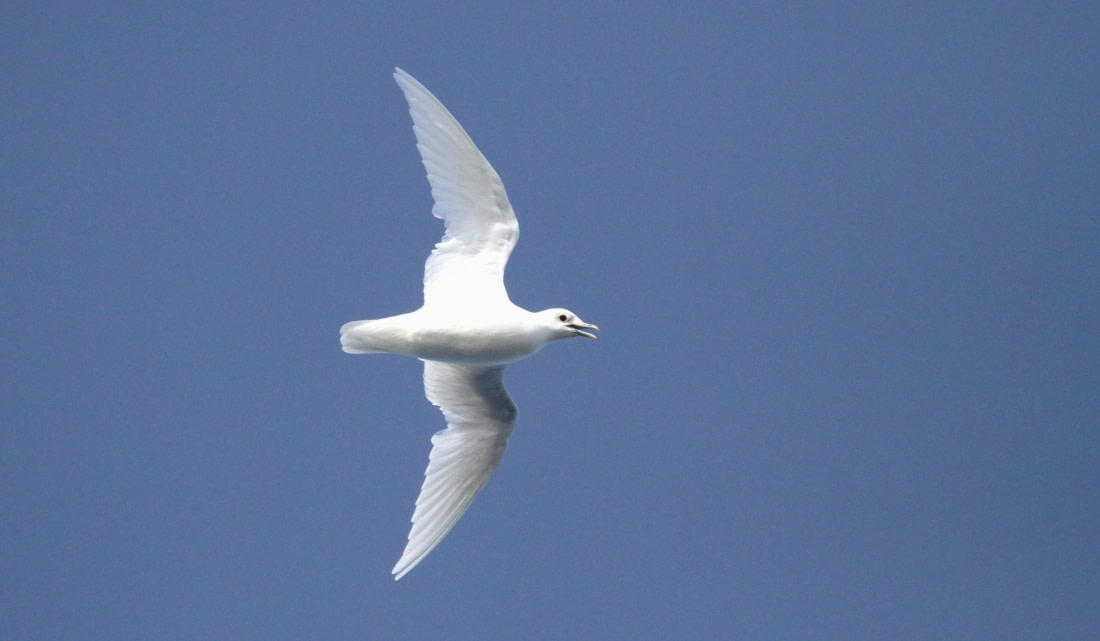
Throughout the day, we also encountered numerous bearded seals and other seal species resting on the ice, as well as graceful pomarine skuas and the ghostly-white ivory gulls, icons of the high north.

As the sun dipped gently toward the horizon (though never setting), the day concluded with a festive BBQ and party on deck—warm food, music, laughter, and shared stories echoing across the ice. A perfect end to a perfect Arctic day.

Two polar bear encounters, vast drifting ice, seal sightings, rare birdlife, and a landing on the sea ice itself—topped off with a celebratory BBQ. Truly, one of the finest and most unforgettable days we’ve had on the ice.

Day 6: A day at sea…

A day at sea…
Datum: 28.06.2025
Position: 81°18.2’N / 021°00.0’E
Wind: SE2
Wetter: Clear sky
Lufttemperatur: +3

We woke to another beautiful Arctic morning, the sky calm and the air still carrying the wonder of yesterday’s unforgettable polar bear encounter and our dramatic landing on the sea ice—moments that will linger in memory.

Shortly after breakfast, we were called to the lounge for an important announcement: due to a medical situation onboard, the expedition team had made the difficult decision to leave the pack ice and begin a full-speed return toward Isfjorden.

While we steamed south, the day remained rich with discovery. In the morning, Pierre and Charlotte delivered engaging lectures on polar bears, diving deeper into the life and adaptations of the Arctic’s most iconic predator.

After another outstanding lunch, the afternoon continued with two more insightful presentations. Tom explored the dynamics of the Arctic sea ice system and its vital role in Earth’s climate, followed by Tiphany, who introduced us to the seals of the Arctic—their diversity, behaviors, and unique challenges in a rapidly changing environment.

As evening settled in, guests gathered for a sumptuous buffet dinner, followed by peaceful sailing along the northwest coast of Svalbard. The ship moved gently through the Arctic twilight, and one by one, we drifted to sleep—cradled by the rhythm of the ocean and the spirit of the north.

Day 7: Harrietbreen & Alkhornet, A Grand Finale

Harrietbreen & Alkhornet, A Grand Finale
Datum: 29.06.2025
Position: 78°12.2’ N, 01°58.8‘E
Wind: S6
Wetter: Clear sky
Lufttemperatur: +7

Today marked the final full day of our voyage, and we woke up to the stillness of Isfjorden surrounding us. At 07:45, the wake-up call echoed softly through the ship. We peeked out the cabin window and saw gentle morning light stretching across the icy mountains — a quiet, breathtaking welcome to the day.

As we were enjoying a warm buffet breakfast, outside, the world was a frozen masterpiece — stark, silent, and humbling. Inside, there was a sense of calm energy, as if we all knew today would be something special.

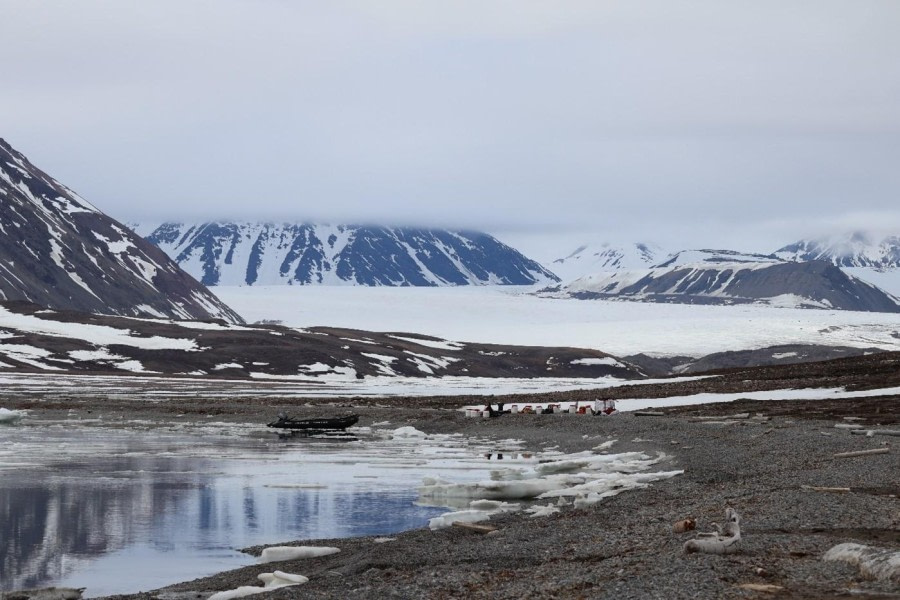
Our morning excursion took us by zodiac to Harrietbreen, Trygghamna, a site steeped in history. Scattered across the shore were remains from World War II and traces of a 17th-century whaling station — weathered beams and rusted metal, standing as fragile monuments to time. Snow-covered peaks loomed above, while seabirds wheeled overhead. It felt like stepping into a forgotten world, where human stories and wild nature quietly coexist.

We joined the zodiac boarding platform on Deck 3. The sea was glassy, perfectly still, reflecting the sky and mountains with surreal clarity.The silence was profound, broken only by the sound of our boat skimming across the water and the distant cries of kittiwakes.

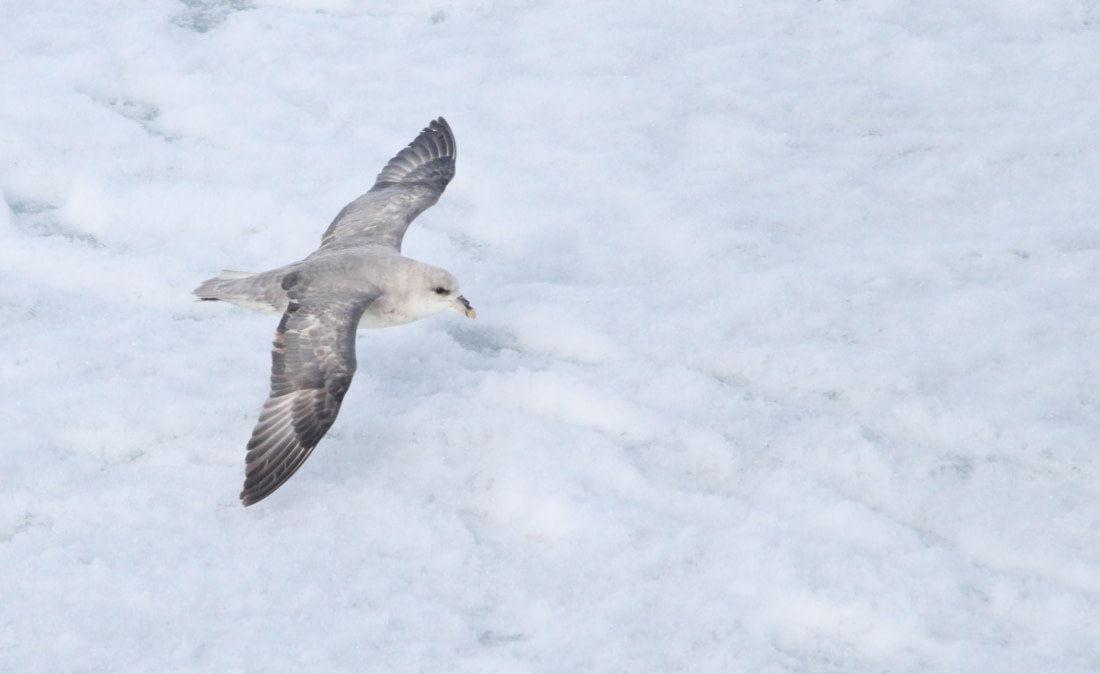
After lunch, we made our final landing of the voyage — Alkhornet, one of the largest bird cliffs in western Spitsbergen. Some of us, long hikers disembarked first, eager to explore deeper inland. The landscape was alive: green moss underfoot, bright Arctic flowers blooming, and the cliff face swarming with thousands of nesting seabirds. Guillemots, kittiwakes, and fulmars filled the air with their calls, their wings slicing through the wind.

The sea, the cliffs, the sky — it all felt so vast and eternal. This was the kind of place that makes you feel small in the best possible way.

Back aboard the ship, we returned our trusty muck boots — symbols of all the wild ground we had covered.

Later on, we gathered in the Lounge for our final recap with the Expedition Team and the Captain. They shared disembarkation details and treated us to a slideshow of the journey. As the images flicked by — the look of a walrus, the shimmering face of a glacier, the joy on our wind-chapped faces — I felt a lump in my throat. It had all gone by so fast, yet every moment was etched into memory.

We then sat down for our farewell dinner. The conversation was quieter tonight, the food savored a little longer, the glances across the table filled with a kind of quiet gratitude. We were no longer strangers — this place had bound us together.

This day, this place — Isfjorden and Alkhornet — gave us not just views, but perspective. As we prepare to leave this land of ice and silence, I carry with me something deeper than photos: the feeling of having truly touched the edge of the world.

Day 8: Farewell from the Arctic: Disembarkation in Longyearbyen

Farewell from the Arctic: Disembarkation in Longyearbyen
Datum: 30.06.2025
Position: 78°15.8’ N, 015°25.0’E
Wind: NNW3
Wetter: Overcast
Lufttemperatur: +5

In the soft light of early morning, we arrived in Longyearbyen. As we gathered for one final breakfast on board, there was a quiet sense of reflection in the air. Outside, the crew gently unloaded our suitcases, a silent reminder that our Arctic adventure was drawing to a close.

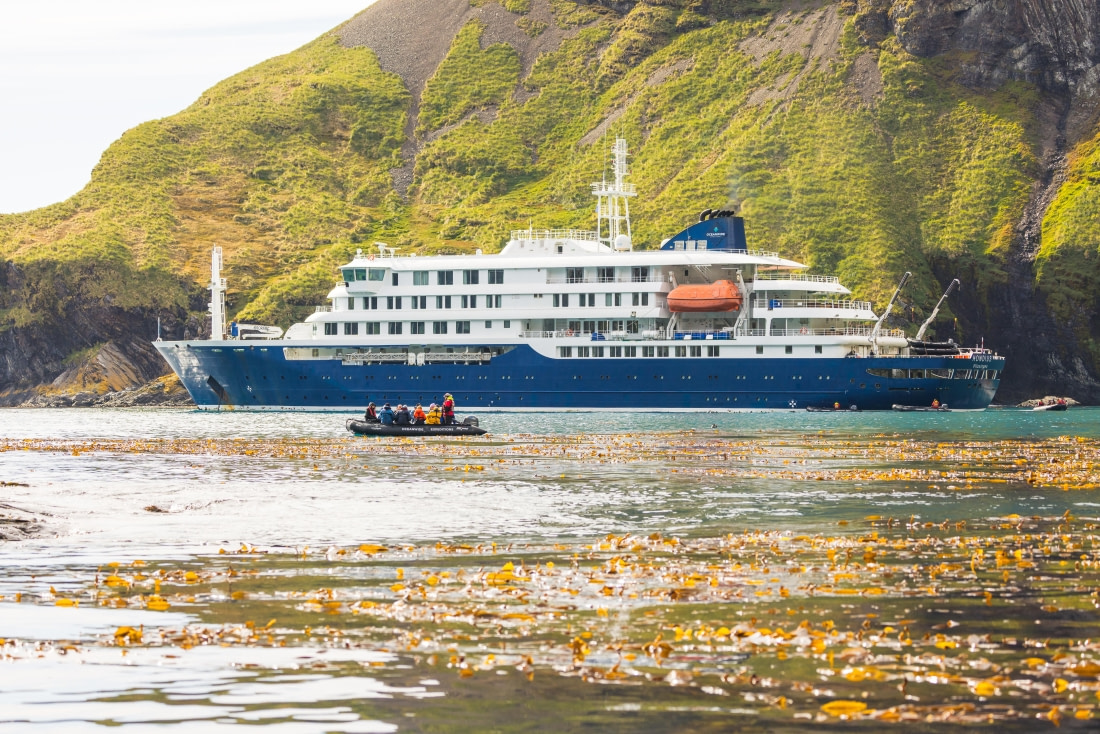
Disembarking from Hondius was not easy. Over these past days, she has been far more than a ship—she’s been our shelter, our launchpad into the wild, and our floating home. Within her walls we’ve shared laughter, awe, and moments that will stay with us for a lifetime.

Together, we ventured deep into the high latitudes, witnessed landscapes sculpted by ice and time, and encountered wildlife most only dream of—polar bears, walrus, whales, and the mesmerizing dance of seabirds in the Arctic skies. Along the way, strangers became companions, and companions became friends.

Now, with hearts full and cameras brimming, we begin the journey home. Though we leave the ice behind, its spirit travels with us—etched into memory, carried in stories, and felt in quiet, unforgettable moments.

Thank you for joining us on this remarkable voyage. Your curiosity, warmth, and camaraderie made this journey truly special. Wherever your path leads next, we hope it brings you back to these wild places—and perhaps, one day, back to us.

Until we meet again—safe travels, and fair winds.

Einzelheiten

Reisecode: HDS04-25
Daten: 23 Jun - 30 Jun, 2025
Dauer: 7 Nächte
Schiff: MS Hondius
Einschiffung: Longyearbyen
Ausschiffung: Longyearbyen

Waren Sie auf dieser Reise?

An Bord von MS Hondius

Die Hondius ist das weltweit erste registrierte Schiff der Polar-Klasse 6 und wurde von Grund auf für Expeditionskreuzfahrten gebaut.

Mehr über die MS Hondius »
Loading