| Datum: |
26.06.2025 |
| Positie: |
79°33.0’ N, 017°41.8’ E |
| Wind: |
SSE1 |
| Weer: |
Overcast |
| Luchttemperatuur: |
+6 |
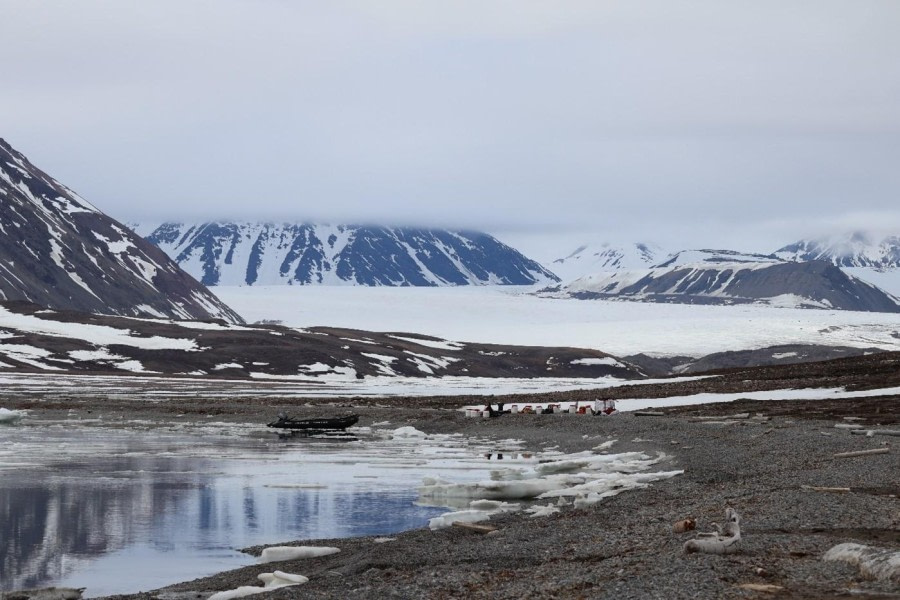
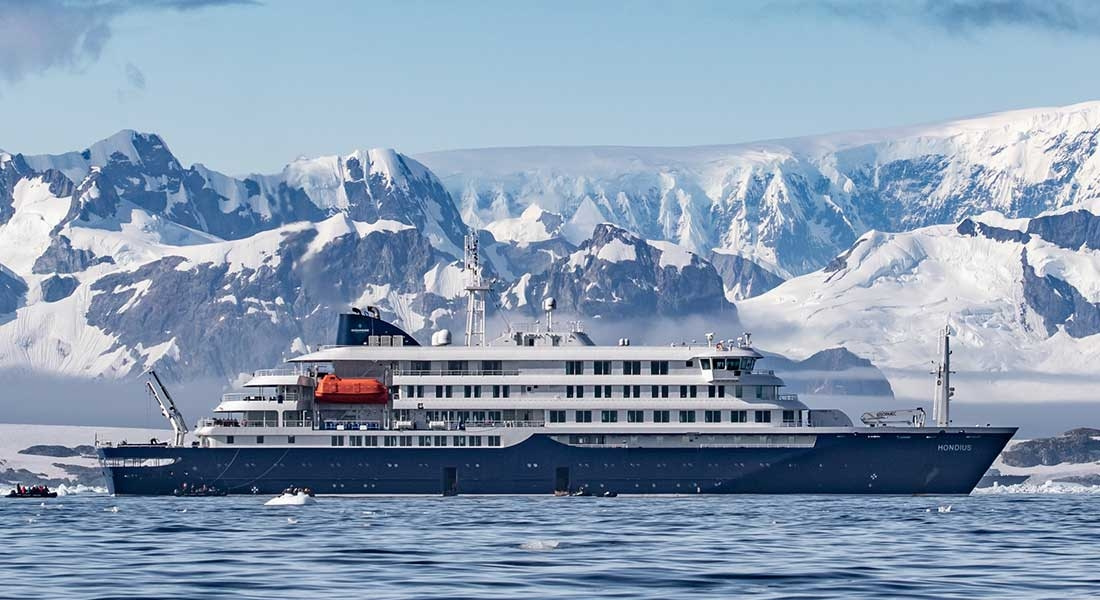
We were awakened by our expedition leader Marcel inviting us to seize the day! We all made our way to the dining room to enjoy a hearty breakfast before it was time to board our zodiacs ready for our first activity of the day. Our first activity would be a landing at a place called Faksevagan, a beautiful hillside overlooking Lomfjord.
First the long hikers set off with Phillip to attempt to climb to the highest point for a beautiful view over the whole fjord. Next the medium and short hikers followed to enjoy their hikes along the shoreline and over the lower hillside. Purple saxifrage, mountain avens and arctic bell heather was scattered along the ground adding a pop of colour to the otherwise dark landscape. There was still some pieces of fast ice floating in the fjord which at times blocked the path of the zodiacs but all made it ashore who wanted to go. The weather was cool but with no wind which made for a lovely peaceful atmosphere.
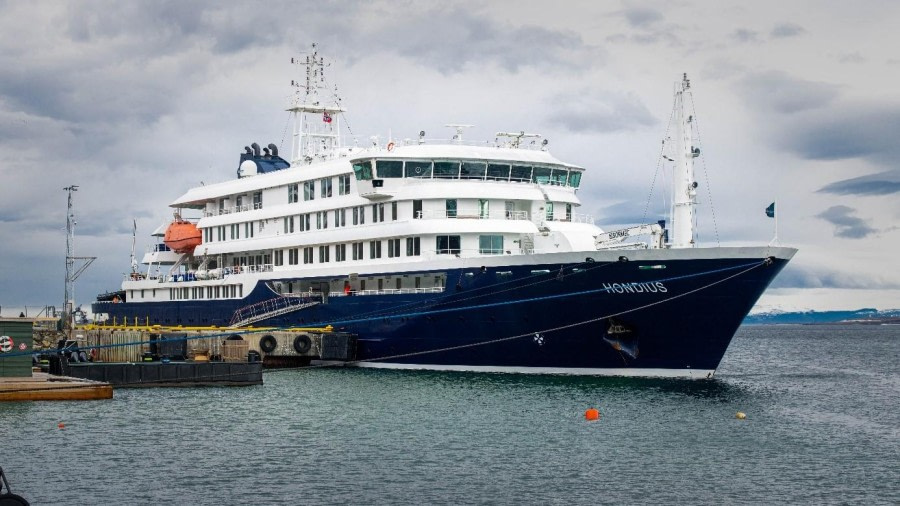
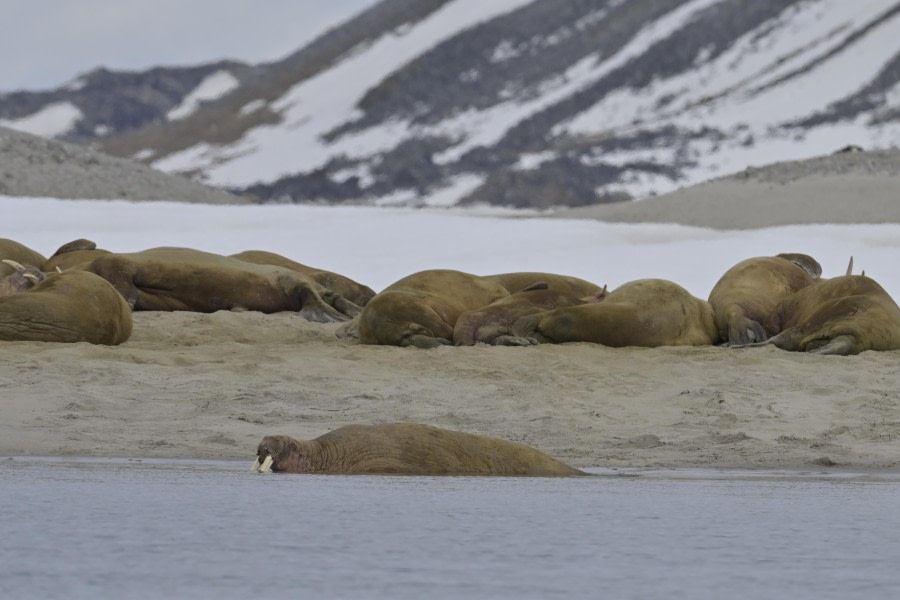
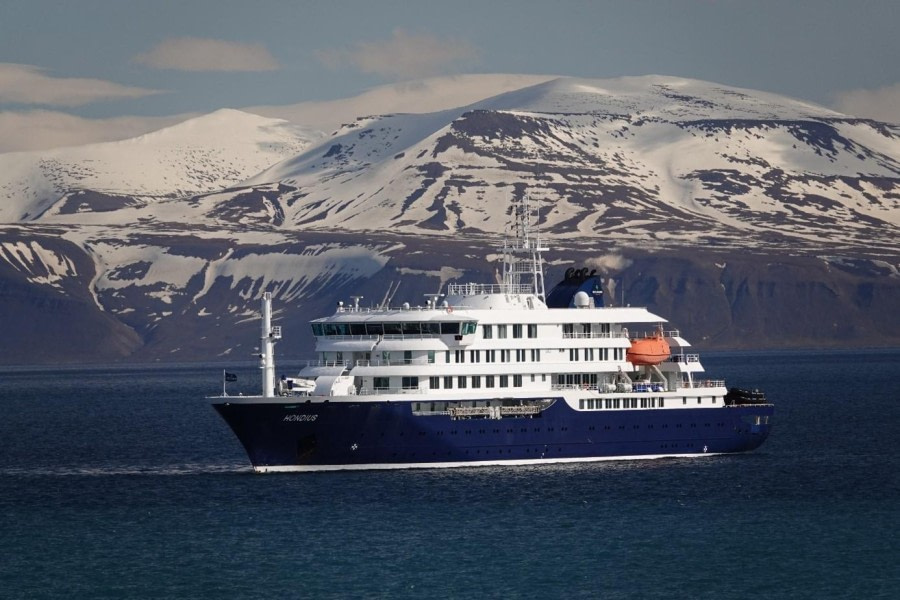
After some time ashore we started making our way back to the ship for lunch. On the way back in the zodiacs we happened to find a walrus floating past the ship on an ice floe. He was very relaxed as we all arrived back on the ship. We all enjoyed another delicious lunch prepared by the galley team whilst the ship reposition for our second activity of the day. Our activity in the afternoon would be a zodiac cruise of a famous bird cliff called Alkefjellet.
After lunch we all loaded into our zodiacs once more to enjoy the wonders of the Brunnich’s guillemot colony living upon the dolomite cliff. The weather had cooled off a little since this morning and there was more wind with a flutter of snow. No matter we made our way to the cliff to enjoy the birds. Over 60,000 breeding pairs come to breed on all the nooks and crannies of the cliff during the short Svalbard summer. The air appeared to be buzzing like a beehive with birds in the air and the ones residing on the cliff were just as impressive sharing tiny ledges with 10s of other birds. The noise was incredible, it sounded like they were laughing at us looking down from their high point.
As we progressed along the cliff face the weather started to increase a little with more wind and snow. We were getting our first taste of true Arctic weather. We decided to have a quick look at the glacier then head back to the ship as the waves were getting larger. Some of us got wet on the way back but it was a wonderful experience. We made it back to the ship and headed up to the lounge for a hot drink to warm up and some chocolate cake. A little later we had some interesting presentations from the expedition team before being called down for another delicious dinner. What a great expedition day!!
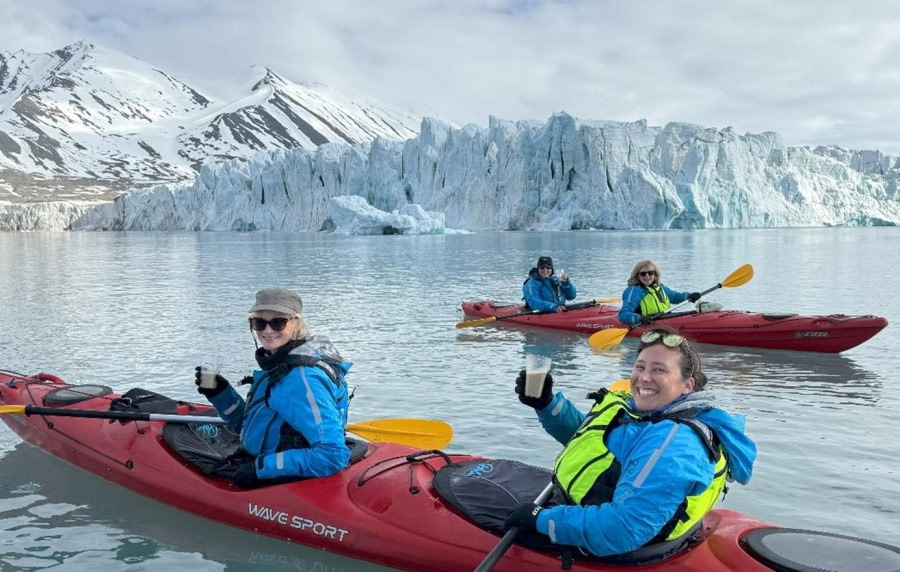
Kayak triplog
Faksevågen - The day began under a soft, overcast sky, the wind stilled to almost nothing. The Arctic offered us calm water and a sense of quiet anticipation. Before launching our kayaks, we paused—spellbound by the sight of a walrus, asleep on a drifting piece of sea ice. Massive and undisturbed, it lay peacefully, its breath rising gently in the morning air.
We set off southward, hugging a shoreline of shale cliffs, their stratified layers a painter’s palette of greys, ochres, and deep browns. Each band of rock spoke to the geological history of Svalbard, a timeline of ancient upheavals pressed into stone.
Below lingering patches of snow, avalanche corridors funneled meltwater into the fjord, mixing with the salty sea. The effect was striking—stratification in motion. We paddled through visible bands of brackish water, where the fresh and salt layers resisted immediate blending, revealing the subtle physics of the Arctic ecosystem right beneath our bows.
Around the 7-kilometer mark, we neared the mouth of a small river and glided close to a grounded iceberg, worn and softened, yet still hauntingly beautiful. Its pale surface bore streaks of sediment and time, and its stillness contrasted the quiet flow of water around it.
Across the fjord, the land revealed dolomitic intrusions and even hints of marble—surprising signs of transformation in a land that often appears frozen in time. The geology here doesn’t just anchor the landscape—it shapes the experience.
As our paddle neared its end, we discovered an old trapper’s cabin, tucked into the shoreline. Built from driftwood logs, likely carried here by the great Siberian rivers, it stood as a fragile testament to the human will to survive in this stark and treeless place.
It was a morning of layers and contrasts—ice and stone, salt and snow, solitude and subtle human presence. A quiet, profound journey into the depths of the Arctic’s story.
Alkefjellet - In the afternoon, we made our way to the towering cliffs of Alkerfjellet, one of the Arctic’s great bird sanctuaries and home to tens of thousands of Brünnich’s guillemots.
Wind and choppy seas made it too difficult to launch directly beneath the cliffs, so we adapted. Alexis, piloting the zodiac, dropped us off in a sheltered bay about 5 kilometers to the south. There, in calm water, we launched smoothly and began our paddle northward—with the wind at our backs and anticipation ahead.
As we neared the cliffs, the first guillemots appeared—slicing through the air in sleek groups, then diving with effortless power. Soon, we were in the heart of the colony. The sky thickened with birds: circling, diving, calling. The air vibrated with life, motion, and sound.
The cliffs loomed high and dark above us, streaked with meltwater and echoing with avian chorus. The experience was surreal, cinematic—like paddling through the edge of another world, part wildlife documentary, part fantasy epic.
Though the sea near the cliffs stayed relatively calm, conditions offshore grew rough. Wisely, we returned to meet Alexis by zodiac after covering about 5 kilometers. The ride back to the ship gave us time to reflect on what we had just witnessed.
This wasn’t just a paddle—it was a deep encounter with the Arctic wild, a full immersion in one of its most vibrant ecosystems. As we glided silently among thousands of birds, we felt the Arctic not just as a location—but as a living, breathing presence.