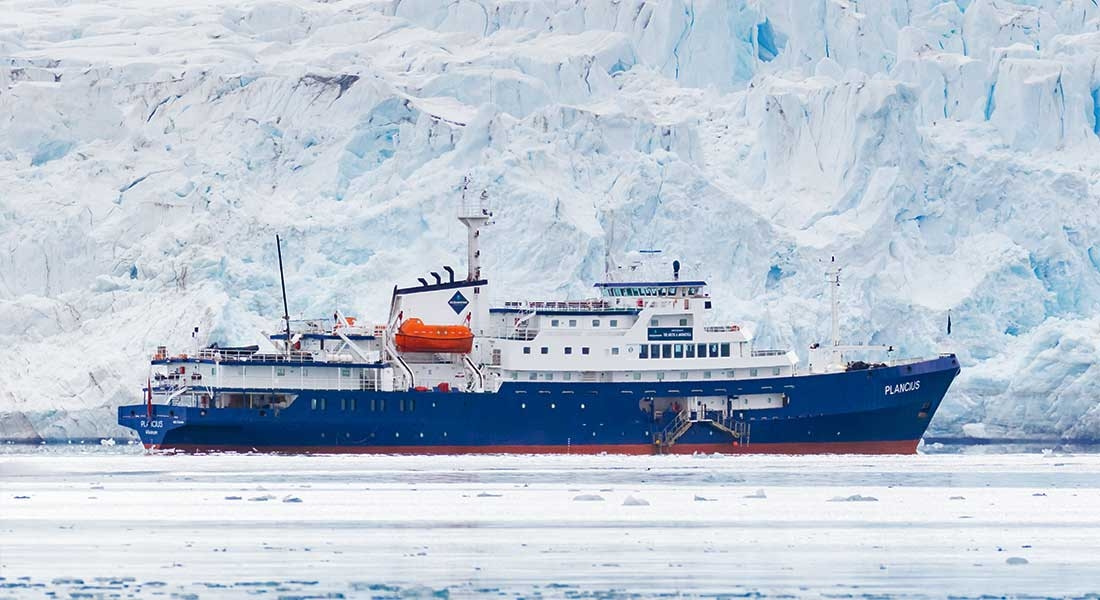
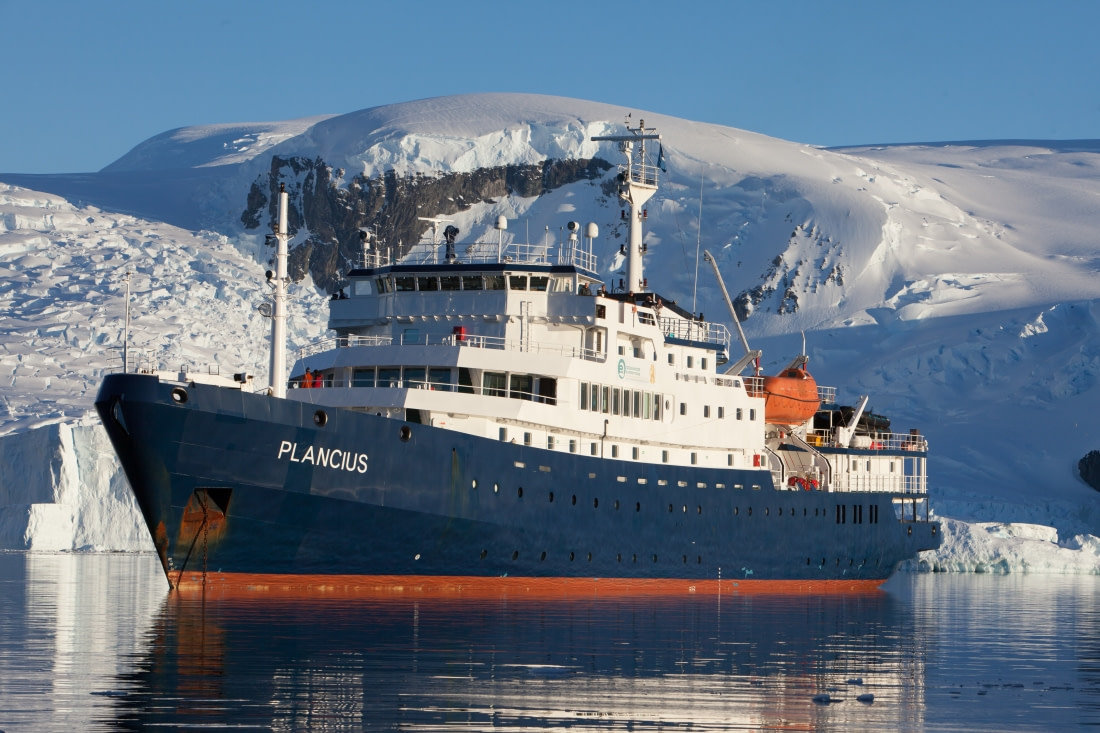
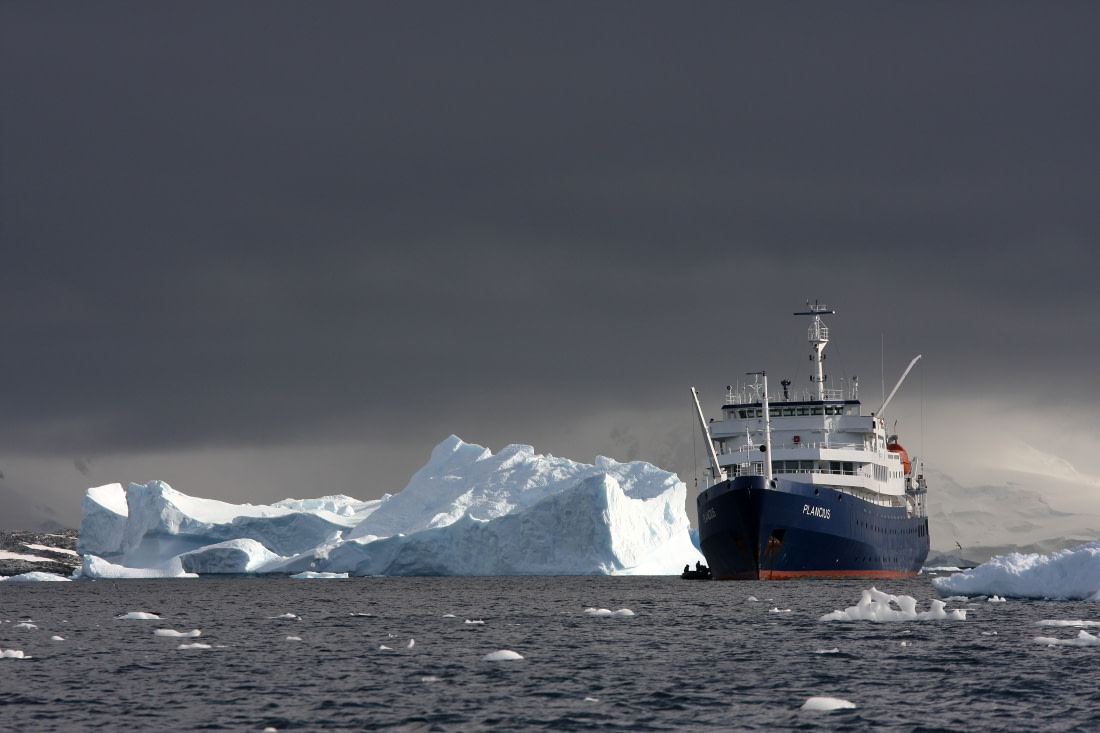
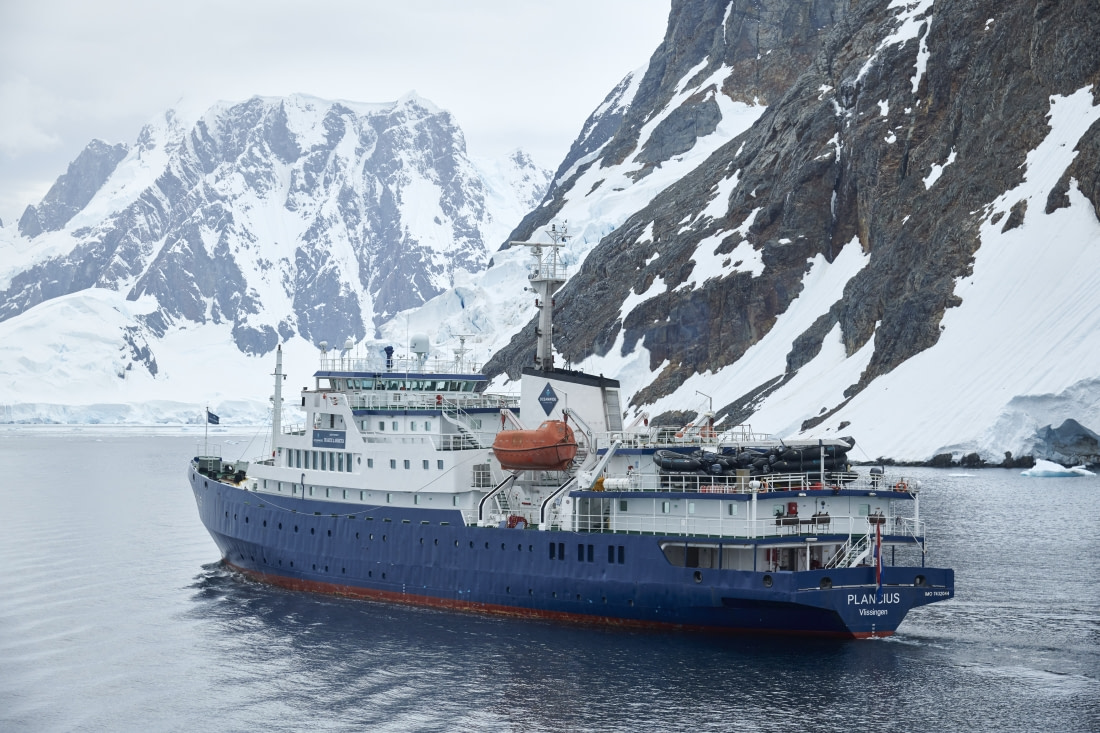
PLA10-26, trip log, Northeast Greenland Solar Eclipse Explorer Voyage

by Oceanwide Expeditions

Galería de fotos

Bitácora

Day 1: Embarkation Day - Longyearbyen

Embarkation Day - Longyearbyen
Fecha: 03.08.2026
Posición: 78°14.0’N / 015°35.4’E
Viento: NE2
Clima: Partly Cloudy
Temperatura del Aire: +8

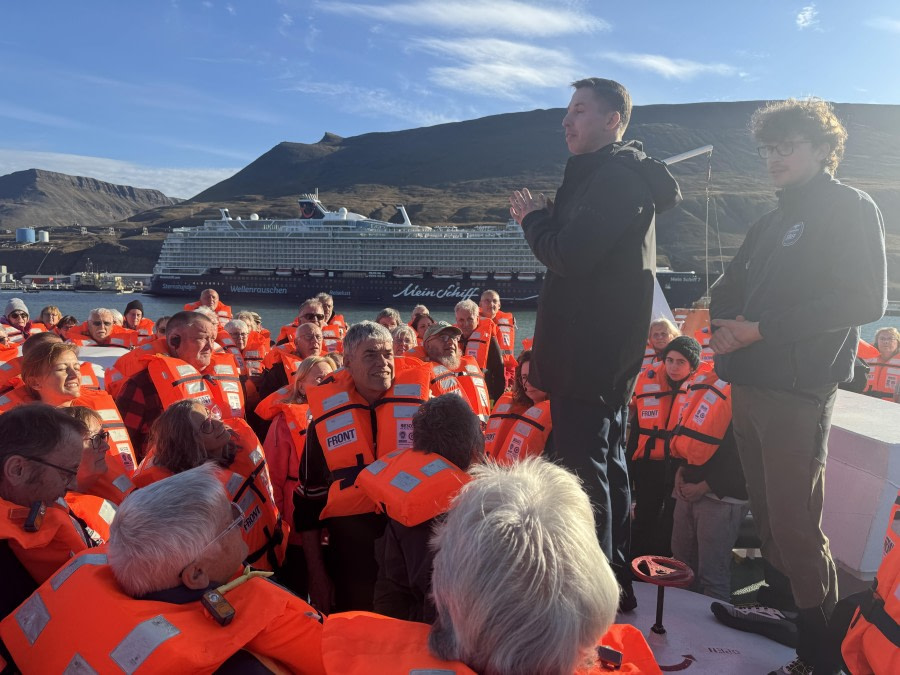
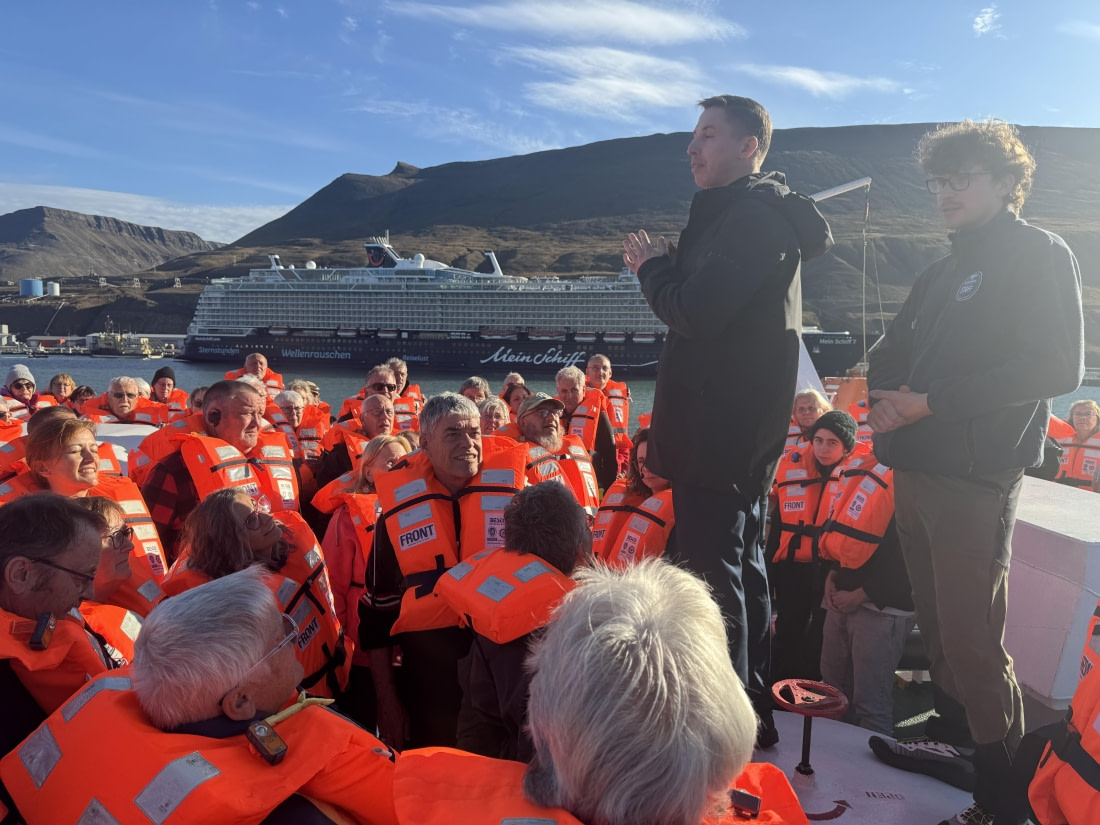
After arriving in Longyearbyen on embarkation day, we could finally feel the excitement building as our Arctic adventure was about to begin. Throughout the afternoon, we watched our luggage being shuttled from the quay out to MV Plancius, patiently waiting at anchor in the bay. By 4:00 p.m., we were lining up eagerly to board the Zodiacs for our first trip across the water. To our delight, the weather was on our side, and we enjoyed a smooth, dry transfer to the ship - something we knew we couldn't take for granted in the Arctic!

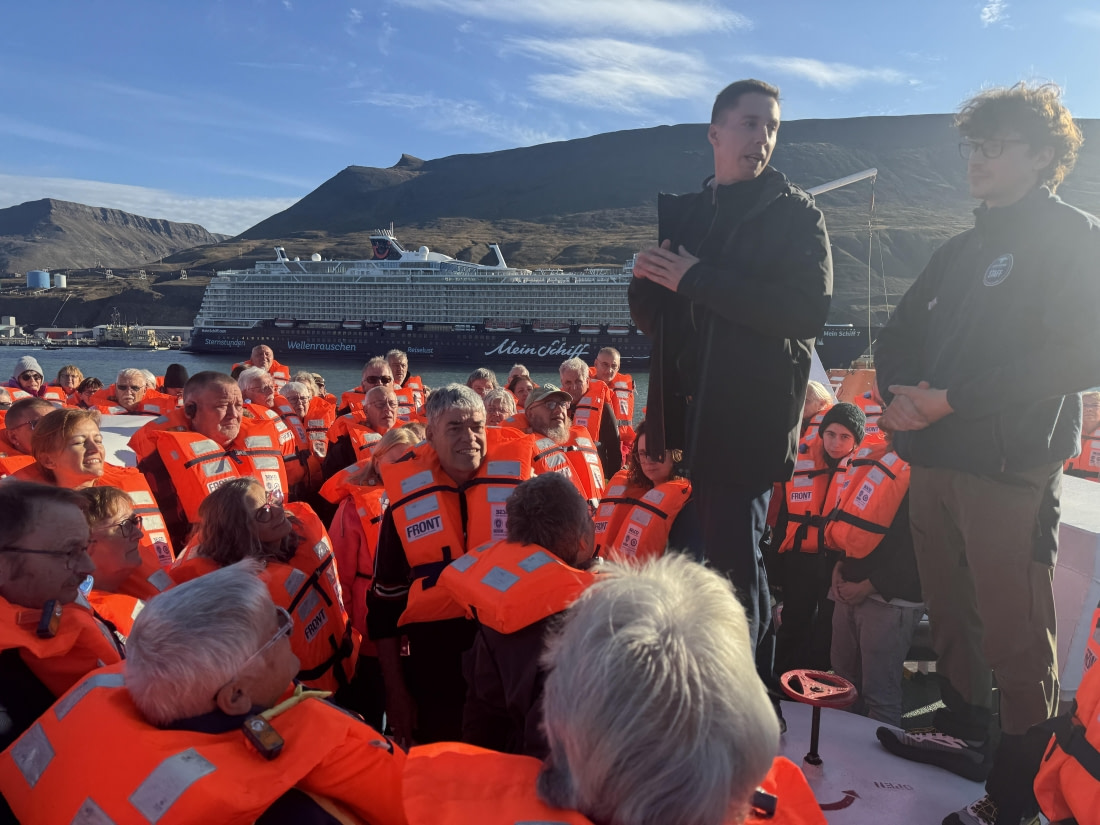
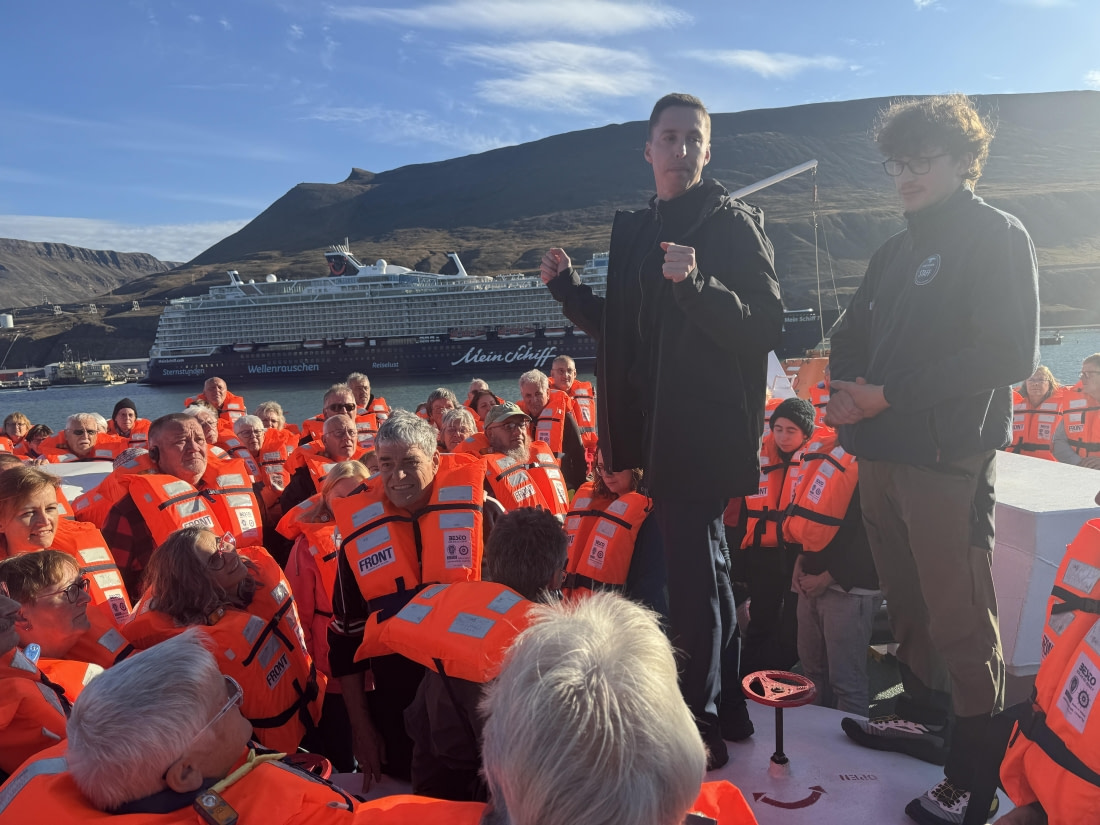
Once on board, everything seemed to happen at once as we settled into our cabins, explored our new home for the voyage, and attended the mandatory safety briefings. We then joined Captain Christophe Colaris for a welcome cocktail, officially marking the beginning of our expedition, before sitting down to a delicious first dinner with our fellow travellers.

Later that evening, as MV Plancius slipped out of Isfjorden and headed north towards our first adventure, many of us gathered on deck to soak up the incredible scenery. The distinctive flat-topped mountains surrounding the fjord glowed in the soft Arctic evening light, giving us a spectacular first taste of Svalbard. With the coastline slowly fading into the distance, the excitement for the days ahead only continued to grow.

Day 2: Smeerenburg and Ytre Noskoya

Smeerenburg and Ytre Noskoya
Fecha: 04.08.2026
Posición: 79°38.0’N / 010°55.2’E
Viento: NE2
Clima: Partly Cloudy
Temperatura del Aire: +6

After welcoming passengers on board, we sailed overnight towards the northwestern part of Spitsbergen. We arrived early in the vicinity of Danskøya, a large island north of Albert I Land. Early in the morning, our Captain crossed the strait of Sørgattet to enter the large area known as Smeerenburgfjorden. Slowly, we sailed into it, enjoying great views of all the small bays located to the east of our position, many of them featuring various glaciers.

After breakfast, our Expedition Leader, Chloé, started her safety briefing, discussing the rules that govern operations in this desolate Norwegian archipelago. The first part of the briefing covered how we operate under the AECO guidelines. AECO is the Association of Arctic Expedition Cruise Operators and, as such, implements operational protocols to help ensure the preservation of this beautiful place. Afterwards, she described our onboard protocols for getting in and out of the Zodiacs, the small inflatable boats we use to bring passengers ashore. Finally, she explained how to behave in the event of an encounter with a polar bear. Many mandatory briefings, all aimed at ensuring your safety!

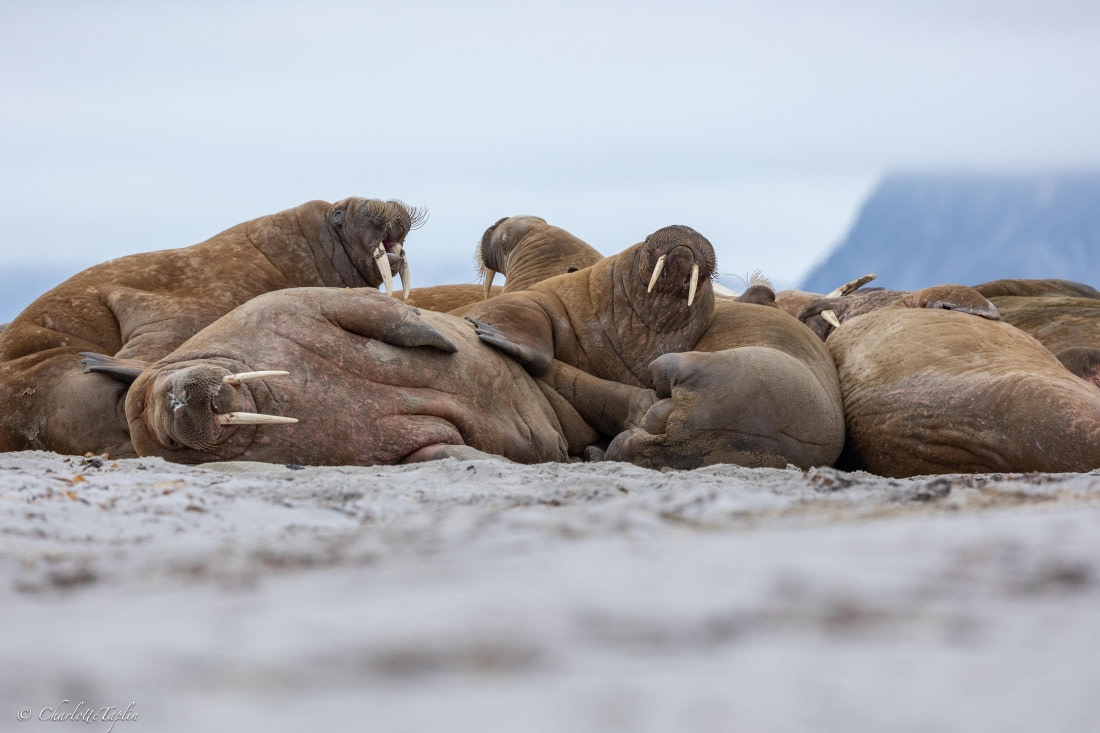
Around 10:00, we started our operations, launching our first Zodiacs into the water with the aim of visiting the old Dutch whaling station of Smeerenburg, which operated between 1619 and 1660. Given the number of whales hunted, the station was eventually abandoned when there were no longer enough whales to be found in the area. What brought us there was not just the historical significance of the place: today, wildlife thrives along its beaches. Indeed, as we landed, we organised our passengers to visit a large number of walruses (Odobenus rosmarus) hauling out on the shore.

We estimated that a few dozen animals were present at the time of our visit. We were very proud to see how our passengers followed the instructions provided by the staff and behaved respectfully when approaching the animals. The activity finished around 12:30, by which time the last Zodiac had been hoisted back on board. While our passengers enjoyed their first lunch on board, our navigation officers repositioned the ship. We hove anchor and started a short passage across Fair Haven and the Cooksundet, aiming to reach the northwestern side of a small island called Ytre Norskøya, the place where we would undertake our second operation of the day. After circling the island from northwest to north and then southeast, we dropped anchor and started launching the Zodiacs.

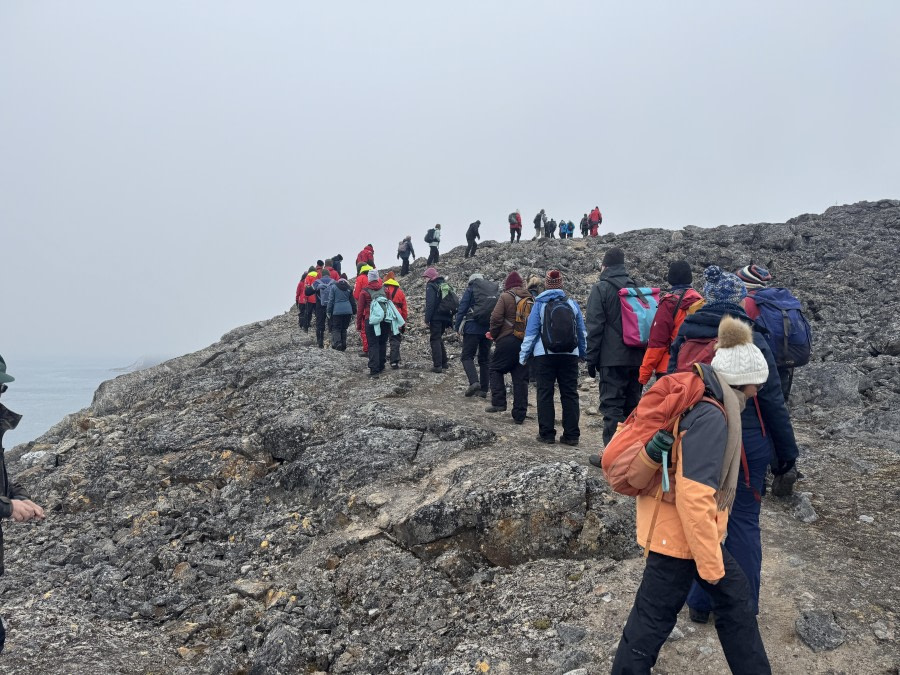
Our intention was to offer hikes with different levels of physical demand. Charlotte and Koen led the long hike, which visited the top of the island, a small summit called Utkiken, 151 metres above sea level. The second group, led by Ursula, Sven, Gaby and Eduardo, aimed to walk to the base of Utkiken. As the walk progressed, this medium-difficulty group was divided into two subgroups: one led by Ursula and Sven, which continued higher towards Utkiken, and a smaller one led by Gaby and Eduardo, which went to Utkikpynten, a lookout point offering beautiful views of the landscape.

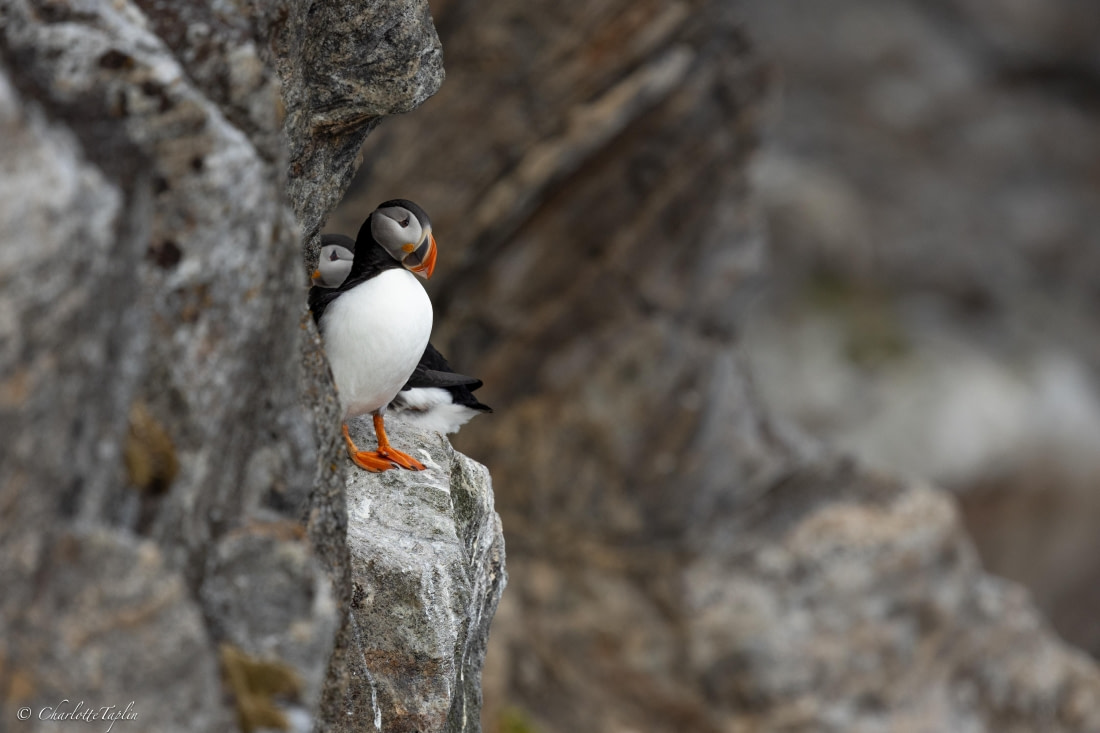
A smaller group was organised by Michelle and Chloé for those wishing to stay in the vicinity of the landing site. It is fair to say that we all had fun walking on the island, regardless of the difficulty of the stroll, and that we all enjoyed good views of the landscape, our ship and the sea. Those who ventured higher up the island were rewarded with sightings of wildlife, including several Arctic foxes, puffins and a number of other species.

The last of us returned to the ship at 18:30. After sorting the equipment and taking a shower, we had our daily recap, during which Chloé presented the plans for the next day. Charlotte also gave a presentation during the recap, talking about walruses and providing additional information about these beautiful creatures.Dinner was announced and we sailed on a north-northwesterly course, aiming to reach the pack ice early in the morning. Over the next few days, we will be crossing the Fram Strait, a passage of water separating Greenland from Svalbard. Our next land destination is Greenland, the largest island in the world.
Day 3: In the ice

In the ice
Fecha: 05.08.2026
Posición: 79°30.0’N / 003°38.9’E
Viento: NE2
Clima: Overcast
Temperatura del Aire: +6

Early in the morning, we were woken by the crunch of ice against our bow. Looking out, we were met with a landscape like no other: endless expanses of drifting ice floes, a spectrum of greys, whites and blues. At a quarter to seven, Chloé’s wake-up call rang out, followed by Michelle’s German translation. We enjoyed a leisurely breakfast and let the day unfold at a gentle pace.

Today’s main aim was to relax and let our minds wander, allowing our gaze to roam over the seemingly endless pack ice in search of life. At first glance, this landscape looks barren and lifeless, but if you take the time to look more closely, you can see the diversity of life teeming among the ice floes. We could see large flocks of little auks, while fulmars and kittiwakes constantly circled the ship, and black guillemots and Brünnich’s guillemots dived away into the water. Here and there, a curious harp seal broke the surface of the gently rippled water.

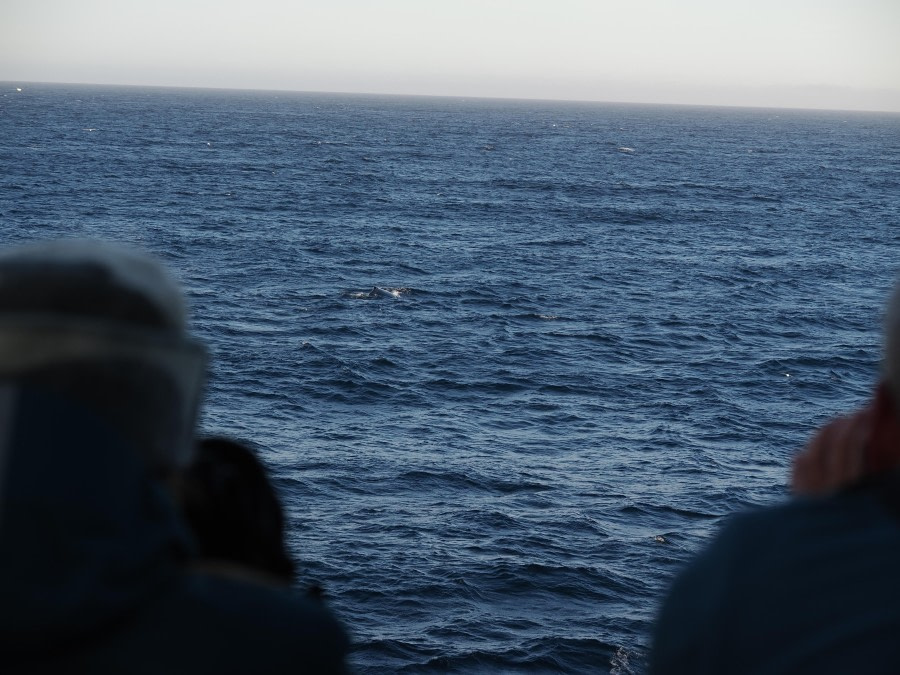
Suddenly, a giant whale appeared right in front of the ship! A huge fountain of spray shot high into the air as it exhaled, and then it sank back down between the ice floes, as if it were a submarine. Then came the announcement: a blue whale! The largest animal ever to have lived on our planet! We were incredibly lucky to have such a special encounter on just our second day.

Shortly afterwards, it resurfaced right next to our ship. Now we could clearly see its blue-grey markings and the giant’s relatively small dorsal fin. We had the pleasure of seeing the blue whale surface to breathe a few more times before it dived back down and disappeared beneath the drifting pack ice.Around midday, we left the pack ice for a while to cover some nautical miles and make a little faster progress.

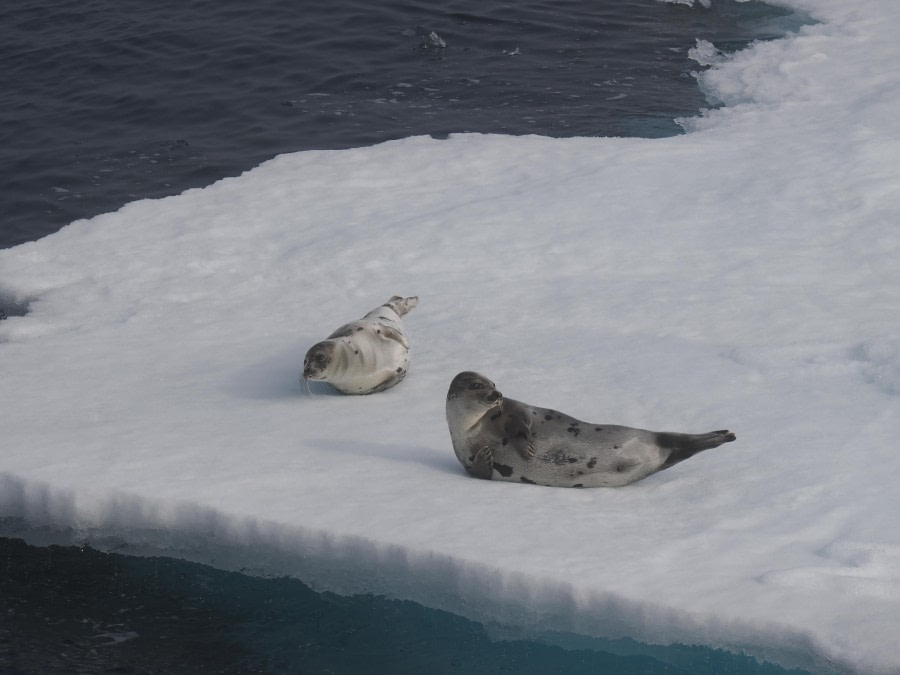
After lunch, we enjoyed a short break before gathering in the lounge to listen to Chloé’s presentation on sea ice. She told us how the ice forms here in the Arctic Ocean, why it is so incredibly important for local wildlife and the global climate, and how much it is threatened by climate change. Some time after this interesting lecture, an announcement came from the bridge. A large number of seals had been spotted resting on some ice floes. The Captain steered the ship in their direction and, as we got closer, we realised there were at least 50 harp seals. Another unique encounter in the pack ice that day!

That evening, the Expedition Team invited us to the daily recap in the lounge. Chloé told us more about tomorrow’s plans and explained a little more about the so-called “explorer hikes” and the shorter hikes that await us in Greenland. Afterwards, Koen gave a short presentation on the blue whale, offering us insights into the absolutely fascinating world of the largest animal on Earth. Then Michelle talked about her favourite Arctic animal: the Arctic fox. What really surprised us was the distance some animals can travel on their explorations through the Arctic! We rounded off this wonderful day with dinner and a drink or two at the bar.
Day 4: Sea day

Sea day
Fecha: 06.08.2026
Posición: 76°08.7’N / 006°04.9’W
Viento: NW3
Clima: Overcast
Temperatura del Aire: -1

The day began with a peaceful crossing of the Greenland Sea, where endless shades of grey stretched across the horizon. The muted colours of the sea and sky created a dramatic Arctic atmosphere, while a brief spell of light snowfall during the morning added to the sense of being deep within the polar environment. Despite the subdued weather, conditions remained relatively calm, with the temperature hovering around 2°C.

Wildlife was never far away. Atlantic fulmars effortlessly glided alongside the ship, taking advantage of the air currents generated by the vessel. These remarkable seabirds are perfectly adapted to life at sea, spending much of their lives over the open ocean and only returning to land to breed. The occasional Arctic skua was also spotted, while flocks of little auks rested on the water’s surface before rapidly diving beneath the waves to avoid the approaching ship. These tiny seabirds are among the most abundant birds in the North Atlantic and rely on their exceptional diving abilities to feed on small crustaceans beneath the surface.

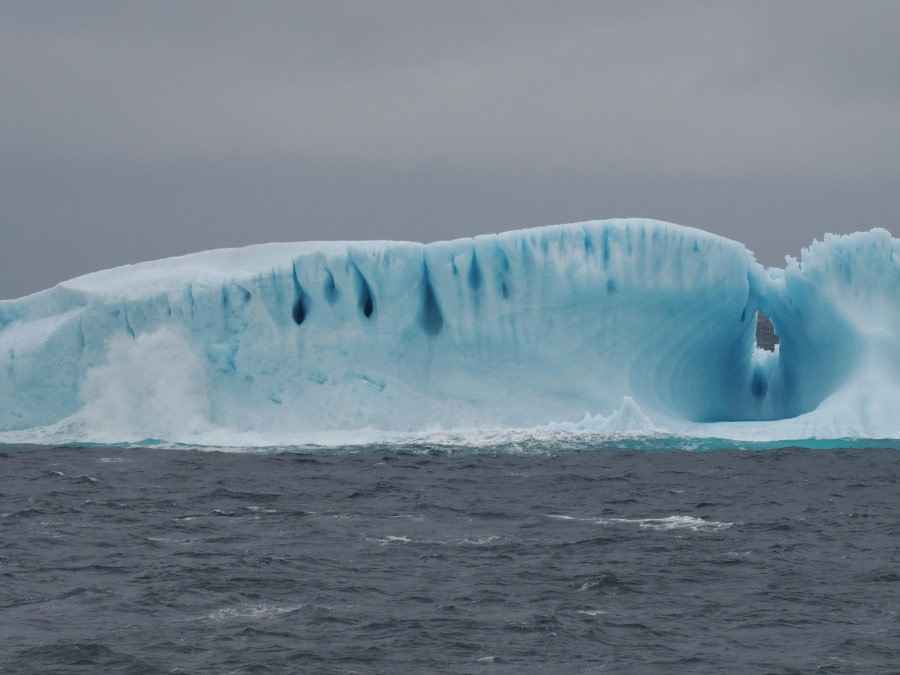
Late in the morning, excitement spread across the decks as the expedition’s first iceberg came into view. Beautifully sculpted by wind, waves and melting, the iceberg displayed stunning shades of blue—a result of compressed ice that has lost most of its trapped air, allowing blue wavelengths of light to penetrate more deeply than other colours. Moments later, the spectacle became even more memorable when a fin whale was spotted nearby. The whale surfaced three times before disappearing beneath the surface, offering guests a memorable encounter with the world’s second-largest animal.

Lectures throughout the day were dedicated to expanding our knowledge, with presentations delivered separately in both English and German to ensure that all guests could fully engage with the topics. Eduardo explored the fascinating science behind solar eclipses, explaining the precise alignment of the Sun, Moon and Earth that creates one of nature’s most spectacular astronomical events. Charlotte and Ursula introduced the incredible diversity, biology and behaviour of whales, highlighting the species that inhabit Arctic waters and the adaptations that allow them to thrive in such extreme environments. Michelle then provided an insight into the people of Greenland, exploring the island’s rich cultural heritage, traditions and the close relationship between its communities and the Arctic landscape. Esther and Charlotte provided the mandatory briefing for guests who had signed up for the extended explorer hikes offered on this voyage.

The day’s programme concluded with Chloé’s daily recap, reviewing the day and outlining the plans for the following day’s landings at Myggbukta and Kapp Humboldt. Guests also enjoyed two short educational presentations: Gaby introduced the work of the renowned cartographer and astronomer Petrus Plancius, whose maps and navigational contributions played an important role during the Age of Exploration, while Ursula rounded off the recap with an engaging presentation on harp seals, examining their life cycle, remarkable migrations and the adaptations that enable them to survive in the icy waters of the North Atlantic.

Although the day was spent entirely at sea, it perfectly illustrated that expedition cruising is as much about discovery as it is about the destination. From observing Arctic wildlife and the expedition’s first iceberg to deepening their understanding through expert-led lectures, guests continued to build their appreciation of the remarkable environments they were travelling through, while looking ahead to tomorrow’s adventures ashore.

Day 5: Myggbukta and Kapp Humbolt

Myggbukta and Kapp Humbolt
Fecha: 07.08.2026
Posición: 73°28.9’N / 021°32.2’W
Viento: SW2
Clima: Overcast
Temperatura del Aire: +6

We arrived in Greenland in the morning, marking the beginning of our first full day of activities in this extraordinary Arctic landscape. After breakfast on board, we prepared for our first landing in Greenland at Myggbukta, meaning “Mosquito Bay” in Norwegian.

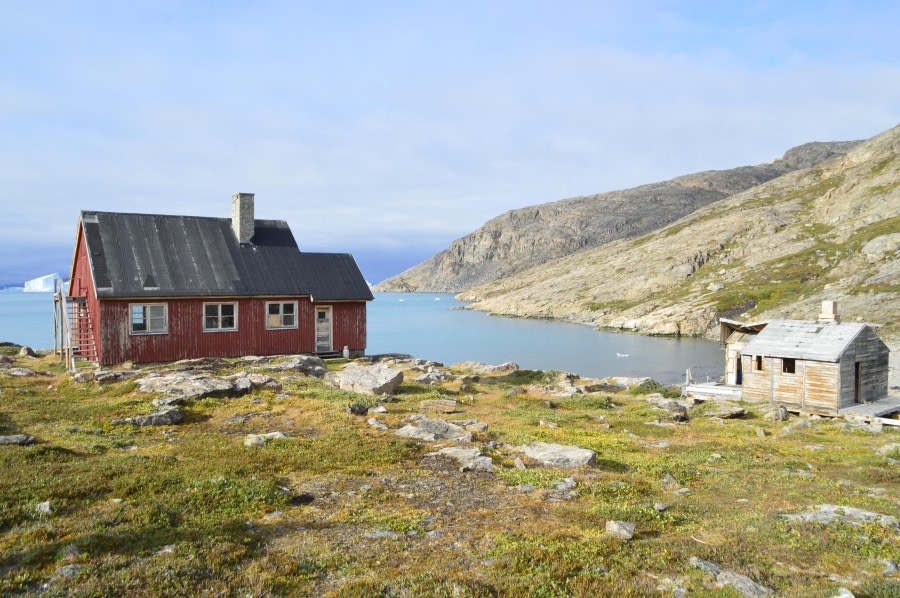
Located at roughly 73°N on the east coast of Greenland, near the Hold with Hope peninsula, Myggbukta is a remote and historically fascinating place. Established in 1922, it served as a Norwegian hunting, meteorological and radio station and also played a role in Norway’s historical territorial claims in eastern Greenland. Exploring the area gave us a fascinating glimpse into the history of the people who once lived and worked in this isolated part of the Arctic.

Standing among the vast landscapes of Greenland, it was easy to imagine how challenging life must have been for the hunters, trappers and station workers who depended on this remote outpost. Besides the historic remains of the Norwegian trappers, some of us also had the opportunity to observe the remains of several Thule winter houses scattered throughout the landscape. In addition, some musk oxen were spotted in the distance, roaming across the terrain.

After our morning exploration, we returned to the ship for lunch before heading out again for our afternoon landing at Kap Humboldt, also known as Kapp Humboldt, on the eastern shore of Ymer Island. Situated at the entrance to Sofia Sund within Northeast Greenland National Park, the area is surrounded by dramatic mountains and untouched wilderness.

Here, we hoped to discover the remains of an old Norwegian trapper and hunting station built in 1929. However, that afternoon we were reminded that we were not the only ones roaming these shores. As we prepared to hike into the landscape, two bears appeared in the distance, which meant that we needed to leave Kap Humboldt immediately. We all quickly boarded the Zodiacs and left the shore. As the ship began to move away, we were able to observe the bears from a safe distance as they walked along the shoreline. It was an amazing experience for all of us.In the evening, we gathered with the Expedition Team for the daily recap, hearing about the plans for the following day as well as stories and experiences from the staff.

It was a wonderful opportunity to reflect on our first day of activities in Greenland and everything we had already experienced. We then enjoyed dinner together in the dining room, bringing our first day of exploration in Greenland to a close. It was a memorable introduction to this extraordinary part of the world, combining spectacular scenery, fascinating history and the excitement of beginning our Arctic adventure in Greenland.

Day 6: Blomstbukta and Teufelsschloss

Blomstbukta and Teufelsschloss
Fecha: 08.08.2026
Posición: 73°24.2’N / 025°25.2’W
Viento: NE2
Clima: Cloudy
Temperatura del Aire: +16

During the early morning hours, Plancius entered Kaiser Franz Joseph Fjord, approaching today’s destination. At the wake-up call, Chloé encouraged us to come out on deck, where breathtaking mountains surrounded us. The calm sea reflected the muted Arctic colours, while the impressive Teufelsschloss (Devil’s Castle), with its colourful layered cliffs, towered ahead.

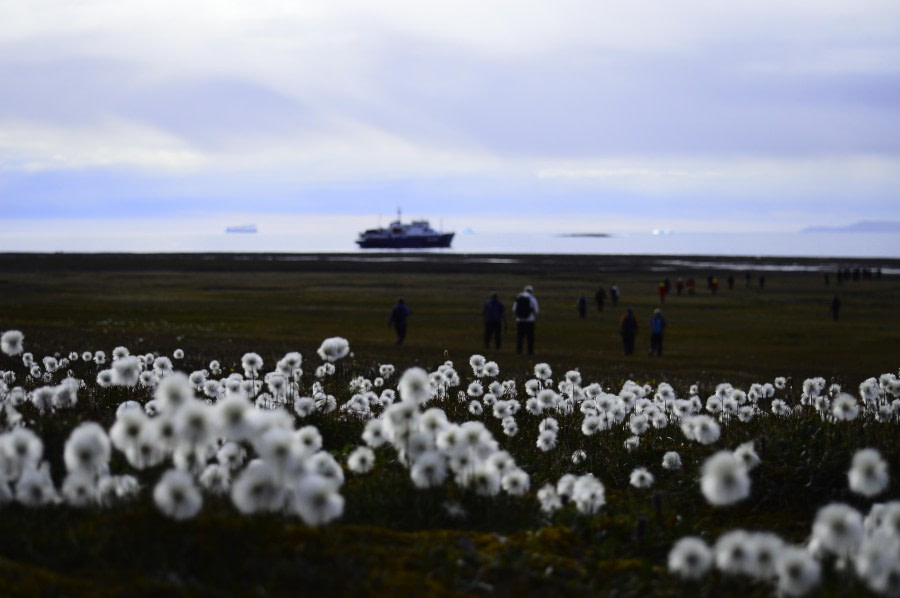
Today, a special programme was organised for those who wanted to take part in a full-day hike. While the Explorative Hikers headed to their landing site east of Teufelsschloss, the rest of us were shuttled to Burgerbukta after breakfast. Divided into three groups, we explored ridges, rock cliffs and tundra platforms covered with flowering Arctic plants. Among the highlights were polar birches, young ptarmigans and several mountain hares. The medium hikers also discovered an old fox trap made of wood and stone.

The hike rewarded us with spectacular views over the untouched landscape, including a reddish-coloured lake. We also spotted ringed plovers and dunlins feeding around a small pond, while a red-throated diver arrived with a fish for its chicks.

After lunch, we returned ashore for the afternoon hike, joining the Explorative Hikers in exploring the valley. The wet, uneven terrain made for challenging walking, but our muck boots proved their worth. Along the way, we discovered two adult musk oxen with a calf moving through the network of small creeks. Some groups continued higher into the valley, while others paused to enjoy the scenery and learn about the remarkable adaptations of Arctic plants.

As we prepared to leave, one of our guests spotted a polar bear swimming along the opposite shore of the estuary. We watched it from a safe distance as it eventually climbed onto the beach—a truly unforgettable way to end the day. That evening, after dinner, many of us remained in the lounge, watching the spectacular mountains and colourful rock formations pass by as Plancius sailed deeper into the fjord. After such a long and exciting day, it was finally time to rest and dream of the adventures still to come.

Day 7: Segelsällskapet & Kapp Petersons

Segelsällskapet & Kapp Petersons
Fecha: 09.08.2026
Posición: 72°25.9’N / 024°52.6’W
Viento: SW5
Clima: Cloudy
Temperatura del Aire: +5

This morning, we woke up to beautiful conditions once again: calm weather, scattered clouds and stunning surroundings. After breakfast, the Expedition Team had planned a landing in Segelsällskapet Fjord at Skipperdal. Named by Swedish Arctic explorer Alfred Gabriel Nathorst after the Royal Swedish Yacht Club, Segelsällskapet Fjord was explored during the Swedish Greenland Expedition in search of survivors from S. A. Andrée’s ill-fated Arctic balloon expedition of 1897.

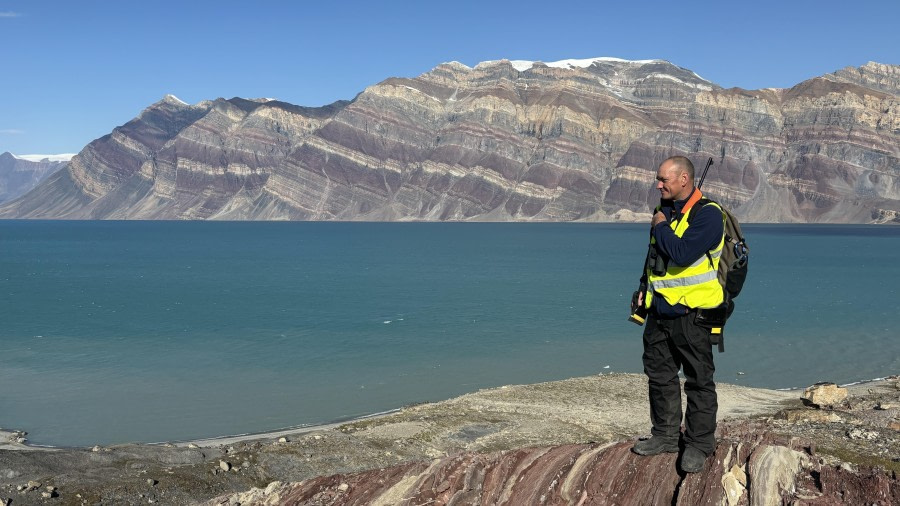
Skipperdal itself is a glacial valley famous for its dramatic and colourful geological formations, often described as looking like “the Earth’s bones”. The vivid bands and layered rock formations made for a spectacular setting for another day of hiking. We set off in our usual groups, with most of us reaching wonderful viewpoints overlooking the fjord and its unique geology. With the sun shining brightly, the weather became surprisingly warm for the High Arctic. Along the way, we spotted rock ptarmigans with their chicks, as well as a weasel-like animal. During a few moments of Arctic silence, the medium group was treated to the loud calls of a female red-throated diver calling to her chicks after returning with food.

We thoroughly enjoyed this special landing and were reluctant to return to the ship, but our hikes had worked up an appetite. We were soon enjoying another delicious lunch in the restaurant. In the afternoon, we headed towards Kap Petersen, another beautiful location where the Expedition Team had organised more hiking. The long hikers climbed one of the nearby steep rocky outcrops, reaching more than 100 metres in elevation before continuing inland into a sheltered valley. Like the other groups, they encountered numerous ptarmigans and enjoyed a refreshing stop at a small waterfall.

The other groups explored along the coastline, trying to reach an old trapper’s hut and catching glimpses of musk oxen grazing nearby. Warm and thirsty after another active day, we all returned to the ship for a refreshing shower and a cool drink. Soon it was time for the daily recap, followed by dinner. What a beautiful day in Greenland!

Day 8: Antarctic Havn & Fleming Fjord

Antarctic Havn & Fleming Fjord
Fecha: 10.08.2026
Posición: 72°01.2’N / 023°03.9’W
Viento: SE2
Clima: Sunny
Temperatura del Aire: +13

An expedition cruise day in the Arctic rarely goes exactly to plan, and today was a perfect example. What began with the promise of a morning landing at Antarctic Havn quickly turned into an unexpected polar bear encounter, followed by a spectacular afternoon exploring Fleming Fjord.

The planned landing at Antarctic Havn had to be cancelled after the Expedition Team spotted a polar bear near the landing site. This was the fifth bear encountered during the cruise, a record for some of the guides on board. With the safety of both guests and wildlife as the priority, we watched from the ship as the bear walked along the shoreline before eventually entering the water, prompting the ship to leave the area.

Although the cancelled landing was disappointing, it perfectly demonstrated one of the key principles of expedition cruising: plans are flexible, and nature always comes first. The morning was followed by lectures from Gaby and Koen about polar bear biology, behaviour and adaptations, giving us the chance to learn more about the animal we had just seen.

The ship then sailed towards Fleming Fjord, where we were greeted by bright sunshine and almost no wind. The three hiking groups set off to explore the spectacular landscape of mountains, valleys and tundra. Wildlife made the afternoon particularly special. Musk oxen slowly moved across the slopes, while bumblebees worked their way between the Arctic flowers. These encounters reminded us that, despite its harsh appearance, the Arctic is far from barren. During the short summer, the landscape comes alive with an incredible variety of plants and animals.

After returning to the ship, we gathered for the daily recap. Chloé presented the plans for the following day, followed by short presentations from Mark on rock ptarmigans and Ursula on the remarkable adaptations of Arctic flowers. It was a day perfectly summed up by the principle of adaptation: from the polar bear surviving in one of the world’s harshest environments to the musk oxen, bumblebees and flowers thriving during the brief Arctic summer. The Arctic may change our plans, but it always seems to offer something even more memorable in return.

Day 9: Scoresby Sund & Bjornoyane

Scoresby Sund & Bjornoyane
Fecha: 11.08.2026
Posición: 70°26.8’N / 023°38.6’W
Viento: NE2
Clima: Sunny
Temperatura del Aire: +16

Today, we sailed into Scoresby Sund, one of the largest fjord systems in northeastern Greenland. We had already marvelled at its towering mountains and impressive glaciers the night before. Since we still had some distance to cover before reaching the perfect location for the following day’s solar eclipse, no activities outside the ship were planned for the morning.

After several busy days, many of us were happy to enjoy a later wake-up call and a more leisurely start. After breakfast, Mark gave an engaging presentation about the colourful diversity and fascinating world of Arctic birds. This was followed by a mandatory lecture from Edu about solar eclipses, focusing on safety and how to protect our eyes and cameras from harmful UV radiation.

Excitement was building throughout the ship. For many of us, witnessing a total solar eclipse was one of the main reasons for joining this voyage; for some, it was the fulfilment of a lifelong dream. Whether this would be our first eclipse or one of several, we were all eagerly looking forward to the following day. At noon, we headed to the restaurant for lunch—burgers today!

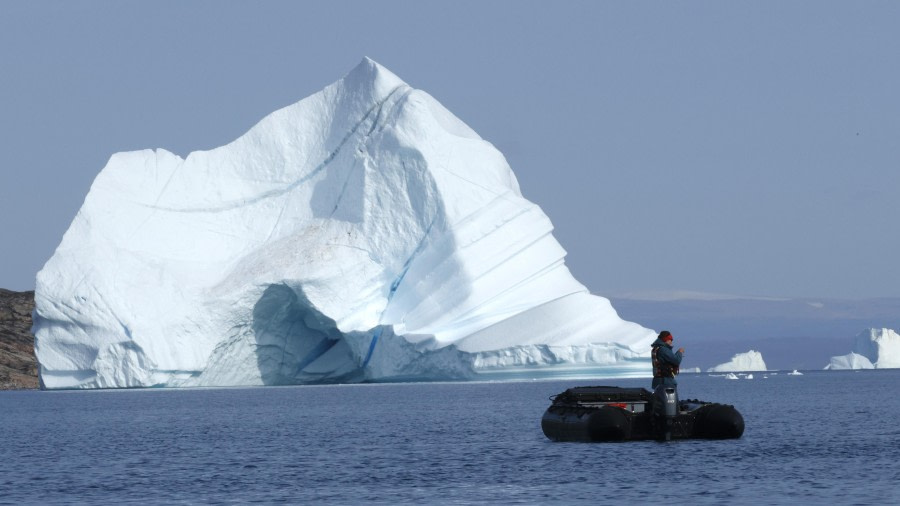
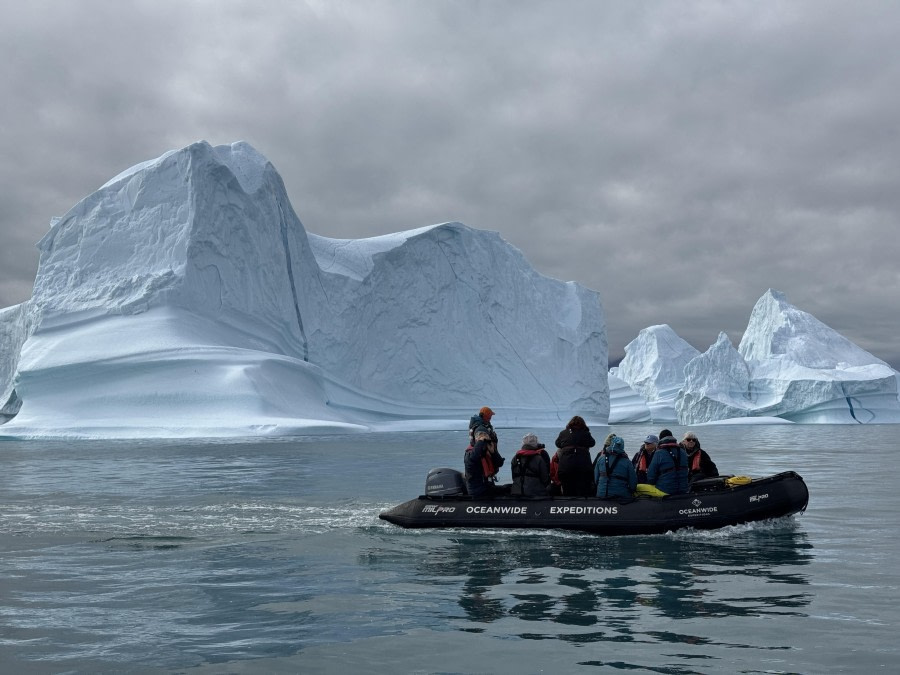
In the afternoon, we set off on a Zodiac cruise through the magnificent Bjørne Øer, the “Bear Islands.” In the mild sunshine, we passed enormous icebergs, some as tall as houses. Scoresby Sund is famous for the huge icebergs that become grounded here, creating what could be described as an iceberg graveyard. We also spotted Arctic terns resting on drifting ice floes. Seeing these delicate birds up close made it hard to imagine that they undertake the longest migration of any animal, travelling around 70,000 kilometres between the Arctic and Antarctica each year.

There is a 5-knot speed limit in Scoresby Sund to help protect the local whale populations. Since our Zodiac had drifted quite far from Plancius, the journey back took around 40 minutes, giving us plenty of time to enjoy the spectacular scenery.

After dinner, we headed out once more, this time for a boat ride through Øfjord and its towering cliffs. We stopped at a particularly striking rock formation known as “Grundtvigskirken”, named after a church in Copenhagen. It was a relaxed but spectacular day, and with the solar eclipse just around the corner, excitement continued to build throughout the ship.

Day 10: Sorte Island and Harefjord (Solar Eclipse)

Sorte Island and Harefjord (Solar Eclipse)
Fecha: 12.08.2026
Posición: 70°41.36’N / 027°44.9’W
Viento: NE2
Clima: Sunny
Temperatura del Aire: +14

One of the most anticipated days of our trip began with Chloé’s usual 07:15 wake-up call. Clear skies, warm temperatures and excellent visibility promised a beautiful morning as Plancius approached the northern side of Sorte Ø, a small island deep inside Scoresby Sound. At 08:45, the Expedition Team began preparations for the landing.

As always, the site was carefully scouted, with staff exploring the area on foot and two Zodiacs checking the coastline for wildlife and polar bears. Once the area was declared safe, we offered long, medium and short hikes. With blue skies, warm temperatures and spectacular visibility, everyone enjoyed views of distant mountains, ice-capped glaciers and the surrounding fjords. Some adventurous guests even finished the morning with a refreshing “polar plunge” from the beach.

After lunch, all attention turned to the afternoon’s main event: a total solar eclipse. Preparations had begun earlier in the voyage, with Eduardo, our astronomer, giving presentations about eclipses, the specific circumstances of this event and how to observe it safely. Special solar glasses were distributed, and a dedicated area was prepared for photographers. While we waited, Eduardo gave a presentation about the Voyager programme, sharing personal stories about how the spacecraft had inspired him to become an astronomer. Felix Baumer, an invited guest, then gave a presentation about the eclipse for the Swiss group on board. Eduardo also prepared a live simulation so guests could follow the progress of the eclipse from inside the lounge. The weather remained favourable as we drifted in the northern part of Rødefjord, although some high clouds began appearing in the distance. At 16:33, the first contact occurred as the Moon began to move across the Sun. As the eclipse progressed, more and more of the Sun disappeared.

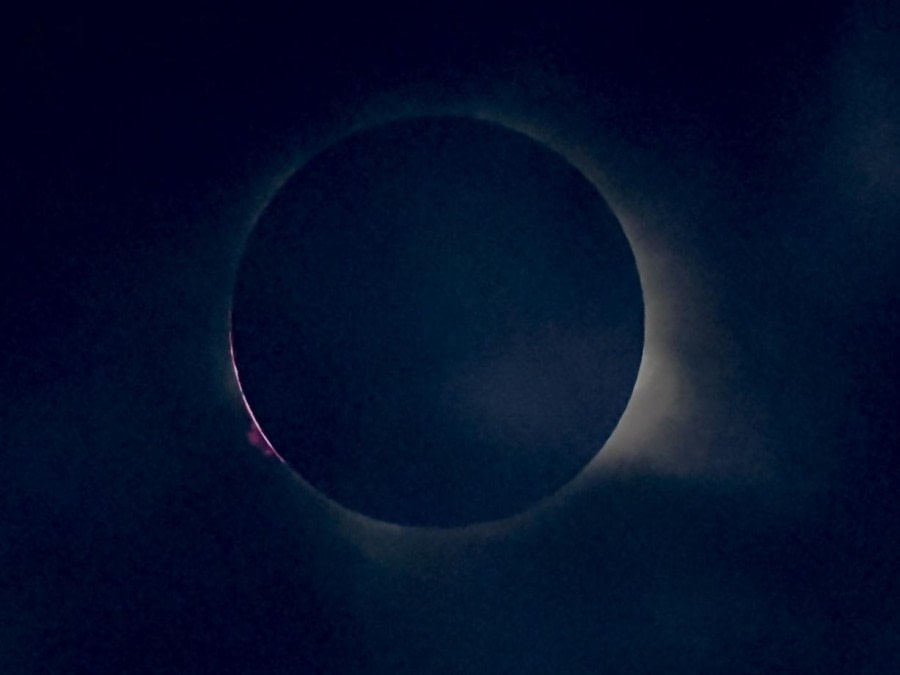
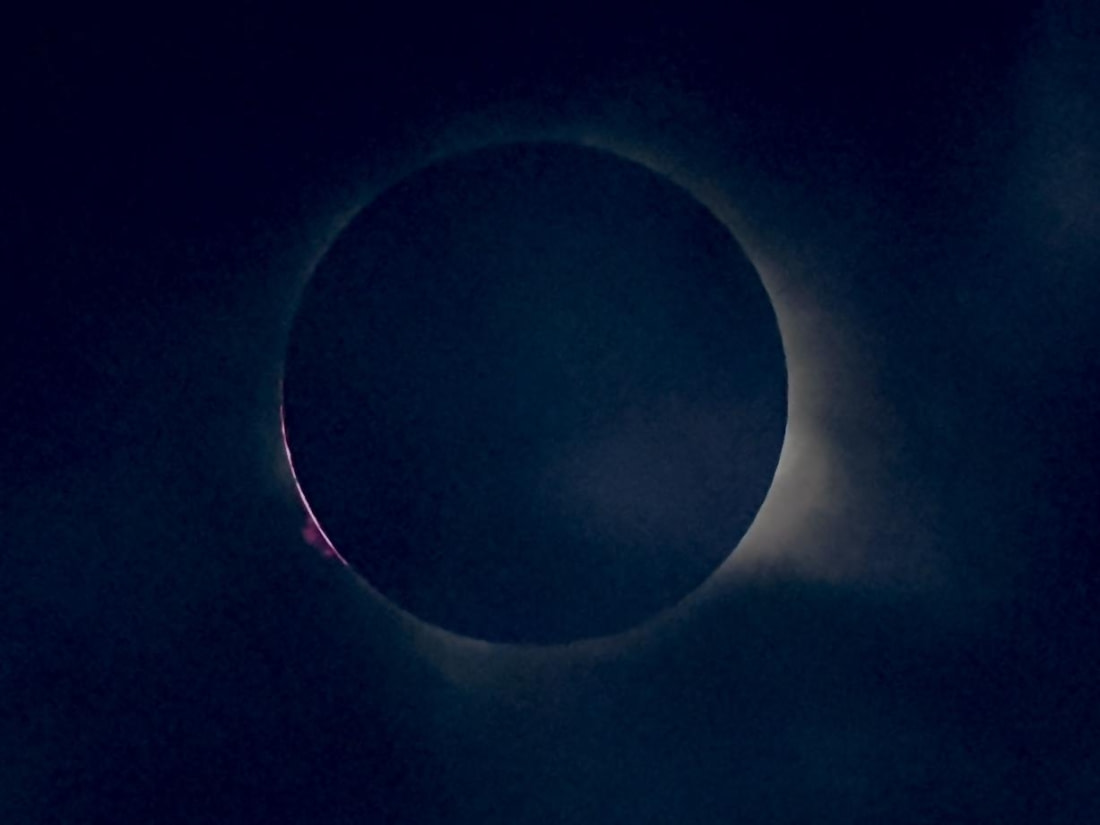
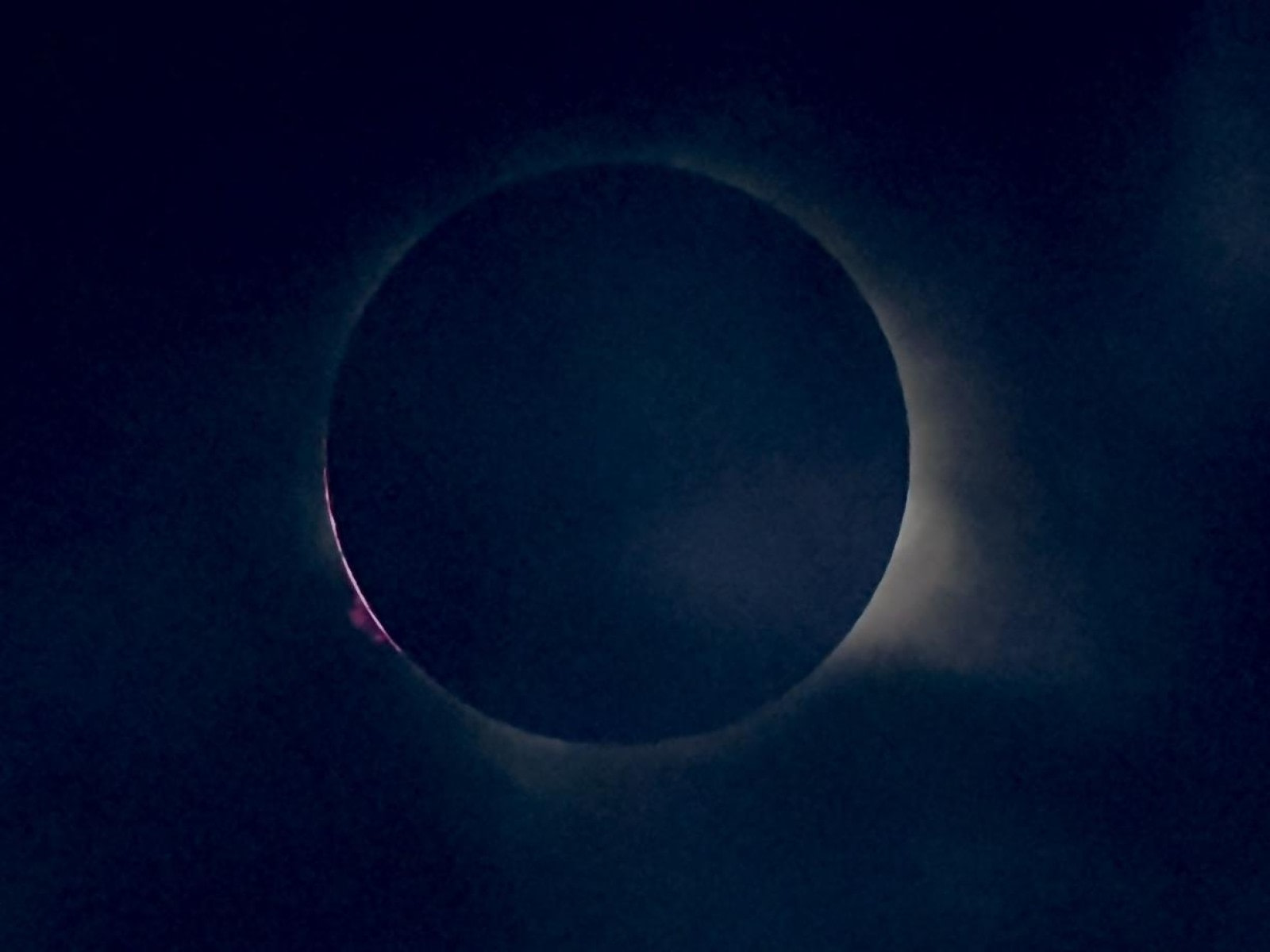
At 17:35, totality began. Almost as if someone had switched off the lights, darkness fell across the fjord. The Sun’s corona appeared around the black disk of the Moon, creating a breathtaking sight that lasted approximately two minutes and fifteen seconds. To our amazement, a reddish spot could even be seen in the corona, produced by a huge solar eruption ejecting plasma from the Sun’s surface. For those precious minutes, everything seemed to stand still. The temperature dropped, a cold wind began to blow, and the landscape was transformed into a surreal Arctic scene. Then, just after 17:37, the first light returned. Within moments, daylight flooded the fjord once again.

Although increasing cloud cover prevented us from seeing the final stages of the eclipse, we were left speechless by what we had witnessed. A total solar eclipse in such a remote and spectacular location is an exceptionally rare experience, and we felt incredibly fortunate that the weather had cooperated for the most important moments. Back on board, the Hotel Department celebrated the occasion with a Happy Hour, while every passenger received a commemorative poster. After dinner, we gathered for a late recap at 21:00 to hear about the plans for the following day. Later that evening, passengers, colleagues and crew shared their excitement about the experience. For many of us, the eclipse had become one of the most spectacular things we had ever witnessed.

Details of the Eclipse:

Location 70˚ 47' N, 27˚ 47 W

Partial Started 12.08. 16:34:44

Full Total Started 12.08. 17:35:14

Full Total End 12.08. 17:37:38

Partial Ended 12.08. 18:35:52

Duration Totality: 2 minutes 18 seconds.

Duration Whole Eclipse: 2 hours 1 minute 8 seconds.

Obscuration of the Sun: 100%

Day 11: Immikkeertigajik & Sydkap

Immikkeertigajik & Sydkap
Fecha: 13.08.2026
Posición: 71°16.5’N / 025°01.5’W
Viento: NNW2
Clima: Cloudy
Temperatura del Aire: +14

After yesterday’s fantastic solar eclipse, we awoke to sunny skies, little to no wind and calm seas. It was as if nothing had happened, although we all knew it had been an amazing and surreal experience that we would not soon forget.

Overnight, Plancius had repositioned opposite Sydkap, where Chloé had once again organised a full-day hike. The long hikers explored a stunning area with impressive viewpoints and plenty of distance to cover, while the rest of us followed the traditional hiking programme.

We landed at beautiful Immikkeertikajik, a small island opposite Sydkap. The name means “the isolated little island” or “bad island” in Greenlandic. The weather was fantastic, and the rich vegetation was immediately noticeable as we came ashore.

The island is also home to well-preserved remains of a Thule settlement, occupied between around 1000 and 1600. We could see the remains of houses dug about a metre into the ground, designed to provide shelter and retain warmth. Their roofs were constructed from bowhead whale jaw and rib bones, covered with animal skins and turf. It was fascinating to see how people lived here hundreds of years ago.

The long-hike group, consisting of just four participants, reached the summit at 250 metres. On their way back, Koen and Gaby even rewarded them with a ten-minute rest in the soft vegetation under the warm Arctic sun. The other groups took things a little easier, with many of us spotting Arctic hares and musk ox remains.

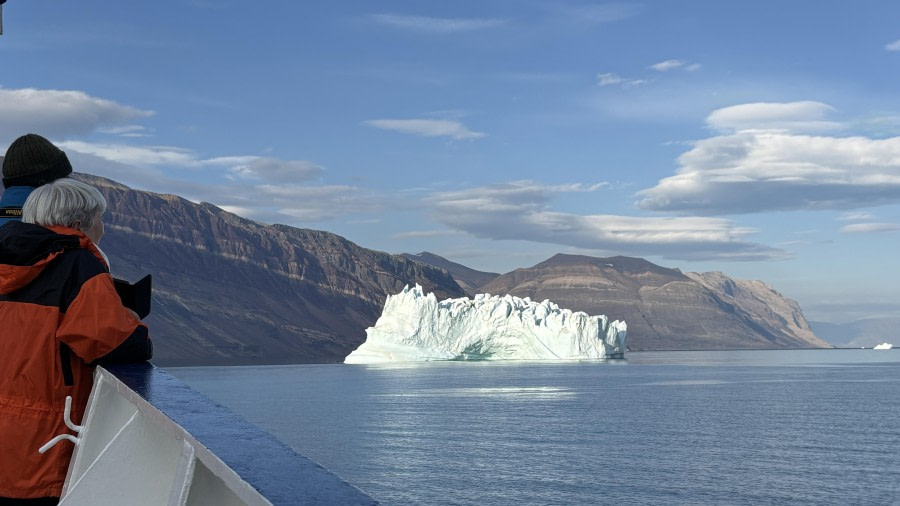
Near the landing site, we admired a stunning iceberg with smooth sides shining beautifully in the sunlight and revealing incredible shades of blue. From higher ground, we could also appreciate how far the ice extended below the surface.

After lunch, Chloé announced the afternoon’s activity: a Zodiac cruise among the stranded icebergs off Sydkap. After a good hike in the morning, it was the perfect way to enjoy the ice giants at a more relaxed pace.

The area is often called an “iceberg graveyard” or “iceberg garden”. Knowing that only around 10% of an iceberg is visible above the surface, it was easy to imagine the enormous depths of the larger icebergs. We saw countless shapes and forms, some with caves and huge holes, while a few lucky guests even witnessed an iceberg calving. As we prepared for the daily recap, the long hikers were picked up from a nearby beach—they had made it!

Dinner was a barbecue, and the weather and scenery could not have been better. We ate outside, enjoying freshly grilled sausages, chicken and steaks as the evening light illuminated the surrounding landscape. Afterwards, the tables were cleared to make room for dancing and drinks. It was the perfect ending to another fantastic day in Greenland.

Day 12: Romer Glacier and Ittoqqortoormiit

Romer Glacier and Ittoqqortoormiit
Fecha: 14.08.2026
Posición: 70°10.3’N / 022°58.9’W
Viento: NNE2
Clima: Sunny
Temperatura del Aire: +13

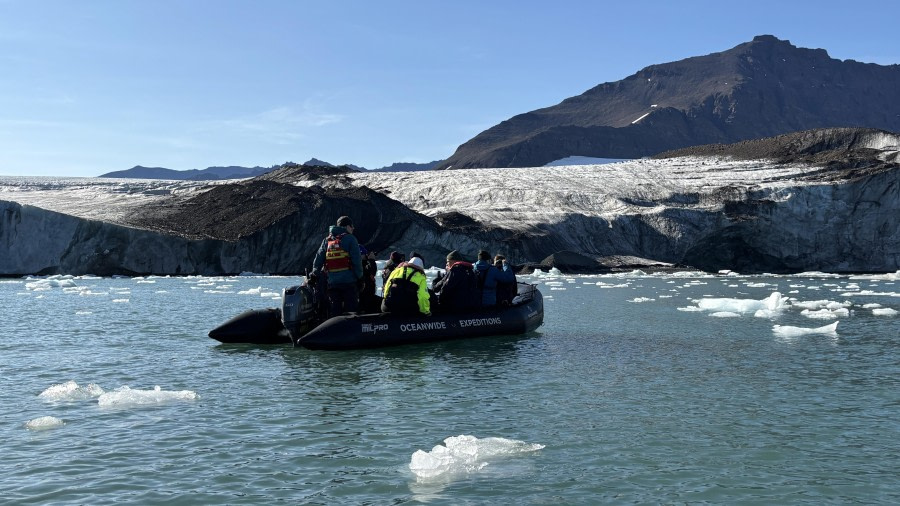
Our last day of activities in Greenland began with a Zodiac cruise in front of the Roma Glacier. Located close to the opening of Scoresby Sound, the glacier once again offered an impressive glimpse into the Arctic landscape. Clearly visible moraines showed the glacier’s movement, while striking basalt mountains and steep cliffs rose along the coast. The characteristic columnar structures of the basalt, formed by Paleogene volcanism in East Greenland, gave the landscape an extraordinary appearance. The Zodiac cruise allowed us to experience this spectacular combination of ice, rock and sea from close up.

After returning to the ship, we enjoyed lunch before our final landing in Greenland that afternoon. We arrived in Ittoqqortoormiit, one of the most remote settlements in the world, home to around 350 people. Our visit gave us a unique insight into everyday life in this isolated community. Some of us were invited into a local home, where we were welcomed with coffee and had the opportunity to talk with residents. Others visited the museum and church, while we also had the chance to see the sled dogs being fed. Walking through the town, we met more local residents and learned about life in this remote part of Greenland.

In the evening, we gathered with the Expedition Team for our daily recap and reflected on our final day in Greenland before enjoying dinner on board. But the day still had one final surprise in store. After leaving Scoresby Sound, we spotted more than 50 humpback whales from the ship, gathered together and feeding in the waters around us. It was an extraordinary sight and a fitting way to conclude our time in Greenland. As Plancius finally set course for Iceland, we could look back on an unforgettable expedition filled with immense landscapes, glaciers, fascinating geology, encounters with the people of Greenland and remarkable Arctic wildlife.

Day 13: At Sea

At Sea
Fecha: 15.08.2026
Posición: 78°14.0’N / 015°35.4’E
Viento: NE2
Clima: Cloudy
Temperatura del Aire: +8

Our final morning on board began with a gentle 07:45 wake-up call. After so many busy and unforgettable days, we were all feeling a little sleepy, taking our time over breakfast and perhaps still processing everything we had experienced during this incredible voyage.

The morning offered one last opportunity to learn and reflect. German-speaking guests joined Esther in the Observation Lounge for an engaging lecture about the Vikings, while the English-speaking group gathered with Charlotte to discover more about other exciting Oceanwide destinations. It was a relaxed morning, with plenty of stories and memories still being shared between guests and crew.

After lunch, we continued our programme with “Drifting World: The Curious World of Plankton!” Ursula presented the fascinating subject to the German-speaking guests, while Chloé introduced the English-speaking group to the hidden world of plankton and its importance to the marine ecosystem.

Later in the afternoon, the groups swapped lectures, with Koen presenting more exciting Oceanwide destinations to the German-speaking guests and Esther taking the English-speaking group on another journey into the world of the Vikings.

Then came the moment we had all been waiting for: the Captain’s Farewell. We gathered in the Observation Lounge for a final toast to an extraordinary voyage. Gaby also presented the slideshow she had prepared for us, bringing together many of the incredible moments we had shared along the way. Seeing the photographs brought back memories of glaciers, mountains, icebergs, polar bears, whales, hikes, remote settlements and, of course, that unforgettable solar eclipse.

Afterwards, we enjoyed our final dinner together in the dining room. There was a sense of both happiness and tiredness in the air. We were all sleepy after such an intense journey, but our minds were still busy processing the countless experiences and extraordinary moments of the past days.

It has been an amazing trip—filled with spectacular landscapes, incredible wildlife, fascinating encounters and memories that will stay with us for a very long time.

As our expedition comes to an end, we leave with tired bodies, full hearts and heads filled with stories. What a journey it has been.

Day 14: Disembarkation - Akureyi

Disembarkation - Akureyi
Fecha: 16.08.2026
Posición: 65°41.06’N / 018°05.01’E
Viento: SSE1
Clima: Partly Cloudy
Temperatura del Aire: +5

Our final morning on board arrived far too quickly. After such an incredible journey, it felt strange to wake up knowing that this was our last morning on Plancius.

At 07:30, we placed our luggage outside our cabins before heading to breakfast. There was a quiet, reflective feeling on board as we enjoyed our final meal together and prepared to leave. At 08:30, it was time to disembark. As we made our way down the gangway, we said our final goodbyes to the Expedition Staff and crew who had shared this incredible journey with us. It was hard to say goodbye after so many days filled with unforgettable experiences.

Once ashore, we boarded the buses and set off towards Reykjavík, leaving Plancius and our Arctic adventure behind. We left with tired bodies, full hearts and minds still processing everything we had experienced. It had truly been an amazing trip, filled with memories, stories and moments that will stay with us for a very long time.

The expedition was over, but the adventure—and the memories—will continue long after we reach home. Goodbye, Greenland—and goodbye to everyone who shared this unforgettable adventure. Until the next expedition.

Total distance sailed on our voyage: 1,897.2 nm

Northernmost position: 79°52.38’N, 11°28.42’E

On behalf of Oceanwide Expeditions, Captain Christophe Colaris , Expedition Leader Chloe Marechal, Hotel Manager Marleen Van Moorsel and all the crew and staff of M/V Plancius, it has been a pleasure travelling with you.

Detalles

Código del viaje: PLA10-26
Fechas: 3 ago. - 16 ago., 2026
Duración: 13 noches
Barco: El Plancius
Embarque: Longyearbyen
Desembarque: Akureyri

¿Ha estado en este viaje?

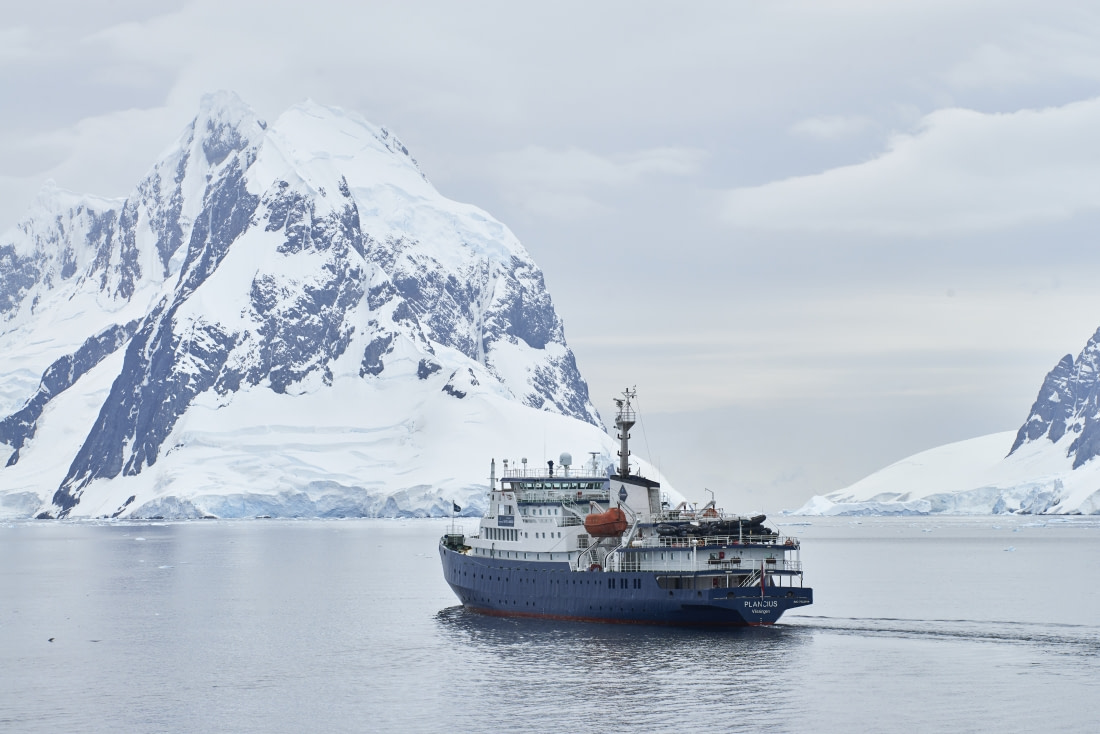
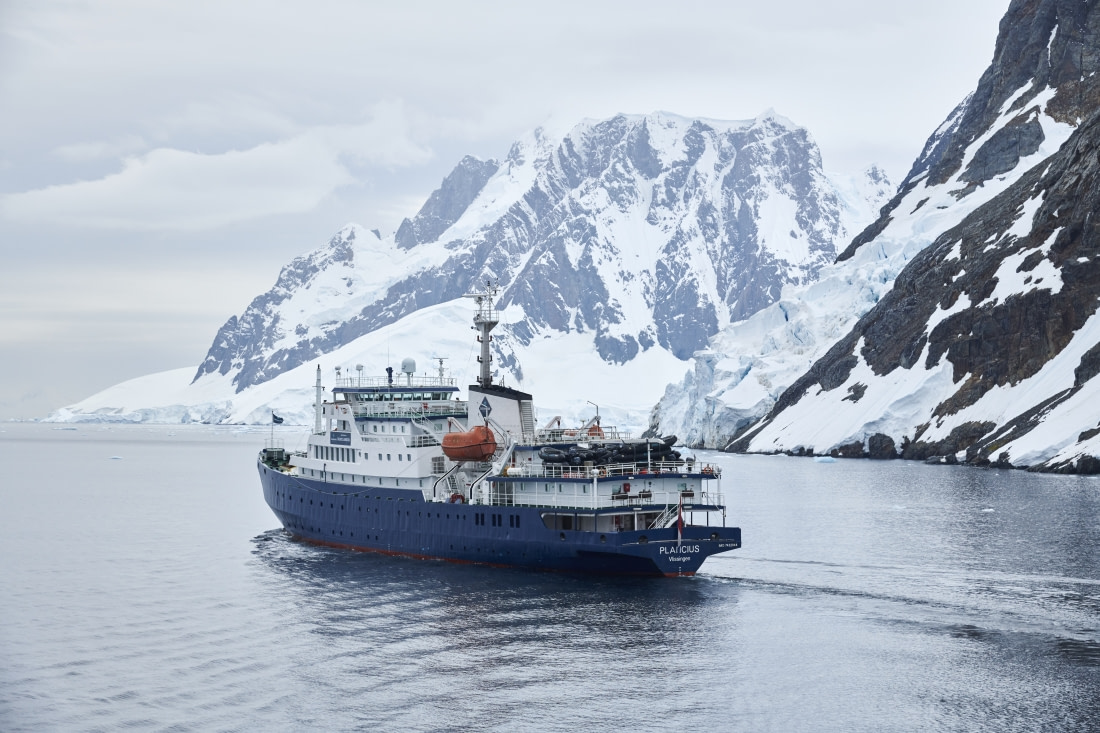
A bordo El Plancius

Nuestro barco más antiguo, el Plancius, es un clásico para algunos de nuestros viajes polares más populares.

Más información El Plancius »
Loading